Home

  • DESMAN Q60Ultra AI Smart Lock Review: Your Door Gains Emotions

    DESMAN Q60Ultra AI Smart Lock Review: Your Door Gains Emotions

    Introductin: When Your Lock Learns to Be Cute, Security Becomes Companionship
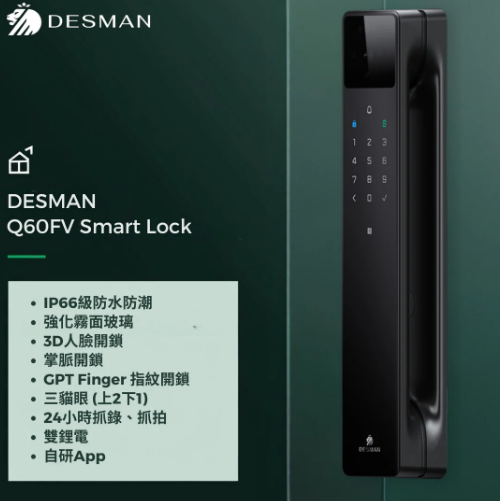
    DESMAN Q60FV smart lock front panel with touchscreen
    DESMAN Q60FV smart lock front panel with touchscreen

    Honestly, before reviewing this lock, my expectations for smart locks stopped at three basics: fast fingerprint, accurate password, clear peephole. But the DESMAN Q60Ultra threw me a “door pet”—a little creature on the lock face that greets you, interacts with you, and can even be customized to look like your real pet. This lock wants to tell you not just “I am secure,” but “I understand you.” Released on March 11, 2026, as DESMAN’s annual flagship, is the Q60Ultra genuine innovation or just a gimmick? Let’s find out through hands-on testing.

    Product Overview: Evolution from Tool to Companion

    DESMAN has held China’s smart lock market leadership for 5 consecutive years in both online sales and premium segment sales—proof their products deliver. The 2026 theme is “Lingyao Future,” with one core message: transforming smart locks from “seeing” to “understanding.”

    The Q60Ultra is the absolute star of this launch. A 4.5-inch dynamic AI touch front screen plus 5.5-inch giant rear screen represents “top-tier among top-tier” in smart lock configurations. The IP66-rated front panel means no worries even in heavy rain. It debuts four breakthrough technologies: AI Smart Butler 2.0, Dragon Motor 2.0, Smart Radar 4.0, and Peephole Privacy Protection.
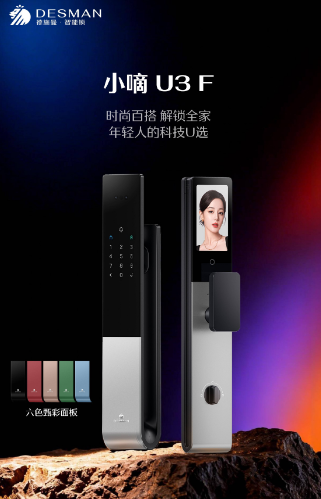
    DESMAN Xiaodi U3F smart lock with colorful panels
    DESMAN Xiaodi U3F smart lock with colorful panels

    Specifications: A Spec Monster’s Sincerity

    SpecDetails
    Front Screen4.5-inch AI touch screen
    Rear Screen5.5-inch giant screen
    Door Pet SystemLittle Lion/Puppy/Kitten, supports AI customization
    MotorDragon Motor 2.0, 9-level torque adaptation
    Max Torque5.6N·m (24.4% increase over 1.0)
    RadarSmart Radar 4.0, adjustable sensing zone
    PrivacyAI smart blurring (1.5-3m faces)
    WaterproofIP66-rated
    Recognition3D face + palm + GPTfinger 2.0 fingerprint
    BatteryD-Power Smart Battery 2.0

    Data source: DESMAN official launch materials

    Performance Analysis: Door Pets Are Not Just Decoration, Emotional Value Is Essential

    Let’s start with the eye-catching “personalized interactive door pet.” The system includes three virtual pets—Little Lion, Puppy, and Kitten—that interact across scenarios: welcoming you home, reminding you to grab keys when leaving, and sounding alerts when anomalies are detected. Even more impressive is “AI dynamic door pet customization”—upload photos of your actual pets, and the AI generates exclusive door pet avatars. This design precisely targets the emotional needs of pet-owning households, giving cold metal locks a warm personality.

    But the Q60Ultra’s technology is equally solid. AI Smart Butler 2.0 achieves upgrades across three dimensions: perception, decision-making, and interaction:

    Perception Layer: Multimodal recognition technology can “understand doorway scenes,” distinguishing between food delivery arrivals, neighbor pass-bys, and potential threats. The innovative “contactless package pickup” feature detects delivery arrivals and reminds you to collect at the right moment.

    Decision Layer: Supports user-defined tagging, automatically learning to distinguish different doorway roles and building private visitor profiles. Familiar faces get do-not-disturb treatment; suspicious individuals get rapid tracing—humanized security management.

    Interaction Layer: Generates daily doorway event summaries, weekly usage data analysis, and proactive smart care reminders. The most stunning feature is the “emotional interaction engine”—record family members’ voices as unlock welcome messages, filling technology with warmth.

    The Dragon Motor 2.0’s 9-level torque adaptation is a practical innovation. High gear at 5.6N·m easily handles old, sticky locks; low gear achieves silence, so late-night arrivals won’t wake the family. Smart Radar 4.0 solves an industry pain point: users whose doors are near elevators or hallways will no longer be driven crazy by constant false triggers. Peephole privacy protection uses AI algorithms to smart-blur faces within 1.5-3 meters, ensuring home security while respecting neighbor privacy.
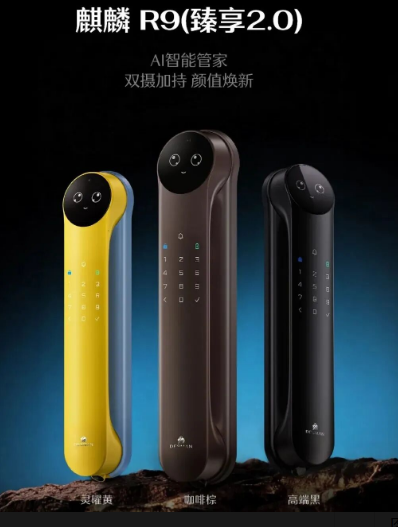
    DESMAN Qilin R9 smart lock three color variants
    DESMAN Qilin R9 smart lock three color variants

    Comparison: DESMAN Q60Ultra vs Kaadas K70 vs Xiaomi M30

    FeatureDESMAN Q60UltraKaadas K70Xiaomi Smart Door Lock M30
    Screen4.5+5.5-inch dualSingle screenSingle screen
    Door PetAI customization supportedNoneNone
    Motor Torque5.6N·m adaptiveFixed torqueFixed torque
    RadarSmart 4.0 adjustableStandard radarStandard radar
    PrivacyAI smart blurringManual settingsManual settings
    WaterproofIP66IP55IP54
    PositioningFlagship emotional interactionPremium securityValue-for-money

    The Q60Ultra’s differentiation is clear: while competitors race on recognition speed, it competes on emotional connection. The dual-screen + door pet combination has no direct market rival, and IP66 waterproofing is the industry’s highest standard. But the price is necessarily higher, targeting families with ample budgets pursuing quality living.

    Pros and Cons

    ProsCons
    Door pet interaction innovation, high emotional valueHigher price, premium market positioning
    Dual-screen design, clear information displayComplex features, steeper learning curve for elderly
    9-level torque adaptation, works with old doorsDoor pet AI customization requires photo upload, privacy concerns
    IP66 waterproofing, safe for outdoor installationEmotional features limited value for single users
    AI smart blurring, better neighbor relationsFlagship positioning, potentially higher repair costs

    Who Should Buy

    Recommended for:

    • Pet-owning families seeking emotional interaction experiences
    • Villa/large home users needing premium security solutions
    • Tech enthusiasts willing to pay for innovative features
    • Families with elderly/children needing proactive care reminders

    Not recommended for:

    • Budget-constrained users with basic unlocking needs
    • Rental tenants where installation/removal is inconvenient
    • Pragmatists indifferent to virtual interactions

    FAQ

    Q: Does the door pet feature drain battery? A: Door pets use low-power design, with minimal impact on daily battery life; the D-Power 2.0 system automatically optimizes.

    Q: Is AI custom door pet an extra charge? A: Official pricing policy has not been announced; basic customization is likely free, with advanced features potentially subscription-based.

    Q: Can IP66 waterproofing handle typhoons? A: IP66 is fully dustproof and resistant to powerful water jets, but prolonged submersion is still not recommended; adding an awning is advised.

    Conclusion

    The DESMAN Q60Ultra is not just a “better lock”—it is a “family companion that understands you.” Through door pets, custom voices, and proactive care, it elevates smart locks from functional tools to emotional connectors. Technically, the dual screens, 9-level motor, and AI privacy protection all reach industry-leading levels. If your budget allows and you want a lock that offers both security and warmth, the Q60Ultra is one of few choices on the market. But if you simply need basic “unlock and peephole” functionality, DESMAN’s Q5 Ultra or大圣C6F might suit you better.
  • NVIDIA RTX Spark: The Super Chip That Redefines PC

    NVIDIA RTX Spark: The Super Chip That Redefines PC

    Introduction: NVIDIA Redefines PC

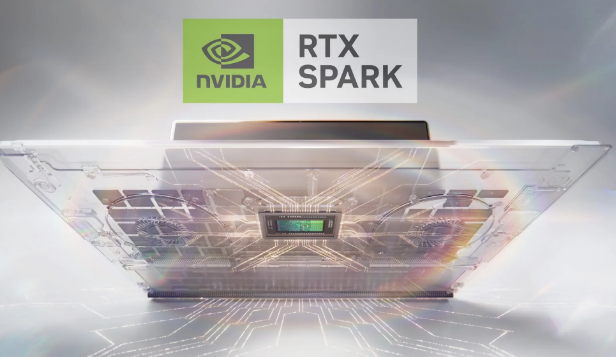
    NVIDIA RTX Spark chip official product render
    NVIDIA RTX Spark chip official product render

    On June 1, 2026, at the Taipei Music Center, NVIDIA CEO Jensen Huang stood on stage and announced the most important thing for the PC industry in 40 years: NVIDIA is officially entering the PC processor market.

    Not graphics cards. Not data centers. CPUs. Complete PC chips. NVIDIA, Microsoft, and Arm joining forces to “reinvent the PC.”

    Product Overview: RTX Spark Is Not a Chip, It Is a Super Chip

    RTX Spark core architecture:

    • GPU: NVIDIA Blackwell architecture, 6,144 CUDA cores, performance comparable to desktop RTX 5070
    • CPU: MediaTek-designed 20-core ARM CPU (10 Cortex-X925 + 10 Cortex-A725), up to 4.0GHz
    • Memory: 128GB LPDDR5X unified memory, 301GB/s bandwidth
    • AI Compute: 1 PFLOP (FP4 precision), capable of processing 120B-parameter models and 1M-token workloads
    • Process: TSMC 3nm
    • Interconnect: NVLink C2C connecting CPU and GPU

    Jensen Huang’s exact words: “This is the first time in 40 years that the PC product line has been completely redesigned.”

    Killer Feature #1: 1 PFLOPS, Redefining AI PC

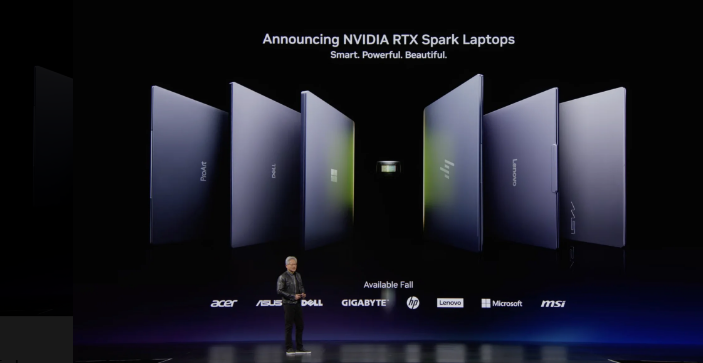
    Jensen Huang presenting at COMPUTEX 2026 keynote stage
    Jensen Huang presenting at COMPUTEX 2026 stage

    What does RTX Spark’s 1 PFLOP AI compute mean?

    • Apple M4 Ultra: ~38 TOPS
    • Qualcomm Snapdragon X Elite: ~45 TOPS
    • Intel Lunar Lake: ~48 TOPS
    • NVIDIA RTX Spark: 1 PFLOP = ~2,000 TOPS

    This is not a multiple gap. This is an order-of-magnitude gap. RTX Spark can locally run 120B-parameter large language models, process 1M-token long documents, and generate 4K video in real-time—tasks that require cloud support on competing platforms.

    Killer Feature #2: RTX 5070-Class Gaming, No Discrete GPU Needed

    RTX Spark’s integrated GPU has 6,144 CUDA cores, comparable to the desktop RTX 5070. This means:

    • 14mm-thin laptops without discrete GPUs can achieve mid-range gaming laptop performance
    • Content creators can complete 4K video editing, 3D rendering, and AI generation on ultrabooks
    • AI developers can train and infer large models locally without cloud GPU instances

    First-wave products will focus on ~14mm thin-and-light laptops targeting content creators, AI developers, and gamers.

    Killer Feature #3: Microsoft Copilot Plus Certified, Savior of Windows on Arm

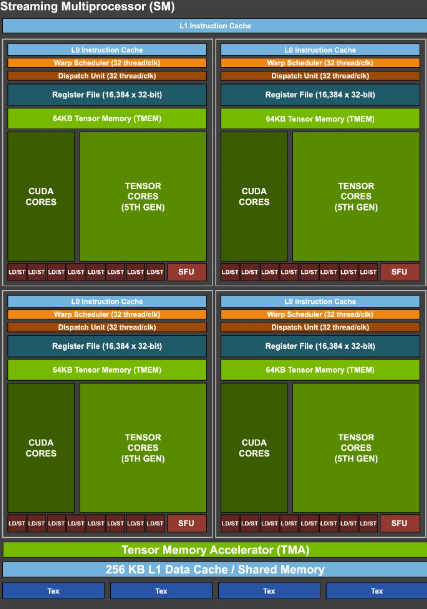
    NVIDIA Blackwell GPU chip with architecture diagram
    NVIDIA Blackwell GPU chip with architecture diagram

    Microsoft and NVIDIA’s joint statement used the same tagline: “A new era of PC.”

    This means:

    • RTX Spark natively supports Microsoft Copilot Plus AI PC standards
    • Supports local large models and offline AI tasks
    • Windows on Arm finally has a chip that can compete with Apple M-series

    First-wave partners include Microsoft, Dell, HP, ASUS, Lenovo, MSI. NVIDIA plans 30+ laptop and 10+ desktop products.

    Specs Comparison: RTX Spark vs Apple M4 vs Qualcomm X Elite vs Intel Lunar Lake

    FeatureNVIDIA RTX SparkApple M4 UltraQualcomm Snapdragon X EliteIntel Lunar Lake
    ArchitectureArm (Blackwell+20 cores)Arm (32 cores)Arm (12 cores)x86 (8 cores)
    GPU6,144 CUDA (Blackwell)Apple SiliconAdrenoXe2
    AI Compute1 PFLOP (FP4)~38 TOPS~45 TOPS~48 TOPS
    Memory128GB LPDDR5X128GB unified64GB LPDDR5X32GB LPDDR5X
    GamingRTX 5070-classMid-rangeEntry-levelEntry-level
    TargetCreators/Developers/GamersPro creationThin officeThin office

    RTX Spark’s differentiation is razor-sharp: it is the only PC chip simultaneously satisfying both “AI compute ceiling” and “gaming performance ceiling.”

    Caveats to Note

    • Software compatibility: Arm architecture running Windows x86 apps still requires emulation, with performance overhead and bug risks
    • Release timeline: June 1 debut, but mass production arrives fall 2026, long wait
    • Price unknown: Premium positioning means premium pricing, likely $1,500+ starting
    • Thermal challenges: High power consumption in thin laptops creates散热 pressure, sustained performance unverified
    • MediaTek role: Despite co-development, MediaTek cancelled its COMPUTEX keynote, raising collaboration depth concerns

    Who Should Wait for RTX Spark?

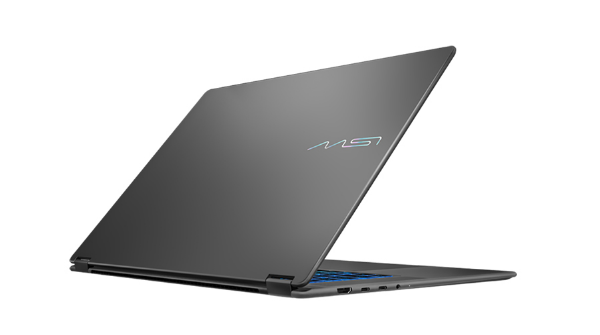
    MSI Prestige laptop powered by RTX Spark
    MSI Prestige laptop powered by RTX Spark

    Highly Recommended to Wait:

    • AI developers (local 120B-parameter model inference)
    • Gamers (3A gaming on thin laptops)
    • Creative professionals (4K video editing + AI generation)
    • Windows ecosystem users (wanting to switch from Mac but software)

    Consider Alternatives:

    • Budget-sensitive buyers (waiting for price announcement)
    • Pure office users (do not need this much compute)
    • Deep Apple ecosystem users (M4 series already sufficient)

    Future Outlook: The “NVIDIA Moment” for AI PCs

    If RTX Spark succeeds, NVIDIA gains:

    1. CPU market entry ticket: Expanding from GPU dominance to full-stack computing
    2. AI PC definition rights: Redefining “AI PC” standards with 1 PFLOP compute
    3. Windows on Arm leadership: Replacing Qualcomm as the preferred Arm Windows platform

    Jensen Huang projects the CPU market will grow to $200 billion. RTX Spark is NVIDIA’s first cut of that cake.

    For consumers, this means fall 2026 may see a wave of “all-capable thin laptops”—thin, long-battery, gaming-capable, AI-capable, creation-capable. This is one of the PC industry’s most significant architectural shifts in a decade.


    Rating: 9.5/10 (Industry Disruptor)

    Bottom Line: NVIDIA is not just selling a chip. It is redefining what a PC can do. The question is not whether RTX Spark will succeed, but how fast the industry will follow.

  • Unitree Technology IPO: The “CATL Moment” for Robotics

    Unitree Technology IPO: The “CATL Moment” for Robotics

    Introduction: The “CATL Moment” for Robotics Has Arrived

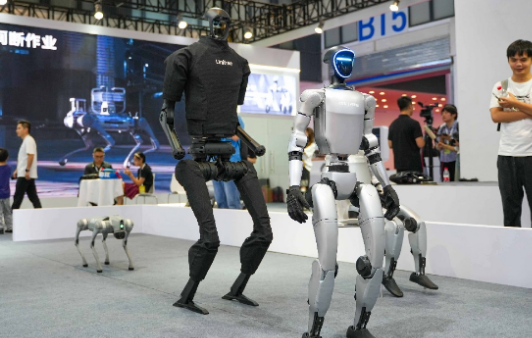
    Unitree G1 humanoid robot assembling robot parts
    Unitree G1 humanoid robot assembling robot parts

    On June 1, 2026, at the Shanghai Stock Exchange. Unitree Technology passed its STAR Market IPO review, becoming the first humanoid robotics stock on A-shares.

    From March 20 acceptance to June 1 approval, only 73 days. This is the second deal under the STAR Market “pre-review” mechanism, but its significance far exceeds the first (Changxin Technology)—because Unitree represents not semiconductors, but robotics, physical AI, embodied intelligence.

    Product Overview: From Quadruped to Humanoid, From Toy to Tool

    Unitree Technology’s product lines:

    • Quadruped robots: Go2, B2, Aliengo, cumulative sales exceeding 33,000 units, global market share leader for consecutive years
    • Humanoid robots: H1 (industrial-grade), G1 (consumer-grade, starting at 99,000 yuan), 2025 shipments exceeding 5,500 units, global number one
    • Core components: Self-developed joint motors, reducers, controllers, LiDAR

    Financial data:

    • 2023 revenue: 159 million yuan
    • 2024 revenue: 393 million yuan
    • 2025 revenue: 1.699 billion yuan (335% YoY growth)
    • 2025 non-GAAP net profit: 591 million yuan
    • Gross margin: 60.13%

    Killer Feature #1: Full-Stack Self-Development, Vertical Integration

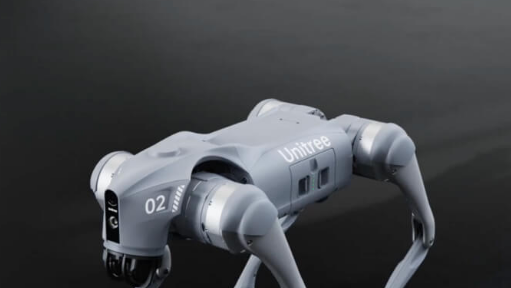
    Unitree Go2 quadruped robot official product shot
    Unitree Go2 quadruped robot official product shot

    Unitree Technology’s core competitiveness is not any single technology, but full-stack self-development capability:

    • Joint motors: Self-developed high torque-density motors, leading power-to-weight ratio in the industry
    • Reducers: Self-developed planetary reducers, replacing imported Harmonic Drive
    • Controllers: Self-developed motion controllers, supporting whole-body dynamics control
    • Perception systems: Self-developed LiDAR + vision fusion, cost only 1/3 of imported solutions
    • AI models: Self-developed motion control large models, Sim-to-Real migration success rate exceeding 95%

    This vertical integration capability allows Unitree’s product costs to be an order of magnitude lower than Boston Dynamics, while achieving 80%+ of the performance.

    Killer Feature #2: Consumer-Grade Humanoid Robots, Starting at 99,000 Yuan

    G1 humanoid robot priced at 99,000 yuan starting. What does this mean?

    • Boston Dynamics Atlas: ~$2 million (lease only)
    • Tesla Optimus: estimated $20,000 (not yet mass-produced)
    • Figure AI: ~$150,000 (enterprise-grade)
    • Unitree G1: 99,000 yuan (~$14,000)

    Unitree has brought humanoid robot prices to the “individual consumer affordable” range. 2025 G1 shipments exceeding 5,500 units prove real market demand exists.

    Killer Feature #3: IPO Raising 4.2 Billion Yuan, Where Is It Going?

    Unitree Technology is raising 4.202 billion yuan, invested in four major projects:

    1. Intelligent robot model R&D (1.5 billion): Embodied intelligence large models, Sim-to-Real platform
    2. Robot body R&D (1.2 billion): Next-generation joints, lightweight materials, energy systems
    3. New intelligent robot product development (800 million): Consumer-grade humanoid robots, service robots
    4. Intelligent robot manufacturing base (700 million): 100,000-unit annual capacity

    This means Unitree’s strategy for the next 3 years is clear: shifting from “selling robots” to “selling intelligence”—hardware is the carrier, AI models are the core moat.

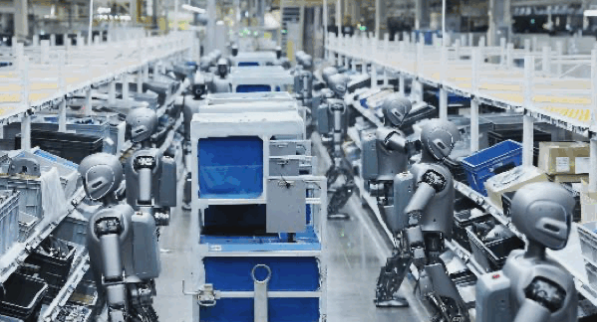
    Unitree robotics factory with production line interior
    Unitree robotics factory with production line interior

    Specs Comparison: Unitree vs Boston Dynamics vs Tesla vs Figure AI

    FeatureUnitree TechnologyBoston DynamicsTeslaFigure AI
    Founded201619922021 (robotics division)2022
    Product FormQuadruped + HumanoidHumanoid (Atlas)Humanoid (Optimus)Humanoid (Figure 01)
    Price99k-390k yuan$2M (lease)Estimated $20K (not mass-produced)$150K
    Shipments5,500 units (2025)Very few0Very few
    CommercializationProfitableLoss-makingNot startedLoss-making
    Core AdvantageCost + Mass productionTechnology leadershipBrand + CapitalStrong fundraising

    Unitree’s differentiation is razor-sharp: **it is the only humanoid robot company simultaneously satisfying “technology usable,” “price affordable,” and “mass production deliverable.”**

    Caveats to Note

    • Profit volatility: Q1 2026 non-GAAP net profit down 52.55% YoY, due to significant increases in R&D and sales expenses
    • Intensifying competition: 2025 humanoid robot revenue share 51.78%, but industry heat gradually cooling, market competition intensifying
    • Technology gap: Compared to Boston Dynamics, dynamic balance and complex terrain adaptation still lag
    • Valuation risk: Post-IPO valuation may be excessive, need to watch whether performance supports stock price
    • Overseas expansion: Currently mainly in China, European and American market expansion faces competition from Boston Dynamics, Tesla, etc.

    Who Should Watch the Unitree IPO?

    Highly Recommended:

    • Robotics industry investors (first pure robotics stock on A-shares)
    • AI/embodied intelligence researchers (Sim-to-Real technology leadership)
    • Manufacturing automation directors (99,000-yuan humanoid robot ROI calculable)
    • Education/research institutions (open-source ecosystem, developer-friendly)

    Consider Waiting:

    • Short-term speculators (post-IPO stock price volatility high)
    • Pure software investors (hardware manufacturing risk higher than software)
    • Overseas users (waiting for overseas sales channels to establish)
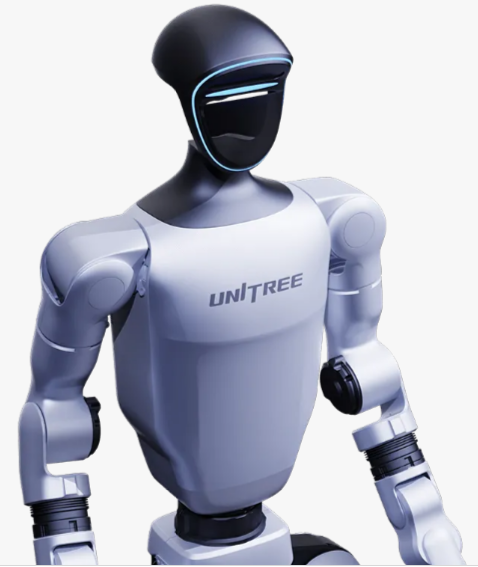
    Unitree G1 humanoid robot official promotional poster
    Unitree G1 humanoid robot official promotional poster

    Future Outlook: From “China’s First Robotics Stock” to “Global Robotics Platform”

    The significance of Unitree Technology’s IPO lies not only in raising 4.2 billion yuan, but in validating a business model:

    Consumer-grade humanoid robots can be profitable, mass-produced, and listed.

    This will bring to the entire industry:

    1. Capital confidence: Proving the robotics track is not a “money-burning bottomless pit”
    2. Supply chain maturity: Scale production driving upstream motor, reducer, sensor cost reductions
    3. Talent aggregation: Listed company brand attracting global robotics talent
    4. Ecosystem expansion: From industrial to home, from B2B to B2C

    If Unitree can build the planned 100,000-unit annual manufacturing base as scheduled, and further drive G1 prices below 50,000 yuan, humanoid robots may enter the “home service” scenario within 3-5 years—cleaning, cooking, companionship, care.

    This is not science fiction. This is what Unitree is doing.


    Rating: 9/10 (Industry Milestone)

    Bottom Line: Unitree’s IPO proves consumer humanoid robots can be a real business, not just a research project. For the global robotics industry, this is the moment when “possible” becomes “profitable.”

  • MSI LuckyClaw: The “App Store Moment” for AI Agents at COMPUTEX 2026

    MSI LuckyClaw: The “App Store Moment” for AI Agents at COMPUTEX 2026

    Introduction: The “AI Agent Year” at COMPUTEX 2026

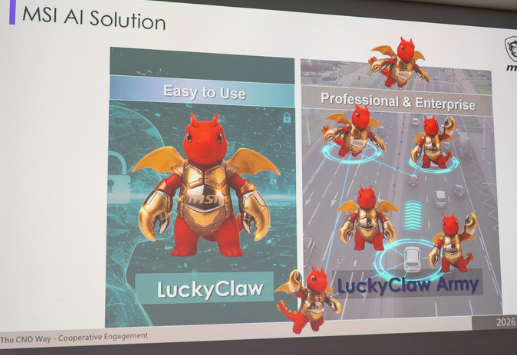
    MSI LuckyClaw AI agent presentation demo screen
    MSI LuckyClaw AI agent presentation demo screen

    On June 2, 2026, at the Taipei Nangang Exhibition Center. COMPUTEX 2026 officially opened. This year’s theme is not graphics cards, not motherboards—but AI Agents.

    MSI showcased LuckyClaw, a platform designed specifically for Windows-side AI Agent deployment. At the same time, MSI is among the first manufacturers to display NVIDIA RTX Spark laptops and desktops.

    Product Overview: What Is LuckyClaw?

    LuckyClaw’s core positioning: let Windows users deploy AI Agents as easily as installing apps.

    Feature highlights:

    • LLM Calculator: Built-in large language model computing tool, supporting local inference
    • Cloud/Edge Hybrid: Cloud + local hybrid architecture, automatically allocating compute based on task complexity
    • NVIDIA hardware acceleration: Supports RTX Spark, RTX 40/50 series GPU acceleration
    • Windows native: Deeply integrated with Windows system, not a virtual machine solution

    MSI simultaneously showcased hardware:

    • RTX Spark laptops: 14mm thickness, Blackwell GPU + 20-core ARM CPU
    • RTX Spark desktops: Flagship configurations, 128GB unified memory
    • AI workstations: Dual RTX 5090, designed specifically for AI training
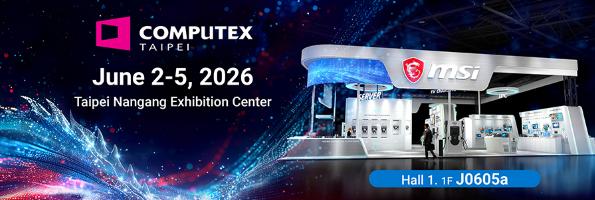
    MSI COMPUTEX 2026 booth at Nangang hall
    MSI COMPUTEX 2026 booth at Nangang hall

    Killer Feature #1: The “App Store Moment” for AI Agents

    The core problem LuckyClaw attempts to solve: AI Agent deployment is too complex.

    Currently deploying a local AI Agent requires:

    • Installing Python environment
    • Configuring CUDA and GPU drivers
    • Downloading model weights (tens of GB)
    • Writing launch scripts
    • Debugging compatibility issues

    LuckyClaw’s solution: one-click deployment. Users select needed Agent functions (document analysis, code generation, image processing), and the platform automatically downloads models, configures environments, and optimizes parameters.

    This is similar to how the early App Store made mobile app installation simple—LuckyClaw wants to make AI Agent installation equally simple.

    Killer Feature #2: Cloud/Edge Hybrid, Intelligent Compute Allocation

    LuckyClaw’s Cloud/Edge Hybrid architecture:

    • Simple tasks: Local execution (document summaries, email replies, code completion)
    • Complex tasks: Cloud handoff (video generation, large model training, multimodal analysis)
    • Auto-switching: Intelligent decision-making based on task type, local compute, and network conditions

    This means:

    • Thin-and-light laptop users can also run AI Agents, with complex tasks automatically going to cloud
    • Desktop users with sufficient local compute complete all tasks locally
    • No manual configuration needed, platform auto-optimizes

    Killer Feature #3: MSI Hardware Ecosystem Closed Loop

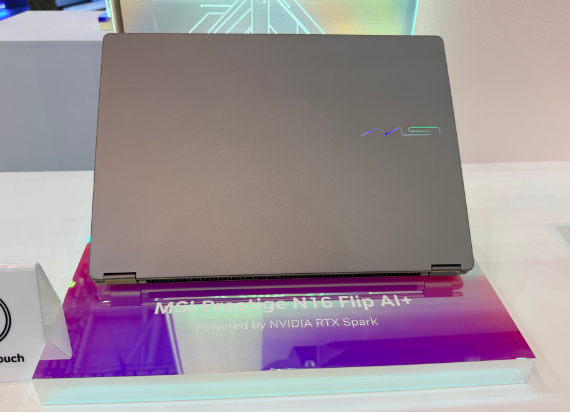
    MSI Prestige N16 Flip RTX Spark laptop
    MSI Prestige N16 Flip RTX Spark laptop

    MSI does not just make software. LuckyClaw is deeply bound to MSI hardware:

    • Laptops: Stealth, Raider, Vector series with RTX Spark
    • Desktops: Infinite, Codex, Trident series supporting dual GPUs
    • Monitors: AI-assisted color calibration, auto-adapting to content type
    • Peripherals: Keyboard shortcuts for one-key AI Agent wake-up

    This hardware-software integration is MSI’s core advantage over pure software Agent platforms.

    Specs Comparison: LuckyClaw vs OpenAI GPTs vs Anthropic Claude Desktop

    FeatureMSI LuckyClawOpenAI GPTsAnthropic Claude Desktop
    DeploymentLocal + Cloud hybridPure cloudLocal + Cloud
    Hardware RequiredNVIDIA GPUNoneNone
    Hardware Acceleration✅ RTX Spark/40/50❌ None❌ None
    Offline Capability✅ Core functions offline❌ Needs network❌ Needs network
    Ecosystem BindingMSI hardware ecosystemOpenAI ecosystemAnthropic ecosystem
    Target UsersWindows gamers/creatorsGeneral usersDevelopers/professionals

    LuckyClaw’s differentiation is razor-sharp: it is the only AI Agent platform deeply bound to NVIDIA hardware, supporting local high-performance inference, and targeting Windows gamers and creators.

    Caveats to Note

    • Feature maturity: First showcased June 2, functional demo stage, official version pending release
    • Ecosystem limitation: Deeply bound to MSI hardware, compatibility with non-MSI devices unverified
    • Model sources: Supported model list not announced, whether mainstream open models (Llama, Qwen, DeepSeek) are included unknown
    • Privacy concerns: Cloud/Edge Hybrid means some data uploads to cloud, enterprise users may hesitate
    • Competitive pressure: OpenAI, Anthropic, and Google’s cloud Agent features are stronger, is LuckyClaw’s local advantage enough to attract users?

    Who Should Watch LuckyClaw?

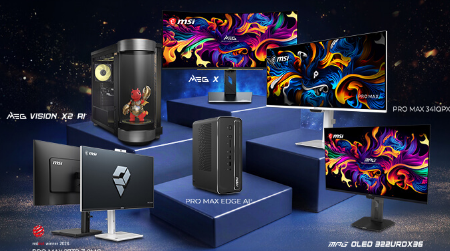
    MSI 40th anniversary product lineup on display
    MSI 40th anniversary product lineup on display

    Highly Recommended:

    • MSI laptop/desktop users (hardware ecosystem加成)
    • NVIDIA graphics card users (RTX 40/50 series can accelerate)
    • Windows gamers (want to use AI assistants while gaming)
    • Content creators (local video/image AI processing)

    Consider Waiting:

    • Mac users (no Windows version planned)
    • Pure cloud users (OpenAI/Anthropic already sufficient)
    • Enterprise users (waiting for security compliance certification)

    Future Outlook: The “Windows Moment” for AI Agents

    LuckyClaw represents an important trend: AI Agents are shifting from “cloud services” to “local applications”.

    If LuckyClaw succeeds:

    1. Lower AI Agent barriers: Let ordinary users deploy without technical background
    2. Activate NVIDIA ecosystem: RTX Spark + LuckyClaw forming hardware + software closed loop
    3. Push Windows on Arm: RTX Spark’s Arm architecture needs Windows native Agent support
    4. Drive new hardware demand: Users willing to upgrade GPUs for better Agent performance

    For MSI, LuckyClaw is not just a software product, but a catalyst for hardware sales—just as NVIDIA’s DLSS drove RTX graphics card sales.


    Rating: 7.6/10 (Promising Concept)

    Bottom Line: LuckyClaw could be the bridge that brings AI Agents from tech enthusiasts to mainstream Windows users. But it needs to ship before the hype fades.