Home

  • Faraday Future’s EAI Educational Robot: Jia Yueting’s Next Bet on Physical AI

    Faraday Future’s EAI Educational Robot: Jia Yueting’s Next Bet on Physical AI

    Introduction: Jia Yueting’s Robotics Education Dream
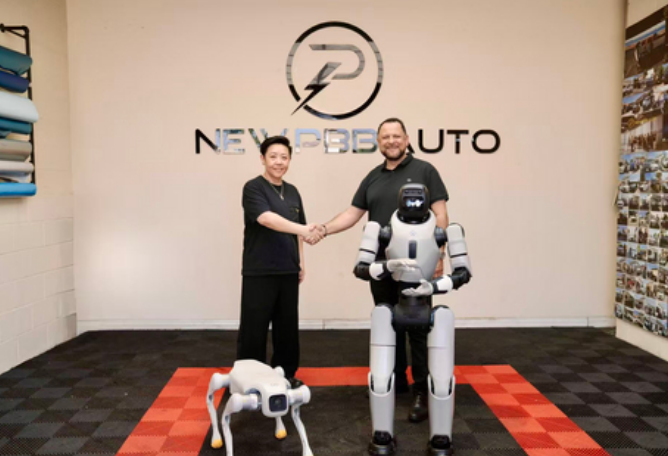
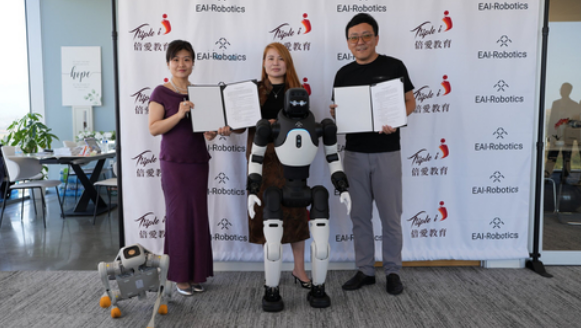
    FF EAI robot lineup humanoid and quadruped
    FF EAI robot lineup humanoid and quadruped

    On May 15, 2026, Faraday Future (FF) buried a teaser in its Q1 earnings report: a “major educational robot product” launching early June.

    This is not FF’s first promise. But the context is different—FF has rebranded as a “physical AI company,” with EAI robotics becoming its new revenue engine in the first delivery quarter. Q1 revenue reached $512,000, up 62% YoY, with software skill packages contributing 26%.

    More critically, FF’s SEC investigation has concluded with no penalties. Founder Jia Yueting has returned as global CEO, with the founding team fully back in control.

    Product Overview: Robotics Ambition in Education
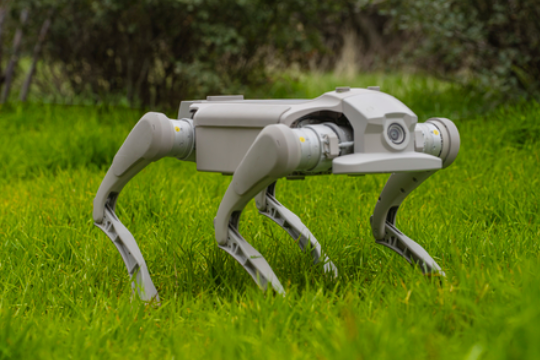
    FF FX Aegis quadruped robot grass field outdoor
    FF FX Aegis quadruped robot grass field

    FF defines 2026 as the “inaugural year of EAI robotics education.” The June education product targets building America’s first scalable EAI robotics education system.

    Known details so far:

    • Positioning: K-12 education scenarios, ages 6-18
    • Platform: FF EAI Brain & Open Developer Platform, featuring six developer tools (Brain Blocks, Create Studio, EAI Soul, EAI Scribe, EAI Studio, SDK/API)
    • Technology: Sim-to-Real digital twin training, data closed-loop engine, Agent Skills development support
    • Ecosystem: Three-tier developer system (Young Futurist/EAI Futurist/EAI Builder), four-tier progression path

    Killer Feature #1: From “Building Cars” to “Building People”

    FF’s transformation logic is clear:

    • Futurist: Full-size professional humanoid robot, already demonstrated nine end-to-end Agent Skills (home assistant, commercial security, pet companion, hospitality)
    • FX Aegis: Quadruped robot, completed all US compliance certifications, ready for formal delivery
    • Education product: Launching early June, form factor unknown (possibly small desktop robot or biomimetic pet)

    FF believes education is the largest addressable market for consumer robots in phase one. This aligns with Unitree and Zhiyuan Robotics’ strategy—education before home.

    Killer Feature #2: Open Ecosystem, Lowering Development Barriers

    The FF EAI Brain platform’s core philosophy: “make robot development as accessible as software development.”

    Platform offerings:

    • Unified developer portal: Accessible from K-12 students to professional engineers
    • Sim-to-Real evolution field: Virtual environment training before physical deployment
    • Data closed-loop engine: Real-world deployment data converted to high-quality training data
    • Agile development toolchain: Rapid Agent Skills iteration

    This open strategy contrasts with Tesla’s closed ecosystem. FF hopes to build a developer community through education, then expand to consumer markets.

    Caveats to Note

    • Delivery track record: FF’s automotive delivery history is poor; robot on-time delivery remains uncertain
    • Funding pressure: $45M financing only covers “first phase ramp-up delivery”; long-term funding still needed
    • Market competition: Wonder Workshop, Sphero already occupy the education robotics market; FF faces brand recognition challenges as a new entrant
    • Unknown product form: Launching early June, but no product images or technical specs have leaked

    Who Should Watch?

    Highly Recommended:

    • US K-12 school STEM education directors
    • Robotics education training institutions
    • Developers interested in embodied AI
    • Investors tracking Jia Yueting/FF transformation

    Consider Waiting:

    • Home consumers (waiting for consumer-grade product maturity)
    • Budget-sensitive schools (waiting for price announcement)

    Future Outlook: The “iPad Moment” for Educational Robots
    FF EAI Brain developer platform interface screen
    FF EAI Brain developer platform interface screen

    If FF’s educational robot is priced reasonably ($500-$1,000 range) and the Agent Skills ecosystem enriches quickly, it could become the education robotics field’s “iPad”—not the first, but defining the category standard.

    FF’s advantages:

    • Sim-to-Real technology: Lowering physical training costs and risks
    • Open ecosystem: Attracting developers rather than building closed loops
    • US domestic compliance: Multiple certifications passed, avoiding overseas market risks

    Rating: 7.8/10 (High Risk, High Potential)

    Bottom Line: FF’s most credible pivot yet, but credibility depends entirely on June delivery. For the education robotics market, this could be a disruptor—or another missed deadline.
  • iFLYTEK AI Smart Glasses: When China’s Voice AI Leader Makes Eyewear

    iFLYTEK AI Smart Glasses: When China’s Voice AI Leader Makes Eyewear

    Introduction: When China’s Voice AI Leader Makes Glasses

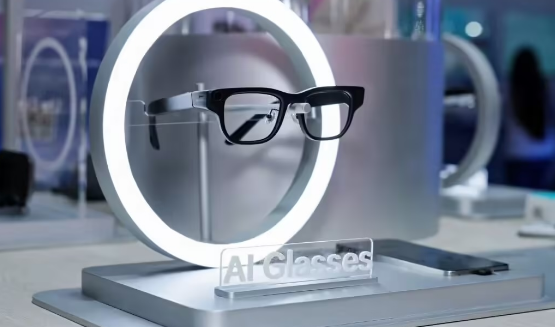
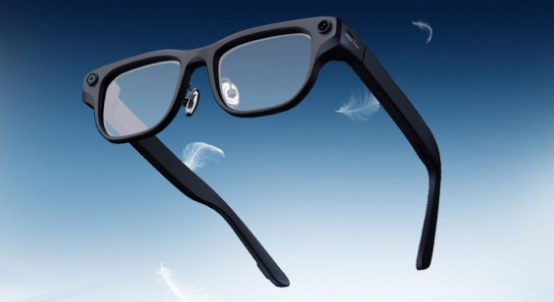
    iFLYTEK AI glasses product render front view
    NVIDIA COMPUTEX venue Taipei Music Center entrance

    On May 28, 2026, iFLYTEK launched an AI glasses product. No keynote, no press conference—just a product video and a spec sheet.

    But this may be the most important AI glasses product in the Chinese market—not because of the most radical technology, but because it understands Chinese users best.

    Product Overview: Voice-First, Office-Oriented

    iFLYTEK AI glasses’ core logic is completely different from Meta Ray-Ban:

    • Meta Ray-Ban: Photo + social + music, targeting young consumers
    • iFLYTEK: Voice + translation + meetings, targeting working professionals

    Hardware specs:

    • Weight: 6.5g per ear, ~35g total (with frame)
    • Audio: Open-ear audio, directional sound transmission, environmental awareness
    • Battery: ~6 hours continuous use, charging case provides 3 additional full charges
    • Lenses: Supports prescription custom lenses for myopia/hyperopia/astigmatism/presbyopia, medical-grade optical center fitting
    • AI: Spark large language model, wake word “Xiao Fei Xiao Fei”

    Killer Feature #1: Spark LLM, Voice Interaction at Its Peak

    iFLYTEK’s 24 years of voice technology accumulation make this glasses’ voice interaction potentially the best among all AI glasses:

    • Wake-up: “Xiao Fei Xiao Fei”, response speed <500ms
    • Translation: Real-time translation for 60+ languages including Chinese, English, Japanese, Korean, German, French, Spanish, Russian
    • Meetings: Auto-recording meeting content, generating structured minutes (to-do/decisions/questions)
    • Q&A: Knowledge Q&A based on Spark LLM, covering professional domains

    More critical is offline capability: Core voice recognition and simple translation support offline operation, no phone connectivity required. For frequent travelers and poor-signal scenarios, this is essential.

    Killer Feature #2: Medical-Grade Optical Customization

    This is iFLYTEK glasses’ most underrated feature. It supports:

    • Myopia (0-1000 degrees)
    • Hyperopia (0-600 degrees)
    • Astigmatism (0-200 degrees)
    • Presbyopia (+100-+400 degrees)

    Through medical-grade optical center custom lenses, ensuring precise pupil distance, pupil height, and vertex distance matching. This is not “buy glasses get AI free,” but “the AI glasses themselves are good glasses.”

    Killer Feature #3: 1,499 Yuan, Price Slasher

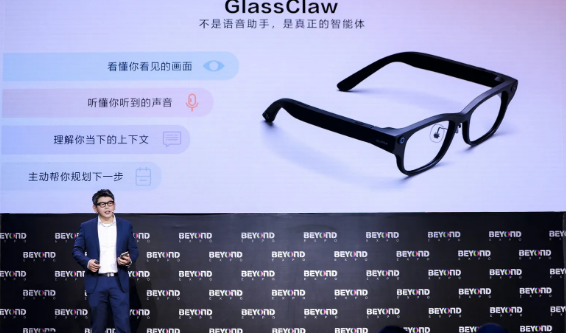
    iFLYTEK GlassClaw AI agent presentation stage
    iFLYTEK GlassClaw AI agent on presentation stage

    Pricing strategy:

    • Standard version: 1,499 yuan (with basic lenses)
    • Custom version: 1,999 yuan (with medical-grade optical custom lenses)
    • Pre-sale: Starts June 15

    Comparison:

    • Meta Ray-Ban: $299-$379 (~¥2,100-2,700)
    • Huawei Smart Glasses: ¥1,699-2,499
    • Xiaomi AI Glasses: ¥1,299 (fewer features)

    iFLYTEK’s price is not the lowest, but the feature focus is highest—every yuan spent buys office productivity, not photo/social function premiums.

    Specs Comparison: iFLYTEK vs Meta Ray-Ban vs Huawei

    FeatureiFLYTEK AI GlassesMeta Ray-BanHuawei Smart Glasses
    Price¥1,499¥2,100-2,700¥1,699-2,499
    Weight6.5g/ear~50g total~45g total
    Camera❌ None✅ 12MP❌ None
    Voice Interaction✅ Spark LLM✅ Meta AI✅ HarmonyOS AI
    Real-time Translation✅ 60+ languages✅ Limited✅ Limited
    Meeting Recording✅ Auto minutes❌ None✅ Simple recording
    Offline Capability✅ Core offline❌ Needs network❌ Needs network
    Optical Custom✅ Medical-grade❌ Basic lenses❌ Basic lenses
    Battery6h + case 3×4-6h4-5h
    Target UserWorking professionalsYoung consumersHuawei ecosystem users

    iFLYTEK’s differentiation is razor-sharp: the only AI glasses pushing “voice office” to the extreme while keeping price under 1,500 yuan.

    Caveats to Note

    • No camera: Cannot take photos/videos, unsuitable for scenarios requiring visual recording (site inspection, travel documentation)
    • Design: Traditional glasses form factor, lacks tech aesthetic; young users may find it “not cool enough”
    • Ecosystem closed: Primarily iFLYTEK ecosystem; integration depth with third-party apps (DingTalk, Lark, Notion) unverified
    • Battery limit: 6 hours may be insufficient for all-day meeting scenarios, requiring mid-day charging
    • Pre-sale risk: Pre-sale starts June 15; actual delivery time and quality control unknown
    iFLYTEK AI glasses MWC 2026 exhibition display
    iFLYTEK AI glasses MWC 2026 exhibition display

    Who Should Buy?

    Highly Recommended:

    • Business professionals attending frequent international meetings (real-time translation essential)
    • Product managers/consultants needing extensive meeting documentation
    • Working professionals requiring vision correction (medical-grade optical customization)
    • Entry-level users wanting to experience AI glasses on a budget

    Consider Alternatives:

    • Visual content creators (no camera is a dealbreaker)
    • Young users pursuing tech aesthetic (design is conservative)
    • Heavy photo/social users (Meta Ray-Ban more suitable)

    Future Outlook: The “Office Entry” for AI Glasses

    iFLYTEK AI glasses represent an overlooked direction: AI glasses are not phone replacements, but enhancement tools for specific scenarios.

    In office scenarios, its value is:

    • Check information, translate, record without pulling out your phone
    • Listen to meetings, take calls without wearing headphones
    • Generate meeting minutes without carrying a laptop

    If iFLYTEK can iterate quickly (adding camera, extending battery, deepening third-party integration), it could become the “office entry” for AI glasses in the Chinese market—just as iFLYTEK Input Method became the “voice entry” years ago.


    Rating: 8.5/10 (Value Pick)

    Bottom Line: The best voice-focused AI glasses for office scenarios at this price point. For Chinese working professionals, this is the most practical AI wearable of 2026.

  • NVIDIA N1/N1X: The “Third Pole” of PC Industry Arrives

    NVIDIA N1/N1X: The “Third Pole” of PC Industry Arrives

    Introduction: The Third Pole of PC Industry Is Coming

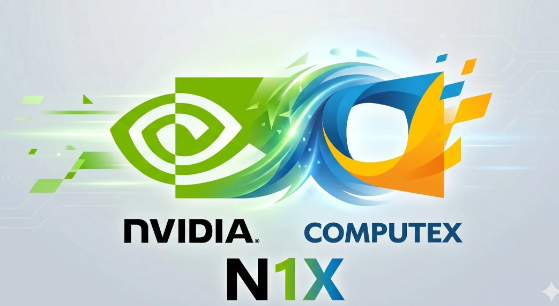
    NVIDIA N1X chip MediaTek collaboration render
    NVIDIA N1X chip with MediaTek joint venture

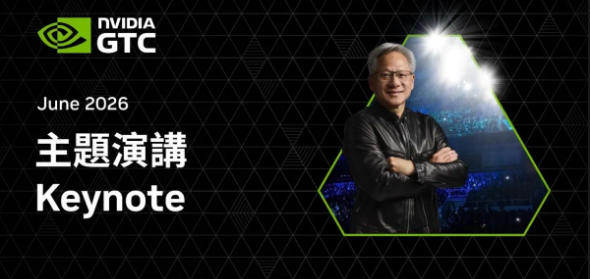
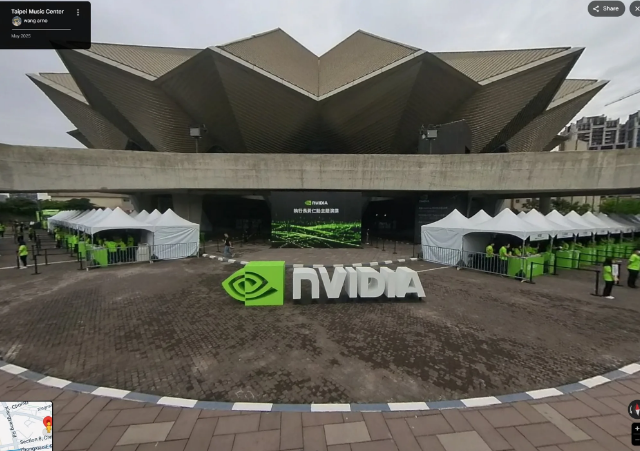
    On June 1, 2026, at the Taipei Music Center, NVIDIA CEO Jensen Huang will deliver the COMPUTEX keynote. The topic is not graphics cards, not data centers—but NVIDIA’s first Arm PC processor: N1/N1X.

    This is not NVIDIA’s first CPU attempt. Project Denver failed in 2011. Grace server chips succeeded in 2021. The 2026 N1 marks NVIDIA’s third assault on the consumer CPU market—this time with MediaTek building the CPU, Microsoft handling the OS, and Lenovo/Dell/ASUS manufacturing the devices.

    Product Overview: A 3nm+Blackwell Heterogeneous Monster

    The N1 series is a NVIDIA-MediaTek co-development using TSMC 3nm process:

    N1X (Flagship):

    • CPU: 10 Cortex-X925 + 10 Cortex-A725 (20 cores)
    • GPU: 48SM (6,144 CUDA), Blackwell architecture
    • Memory: 256-bit LPDDR5X, up to 128GB
    • AI Compute: ~1 PFLOPS at FP4 precision
    • TDP: 45-80W
    • Positioning: Premium thin-and-light/workstation, discrete-GPU-free RTX 5070-class gaming

    N1 (Mainstream):

    • CPU: 8+4 cores (high-end) / 7+3 cores (low-end)
    • GPU: 20SM (2,560 CUDA) / 16SM
    • Memory: 128-bit LPDDR5X
    • TDP: 18-45W
    • Positioning: Mainstream AI-accelerated notebooks

    Killer Feature #1: 1 PFLOPS Local AI Compute

    Jensen Huang COMPUTEX 2026 keynote stage presentation
    Jensen Huang at COMPUTEX 2026 keynote stage

    N1X’s most terrifying number is nearly 1 PFLOPS FP4 precision AI compute. What does this mean?

    • Apple M4 Ultra: ~38 TOPS (INT8)
    • Qualcomm Snapdragon X Elite: ~45 TOPS (INT8)
    • Intel Lunar Lake: ~48 TOPS (INT8)
    • NVIDIA N1X: ~1 PFLOPS (FP4) = ~2,000 TOPS

    While FP4 and INT8 are not directly comparable, this order-of-magnitude gap means N1X can locally run 70B-parameter large language models, generate 4K video in real-time, and perform complex 3D rendering—while competitors only handle simple AI acceleration.

    Killer Feature #2: Blackwell GPU, Gaming Laptop Killer?

    N1X’s integrated GPU scales match GeForce RTX 5070 (6,144 CUDA). This means:

    • Thin-and-light laptops without discrete GPUs can achieve mid-range gaming laptop performance
    • Lenovo Legion handheld may use N1X, becoming the “most powerful Windows handheld”
    • Creative professionals can complete 4K video editing, 3D modeling, and AI generation on ultrabooks

    If NVIDIA solves drivers and compatibility, N1X could end the stereotype that “thin laptops cannot game.”

    Killer Feature #3: The “Savior” of Windows on Arm

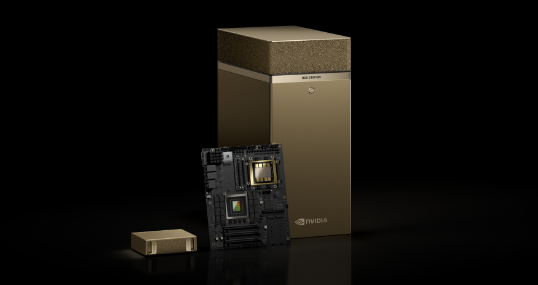
    NVIDIA Blackwell GPU architecture chip closeup
    NVIDIA Blackwell GPU chip with architecture detail

    The Windows on Arm ecosystem has been lukewarm. Qualcomm’s Snapdragon X Elite spent two years with limited market share. Core issues: poor software compatibility, insufficient performance release.

    NVIDIA’s solution:

    • Hardware level: Use Blackwell GPU’s compatibility advantage (mature CUDA ecosystem) to compensate for Arm CPU’s software shortcomings
    • Software level: Deep Microsoft collaboration, potentially becoming the “officially endorsed” Windows on Arm platform
    • Ecosystem level: Dell, Lenovo, ASUS, and Microsoft Surface already preparing N1/N1X devices

    Specs Comparison: N1X vs Apple M4 vs Qualcomm X Elite vs Intel Lunar Lake

    FeatureNVIDIA N1XApple M4 UltraQualcomm Snapdragon X EliteIntel Lunar Lake
    ProcessTSMC 3nmTSMC 3nmTSMC 4nmTSMC 3nm
    CPU ArchArm (20 cores)Arm (32 cores)Arm (12 cores)x86 (8 cores)
    GPU ArchBlackwellApple SiliconAdrenoXe2
    CUDA Cores6,144Not disclosedNoneNone
    AI Compute~1 PFLOPS (FP4)~38 TOPS~45 TOPS~48 TOPS
    Memory128GB LPDDR5X128GB unified64GB LPDDR5X32GB LPDDR5X
    Power45-80W30-60W23W17-30W
    TargetPremium AI PC/gamingPro creation/devThin officeThin office

    N1X’s differentiation is razor-sharp: it is the only chip putting “gaming-grade GPU” and “AI-grade compute” simultaneously into a thin-and-light laptop.

    Caveats to Note

    • Software compatibility: Arm architecture running Windows x86 apps still requires emulation, with performance overhead and bug risks
    • Release timeline: June 1 debut, but mass production may not arrive until late 2026, long wait
    • Price unknown: Premium positioning means premium pricing, likely $1,500+ starting
    • Thermal challenges: 45-80W TDP in thin laptops creates pressure, sustained performance release unverified
    • MediaTek role: Despite co-development, MediaTek cancelled its COMPUTEX keynote, raising collaboration depth concerns

    Who Should Wait for N1X?

    Highly Recommended to Wait:

    • AI developers (local 70B model inference capability)
    • Gamers (3A gaming on thin laptops)
    • Creative professionals (4K video editing + AI generation)
    • Windows ecosystem users (wanting to switch from Mac but software)

    Consider Alternatives:

    • Budget-sensitive buyers (waiting for price announcement)
    • Pure office users (N1 suffices, no need for N1X)
    • Deep Apple ecosystem users (M4 series already sufficient)

    Future Outlook: The “NVIDIA Moment” for AI PCs

    NVIDIA COMPUTEX场地 台北音乐中心入口
    台北音乐中心NVIDIA COMPUTEX展场

    If N1/N1X succeeds, NVIDIA gains:

    1. CPU market entry ticket: Expanding from GPU dominance to full-stack computing
    2. AI PC definition rights: Redefining “AI PC” standards with 1 PFLOPS compute
    3. Windows on Arm leadership: Replacing Qualcomm as the preferred Arm Windows platform

    For consumers, this means late 2026 may see a wave of “all-capable thin laptops”—thin, long-battery, gaming-capable, AI-capable, creation-capable. This is one of the PC industry’s most significant architectural shifts in a decade.


    Rating: 8.5/10 (Pre-Production Preview)

    Bottom Line: The most technically ambitious Arm PC chip ever designed. Whether it succeeds depends on software compatibility and thermal management—not just raw specs.

  • BYD’s Shenzhen Launch Event: Smart Driving, Handled by BYD

    BYD’s Shenzhen Launch Event: Smart Driving, Handled by BYD

    Introduction: While the World Fights Over Range, BYD Fights Over “Dare to Use”

    On May 28, 2026, BYD held a conference in Shenzhen. The theme was a single word: “Dare.”

    Not dare to build faster cars. Not dare to use bigger batteries—but dare to tell you: “Hand over the steering wheel to our AI. If something goes wrong, we pay for everything.”

    This is unprecedented in the global auto industry. Tesla FSD sells for $9,400; accidents are the owner’s responsibility. Huawei ADS sells for $5,300; separate insurance required. BYD city navigation sells for $1,770—and BYD covers all accident costs, with no impact on your next year’s premiums.

    This is not a price war. This is a trust war.

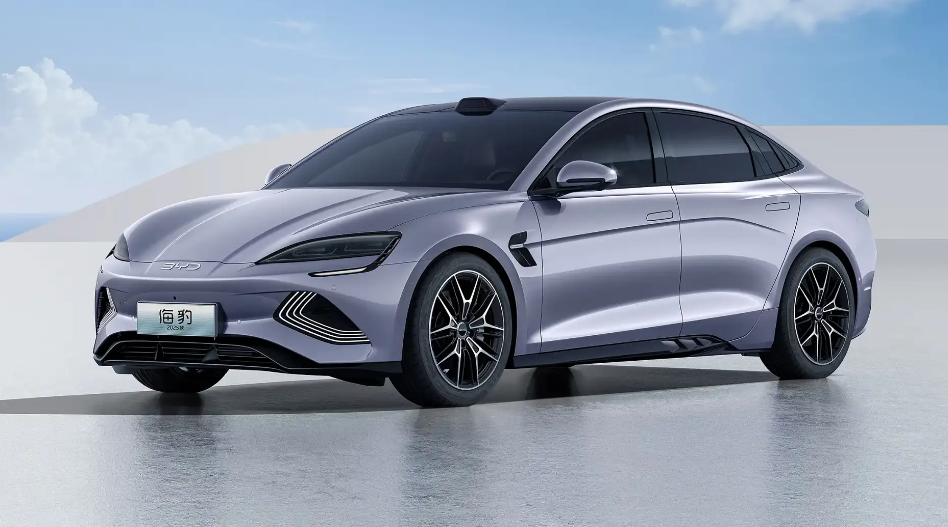
    BYD Seal electric sedan LiDAR roof sensor array
    BYD Seal with autonomous driving sensors equipped

    What Happened: What Did BYD Actually Launch?

    BYD’s event can be summarized as a “triple package”:

    First, 12,000 yuan ($1,770) city navigation with LiDAR, optional across all models. From the $10,000 Seagull to the $150,000+ Yangwang. Industry hardware costs for city navigation typically exceed $3,000; BYD’s pricing is nearly half.

    Second, industry-first “full liability coverage for city navigation accidents.” Under compliant usage, BYD covers all repair costs and third-party damages during city navigation and auto parking, with no payout cap and no impact on owner’s insurance premiums.

    Third, self-developed 4nm automotive-grade chip Xuanji A3. 700 TOPS per chip, 2,100 TOPS with three chips in parallel. China’s first mass-produced 4nm automotive ADAS chip, already in mass production. BYD Chairman Wang Chuanfu stated: “The technical difficulty of a 4nm automotive-grade chip is equivalent to a 2nm consumer-grade chip.”

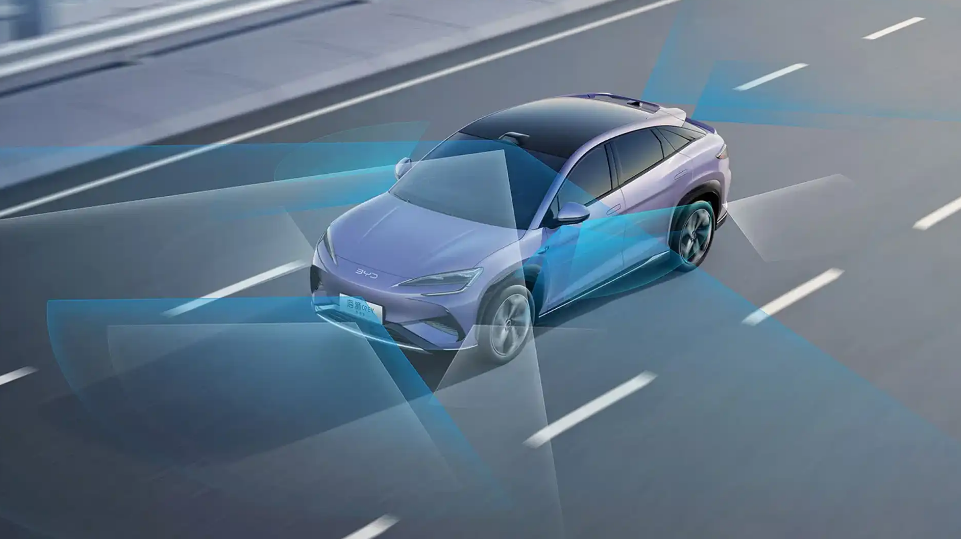
    BYD God Eye 5.0 advanced driver assistance LiDAR field
    BYD God Eye 5.0 LiDAR coverage visualization

    Why Foreign Consumers Should Care

    1. Price Restructuring: ADAS Is No Longer a Luxury

    Tesla FSD: $9,400 in China. Huawei ADS: $5,300. BYD city navigation: $1,770—including LiDAR.

    The impact on global markets is devastating. If BYD exports this system to Europe, Southeast Asia, and Latin America, how do local automakers respond? Hyundai, Kia, and Renault’s ADAS packages typically cost $2,000-$4,000, with far less capability.

    More terrifying: BYD’s low price is not subsidized. It is compressed through vertical integration. Self-developed chips, algorithms, sensors, and vehicles—globally unique.

    2. Trust Restructuring: The Coverage Policy Changes the Game

    The global ADAS industry’s biggest pain point is not technology. It is trust. Level 2 systems require “hands on wheel, eyes on road”—accidents are the owner’s responsibility. This creates a vicious cycle: those who install it dare not use it; those who dare not use it will not buy it.

    BYD’s coverage policy breaks this deadlock directly: “Use it with confidence. If something happens, we pay.” This is not marketing speak. It is a legal liability transfer. For conservative consumers (especially in Western markets), this promise is more persuasive than any technical specification.

    3. Technology Restructuring: Full-Stack Self-Development as Dimensionality Reduction

    BYD’s Xuanji Architecture 2.0 integrates smart cockpit, ADAS, and powertrain control onto one board, reducing information latency to 8 microseconds—15,000× faster than a blink. Raw sensor signals bypass local preprocessing and stream directly to the central brain, doubling compute utilization.

    More terrifying is chip manufacturing. BYD is the world’s only automaker covering all seven chip manufacturing steps (IDM model), with five wafer fabs, 7,000 R&D staff, and 24 years producing 2,000+ chips. While global automakers queue for TSMC capacity, BYD manufactures itself.

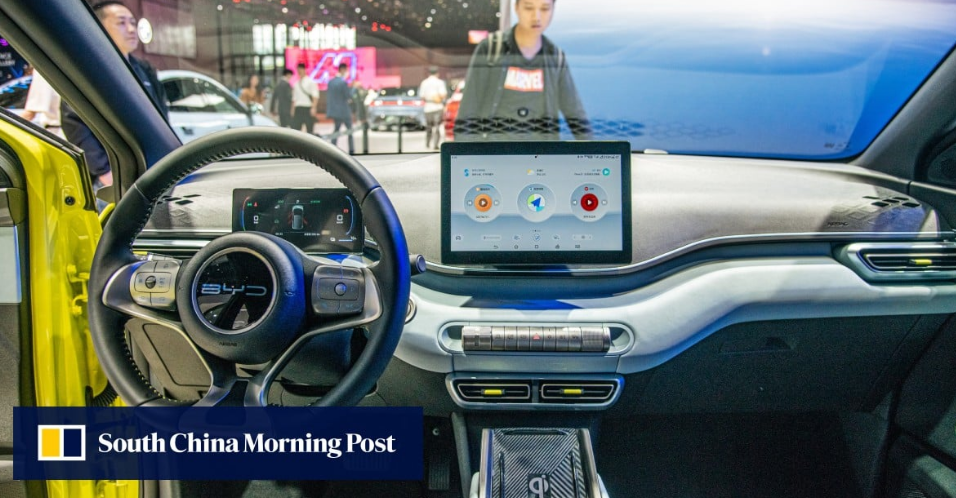
    BYD Seagull entry level EV smart cockpit dashboard
    BYD Seagull entry level smart cockpit view

    Impact on Global Markets

    Europe: BYD’s Hungary plant is ramping up in 2026. If European-market BYDs carry God’s Eye 5.0 at roughly €2,000, Volkswagen and Stellantis’ ADAS packages (typically €3,000+) become uncompetitive. The EU’s 27% tariff? BYD can absorb it through vertical integration.

    Southeast Asia: BYD is already the sales champion in Singapore, Thailand, and Indonesia. These markets are extremely price-sensitive; $1,770 city navigation is practically “free.” Toyota and Honda’s L2 assist is still a premium feature here.

    Latin America: BYD’s Brazil plant is operational, with Mexico planned. Latin America has the world’s highest traffic accident rates. BYD’s “coverage policy” plus low-price ADAS could become a safety necessity for local consumers.

    North America: Tariffs and politics block BYD short-term. But Tesla should be nervous—FSD at $9,400 looks arrogant next to BYD’s $1,770.

    Specs Comparison: BYD vs Tesla vs Huawei

    FeatureBYD God’s Eye 5.0Tesla FSDHuawei ADS 3.0
    Price$1,770 (one-time)$9,400 (China)$5,300 (one-time)
    HardwareIncludes LiDARVision-onlyIncludes LiDAR
    Accident Coverage✅ BYD covers all❌ Owner liable❌ Separate insurance
    ChipSelf-developed 4nm Xuanji A3Self-developed HW4.0 (7nm)External (MDC series)
    Compute2,100 TOPS~500 TOPS400 TOPS
    SubscriptionNoneNone (China)$106/month optional
    Model CoverageAll ($10k-$150k+)All ($30k+)Mid-to-high ($35k+)

    BYD’s competitive advantage is not leading in any single technology, but in full-chain cost control. From chips to algorithms to vehicles, all self-developed and self-produced, pricing at will.

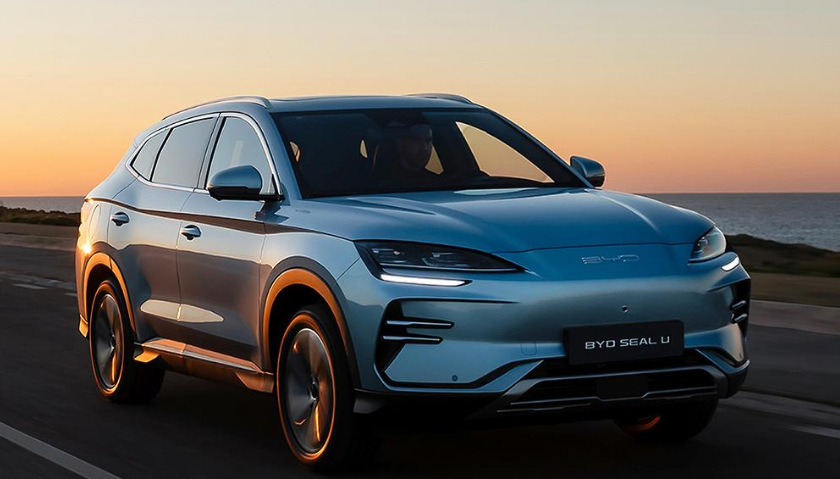
    BYD Seal U electric SUV European specification model
    BYD Seal U SUV for Europe market

    Buying Advice for Overseas Consumers

    If you are in Europe:

    • Wait for European-market BYDs from the Hungary plant (Seal, Atto 3) in late 2026
    • Watch whether God’s Eye 5.0 passes Euro NCAP certification
    • Compare against Volkswagen ID. series and Stellantis ADAS packages—BYD’s value advantage is overwhelming

    If you are in Southeast Asia:

    • BYD Dolphin and Atto 3 are already local bestsellers; adding city navigation makes them unbeatable
    • Singapore’s L4 autonomous buses already use BYD technology, building brand trust
    • Note: Verify whether right-hand-drive ADAS calibration matches left-hand-drive versions

    If you are in Latin America:

    • Brazil plant operational in 2026, local production avoids tariffs
    • Mexico plant planned, North American辐射 capability pending
    • Confirm whether coverage policy applies under local legal frameworks

    If you are in the US:

    • Short-term BYD purchase impossible, but use BYD pricing as negotiation leverage against Tesla
    • Monitor whether FSD prices adjust due to BYD pressure

    Risks to Note

    • Technology maturity: God’s Eye 5.0 city navigation penetration is under 2%, with only 30% usage among installed users. BYD’s data comes from 3.15 million vehicles generating 200 million km/day, but generalization to complex urban scenarios remains unverified.
    • Legal compliance: The “coverage policy” works in China, but may face product liability litigation risks in Europe and America. BYD needs customized legal frameworks for each market.
    • Brand perception: Western consumers still have trust barriers toward “Chinese brand + autonomous driving.” BYD must break bias through NCAP scores and actual accident rates.
    • Geopolitics: EU 27% tariffs, potential US 100% tariffs, could erode BYD’s price advantage.

    Conclusion: This Is Not a Car Company Building Cars. This Is a Tech Company That Happens to Build Cars.

    The real significance of BYD’s event lies not in what products were launched, but in what capabilities were demonstrated:

    • 24 years of semiconductor accumulation: From 2002 IC design department to 2026 4nm automotive chip
    • Full-chain vertical integration: Batteries, motors, electronics, chips, algorithms, vehicles—all self-developed and self-produced
    • Pricing power: Redefining the ADAS price anchor at $1,770
    • Trust rebuilding: Eliminating consumer fear of ADAS through “coverage policy”

    For global consumers, BYD is doing something neither Tesla nor Huawei has achieved: making ADAS shift from “premium option” to “mass standard,” from “dare not use” to “use with confidence.”

    If you are considering an EV with ADAS this year, BYD belongs on your comparison list—not because it is a Chinese brand, but because it used a 24-year technology tree to prove that “good technology should not be expensive.”


    Bottom Line: BYD is not just selling cheap ADAS. It is redefining the global automotive industry’s cost structure, trust model, and technology stack. For consumers outside China, the question is not whether BYD will arrive, but when.