Introduction: While the World Fights Over Range, BYD Fights Over “Dare to Use”
On May 28, 2026, BYD held a conference in Shenzhen. The theme was a single word: “Dare.”
Not dare to build faster cars. Not dare to use bigger batteries—but dare to tell you: “Hand over the steering wheel to our AI. If something goes wrong, we pay for everything.”
This is unprecedented in the global auto industry. Tesla FSD sells for $9,400; accidents are the owner’s responsibility. Huawei ADS sells for $5,300; separate insurance required. BYD city navigation sells for $1,770—and BYD covers all accident costs, with no impact on your next year’s premiums.
This is not a price war. This is a trust war.
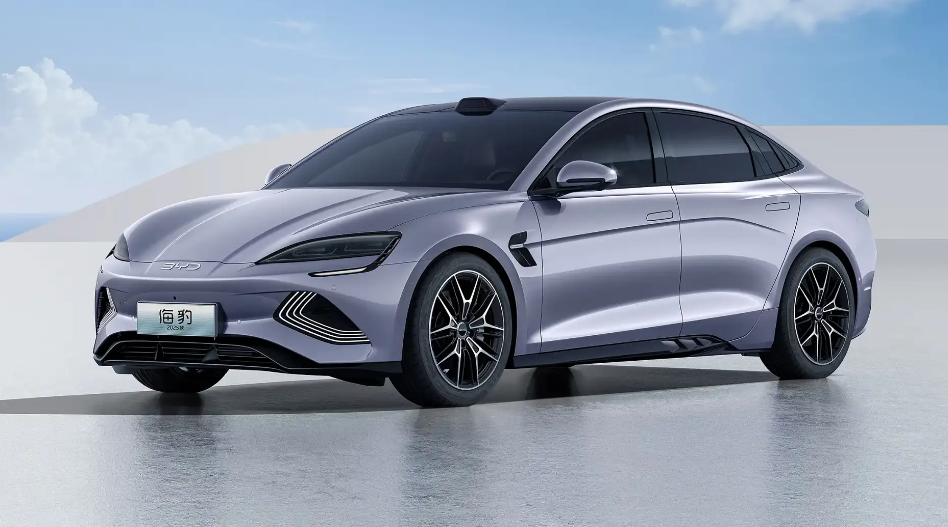
What Happened: What Did BYD Actually Launch?
BYD’s event can be summarized as a “triple package”:
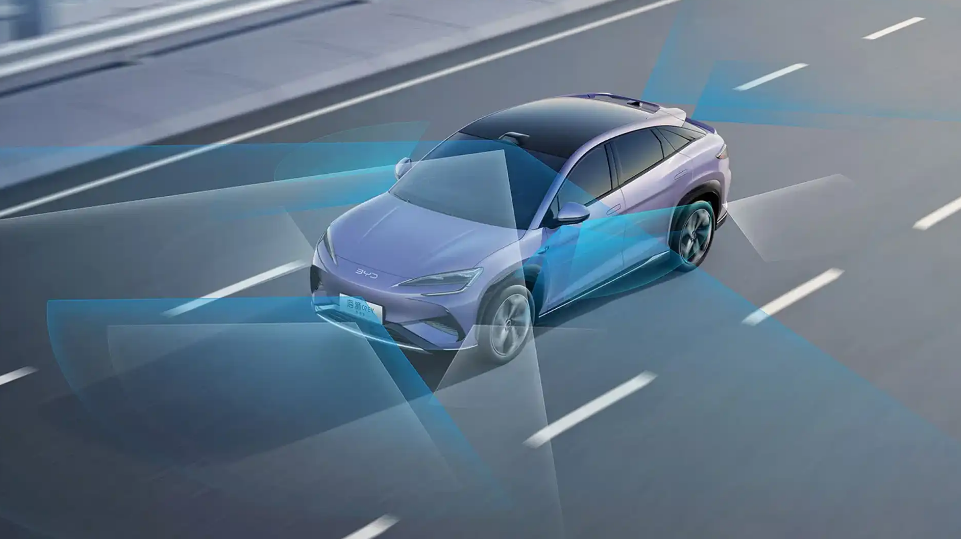
First, 12,000 yuan ($1,770) city navigation with LiDAR, optional across all models. From the $10,000 Seagull to the $150,000+ Yangwang. Industry hardware costs for city navigation typically exceed $3,000; BYD’s pricing is nearly half.
Second, industry-first “full liability coverage for city navigation accidents.” Under compliant usage, BYD covers all repair costs and third-party damages during city navigation and auto parking, with no payout cap and no impact on owner’s insurance premiums.
Third, self-developed 4nm automotive-grade chip Xuanji A3. 700 TOPS per chip, 2,100 TOPS with three chips in parallel. China’s first mass-produced 4nm automotive ADAS chip, already in mass production. BYD Chairman Wang Chuanfu stated: “The technical difficulty of a 4nm automotive-grade chip is equivalent to a 2nm consumer-grade chip.”
Why Foreign Consumers Should Care
1. Price Restructuring: ADAS Is No Longer a Luxury
Tesla FSD: $9,400 in China. Huawei ADS: $5,300. BYD city navigation: $1,770—including LiDAR.
The impact on global markets is devastating. If BYD exports this system to Europe, Southeast Asia, and Latin America, how do local automakers respond? Hyundai, Kia, and Renault’s ADAS packages typically cost $2,000-$4,000, with far less capability.
More terrifying: BYD’s low price is not subsidized. It is compressed through vertical integration. Self-developed chips, algorithms, sensors, and vehicles—globally unique.
2. Trust Restructuring: The Coverage Policy Changes the Game
The global ADAS industry’s biggest pain point is not technology. It is trust. Level 2 systems require “hands on wheel, eyes on road”—accidents are the owner’s responsibility. This creates a vicious cycle: those who install it dare not use it; those who dare not use it will not buy it.
BYD’s coverage policy breaks this deadlock directly: “Use it with confidence. If something happens, we pay.” This is not marketing speak. It is a legal liability transfer. For conservative consumers (especially in Western markets), this promise is more persuasive than any technical specification.
3. Technology Restructuring: Full-Stack Self-Development as Dimensionality Reduction
BYD’s Xuanji Architecture 2.0 integrates smart cockpit, ADAS, and powertrain control onto one board, reducing information latency to 8 microseconds—15,000× faster than a blink. Raw sensor signals bypass local preprocessing and stream directly to the central brain, doubling compute utilization.
More terrifying is chip manufacturing. BYD is the world’s only automaker covering all seven chip manufacturing steps (IDM model), with five wafer fabs, 7,000 R&D staff, and 24 years producing 2,000+ chips. While global automakers queue for TSMC capacity, BYD manufactures itself.
Impact on Global Markets
Europe: BYD’s Hungary plant is ramping up in 2026. If European-market BYDs carry God’s Eye 5.0 at roughly €2,000, Volkswagen and Stellantis’ ADAS packages (typically €3,000+) become uncompetitive. The EU’s 27% tariff? BYD can absorb it through vertical integration.
Southeast Asia: BYD is already the sales champion in Singapore, Thailand, and Indonesia. These markets are extremely price-sensitive; $1,770 city navigation is practically “free.” Toyota and Honda’s L2 assist is still a premium feature here.
Latin America: BYD’s Brazil plant is operational, with Mexico planned. Latin America has the world’s highest traffic accident rates. BYD’s “coverage policy” plus low-price ADAS could become a safety necessity for local consumers.
North America: Tariffs and politics block BYD short-term. But Tesla should be nervous—FSD at $9,400 looks arrogant next to BYD’s $1,770.
Specs Comparison: BYD vs Tesla vs Huawei
| Feature | BYD God’s Eye 5.0 | Tesla FSD | Huawei ADS 3.0 |
|---|---|---|---|
| Price | $1,770 (one-time) | $9,400 (China) | $5,300 (one-time) |
| Hardware | Includes LiDAR | Vision-only | Includes LiDAR |
| Accident Coverage | ✅ BYD covers all | ❌ Owner liable | ❌ Separate insurance |
| Chip | Self-developed 4nm Xuanji A3 | Self-developed HW4.0 (7nm) | External (MDC series) |
| Compute | 2,100 TOPS | ~500 TOPS | 400 TOPS |
| Subscription | None | None (China) | $106/month optional |
| Model Coverage | All ($10k-$150k+) | All ($30k+) | Mid-to-high ($35k+) |
BYD’s competitive advantage is not leading in any single technology, but in full-chain cost control. From chips to algorithms to vehicles, all self-developed and self-produced, pricing at will.
Buying Advice for Overseas Consumers
If you are in Europe:
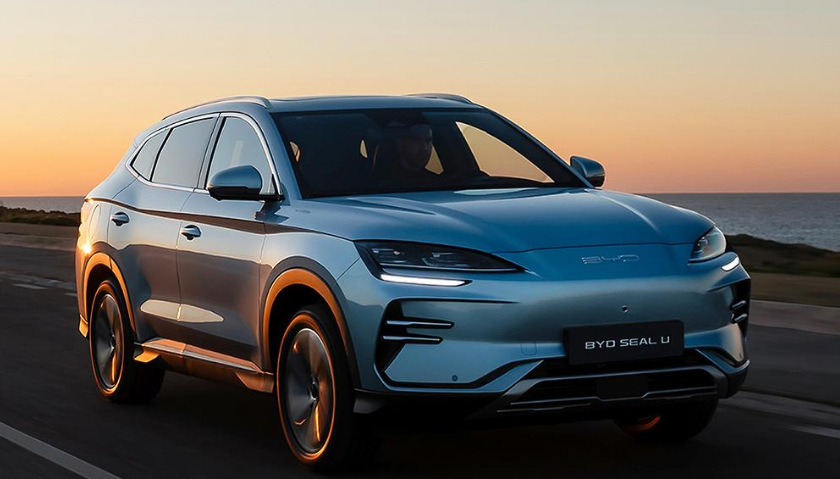
- Wait for European-market BYDs from the Hungary plant (Seal, Atto 3) in late 2026
- Watch whether God’s Eye 5.0 passes Euro NCAP certification
- Compare against Volkswagen ID. series and Stellantis ADAS packages—BYD’s value advantage is overwhelming
If you are in Southeast Asia:
- BYD Dolphin and Atto 3 are already local bestsellers; adding city navigation makes them unbeatable
- Singapore’s L4 autonomous buses already use BYD technology, building brand trust
- Note: Verify whether right-hand-drive ADAS calibration matches left-hand-drive versions
If you are in Latin America:
- Brazil plant operational in 2026, local production avoids tariffs
- Mexico plant planned, North American辐射 capability pending
- Confirm whether coverage policy applies under local legal frameworks
If you are in the US:
- Short-term BYD purchase impossible, but use BYD pricing as negotiation leverage against Tesla
- Monitor whether FSD prices adjust due to BYD pressure
Risks to Note
- Technology maturity: God’s Eye 5.0 city navigation penetration is under 2%, with only 30% usage among installed users. BYD’s data comes from 3.15 million vehicles generating 200 million km/day, but generalization to complex urban scenarios remains unverified.
- Legal compliance: The “coverage policy” works in China, but may face product liability litigation risks in Europe and America. BYD needs customized legal frameworks for each market.
- Brand perception: Western consumers still have trust barriers toward “Chinese brand + autonomous driving.” BYD must break bias through NCAP scores and actual accident rates.
- Geopolitics: EU 27% tariffs, potential US 100% tariffs, could erode BYD’s price advantage.
Conclusion: This Is Not a Car Company Building Cars. This Is a Tech Company That Happens to Build Cars.
The real significance of BYD’s event lies not in what products were launched, but in what capabilities were demonstrated:
- 24 years of semiconductor accumulation: From 2002 IC design department to 2026 4nm automotive chip
- Full-chain vertical integration: Batteries, motors, electronics, chips, algorithms, vehicles—all self-developed and self-produced
- Pricing power: Redefining the ADAS price anchor at $1,770
- Trust rebuilding: Eliminating consumer fear of ADAS through “coverage policy”
For global consumers, BYD is doing something neither Tesla nor Huawei has achieved: making ADAS shift from “premium option” to “mass standard,” from “dare not use” to “use with confidence.”
If you are considering an EV with ADAS this year, BYD belongs on your comparison list—not because it is a Chinese brand, but because it used a 24-year technology tree to prove that “good technology should not be expensive.”
Bottom Line: BYD is not just selling cheap ADAS. It is redefining the global automotive industry’s cost structure, trust model, and technology stack. For consumers outside China, the question is not whether BYD will arrive, but when.
Leave a Reply