Moonix Beta Titanium Model (Actual Product)
I. Introduction: Breaking the Industry Cycle – Creating AI Glasses You Can Wear Every Day
In the past two years, the AI glasses market has been caught in a “component-stacking race”: AR displays, multiple cameras, real-time translation, navigation, and audio-visual playback are all crammed into the temples, resulting in finished products that generally weigh over 40g, are thick and heavy, and press against the nose, making them extremely difficult to wear daily.
Moonix offers a completely differentiated solution: simplification. It abandons universal multi-functionality, focusing on the single core of “personal digital memory,” prioritizing wearing comfort. The brand philosophy is straightforward: “Wearing comfort is 1, functionality is 0; without comfortable wear, no amount of intelligent functions is meaningful.”
This standard version, officially released on July 17th, is the first consumer-grade AI glasses on the market focusing on active, unobtrusive recording. It targets the on-the-go recording needs of business professionals, content creators, and office workers. This test covers a comprehensive experience encompassing appearance, audio recording, AI memory ecosystem, battery life, and advantages/disadvantages.
II. Hardware Appearance: Extremely Lightweight at 14.9g, Indistinguishable from Ordinary Optical Glasses
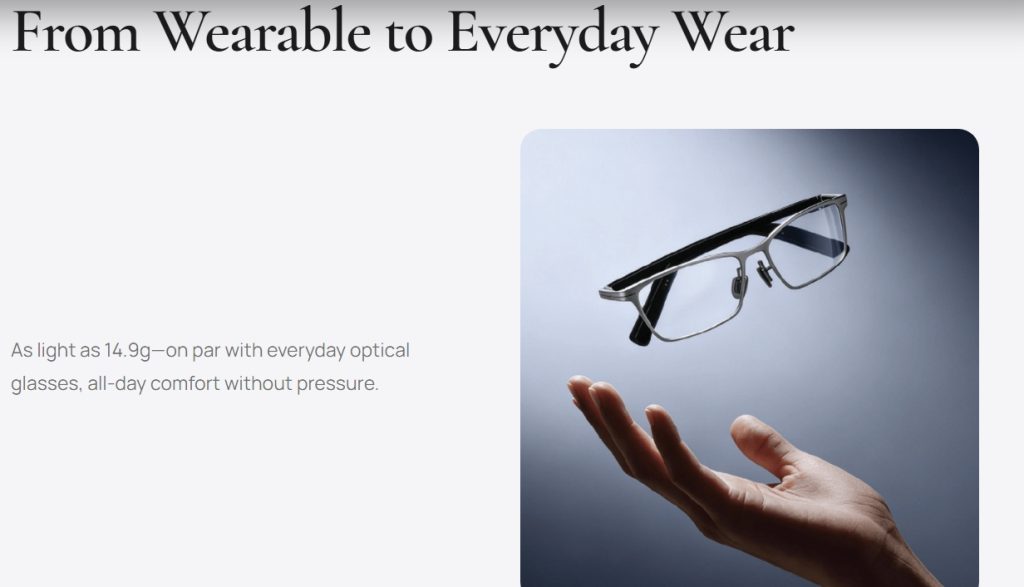
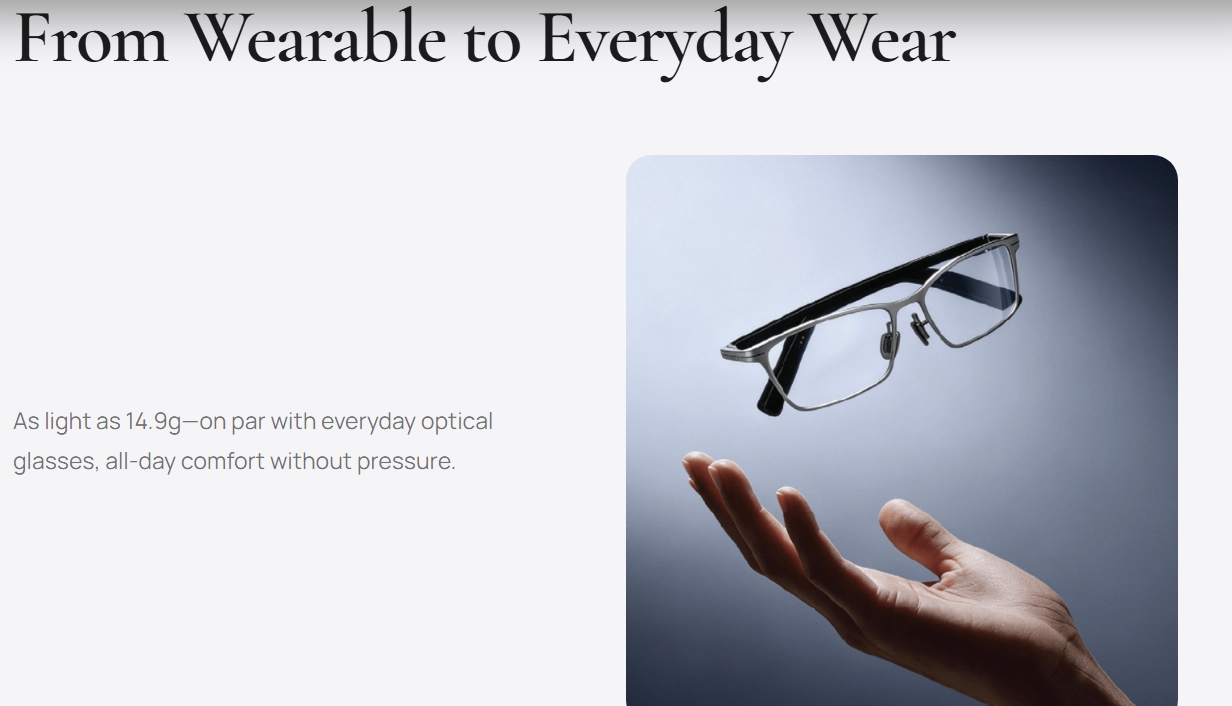
- Weight and Craftsmanship: A Leading Advantage in the Industry
The β-titanium version tested here weighs only 14.9g, with the thinnest part of the temples measuring 4mm. This is half the weight of mainstream smart glasses on the market, which typically weigh over 40g. The three frame options—nano-nylon, acetate, and stainless steel—range from 16-21g, catering to different budgets and style preferences.
Intuitive Feeling: After 8 hours of all-day office wear, there were no pressure marks on the bridge of the nose or soreness behind the ears. Long meetings and commutes do not experience the dragging feeling of traditional smart glasses. My daily-wearing acetate prescription glasses weigh about 17g, and the Monet β Titanium version is even lighter, making it truly “forget you’re wearing a smart device.”
Standard vs. Pro Version Appearance Comparison
- Modular Frames, 39 Styles to Choose From
The frame features a quick-release temple module structure, allowing for individual removal and replacement of the front frame. It comes with 39 different frame styles: business square, retro round, non-prescription, and sunglasses lenses, suitable for round, square, and long faces. Offline, it supports eye exams and prescription glasses at Dr. Glasses stores, allowing nearsighted users to directly obtain their prescription without needing to wear an additional frame and add a smart device.
The appearance is free of exaggerated camera protrusions and bulky temples; from a distance, it looks like a pair of ordinary, affordable luxury optical glasses, perfectly suitable for business meetings and interviews, offering a privacy-friendly experience.
- Core Hardware Configuration (Standard Version)
Six-microphone array noise reduction and pickup, directional voice recording, distinguishing ambient noise from spoken conversation
Built-in stereo open speakers in the temples, enabling offline voice interaction and message playback
Low-power main control, lightweight on-device AI model, supporting local basic voice processing
No camera (Pro version launching in August with a high-definition camera module)
16 hours of overall battery life, sufficient for all-day use from morning commute to evening get off work
III. Core Function Test: Active AI Memory, Redefining On-the-Go Recording
Moonix’s biggest differentiator is its active perception and recording system, distinct from “wake-up AI,” which is also the core highlight of this review.
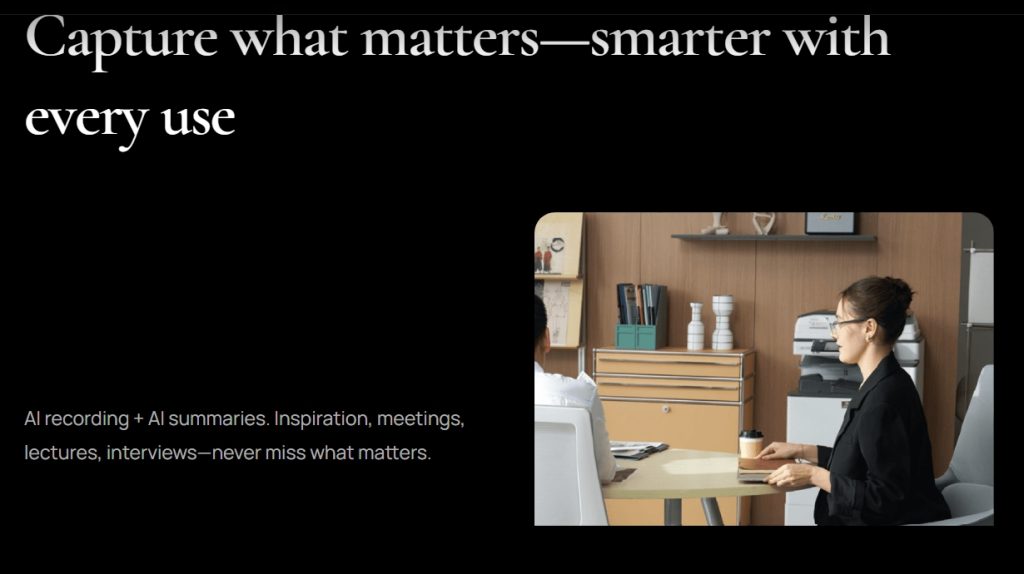
- Seamless Automatic Scene Recognition and Recording: No manual button presses or voice activation are required. A six-microphone array senses the environment in real time, automatically distinguishing between four scenarios: multi-person conversations, one-on-one meetings, one-on-one interviews, and outdoor casual conversations. Lightweight audio recording automatically starts in low-noise environments. For full high-definition recording, long-press the physical button on the temple to switch to continuous recording mode. All recording permissions are 100% user-controlled; audio is not secretly stored in the background.
Test Scenario 1: 2-Hour Project Review Meeting: The glasses automatically recognize multi-person conversations, requiring no manual operation. After the meeting, the app automatically segments speakers, distinguishes between leadership speeches and employee discussions, automatically extracts resolutions, to-do items, and risk points, generating structured meeting minutes. These minutes can be synced to Lark and DingTalk documents with one click, saving over half an hour of manual transcription and organization.
Real-world test scenario 2: Offline customer interviews and creative inspiration capture. In the noisy environment of an outdoor café, the six-microphone directional sound pickup filters out air conditioning and passerby noise, resulting in significantly clearer voices than phone speaker recordings. Spontaneous creative ideas and impromptu customer requests are automatically marked with time points, generating an “Inspiration Fragment” timeline within the app, eliminating the need to take out a phone to type and interrupt the communication flow.
- Personal Digital Memory Bank, AI-Powered Deep Review. After all audio is converted to text, the device builds a personalized database, enabling two key capabilities:
- Time Retrieval: Users can search for any segment of conversation by date, keyword, or person. For example, searching for “third-quarter budget” directly retrieves the complete transcript and original audio playback of the corresponding meeting.
- AI Proactive Analysis and Reminders: With prolonged wear, the model learns your work habits. Detecting consecutive days of overtime, prolonged sitting exceeding 2 hours, and frequent high-intensity meetings, the temple speakers gently remind users to take a break; automatically summarizing daily tasks and broadcasting key points before leaving home in the morning;
One-click content generation: Selecting a section of recorded content allows the app to AI-generate summaries, mind maps, PPT drafts, and short copy, ideal for planners, consultants, and media professionals to quickly produce content.
- Offline voice interaction, no phone required
Supports local offline voice Q&A, allowing users to check today’s records, start/pause recording, and set reminders without a mobile network connection; the open speaker provides a soft voice, ensuring quiet broadcasts during outdoor commutes and office work without disturbing others or causing sound leakage. - Trade-offs: Eliminating redundant functions and focusing on core areas
The manufacturer proactively abandoned popular features such as real-time translation, AR navigation, audio/video playback, and photo/video recording. The official logic is clear: navigation and translation are low-frequency, short-term needs and cannot support all-day wear; while note-taking is a daily necessity for professionals, and long-term use will generate compound interest in personal data, with AI becoming increasingly adept at understanding user context.
The standard version’s pure audio approach also directly reduces hardware costs, with a starting price of 2299 yuan, offering outstanding value compared to other AR smart glasses of the same form factor.
IV. Battery Life and Compatible Ecosystem Testing
- Battery Life Performance
Light Use (commuting voice broadcasts, limited short conversation recording): 16 hours on a full charge for a full workday;
Heavy Use (continuous meeting recording all day): Approximately 12 hours, requiring only evening charging upon returning home;
The charging case features magnetic fast charging, reaching 70% in 30 minutes and fully charging in 1 hour, making it easy to carry for short business trips. - App Compatibility
The Moonix dedicated app is divided into three main sections:
Memory Timeline: Archives all recorded texts by day, supporting tags, categorization, and encrypted storage;
AI Workbench: Generates minutes, creates text, synchronizes to-do lists, and exports data;
Frame and Device Management: Recognizes frame changes, monitors wear, and adjusts microphone noise reduction;
Supports local storage + cloud dual backup. With privacy mode enabled, audio is only stored locally and not uploaded to the cloud, ensuring the security of sensitive office information.
V. Summary of Advantages and Disadvantages Based on Actual Testing
Advantages
Leading Wearing Experience: Its lightweight 14.9g design is a key selling point, allowing for truly all-day daily wear. It’s compatible with prescription glasses and boasts a low-key, non-tech-savvy appearance.
Precise and Efficient AI Recording: Excellent six-microphone noise reduction, automatic transcription by different users, and structured minutes significantly improve work efficiency, making it an essential tool for consultants, media, product managers, and management.
Clear and Concise Functionality: Eliminating unnecessary features, excellent hardware power consumption control, and a 16-hour battery life for all-day use.
Modular and Highly Adaptable: 39 interchangeable frame options, allowing for in-store fitting at optical shops, covering both business and leisure scenarios.
Affordable Price: Starting at 2299 RMB, it offers a lower entry point compared to AR smart glasses priced above 4000 RMB.
Shortcomings: The standard version lacks a camera; users needing video recording and real-world footage will have to wait for the Pro version in August. It doesn’t support real-time translation or navigation, failing to meet the needs of multilingual communication during business trips or outdoor navigation. The open speaker has limited volume, reducing voice recognition in noisy environments like subways. The cloud-based AI deep generation function requires a basic membership; the free version only offers basic transcription.
VI. Suitable Users & Purchase Recommendations
Worth Buying:
Management personnel, consultants, product managers: Frequent meetings requiring automatic meeting minutes organization.
Journalists, content creators, planners: Offline interviews, fragmented inspiration recording.
People with nearsightedness who want a lightweight, everyday smart wearable.
People with forgetfulness who need a tool for long-term personal conversations and to-do list memory.
Not Recommended:
Users seeking AR projection, real-time translation, and photo/video recording capabilities.
People who heavily use outdoor navigation or frequently travel internationally and require instant translation.
Recommended Versions:
- For daily office work, pure audio recording, and prioritizing ultimate portability: Choose the β Titanium Standard Edition (2299 RMB);
- For those who prefer retro acetate frames and have a slightly larger budget: The acetate version (2099 RMB);
- For those needing video recording: Wait for the Pro version (19.9g, equipped with a high-definition camera module) launching in August.
VII. Conclusion: A Pragmatic New Direction in the AI Wearable Market
- Most smart glasses currently pursue “all-around functionality,” ultimately falling into the trap of being bulky, niche, and unsuitable for daily wear. Moonix AI Glasses, however, has carved out a niche with essential needs.
It lacks flashy spatial displays and complex audio-visual entertainment; it focuses solely on maximizing “portable digital memory,” solving the biggest pain point of AI wearables—wearability—with its lightweight 14.9g design. For professionals who need to attend meetings, conduct interviews, and capture inspiration daily, it’s not a fancy digital toy, but a truly integrated and efficient office assistant.
If your core need is to automatically record and organize conversations, and you cannot accept wearing bulky smart glasses all day, then the Moonix AI Glasses, starting at 2299 yuan, are currently the best choice on the market.
Leave a Reply