Home

  • How are Dexterous Hands Reshaping Robots and Entering Our Lives

    How are Dexterous Hands Reshaping Robots and Entering Our Lives

    In the past, it was considered amazing for a robot to be able to run and jump; now, the real skill is to be able to steadily pick up a screw and gently fold a shirt.

    As embodied intelligence moves from “walking” to “working,” the biggest obstacle between ideal and reality is no longer chip computing power, but rather the end effectors that can truly “shake hands” with the physical world. Dexterous hands (and bionic hands) are rapidly transforming from sophisticated teaching tools in laboratories into core engines for industrial application.

    The choice of technological path is returning to pragmatism. Early on, the industry was obsessed with making it “as human-like as possible,” and five-fingered bionics became the standard. But reality quickly offered a better solution:

    Pacini proactively eliminated its little finger, using a four-finger solution to cover 85% of industrial scenarios, reducing hardware costs by 20%; Sunday Robotics’ three-finger design targets 80% of household chores, using fewer joints to achieve higher reliability.

    Pasini 's four-finger design
    Pasini ‘s four-finger design

    This is not a compromise, but a precise trade-off. In terms of underlying transmission technology, the industry has also figured out the characteristics of each: chord drives are like human tendons, flexible but prone to fatigue and loosening; direct drive motors have precise force and zero backlash, but heat generation and size are major drawbacks; linkage structures are sturdy and durable, but sacrifice the flexibility of the joints.

    Today, leading manufacturers are no longer “betting” on a single solution, but rather modularly assembling it to create a system that adapts to scientific research, factory assembly, and light-duty scenarios. Dexterous hands are no longer focused on “looking like a human,” but rather on “doing things beautifully.”

    More noteworthy is that dexterous hands have evolved from “execution components” to “data entry points.” Xiaomi and several startups have simultaneously launched isomorphic “haptic gloves”: when a person wears them to work, data such as fingertip pressure, grasping angle, and sliding friction are synchronized in real time, allowing the robot to directly “copy the work.” This “human-teacher-machine” model significantly bypasses the trial-and-error costs of traditional reinforcement learning, exponentially shortening the algorithm training cycle.

    Sunday Robotics
    Sunday Robotics

    Meanwhile, the industrial chain is experiencing a dual recovery in manufacturing and capital. From Zhaowei Electromechanical’s highly integrated micro motors to Lingxin Qiaoshou achieving a monthly production of thousands of units and covering all technical routes, and Yinshi Robotics’ self-developed micro servo electric cylinders connecting upstream and downstream, the domestic supply chain is pushing down the price of what were once “luxury goods” costing hundreds of thousands of yuan to the thousands or even hundreds of yuan level. When the cost curve and the data flywheel form a positive cycle, the large-scale popularization of dexterous hands is only a matter of time.

    Imagine this morning: before you’re fully awake, a robot in the kitchen has already steadily cracked an egg with three fingers, while its other flexible hand gently pushes warm milk towards you. This isn’t science fiction; it’s the everyday reality that’s about to become a reality after dexterity robots have broken the thousand-yuan mark in cost and crossed the critical reliability barrier.

    For consumers, the true significance of dexterous hands lies not in making robots “look like humans,” but in enabling robots to “truly do work for humans.” In the past, most home robots were limited to sweeping and playing music, essentially “smart speakers with wheels.”

    A pair of dexterous hands capable of precise force control and material perception will completely streamline the final step of housework: it can distinguish the washing intensity of silk from wool, locate medicines deep in drawers without looking, and provide just the right amount of assistance when the elderly get up. Home service will shift from “standardized instructions” to “personalized companionship,” and robots will no longer be cold executors, but rather considerate and understanding life collaborators.

    Of course, the road to widespread adoption is not smooth. First and foremost is safety: the robotic fingers come into direct contact with the human body, requiring a medical-grade margin of error. Secondly, privacy is paramount; frequent physical interactions will record a vast amount of family habits, and the anonymization and attribution of this data urgently need to be standardized. Finally, there’s the psychological barrier: whether users can truly trust a machine that “touches you” still requires time and experience to refine. However, the direction of technological evolution is irreversible. When the dexterous hand moves from the industrial production line to the living room dining table, the human-machine relationship will undergo a quiet but profound transformation.

    We no longer need to adapt to the logic of machines; instead, machines will learn to adapt to human habits. For ordinary families, this might mean dual-income parents can spend an extra hour with their children, elderly people living alone can receive more peace of mind , and weary city dwellers can have more uninterrupted time without being interrupted by trivial matters. After all, the essence of technology has always been to serve humanity.

  • Alibaba’s S1 AI Glasses: Multimodal Interaction Reshapes the Wearable Experience

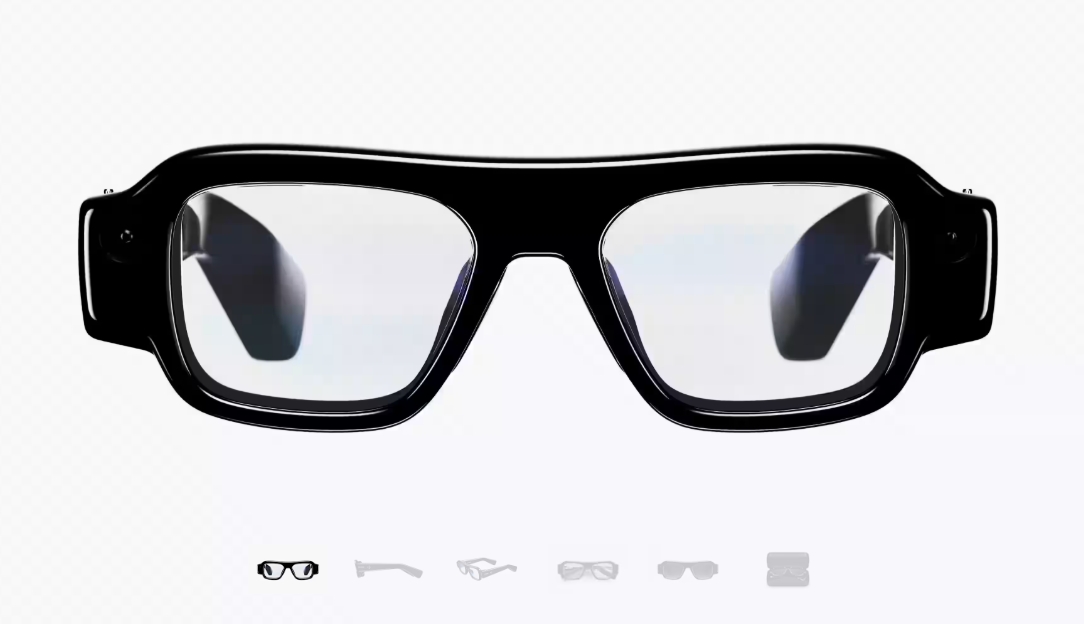
    Alibaba's Qianwen S1 AI Glasses will be available for immediate purchase on April 15th.
    Alibaba’s Qianwen S1 AI Glasses will be available for immediate purchase on April 15th.

    Alibaba’s Qianwen S1 AI Glasses will be available for immediate purchase on April 15th.

    On April 10, 2026, Alibaba’s Qianwen officially released its second AI glasses, the S1.

    As an iterative product of the deep integration of large-scale models and wearable hardware, the S1 not only debuts with the Qualcomm Snapdragon AR1 platform, but also achieves breakthroughs in binocular spatial display, hot-swappable battery replacement, and multimodal interaction logic. Priced at approximately $485 USD , it will be available for immediate purchase on April 15th. Does this pair of glasses have the capability for frequent daily use? We’ll break it down step by step through practical testing.

    Hardware Foundation: The Synergistic Evolution of Snapdragon AR1 and Optical Solutions

    The S1’s computing power comes from the Qualcomm Snapdragon AR1 chip. This SoC, specifically designed for low-power XR scenarios, adopts a heterogeneous computing architecture and can smoothly handle large-scale on-device inference in independent operation. Combined with a dual-lens Micro-OLED display module, the S1 achieves true stereoscopic depth rendering. In actual testing, the occlusion relationship between the virtual UI and the real environment is handled naturally, the motion-to-display latency is consistently within 20ms, and the dizziness is significantly lower than the previous generation. Even more noteworthy is the “front-facing light-leakage technology”: by superimposing a microprism guiding light and a polarizing filter layer, it completely solves the pain point of side light leakage and privacy exposure in traditional AR devices, ensuring clear contrast even in strong outdoor light, balancing practicality and social decorum.

    Interaction and Imaging: Multimodal Fusion and Full-Scene Voice Loop

    The essence of AI glasses lies in seamless interaction. The S1 abandons single touch control, shifting to a multimodal architecture of “voice wake-up + visual understanding + micro-gestures.” A 5-microphone circular array, combined with AI noise reduction algorithms, can accurately separate human voices even during subway commutes or in open-plan office spaces; dual voice coil speakers provide a wide sound field, ensuring excellent clarity for calls and media playback. In terms of imaging, the 12-megapixel main camera supports 3K 30fps video recording. Combined with real-time visual analysis from Alibaba’s Qianwen big data model, it can achieve functions such as “gaze translation,” “object recognition,” and “scene note-taking.” For example, when the gaze rests on a foreign language road sign, semantic prompts immediately appear at the edge of the field of vision, compressing the interaction to the level of a single blink, truly achieving “what you see is what you get.”

    Wearability and Battery Life: Lightweight Design Optimized for Asian Face Shapes

    Wearability of wearable devices is determined by comfort. The S1 features aerospace-grade titanium alloy temples and memory silicone nose pads, weighing only 78 grams. Based on 3D data modeling of millions of Asian facial features, the frame curvature and center of gravity distribution have been recalibrated to ensure comfortable wear for extended periods without pressure on the bridge of the nose or slipping. A highlight of the design is the hot-swappable dual battery compartment: each battery provides approximately 4 hours of continuous use, supporting seamless switching via blind insertion. Combined use can cover all-day commutes, meeting recording, and light navigation, completely eliminating battery anxiety. Magnetic contacts and waterproof sealing rings ensure both durability and outdoor adaptability.

    Price and Positioning: Can $485 Break Through in the Red Ocean Market?

    With a price tag of approximately $485, the S1 positions itself in the “high-end practical” market. Compared to overseas competitors in the same price range, the S1 boasts a significant advantage in large-scale model response speed, optical privacy protection, and Asian face adaptation. The fact that it was available for immediate purchase on April 15th demonstrates Alibaba’s confidence in its supply chain ramp-up and yield control. If your needs are for efficiency improvements, cross-language assistance, and a native AI experience, rather than hardcore 3D gaming, the S1’s hardware is more than adequate for the early adopter phase and possesses the attributes of a primary tool.

    In conclusion, the inflection point for the practical application of AI wearables has arrived.

    Alibaba Qianwen S1 AI Glasses
    Alibaba Qianwen S1 AI Glasses

    The Alibaba Qianwen S1 is not a concept phone piled up with specifications, but rather a productivity extension focused on real-world scenarios. Its core competitiveness lies in the energy efficiency of the Snapdragon AR1 processor, the smoothness of multimodal interaction, and engineering solutions to pain points such as light leakage, battery life, and wearing comfort. Current shortcomings include the fact that the third-party ecosystem is still in its incubation period, and high-end AR content needs to be developed. Suitable for: cross-language workers, efficiency-oriented office workers, and tech-savvy users. Priced at $485, you’re not just buying optical and computing hardware, but also the first ticket to bringing large-scale AR models to everyday use.

    (Note: 485 USD is the discounted price for mainland China. Please refer to the official website for the actual global price.)

  • DJI Osmo Pocket 4 : It’s Finally Here After Such A long Wait

    DJI Osmo Pocket 4 product view
    DJI Osmo Pocket 4 product view

    After a long wait by global consumers, DJI has finally released the Osmo Pocket 4 !

    DJI will officially release the Osmo Pocket 4 at 8:00 PM on April 16, 2026. With the slogan “A myriad of images in an inch, light and shadow on the go,” this pocket gimbal camera, which has been iterated after two and a half years, once again pushes the balance between “portability” and “professionalism” to a new level.

    consumers who are holding off on buying , piling up specifications is not the end goal. The real “decisive moment” lies in how to transform paper data into actual productivity and how to combine accessories to build an efficient workflow .

    aicrunchx will provide you with an objective and practical product preview guide, starting from core performance, storage architecture, control ecosystem, and version differences. Once the product is officially released, we will purchase it and conduct a review as soon as possible .

    I. Image Quality and Optical System: The Synergy Between a 1-inch Sensor and Hardware-Level 2x Zoom

    The most fundamental upgrade in the Pocket 4 is the replacement of the sensor with a 1-inch image sensor. The increased light intake per pixel, combined with 14 stops of dynamic range, significantly improves detail retention in backlit, nighttime, and high-contrast scenes. Optimized shadow clarity and highlight suppression mean that the output images have high commercial delivery potential. For users with post-processing needs, the new 10-bit D-Log color mode (different from the previous generation’s D-Log M) offers wider color gradation latitude, and 1.07 billion color depth makes sky gradients and skin tone transitions smoother, greatly reducing the risk of color banding when applying LUTs or manually adjusting colors.

    On the optical level, the all-new hardware-level 2x lossless zoom is an unmissable highlight. Compared to digital cropping, this feature uses sensor area reading and lens optical axis coordination to magnify the image without sacrificing resolution. Combined with a three-axis mechanical stabilization system (not the previously rumored four-axis magnetic levitation), the gimbal provides more precise smooth compensation during zooming, resulting in images free of breathing or tearing. In everyday composition, 2x zoom allows for quick switching between portrait close-ups and environmental details, reducing the risk of continuity errors caused by frequent movement, making it extremely user-friendly for solo vloggers.

    II. High Frame Rate and Cropping: The Practical Boundaries of 4K/240fps

    Slow-motion performance is doubled to 4K/240fps, stretching dynamic moments nearly 10 times, making it ideal for capturing action, pet interactions, or fluid effects. However, it’s important to note that this mode introduces approximately 1.2 times image cropping. This is not a design compromise, but rather an engineering optimization to ensure sensor data throughput, heat dissipation control, and image stabilization processing power at high frame rates.

    In actual shooting, a 1.2x crop is only equivalent to a slight extension of the focal length. It is recommended to leave about 15% of the ambient space when composing the shot, and then crop it again in post-processing to perfectly restore the original image. If a full wide-angle view is required, 4K/120fps or 4K/60fps modes remain the primary formats, and the image quality is still maintained at 10-bit full sampling level. Treating 240fps as an “emotional embellishment” rather than a daily recording format will maximize its creative value.

    III. Storage Architecture Restructuring: Workflow Transformation with 107GB Built-in Flash Memory

    Eliminating the traditional MicroSD card slot and featuring 107GB of high-speed internal storage as standard is the most revolutionary design of the Pocket 4. Read and write speeds of 800MB/s exponentially improve the efficiency of media export: via USB-C direct connection to a computer or mobile phone, tens of gigabytes of 4K Log footage can be transferred in under a minute, significantly reducing post-production waiting time during outdoor shooting. The card-free design also eliminates memory card compatibility issues and the risk of media loss due to physical damage, resulting in higher system stability.

    New habits need to be established for capacity management. 107GB can support a day’s high-intensity creative work under normal 4K/30fps recording, but if 4K/240fps or 10-bit Log is frequently used, the capacity will be consumed significantly faster. It is recommended to develop a light workflow of “shooting and archiving on the same day” and backing up regularly with a high-speed NVMe external hard drive or NAS. If an official docking station or Pro version is released in the future, the capacity anxiety of heavy users will be further alleviated.

    IV. Tracking, Reception, and Control: The Leap from “Usable” to “Effective”

    At the algorithm level, the intelligent tracking feature has been upgraded to version 7.0, integrating an independent intelligent focus module, which significantly improves the recognition accuracy and focus smoothness for faces, pets, and irregularly moving objects. When the subject is briefly obscured or turns rapidly, the coordinated response of the gimbal and focus system is more decisive, significantly reducing the rate of unusable shots.

    In terms of audio, the four-channel Osmo Audio microphone matrix achieves 360° ambient sound field acquisition, with wind noise suppression algorithms and human voice enhancement frequency bands optimized simultaneously. The physical controls have also been redesigned: a new independent zoom lever and a customizable C button have been added. The probability of accidental touches during two-finger pinch zoom is reduced to zero, and the C button can be used to switch frame rates, activate slow motion, or bind frequently used filters, improving blind operation efficiency. The 1545mAh battery, after power consumption optimization, offers a combined battery life exceeding 200 minutes. The Wi-Fi 6 protocol results in lower latency for mobile app monitoring, stronger anti-interference capabilities for image transmission, and a more stable experience for multi-camera collaboration or remote control.

    The leap from usable to truly usable
    The leap from usable to truly usable

    V. Version Selection and Price Prediction: Standard Edition vs. All-in-One Set

    Based on DJI’s product line pricing logic and imaging market trends, the Pocket 4 is expected to continue with a dual-version strategy:

    • Standard version : Includes the main unit, charging case, and basic adapter. Suitable for existing DJI Mic series microphones and tripods, or for users who simply need a lightweight upgrade. Estimated price: $499–$549 USD .
    • The Creator Combo adds a wireless lavalier microphone, wide-angle/telephoto adapter lenses, a multi-functional carrying case, spare batteries, and a fast-charging cable to the standard version. It allows you to build a complete vlog workflow right out of the box, eliminating the hidden costs of purchasing items separately later. Estimated price: $699–$749 USD .

    If the shooting scenario involves outdoor interviews, long-term follow-up shooting, or has strict requirements for sound recording/protection, the all-in-one kit offers better overall value; if it is only used for daily recording and a mature audio solution is already available, the standard version can still deliver core performance when paired with third-party accessories.

    VI. Purchase Decision Recommendations

    • Highly recommended for : Vloggers, travel photographers, short video creators, and pet/sports enthusiasts. 1-inch screen, 200 minutes of battery life, and four-channel audio recording precisely address the core pain points of mobile video.
    • It’s advisable to wait and see : This is suitable for users who only want to take casual family photos and don’t need post-processing color correction. The performance of the Pocket 4 is somewhat excessive; older models or entry-level mirrorless cameras may offer better value for money.
    • Not suitable for : Professional film and television teams that need to shoot RAW video, use interchangeable lenses, or work in extremely harsh environments. The Pocket series is always positioned as an “efficient portable recording tool,” not a replacement for a main unit.

    Conclusion

    DJI Pocket 4 Login Instantly
    DJI Pocket 4 Login Instantly

    The Osmo Pocket 4 is not simply an iteration of stacked parameters, but a systematic reconstruction centered around the “on-the-go creation” scenario. From the 1-inch sensor to 107GB high-speed flash memory, from 2x hardware zoom to Smart Follow 7.0, every upgrade directly addresses the pain points in real workflows.

    After its official release on April 16th, aicrunchx will bring you an in-depth review as soon as possible. At that time, readers are welcome to refer to the actual test results to confirm whether the firmware stability and the color calibration of the output meet their personal aesthetics, and then make a choice based on their budget and accessory ecosystem.

    The essence of video creation is capturing moments, and the significance of Pocket 4 is to make every press of the record button easier and more reliable.

  • Nike “Recovery Sleep-Sock” Venous Compression Stockings

    NIKE
    NIKE

    Aicrunchx has learned that this week, Nike’s Technology Innovation Lab (NSRL) officially launched a new type of compression sock called “Recovery Sleep-Sock”.

    The “Recovery Sleep-Sock” is not a traditional sports accessory, but a set of “smart hardware” that incorporates flexible sensing, gradient compression algorithms, and IoT connectivity.

    In today’s era of rapid advancements in AIoT and biosensing, Nike is attempting to enter the AI sleep race with a pair of socks.

    But can the “Recovery Sleep-Sock” truly help Nike reap the rewards of the AI sleep market?

    As long as you have a body, you are an athlete.
    As long as you have a body, you are an athlete.

    Figure 1: As long as you have a body, you are an athlete.

    Aicrunchx believes that the breakthrough in hardware architecture is the core barrier to entry for this product.

    Unlike the single physical restraint of daytime compression gear, NSRL employs “gradient microcirculation knitting technology.”

    Based on extensive biomechanical modeling of athletes, the “Recovery Sleep-Sock” socks deliver differentiated pressure gradients (approximately 8-15 mmHg) to the arch, Achilles tendon, and calf muscles.

    During the body’s resting phase, it simulates the venous pump effect, significantly improving blood return efficiency and accelerating the clearance of lactic acid and inflammatory factors.

    Even more noteworthy is its sensor solution: a flexible thin-film temperature sensor and a micro-impedance monitoring module are embedded within the sock, using medical-grade silicone encapsulation and a seamless weaving process.

    Combined with a low-power MCU and a miniature antenna, it achieves zero-feel-of-absence wear throughout the night and millisecond-level vital sign data acquisition, marking a leap forward in sports textiles towards the form of “wearable electronic terminals.”

    Nike's National Science and Technology Innovation Lab (NSRL)
    Nike’s National Science and Technology Innovation Lab (NSRL)

    Figure 2: Nike’s National Science and Technology Innovation Lab (NSRL)

    Hardware is merely the carrier; the edge AI of smart hardware and its interconnected ecosystem are the key to success. Medical data shows that a natural drop of 0.5℃-1℃ in core body temperature is the physiological switch that triggers deep sleep.

    The edge computing chip of “Recovery Sleep-Sock” can analyze foot microclimate fluctuations in real time and communicate bidirectionally with the smart home hub (temperature control air conditioner, smart mattress) through open protocols to dynamically build a “micro-environment for easy deep sleep”.

    All anonymized data will be seamlessly integrated into the Nike Run Club ecosystem. Leveraging machine learning models, the system can not only generate recovery reports that include sleep cycles and HRV variability, but also combine daytime training load to output “dynamic bedtime suggestions” and “next day training intensity warnings.” From passive recording to proactive intervention, Nike is building a “data-driven recovery loop.”

    Behind this is the strategic positioning of the sports technology industry as it moves towards the “Elite Sleep” track, a blue ocean market that capital is eagerly seeking.

    When daytime athletic performance approaches physiological limits, the quality of nighttime recovery becomes a new variable for breaking through bottlenecks.

    For marathon runners and CrossFit enthusiasts, it is a “bio-accelerator” to reduce delayed onset muscle soreness; for people who sit or stand for long periods, it is a “nighttime therapy device” to improve lower limb microcirculation and combat venous stasis; and for tech elites who pursue ultimate efficiency, it transforms 8 hours of sleep into quantifiable and iterative “productivity assets.”

    Nike’s recovery socks mark a significant step for smart wearables, moving beyond the “data collection era” and into the “algorithm intervention and biological optimization era.”In the second half of the integration of flexible electronics and AI big data models, whoever can accurately decode the black box of sleep will hold the ticket to the next generation of health hardware.