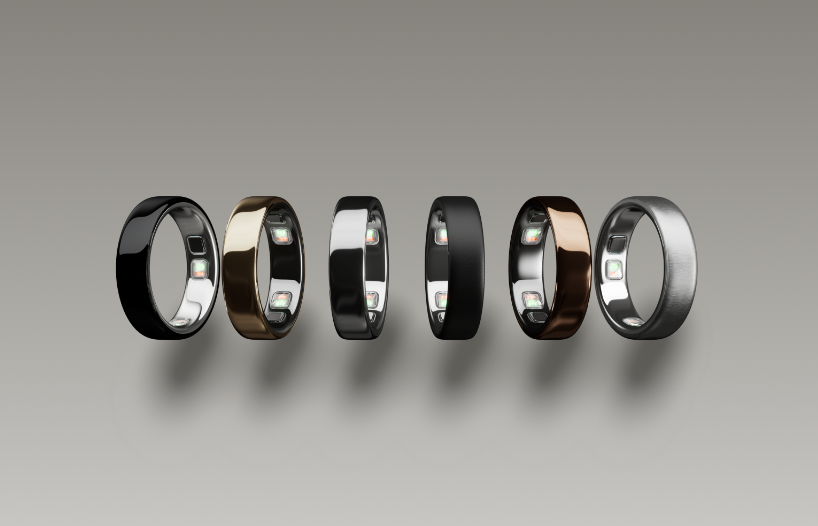
Rating: 8.5/10
Introduction: The Coronation of the Ring King
On May 28, 2026, Oura—the undisputed leader in smart rings—launched its fifth-generation product, the Oura Ring 5. On the same day, the company confidentially filed its IPO prospectus with the US SEC.
This is no coincidence. Oura needs a product stunning enough to justify its $11 billion valuation and $1.5 billion revenue target for 2026.
The question is: can Ring 5 carry that ambition?
Product Overview: 40% Smaller, 100% More Ambitious
Oura Ring 5’s core selling points distill into three words: smaller, more accurate, smarter.
Smaller: 40% volume reduction, width only 6.09mm, thickness 2.28mm, weight starting at 2g (size-dependent). For comparison, the previous Ring 4 started at 3.3g. Oura claims this is “the world’s smallest smart ring.”
More accurate: New low-profile sensor domes with more powerful LEDs and 12 stronger signal pathways, improving overnight heart rate, workout heart rate, and overall signal quality.
Smarter: Evolving from “data monitoring” to “proactive health management + care services,” with first-time foray into brain health research.
Killer Feature #1: Health Radar, From Detection to Prevention
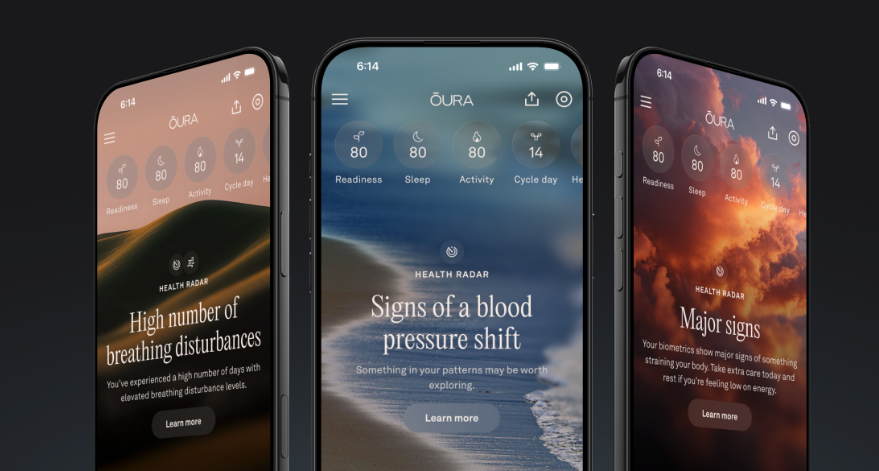
Health Radar is Ring 5’s most significant software upgrade. It continuously monitors key biometrics in the background, surfacing patterns users should pay attention to—not waiting for illness to strike, but warning before problems worsen.
Blood Pressure Signals: Utilizes the window during nighttime sleep when cardiovascular status is most stable, tracking blood pressure variation patterns. If blood pressure fails to drop normally, it may indicate cardiovascular risk—a signal that daytime single measurements could miss.
Nighttime Breathing: A 30-day rolling view of sleep-related breathing patterns and disturbances. Oura also partnered with ResMed to provide sleep health resources and diagnostic pathways for users with abnormal breathing alerts.
Oura Health Records: US users can import diagnosed conditions, medications, lab results, and allergies for a more complete health picture. Currently available in 43 states.
Killer Feature #2: GLP-1 Medication Tracking, Catching the Weight-Loss Drug Wave
This is Ring 5’s most eye-catching feature. As GLP-1 receptor agonists like Ozempic, Wegovy, and Mounjaro explode globally, more people are using these medications for weight management or diabetes treatment.
Ring 5 can:
- Track how dosage changes affect the body
- Analyze corresponding shifts in stress, activity, and recovery long-term trends
- Help users quantitatively evaluate GLP-1 treatment effectiveness
This is not simply “logging medication times.” It connects pharmaceutical intervention with physiological data, answering a critical question: “Is this drug actually working for me?”
Killer Feature #3: AI Health Advisor Oura Advisor
Oura partnered with medical AI company Counsel Health to launch an AI health Q&A feature. Users can ask health questions in the app, receive personalized medical advice, and connect with US-licensed physicians.
This requires additional payment (specific pricing unannounced), but Oura’s pricing logic is clear:
- Hardware: $399-$499 (one-time)
- Basic subscription: $5.99/month (standard features)
- Premium services: AI advisor + medical consultation (pay-as-needed)
From “selling rings” to “selling health services,” Oura is replicating the Apple Watch + Apple Fitness+ playbook.
Killer Feature #4: Brain Health Research Initiative
Oura proposed its first “Brain Health Research Initiative,” combining cognitive tests with physiological data to explore connections between cognitive function and sleep, stress, and recovery.
Eligible users can voluntarily join, matching short cognitive tasks in the app with long-term physiological trends. Oura hopes to eventually map how daily choices affect mental sharpness and long-term brain health.
This seems distant, but it lays data groundwork for early screening of neurodegenerative diseases like Alzheimer’s. Oura is leaping from “health tracking” to “disease prevention.”
Specs Comparison: Ring 5 vs Ring 4 vs Samsung Galaxy Ring
| Feature | Oura Ring 5 | Oura Ring 4 | Samsung Galaxy Ring |
|---|---|---|---|
| Volume | 40% smaller | Baseline | Slightly larger |
| Weight | 2-2.69g | 3.3-5.2g | ~3g |
| Battery | 6-9 days | 5-8 days | 7 days |
| Sensors | 12 pathways + low-profile domes | 18 pathways | Not disclosed |
| Blood Pressure | ✅ Nighttime signals | ❌ None | ❌ None |
| GLP-1 Tracking | ✅ Supported | ❌ None | ❌ None |
| AI Advisor | ✅ Oura Advisor | ❌ None | ❌ None |
| Brain Health | ✅ Planned | ❌ None | ❌ None |
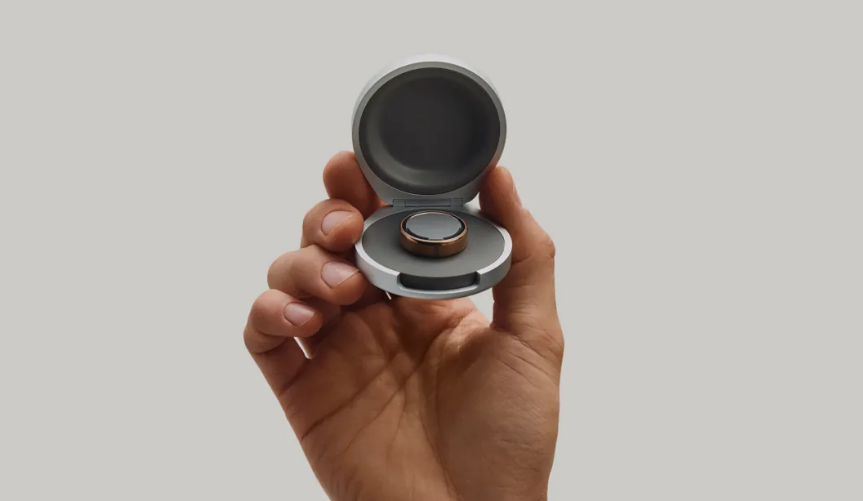
| Charging Case | $99 optional (5 charges) | None | Included |
| Price | $399-$499 | $349-$499 | $399 |
| Subscription | $5.99/month | $5.99/month | None |
Ring 5’s upgrade over Ring 4 is comprehensive: smaller, lighter, more accurate, more features. Against Samsung Galaxy Ring, Oura’s advantage lies in health depth (blood pressure, GLP-1, AI advisor), but the disadvantage is subscription fees.
Caveats to Note
- Price increase: Base model $399, $50 more than Ring 4’s $349. Oura CEO attributes this to sensor precision improvements, GLP-1 tracking, and miniaturization costs.
- Regional restrictions: Health Radar (including blood pressure signals and nighttime breathing) currently only available in US, India, and UAE, launching June 2026.
- Subscription dependency: $5.99/month subscription is a long-term cost, totaling ~$699 over 5 years including hardware. Compared to subscription-free RingConn, the cost gap is significant.
- IPO uncertainty: Although Oura filed S-1 with SEC, timing, pricing, and fundraising scale remain undetermined, subject to market volatility.
Who Should Upgrade to Ring 5?
Highly Recommended:
- Ring 3 and earlier users (40% volume reduction is a qualitative leap)
- GLP-1 medication users (tracking feature is essential)
- Cardiovascular health watchers (nighttime blood pressure signals are unique)
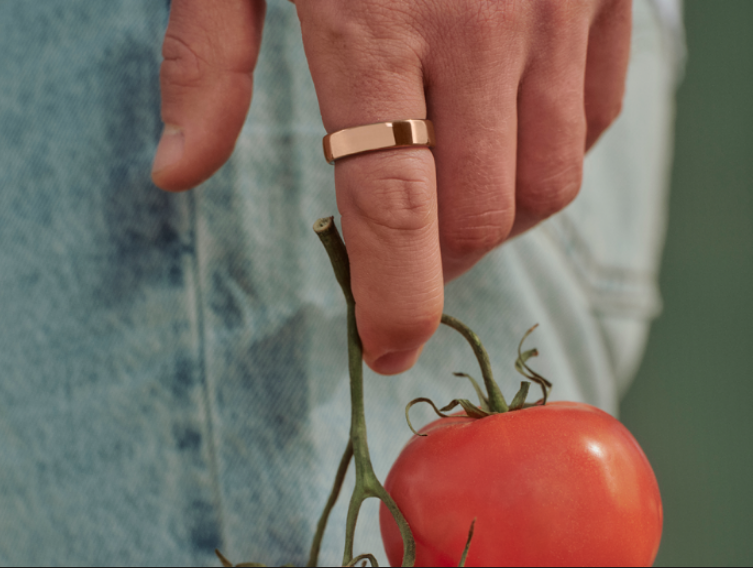
- Users pursuing ultimate wearing comfort (starting at 2g, near wedding-ring weight)
Consider Waiting:
- Ring 4 users (sensor upgrade limited, software features may roll down)
- Budget-sensitive buyers ($399 + $5.99/month × 5 years = $699 total cost)
- Non-US users (Health Radar features restricted)‘’
Future Outlook: From Hardware to Health Platform
The Ring 5 launch, paired with the IPO filing, reveals a clear strategic path:
- Hardware extreme: Smallest, most accurate, lightest—establishing technical moats
- Service transformation: From data monitoring to proactive health management + medical consultation
- Ecosystem expansion: Brain health research, GLP-1 tracking, health records import—building a health data platform
- Capitalization: IPO funding to support R&D and market expansion, $1.5B revenue target for 2026
Omdia data shows Oura captured 74% of the smart ring market in H1 2025, with 5.5 million rings sold cumulatively and paid subscribers exceeding 5 million.
This means Oura is no longer a “niche health toy.” It is evolving into mainstream health infrastructure. Ring 5 is a critical step in that evolution.
Bottom Line: The most advanced smart ring ever made. Whether the subscription model and regional restrictions fit your needs depends on your location and budget.
Leave a Reply