Introduction: The “AI Agent Year” at COMPUTEX 2026
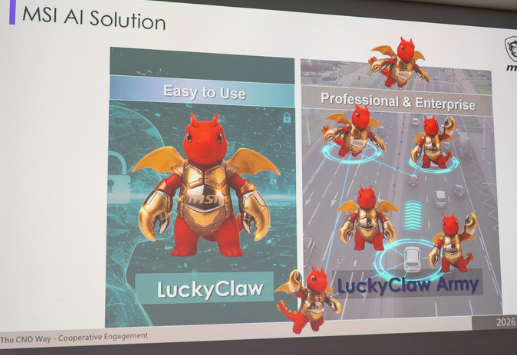
On June 2, 2026, at the Taipei Nangang Exhibition Center. COMPUTEX 2026 officially opened. This year’s theme is not graphics cards, not motherboards—but AI Agents.
MSI showcased LuckyClaw, a platform designed specifically for Windows-side AI Agent deployment. At the same time, MSI is among the first manufacturers to display NVIDIA RTX Spark laptops and desktops.
Product Overview: What Is LuckyClaw?
LuckyClaw’s core positioning: let Windows users deploy AI Agents as easily as installing apps.
Feature highlights:
- LLM Calculator: Built-in large language model computing tool, supporting local inference
- Cloud/Edge Hybrid: Cloud + local hybrid architecture, automatically allocating compute based on task complexity
- NVIDIA hardware acceleration: Supports RTX Spark, RTX 40/50 series GPU acceleration
- Windows native: Deeply integrated with Windows system, not a virtual machine solution
MSI simultaneously showcased hardware:
- RTX Spark laptops: 14mm thickness, Blackwell GPU + 20-core ARM CPU
- RTX Spark desktops: Flagship configurations, 128GB unified memory
- AI workstations: Dual RTX 5090, designed specifically for AI training

Killer Feature #1: The “App Store Moment” for AI Agents
The core problem LuckyClaw attempts to solve: AI Agent deployment is too complex.
Currently deploying a local AI Agent requires:
- Installing Python environment
- Configuring CUDA and GPU drivers
- Downloading model weights (tens of GB)
- Writing launch scripts
- Debugging compatibility issues
LuckyClaw’s solution: one-click deployment. Users select needed Agent functions (document analysis, code generation, image processing), and the platform automatically downloads models, configures environments, and optimizes parameters.
This is similar to how the early App Store made mobile app installation simple—LuckyClaw wants to make AI Agent installation equally simple.
Killer Feature #2: Cloud/Edge Hybrid, Intelligent Compute Allocation
LuckyClaw’s Cloud/Edge Hybrid architecture:
- Simple tasks: Local execution (document summaries, email replies, code completion)
- Complex tasks: Cloud handoff (video generation, large model training, multimodal analysis)
- Auto-switching: Intelligent decision-making based on task type, local compute, and network conditions
This means:
- Thin-and-light laptop users can also run AI Agents, with complex tasks automatically going to cloud
- Desktop users with sufficient local compute complete all tasks locally
- No manual configuration needed, platform auto-optimizes
Killer Feature #3: MSI Hardware Ecosystem Closed Loop
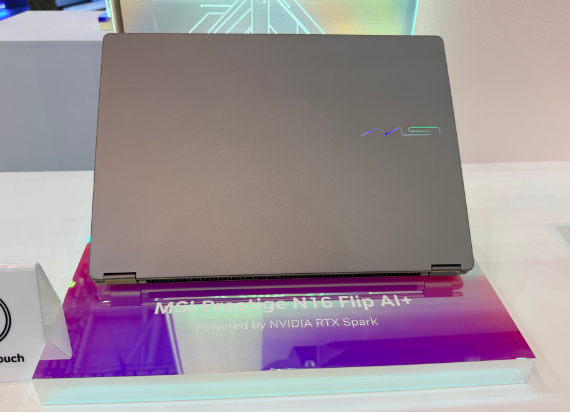
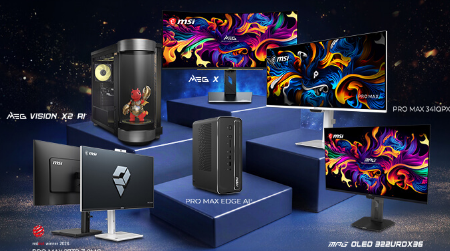
MSI does not just make software. LuckyClaw is deeply bound to MSI hardware:
- Laptops: Stealth, Raider, Vector series with RTX Spark
- Desktops: Infinite, Codex, Trident series supporting dual GPUs
- Monitors: AI-assisted color calibration, auto-adapting to content type
- Peripherals: Keyboard shortcuts for one-key AI Agent wake-up
This hardware-software integration is MSI’s core advantage over pure software Agent platforms.
Specs Comparison: LuckyClaw vs OpenAI GPTs vs Anthropic Claude Desktop
| Feature | MSI LuckyClaw | OpenAI GPTs | Anthropic Claude Desktop |
|---|---|---|---|
| Deployment | Local + Cloud hybrid | Pure cloud | Local + Cloud |
| Hardware Required | NVIDIA GPU | None | None |
| Hardware Acceleration | ✅ RTX Spark/40/50 | ❌ None | ❌ None |
| Offline Capability | ✅ Core functions offline | ❌ Needs network | ❌ Needs network |
| Ecosystem Binding | MSI hardware ecosystem | OpenAI ecosystem | Anthropic ecosystem |
| Target Users | Windows gamers/creators | General users | Developers/professionals |
LuckyClaw’s differentiation is razor-sharp: it is the only AI Agent platform deeply bound to NVIDIA hardware, supporting local high-performance inference, and targeting Windows gamers and creators.
Caveats to Note
- Feature maturity: First showcased June 2, functional demo stage, official version pending release
- Ecosystem limitation: Deeply bound to MSI hardware, compatibility with non-MSI devices unverified
- Model sources: Supported model list not announced, whether mainstream open models (Llama, Qwen, DeepSeek) are included unknown
- Privacy concerns: Cloud/Edge Hybrid means some data uploads to cloud, enterprise users may hesitate
- Competitive pressure: OpenAI, Anthropic, and Google’s cloud Agent features are stronger, is LuckyClaw’s local advantage enough to attract users?
Who Should Watch LuckyClaw?
Highly Recommended:
- MSI laptop/desktop users (hardware ecosystem加成)
- NVIDIA graphics card users (RTX 40/50 series can accelerate)
- Windows gamers (want to use AI assistants while gaming)
- Content creators (local video/image AI processing)
Consider Waiting:
- Mac users (no Windows version planned)
- Pure cloud users (OpenAI/Anthropic already sufficient)
- Enterprise users (waiting for security compliance certification)
Future Outlook: The “Windows Moment” for AI Agents
LuckyClaw represents an important trend: AI Agents are shifting from “cloud services” to “local applications”.
If LuckyClaw succeeds:
- Lower AI Agent barriers: Let ordinary users deploy without technical background
- Activate NVIDIA ecosystem: RTX Spark + LuckyClaw forming hardware + software closed loop
- Push Windows on Arm: RTX Spark’s Arm architecture needs Windows native Agent support
- Drive new hardware demand: Users willing to upgrade GPUs for better Agent performance
For MSI, LuckyClaw is not just a software product, but a catalyst for hardware sales—just as NVIDIA’s DLSS drove RTX graphics card sales.
Rating: 7.6/10 (Promising Concept)
Bottom Line: LuckyClaw could be the bridge that brings AI Agents from tech enthusiasts to mainstream Windows users. But it needs to ship before the hype fades.
Leave a Reply