Introduction: NVIDIA Redefines PC
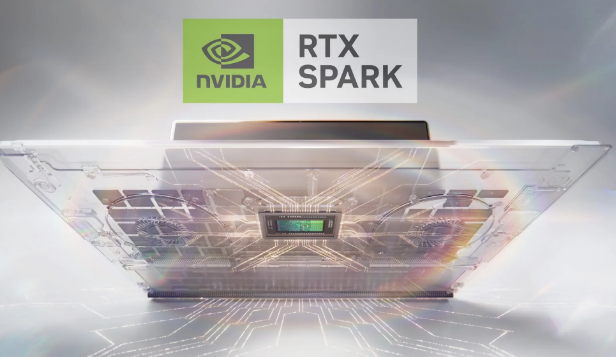
On June 1, 2026, at the Taipei Music Center, NVIDIA CEO Jensen Huang stood on stage and announced the most important thing for the PC industry in 40 years: NVIDIA is officially entering the PC processor market.
Not graphics cards. Not data centers. CPUs. Complete PC chips. NVIDIA, Microsoft, and Arm joining forces to “reinvent the PC.”
Product Overview: RTX Spark Is Not a Chip, It Is a Super Chip
RTX Spark core architecture:
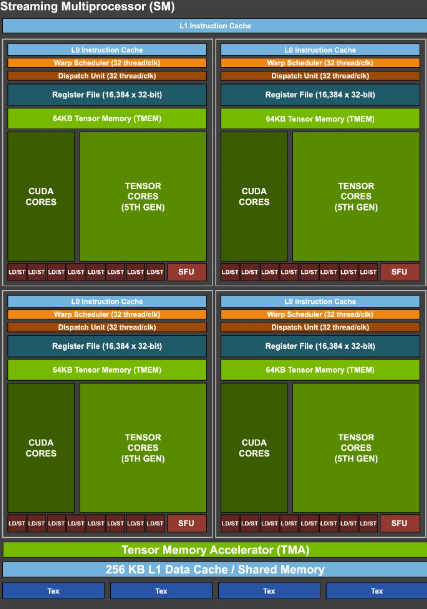
- GPU: NVIDIA Blackwell architecture, 6,144 CUDA cores, performance comparable to desktop RTX 5070
- CPU: MediaTek-designed 20-core ARM CPU (10 Cortex-X925 + 10 Cortex-A725), up to 4.0GHz
- Memory: 128GB LPDDR5X unified memory, 301GB/s bandwidth
- AI Compute: 1 PFLOP (FP4 precision), capable of processing 120B-parameter models and 1M-token workloads
- Process: TSMC 3nm
- Interconnect: NVLink C2C connecting CPU and GPU
Jensen Huang’s exact words: “This is the first time in 40 years that the PC product line has been completely redesigned.”
Killer Feature #1: 1 PFLOPS, Redefining AI PC
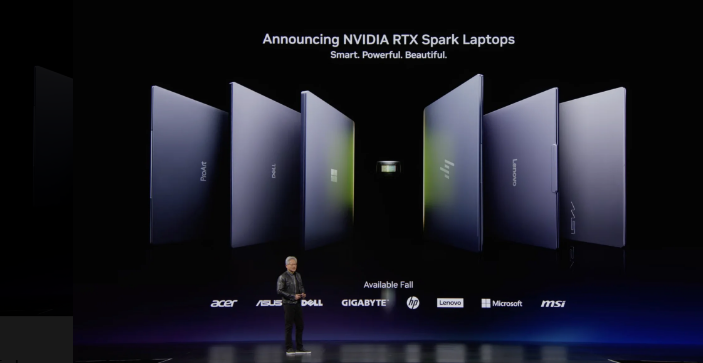
What does RTX Spark’s 1 PFLOP AI compute mean?
- Apple M4 Ultra: ~38 TOPS
- Qualcomm Snapdragon X Elite: ~45 TOPS
- Intel Lunar Lake: ~48 TOPS
- NVIDIA RTX Spark: 1 PFLOP = ~2,000 TOPS
This is not a multiple gap. This is an order-of-magnitude gap. RTX Spark can locally run 120B-parameter large language models, process 1M-token long documents, and generate 4K video in real-time—tasks that require cloud support on competing platforms.
Killer Feature #2: RTX 5070-Class Gaming, No Discrete GPU Needed
RTX Spark’s integrated GPU has 6,144 CUDA cores, comparable to the desktop RTX 5070. This means:
- 14mm-thin laptops without discrete GPUs can achieve mid-range gaming laptop performance
- Content creators can complete 4K video editing, 3D rendering, and AI generation on ultrabooks
- AI developers can train and infer large models locally without cloud GPU instances
First-wave products will focus on ~14mm thin-and-light laptops targeting content creators, AI developers, and gamers.
Killer Feature #3: Microsoft Copilot Plus Certified, Savior of Windows on Arm
Microsoft and NVIDIA’s joint statement used the same tagline: “A new era of PC.”
This means:
- RTX Spark natively supports Microsoft Copilot Plus AI PC standards
- Supports local large models and offline AI tasks
- Windows on Arm finally has a chip that can compete with Apple M-series
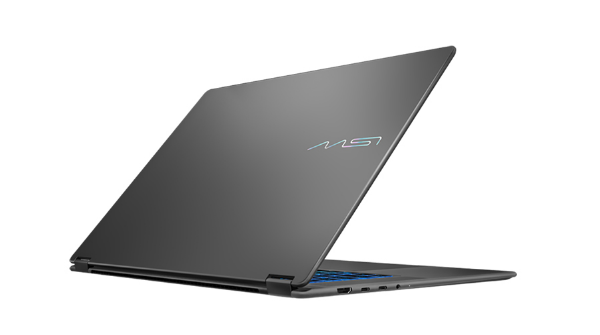
First-wave partners include Microsoft, Dell, HP, ASUS, Lenovo, MSI. NVIDIA plans 30+ laptop and 10+ desktop products.
Specs Comparison: RTX Spark vs Apple M4 vs Qualcomm X Elite vs Intel Lunar Lake
| Feature | NVIDIA RTX Spark | Apple M4 Ultra | Qualcomm Snapdragon X Elite | Intel Lunar Lake |
|---|---|---|---|---|
| Architecture | Arm (Blackwell+20 cores) | Arm (32 cores) | Arm (12 cores) | x86 (8 cores) |
| GPU | 6,144 CUDA (Blackwell) | Apple Silicon | Adreno | Xe2 |
| AI Compute | 1 PFLOP (FP4) | ~38 TOPS | ~45 TOPS | ~48 TOPS |
| Memory | 128GB LPDDR5X | 128GB unified | 64GB LPDDR5X | 32GB LPDDR5X |
| Gaming | RTX 5070-class | Mid-range | Entry-level | Entry-level |
| Target | Creators/Developers/Gamers | Pro creation | Thin office | Thin office |
RTX Spark’s differentiation is razor-sharp: it is the only PC chip simultaneously satisfying both “AI compute ceiling” and “gaming performance ceiling.”
Caveats to Note
- Software compatibility: Arm architecture running Windows x86 apps still requires emulation, with performance overhead and bug risks
- Release timeline: June 1 debut, but mass production arrives fall 2026, long wait
- Price unknown: Premium positioning means premium pricing, likely $1,500+ starting
- Thermal challenges: High power consumption in thin laptops creates散热 pressure, sustained performance unverified
- MediaTek role: Despite co-development, MediaTek cancelled its COMPUTEX keynote, raising collaboration depth concerns
Who Should Wait for RTX Spark?
Highly Recommended to Wait:
- AI developers (local 120B-parameter model inference)
- Gamers (3A gaming on thin laptops)
- Creative professionals (4K video editing + AI generation)
- Windows ecosystem users (wanting to switch from Mac but software)
Consider Alternatives:
- Budget-sensitive buyers (waiting for price announcement)
- Pure office users (do not need this much compute)
- Deep Apple ecosystem users (M4 series already sufficient)
Future Outlook: The “NVIDIA Moment” for AI PCs
If RTX Spark succeeds, NVIDIA gains:
- CPU market entry ticket: Expanding from GPU dominance to full-stack computing
- AI PC definition rights: Redefining “AI PC” standards with 1 PFLOP compute
- Windows on Arm leadership: Replacing Qualcomm as the preferred Arm Windows platform
Jensen Huang projects the CPU market will grow to $200 billion. RTX Spark is NVIDIA’s first cut of that cake.
For consumers, this means fall 2026 may see a wave of “all-capable thin laptops”—thin, long-battery, gaming-capable, AI-capable, creation-capable. This is one of the PC industry’s most significant architectural shifts in a decade.
Rating: 9.5/10 (Industry Disruptor)
Bottom Line: NVIDIA is not just selling a chip. It is redefining what a PC can do. The question is not whether RTX Spark will succeed, but how fast the industry will follow.
Leave a Reply