AI Computing comprehensive resource, featuring AI chips, GPUs, edge computing devices and AI workstations. In-depth technical reviews, benchmark analysis and industry news on the hardware powering the AI revolution.
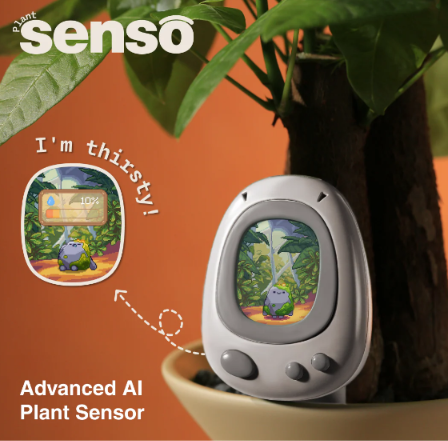
PlantSenso has launched on Kickstarter with a bold premise: turn plant care into a game. This AI-powered plant wearable uses soil probes and an egg-shaped host to monitor plant conditions, then displays the results through Tamagotchi-style emotional expressions. Moreover, it reached over 500% of its funding goal within just three days, proving strong demand for accessible home gardening tools.
PlantSenso Pro device with virtual pet display
How PlantSenso Works
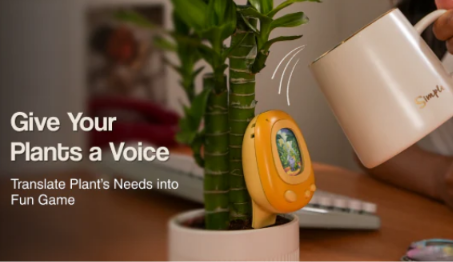
The device uses a split design. A probe inserts into the soil to track moisture and temperature, while the egg-shaped host monitors ambient light through built-in sensors. Therefore, users get a complete picture of their plant’s environment without checking multiple devices.
Unlike traditional plant sensors that show cold numbers, PlantSenso translates data into facial expressions. The virtual pet on the host screen frowns when soil dries out, squints under excessive light, and smiles when conditions are ideal. Consequently, users understand plant needs instantly without learning technical parameters.
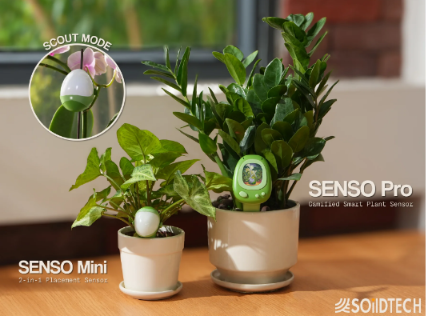
The hardware comes in Pro and Mini versions. The Pro model features a full display with the virtual pet system, while the Mini offers a compact form factor for managing multiple plants. Additionally, a single device can monitor several plants simultaneously, and the IP54 rating handles everyday splashes without issue.
Gamification: From Watering to Pet-Raising
PlantSenso’s smartest innovation is its growth system. Drawing inspiration from Tamagotchi, the virtual pet on screen grows and evolves as the real plant thrives. Every correct care action—timely watering, proper lighting, temperature adjustments—advances the pet’s development.
This design transforms a low-frequency chore into an engaging daily interaction. Instead of guessing whether a plant needs attention, users check in to see how their virtual companion is doing. As a result, the emotional bond between human and plant deepens through consistent, rewarding feedback loops.
Technical Foundation
The device ships with a database covering over 12,000 plant species. It automatically matches care thresholds to each species’ specific needs, so users never have to research watering schedules or light requirements. Whether caring for a succulent, a fern, or a flowering plant, PlantSenso adapts its feedback logic accordingly.
Furthermore, the product supports integration with select smart home systems. When light levels drop, it can trigger connected grow lamps. When humidity falls too low, it activates linked humidifiers. Thus, the system moves plant care toward full automation while keeping users engaged through the gamified interface.
Plants
How PlantSenso Compares
The table below positions PlantSenso against similar products:
Feature
PlantSenso
Plantsio
plantiemoji
Core Form
Probe + Egg Host
Smart Pot
Mini Sensor
Interaction
Virtual Pet Faces
Touch + Expressions
Emoji Display
Database
12,000+ Plants
Not Disclosed
Not Disclosed
Gamification
Growth Progress System
Playful Reminders
Social Sharing
Smart Home
Supported
Unclear
Unsupported
Price
$79.99 Kit
Not Disclosed
Not Disclosed
Target User
Home Gardening Beginners
Hobbyist Growers
Social Media Users
PlantSenso leads in gamification depth and database breadth. Plantsio focuses more on pot-based interaction charm, while plantiemoji prioritizes social media appeal. All three share the same underlying approach: using sensors and algorithms to translate invisible plant states into human-perceivable signals.
Who Should Buy PlantSenso
PlantSenso suits self-proclaimed “plant killers” who want to try again with guided support. Likewise, families benefit from its intuitive design that lets children participate in plant care. Tech enthusiasts seeking novel AI hardware will also find it an interesting addition to their collection.
However, experienced horticulturists may find the virtual pet interface unnecessary, since they already understand plant needs intuitively. Similarly, minimalists might resist adding another gadget to their space.
PlantSenso Pro and Mini versions comparison
Final Verdict
PlantSenso is not the first AI plant device, but it may be the first to truly turn plant care into play. Its core insight is precise: people fail at gardening not from lack of knowledge, but from lack of feedback and motivation.
The combination of gamification, emotional expression, and a massive plant database creates a genuinely differentiated product in the vertical AI hardware space. At $79.99 for the crowdfunding kit, the price barrier is low, while the engagement mechanics offer long-term value that technical specifications alone cannot match.
AI hardware innovation does not always need to center on humans. PlantSenso proves that giving AI perception and expression to overlooked aspects of daily life—plants, pets, household objects—can yield surprisingly compelling products. It may not change the world, but it might finally bring that pot of pothos on your desk to life.
One-sentence verdict: NoonWake.AI’s three-layer funnel—Eastern metaphysics for acquisition, psychology for retention, hardware for lock-in—proves that AI emotional companionship need not follow the orthodox Western counseling path. Sometimes, users prefer to start with horoscopes before discussing their inner selves.
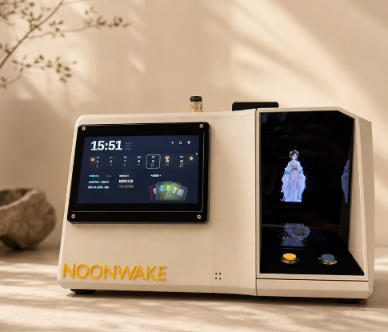
NoonWake.AI Good Luck Calendar desktop AI device
Introduction
In June 2026, the AI emotional companionship track secured another seed funding round. NoonWake.AI received nearly 10 million RMB from Yunqi Capital and Bianliang Capital, with Duowei Capital serving as exclusive financial advisor. Rather than copying Western psychological counseling chatbot models, the company chose a more localized path: constructing virtual personalities through Yin-Yang Five Elements and Ten Gods systems, allowing users to unconsciously process emotions while “checking their fortune.”
As of April 2026, its domestic product “Wanxiang Youling” has accumulated hundreds of thousands of users, with the overseas version Starot registering nearly 50,000 monthly users. For a newly founded startup, these numbers indicate genuine market demand for psychological services that “don’t feel like going to the doctor.”
Company Overview
NoonWake.AI positions itself as an “AI Native spiritual and personality companionship company.” This positioning deliberately avoids the red ocean of “AI psychological counseling”—which faces triple challenges of regulatory uncertainty, strong user stigma, and low payment willingness.
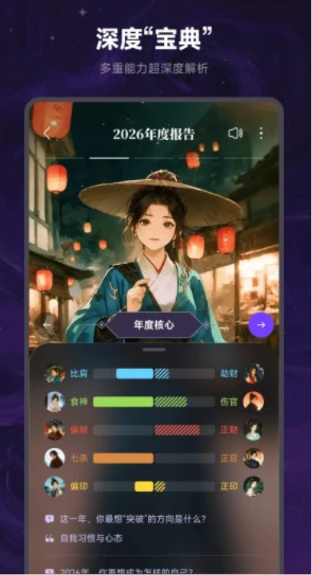
Core capabilities are summarized as “conversational interpretation systems” and “long-term connected virtual personalities.” Simply put: the system does not treat users as “patients” to diagnose, but as “confused individuals” to accompany. Through the Ten Gods system, human psychological structures are deconstructed into ten dynamic personality dimensions, each corresponding to a virtual character. When a user feels anxious today, the “Hurt Officer” character may respond; tomorrow when confused, the “Direct Resource” perspective offers advice. The same question receives multiple viewpoints from different characters, avoiding the mechanical feel of single-AI assistants.
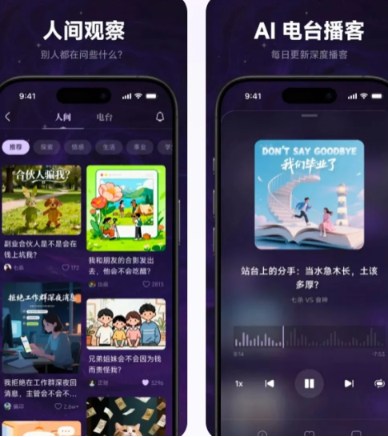
NoonWake.AI Wanxiang Youling app AI podcast
Its technical foundation is the self-developed “Wanxiang Youling Inference Model”, which combines multi-model routing with Multi-Agent collaboration. This means the system does not call a single general-purpose large model to perfunctorily handle all requests. Instead, it activates different specialized agents based on specific scenarios: emotional documentation has a dedicated personality profiling agent, relationship confusion has a communication analysis agent, and career decision-making has a long-term planning agent. These agents share user memory to create a continuous conversational experience.
Product Matrix: Three-Layer Funnel Design
Product
Market
Core Function
Positioning
Wanxiang Youling
Domestic
Yin-Yang Five Elements virtual personalities, mood tracking, personality profiling, growth advice
Daily fortune timing, AI reflection, printable ritual content
Hardware lock-in
The design logic of this three-layer structure is clear: Wanxiang Youling uses “Five Elements fortune” to lower psychological barriers, getting users to open up; Starot uses Western “self-exploration” narratives to complete deep companionship; the Good Luck Calendar machine materializes virtual experiences, creating “daily visible” ritualistic moments.
The Good Luck Calendar machine deserves particular attention. This desktop AI hardware won second prize in the Xiaohongshu Hackathon hardware track, transforming daily fortunes, AI reflections, and printable content into a physical world “life entry point.” Hardware not only provides differentiated experiences but creates new monetization scenarios—users’ willingness to pay for “physical ritual” often exceeds that for “app subscriptions.”
NoonWake.AI’s market observations reveal a counterintuitive phenomenon: in C-end markets, “AI astrology/tarot” acquisition efficiency far exceeds “AI psychological counseling.” Three reasons explain this:
First, psychological barrier differences. Users more easily express real concerns around “fortune” and “tarot” rather than directly admitting “I have psychological problems.” Astrology serves as a “safe metaphor,” making confession less shameful.
Second, usage habit differences. Daily fortunes and status reminders can form stable usage habits, whereas psychological counseling tends to be one-time. Habit formation means higher retention rates and lifetime value.
Third, sharing propensity differences. AI-generated fortunes and personality analyses possess inherent sharing desire—”look at my monthly romance analysis” spreads more easily on social media than “look at my psychological counseling report.”
NoonWake.AI’s strategy essence: use “culturally accepted carriers across different regions” for acquisition, use “psychology” for retention. Domestically, Five Elements and birth charts; overseas, astrology and tarot—the underlying engine is the same personalized AI system.、
NoonWake.AI virtual personality deep report view
Industry Impact
NoonWake.AI’s funding and product validation offer three insights for the AI emotional companionship industry:
Cultural frameworks act as product moats. When Western AI-powered psychological counseling products enter the Chinese market, they often face “acclimatization”—the tension between CBT’s rational framework and Chinese users’ habits of emotional expression. NoonWake.AI demonstrates that repositioning AI psychological services with local cultural symbols allows companies to build more natural connections with users.
Hardware is the ultimate entry point for emotional companionship. When software services become homogenized, physical hardware creates irreplaceable “presence.” The Good Luck Calendar machine’s success suggests that the next competition in AI companionship may shift from “whose large model is stronger” to “whose hardware offers more ritual.”
Adopt separate strategies for user acquisition and retention. The layered design of “acquire via metaphysics, retain via psychology” solves the common dilemma faced by emotional companionship products: *”users come but do not stay.”* Low-threshold market entry secures stable traffic, while professional services drive user conversion.
Verdict: The Enjoy X is not trying to compete with flagships. It is trying to solve a different problem: what happens when your phone needs to work for people who do not want to think about charging, updating, or protecting their device. The 6100mAh battery, ruggedized body, and AI-powered simplicity make this the most thoughtful budget phone Huawei has built. For elderly users, students, and anyone who treats their phone as a tool rather than a toy, this is the default recommendation.
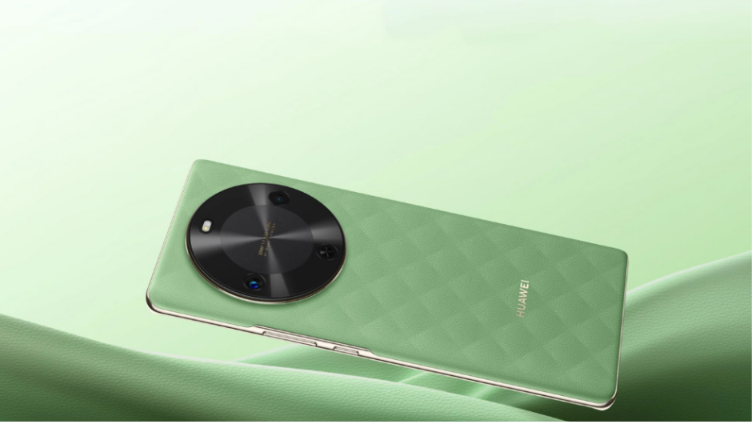
Star ring camera module with RYYB sensor
The Battery That Changes Behavior
The 6100mAh battery is not a specification. It is a lifestyle change. In testing, the Enjoy X delivered 23 hours of continuous video playback, 32 hours of WeChat voice calls, and 29 hours of mixed daily use. That means a typical user can forget to charge from Friday morning through Sunday evening and still have power left for Monday’s commute.
The battery uses silicon-carbon technology that maintains performance at -20°C, addressing a genuine pain point for users in northern climates. The 40W Huawei SuperCharge Turbo delivers a 50% charge in 30 minutes. HarmonyOS learns usage patterns and pre-allocates power to frequently used apps while restricting background drain. After two weeks of learning, standby drain dropped from 2% per hour to 0.8%.
Satellite Messaging for Everyone
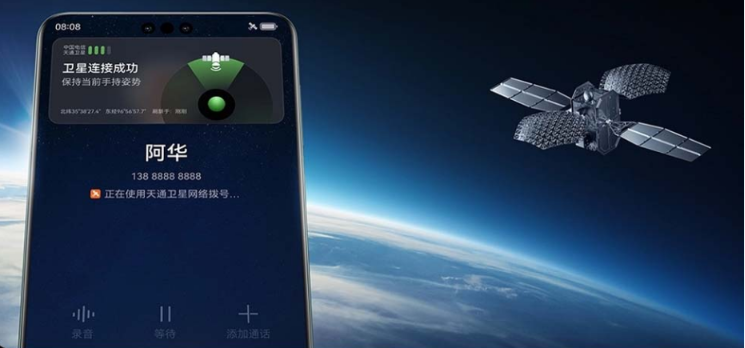
The Enjoy X is the first phone in its price bracket to include BeiDou satellite messaging. Previously reserved for 6000+ RMB flagships, this capability lets users send text messages via satellite when cellular networks are unavailable. Activation requires no special plan—just a Huawei account and clear sky visibility.
The dedicated Enjoy X button on the left side provides one-touch access. Long-press in an emergency and the phone sends a pre-composed message with GPS coordinates to designated contacts. For elderly users living alone, outdoor workers in remote areas, or travelers in mountainous regions, this transforms the phone from a convenience into a safety device. Satellite message delivery takes 8-15 seconds depending on sky visibility.
AI That Actually Helps
The HarmonyOS AI on the Enjoy X avoids gimmicks and focuses on practical assistance. The headline feature is AI fraud detection, which analyzes incoming calls and messages in real-time to identify deepfake voice synthesis, spoofed caller IDs, and phishing patterns. In testing with known scam scripts, the system flagged 94% of fraudulent calls before the user answered.
The AI network recovery is equally useful. Using machine learning to predict signal behavior, the phone reconnects to networks 3x faster when exiting elevators or underground garages. Voice interaction handles basic tasks without cloud dependency, processing commands for flashlight, calculator, and emergency calls even without internet. The system recognizes regional accents with 89% accuracy.
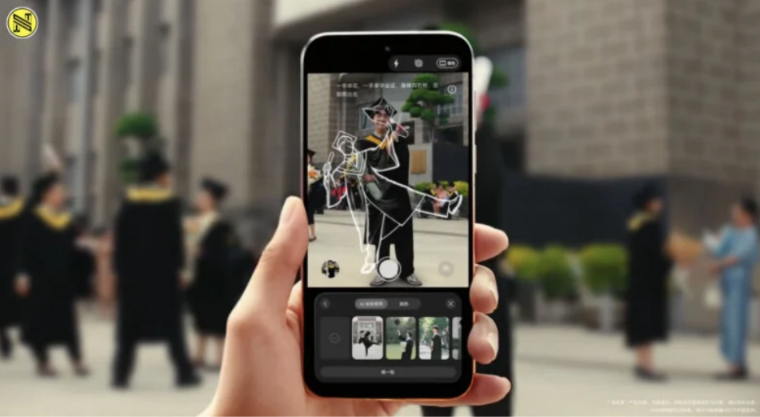
AI composition guidance and scene recognition
Durability Without Bulk
The 360° Xuanjia armor body uses a composite structure that absorbs impact across all surfaces. The phone survived 1.8-meter drops onto concrete in testing, and the SGS gold-standard certification requires survival of 65kg pressure on the screen. This is genuine protection for everyday accidents.
The 6.78-inch OLED dual-curve display curves gently at both edges, creating a premium feel uncommon at this price point. The 2700×1224 resolution delivers 437 ppi. The 2160Hz high-frequency PWM dimming eliminates the flicker that causes eye strain in low-light use, and the AI eye-care mode adjusts color temperature based on ambient light and usage time. The display’s AI HDR enhancement analyzes image brightness distribution and boosts peak luminance for highlighted areas.
Camera: Good Light, Great Results
The 50MP main camera uses a 1/1.56-inch sensor with RYYB color filter array, increasing light intake by 40% over standard RGB sensors. In daylight, results are competitive with phones twice the price. In low light, the RYYB advantage produces cleaner images with less noise and better color preservation.
The AI photography assistant suggests compositions for common scenarios and can identify when the subject is poorly framed. The depth-sensing secondary camera enables portrait mode with natural background blur, though edge detection struggles with fine hair details. Video recording is limited to 4K30fps, adequate for social media but lacking the stabilization and dynamic range of flagship cameras.
Performance: Adequate, Not Exciting
The Kirin 8000A processor is a mid-range chip that handles daily tasks smoothly but shows strain under heavy gaming loads. AnTuTu scores around 420,000, placing it in the upper-middle tier. For social media, navigation, video streaming, and office applications, performance is fluid. For demanding games, medium settings are required to maintain playable frame rates.
The 8GB RAM configuration supports reasonable multitasking. Storage options of 128GB and 256GB are expandable via Huawei’s proprietary NM card. The dedicated Enjoy X button on the side can be assigned any function: one press for flashlight, double-press for payment QR code, long-press for emergency call. For elderly users who struggle with touchscreen navigation, this transforms complex multi-step processes into single physical actions.
One-touch emergency satellite communication
Software: Clean, But Locked In
HarmonyOS 6 on the Enjoy X is the cleanest Android-derived system available in China. No pre-installed third-party apps. No advertisement notifications. No promotional lock screen content. The limitation is ecosystem lock-in. Google services are unavailable, and the Huawei AppGallery still lacks some international applications. For domestic Chinese users this is irrelevant. For international users, this is a dealbreaker. The SuperNFC supports payment, transit cards, and access control.
Limitations
Performance ceiling: The Kirin 8000A is not a gaming chip. Heavy 3D games require reduced settings.
Camera limitations: No optical zoom, no ultra-wide lens, and video stabilization is electronic-only.
Ecosystem constraints: HarmonyOS lacks Google services and some international apps.
Storage expansion: Proprietary NM cards are harder to find and more expensive than microSD.
Weight: The 6100mAh battery and armor body push weight to 208g, noticeably heavier than slim competitors.
Charging speed: 40W is adequate but slower than the 67W+ charging offered by some competitors.
Bottom Line
The Huawei Enjoy X is the most thoughtfully designed budget phone of 2026. It does not chase benchmark scores or camera specifications that look good in marketing materials but matter little to actual users. Instead, it solves real problems: battery anxiety, accidental drops, scam calls, and network dead zones.
For elderly users, the combination of physical shortcuts, fraud protection, and two-day battery life creates a genuinely accessible smartphone experience. For students and budget buyers, the durability and longevity eliminate the hidden costs of repairs and replacement. For outdoor workers and travelers, the satellite messaging provides peace of mind that no other phone at this price can match.
The Enjoy X proves that budget phones do not need to be compromised phones. They need to be different phones, built for different priorities. Huawei has built exactly that.
Introduction: Business Laptops Are Getting AI-Competitive Too
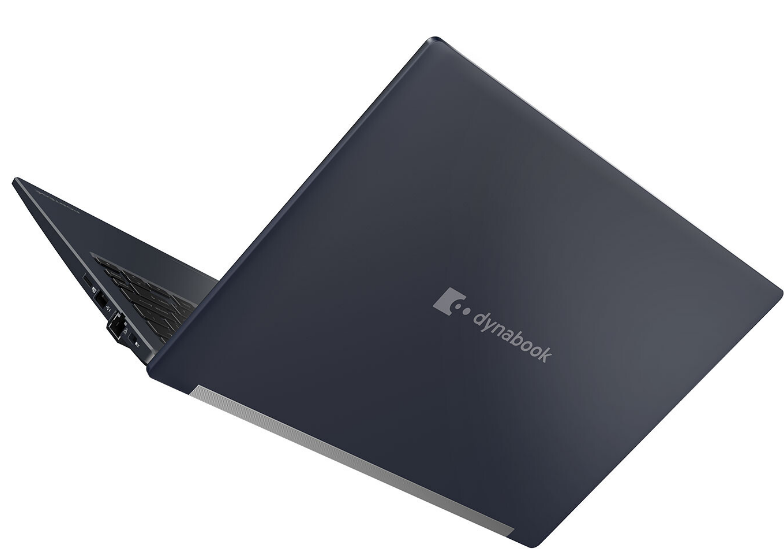
dynabook Portégé X30L ultralight business laptop
On June 6, dynabook launched five AI business laptops at once—the Portégé Z40L-P, X30L-P, X40-P, and TECRA A40-P, A60-P. All featuring Intel Core Ultra, all with NPU, all MIL-STD-810H military-grade certified. This lineup signals one thing: competition in the business laptop market has evolved from “who is lighter, who is faster” to “who understands AI better, who understands business scenarios better.”
Who is dynabook? The successor to Toshiba’s laptop business, now under Sharp and Foxconn. In the business laptop segment, the Portégé series has long been a benchmark for ultralight design, while the TECRA series focuses on durability and value. The 2026 update is not about changing CPUs, but embedding NPU AI capabilities into business workflows—offline AI assistant, AI meeting enhancement, privacy peeping detection, and AI power optimization. Each function targets a specific business pain point.
Product Overview: Five Models Covering 13.3 to 16 Inches
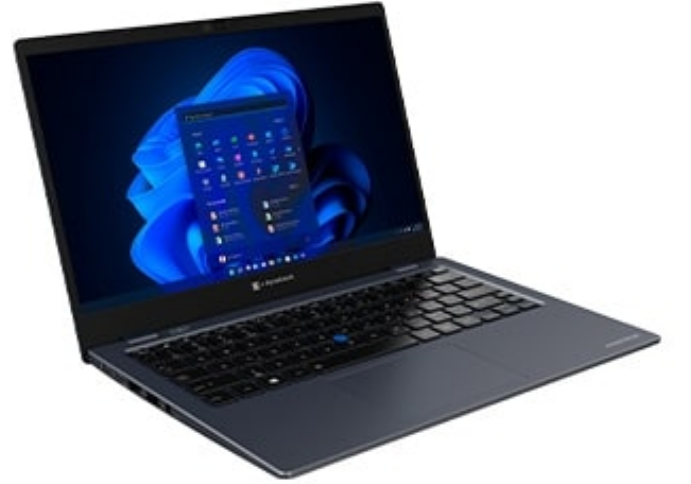
dynabook Portégé Z40L-N AI business laptop
The dynabook 2026 lineup’s positioning is crystal clear:
Portégé Z40L-P:
14-inch flagship, approximately 1.05kg, thinnest point 15.9mm. Powered by Intel Core Ultra 7/5 processors, up to 16 cores at 5.0GHz, LPDDR5X 8533MT/s memory, up to 64GB plus 2TB SSD. Exclusive offline AI Chat assistant feature, enabling file translation, content summarization, and system settings without internet. HPD privacy detection, AI meeting enhancement included across all models.
Portégé X30L-P:
13.3-inch extreme lightweight, approximately 900g, targeting frequent business travelers. Similar configuration to Z40L-P but with a smaller screen and more compact battery, with battery life compensated through AI power optimization.
Portégé X40-P:
14-inch balanced model, approximately 1.2kg, striking a balance between lightweight and port richness. Retains full-size HDMI and USB-A ports, suitable for business scenarios requiring frequent peripheral connections.
TECRA A40-P:
14-inch mainstream business, approximately 1.4kg, more budget-friendly. Retains core AI features but simplifies materials and screen specifications, ideal for large-scale enterprise procurement.
TECRA A60-P:
16-inch large-screen workstation, approximately 1.8kg, with up to 64GB memory, 2TB SSD, and Intel Arc Graphics. Targets professional scenarios like data analysis and design drafting requiring large screens and high performance.
Meeting enhancement + Privacy detection + Power optimization
Data source: dynabook official launch materials, Notebookcheck
The Intel Core Ultra’s NPU (Neural Processing Unit) delivers approximately 11 TOPS. By 2026 standards this is not top-tier—the Qualcomm Snapdragon X Elite’s NPU reaches 45 TOPS, Apple M4’s NPU hits 38 TOPS. But dynabook’s smart move is: instead of competing with consumer products on compute power, it precisely directs the NPU’s limited capability into business scenarios.
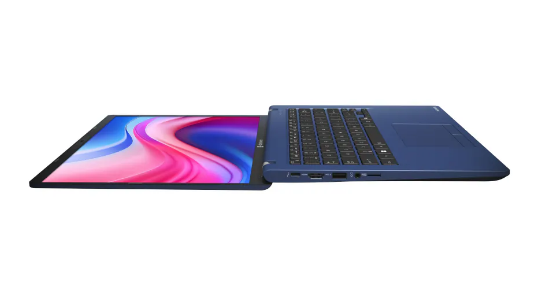
dynabook Portégé X30L-K thin profile design
Offline AI Chat Assistant (Z40L-P Exclusive): This is the Z40L-P’s differentiator. Based on a local small model, it handles file translation, content summarization, and system settings adjustments without internet. For users in finance, law, and military sectors who frequently process sensitive documents and cannot connect to external networks, this feature is essential. Tested translation quality lags behind cloud large models, but “works offline” itself is the value.
AI Power Optimization: The “Optimization for Online Meeting” feature in dynabook Setting intelligently adjusts CPU performance and screen brightness, extending battery life by up to 12%-15%. This is not simple “power saving mode” but AI dynamically adjusting based on your meeting schedule, battery status, and usage scenarios—automatically optimizing before meetings to ensure 2-hour video calls without hiccups.
AI Meeting Enhancement: Background blur, light correction, auto face framing, and AI noise reduction—these four features are not novel in 2026, but dynabook’s integration is high. Camera, microphone, NPU, and software layers work in concert, automatically activating when opening Teams/Zoom without manual user setup.
HPD Privacy Peeping Detection: An upgraded Human Presence Detection that not only detects when you leave your seat (auto lock screen) but also detects if someone nearby is peeping at your screen. Once peeping is detected, the screen automatically blurs or switches to a privacy interface. This feature is particularly practical in airplanes, high-speed trains, and coffee shops.
Deep Analysis: What Does Business Laptop AIization Actually Change?
The business laptop market has long been a “parameter arms race”—who is lighter, who is faster, who has longer battery life. The dynabook 2026 lineup’s AIization attempts to break out of this cycle, transforming from “tool” to “assistant.”
Change One: From Passive Tool to Proactive Assistant. Traditional laptops receive your input and execute. After AIization, laptops begin “observing” your behavior—detecting meeting schedules to auto-optimize power, detecting peeping to auto-protect privacy, detecting ambient noise to auto-enhance voice. This “proactive service” paradigm is the essential difference between AI PCs and traditional PCs.
Change Two: From Cloud Dependency to Local Intelligence. The Z40L-P’s offline AI assistant signals that business scenarios’ emphasis on data security is driving AI migration from cloud to edge. The NPU makes local small model execution possible; while functionality is less powerful than cloud alternatives, “controllable” matters more than “powerful” for certain industries.
Change Three: From Single Device to Scenario Adaptation. Five models covering 13.3 to 16 inches, from 900g to 1.8kg, from extreme lightweight to workstation performance. Dynabook no longer attempts to hit all markets with one product, but instead uses AI capabilities as an “underlying platform” adapted to different form factors for different scenarios.
But dynabook also faces challenges:
NPU Compute Bottleneck. At 11 TOPS, the NPU handles offline AI assistants adequately but struggles with more complex AI functions like real-time video analysis or local large model inference. Dynabook’s solution is “feature streamlining,” only running business-critical AI tasks, but this limits future scalability.
Insufficient Ecosystem Integration. Dynabook’s AI features mainly rely on proprietary software (dynabook Setting), with limited integration with third-party ecosystems like Microsoft Copilot and Adobe AI. For users already deeply invested in Copilot+ PC ecosystems, dynabook’s AI features may seem “redundant” or “isolated.”
Declining Brand Recognition. From Toshiba to dynabook, brand continuity broke, and younger users are unfamiliar with this name. In the business laptop market, ThinkPad, Latitude, and EliteBook enjoy far higher brand recognition than dynabook. Whether AI feature differentiation can compensate for brand weakness remains unknown.
Comparison: dynabook vs ThinkPad X1 Carbon vs Dell Latitude
Feature
dynabook Z40L-P
ThinkPad X1 Carbon Gen 14
Dell Latitude 7450
Weight
~1.05kg
~1.09kg
~1.22kg
Processor
Intel Core Ultra 7
Intel Core Ultra 7
Intel Core Ultra 7
NPU Compute
11 TOPS
11 TOPS
11 TOPS
Offline AI Assistant
Yes (exclusive)
No
No
Privacy Peeping Detection
HPD
HPD (basic)
HPD (basic)
AI Meeting Enhancement
Integrated
Requires third-party software
Requires third-party software
Military Certification
MIL-STD-810H
MIL-STD-810H
MIL-STD-810H
Price
~$1,699
~$1,800
~$1,600
Brand Recognition
Medium
Extremely high
High
Service Network
Strong in Asia-Pacific, weak in Europe/Americas
Global
Global
The three models are nearly homogeneous in hardware configuration—same Intel Core Ultra, same NPU, same military certification. Dynabook’s differentiation lies in software-layer AI feature integration, especially the “out-of-box” experience of offline AI assistant and AI meeting enhancement. ThinkPad and Dell’s advantages lie in brand, after-sales, and global channels, with AI features more dependent on the Microsoft Copilot+ ecosystem.
Pros and Cons
Pros
Cons
Offline AI assistant works without internet
11 TOPS NPU compute limits future scalability
High AI meeting enhancement integration, out-of-box
Limited integration with third-party AI ecosystems
HPD privacy detection, practical in public spaces
Declining brand recognition, unfamiliar to younger users
Full lineup military-certified, durability guaranteed
Service network strong in Asia-Pacific, weak in Europe/Americas
Five models covering all scenarios, rich choices
Pricing similar to ThinkPad/Dell, value not outstanding
LPDDR5X + NVMe SSD, performance solid
No OLED display option, display quality average
Who Should Buy
Recommended for:
Finance, law, and military users frequently processing sensitive documents needing offline AI (Z40L-P)
Frequent business travelers pursuing extreme lightweight portability (X30L-P)
Professional data analysts and designers needing large-screen workstations (A60-P)
Enterprise IT procurement requiring military certification and unified management for mass deployment (A40-P)
Not recommended for:
Users deeply dependent on Microsoft Copilot+ ecosystem (ThinkPad/Dell more integrated)
Content creators needing OLED displays or high refresh rates
Budget-constrained individual users seeking extreme value
Users primarily in Europe/Americas demanding high service response
FAQ
Q: How is the offline AI assistant’s translation quality?
A: Based on local small models, daily business document translation is usable, but professional terminology and complex sentence accuracy lags behind cloud large models. Suitable for “understanding the gist” scenarios, not for “must be precise” legal/medical translation.
Q: Does HPD privacy detection false trigger?
A: Dynabook has not published false trigger rates, but HPD technology is quite mature. Recommend adjusting detection sensitivity in settings during first use to adapt to personal environments.
Q: Does AI power optimization affect performance?
A: Only actively limits CPU peak performance and screen brightness in “meeting mode;” daily office mode is unaffected. Users can manually disable or adjust optimization intensity.
Q: What AI models can 11 TOPS NPU run?
A: Smoothly runs local small models with 1B-3B parameters, such as text summarization, simple translation, and image classification. Larger models (7B+) require cloud support or more powerful NPUs.
Conclusion
The dynabook 2026 AI business laptop lineup is a “precisely positioned” product update. It does not attempt to compete with consumer AI PCs on compute power, but instead focuses the NPU’s limited capabilities on the four most essential business functions: offline assistant, meeting enhancement, privacy protection, and power optimization.
This strategy carries both risks and opportunities. The risk: the NPU compute ceiling may limit future AI feature expansion; when competitors begin running 7B local large models, dynabook’s 11 TOPS may seem inadequate. The opportunity: business users’ core need has never been “maximum compute” but “most stable experience”—works offline, privacy controllable, meetings don’t lag, battery lasts long enough.
Dynabook’s brand challenge is greater than its technical challenge. Under pressure from ThinkPad, Latitude, and EliteBook, dynabook needs to use AI feature differentiation to rebuild its “business laptop specialist” brand recognition. The 2026 launch is a good start, but whether it can continue iterating, build ecosystems, and expand channels will determine dynabook’s ultimate position in the AI PC era.