Tag: NVIDIA

  • NVIDIA RTX Spark: The Super Chip That Redefines PC

    NVIDIA RTX Spark: The Super Chip That Redefines PC

    Introduction: NVIDIA Redefines PC
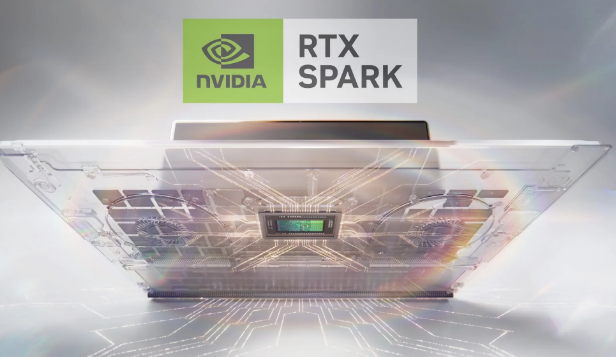
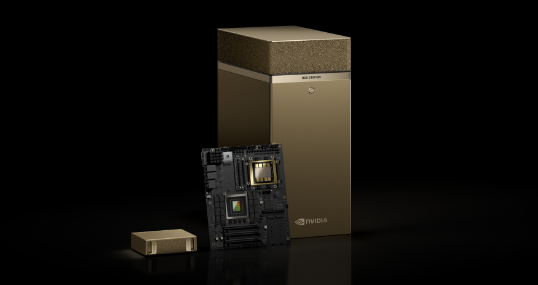
    NVIDIA RTX Spark chip official product render
    NVIDIA RTX Spark chip official product render

    On June 1, 2026, at the Taipei Music Center, NVIDIA CEO Jensen Huang stood on stage and announced the most important thing for the PC industry in 40 years: NVIDIA is officially entering the PC processor market.

    Not graphics cards. Not data centers. CPUs. Complete PC chips. NVIDIA, Microsoft, and Arm joining forces to “reinvent the PC.”

    Product Overview: RTX Spark Is Not a Chip, It Is a Super Chip

    RTX Spark core architecture:

    • GPU: NVIDIA Blackwell architecture, 6,144 CUDA cores, performance comparable to desktop RTX 5070
    • CPU: MediaTek-designed 20-core ARM CPU (10 Cortex-X925 + 10 Cortex-A725), up to 4.0GHz
    • Memory: 128GB LPDDR5X unified memory, 301GB/s bandwidth
    • AI Compute: 1 PFLOP (FP4 precision), capable of processing 120B-parameter models and 1M-token workloads
    • Process: TSMC 3nm
    • Interconnect: NVLink C2C connecting CPU and GPU

    Jensen Huang’s exact words: “This is the first time in 40 years that the PC product line has been completely redesigned.”

    Killer Feature #1: 1 PFLOPS, Redefining AI PC
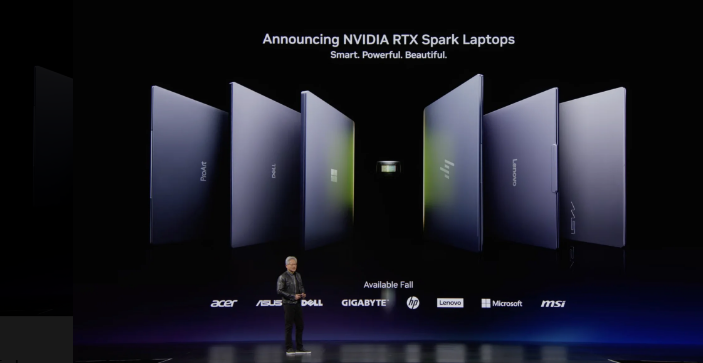
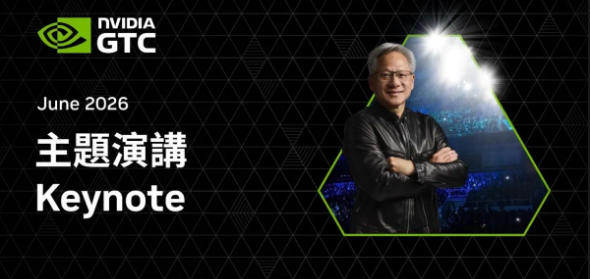
    Jensen Huang presenting at COMPUTEX 2026 keynote stage
    Jensen Huang presenting at COMPUTEX 2026 stage

    What does RTX Spark’s 1 PFLOP AI compute mean?

    • Apple M4 Ultra: ~38 TOPS
    • Qualcomm Snapdragon X Elite: ~45 TOPS
    • Intel Lunar Lake: ~48 TOPS
    • NVIDIA RTX Spark: 1 PFLOP = ~2,000 TOPS

    This is not a multiple gap. This is an order-of-magnitude gap. RTX Spark can locally run 120B-parameter large language models, process 1M-token long documents, and generate 4K video in real-time—tasks that require cloud support on competing platforms.

    Killer Feature #2: RTX 5070-Class Gaming, No Discrete GPU Needed

    RTX Spark’s integrated GPU has 6,144 CUDA cores, comparable to the desktop RTX 5070. This means:

    • 14mm-thin laptops without discrete GPUs can achieve mid-range gaming laptop performance
    • Content creators can complete 4K video editing, 3D rendering, and AI generation on ultrabooks
    • AI developers can train and infer large models locally without cloud GPU instances

    First-wave products will focus on ~14mm thin-and-light laptops targeting content creators, AI developers, and gamers.

    Killer Feature #3: Microsoft Copilot Plus Certified, Savior of Windows on Arm
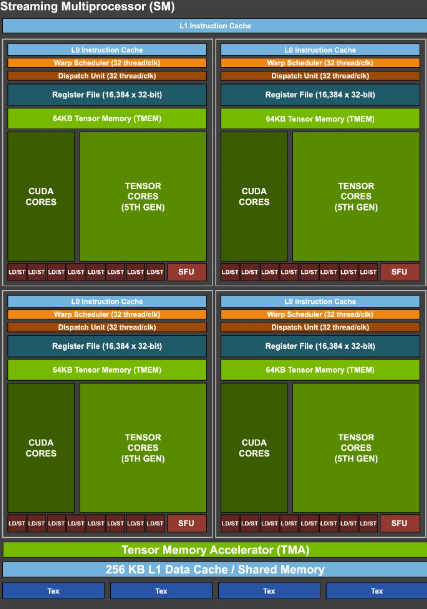
    NVIDIA Blackwell GPU chip with architecture diagram
    NVIDIA Blackwell GPU chip with architecture diagram

    Microsoft and NVIDIA’s joint statement used the same tagline: “A new era of PC.”

    This means:

    • RTX Spark natively supports Microsoft Copilot Plus AI PC standards
    • Supports local large models and offline AI tasks
    • Windows on Arm finally has a chip that can compete with Apple M-series

    First-wave partners include Microsoft, Dell, HP, ASUS, Lenovo, MSI. NVIDIA plans 30+ laptop and 10+ desktop products.

    Specs Comparison: RTX Spark vs Apple M4 vs Qualcomm X Elite vs Intel Lunar Lake

    FeatureNVIDIA RTX SparkApple M4 UltraQualcomm Snapdragon X EliteIntel Lunar Lake
    ArchitectureArm (Blackwell+20 cores)Arm (32 cores)Arm (12 cores)x86 (8 cores)
    GPU6,144 CUDA (Blackwell)Apple SiliconAdrenoXe2
    AI Compute1 PFLOP (FP4)~38 TOPS~45 TOPS~48 TOPS
    Memory128GB LPDDR5X128GB unified64GB LPDDR5X32GB LPDDR5X
    GamingRTX 5070-classMid-rangeEntry-levelEntry-level
    TargetCreators/Developers/GamersPro creationThin officeThin office

    RTX Spark’s differentiation is razor-sharp: it is the only PC chip simultaneously satisfying both “AI compute ceiling” and “gaming performance ceiling.”

    Caveats to Note

    • Software compatibility: Arm architecture running Windows x86 apps still requires emulation, with performance overhead and bug risks
    • Release timeline: June 1 debut, but mass production arrives fall 2026, long wait
    • Price unknown: Premium positioning means premium pricing, likely $1,500+ starting
    • Thermal challenges: High power consumption in thin laptops creates散热 pressure, sustained performance unverified
    • MediaTek role: Despite co-development, MediaTek cancelled its COMPUTEX keynote, raising collaboration depth concerns

    Who Should Wait for RTX Spark?
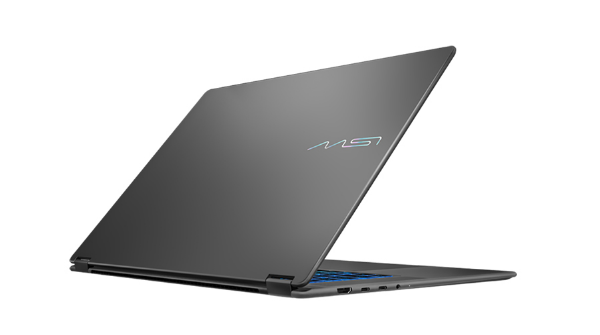
    MSI Prestige laptop powered by RTX Spark
    MSI Prestige laptop powered by RTX Spark

    Highly Recommended to Wait:

    • AI developers (local 120B-parameter model inference)
    • Gamers (3A gaming on thin laptops)
    • Creative professionals (4K video editing + AI generation)
    • Windows ecosystem users (wanting to switch from Mac but software)

    Consider Alternatives:

    • Budget-sensitive buyers (waiting for price announcement)
    • Pure office users (do not need this much compute)
    • Deep Apple ecosystem users (M4 series already sufficient)

    Future Outlook: The “NVIDIA Moment” for AI PCs

    If RTX Spark succeeds, NVIDIA gains:

    1. CPU market entry ticket: Expanding from GPU dominance to full-stack computing
    2. AI PC definition rights: Redefining “AI PC” standards with 1 PFLOP compute
    3. Windows on Arm leadership: Replacing Qualcomm as the preferred Arm Windows platform

    Jensen Huang projects the CPU market will grow to $200 billion. RTX Spark is NVIDIA’s first cut of that cake.

    For consumers, this means fall 2026 may see a wave of “all-capable thin laptops”—thin, long-battery, gaming-capable, AI-capable, creation-capable. This is one of the PC industry’s most significant architectural shifts in a decade.


    Rating: 9.5/10 (Industry Disruptor)

    Bottom Line: NVIDIA is not just selling a chip. It is redefining what a PC can do. The question is not whether RTX Spark will succeed, but how fast the industry will follow.
  • NVIDIA N1/N1X: The “Third Pole” of PC Industry Arrives

    NVIDIA N1/N1X: The “Third Pole” of PC Industry Arrives

    Introduction: The Third Pole of PC Industry Is Coming

    NVIDIA N1X chip MediaTek collaboration render
    NVIDIA N1X chip with MediaTek joint venture

    On June 1, 2026, at the Taipei Music Center, NVIDIA CEO Jensen Huang will deliver the COMPUTEX keynote. The topic is not graphics cards, not data centers—but NVIDIA’s first Arm PC processor: N1/N1X.

    This is not NVIDIA’s first CPU attempt. Project Denver failed in 2011. Grace server chips succeeded in 2021. The 2026 N1 marks NVIDIA’s third assault on the consumer CPU market—this time with MediaTek building the CPU, Microsoft handling the OS, and Lenovo/Dell/ASUS manufacturing the devices.

    Product Overview: A 3nm+Blackwell Heterogeneous Monster

    The N1 series is a NVIDIA-MediaTek co-development using TSMC 3nm process:

    N1X (Flagship):

    • CPU: 10 Cortex-X925 + 10 Cortex-A725 (20 cores)
    • GPU: 48SM (6,144 CUDA), Blackwell architecture
    • Memory: 256-bit LPDDR5X, up to 128GB
    • AI Compute: ~1 PFLOPS at FP4 precision
    • TDP: 45-80W
    • Positioning: Premium thin-and-light/workstation, discrete-GPU-free RTX 5070-class gaming

    N1 (Mainstream):

    • CPU: 8+4 cores (high-end) / 7+3 cores (low-end)
    • GPU: 20SM (2,560 CUDA) / 16SM
    • Memory: 128-bit LPDDR5X
    • TDP: 18-45W
    • Positioning: Mainstream AI-accelerated notebooks

    Killer Feature #1: 1 PFLOPS Local AI Compute

    Jensen Huang COMPUTEX 2026 keynote stage presentation
    Jensen Huang at COMPUTEX 2026 keynote stage

    N1X’s most terrifying number is nearly 1 PFLOPS FP4 precision AI compute. What does this mean?

    • Apple M4 Ultra: ~38 TOPS (INT8)
    • Qualcomm Snapdragon X Elite: ~45 TOPS (INT8)
    • Intel Lunar Lake: ~48 TOPS (INT8)
    • NVIDIA N1X: ~1 PFLOPS (FP4) = ~2,000 TOPS

    While FP4 and INT8 are not directly comparable, this order-of-magnitude gap means N1X can locally run 70B-parameter large language models, generate 4K video in real-time, and perform complex 3D rendering—while competitors only handle simple AI acceleration.

    Killer Feature #2: Blackwell GPU, Gaming Laptop Killer?

    N1X’s integrated GPU scales match GeForce RTX 5070 (6,144 CUDA). This means:

    • Thin-and-light laptops without discrete GPUs can achieve mid-range gaming laptop performance
    • Lenovo Legion handheld may use N1X, becoming the “most powerful Windows handheld”
    • Creative professionals can complete 4K video editing, 3D modeling, and AI generation on ultrabooks

    If NVIDIA solves drivers and compatibility, N1X could end the stereotype that “thin laptops cannot game.”

    Killer Feature #3: The “Savior” of Windows on Arm

    NVIDIA Blackwell GPU architecture chip closeup
    NVIDIA Blackwell GPU chip with architecture detail

    The Windows on Arm ecosystem has been lukewarm. Qualcomm’s Snapdragon X Elite spent two years with limited market share. Core issues: poor software compatibility, insufficient performance release.

    NVIDIA’s solution:

    • Hardware level: Use Blackwell GPU’s compatibility advantage (mature CUDA ecosystem) to compensate for Arm CPU’s software shortcomings
    • Software level: Deep Microsoft collaboration, potentially becoming the “officially endorsed” Windows on Arm platform
    • Ecosystem level: Dell, Lenovo, ASUS, and Microsoft Surface already preparing N1/N1X devices

    Specs Comparison: N1X vs Apple M4 vs Qualcomm X Elite vs Intel Lunar Lake

    FeatureNVIDIA N1XApple M4 UltraQualcomm Snapdragon X EliteIntel Lunar Lake
    ProcessTSMC 3nmTSMC 3nmTSMC 4nmTSMC 3nm
    CPU ArchArm (20 cores)Arm (32 cores)Arm (12 cores)x86 (8 cores)
    GPU ArchBlackwellApple SiliconAdrenoXe2
    CUDA Cores6,144Not disclosedNoneNone
    AI Compute~1 PFLOPS (FP4)~38 TOPS~45 TOPS~48 TOPS
    Memory128GB LPDDR5X128GB unified64GB LPDDR5X32GB LPDDR5X
    Power45-80W30-60W23W17-30W
    TargetPremium AI PC/gamingPro creation/devThin officeThin office

    N1X’s differentiation is razor-sharp: it is the only chip putting “gaming-grade GPU” and “AI-grade compute” simultaneously into a thin-and-light laptop.

    Caveats to Note

    • Software compatibility: Arm architecture running Windows x86 apps still requires emulation, with performance overhead and bug risks
    • Release timeline: June 1 debut, but mass production may not arrive until late 2026, long wait
    • Price unknown: Premium positioning means premium pricing, likely $1,500+ starting
    • Thermal challenges: 45-80W TDP in thin laptops creates pressure, sustained performance release unverified
    • MediaTek role: Despite co-development, MediaTek cancelled its COMPUTEX keynote, raising collaboration depth concerns

    Who Should Wait for N1X?

    Highly Recommended to Wait:

    • AI developers (local 70B model inference capability)
    • Gamers (3A gaming on thin laptops)
    • Creative professionals (4K video editing + AI generation)
    • Windows ecosystem users (wanting to switch from Mac but software)

    Consider Alternatives:

    • Budget-sensitive buyers (waiting for price announcement)
    • Pure office users (N1 suffices, no need for N1X)
    • Deep Apple ecosystem users (M4 series already sufficient)

    Future Outlook: The “NVIDIA Moment” for AI PCs

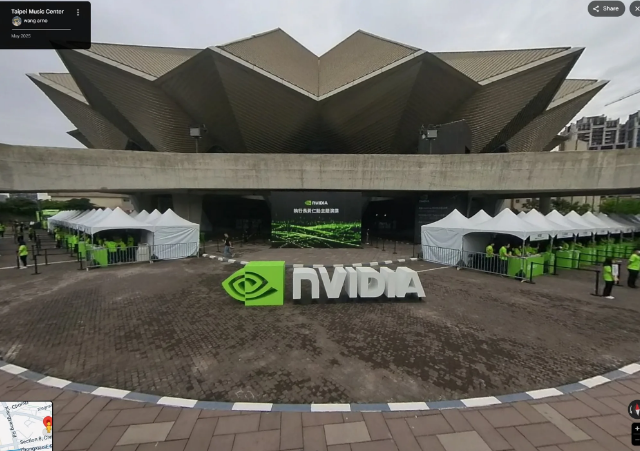
    NVIDIA COMPUTEX场地 台北音乐中心入口
    台北音乐中心NVIDIA COMPUTEX展场

    If N1/N1X succeeds, NVIDIA gains:

    1. CPU market entry ticket: Expanding from GPU dominance to full-stack computing
    2. AI PC definition rights: Redefining “AI PC” standards with 1 PFLOPS compute
    3. Windows on Arm leadership: Replacing Qualcomm as the preferred Arm Windows platform

    For consumers, this means late 2026 may see a wave of “all-capable thin laptops”—thin, long-battery, gaming-capable, AI-capable, creation-capable. This is one of the PC industry’s most significant architectural shifts in a decade.


    Rating: 8.5/10 (Pre-Production Preview)

    Bottom Line: The most technically ambitious Arm PC chip ever designed. Whether it succeeds depends on software compatibility and thermal management—not just raw specs.

  • AMD MI400 Series with HBM4 Memory Targets NVIDIA Blackwell Dominance

    AMD MI400 Series with HBM4 Memory Targets NVIDIA Blackwell Dominance

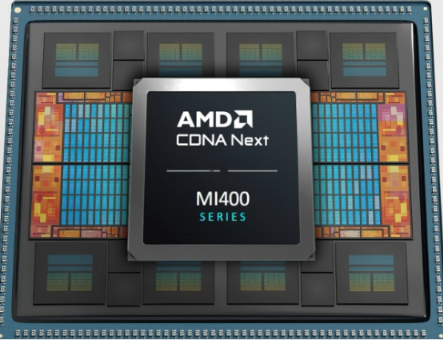
    AMD Instinct MI400 GPU with HBM4 memory
    AMD Instinct MI400 GPU with HBM4 memory

    San Francisco, May 15, 2026 — AMD has officially announced its Advancing AI 2026 conference will take place July 22-23 in San Francisco, where the company will unveil the Instinct MI400 series AI accelerators.

    Built on TSMC’s 2nm process with HBM4 memory, delivering 432GB per GPU and 19.6TB/s bandwidth, this new generation marks AMD’s first substantive challenge to NVIDIA Blackwell’s core specifications, signaling the global AI chip market’s transition from “NVIDIA solo show” to “duopoly competition.”

    From Follower to Challenger: MI400’s Decade-Long Journey

    AMD’s AI chip resurgence is no accident. The 2023 MI300X leveraged 192GB HBM3e memory to achieve competitiveness against NVIDIA H100 in specific inference scenarios, but software ecosystem limitations constrained market penetration. The 2025 MI350 series boosted FP8 compute to 10 PFLOPS with CDNA 4 architecture, gradually closing the hardware gap. Now, the MI400 launch signifies AMD’s strategic transformation from “hardware catching up” to “ecosystem confrontation.”

    The MI400 series’ core breakthrough lies in memory architecture. The HBM4 standard employs 16-layer stacking with 48GB per die and 145% bandwidth improvement over HBM3e. The flagship MI455X integrates 432GB HBM4 — 2.25x NVIDIA B200’s 192GB HBM3e; its 19.6TB/s memory bandwidth is 2.4x B200’s 8TB/s. For large model inference, memory capacity and bandwidth often matter more than raw compute — when model parameters exceed GPU memory, multi-card parallelism or CPU offloading becomes necessary, causing latency spikes. MI400’s memory advantage provides unique competitiveness for single-GPU trillion-parameter inference.

    On process technology, the MI400 series uses TSMC N2 (2nm-class), becoming the first GPU product to employ this advanced node, potentially ahead of NVIDIA Rubin (using N3). With 320 billion transistors — 70% more than MI355X — and 12 compute/IO chiplets in 3D stacking, it achieves density and energy efficiency balance. Single-GPU FP8 compute reaches 20 PFLOPS, FP4 compute hits 40 PFLOPS, matching NVIDIA B200 in raw performance while memory leadership may deliver superior real-world workload performance.

    Helios Rack: AMD’s “AI Factory” Blueprint

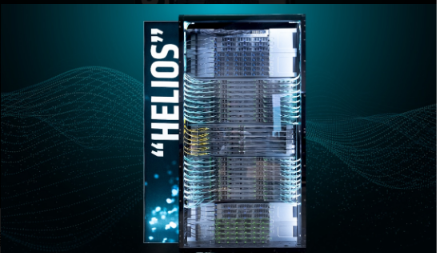
    Launched alongside the MI400 series, the Helios rack platform represents AMD’s first foray into rack-scale AI infrastructure integration. This double-wide rack (roughly twice standard server rack width) weighs 7,000 pounds (~3,175 kg), integrating 72 MI455X GPUs and 18 EPYC Venice CPUs, delivering 31TB total HBM4 memory, 1.4PB/s memory bandwidth, and 260TB/s interconnect bandwidth.

    Helios’ compute density is striking: per-rack FP4 inference performance reaches 2.9 ExaFLOPS, FP8 training performance hits 1.4 ExaFLOPS. For comparison, NVIDIA GB200 NVL72 delivers 3.6 ExaFLOPS FP4 inference and 2.5 ExaFLOPS FP4 training. While NVIDIA maintains raw compute advantages, Helios leads in memory capacity (31TB vs 20.7TB) and memory bandwidth (1.4PB/s vs 936TB/s) by approximately 50%. For memory-intensive inference tasks, this advantage may translate to 20%-30% actual throughput improvements.

    Thermal design is another Helios highlight. The double-wide rack provides ample space for liquid cooling systems, with per-rack power consumption around 140kW, comparable to NVIDIA NVL72 (120-130kW). AMD emphasizes Helios adopts Meta’s Open Rack Wide v3 open standard, intended to be replicated and adapted by multiple OEM/ODM partners rather than sold as a tightly controlled exclusive stack like NVIDIA. HPE has become the first major OEM partner to adopt the Helios architecture, with its custom Juniper switch supporting the UALoE (Ultra Accelerator Link over Ethernet) standard, reinforcing the openness positioning.

    AMD Helios double-wide AI rack platform
    AMD Helios double-wide AI rack platform

    Open Ecosystem: UALink and ROCm’s Joint Offensive

    AMD’s core strategy against NVIDIA extends beyond hardware competition to ecosystem openness. The UALink (Ultra Accelerator Link) interconnect standard, backed by AMD, Intel, Google, Meta, Microsoft, and Broadcom, aims to provide an open alternative to NVLink. Unlike NVIDIA’s proprietary NVLink 5 (1.8TB/s), UALink enables cross-vendor GPU cluster interconnectivity, reducing data center dependency on a single supplier.

    On the software front, the ROCm platform now natively supports PyTorch and TensorFlow, eliminating the largest early adoption barrier. While optimized kernel counts (~2,000) still trail CUDA (8,000+), AMD has validated ecosystem feasibility through a 6-gigawatt strategic partnership with OpenAI, Meta’s rack-scale deployment commitment, and Oracle Cloud’s MI355X instance launch. For enterprises with existing NVIDIA-optimized codebases, migration friction remains, but the entry barrier for new adopters has significantly lowered.

    Notably, AMD employs a “precision-segmented” product strategy. The MI400 series is not a single model for all scenarios but divides into three sub-series: MI455X for low-precision AI inference (FP4/FP8/BF16), MI440X for enterprise 8-GPU server deployment, and MI430X retaining full FP64 precision for HPC and scientific computing. This specialization reduces redundant logic, improving power efficiency and cost-effectiveness, contrasting with NVIDIA’s “one card for all” approach.

    Market Landscape: AI Compute’s “Cold War” Era

    The 2026 AI chip market is undergoing structural transformation. NVIDIA, with its CUDA ecosystem moat and mature Blackwell deployment, still commands approximately 80% market share, but supply bottlenecks and customer demands for supplier diversification create a window for AMD.

    AMD CEO Lisa Su proposed the “Yottascale” vision at CES 2026: global compute capacity must increase 100x over five years to reach 10 YottaFLOPS, expanding AI users from 1 billion to 5 billion. Behind this grand narrative lies AMD’s judgment that AI infrastructure is transitioning from “high-end niche” to “mass adoption” — when compute demand explodes, a single supplier cannot meet global needs, and open ecosystem cost advantages will emerge.

    Financially, AMD Q4 2025 revenue reached $10.3 billion (+34% YoY), with datacenter GPU business becoming the growth engine. Su projects AI datacenter business will grow approximately 80% annually over the next three to five years, with 2027 sales potentially reaching tens of billions of dollars. MI400 series mass production will be the critical inflection point for this growth curve.

    AMD Yottascale AI compute vision keynote
    AMD Yottascale AI compute vision keynote

    Challenges and Concerns: Software Maturity and Production Timeline

    Despite bright prospects, the MI400 series faces three major challenges. First is the software ecosystem maturity gap. CUDA, with 20 years of accumulation, boasts millions of developers and thousands of enterprise applications; ROCm still lags significantly in optimization depth, toolchain completeness, and developer community scale. For AI workloads dependent on custom CUDA kernels, migration to ROCm requires additional engineering investment and performance tuning.

    Second is production timeline uncertainty. SemiAnalysis reports indicate Helios rack engineering samples and low-volume production are expected in H2 2026, but mass production ramp and first production tokens may be delayed to Q2 2027. This means MI400’s actual 2026 shipment volume may be limited, posing no immediate threat to NVIDIA’s 2026 revenue.

    The most fundamental challenge lies in market perception transformation. NVIDIA has become synonymous with AI compute; the “buy GPU, choose NVIDIA” brand mindset is difficult to shake in the short term. AMD must demonstrate benchmark performance data beyond spec sheets and announce major customer deployment cases at Advancing AI 2026 to establish market confidence that “AMD is a reliable second choice.”

    Power Restructuring in the Trillion-Dollar Track

    The AI chip market is transitioning from “NVIDIA Empire” to “multipolar world.” AMD MI400’s launch, Intel Gaudi’s continued iteration, Google TPU’s vertical integration, and Amazon Trainium’s self-developed route collectively challenge NVIDIA’s dominance. But in this melee, AMD is the only vendor with autonomous capabilities across CPU (EPYC), GPU (Instinct), and interconnect technology (Infinity Fabric/Pensando), giving its “full-stack open” positioning unique ecosystem appeal.

    For datacenter operators and cloud providers, AMD’s rise means enhanced bargaining power and diversified supply chain risk. For AI developers and enterprise users, healthy competition in open ecosystems will reduce compute costs and accelerate innovation cycles. July 22, 2026, in San Francisco, may become a historic node for AI infrastructure power restructuring — when the Helios rack lights up, NVIDIA’s “lonely king” era may officially end.