Verdict: For the price of a coffee, FSL delivers a surprisingly capable voice-controlled night light that actually works offline. It is not revolutionary, but it is honest smart home tech for everyday people.
FSL executive presenting new AI night light at product launch
What You Get
The Xiaoban is a compact USB-powered night light from FSL (Foshan Lighting), a Chinese lighting manufacturer founded in 2026. The unit measures roughly 59 x 18 x 9 mm and plugs directly into any USB port. No app. No WiFi. No cloud account. You unpack it, plug it in, and speak.
The device recognizes basic Mandarin commands: “turn on the light,” “turn off,” “change color,” “brighter,” “dimmer.” Response time sits under one second. The built-in microphone picks up commands from about 3 meters in a quiet room. Background noise above 60 dB starts to interfere, so do not expect it to hear you over a running vacuum.
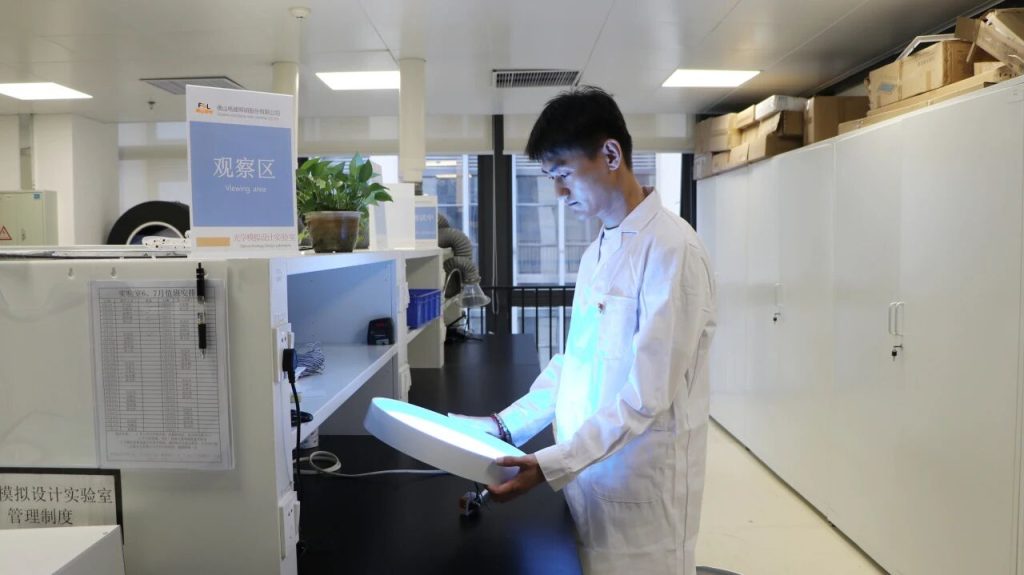
FSL technician inspecting LED panel in quality control lab
Lighting Performance
The Xiaoban uses a standard 5V/1A USB input and draws minimal power. LED output is soft and warm, rated around 2700K-3000K in default mode. The color-switching feature cycles through RGB options, though the transitions feel more functional than atmospheric. Brightness is adequate for hallway navigation or baby feeding at 3 AM, but insufficient for reading.
The eye-care claims hold up. No visible flicker at phone-camera test, and the diffused light does not blast your pupils when you are half-asleep. After two weeks of nightly use, no eye strain reported.
Build and Design
The plastic shell feels lightweight, not premium. The USB-A connector is fixed, not rotatable, which limits placement flexibility. A USB-C version would have been more 2025-appropriate. The device runs slightly warm after hours of use but never hot enough to cause concern.
The minimalist design blends into most bedroom setups. It is invisible when off and unobtrusive when on. No status LEDs to blind you at midnight, a thoughtful touch many competitors miss.
Who Actually Needs This
New parents who need hands-free light during 2 AM feeding sessions
Elderly users who struggle with small switches in the dark
Renters who cannot install permanent smart lighting
Budget smart home curious who want to test voice control without ecosystem lock-in
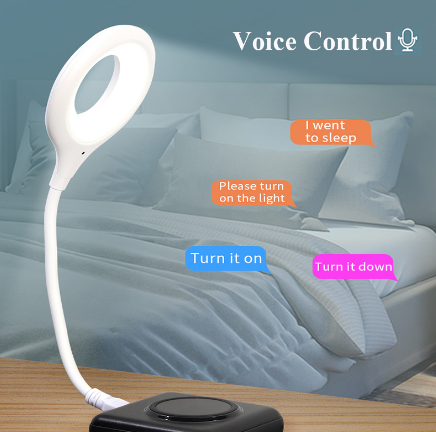
Voice-controlled lamp on bedroom nightstand
The Competition
At roughly $3-6 (20-40 RMB), the Xiaoban undercuts most alternatives. The Xiaomi Mi Night Light 3 offers motion sensing but no voice control at $8-9. The Lofree Sound-Activated Night Light costs $25+ with better aesthetics but identical core function. Generic USB voice lights from Alibaba start at $1 but lack brand reliability and consistent voice recognition.
FSL’s advantage is pedigree. Sixty-seven years in lighting manufacturing means the LED components are sourced properly, not salvaged from rejected batches. The voice module is a commodity chip, but the integration is clean.
Limitations
Language lock: Mandarin only. No English or other language support.
No dimming precision: Three rough brightness levels, not smooth adjustment.
No scheduling: Cannot set auto-off timers without external smart plugs.
USB dependency: Requires a powered port. Battery operation would unlock portability.
Bottom Line
The FSL Xiaoban is not trying to be a Philips Hue killer. It is a practical, low-risk entry into voice-controlled lighting. For anyone who has fumbled for a light switch at midnight while holding a crying baby, this $3 gadget removes exactly that friction. The smart home industry often chases complexity. FSL chose simplicity, and for this product category, that is the right call.
Introduction: Lei Jun’s Humanoid Robot Dream Finally Beyond PowerPoint
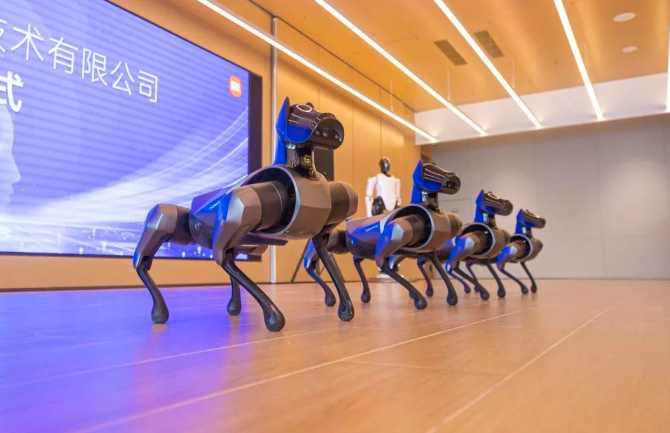
Xiaomi CyberOne 2026 version standing render
On June 8, Xiaomi did something big—the official release of CyberOne Gen 2. Standing 170cm tall, walking at 3km/h, powered by the self-developed MiMo embodied large model, breaking through 40% success rate as the only competitor at CVPR 2026 real-machine manipulation track, securing dual championships at ICRA 2026 full-body control track. The live demo even showed it holding a Xiaomi 17T Pro to take photos—not staged, but real-machine operation.
More critically: it has already started working at Xiaomi’s automotive factory. This is not a concept machine, not a laboratory toy, but a genuine “worker” that can tighten screws, move parts, and take quality inspection photos.
Xiaomi’s journey in humanoid robotics, counting from the 2022 debut of CyberOne Gen 1 “Tie Da,” has spanned four years. Gen 1 was technology validation; Gen 2 is scenario deployment. Lei Jun says humanoid robots are the final piece of Xiaomi’s “human-car-home full ecosystem” puzzle—phones manage people, cars manage mobility, robots manage the home. Now, this piece is finally starting to fit.
Product Overview: Evolution from “Tie Da” to “Worker”
The core upgrade of CyberOne Gen 2 is not height or weight, but the “brain”—the MiMo embodied large model.
What is MiMo? Xiaomi’s self-developed embodied intelligence large model. In February 2026, Xiaomi open-sourced the first-generation VLA large model Xiaomi-Robotics-0 (4.7 billion parameters, “brain + cerebellum” hybrid architecture), followed by the MiMo-V2.5 series in March. MiMo’s core capability bridges “language understanding” and “physical operation”: when you say “tighten that screw to the specified torque,” MiMo can decompose this into a physical action chain of “locate screw → grab tool → align with hole → rotate → detect torque → stop.”
The Weight of CVPR 2026 Dual Championships: CVPR is the top conference in computer vision. The real-machine manipulation track requires robots to complete grasping, placing, and tool usage tasks in real environments. CyberOne Gen 2 was the only competitor to break through 40% success rate—meaning in complex, dynamic, unstructured real environments, it can stably complete nearly half of the operation tasks. By comparison, the 2025 champion’s success rate was still around 25%.
ICRA 2026 Full-Body Control Dual Championships: ICRA is the top conference in robotics. The full-body control track tests a robot’s ability to walk, balance, and avoid obstacles while simultaneously performing upper-body operations. CyberOne Gen 2 can tighten screws while walking, carry boxes while avoiding obstacles—this “multi-task parallel” capability is the core requirement of industrial scenarios.
Live Demo of Holding Phone for Photography: This action seems simple but is actually extremely difficult. Phones are smooth, fragile, irregular objects; grip strength requires precise control (too light and it drops, too heavy and it breaks), and photography requires stable posture. CyberOne Gen 2’s ability to complete this action demonstrates that its tactile perception and force control precision have reached commercial levels.
Specifications: How Much Technology Fits in a 170cm Body
Spec
Details
Height
170cm
Walking Speed
3km/h
Drive Model
MiMo embodied large model
AI Architecture
VLA (Vision-Language-Action)
Open-Source Model
Xiaomi-Robotics-0 (4.7 billion parameters)
Vision System
Mi-Sense 3.0 (3D spatial perception)
Upper Body DoF
21+
Hand
Dexterous hand (tactile sensors)
Lower Body
Bipedal walking
Battery
Unannounced (Gen 1 reference ~3 hours)
Weight
~52kg (Gen 1 reference)
Application Scenarios
Factory assembly,quality inspection
Deployment Status
Already working at Xiaomi automotive factory
Data source: Xiaomi official launch event, CVPR/ICRA 2026 papers, IT Home
CyberOne Gen 2’s hardware platform continues the first generation’s design framework but with key upgrades:
Upper Body Dexterous Hand: Gen 1’s hand was a simple gripper; Gen 2 upgrades to a multi-DoF dexterous hand with independent finger control and palm covered with tactile sensor arrays. This enables it to hold phones, tighten screws, and plug in interfaces—actions requiring “perceive → adjust → execute” closed loops rather than simple “open → close.”
Mi-Sense 3.0 Vision System: Supports real-time 3D environment reconstruction with 10x precision improvement over Gen 1. In factory environments, it can identify part positions, poses, types, and even detect surface defects (scratches, stains, deformations).
Whole-Body Control Algorithm: Based on MiMo large model’s hybrid training of reinforcement learning + imitation learning. First trained millions of times in simulation environments, then fine-tuned in real environments. The ICRA dual championships prove that this algorithm reaches internationally top-tier levels in dynamic balance and multi-task coordination.
Deep Analysis: What Can Factory Deployment Actually Do?
CyberOne Gen 2’s specific work content at Xiaomi’s automotive factory includes:
Stud Insertion / Screw Tightening: At the die-casting workshop stud insertion station, continuously operating autonomously for 3 hours with bilateral simultaneous installation success rate reaching 90.2%, meeting the fastest 76-second production line cycle requirement. This data comes from March 2026 factory testing, harder-core than launch event demos.
Part: Cooperating with AGVs (Automated Guided Vehicles), grabbing part boxes from shelves, to assembly stations, and placing them at designated positions. During, it needs to avoid workers and other equipment with dynamic path planning.
Quality Inspection Photography: Holding a phone (or dedicated camera) to photograph assembled components, with the AI vision system detecting whether they are qualified. Unqualified products are automatically marked, notifying manual re-inspection.
Simple Assembly: Aligning two parts, inserting them, and securing them. Such tasks require force control precision (preventing over-tightening or under-tightening) and visual guidance (aligning with holes).
But these tasks share a common characteristic: structured, repetitive, with clear standards. CyberOne Gen 2 currently cannot handle unstructured tasks (such as “organize those messy parts”) or respond to emergencies (such as dropped parts, broken tools). Lei Jun himself admits that humanoid robots currently belong to the “apprentice” status, not yet truly becoming “formal workers.”
Comparison: CyberOne Gen 2 vs Tesla Optimus vs Unitree G1 vs UBTECH Walker
Feature
Xiaomi CyberOne Gen 2
Tesla Optimus Gen 2
Unitree G1
UBTECH Walker S1
Height
170cm
173cm
127cm
172cm
Weight
~52kg
~73kg
35kg
~76kg
Walking Speed
3km/h
5km/h
2m/s
3.5km/h
DoF
21+
22+
43
41
AI Model
MiMo (self-developed)
Tesla self-developed
Open-source/self-developed
ROSA 2.0
Dexterous Hand
Yes (tactile)
Yes (11 DoF)
Optional
Yes (force control)
Factory Deployment
Already working (Xiaomi)
Testing phase
Research/education
Already working (BYD, etc.)
Price
Unannounced (target < $30,000)
Unannounced (estimated $20,000-30,000)
99,000 yuan
Unannounced
Open Source
Partial (VLA model)
No
Partial
No
Positioning
Industrial + ecosystem
Industrial + general
Research + education
Industrial + service
CyberOne Gen 2’s differentiation is clear: ecosystem integration. It is not the strongest (Optimus), not the most flexible (G1), not the most mature (Walker), but it is the only humanoid robot destined from birth to become part of the “human-car-home ecosystem.”
Imagine this scenario: you leave home in the morning, your Xiaomi phone automatically syncs your schedule to CyberOne; after you get in the car, navigation data syncs to CyberOne, which turns on the home AC in advance; before you get off work, CyberOne receives the car’s location and starts preparing dinner (simple operations); when you arrive home, CyberOne reports today’s household completion status and syncs inspection photos to your phone album.
This “cross-device collaboration” capability is unique to Xiaomi’s ecosystem. Other manufacturers’ humanoid robots, no matter how powerful, are “islands.”
Pros and Cons
Pros
Cons
MiMo large model driven, internationally top-tier AI capability (CVPR + ICRA dual championships)
Factory tasks currently limited to structured, repetitive work
Already genuinely deployed, not a laboratory concept
Weak handling of unstructured tasks and emergencies
Human-car-home ecosystem integration, vast scenario imagination space
Battery life and stability require long-term validation
Dexterous hand + tactile sensors, strong delicate operation capability
Tech enthusiasts following humanoid robot technology frontiers
Investors/researchers focusing on embodied intelligence and VLA model development
Not recommended for:
Ordinary household users (currently no consumer version, and functions not suitable for home use)
Non-Xiaomi ecosystem users (ecosystem integration advantages cannot be leveraged)
Users needing unstructured task processing (such as organizing clutter, caring for elderly)
Small businesses with limited budgets (expected high initial procurement costs)
FAQ
Q: Can I buy CyberOne Gen 2 for home use? A: Currently only面向 industrial scenarios and enterprise clients, with no consumer sales plans. Xiaomi’s long-term goal is to launch home service models priced at 20,000-30,000 yuan, but the timeline is unannounced.
Q: Is the MiMo large model open-source? A: In February 2026, the first-generation VLA large model Xiaomi-Robotics-0 (4.7 billion parameters) was open-sourced, but whether the complete MiMo model running on CyberOne Gen 2 is open-source has not been officially clarified.
Q: Is factory deployment propaganda or reality? A: According to March 2026 testing data, CyberOne operated continuously for 3 hours at Xiaomi’s automotive factory die-casting workshop, achieving 90.2% bilateral nut installation success rate, meeting the 76-second cycle. This is real deployment, but scale may still be limited (hundreds of units).
Q: Who is stronger, CyberOne or Tesla Optimus? A: Each has advantages. Optimus leads in hardware performance (speed, strength), but CyberOne leads in AI models (CVPR/ICRA results) and ecosystem integration. Both are currently in industrial pilot phases, not yet mass-produced.
Q: What is the battery life? A: Official Gen 2 battery data has not been announced. Referencing Gen 1’s approximately 3 hours, Gen 2 may improve through battery optimization and energy management, but industrial scenarios typically require battery swap or charging solutions.
Conclusion
The release of Xiaomi CyberOne Gen 2 marks the Chinese humanoid robot industry’s formal transition from “laboratory showmanship” to “factory.” The CVPR and ICRA dual championships are not the endpoint but the starting point—they prove MiMo large model’s reliability in real physical environments, but the 90.2% success rate also means the remaining 9.8% of errors need to be conquered.
CyberOne Gen 2’s greatest value lies not in what it can do now, but in what it represents: the final piece of Xiaomi’s “human-car-home full ecosystem” puzzle. When phones, cars, and robots share the same AI brain (MiMo), the same data flow, and the same user profile, “intelligent living” transforms from marketing rhetoric into real experience.
But this road is still long. Large-scale engineering application of humanoid robots faces prominent challenges including poor process stability, high hardware costs, and limited workstation quantities. Lei Jun promises that within 5 years humanoid robots will be deployed in Xiaomi factories—whether this promise is fulfilled depends on MiMo model iteration speed, supply chain cost decline curves, and most importantly: whether users are willing to pay for “a walking AI assistant.”
Introduction: Projector AIization, From “Watchable” to “Usable”
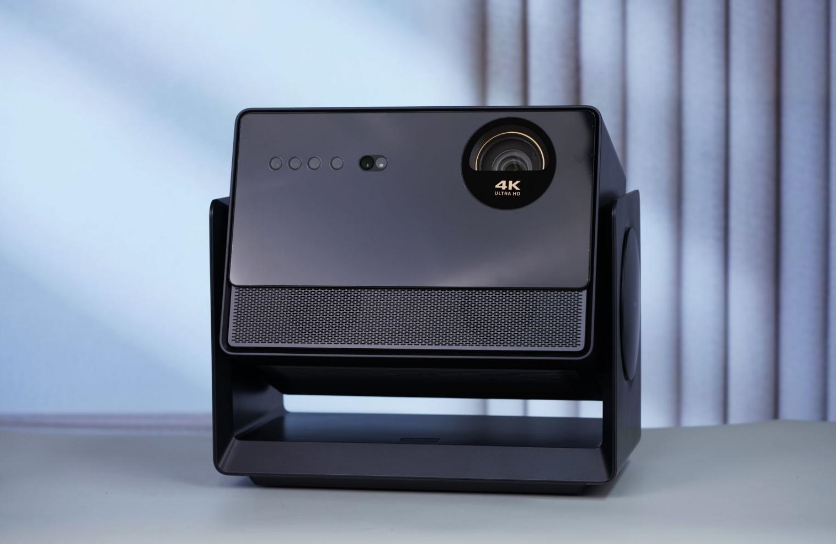
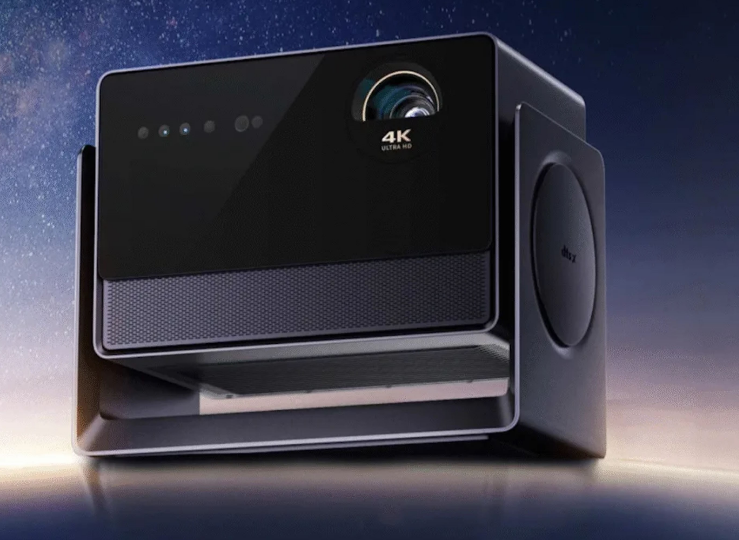
Dangbei S7 Ultra Pro AI projector front view
On October 9, 2025, Dangbei released the S7 Ultra Pro—a flagship AI smart projector with maxed-out specifications. 4500 CVIA lumens, native 4K, 8000:1 native contrast ratio, Dangbei Super AI OS 6.0, AI super assistant, 360° motorized AI gimbal, full-link liquid cooling, and 24dB noise level. Priced at approximately 9496 yuan, positioned as a premium home cinema.
Honestly, the projector market has been competitive for years. XGIMI, JMGO, Hisense Vidda, Dangbei—all competing on brightness, resolution, and intelligence. The S7 Ultra Pro’s strategy is clear: establish a “image quality ceiling” with hardware specs, build an “experience moat” with AI OS, and solve “usage pain points” with liquid cooling and gimbal.
The question is: is 9496 yuan for a projector worth it?
Product Overview: Dangbei’s Flagship Ambition
Who is Dangbei? One of China’s top smart projector brands, originally known for “Dangbei Market” and “Dangbei OS,” later entering hardware with a focus on “high brightness + intelligence.” The S7 Ultra Pro is Dangbei’s absolute flagship, with all technical reserves fully deployed.
Core selling points can be summarized as “three hardware, three software”:
Three Hardware: 4500 CVIA lumens ultra-high brightness, native 4K resolution, 8000:1 native contrast ratio (dynamic 65000:1).
Three Software: Dangbei Super AI OS 6.0, customizable AI super assistant, 360° horizontal + 180° vertical motorized AI gimbal.
Specifications: The Sincerity of Flagship Projector Spec Stacking
Spec
Details
Brightness
4500 CVIA lumens
Resolution
Native 4K (3840×2160)
Contrast
8000:1 native / 65000:1 dynamic
Chip
MT9681 flagship chip
Memory
4GB+128GB
Operating System
Dangbei Super AI OS 6.0
AI Interaction
Far-field voice, light-tracking pointer, gesture control
AI Assistant
AI Super Assistant (customizable)
Cooling
Full-link liquid cooling
Noise
24dB
Gimbal
360° horizontal + 180° vertical motorized AI gimbal
Data source: Dangbei official launch materials, SMZDM
What does 4500 CVIA lumens mean? CVIA is a brightness standard established by the China Video Industry Association, stricter than traditional ANSI lumens (typically CVIA value ≈ ANSI value × 0.8-0.9). 4500 CVIA is approximately equivalent to 5000-5600 ANSI lumens, belonging to “top-tier brightness” among projectors—watchable during daytime without closing curtains, unaffected by room lights at night.
Native 4K resolution means physical pixels are genuinely 3840×2160, not “wobulated 4K” or “XPR technology 4K.” Paired with 8000:1 native contrast ratio, image depth and dark detail performance far exceed “wobulated 4K” products. The dynamic 65000:1 is achieved through dynamic iris, making dark scenes darker and bright scenes brighter when watching movies.
The MT9681 is MediaTek’s flagship projector chip, with performance comparable to flagship smartphone SoCs. The 4GB+128GB storage configuration is “top-tier” among projectors—most projectors still use 2GB+16GB or 3GB+32GB.
Deep Analysis: What Does AI OS Actually Change?
Dangbei Super AI OS 6.0 is the S7 Ultra Pro’s core differentiator. Traditional projector OS simply “plays videos,” while Dangbei’s AI OS aims to be a “smart entertainment center.”
AI Super Assistant: Users can customize the AI assistant’s wake word, voice, personality, and even set up exclusive knowledge bases. For example, you can create a “movie expert” assistant specializing in film recommendations, director style explanations, and shot language analysis. This assistant runs on an edge-side AI model, enabling basic conversation without internet connectivity.
Far-Field Voice: No need to press the remote to speak; simply call out “Dangbei Dangbei” to wake it up. Supports multi-turn dialogue and context understanding, such as “recommend a sci-fi movie,” “directed by Nolan,” “not Batman”—the AI can understand.
Light-Tracking Pointer: The remote emits a light beam; the projector camera tracks the light point position, displaying a cursor on screen. This is much faster than traditional directional buttons for selecting content, especially when inputting text or browsing web pages.
Gesture Control: Raise hand to pause, wave to flip pages, clench fist to confirm. Suitable for eating without touching the remote, or exercising while operating from a distance.
360° Motorized AI Gimbal: This is hardware-level AIization. The gimbal built-in gyroscope and AI algorithms automatically recognize projection angles and wall positions, achieving “point and project.” You can place the projector on nightstands, coffee tables, or bookshelves—AI automatically corrects the image (keystone correction, focusing, obstacle avoidance, screen fitting). The 360° horizontal rotation means you can project onto the ceiling, side walls, or even turn around to project onto the wall behind you.
Mijia Interconnection: Access to the Xiaomi ecosystem, enabling projector control of Mijia devices, or using Xiao Ai to control the projector. For example, saying “cinema mode” while watching movies automatically dims the projector, closes curtains, and changes ambient lighting colors.
Comparison: S7 Ultra Pro vs XGIMI RS10 Ultra vs JMGO N1S Ultra
Feature
Dangbei S7 Ultra Pro
XGIMI RS10 Ultra
JMGO N1S Ultra
Brightness
4500 CVIA
3500 CVIA
3000 CVIA
Resolution
Native 4K
Native 4K
Native 4K
Contrast
8000:1 native
Unannounced (estimated ~3000:1)
1600:1
Chip
MT9681
MT9669
MT9669
Memory
4GB+128GB
4GB+128GB
4GB+64GB
AI OS
Dangbei Super AI OS 6.0
GMUI 6.0
Bonfire OS
Gimbal
360° motorized AI gimbal
None (requires stand)
None (requires stand)
Cooling
Liquid cooling 24dB
Air cooling (~30dB)
Air cooling (~28dB)
Optical Zoom
0.98-1.6:1
1.2:1 fixed
1.2:1 fixed
Speckle Elimination
Eight-layer 99.999%
Standard
Standard
Price
~9496 yuan
~9999 yuan
~8999 yuan
All three are flagship projectors in the 10,000-yuan range, but differentiation is clear. The Dangbei S7 Ultra Pro wins on “brightness + AI gimbal + liquid cooling noise control,” the XGIMI RS10 Ultra wins on “brand recognition + content ecosystem,” and the JMGO N1S Ultra wins on “tri-color laser color + value for money.”
If you pursue “watchable during daytime” ultimate brightness, automatic gimbal without stand hassle, and quiet liquid cooling, Dangbei is the best choice. If you prioritize brand after-sales and content integration, XGIMI is more reliable. If you have limited budget but want tri-color laser color performance, JMGO is more suitable.
Dangbei S7 Ultra Pro 4K projector official render
Pros and Cons
Pros
Cons
4500 CVIA lumens, daytime viewing without pressure
9496 yuan price is high, high barrier for entry users
Pragmatists indifferent to AI features who only need “video playback”
Families already owning high-end TVs (such as OLED 77-inch+), where projector improvement is limited
FAQ
Q: Can 4500 CVIA lumens be watched during daytime without closing curtains?
A: Yes, but effects are inferior to nighttime. Recommend using high brightness mode during daytime, or pairing with an ambient light rejecting screen. Any projector struggles under direct sunlight.
Q: How accurate is the AI gimbal’s auto-correction?
A: Official claims support “millisecond-level” auto-correction, but complex walls (such as wallpaper, uneven surfaces) may affect results. Recommend projecting onto flat white walls or screens when possible.
Q: Does liquid cooling require maintenance?
A: The liquid cooling system is a closed loop, theoretically requiring no maintenance. But after long-term use (3-5 years), professional inspection may be needed. Recommend confirming warranty policies at purchase.
Q: Can the AI super assistant connect to third-party large models?
A: Currently only supports Dangbei’s built-in AI model and custom knowledge bases. Official announcements on whether ChatGPT, Wenxin Yiyan, or other third-party models will be supported are pending.
Conclusion
The Dangbei S7 Ultra Pro is a “parameter ceiling” level flagship projector. 4500 CVIA lumens, native 4K, and 8000:1 contrast ratio—these three hard metrics have virtually no rivals in the 10,000-yuan projector segment. The AI gimbal, liquid cooling, and light-tracking pointer also genuinely solve traditional projector usage pain points.
But the 9496 yuan pricing makes it destined to be not a “mass-market blockbuster” but an “enthusiast toy.” For ordinary families, projectors around 5000 yuan are sufficient; but for users pursuing ultimate audiovisual experience and willing to pay for every parameter improvement, the S7 Ultra Pro is one of the most worth-considering options on the market.
Dangbei’s challenge lies in: how to build true brand moats beyond “hardware spec stacking.” XGIMI has content ecosystem and offline channels, JMGO has the technical label of tri-color laser, and whether Dangbei’s “AI OS” differentiation can maintain leadership depends on subsequent iteration speed and ecosystem expansion capabilities.
Introduction: Google Is Finally Getting Serious About Smart Speakers
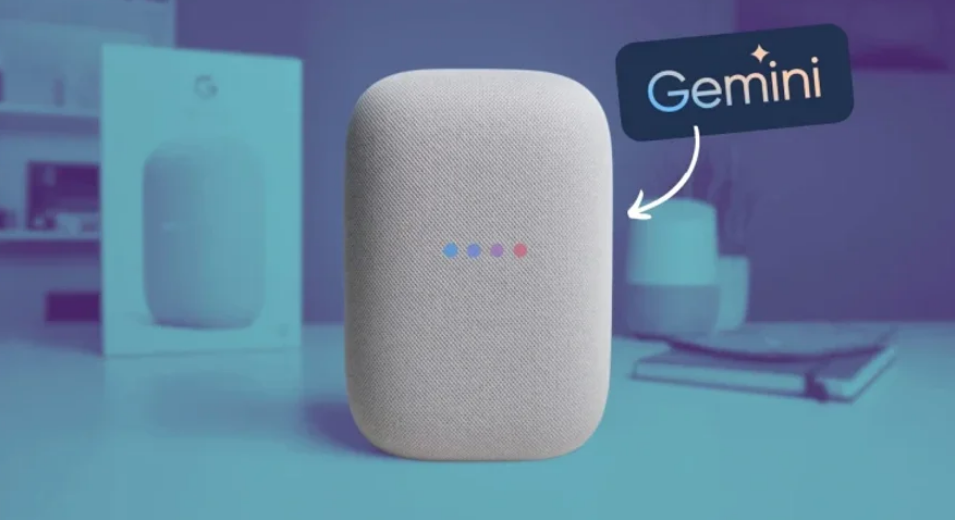
Google Nest speaker Gemini AI integration preview
At the October 2025 hardware launch event, Google dropped a bombshell: the next-generation Google Home speaker will be powered by the Gemini large model. Not a patch for the original Google Assistant, but a complete brain replacement—from a rule-based voice assistant to a large model-based AI assistant. Scheduled for spring 2026 launch, estimated at $99, four colors available, 360-degree audio, 3D woven material.
This news matters because it signals a turning point for the smart speaker industry: voice assistants evolving from toys that “understand a few commands” to butlers that “comprehend complex intentions.” And Google’s choice to use Gemini—their strongest large model—shows they genuinely want to transform smart speakers from “smart home accessories” into “home AI hubs.”
But the question is: can Gemini in a speaker really change anything? Or is it just another “sounds cool, works dumb” upgrade?
Product Overview: Gemini Speaker, Not Google Assistant 2.0
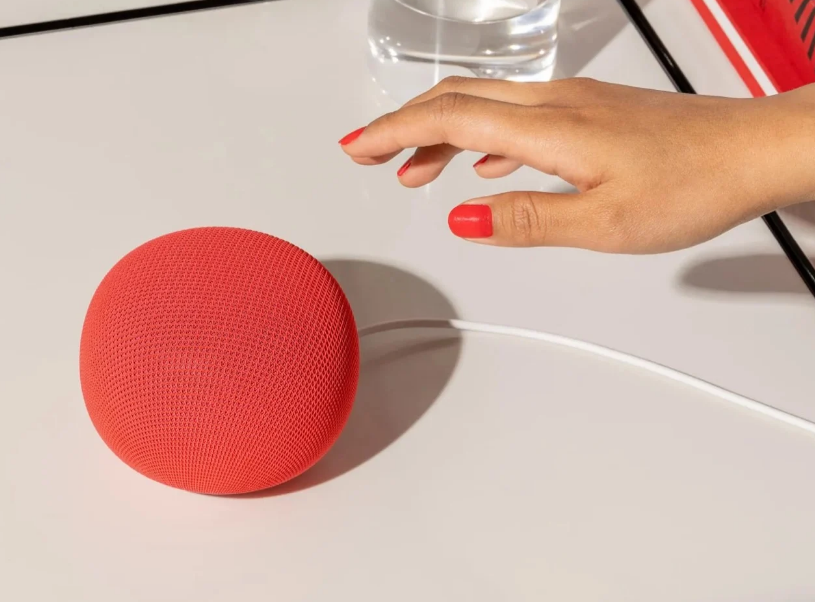
Google Home Mini red fabric speaker design
The Google Home series has been on sale for nearly a decade, from the original Google Home to Nest Mini, Nest Audio, and Nest Hub, covering entry-level to screen-equipped models across various price points. But the core voice assistant—Google Assistant—has always been a rule-based expert system: you say “turn on the light,” it matches the “turn on the light” command; you say “dim the living room light a bit,” and it might just get confused.
Gemini integration is not a simple “reskin” but an architectural reconstruction:
From Rule Matching to Intent Understanding: Google Assistant requires you to say exact command words; Gemini understands natural language. For example, you say “I want to watch a movie tonight, set the mood,” and Gemini can understand: dim lights → close curtains → turn on TV → launch Netflix → adjust volume to appropriate level → lower AC temperature slightly. In the Google Assistant era, this required writing a series of automation scripts.
From Single-Turn to Multi-Turn Continuous Dialogue: Gemini Live mode supports natural and fluent continuous conversation without needing to say “Hey Google” for every sentence. You can interrupt it, switch topics, add conditions—just like chatting with a real person. This requires the large model’s context memory and reasoning capabilities, which traditional voice assistants cannot achieve.
From Cloud Processing to Edge-Cloud Collaboration: Some Gemini capabilities will to the device side, enabling faster response and better privacy protection. For example, simple device control and local queries can be completed locally on the speaker; complex multi-step tasks require uploading to cloud processing.
Specifications: What Does the Gemini Speaker Actually Upgrade?
Gemini Live (requires Google One Premium subscription)
Ecosystem Protocols
Matter, Thread, Zigbee
Pairing
Can pair with Google TV Streamer for surround sound
Sensing
Sound Sensing (anomaly sound detection)
Estimated Price
$99
Estimated Launch
Spring 2026
Data source: Google October 2025 hardware launch event, 9to5Google, Android Police
360-Degree Audio: Not simply “speakers on all sides,” but algorithm-optimized to distribute sound evenly throughout the room. Regardless of which direction you stand from the speaker, the sound quality and volume remain basically consistent. This is far more practical than directional speakers for speakers placed in the center of the living room.
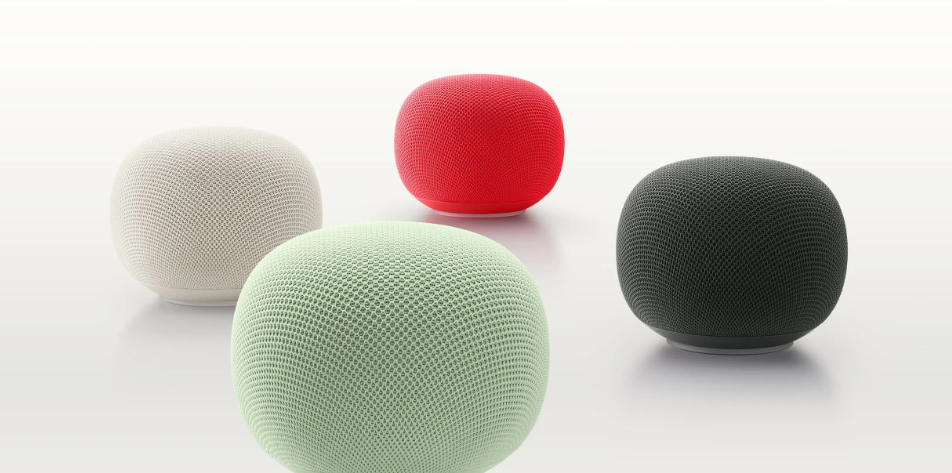
3D Woven Material: Google’s obsession with environmental sustainability. This material is made from recycled plastic bottles, with a fabric-like texture but acoustic wave transparency—sound can penetrate the material to propagate without distortion from blocking. The four-color design (Porcelain, Hazel, Berry, Jade) transforms the speaker from a “tech product” into a “home decoration.”
Bottom LED Ring: Status visualization design. Different colors represent different states: white = waking up, blue = processing, red = muted, yellow = notification. This is more intuitive than voice announcements, especially in noisy environments.
Gemini Live: This is the core selling point, but requires a Google One Premium subscription (approximately $20/month). Live mode supports natural conversation, interruptions, and topic switching, equivalent to installing a “real person assistant” in the speaker. But the question is: how many users are willing to pay an extra $20 per month for a speaker’s AI features?
Sound Sensing: Anomaly sound detection. The speaker can identify sounds like glass breaking, smoke alarms, and baby crying, automatically notifying users. This function does not rely on additional sensors but is purely achieved through AI audio analysis, demonstrating Gemini’s multimodal capabilities.
Google 2026 smart speaker four color lineup display
Deep Analysis: What Gemini Speakers Can and Cannot Change
The impact of Gemini integration on the smart speaker industry can be analyzed from three levels:
First, Interaction Experience: From “Commands” to “Conversations”
This is the most direct change. Current smart speakers work like this: you say “play Jay Chou’s songs,” it plays; you say “next song,” it switches; you say “lower the volume,” it adjusts. The entire process is a one-way “you issue command → it executes” flow.
In the Gemini era, interaction becomes bidirectional:
You: “Recommend some music suitable for working”
Gemini: “What style do you prefer? Light music, jazz, or electronic?”
You: “Jazz, but not too loud”
Gemini: “Okay, I’ll play Miles Davis’s ‘Kind of Blue’ for you, one of the most classic albums in jazz history. What volume would you like?”
You: “30% is fine”
Gemini: “Set. If you want to change styles later, just let me know.”
This conversational interaction transforms the speaker from a “tool” into a “partner.” But the premise is: Gemini’s understanding accuracy is high enough, response speed is fast enough; otherwise, the conversation’s fluency will be interrupted, and the experience will be worse than command-based interaction.
Second, Smart Home: From “Control” to “Orchestration”
Current smart home control is essentially “one-to-one”: you say “turn on the light,” the light turns on; you say “turn on the AC,” the AC turns on. Complex scenarios require users to set up automations themselves (such as Google Home’s Routines).
Gemini’s “orchestration” capability is “many-to-many”: you say “I’m leaving,” and Gemini automatically executes: turn off lights → turn off AC → lock door → start robot vacuum → set security system to away mode → send phone notification “Away, security activated.” More impressively, Gemini can dynamically adjust based on your habits: if you normally don’t turn off the AC when leaving (because you have pets at home), it remembers this exception and won’t turn it off every time.
This “learning + reasoning + execution” capability is the core advantage of the Gemini large model. But the challenge lies in smart home device compatibility. Google Home supports the Matter protocol, but domestic brands like Xiaomi, Huawei, and Haier have inconsistent Matter support. No matter how smart Gemini is, it cannot control devices that “cannot understand.”
Third, Business Model: From “Selling Hardware” to “Selling Services”
At a $99 hardware price point, Google basically makes no money (or possibly loses money). The real profit point is the Google One Premium subscription ($20/month) and control over the smart home ecosystem.
The Gemini Live subscription model is Google’s key shift from “one-time speaker sales” to “ongoing AI service sales.” If users become accustomed to Gemini Live’s natural conversation, it’s hard to go back to the free Google Assistant. This “habit lock-in” effect is the core of the subscription business model.
But risks are also obvious: if the Gemini Live experience is not good enough, users won’t pay; if competitors (such as Alexa+Claude, Siri+Apple Intelligence) offer free or cheaper alternatives, Google’s subscription model won’t stand.
Comparison: Google Home Gemini vs Amazon Echo vs Apple HomePod
Feature
Google Home Gemini
Amazon Echo (Alexa+Claude)
Apple HomePod (Siri)
AI Model
Gemini (self-developed)
Claude (Anthropic partnership)
Apple Intelligence (self-developed)
Conversation
Gemini Live (subscription)
Basic conversation (free)
Basic conversation (free)
Multi-Step Commands
Strong (native to large model)
Medium (requires Skills development)
Weak (rule-based)
Audio Quality
360-degree omnidirectional
Directional (varies by model)
360-degree omnidirectional (computational audio)
Smart Home
Matter+Thread+Zigbee
Matter+Zigbee+proprietary
HomeKit+Thread+Matter
Ecosystem Openness
High (Matter-focused)
Medium (strong proprietary ecosystem)
Low (closed ecosystem)
Privacy Strategy
Edge-cloud collaboration, optional local
Cloud-based primarily
Edge-side priority
Price
$99 (hardware) + $20/month (Live)
$50-200 (hardware, no subscription)
$299 (hardware, no subscription)
Content
YouTube Music, Spotify
Amazon Music, Audible
Apple Music, Podcasts
Three speakers, three paths: Google bets on “AI conversation capabilities + subscription services,” Amazon bets on “ecosystem richness + low-cost hardware,” and Apple bets on “audio quality + privacy + closed ecosystem.”
If you’re already in the Google ecosystem (Android phone, YouTube, Google Photos), the Gemini speaker is a natural extension. If you deeply use Amazon services (Prime, Audible, Amazon Music), Echo is more integrated. If you’re an Apple ecosystem user, HomePod’s audio quality and privacy are irreplaceable.
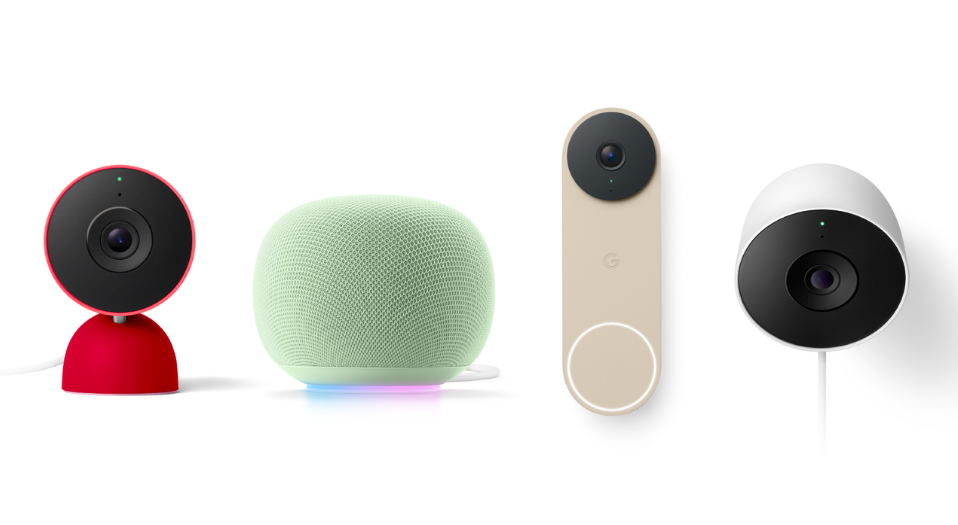
Google Nest ecosystem product lineup collection
Pros and Cons (Based on Preview Information)
Pros
Cons
Gemini large model understanding far exceeds Google Assistant
Gemini Live requires subscription ($20/month), increasing usage costs
Native multi-step complex command support, no scripting needed
Actual experience to be verified; large model latency may affect conversation fluency
360-degree audio, consistent quality from any room position
$99 hardware pricing may imply audio quality compromises
3D woven eco-friendly material, high home integration
Domestic users cannot directly use (requires VPN + US-region account)
Matter protocol support, high ecosystem openness
Low Matter support from domestic smart home brands, limited compatibility
Sound Sensing anomaly detection without additional sensors
Privacy concerns: microphone 24/7 listening, data uploaded to cloud
Can pair with Google TV Streamer for surround sound
Pairing with Google TV Streamer requires additional device purchase
Who Should Buy (Based on Preview Information)
Recommended for:
Overseas Google ecosystem users (Android, YouTube, Google Photos)
Users with high requirements for AI conversation capabilities willing to pay for Gemini Live subscription
Users with Matter-protocol smart home setups needing an open ecosystem hub
Tech enthusiasts wanting to experience large model voice interaction as early adopters
Not recommended for:
Domestic users (cannot directly use Google services)
Budget-sensitive users unwilling to pay monthly for AI features
Deep Apple ecosystem users (HomePod more integrated)
Deep Amazon ecosystem users (Echo more integrated)
Users extremely sensitive to privacy who reject cloud voice processing
FAQ
Q: Is Gemini Live subscription required to use the Gemini speaker?
A: Basic functions (device control, simple queries, music playback) are free, but natural conversation, multi-step commands, and context memory require Google One Premium subscription (approximately $20/month).
Q: Can it be purchased and used in China?
A: Google hardware products are typically not sold in mainland China. Even if obtained through overseas purchasing, VPN network environment and US-region Google account are required for normal full-function use. Domestic users recommend waiting for domestic versions or choosing domestic alternatives.
Q: Can the Gemini speaker control Xiaomi/Huawei smart home devices?
A: If devices support the Matter protocol, they can be directly controlled. But domestic brands’ Matter support is inconsistent; recommend confirming specific device compatibility before purchase. Devices not supporting Matter require third-party bridging or cannot connect.
Q: How is Sound Sensing privacy security? A: Google claims Sound Sensing processes audio locally without uploading to the cloud. But specific implementation details (such as which sounds trigger uploads, data retention policies) require confirmation from the privacy white paper after official release.
Q: Is audio quality improvement obvious after pairing with Google TV Streamer?
A: After pairing, stereo or surround sound effects can be achieved, but improvement degree depends on room acoustics and speaker placement. Single-speaker 360-degree audio is already good; pairing mainly expands soundstage rather than improving audio quality.
Conclusion
Google Home Gemini integration is the smart speaker industry’s key step from “voice control” toward “AI conversation.” The Gemini large model’s understanding capabilities, reasoning capabilities, and multi-step execution capabilities genuinely have the potential to upgrade smart speakers from “smart home accessories” to “home AI hubs.”
But this product faces three uncertainties:
First, experience uncertainty. Large model response latency, understanding accuracy, and conversation fluency in real home environments (with background noise, multiple people speaking, accent variations) need verification after official release.
Second, business model uncertainty. The $20/month Gemini Live subscription—will users pay? If the free version’s basic functions are already good enough, subscription conversion may be low; if the free version deliberately limits experience to force subscriptions, it will trigger backlash.
Third, ecosystem uncertainty. The Matter protocol is Google’s open strategy, but domestic smart home market dominance lies with local brands like Xiaomi, Huawei, and Haier. These brands’ Matter support progress directly determines Gemini speaker usability domestically—though domestic users couldn’t use Google services anyway.
For overseas users, Google Home Gemini is the most anticipated smart speaker upgrade of 2026. For domestic users, it’s more like a “technology”—showing us what large model voice interaction can achieve, then waiting for domestic manufacturers (Xiao Ai + Tongyi Qianwen, Xiaodu + Wenxin Yiyan) to follow.
Google is getting serious this time, but whether seriousness can win over users will be seen in spring 2026.