Introduction: Google Is Finally Getting Serious About Smart Speakers
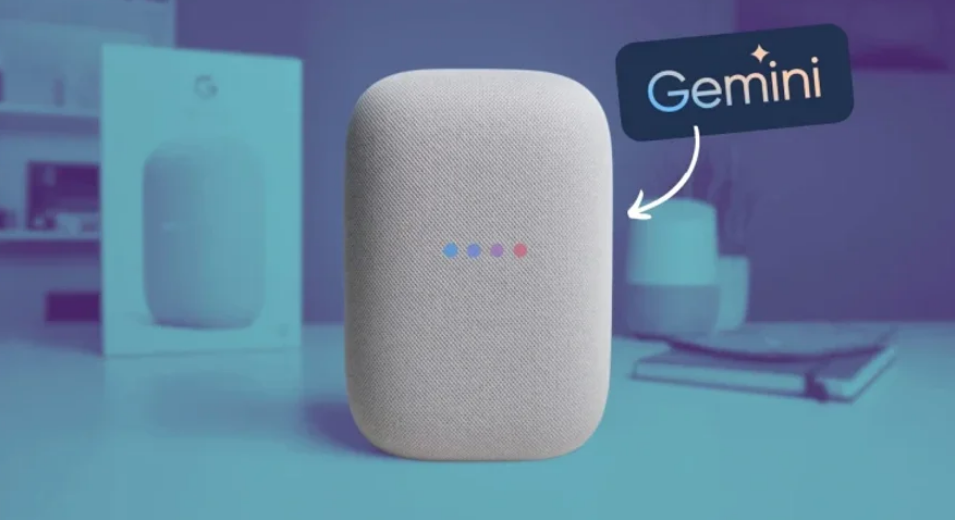
At the October 2025 hardware launch event, Google dropped a bombshell: the next-generation Google Home speaker will be powered by the Gemini large model. Not a patch for the original Google Assistant, but a complete brain replacement—from a rule-based voice assistant to a large model-based AI assistant. Scheduled for spring 2026 launch, estimated at $99, four colors available, 360-degree audio, 3D woven material.
This news matters because it signals a turning point for the smart speaker industry: voice assistants evolving from toys that “understand a few commands” to butlers that “comprehend complex intentions.” And Google’s choice to use Gemini—their strongest large model—shows they genuinely want to transform smart speakers from “smart home accessories” into “home AI hubs.”
But the question is: can Gemini in a speaker really change anything? Or is it just another “sounds cool, works dumb” upgrade?
Product Overview: Gemini Speaker, Not Google Assistant 2.0
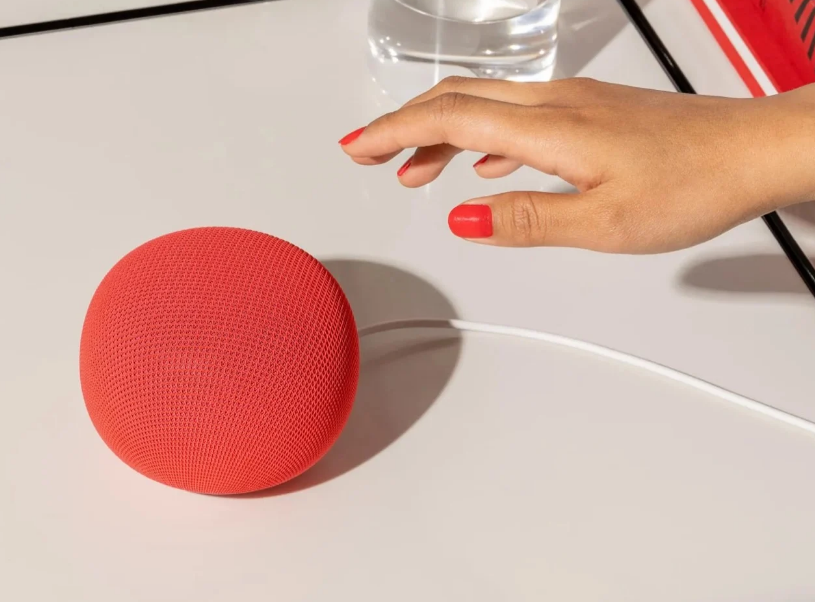
The Google Home series has been on sale for nearly a decade, from the original Google Home to Nest Mini, Nest Audio, and Nest Hub, covering entry-level to screen-equipped models across various price points. But the core voice assistant—Google Assistant—has always been a rule-based expert system: you say “turn on the light,” it matches the “turn on the light” command; you say “dim the living room light a bit,” and it might just get confused.
Gemini integration is not a simple “reskin” but an architectural reconstruction:
From Rule Matching to Intent Understanding: Google Assistant requires you to say exact command words; Gemini understands natural language. For example, you say “I want to watch a movie tonight, set the mood,” and Gemini can understand: dim lights → close curtains → turn on TV → launch Netflix → adjust volume to appropriate level → lower AC temperature slightly. In the Google Assistant era, this required writing a series of automation scripts.
From Single-Turn to Multi-Turn Continuous Dialogue: Gemini Live mode supports natural and fluent continuous conversation without needing to say “Hey Google” for every sentence. You can interrupt it, switch topics, add conditions—just like chatting with a real person. This requires the large model’s context memory and reasoning capabilities, which traditional voice assistants cannot achieve.
From Cloud Processing to Edge-Cloud Collaboration: Some Gemini capabilities will to the device side, enabling faster response and better privacy protection. For example, simple device control and local queries can be completed locally on the speaker; complex multi-step tasks require uploading to cloud processing.
Specifications: What Does the Gemini Speaker Actually Upgrade?
| Spec | Details (Based on Preview Information) |
|---|---|
| AI Model | Google Gemini (replacing Google Assistant) |
| Audio | 360-degree omnidirectional audio |
| Design | 3D woven material, eco-friendly and recyclable |
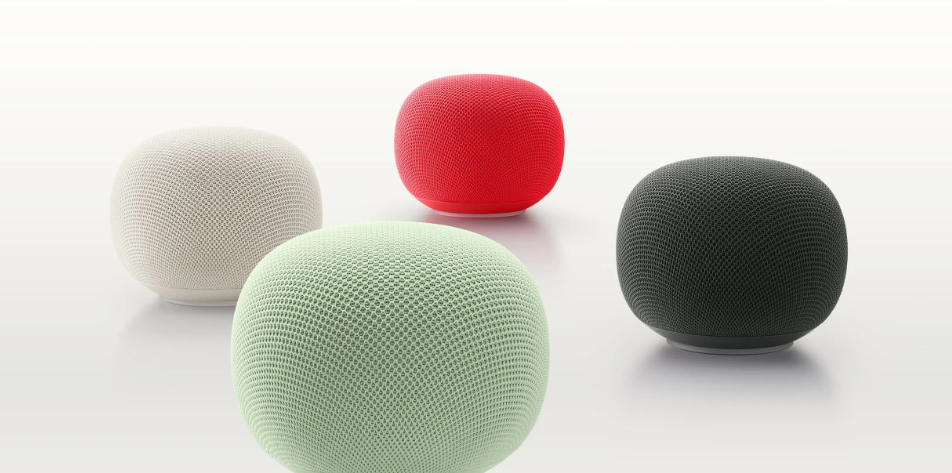
| Colors | Porcelain, Hazel, Berry, Jade |
| Indicator | Bottom LED ring, status visualization |
| Voice Interaction | Far-field pickup, noise suppression, reverberation cancellation |
| Conversation Mode | Gemini Live (requires Google One Premium subscription) |
| Ecosystem Protocols | Matter, Thread, Zigbee |
| Pairing | Can pair with Google TV Streamer for surround sound |
| Sensing | Sound Sensing (anomaly sound detection) |
| Estimated Price | $99 |
| Estimated Launch | Spring 2026 |
Data source: Google October 2025 hardware launch event, 9to5Google, Android Police
360-Degree Audio: Not simply “speakers on all sides,” but algorithm-optimized to distribute sound evenly throughout the room. Regardless of which direction you stand from the speaker, the sound quality and volume remain basically consistent. This is far more practical than directional speakers for speakers placed in the center of the living room.
3D Woven Material: Google’s obsession with environmental sustainability. This material is made from recycled plastic bottles, with a fabric-like texture but acoustic wave transparency—sound can penetrate the material to propagate without distortion from blocking. The four-color design (Porcelain, Hazel, Berry, Jade) transforms the speaker from a “tech product” into a “home decoration.”
Bottom LED Ring: Status visualization design. Different colors represent different states: white = waking up, blue = processing, red = muted, yellow = notification. This is more intuitive than voice announcements, especially in noisy environments.
Gemini Live: This is the core selling point, but requires a Google One Premium subscription (approximately $20/month). Live mode supports natural conversation, interruptions, and topic switching, equivalent to installing a “real person assistant” in the speaker. But the question is: how many users are willing to pay an extra $20 per month for a speaker’s AI features?
Sound Sensing: Anomaly sound detection. The speaker can identify sounds like glass breaking, smoke alarms, and baby crying, automatically notifying users. This function does not rely on additional sensors but is purely achieved through AI audio analysis, demonstrating Gemini’s multimodal capabilities.
Deep Analysis: What Gemini Speakers Can and Cannot Change
The impact of Gemini integration on the smart speaker industry can be analyzed from three levels:
First, Interaction Experience: From “Commands” to “Conversations”
This is the most direct change. Current smart speakers work like this: you say “play Jay Chou’s songs,” it plays; you say “next song,” it switches; you say “lower the volume,” it adjusts. The entire process is a one-way “you issue command → it executes” flow.
In the Gemini era, interaction becomes bidirectional:
- You: “Recommend some music suitable for working”
- Gemini: “What style do you prefer? Light music, jazz, or electronic?”
- You: “Jazz, but not too loud”
- Gemini: “Okay, I’ll play Miles Davis’s ‘Kind of Blue’ for you, one of the most classic albums in jazz history. What volume would you like?”
- You: “30% is fine”
- Gemini: “Set. If you want to change styles later, just let me know.”
This conversational interaction transforms the speaker from a “tool” into a “partner.” But the premise is: Gemini’s understanding accuracy is high enough, response speed is fast enough; otherwise, the conversation’s fluency will be interrupted, and the experience will be worse than command-based interaction.
Second, Smart Home: From “Control” to “Orchestration”
Current smart home control is essentially “one-to-one”: you say “turn on the light,” the light turns on; you say “turn on the AC,” the AC turns on. Complex scenarios require users to set up automations themselves (such as Google Home’s Routines).
Gemini’s “orchestration” capability is “many-to-many”: you say “I’m leaving,” and Gemini automatically executes: turn off lights → turn off AC → lock door → start robot vacuum → set security system to away mode → send phone notification “Away, security activated.” More impressively, Gemini can dynamically adjust based on your habits: if you normally don’t turn off the AC when leaving (because you have pets at home), it remembers this exception and won’t turn it off every time.
This “learning + reasoning + execution” capability is the core advantage of the Gemini large model. But the challenge lies in smart home device compatibility. Google Home supports the Matter protocol, but domestic brands like Xiaomi, Huawei, and Haier have inconsistent Matter support. No matter how smart Gemini is, it cannot control devices that “cannot understand.”
Third, Business Model: From “Selling Hardware” to “Selling Services”
At a $99 hardware price point, Google basically makes no money (or possibly loses money). The real profit point is the Google One Premium subscription ($20/month) and control over the smart home ecosystem.
The Gemini Live subscription model is Google’s key shift from “one-time speaker sales” to “ongoing AI service sales.” If users become accustomed to Gemini Live’s natural conversation, it’s hard to go back to the free Google Assistant. This “habit lock-in” effect is the core of the subscription business model.
But risks are also obvious: if the Gemini Live experience is not good enough, users won’t pay; if competitors (such as Alexa+Claude, Siri+Apple Intelligence) offer free or cheaper alternatives, Google’s subscription model won’t stand.
Comparison: Google Home Gemini vs Amazon Echo vs Apple HomePod
| Feature | Google Home Gemini | Amazon Echo (Alexa+Claude) | Apple HomePod (Siri) |
|---|---|---|---|
| AI Model | Gemini (self-developed) | Claude (Anthropic partnership) | Apple Intelligence (self-developed) |
| Conversation | Gemini Live (subscription) | Basic conversation (free) | Basic conversation (free) |
| Multi-Step Commands | Strong (native to large model) | Medium (requires Skills development) | Weak (rule-based) |
| Audio Quality | 360-degree omnidirectional | Directional (varies by model) | 360-degree omnidirectional (computational audio) |
| Smart Home | Matter+Thread+Zigbee | Matter+Zigbee+proprietary | HomeKit+Thread+Matter |
| Ecosystem Openness | High (Matter-focused) | Medium (strong proprietary ecosystem) | Low (closed ecosystem) |
| Privacy Strategy | Edge-cloud collaboration, optional local | Cloud-based primarily | Edge-side priority |
| Price | $99 (hardware) + $20/month (Live) | $50-200 (hardware, no subscription) | $299 (hardware, no subscription) |
| Content | YouTube Music, Spotify | Amazon Music, Audible | Apple Music, Podcasts |
Three speakers, three paths: Google bets on “AI conversation capabilities + subscription services,” Amazon bets on “ecosystem richness + low-cost hardware,” and Apple bets on “audio quality + privacy + closed ecosystem.”
If you’re already in the Google ecosystem (Android phone, YouTube, Google Photos), the Gemini speaker is a natural extension. If you deeply use Amazon services (Prime, Audible, Amazon Music), Echo is more integrated. If you’re an Apple ecosystem user, HomePod’s audio quality and privacy are irreplaceable.
Pros and Cons (Based on Preview Information)
| Pros | Cons |
|---|---|
| Gemini large model understanding far exceeds Google Assistant | Gemini Live requires subscription ($20/month), increasing usage costs |
| Native multi-step complex command support, no scripting needed | Actual experience to be verified; large model latency may affect conversation fluency |
| 360-degree audio, consistent quality from any room position | $99 hardware pricing may imply audio quality compromises |
| 3D woven eco-friendly material, high home integration | Domestic users cannot directly use (requires VPN + US-region account) |
| Matter protocol support, high ecosystem openness | Low Matter support from domestic smart home brands, limited compatibility |
| Sound Sensing anomaly detection without additional sensors | Privacy concerns: microphone 24/7 listening, data uploaded to cloud |
| Can pair with Google TV Streamer for surround sound | Pairing with Google TV Streamer requires additional device purchase |
Who Should Buy (Based on Preview Information)
Recommended for:
- Overseas Google ecosystem users (Android, YouTube, Google Photos)
- Users with high requirements for AI conversation capabilities willing to pay for Gemini Live subscription
- Users with Matter-protocol smart home setups needing an open ecosystem hub
- Tech enthusiasts wanting to experience large model voice interaction as early adopters
Not recommended for:
- Domestic users (cannot directly use Google services)
- Budget-sensitive users unwilling to pay monthly for AI features
- Deep Apple ecosystem users (HomePod more integrated)
- Deep Amazon ecosystem users (Echo more integrated)
- Users extremely sensitive to privacy who reject cloud voice processing
FAQ
Q: Is Gemini Live subscription required to use the Gemini speaker?
A: Basic functions (device control, simple queries, music playback) are free, but natural conversation, multi-step commands, and context memory require Google One Premium subscription (approximately $20/month).
Q: Can it be purchased and used in China?
A: Google hardware products are typically not sold in mainland China. Even if obtained through overseas purchasing, VPN network environment and US-region Google account are required for normal full-function use. Domestic users recommend waiting for domestic versions or choosing domestic alternatives.
Q: Can the Gemini speaker control Xiaomi/Huawei smart home devices?
A: If devices support the Matter protocol, they can be directly controlled. But domestic brands’ Matter support is inconsistent; recommend confirming specific device compatibility before purchase. Devices not supporting Matter require third-party bridging or cannot connect.
Q: How is Sound Sensing privacy security? A: Google claims Sound Sensing processes audio locally without uploading to the cloud. But specific implementation details (such as which sounds trigger uploads, data retention policies) require confirmation from the privacy white paper after official release.
Q: Is audio quality improvement obvious after pairing with Google TV Streamer?
A: After pairing, stereo or surround sound effects can be achieved, but improvement degree depends on room acoustics and speaker placement. Single-speaker 360-degree audio is already good; pairing mainly expands soundstage rather than improving audio quality.
Conclusion
Google Home Gemini integration is the smart speaker industry’s key step from “voice control” toward “AI conversation.” The Gemini large model’s understanding capabilities, reasoning capabilities, and multi-step execution capabilities genuinely have the potential to upgrade smart speakers from “smart home accessories” to “home AI hubs.”
But this product faces three uncertainties:
First, experience uncertainty. Large model response latency, understanding accuracy, and conversation fluency in real home environments (with background noise, multiple people speaking, accent variations) need verification after official release.
Second, business model uncertainty. The $20/month Gemini Live subscription—will users pay? If the free version’s basic functions are already good enough, subscription conversion may be low; if the free version deliberately limits experience to force subscriptions, it will trigger backlash.
Third, ecosystem uncertainty. The Matter protocol is Google’s open strategy, but domestic smart home market dominance lies with local brands like Xiaomi, Huawei, and Haier. These brands’ Matter support progress directly determines Gemini speaker usability domestically—though domestic users couldn’t use Google services anyway.
For overseas users, Google Home Gemini is the most anticipated smart speaker upgrade of 2026. For domestic users, it’s more like a “technology”—showing us what large model voice interaction can achieve, then waiting for domestic manufacturers (Xiao Ai + Tongyi Qianwen, Xiaodu + Wenxin Yiyan) to follow.
Google is getting serious this time, but whether seriousness can win over users will be seen in spring 2026.
Leave a Reply