Home

  • Zhipu Lingji AI Learning Card Review

    Zhipu Lingji AI Learning Card Review

    Zhipu AI recently launched an interesting product—the Lingji AI Learning Card. At 799 yuan, featuring an e-ink screen, powered by the GLM large model, and designed specifically for primary and secondary school students’ Q&A needs. Not a tablet, not a learning machine, but a card-sized device that fits in your pocket.

    This positioning is precise. The current education hardware market is divided between thousand-yuan AI learning machines (iFLYTEK, TAL) and hundred-yuan dictionary pens (NetEase Youdao, Alpha Egg), with a gap for “lightweight AI Q&A” in between. The Lingji Learning Card aims to fill this exact.
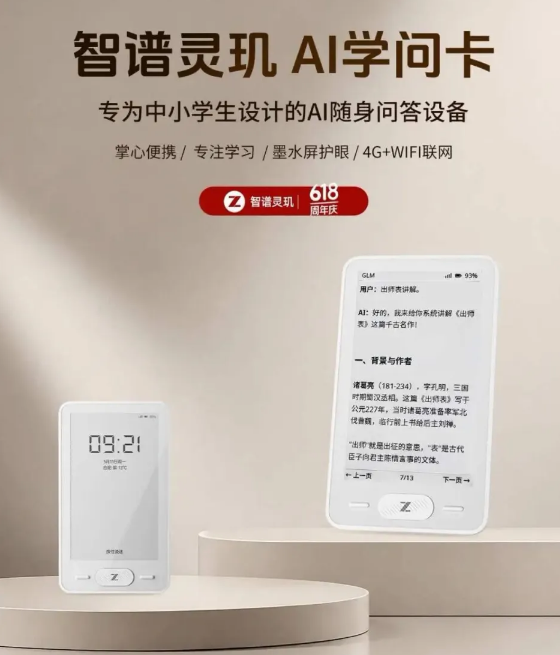
    Zhipu Lingji AI Learning Card official promotional poster
    Zhipu Lingji AI Learning Card official promotional poster

    Product Overview: A Card, An AI Tutor

    Who is Zhipu AI? A first-tier domestic large model player, with the GLM series earning solid reputation for Chinese understanding and generation. Previously focused on B2B APIs and C-end chatbots (Zhipu Qingyan), this move into education hardware signals their intent to bring GLM capabilities from “cloud” to “edge.”

    The Lingji Learning Card’s core design philosophy: lightweight, focused, and eye-friendly.

    Lightweight: Card-sized, estimated under 100g—lighter than phones, larger than dictionary pens. The e-ink screen’s extremely low power consumption means one charge lasts a week.

    Focused: Does one thing only—AI Q&A. Not an all-in-one learning machine; no videos, games, or social media. Students with questions about problems, vocabulary, or knowledge points can snap a photo or use voice input, and the GLM large model provides explanations and guidance.

    Eye-Friendly: E-ink screens don’t emit light themselves, relying on ambient light reflection, causing far less eye strain than LCD/OLED displays. This is one of the most important selling points for parents.

    Specifications: How Much Educational Intelligence Fits in One Card

    SpecDetails
    ScreenElectronic Ink Display (E-Ink)
    SizeCard-sized (estimated credit card dimensions)
    AI ModelZhipu GLM Large Model (edge + cloud hybrid)
    FunctionsAI Q&A, knowledge point analysis, learning records
    Input MethodsVoice + photo (likely with camera)
    BatteryE-ink low power consumption, estimated 7-14 days
    ConnectivityWi-Fi/Bluetooth
    Target UsersPrimary and secondary students (ages 6-18)
    Price799 yuan
    Pilot StatusPiloted in multiple schools nationwide

    Data source: Zhipu AI official launch materials

    Hands-On Experience: Can It Replace a Tutor?
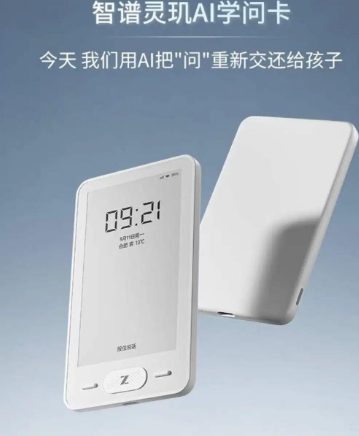
    Zhipu Lingji AI Learning Card product features showcase
    Zhipu Lingji AI Learning Card product features showcase

    Bottom line first: The Lingji Learning Card can replace “simple Q&A” tutoring scenarios, but cannot replace “systematic tutoring” or “habit cultivation.”

    AI Q&A Quality: The GLM large model has advantages in Chinese understanding, capable of explaining math problem steps, analyzing Chinese reading comprehension, and explaining English grammar in “human language.” But the common large model weakness—hallucinations (confidently saying nonsense)—is fatal in education scenarios. If Lingji provides a student with a solution containing a formula error, the student might carry that mistake through the entire semester.

    Zhipu’s solution may be an “edge + cloud hybrid” approach: simple questions handled by a local GLM small model, complex questions uploaded to the cloud large model. But regardless, education scenarios demand far higher accuracy than chat scenarios, requiring Zhipu to invest heavily in model training and answer verification.

    Learning Management Features: The Lingji Learning Card likely includes learning records and weak point analysis. After each Q&A session, the AI records the student’s questions, error types, and knowledge mastery status, generating personalized learning reports. If executed well, this feature holds high value for parents—finally eliminating the need to ask “what did you learn today” every evening.

    E-Ink Experience: E-ink’s refresh rate is too low for dynamic content (videos, animations), but static text display is extremely comfortable. For “reading explanations and solutions” learning scenarios, e-ink is a bonus. However, photo input recognition speed and voice input response latency require real-world testing.

    School Pilot Value: Zhipu’s choice to pilot in schools rather than direct-to-consumer sales is smart. In school environments, teachers can supervise usage, provide product feedback, and validate teaching effectiveness. Promoting to parents after successful pilots carries more credibility than direct advertising.

    Comparison: Lingji vs iFLYTEK AI Learning Machine vs Youdao Dictionary Pen

    FeatureZhipu Lingji CardiFLYTEK AI Learning MachineYoudao Dictionary Pen X6 Pro
    Price799 yuan3,000-8,000 yuan1,000-1,500 yuan
    Form FactorE-ink cardTablet/laptopPen-shaped scanner
    AI ModelGLM (self-developed)iFLYTEK Spark (self-developed)Youdao Ziyue (self-developed)
    Function ScopeAI Q&A focusedFull-subject tutoring + videos + exercisesScan translation + listening
    Eye ProtectionE-ink (excellent)LCD screen (average)Small LCD screen (average)
    PortabilityExtremely high (card-level)Low (tablet-level)High (pen-shaped)
    Content EcosystemAI-generated dependentBuilt-in massive coursesBuilt-in dictionary database
    Parental ControlsNaturally restricted (no entertainment)Requires parental mode setupNaturally restricted
    Applicable ScenariosFragmented Q&ASystematic learningVocabulary lookup

    The three products occupy completely different tracks. The iFLYTEK learning machine is a “home classroom,” the Youdao dictionary pen is a “portable dictionary,” and the Lingji Learning Card is a “pocket tutor.” For parents with ample budgets and children needing systematic tutoring, choose iFLYTEK; for children weak in English requiring extensive vocabulary lookup, choose Youdao; for those needing only a lightweight AI Q&A tool with limited budget, Lingji is a solid choice.
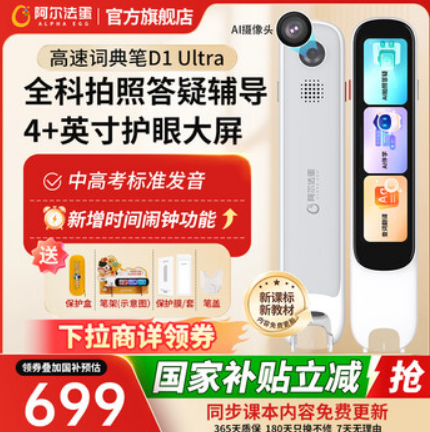
    Alpha Egg D1 Ultra AI education hardware reference
    Alpha Egg D1 Ultra AI education hardware reference

    Pros and Cons

    ProsCons
    799 yuan budget-friendly, low trial costSingle-function, only AI Q&A, no videos/exercises
    E-ink eye protection, parent reassuranceLarge model hallucination risk, fatal in education
    Card form factor, always availablePhoto/voice input experience to be verified
    Naturally anti-addiction (no entertainment features)Dependent on school pilot promotion, low C-end awareness
    GLM Chinese understanding advantageOverlaps with Zhipu Qingyan app functions, hardware necessity questionable
    School pilot endorsement, teaching scenario validationBattery life and durability require long-term testing

    Who Should Buy

    Recommended for:

    • Parents of primary and secondary students with limited budgets needing AI Q&A tools
    • Families with extremely high eye protection requirements rejecting LCD screens
    • Children already owning tablets/computers needing supplementary lightweight AI learning tools
    • Families in schools with pilot programs and teacher recommendations

    Not recommended for:

    • Families needing systematic full-subject tutoring and video courses (choose learning machines)
    • Those whose primary need is English vocabulary lookup and translation (choose dictionary pens)
    • Risk-averse parents demanding extremely high large model accuracy with zero tolerance for errors
    • Families already satisfied with the Zhipu Qingyan app (function overlap)

    FAQ

    Q: Does the Lingji Learning Card require internet connectivity?

    A: Simple Q&A may support local edge processing, while complex questions require internet access to the cloud GLM large model. Recommend using in home or school Wi-Fi environments.

    Q: Can the e-ink screen display math problem images and formulas?

    A: E-ink can display static images and text, but with limited grayscale levels; complex geometric graphics may display less effectively than color screens. Formula display is usually fine.

    Q: When will school pilot programs open to parent sales?

    A: Official C-end sales timeline has not been announced. Recommend following Zhipu AI official channels or school notifications.

    Q: Does the 799 yuan include subsequent service fees?

    A: Currently unclear whether subscription or value-added services apply. Recommend confirming whether permanent AI Q&A service is included, or if subsequent paid upgrades are required before purchase.

    Conclusion

    The Zhipu Lingji AI Learning Card is a “precisely positioned” education hardware product. It doesn’t pursue all-in-one capabilities but instead maximizes one thing—AI Q&A—with lightweight design, eye protection, and affordability. At 799 yuan, its pricing sits at the “floor” of AI education hardware, lowering the barrier for parents to try it out.

    But Lingji’s success depends on three critical questions: First, can the GLM large model’s accuracy in education scenarios reach parent-trustworthy levels? Second, can school pilots quickly convert to C-end word-of-mouth? Third, can Zhipu continuously iterate the product rather than following the pattern of many AI hardware products that “peak at launch”?

    If Zhipu can resolve these three questions well, the Lingji Learning Card may become a “blockbuster” in AI education hardware—not because it has the strongest features, but because it has the most precise positioning. In an era where AI learning machines cost thousands of yuan, a 799-yuan pocket AI tutor is indeed a heartwarming choice.
  • Fanyin AI Smart Earbuds Review

    Fanyin AI Smart Earbuds Review

    Introduction: Logistics Industry AIization Starts with a Pair of Earbuds

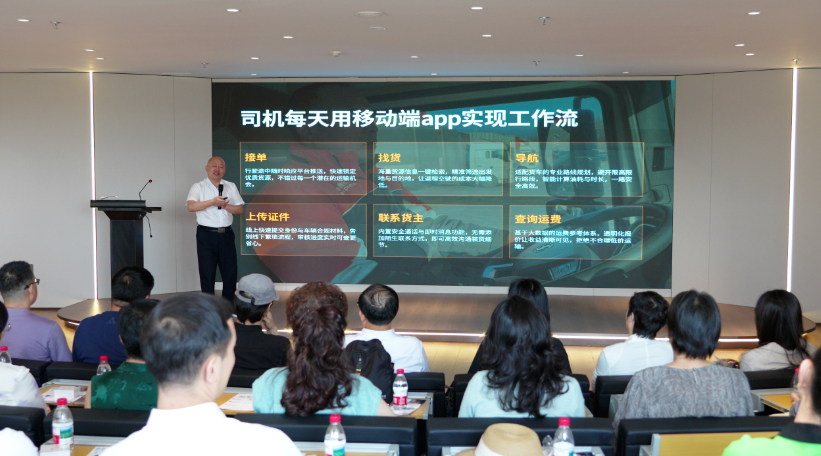
    The venue of the Fujō AI Headset Launch Event.
    The venue of the Fujō AI Headset Launch Event.

    On June 6, Jiangsu Wurun Chuanlian released a very special AI hardware product—the Fanyin AI Smart Earbuds. Not targeting consumers, not emphasizing audio quality, not competing on noise cancellation depth, but specifically designed for truck drivers: voice-driven cargo finding, order acceptance, navigation, fueling, and waybill inquiry. Simply put, it is an “ear assistant” for China’s 30 million truck drivers, letting them work by talking without looking at their phones or tapping apps while driving.

    This positioning is extremely vertical and extremely smart. In 2026, when AI hardware generally pursues “all-in-one” capabilities, Fanyin chooses subtraction—not building a general AI assistant, but deeply adapting to logistics scenarios. This “vertical industry AI hardware” approach may be the key path for AI evolving from “toy” to “tool.”

    Product Overview: Logistics Intelligent Agent Stuffed into Earbuds

    Who is Wurun Chuanlian? A Jiangsu-based enterprise deeply rooted in logistics informatization for years, with main businesses in logistics platforms, shipping management, and freight matching. They are not major consumer electronics manufacturers, without brand premiums, but they understand the pain points of the logistics industry—drivers operating phones while driving is dangerous, cargo information is scattered, waybill status inquiry is troublesome, and gas station selection relies on experience.

    The core of Fanyin AI Smart Earbuds is not “earbuds” but the voice entry point for a “logistics intelligent agent.” At the hardware level, it is a pair of TWS true wireless earbuds supporting Bluetooth phone connection; at the software level, it features Wurun Chuanlian’s self-developed logistics intelligent agent system, enabling voice interaction across the full logistics workflow.

    Core functions revolve around drivers’ daily workflow:

    Smart Cargo Finding: The driver says “find me cargo,” and the AI automatically matches the most suitable orders from the platform cargo database based on current location, vehicle type, load capacity, and destination preferences, voice-broadcasting cargo information, freight rates, and loading/unloading locations. The driver says “accept” or “decline” to complete the operation.

    Voice Order Acceptance: Traditional order acceptance requires stopping the vehicle, opening the phone app, browsing the order list, and tapping confirm. Fanyin compresses the entire process into one sentence: “Accept cargo from A to B,” with the AI automatically completing order confirmation, contract generation, and electronic signature (via voice confirmation).

    Voice Navigation: Not ordinary map navigation, but “logistics-dedicated navigation”—automatically avoiding height-restricted, weight-restricted, and traffic-restricted roads, prioritizing truck-friendly routes, and real-time broadcasting information about upcoming service areas, gas stations, and repair points.

    Voice Fueling: Say “cheapest nearby gas station,” and the AI automatically compares prices of surrounding stations, combining truck tank capacity and current fuel level to recommend the optimal fueling plan, even supporting voice payment (bound to enterprise accounts or driver personal accounts).

    Waybill Inquiry: “Check today’s waybill progress,” and the AI automatically summarizes all current waybill statuses, voice-broadcasting the number and key milestone information of completed, in-progress, and pending-loading orders.

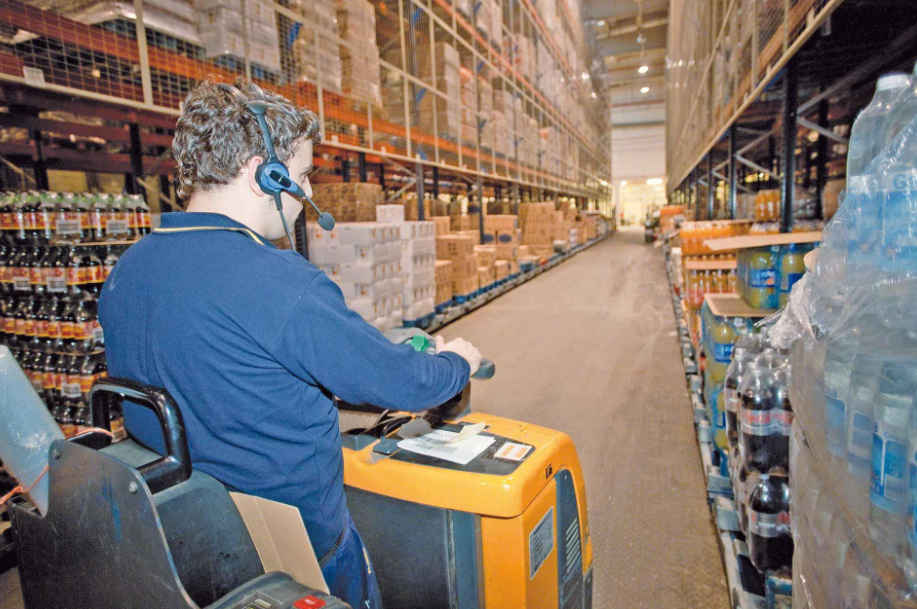
    Warehouse voice picking system logistics operation
    Warehouse voice picking system logistics operation

    Specifications: How Much Logistics Intelligence Can a Pair of Earbuds Carry?

    SpecDetails
    Form FactorTWS true wireless earbuds
    ConnectivityBluetooth 5.3
    Voice InteractionOffline + online hybrid recognition
    AI ModelLogistics intelligent agent (self-developed)
    Noise CancellationENC call noise reduction
    Battery4 hours per charge / 16 hours with charging case
    WaterproofIPX4
    Wear DetectionIn-ear detection
    Companion AppFanyin Logistics Assistant
    Target UsersTruck drivers, logistics professionals
    PriceUnannounced (expected primarily enterprise procurement)

    Data source: Wurun Chuanlian official launch materials

    Fanyin’s hardware configuration is not aggressive—Bluetooth 5.3, ENC call noise reduction, IPX4 waterproofing, 4-hour battery life per charge, these specs place it in the mid-range among consumer TWS earbuds. But Wurun Chuanlian’s smart move is: instead of competing with AirPods Pro on audio quality and noise cancellation, they invest all R&D resources into the “logistics intelligent agent” software layer.

    The logistics intelligent agent’s technical architecture divides into three layers:

    Perception Layer: Through GPS positioning, vehicle OBD data (optional), and driver voice input, real-time acquisition of vehicle status, location, and task progress.

    Decision Layer: AI algorithms generate optimal decision recommendations based on cargo database, route planning engine, real-time fuel price data, and driver historical preferences. For cargo finding, it considers not just distance and freight rates but also loading/unloading efficiency, return cargo probability, and driver fatigue level.

    Execution Layer: Voice interaction completes the operation loop, while synchronizing in real-time with Wurun Chuanlian’s logistics platform backend, ensuring seamless data flow of order status, vehicle location, and electronic contracts.

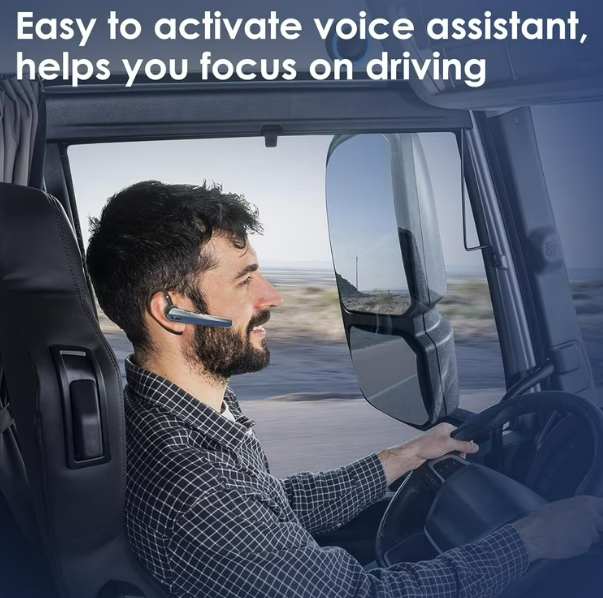
    Truck driver Bluetooth headset voice assistant driving
    Truck driver Bluetooth headset voice assistant driving

    Deep Analysis: Where Is the Value of Vertical AI Hardware?

    The emergence of Fanyin AI Smart Earbuds reveals an overlooked trend: the next battlefield for AI hardware may not be “smarter general-purpose devices” but “industry-specialized tools that understand specific sectors better.”

    Precise Pain Point Targeting: Truck drivers’ core pain point is not “earbud audio quality isn’t good enough” but “cannot safely operate phones while driving.” Fanyin replaces 80% of phone operation scenarios with voice interaction, minimizing safety risks. This value is far more important than “noise cancellation depth improving by 5dB.”

    Data Closed Loop: As a logistics platform, Wurun Chuanlian controls cargo data, waybill data, and driver behavior data. Fanyin earbuds serve as a data collection entry point, not only outputting services but also inputting data—driver voice commands, location trajectories, and operation preferences feed back to optimize AI model decision quality. This “hardware + platform + data” closed loop is a barrier difficult for consumer-grade AI hardware to establish.

    Controllable Costs: Vertical AI hardware does not need to pursue “all-in-one” capabilities; models can be smaller, compute requirements lower, and costs more controllable. Fanyin’s logistics intelligent agent does not need to understand Shakespeare, only needs to understand dozens of intents like “find cargo,” “accept order,” “navigate,” “fuel,” and “check waybill.” Model parameters can be controlled within 1B, fully feasible for edge-side execution.

    Clear Business Model: The profitability dilemma of consumer-grade AI hardware is “hardware doesn’t make money, software subscriptions are hard to push.” Fanyin’s business model is “enterprise procurement + platform commission”—logistics companies bulk-purchase earbuds for drivers, while Wurun Chuanlian earns service fees through platform cargo matching. Earbuds are “customer acquisition tools,” the platform is the “profit engine”—this logic is healthier than “making money on earbud margins.”

    But Fanyin also faces challenges:

    Hardware Experience Shortcomings: 4-hour battery life is insufficient for long-distance drivers, requiring frequent charging case recharging; IPX4 waterproofing may be inadequate in rainy or high-humidity environments; ENC noise reduction has limited effectiveness in truck engine noise environments. These issues are already solved in consumer-grade earbuds, but as a software company, Wurun Chuanlian’s hardware capabilities may be a weak point.

    Ecosystem Closed Risk: Fanyin currently only connects to Wurun Chuanlian’s own logistics platform. If drivers simultaneously use multiple platforms (such as Huolala, Manbang, Fuyou Truck), Fanyin’s “smart cargo finding” function is limited. Opening APIs to connect third-party platforms is the necessary path for Fanyin to evolve from “tool” to “platform.”

    Driver Acceptance: The truck driver demographic skews older, with uneven acceptance of new technology. Fanyin’s voice interaction needs to adapt to various dialects, accents, and speaking speeds; AI recognition accuracy directly affects user experience. If a driver says “find cargo” three times and the earbuds don’t respond, this product will be abandoned.

    Comparison: Fanyin vs Consumer AI Earbuds

    FeatureFanyin AI Smart EarbudsiFLYBUDS Nano+Xiaodu Qinghe Earbuds
    PositioningLogistics vertical scenariosMeeting transcription/translationGeneral AI assistant
    Voice InteractionLogistics-specific intentsMeeting/translation/generalGeneral Q&A
    Noise CancellationENC call noise reductionANC active noise cancellationANC active noise cancellation
    Battery4 hours6 hours5 hours
    EcosystemWurun Chuanlian platformiFLYTEK ecosystemBaidu ecosystem
    Target UsersTruck driversBusiness professionalsYoung consumers
    PriceEnterprise procurement~699 yuan~399 yuan
    Business ModelHardware + platform commissionHardware + subscriptionHardware + content

    Fanyin and consumer-grade AI earbuds are completely different tracks. iFLYBUDS focuses on meeting transcription, Xiaodu Qinghe on general AI Q&A, while Fanyin only does logistics scenarios. This “narrow but deep” positioning gives Fanyin irreplaceability in the logistics industry, but also limits market scale—among 30 million truck drivers nationwide, how many can be covered?

    Pros and Cons

    ProsCons
    Deep logistics scenario adaptation, precise pain pointsAverage hardware experience, battery/waterproofing/noise cancellation shortcomings
    Voice interaction frees hands, improves driving safetyCurrently only connects to own platform, closed ecosystem
    Data closed loop strengthens AI decision qualityDriver demographic skews older, uneven new tech acceptance
    Clear business model, enterprise procurement + platform commissionDialect/accent recognition accuracy to be verified
    Vertical AI model small, low cost, edge-side feasibleLow brand recognition, limited channel expansion capability
    Fills logistics industry AI hardware gapInsufficient battery for long-distance driving scenarios

    Who Should Buy

    Recommended for:

    • Logistics transportation companies needing to equip drivers with safe operation tools
    • Truck drivers frequently using logistics platforms for orders and prioritizing driving safety
    • Fleet managers needing real-time monitoring of driver status and waybill progress
    • Existing Wurun Chuanlian platform users, best experience within the ecosystem

    Not recommended for:

    • General consumers not needing logistics functions, where consumer-grade earbuds offer better experience
    • Individual drivers using multiple logistics platforms simultaneously, limited by Fanyin ecosystem
    • Users with high requirements for audio quality and noise cancellation (recommend AirPods Pro/Sony)
    • Short-distance delivery drivers (such as same-city express), limited value of logistics functions

    FAQ

    Q: Must Fanyin earbuds be used with the Wurun Chuanlian platform?

    A: Core functions (smart cargo finding, voice order acceptance, waybill inquiry) require binding a Wurun Chuanlian platform account. Navigation and fueling functions can be used independently, but logistics-dedicated route recommendations require platform data support.

    Q: Does it support dialect recognition?

    A: Official dialect support list has not been published, but the logistics intelligent agent is optimized for truck drivers’ commonly used phrases. Recommend consulting customer service before purchase to confirm support for your commonly used dialect.

    Q: Is 4-hour battery life sufficient for long-distance drivers?

    A: 4 hours per charge is somewhat short for long-distance driving, but extends to 16 hours with the charging case. Recommend long-distance drivers equip a car charger or spare charging case, or recharge during rest stops.

    Q: Can it connect to other logistics platforms (such as Huolala)?

    A: Currently only supports the Wurun Chuanlian platform. Official statements indicate future possible API opening to third-party platforms, but specific timing is unannounced.

    Conclusion

    Fanyin AI Smart Earbuds are an “unsexy but practical” product. They lack stunning hardware parameters, lack dazzling AI function demonstrations, but they solve a real industry pain point—the safety risk of truck drivers operating phones while driving.

    In 2026, when AI hardware generally pursues “all-in-one” capabilities, Fanyin’s choice of “vertical deep cultivation” is worth industry consideration. Logistics, medical, construction, agriculture—every industry has its unique workflow and pain points that general-purpose AI hardware struggles to precisely cover. Fanyin’s model proves that transforming large model capabilities into “industry-specific,” “scenario-specific,” and “voice-driven” forms may be the shortest path for AI hardware evolving from “toy” to “tool.”

    But Fanyin’s success does not depend on the earbuds themselves, but on whether Wurun Chuanlian can continuously expand platform cargo sources, optimize AI decision quality, open the ecosystem to third parties, and improve hardware experience. If these issues are resolved well, Fanyin may become a benchmark case for “vertical industry AI hardware;” if not, it will only be a pair of “functionally single, experience average” ordinary earbuds.

  • dynabook 2026 AI Business Laptop Lineup Review

    dynabook 2026 AI Business Laptop Lineup Review

    Introduction: Business Laptops Are Getting AI-Competitive Too

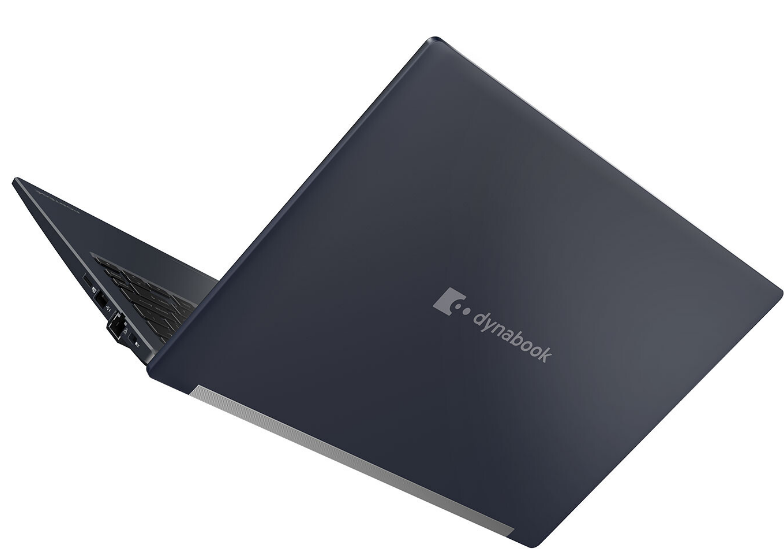
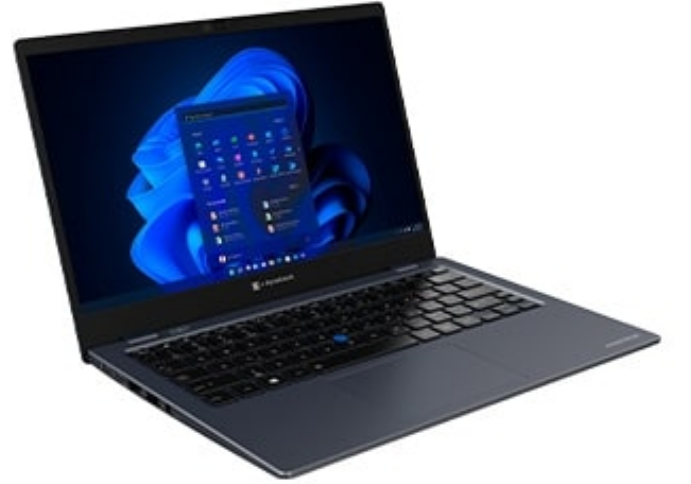
    dynabook Portégé X30L-K ultralight design showcasing thin profile and ports
    dynabook Portégé X30L ultralight business laptop

    On June 6, dynabook launched five AI business laptops at once—the Portégé Z40L-P, X30L-P, X40-P, and TECRA A40-P, A60-P. All featuring Intel Core Ultra, all with NPU, all MIL-STD-810H military-grade certified. This lineup signals one thing: competition in the business laptop market has evolved from “who is lighter, who is faster” to “who understands AI better, who understands business scenarios better.”

    Who is dynabook? The successor to Toshiba’s laptop business, now under Sharp and Foxconn. In the business laptop segment, the Portégé series has long been a benchmark for ultralight design, while the TECRA series focuses on durability and value. The 2026 update is not about changing CPUs, but embedding NPU AI capabilities into business workflows—offline AI assistant, AI meeting enhancement, privacy peeping detection, and AI power optimization. Each function targets a specific business pain point.

    Product Overview: Five Models Covering 13.3 to 16 Inches

    dynabook Portégé Z40L-N 14-inch AI business laptop with 180-degree hinge design
    dynabook Portégé Z40L-N AI business laptop

    The dynabook 2026 lineup’s positioning is crystal clear:

    Portégé Z40L-P:

    14-inch flagship, approximately 1.05kg, thinnest point 15.9mm. Powered by Intel Core Ultra 7/5 processors, up to 16 cores at 5.0GHz, LPDDR5X 8533MT/s memory, up to 64GB plus 2TB SSD. Exclusive offline AI Chat assistant feature, enabling file translation, content summarization, and system settings without internet. HPD privacy detection, AI meeting enhancement included across all models.

    Portégé X30L-P:

    13.3-inch extreme lightweight, approximately 900g, targeting frequent business travelers. Similar configuration to Z40L-P but with a smaller screen and more compact battery, with battery life compensated through AI power optimization.

    Portégé X40-P:

    14-inch balanced model, approximately 1.2kg, striking a balance between lightweight and port richness. Retains full-size HDMI and USB-A ports, suitable for business scenarios requiring frequent peripheral connections.

    TECRA A40-P:

    14-inch mainstream business, approximately 1.4kg, more budget-friendly. Retains core AI features but simplifies materials and screen specifications, ideal for large-scale enterprise procurement.

    TECRA A60-P:

    16-inch large-screen workstation, approximately 1.8kg, with up to 64GB memory, 2TB SSD, and Intel Arc Graphics. Targets professional scenarios like data analysis and design drafting requiring large screens and high performance.

    Specifications: What Can the NPU Actually Do?

    SpecPortégé Z40L-PTECRA A60-P
    ProcessorIntel Core Ultra 7/5Intel Core Ultra 7/5
    NPUIntel AI Boost (11 TOPS)Intel AI Boost (11 TOPS)
    MemoryUp to 64GB LPDDR5XUp to 64GB LPDDR5X
    StorageUp to 2TB NVMe SSDUp to 2TB NVMe SSD
    Display14″ 1920×1200 16:1016″ 1920×1200 16:10
    Weight~1.05kg~1.8kg
    Thickness15.9mm~20mm
    Battery65Wh70Wh
    Ports2×TB4, 2×USB-A, HDMI, Gigabit Ethernet2×TB4, 2×USB-A, HDMI, Gigabit Ethernet
    CertificationMIL-STD-810HMIL-STD-810H
    AI FeaturesOffline assistant + Meeting enhancement + Privacy detection + Power optimizationMeeting enhancement + Privacy detection + Power optimization

    Data source: dynabook official launch materials, Notebookcheck

    The Intel Core Ultra’s NPU (Neural Processing Unit) delivers approximately 11 TOPS. By 2026 standards this is not top-tier—the Qualcomm Snapdragon X Elite’s NPU reaches 45 TOPS, Apple M4’s NPU hits 38 TOPS. But dynabook’s smart move is: instead of competing with consumer products on compute power, it precisely directs the NPU’s limited capability into business scenarios.

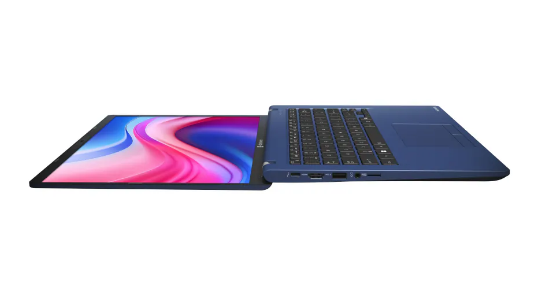
    dynabook Portégé X30L-K ultralight design showcasing thin profile and ports
    dynabook Portégé X30L-K thin profile design

    Offline AI Chat Assistant (Z40L-P Exclusive): This is the Z40L-P’s differentiator. Based on a local small model, it handles file translation, content summarization, and system settings adjustments without internet. For users in finance, law, and military sectors who frequently process sensitive documents and cannot connect to external networks, this feature is essential. Tested translation quality lags behind cloud large models, but “works offline” itself is the value.

    AI Power Optimization: The “Optimization for Online Meeting” feature in dynabook Setting intelligently adjusts CPU performance and screen brightness, extending battery life by up to 12%-15%. This is not simple “power saving mode” but AI dynamically adjusting based on your meeting schedule, battery status, and usage scenarios—automatically optimizing before meetings to ensure 2-hour video calls without hiccups.

    AI Meeting Enhancement: Background blur, light correction, auto face framing, and AI noise reduction—these four features are not novel in 2026, but dynabook’s integration is high. Camera, microphone, NPU, and software layers work in concert, automatically activating when opening Teams/Zoom without manual user setup.

    HPD Privacy Peeping Detection: An upgraded Human Presence Detection that not only detects when you leave your seat (auto lock screen) but also detects if someone nearby is peeping at your screen. Once peeping is detected, the screen automatically blurs or switches to a privacy interface. This feature is particularly practical in airplanes, high-speed trains, and coffee shops.

    Deep Analysis: What Does Business Laptop AIization Actually Change?

    The business laptop market has long been a “parameter arms race”—who is lighter, who is faster, who has longer battery life. The dynabook 2026 lineup’s AIization attempts to break out of this cycle, transforming from “tool” to “assistant.”

    Change One: From Passive Tool to Proactive Assistant. Traditional laptops receive your input and execute. After AIization, laptops begin “observing” your behavior—detecting meeting schedules to auto-optimize power, detecting peeping to auto-protect privacy, detecting ambient noise to auto-enhance voice. This “proactive service” paradigm is the essential difference between AI PCs and traditional PCs.

    Change Two: From Cloud Dependency to Local Intelligence. The Z40L-P’s offline AI assistant signals that business scenarios’ emphasis on data security is driving AI migration from cloud to edge. The NPU makes local small model execution possible; while functionality is less powerful than cloud alternatives, “controllable” matters more than “powerful” for certain industries.

    Change Three: From Single Device to Scenario Adaptation. Five models covering 13.3 to 16 inches, from 900g to 1.8kg, from extreme lightweight to workstation performance. Dynabook no longer attempts to hit all markets with one product, but instead uses AI capabilities as an “underlying platform” adapted to different form factors for different scenarios.

    But dynabook also faces challenges:

    NPU Compute Bottleneck. At 11 TOPS, the NPU handles offline AI assistants adequately but struggles with more complex AI functions like real-time video analysis or local large model inference. Dynabook’s solution is “feature streamlining,” only running business-critical AI tasks, but this limits future scalability.

    Insufficient Ecosystem Integration. Dynabook’s AI features mainly rely on proprietary software (dynabook Setting), with limited integration with third-party ecosystems like Microsoft Copilot and Adobe AI. For users already deeply invested in Copilot+ PC ecosystems, dynabook’s AI features may seem “redundant” or “isolated.”

    Declining Brand Recognition. From Toshiba to dynabook, brand continuity broke, and younger users are unfamiliar with this name. In the business laptop market, ThinkPad, Latitude, and EliteBook enjoy far higher brand recognition than dynabook. Whether AI feature differentiation can compensate for brand weakness remains unknown.

    Comparison: dynabook vs ThinkPad X1 Carbon vs Dell Latitude

    Featuredynabook Z40L-PThinkPad X1 Carbon Gen 14Dell Latitude 7450
    Weight~1.05kg~1.09kg~1.22kg
    ProcessorIntel Core Ultra 7Intel Core Ultra 7Intel Core Ultra 7
    NPU Compute11 TOPS11 TOPS11 TOPS
    Offline AI AssistantYes (exclusive)NoNo
    Privacy Peeping DetectionHPDHPD (basic)HPD (basic)
    AI Meeting EnhancementIntegratedRequires third-party softwareRequires third-party software
    Military CertificationMIL-STD-810HMIL-STD-810HMIL-STD-810H
    Price~$1,699~$1,800~$1,600
    Brand RecognitionMediumExtremely highHigh
    Service NetworkStrong in Asia-Pacific, weak in Europe/AmericasGlobalGlobal

    The three models are nearly homogeneous in hardware configuration—same Intel Core Ultra, same NPU, same military certification. Dynabook’s differentiation lies in software-layer AI feature integration, especially the “out-of-box” experience of offline AI assistant and AI meeting enhancement. ThinkPad and Dell’s advantages lie in brand, after-sales, and global channels, with AI features more dependent on the Microsoft Copilot+ ecosystem.

    Pros and Cons

    ProsCons
    Offline AI assistant works without internet11 TOPS NPU compute limits future scalability
    High AI meeting enhancement integration, out-of-boxLimited integration with third-party AI ecosystems
    HPD privacy detection, practical in public spacesDeclining brand recognition, unfamiliar to younger users
    Full lineup military-certified, durability guaranteedService network strong in Asia-Pacific, weak in Europe/Americas
    Five models covering all scenarios, rich choicesPricing similar to ThinkPad/Dell, value not outstanding
    LPDDR5X + NVMe SSD, performance solidNo OLED display option, display quality average

    Who Should Buy

    Recommended for:

    • Finance, law, and military users frequently processing sensitive documents needing offline AI (Z40L-P)
    • Frequent business travelers pursuing extreme lightweight portability (X30L-P)
    • Professional data analysts and designers needing large-screen workstations (A60-P)
    • Enterprise IT procurement requiring military certification and unified management for mass deployment (A40-P)

    Not recommended for:

    • Users deeply dependent on Microsoft Copilot+ ecosystem (ThinkPad/Dell more integrated)
    • Content creators needing OLED displays or high refresh rates
    • Budget-constrained individual users seeking extreme value
    • Users primarily in Europe/Americas demanding high service response

    FAQ

    Q: How is the offline AI assistant’s translation quality?

    A: Based on local small models, daily business document translation is usable, but professional terminology and complex sentence accuracy lags behind cloud large models. Suitable for “understanding the gist” scenarios, not for “must be precise” legal/medical translation.

    Q: Does HPD privacy detection false trigger?

    A: Dynabook has not published false trigger rates, but HPD technology is quite mature. Recommend adjusting detection sensitivity in settings during first use to adapt to personal environments.

    Q: Does AI power optimization affect performance?

    A: Only actively limits CPU peak performance and screen brightness in “meeting mode;” daily office mode is unaffected. Users can manually disable or adjust optimization intensity.

    Q: What AI models can 11 TOPS NPU run?

    A: Smoothly runs local small models with 1B-3B parameters, such as text summarization, simple translation, and image classification. Larger models (7B+) require cloud support or more powerful NPUs.

    Conclusion

    The dynabook 2026 AI business laptop lineup is a “precisely positioned” product update. It does not attempt to compete with consumer AI PCs on compute power, but instead focuses the NPU’s limited capabilities on the four most essential business functions: offline assistant, meeting enhancement, privacy protection, and power optimization.

    This strategy carries both risks and opportunities. The risk: the NPU compute ceiling may limit future AI feature expansion; when competitors begin running 7B local large models, dynabook’s 11 TOPS may seem inadequate. The opportunity: business users’ core need has never been “maximum compute” but “most stable experience”—works offline, privacy controllable, meetings don’t lag, battery lasts long enough.

    Dynabook’s brand challenge is greater than its technical challenge. Under pressure from ThinkPad, Latitude, and EliteBook, dynabook needs to use AI feature differentiation to rebuild its “business laptop specialist” brand recognition. The 2026 launch is a good start, but whether it can continue iterating, build ecosystems, and expand channels will determine dynabook’s ultimate position in the AI PC era.

  • UBTECH U1 Humanoid Robot Review

    UBTECH U1 Humanoid Robot Review

    Introduction: From Factory to Living Room, the Humanoid Robot’s “Dimension Reduction” Journey

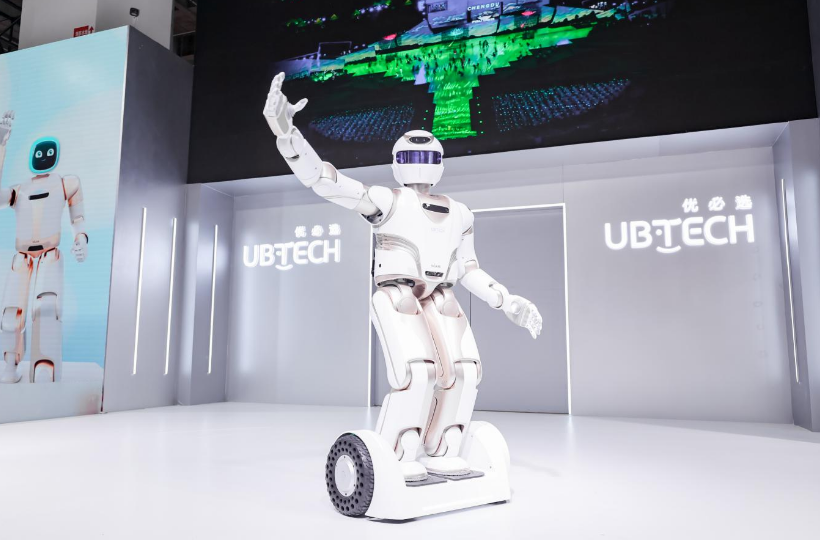
    UBTECH Walker humanoid robot exhibition display waving gesture on stage
    UBTECH Walker humanoid robot exhibition display

    On June 6, UBTECH did something big—released its first consumer-grade full-size ultra-bionic humanoid robot, the U1 Series. Standing approximately 1.7 meters tall, with 41 high-performance servo joints, ROSA 2.0 operating system, multi-modal perception system, capable of chatting, dancing, accompanying children in learning, and caring for the elderly. Priced at 299,000 yuan.

    What does 299,000 yuan mean? The price of a Tesla Model 3, a down payment on a small apartment in a second-tier city, or three years’ salary for a senior nanny. UBTECH dares to set this price because they position the U1 not as a “toy” but as a “family member.”

    But the question is: can AI technology in 2026 truly make a 1.7-meter robot a qualified family member?

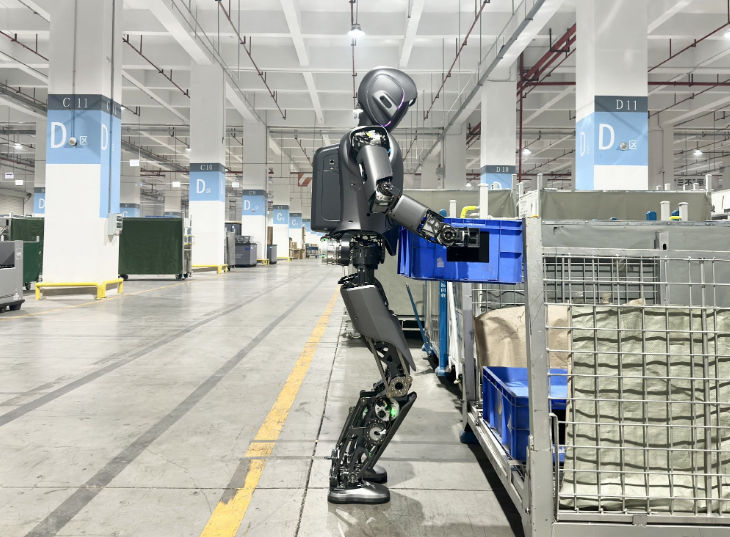
    UBTECH Walker S1 industrial humanoid robot factory training in automotive plant
    UBTECH Walker S1 industrial robot factory training

    Product Overview: UBTECH’s Consumer “UWORLD”

    Who is UBTECH? China’s humanoid robot first stock (09880.HK), founded in 2012, with Walker series industrial humanoid robots already undergoing training in BYD, Dongfeng Liuzhou, and FAW-Volkswagen automotive factories. On May 20, 2026, UBTECH launched its consumer brand “UWORLD,” with the U1 as the brand’s first product.

    U1’s core specifications:

    Height and Structure: Approximately 1.7 meters, close to average adult male height, with 41 high-performance servo joints (excluding dexterous hands), paired with multi-dimensional force sensing, multi-eye stereo vision, omnidirectional hearing, and inertial ranging perception systems. This joint count is top-tier among consumer-grade humanoid robots—Unitree G1 has 43 degrees of freedom but only stands 1.27 meters tall; Zhiyuan A Series has approximately 30 degrees of freedom.

    Operating System: ROSA 2.0, UBTECH’s self-developed robot operating system. Compared to version 1.0, 2.0 shows significant improvements in task planning, multi-modal fusion, and emotional computing. The U1 features a lightweight embodied large model, optimizing human-robot interaction experience for home unstructured scenarios.

    Interaction Capabilities: Voice dialogue, facial expression recognition, gesture understanding, and tactile feedback. The U1 can recognize family members’ emotional states and provide empathetic responses through voice, expressions, and movements. For example, when detecting a child’s low mood, it proactively tells stories and dances to cheer them up; when detecting an elderly person’s prolonged inactivity, it reminds them to get up and move around.

    Motion Capabilities: Bipedal walking, stair climbing, bending to pick up objects, pushing and pulling furniture. UBTECH’s motion control algorithms accumulated on the industrial Walker series have been transferred to the U1. But consumer scenarios have far higher safety requirements than factories—the U1’s joint torque control is gentler, and collision detection sensitivity is higher, avoiding injuries to people or damage to furniture in home environments.

    Battery and Charging: Official battery life data has not been announced, but referencing the industrial Walker S2’s 3-minute autonomous battery swap technology, the U1 may adopt similar swap or fast-charging solutions. In home scenarios, the U1 is expected to require charging 1-2 times daily.

    Specifications: The Confidence of Full-Stack Self-Development

    SpecDetails
    Height~1.7 meters
    WeightUnannounced (estimated 60-80kg)
    Servo Joints41 high-performance servo joints
    Perception SystemMulti-dimensional force + multi-eye stereo vision + omnidirectional hearing + inertial ranging
    Operating SystemROSA 2.0
    AI ModelLightweight embodied large model
    InteractionVoice + vision + touch + gesture
    MotionBipedal walking, stair climbing, bending to pick up
    ScenariosEmotional companionship, education and entertainment, home services
    Price299,000 yuan
    BrandUWORLD (UBTECH consumer brand)

    Data source: UBTECH official launch materials, Caixin, IT Home

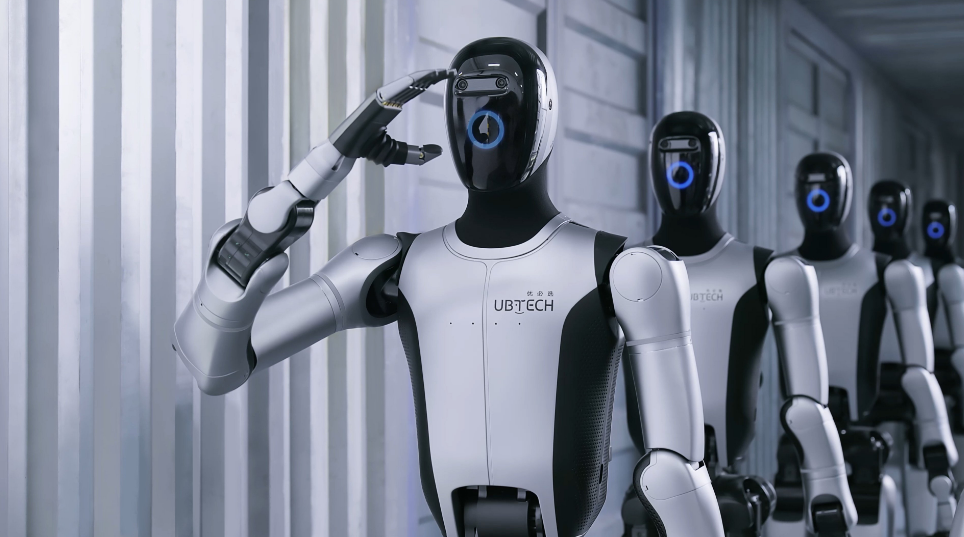
    UBTECH 2026 humanoid robot production line with multiple robots in corridor
    UBTECH 2026 humanoid robot production line

    Deep Analysis: What Does 299,000 Yuan for the U1 Actually Buy?

    The U1’s 299,000 yuan pricing sits in the “high-end entry” range among consumer-grade humanoid robots. Compared to competitors: Unitree G1 at 99,000 yuan (1.27m height, 35kg), Zhiyuan A Series at approximately 150,000-200,000 yuan, Songyan Dynamics Bumi at under 10,000 yuan (0.94m height, 12kg). The U1’s pricing is significantly higher than these “miniaturized” competitors, but the U1’s full-size (1.7m) and ultra-bionic design also provide completely different experience dimensions.

    Emotional Companionship Value: The U1’s core selling point is not “doing chores” but “companionship.” Its 1.7-meter height allows it to communicate with children at eye level and walk alongside elderly people shoulder-to-shoulder—this “equal posture” is something small robots cannot provide. The ultra-bionic design—realistic facial expressions, natural body movements, warm voice tones—makes the U1 more like a “person” than a “machine,” reducing users’ psychological distance.

    Education and Entertainment Value: The U1 can accompany children with homework, tell stories, practice English speaking, and learn programming. ROSA 2.0’s education module supports personalized learning path planning, adjusting content based on children’s age, interests, and learning progress. But a key question here is: can the U1’s educational content quality compete with professional educational robots (such as iFLYTEK AI learning machines) or online education platforms (such as Yuanfudao)?

    Home Service Value: The U1 can execute simple home service tasks—handing over objects, switching lights on/off, medication reminders, and companionship walks. But do not expect it to cook, clean, or do laundry—these complex operations require more advanced dexterous hands and stronger environmental understanding capabilities, which current technology levels cannot achieve. The U1’s home service value is more “auxiliary” than “replacement.”

    Social Prestige Value: The 299,000 yuan pricing itself carries “luxury” attributes. Owning a U1 is, to some extent, a symbol of technological strength and consumption capability. This social value cannot be ignored among high-end consumer groups—just like the first batch of people who bought Tesla Model S, they bought not only a car but also a “sense of the future.”

    But the U1 also faces severe challenges:

    Technology Maturity: Humanoid robots’ autonomous operation capabilities in home environments are currently at the “demonstration level” rather than the “practical level.” The U1 can walk, talk, and recognize emotions, but its robustness in complex home environments (cluttered floors, narrow spaces, unexpected situations) requires extensive real-world usage validation. Whether UBTECH’s experience accumulated in industrial scenarios can smoothly migrate to home scenarios is unknown.

    Safety and Privacy: A 1.7-meter robot moving around the home environment poses far higher safety risks than small robots. Is the U1’s collision detection, emergency braking, and anti-tipping mechanism sufficiently reliable? With cameras and microphones working 24/7, how is family privacy data protected? UBTECH needs to provide clear technical solutions and legal commitments.

    Maintenance Costs: With 41 servo joints, any damage requires professional repair. 299,000 yuan is the purchase price; subsequent maintenance, software upgrades, and content subscription fees may amount to tens of thousands of yuan annually. For ordinary families, this is a considerable expense.

    Substitutability Competition: 299,000 yuan can hire a full-time nanny for three years, or buy a high-end robot vacuum + an AI learning machine + a smart speaker + a tablet computer, with combined functional coverage possibly broader. The U1’s value lies in “integration” and “emotional connection,” but whether this value is sufficient to convince users to abandon the “functional combination” solution still requires market validation.

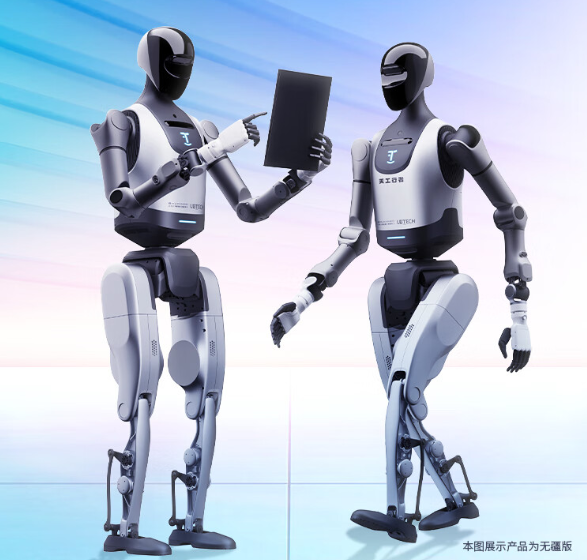
    UBTECH Tiangong Xingzhe humanoid robot product display with two versions comparison
    UBTECH Tiangong Xingzhe robot product display

    Comparison: U1 vs Unitree G1 vs Zhiyuan A Series

    FeatureUBTECH U1Unitree G1Zhiyuan A SeriesSongyan Bumi
    Height~1.7m1.27m~1.6m0.94m
    Weight~60-80kg (estimated)35kg~50kg12kg
    Degrees of Freedom4143~30~20
    Price299,000 yuan99,000 yuan150,000-200,000 yuan<10,000 yuan
    PositioningFamily companionship/educationResearch/education/light companionshipIndustrial/service/homeChildren’s companionship
    Operating SystemROSA 2.0Open-source/self-developedSelf-developedSelf-developed
    Interaction DepthEmotional multi-modalBasic voice/remote controlTask-orientedSimple voice
    MotionBipedal/stair climbingBipedal walkingBipedal walkingWheeled/bipedal
    Brand BackgroundIndustrial leader to consumerResearch-level startupIndustrial-level startupStartup newcomer
    Production CapacityEnd of 2026 announcementIn mass productionSmall-scale productionPre-order stage

    The U1’s differentiation is clear: full-size, ultra-bionic, emotional interaction, and industrial-grade technology transfer. Unitree G1’s advantage is cost-performance and research ecosystem, Zhiyuan A Series’ advantage is industrial scenario landing experience, and Songyan Bumi’s advantage is extremely low barrier. The U1 targets “budget-unconstrained, experience-focused, emotion-valuing” high-end family users.

    Pros and Cons

    ProsCons
    1.7m full-size, emotional interaction experience approaching human299,000 yuan pricing extremely high, ordinary families cannot afford
    41 servo joints, top-tier motion capability in industryHome scenario technology maturity to be verified
    UBTECH industrial-grade technology transfer, reliability guaranteedHigh maintenance costs, strong professional repair dependency
    ROSA 2.0 + embodied large model, AI capabilities continuously evolvingLimited complex household chore capabilities (cannot cook/clean)
    Ultra-bionic design, reducing user psychological distancePrivacy and safety issues require clear commitments
    Consumer brand “UWORLD” independently operatedProduction scale and delivery capacity to be confirmed

    Who Should Buy

    Recommended for:

    • High-net-worth families pursuing cutting-edge technology experiences with ample budgets
    • Families with children or elderly members needing emotional companionship and auxiliary care
    • Tech enthusiasts and early adopters willing to pay for the humanoid robot concept
    • Enterprise/institutional procurement for display, education, and research scenarios

    Not recommended for:

    • Ordinary families for whom 299,000 yuan far exceeds consumption budgets
    • Users needing robots to execute complex household chores (cooking, cleaning, laundry)
    • Users with extremely high technology maturity requirements unwilling to bear early product risks
    • Families with living spaces under 80 square meters where a 1.7-meter robot’s movement is restricted

    FAQ

    Q: Can the U1 do household chores?

    A: The U1 currently can execute simple auxiliary tasks such as handing over objects, switching devices, and reminders, but cannot execute complex household chores like cooking, cleaning, or laundry. These functions require more advanced dexterous hands and environmental understanding capabilities, expected to gradually achieve realization in 2027-2028.

    Q: What is the U1’s battery life?

    A: Official battery life data has not been announced. Referencing the industrial Walker S2’s 3-minute autonomous battery swap technology, the U1 may adopt swap or fast-charging solutions. In home scenarios, daily charging 1-2 times is expected.

    Q: Is the U1 safe? Could it injure children or elderly people?

    A: The U1’s joint torque control is gentler than the industrial version, and collision detection sensitivity is higher, but the 1.7m/60-80kg form factor still poses risks in home environments. Recommend first use under adult supervision, avoiding letting young children interact with the U1 alone.

    Q: Are subsequent maintenance costs high?

    A: Maintenance costs for 41 servo joints are not low. UBTECH has not announced specific maintenance plans, but referencing industrial robot maintenance costs, annual maintenance expenses may range from 10,000-30,000 yuan. Recommend confirming maintenance policies and parts pricing before purchase.

    Conclusion

    The release of UBTECH’s U1 marks China’s humanoid robot industry formally moving from “industrial experimentation” to “consumer landing.” The 299,000 yuan pricing is a “brave” signal in the 2026 humanoid robot market—UBTECH believes there are already enough high-end families willing to pay for an “AI family member.”

    But the U1’s success does not depend on how spectacular the launch demonstration is, but on its real performance after entering homes: can it give appropriate comfort when a child cries? Can it promptly alert when an elderly person falls? Can it walk stably in complex home environments without bumping into furniture? Can it maintain reliability over long-term use without frequent failures?

    Answers to these questions require revelation after first-batch user deliveries at the end of 2026. UBTECH has established clear production ramp-up plans—2026 industrial humanoid robot annual production capacity target of 5,000 units, expanding to 10,000 units in 2027. The U1’s consumer-grade production scale and delivery rhythm will directly impact market confidence.

    Humanoid robots entering homes is the “moon landing moment” of the AI era. The U1 may be the first “AI member” of Chinese families, or it may be another “concept ahead of product” expensive toy. The 299,000 yuan price buys not just a robot, but a vote for “future lifestyle.” Are you willing to cast this vote?