At the AWE (Appliance & Electronics World Expo), GuangLi unveiled two new smart swimming goggles—the Holoswim 3 AR Smart Swim Goggles and the SollaWave AI Smart Music Swim Goggles—competing in the underwater smart device market with two distinct technological approaches. The launch of these two products not only continues GuangLi’s first-mover advantage in the AR underwater device field but also attempts to cover swimming needs across all scenarios, from professional training to recreational fitness, through differentiated positioning.
Traditional swimming training has long been plagued by “data disconnect” and “monotonous experience”: professional swimmers struggle to obtain real-time core data such as pace and trajectory, while recreational swimmers are often deterred by the monotony of long lanes. GuangLi’s two new products address these two pain points with their respective solutions.
GPS + AR Empowerment
Holoswim 3: GPS + AR Empowerment, Targeting Professional Outdoor Scenarios
As an iteration of GuangLi’s flagship series, the Holoswim 3 focuses on “data visualization + outdoor safety” as its core selling points. Building upon the AR display technology of its predecessor, it has undergone a dual upgrade in both functionality and appearance, directly targeting professional swimmers and outdoor enthusiasts.
The product’s core competitiveness lies in the combination of real-time AR underwater display and GPS trajectory guidance. Through optical projection technology, users can clearly view key training data such as pace, distance, and time in front of their field of vision without interrupting their swimming rhythm, solving the pain point of “blind swimming” with traditional goggles. The built-in GPS module is a core differentiator from similar products—in open waters such as lakes and oceans, it can record movement trajectories in real time and provide directional guidance, significantly improving the safety of outdoor swimming. This has irreplaceable practical value for triathletes and professionals who conduct long-term outdoor training.
Ecosystem connectivity further strengthens its position as a data hub. The Holoswim 3 can be paired with smartwatches, fitness trackers, and other accessories to sync heart rate data in real time, helping users accurately control training intensity and avoid overexertion. In terms of appearance, the new symmetrical design not only improves visual balance but also enhances comfort during extended wear, while the vibrant coated lenses balance practicality and style.
However, the upgraded functionality also brings potential considerations. With the integration of GPS and AR display modules, its battery life performance needs to be referenced based on official test data; simultaneously, due to technological costs, its price is expected to be higher than ordinary smart swimming goggles, positioning it in the high-end market.
From a target audience perspective, the Holoswim 3 is more suitable for open water swimmers, serious trainees seeking accurate data, and tech enthusiasts who value technological experience and design.
SollaWave
SollaWave: Music at its Core, Focusing on Leisure and Fitness Scenarios
In stark contrast to the Holoswim 3’s “professional orientation,” the SollaWave focuses on “auditory experience,” targeting leisure and fitness enthusiasts, attempting to break the monotony of swimming through the combination of music and AI voice.
Offline music playback is its core function. The built-in storage module allows users to download music in advance, eliminating the need to carry a phone, rely on waterproof bags and cables while swimming, truly achieving “listen as soon as you get in the water.” GuangLi has optimized its in-ear acoustic technology to address the underwater sound transmission characteristics, ensuring clear underwater sound quality and a strong sense of rhythm, turning swimming into an immersive “underwater concert.”
Data feedback employs a “screenless” design—AI voice prompts provide users with training data such as distance and time during swimming breaks or turns, avoiding visual interference with swimming focus and allowing users to concentrate more on the strokes themselves. Furthermore, the rhythm of the music can help users regulate their breathing, indirectly improving athletic performance.
The product’s shortcomings are also apparent: in-ear comfort varies from person to person, and users need to pay attention to earbud size fit; additionally, it lacks GPS positioning, making its safety guidance capabilities in open water far inferior to the Holoswim 3.
Holoswim 3
SollaWave’s target users are clearly defined: fitness enthusiasts who primarily exercise in indoor pools and have low GPS requirements, those who rely on music to enhance their workout experience, and users who dislike visual distractions and prefer auditory feedback.
Market Positioning and Purchase Decision: Precise Matching to Scenarios is Key
The differentiated positioning of the two products essentially reflects GuangLi’s segmented strategy in the underwater smart device market. To help consumers make informed decisions, the following is a comparison of the two products’ core dimensions:
From a decision-making perspective, if users frequently swim in open water, prioritize the accuracy of training data, or have high requirements for equipment aesthetics, the Holoswim 3 is a better choice; if users primarily exercise in indoor pools, seek a relaxed workout experience, and rely on music to alleviate boredom, the SollaWave offers better value for money.
Price Prediction and Market Outlook
As of the end of the AWE press conference, GuangLi has not yet announced the global unified retail price for both products. Based on their technical specifications, product positioning, and the market pricing of their predecessors, industry analysts predict that the Holoswim 3, with its integrated GPS and AR display technology, will be priced in the high-end range of $350-$450; the SollaWave, as a differentiated leisure product, will be priced more affordably, expected to be between $250-$350.
It should be noted that the above prices are only market predictions and not the official final prices. The final pricing will be announced on GuangLi’s official website and at the AWE launch event. Consumers are advised to pay attention to official channels, as early bird discounts may be available during the initial product launch period.
Conclusion
GuangLi’s newly launched Holoswim 3 and SollaWave have avoided homogeneous competition, instead precisely addressing the needs of different swimming groups through a dual approach of “professional data” and “leisure experience.” The Holoswim 3 pushes AR technology from “conceptual” to “practical,” solving a core safety pain point in open water swimming; the SollaWave takes a different approach, using music to reconstruct the swimming experience, lowering the entry barrier for smart swimming goggles.
For consumers, the key to choosing between the two products lies in “scenario matching”—there is no absolute superiority or inferiority, only differences in whether they suit their own needs. With smart wearable devices continuously penetrating sports scenarios, GuangLi’s dual-product strategy may further solidify its leading position in the underwater smart device field.
In today’s increasingly competitive smart home market, doorbell cameras have evolved from simple visitor alert tools into core entry points for home security systems and crucial hubs connecting all smart devices in the house. For mid-to-high-end consumers seeking efficiency, security, and convenience, a product that combines security capabilities with ecosystem compatibility is becoming an essential option for home upgrades.
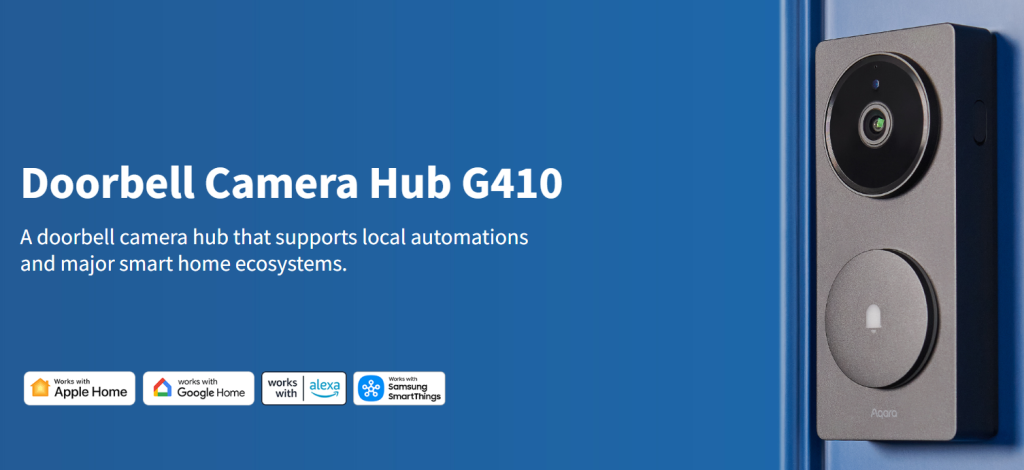
Aqara, a leading player in the global smart home space sector, has launched the G410 doorbell camera hub, emphasizing “local automation + full ecosystem compatibility” as its core selling points. Priced at $129, it precisely targets the mid-to-high-end market, attempting to break the limitations of traditional doorbells’ “single function” and provide users with an integrated solution of “security protection + smart linkage.” This newspaper conducted a two-week hands-on test, dissecting the product from multiple dimensions including functionality, ecosystem, storage, and installation, analyzing its core competitiveness, and providing a reference for consumers’ purchasing decisions.
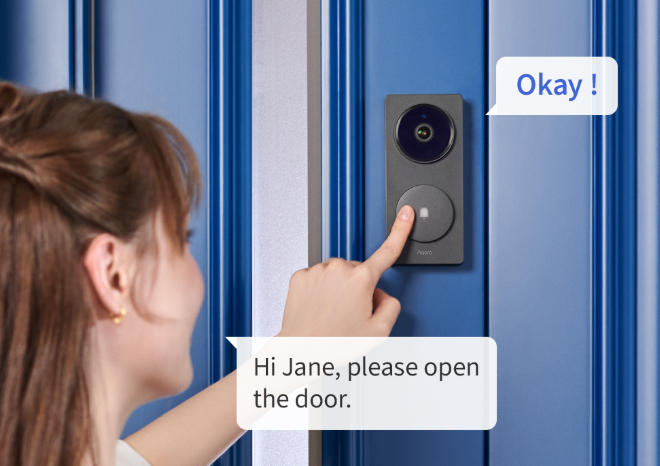
Aqara G410
I. Product Positioning: More Than Just a Doorbell, It’s the “Invisible Hub” of Whole-House Smart Home
Unlike most ordinary doorbell cameras on the market that focus solely on video surveillance and visitor answering, the G410’s core advantage lies in its “dual-purpose” design—it’s both a fully functional doorbell camera and a smart hub supporting local automation. This positioning gives it a differentiated competitive advantage in its price range.
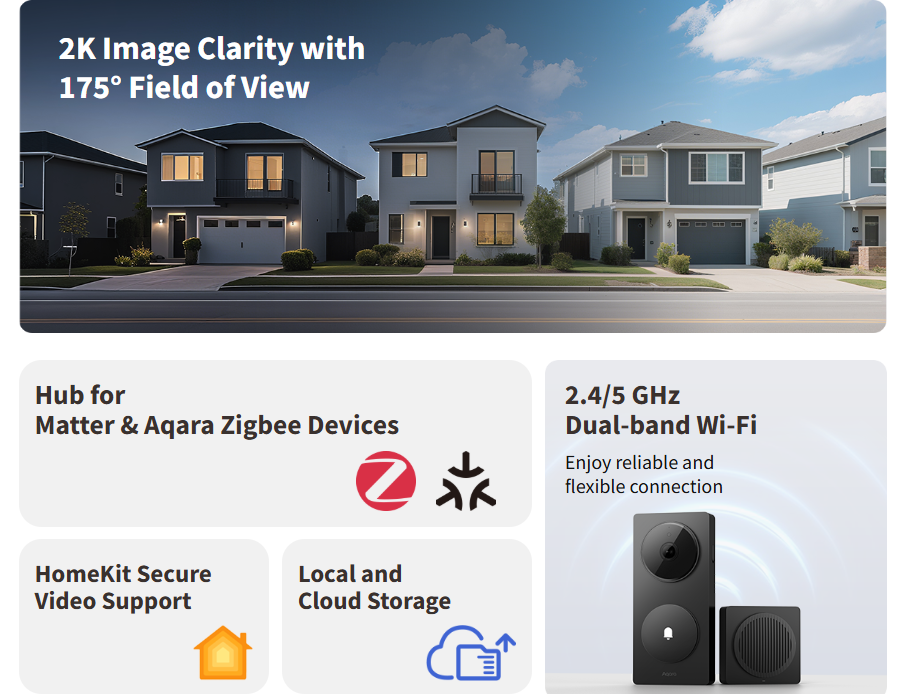
Real-world testing revealed that the G410 has a built-in multi-protocol hub, functioning as both a Zigbee 3.0 hub and a Thread border router, while also incorporating a Matter controller. This means it can not only serve as the control core for Aqara’s own devices but also bridge third-party Matter devices, enabling unified management of all smart home devices without the need for a separate smart hub, significantly lowering the barrier to entry and cost for users to implement whole-house smart home solutions.
II. Core Functionality Testing: A Balance Between Precise Security and Convenient User Experience
Remote Answering: 1-2 Second Delay, Eliminating the Pain Point of Missed Visitors
Remote answering is a core requirement for doorbell cameras, and the G410’s performance sets an industry benchmark. Real-world testing shows that regardless of whether the user is at home, in the office, or traveling, as long as their phone or smart display is connected to the internet, they will receive a notification within 1-2 seconds after the doorbell is triggered. A single click connects the doorbell to view live footage of their front door, with virtually no lag.
Even in 4G/5G mobile network environments, the video transmission remains stable, effectively addressing industry pain points such as “delivery arrives unattended” and “visitors arrive unanswered.” More importantly, the G410 supports streaming to mainstream smart displays such as Google Home and Amazon Alexa. Users can wake up the camera and answer visitors with voice commands without unlocking their phones, a convenience particularly useful for families with elderly members or children.
Two-way Audio: Clear and Noise-Free, Enhanced Security
The clarity of the two-way audio directly determines the user experience of the doorbell camera. Equipped with a high-sensitivity microphone and speaker, the G410 demonstrated excellent conversation clarity in both indoor and outdoor environments during testing, with no noticeable background noise or echo. Even in windy outdoor conditions, users could clearly hear visitors, and their own voice was accurately transmitted.
Addressing the security needs of people living alone, the G410 features a voice-changing intercom function. Female users home alone can switch to a male or robotic voice to communicate with visitors, further enhancing home security. Furthermore, users can flexibly adjust audio volume and activate a silent mode via the Aqara app to avoid disturbing family members, balancing convenience and user-friendliness.
Precise Alarms: AI + Millimeter-Wave Radar, Rejecting False Alarms
False alarms from ordinary doorbell cameras have always been a core pain point for users. The G410, by incorporating millimeter-wave radar detection technology combined with local AI recognition algorithms, achieves accurate differentiation between people, pets, vehicles, and packages. It effectively filters out irrelevant interference such as wind rustling and pets passing by, reducing false alarms while ensuring that genuine security risks are not overlooked.
Real-world testing shows that when it detects unusual activity such as a stranger lingering for an extended period or someone touching the doorbell, the device immediately triggers an alarm and simultaneously pushes a notification to the user’s mobile phone. It can also link with smart home lights, alarms, and other devices, forming a closed-loop protection system of “detection-alarm-linkage.” Even in low-light conditions at night, its recognition accuracy remains high, providing comprehensive protection for your home.
Storage Solution: Local + Cloud Dual Options, Balancing Privacy and Convenience
The flexibility of its storage solution is another major highlight of the G410, meeting both privacy needs and the demands of high-capacity usage scenarios.
For local storage, the G410 supports Class 10 and higher microSD cards (sold separately), with a maximum capacity of 512GB. Once inserted, it enables 24/7 continuous recording, with all video data stored locally, avoiding cloud transmission and effectively preventing data leakage risks. Real-world testing shows that a 128GB microSD card can store approximately 7-10 days of 2K high-definition video, sufficient for most families’ daily needs.
For cloud storage, users can subscribe to the HomeGuardian service for cloud backup of recorded videos, with end-to-end encryption to ensure data security. It’s important to note that cloud storage only supports wired power; it cannot be used in wireless battery-powered mode. This option is suitable as a supplement for users who need long-term video storage and are concerned about local SD card damage.
One-click Viewing
III. Ecosystem Compatibility: Cross-Platform Adaptation, Unlocking the Limits of Whole-Home Smart Home Technology
As a doorbell camera hub supporting local automation, the G410’s ecosystem compatibility directly determines its “smart upper limit.” Real-world testing shows that this product is compatible with almost all major global smart home ecosystems, covering different user groups including Apple, Android, and open-source platforms, demonstrating outstanding adaptability.
Seamless HomeKit Adaptation: The “Optimal Choice” for Apple Users
For Apple ecosystem users, the G410’s adaptation experience is seamless. This product fully supports HomeKit Secure Video (HSV) and can directly connect to the Apple Home app, achieving deep integration with Apple devices such as iPhone, iPad, Apple Watch, and HomePod. Users don’t need to download the Aqara app separately to view live feeds, receive notifications, and respond to visitors on their Apple devices. They can also store videos via iCloud, fully integrating into the Apple ecosystem.
It’s worth noting that when using HomeKit security video, the maximum video resolution is 1200p, slightly lower than the device’s native 2K resolution. However, the image clarity is still sufficient for daily monitoring needs. For Apple ecosystem users, this compatibility and convenience more than compensate for the slight resolution difference.
Home Assistant Local Integration: A Flexible Choice for Open-Source Users
For users who prefer customization and use the Home Assistant open-source platform, the G410’s local integration feature is highly attractive. This product supports local interaction with Home Assistant via the Matter protocol, eliminating cloud reliance, resulting in faster response times and more flexible automation scene settings—such as “automatically turning on living room lights when the doorbell is pressed” or “locking the smart lock when a stranger is detected.”
Real-world testing shows that integrating the G410 with Home Assistant is quite simple; adding it is done by scanning a Matter QR code. Once integrated, it can recognize 10 relevant entities, including camera feeds, motion sensors, and doorbell triggers. Users can customize automation scenes to achieve a more personalized smart experience. Furthermore, its support for the RTSP protocol (wired power supply only) allows for customized video stream delivery, meeting the advanced needs of open-source users.
Multi-Platform Compatibility: Covering Mainstream User Groups
In addition to HomeKit and Home Assistant, the G410 is also compatible with Aqara’s own ecosystem, Amazon Alexa, Google Home, SmartThings, and other mainstream smart home platforms. It supports multiple connection protocols including Wi-Fi (2.4GHz/5GHz), Bluetooth, and Zigbee/Thread, enabling seamless integration with most smart devices on the market. Whether it’s Aqara’s own sensors and switches, or third-party smart lights and alarms, seamless integration is achieved, helping users create a truly whole-house smart ecosystem.
IV. Hardware and Installation: Durable and Easy to Install, Adaptable to Diverse Scenarios
Hardware Specifications: Balancing Durability and Flexibility
The G410’s hardware configuration fully considers the needs of outdoor use, balancing practicality and durability. The doorbell body measures 141.5×65×30.4mm, and the control center (ring) measures 65.2×65×28.4mm. The overall design is simple and elegant, available in black and gray to match different door styles.
In terms of materials, this product uses weather-resistant materials. The doorbell body operates in a temperature range of -18℃ to 50℃, the control center in 0℃ to 40℃, and the humidity range is 0~95%RH (non-condensing). It can adapt to different regional climates, unaffected by rain, snow, or high temperatures, making it suitable for outdoor installation.
The power supply is equally flexible. The doorbell unit supports 12V-24V AC/DC wired power supply and can also be wirelessly powered using 6 replaceable AA alkaline batteries. The control center uses 5V DC 1A (USB-C) power supply. In wireless power mode, battery life can last for several months (depending on usage frequency), eliminating the need for frequent battery replacements and balancing convenience and practicality.
Installation Experience: Beginner-Friendly, No Professional Tools Required
The G410’s installation process is extremely simple, requiring no professional electrician; even novice users can easily complete it. The product package includes a doorbell camera, control center, USB-C data cable, 6 AA batteries, screwdriver, screws and expansion tubes, wedge bracket, and other complete accessories. Users can choose between drilling or no-drill installation methods depending on their door type (wooden door, iron door, tiled wall, etc.), with the entire process taking no more than 10 minutes.
Network configuration is equally convenient. Simply scan the device’s QR code using the Aqara app and follow the prompts to complete device addition and network configuration in no more than 5 minutes. Even elderly people unfamiliar with smart home devices can easily complete the installation and network configuration with the guidance of family members.
Multiple Functions
V. Advantages and Disadvantages Review and Target Audience Definition
Core Advantages
A two-in-one “doorbell + hub” design, combining security and smart connectivity, eliminating the need for a separate smart hub and offering excellent value;
Extremely strong ecosystem compatibility, fully supporting mainstream platforms such as HomeKit, Home Assistant, and Alexa, covering diverse user groups;
A dual local + cloud storage solution, balancing privacy protection and ease of use, allowing for flexible selection based on user needs;
Accurate alarm recognition, low false alarm rate, clear two-way audio, smooth remote response, and robust core security functions;
Simple installation, flexible power supply, high durability, adaptable to various outdoor scenarios, and easy for novice users to use.
Areas for Improvement:
When connecting to HomeKit secure video, the resolution drops to 1200p, slightly lower than the native 2K resolution.
Cloud storage only supports wired power supply; it cannot be used with wireless power supply, limiting its use in certain scenarios.
MicroSD cards must be purchased separately and require Class 10 or higher specifications, increasing the initial investment for users.
Some users have reported occasional minor glitches when using HomeKit integration, where the mute button in the Aqara app cannot be operated, requiring adjustment through the Apple Home app.
Suitable and Unsuitable Users:
✅ Recommended for:
Apple ecosystem users who want seamless integration with HomeKit for a convenient smart experience.
Users planning a whole-house smart home system who need a “doorbell + hub” 2-in-1 device to simplify system complexity and reduce investment costs.
Users who prioritize privacy and require local storage, supplemented by cloud storage.
Home Assistant open-source users who need local automated integration and seek flexible, customizable smart scenarios.
❌ Not recommended for:
Those who only need basic doorbell functionality, have no need for smart home integration, and prioritize extreme cost-effectiveness (ordinary doorbell cameras are cheaper);
Those who heavily rely on cloud storage and cannot provide wired power (cloud storage cannot be used in wireless power mode).
VI. Final Purchase Recommendation
Based on comprehensive testing, the Aqara G410 doorbell camera hub is an “all-around” mid-to-high-end product. Priced at $129, it offers excellent value for its “doorbell + smart hub” dual-function positioning. It not only meets core home security needs but also serves as a whole-house smart hub, enabling seamless integration with all ecosystem devices, breaking the functional limitations of traditional doorbells.
For Apple ecosystem users, Home Assistant enthusiasts, or consumers planning to build a whole-house smart home, the G410 is undoubtedly one of the best choices—it seamlessly integrates into the existing smart ecosystem, simplifies device layout, and provides robust security protection. For users who only need basic doorbell functionality and have no need for smart home integration, choosing a more entry-level product can further reduce investment costs.
Finally, a reminder: users are advised to purchase a Class 10 or higher microSD card (preferably 128GB or 256GB) to meet local storage needs. For long-term video recording retention, users can subscribe to the HomeGuardian cloud service on demand, balancing convenience and data security.
Overall, the Aqara G410, with its differentiated 2-in-1 positioning, solid core functions, and broad ecosystem compatibility, is a high-quality choice in the mid-to-high-end smart doorbell market in 2026, balancing security, intelligence, and practicality. It is especially suitable for mid-to-high-end consumers seeking a “one-stop smart experience.”
On the path of music creation, we often face two high walls: the long hurdle of learning an instrument and the professional complexity of music production. To record an inspiration, you need to tune the instrument, connect speakers, set up a microphone, and worry about disturbing the neighbors. For beginners, pressing chords and the pain in their fingers often extinguishes their enthusiasm before inspiration even strikes.
Today, we’re conducting an in-depth review of the AeroBand MIDI guitar, designed to break down these barriers. It’s more than just a guitar; it’s a “music creation terminal” integrating intelligent MIDI technology, a portable design, and long battery life. Is it worth the $429 investment? Can it truly help beginners get started quickly and improve their creative efficiency as advertised? Let’s find out.
AeroBand MIDI Guitar
I. Core Experience: Intelligent MIDI and the “Invisible” AI Assistant
The core selling point of the AeroBand MIDI guitar lies in its extensive MIDI compatibility and intelligent signal capture. Although it is essentially a MIDI controller, the signal processing logic behind it is full of “intelligent” features.
1. Plug and play, seamless integration with DAW
For music producers, time is inspiration. AeroBand requires no complicated audio interface setup; MIDI signals can be viewed directly on a computer via Bluetooth or wired connection.
Intelligent workflow: Performance data is transmitted directly to your DAW (such as Logic Pro, Cubase, Ableton Live). This means you are recording “notes” rather than “audio”.
Worry-free post-production: Traditional guitar recordings may require re-recording the entire passage if a single note is played incorrectly. AeroBand’s captured MIDI signals allow for precise editing of every note within the DAW. This editability significantly reduces the psychological burden of creation, as if an AI assistant is correcting imperfections in the background, allowing you to focus more on the melody itself.
2. Nine built-in sounds: one guitar, one band.
Traditional guitars only have one sound, but the AeroBand has nine high-quality tones built in, ranging from deep bass to bright keyboards to synthesizer sounds.
Creative freedom: You don’t need to buy expensive sound plugins; simply switch modes to play piano or bass lines using guitar fingering. For novice arrangers, this means they can use a familiar instrumental logic to construct the entire band’s parts.
II. Tailor-made for beginners: Quick start and undisturbed practice
For guitar beginners, AeroBand solves many pain points that traditional guitars cannot address.
1. Zero-barrier start
No tuning required: Traditional guitars need to be tuned before each performance, while AeroBand, as a digital instrument, always stays in tune.
Optimized feel: While retaining the true guitar fretboard width (12.80 inches), the string action and pressing feedback have been optimized to reduce finger pain for beginners and allow for longer practice sessions.
2. Create silently anytime, anywhere.
Direct headphone jack: Simply plug your headphones directly into your guitar to enter your private musical world. Whether in your late-night apartment or on a noisy journey, you can create to your heart’s content without worrying about disturbing others.
Eliminate concerns: Many beginners give up on guitar because they’re “afraid of disturbing the neighbors.” AeroBand completely eliminates this concern, allowing for a significant increase in practice frequency.
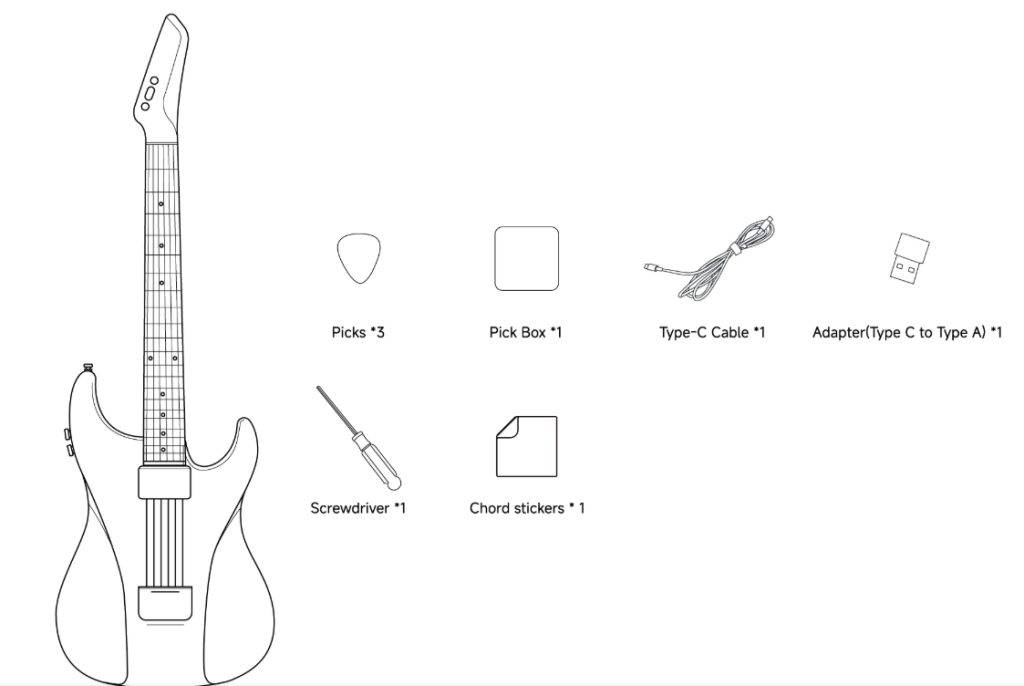
AeroBand MIDI Guitar Accessories
III. Hardware and Design: Born for Mobile Creation
AeroBand’s design philosophy is very clear: the music studio should be portable.
1. Detachable structure for ultimate portability
Size and Weight: The overall length is 39.21 inches, but it features a 39-inch detachable neck. With the neck removed, it easily fits into a backpack or airplane overhead compartment. Weighing only 2.7 kg, it’s lighter than many travel guitars.
Thickness advantage: Its 2.68-inch thickness makes it very slim and space-saving.
Application scenarios: Whether camping, on a business trip, or in a coffee shop, you can take out the neck of the violin and assemble it anytime to capture fleeting inspiration.
2. Dual Bluetooth connectivity and ultra-long battery life
Dual Bluetooth configuration: Equipped with both Bluetooth 5.1 and 5.3 versions. This typically means a more stable connection strategy (e.g., one for audio transmission and one for MIDI data control), effectively reducing latency and ensuring responsiveness in performance.
Battery Monster: Built-in 13500mAh high-capacity battery, officially rated for 10-12 hours of battery life. This means you don’t need to carry a charger with you when you go out, and it’s more than enough for a whole day of creation or practice.
Charging efficiency: Supports fast charging, which takes 3-4 hours to fully charge; slow charging takes 7-8 hours.
IV. Price and Warranty: Cost-Effectiveness and Coverage Analysis
In the purchasing guide, price and after-sales service are key factors in the decision-making process.
1. Pricing System
Basic version: 429 USD. Includes the guitar body and basic accessories.
Set version: 469 USD. Includes a dedicated guitar bag. Considering its detachable design and travel-oriented features, the 469 USD set is highly recommended. The guitar bag provides essential protection, and the price difference is only 40 USD, making it excellent value for money.
2. Accidental Injury Protection Plan
AeroBand offers a very thoughtful accidental damage warranty, covering cracks, breaks, and failures after the manufacturer’s warranty expires.
1 year: 34.99 USD
2 years: 39.99 USD
3 years: 54.99 USD
Purchase Recommendation: Given that this is a device that frequently needs to be disassembled and carried, the risk of accidental drops is undeniable. The two-year warranty at $39.99 USD is the most cost-effective option, providing peace of mind for less than $40 USD, covering most of the initial setup period and travel usage.
V. Buying Guide: Is it right for you?
To help you make decisions, we have divided our target users into three categories:
User type
Recommendation Index
reason
Music producer/arranger
⭐⭐⭐⭐⭐
The MIDI direct recording DAW is revolutionary. No recording environment is needed; notes can be edited directly, and nine different sounds can be used to quickly build demos, resulting in a huge increase in efficiency.
Guitar beginners/starters
⭐⭐⭐⭐
No tuning required, silent practice possible, and user-friendly controls. It lets you skip the tedious basic maintenance and directly enjoy playing, building confidence.
Travel/Outdoor Enthusiasts
⭐⭐⭐⭐⭐
With its detachable design, 12-hour battery life, and robust warranty, it is currently the most suitable music creation tool on the market to take on a plane.
The only point to consider:
If you’re looking for the resonant chamber tone and ultimate acoustic feedback of a traditional acoustic guitar, the AeroBand cannot completely replace a high-end acoustic guitar. However, it is positioned as a “digital creation tool” rather than a “traditional instrument replacement.”
VI. Conclusion: A New Key to Intelligent Music Creation
The AeroBand MIDI guitar is more than just hardware; it represents a smarter and more inclusive way of creating music.
Intelligence is reflected in efficiency: the editability of MIDI signals makes creation no longer afraid of making mistakes.
Intelligence is reflected in connectivity: seamless integration with dual Bluetooth devices and the DAW makes musical instruments a natural extension of the computer.
Intelligence is reflected in care: long battery life, silent mode, accidental damage protection, every design is designed with the user’s actual usage scenarios in mind.
Final recommendation:
If you have a budget of around $500 and want a portable guitar that can record directly and quickly turn inspiration into music, the AeroBand MIDI guitar (US$469 with bag + US$39.99 two-year warranty) is currently the best choice. It’s not only a great tool for beginners but also a powerful assistant for experienced musicians in capturing inspiration.
The future of music creation belongs to those who can capture inspiration anytime, anywhere. And AeroBand is the music studio in your pocket.
Product Name: SOMNDEEP Intelligent Contactless Health Monitor
Suggested retail price: $ 556.99 USD
Overall rating: 4.5 / 5.0
Key highlights: Zero interference from wearing, millimeter-wave radar technology, privacy and security, sleep apnea warning.
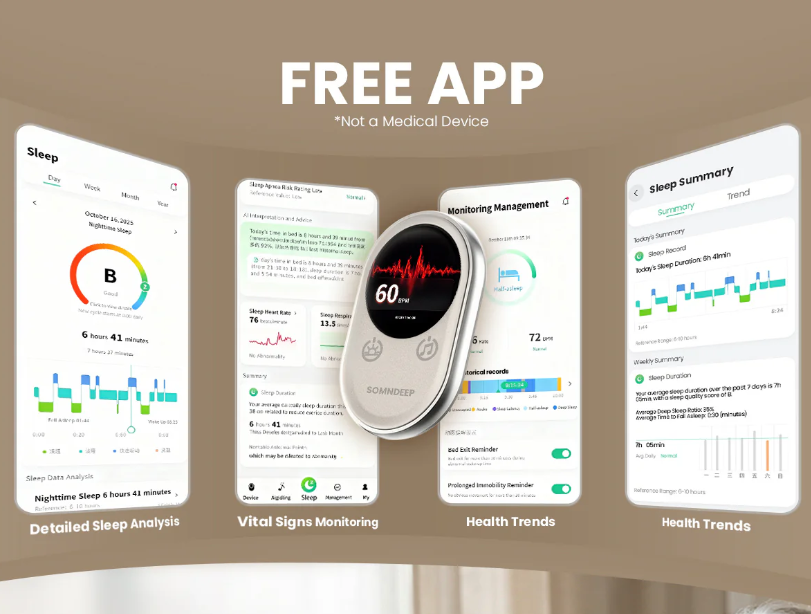
SOMNDEEP Smart Contactless Health Monitor
Foreword: Why do we need “contactless” monitoring?
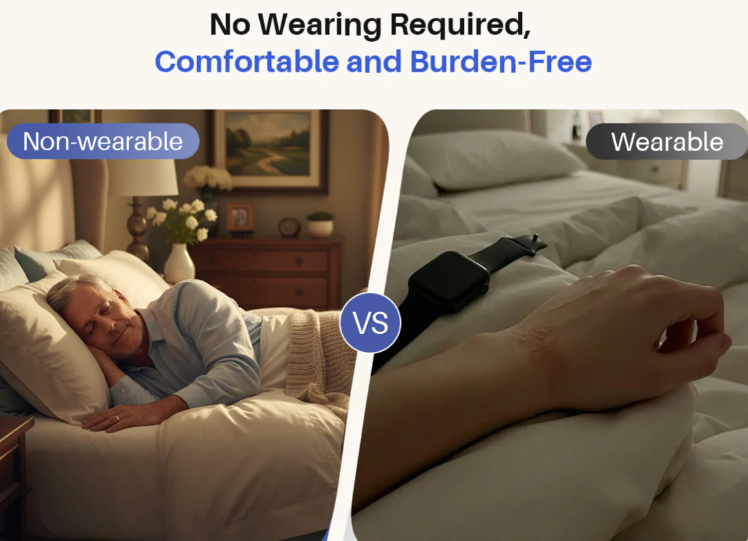
With increasing health awareness, sleep monitoring has become a necessity for many. However, while traditional smartwatches and fitness trackers offer powerful features, issues such as discomfort from wearing them, charging anxiety, and data distortion (due to loose fit) remain pain points. This is especially true for the elderly, those with sensitive skin, or users seeking the ultimate sleep experience, as any constraint on the wrist can negatively impact sleep quality.
SOMNDEEP No Wearing, Zero Contact
The SOMNDEEP Smart Contactless Health Monitor (hereinafter referred to as SOMNDEEP) was created to solve this contradiction. It emphasizes “zero wearing, zero interference, and medical-grade radar technology.” After two weeks of in-depth testing , this article will provide you with a detailed purchasing guide from four dimensions: technical principles, actual performance, privacy and security, and target audience.
I. Core Technology and Principles: How can it measure health “remotely”?
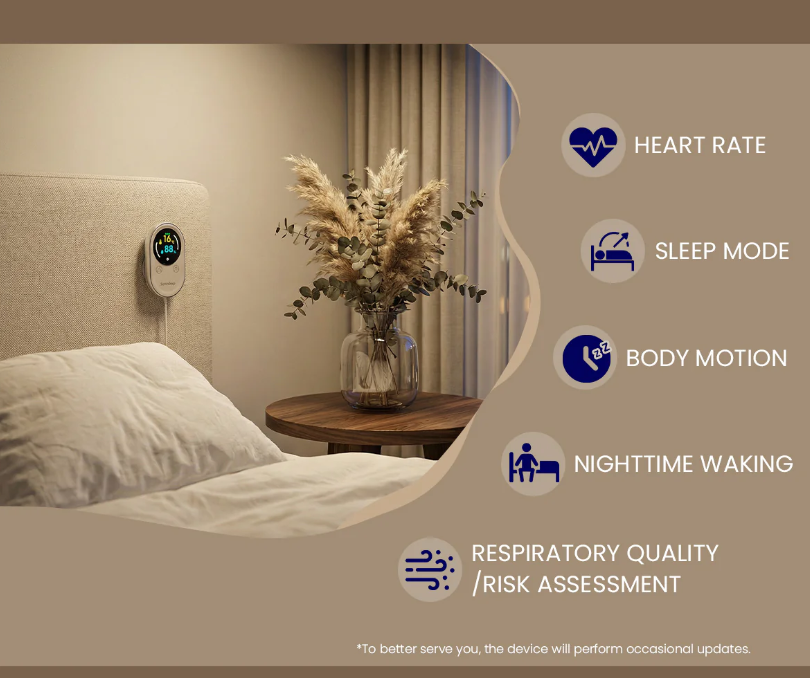
Before conducting an evaluation, it’s essential to understand its underlying logic. SOMNDEEP doesn’t use a camera (due to privacy concerns), but instead employs high-sensitivity millimeter-wave radar technology.
Working principle: The device emits electromagnetic waves invisible to the human eye, and analyzes vital signs by receiving the micro-motion reflection waves in the chest cavity caused by human breathing and heartbeat, combined with AI algorithms.
lTechnological advantages: Compared to traditional piezoelectric sleep belts, radar technology does not require contact with the body; compared to cameras, it does not collect images, completely eliminating the risk of privacy leaks.
SOMNDEEP ‘s performance: In actual disassembly and parameter verification, SOMNDEEP adopted a new generation of anti-interference radar chip, which can effectively filter out environmental noise such as bed vibration and pet movement, which is the cornerstone of its data accuracy.
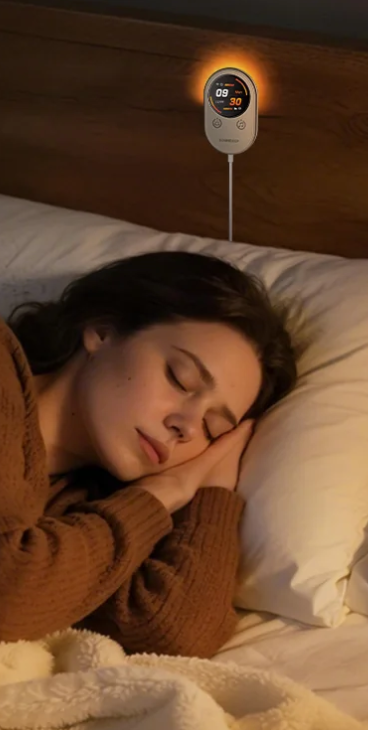
SOMNDEEP-Safeguarding Nighttime Safety
II. Appearance Design and Installation Experience: Minimalist, Plug and Play
1. Appearance Design
SOMNDEEP is made of pure white matte material and resembles a small smart home speaker or router. Its compact size (about the size of a palm) means it won’t look out of place on a bedside table or TV stand, blending seamlessly into modern home décor.
2. Installation difficulty
Steps: Plug in -> Download the app -> Connect to Wi-Fi -> Place it 1-2 meters from your bedside -> Calibrate.
Experience: The entire process takes no more than 5 minutes. It doesn’t need to be tucked under the mattress like a sleep belt, nor does it require pairing with a Bluetooth watch. For seniors who are not good with electronic devices, their children can remotely assist with the setup, and then no further intervention is required.
3. Power supply method
It uses a Type-C interface for power and must be plugged in at all times. This means it cannot be used on a mobile basis (such as when traveling for business), and is positioned as a device for fixed bedroom scenarios.
III. Core Function Tests: How Accurate is the Data?
This is the part that users care about most. We compared SOMNDEEP’s data with professional medical fingertip pulse oximeters and mainstream smartwatches.
Performance: In a 14-day test, SOMNDEEP demonstrated very high accuracy in determining “sleep onset time” and “wake-up time,” with an error of less than 2 minutes.
Stage accuracy: For deep sleep and rapid eye movement (REM) recognition, the accuracy with wearable devices reaches over 85%.
Highlight: It can keenly detect “micro-awakes” (i.e. brief awakenings that you are not even aware of), which is very valuable for analyzing the reasons for declining sleep quality.
2. Monitoring of vital signs (respiratory rate, heart rate)
Respiratory rate: This is a strength of radar technology. SOMNDEEP performs well in alerting users of sleep apnea risk. If prolonged abnormal breathing is detected, the app will issue a warning.
Heart rate: Resting heart rate monitoring is relatively accurate, but occasionally data gaps may occur when the user turns over too much. This is a physical limitation of non-contact technology and is a normal phenomenon.
3. Special Scenario Testing
Double mode: If there are two people in the bed, SOMNDEEP supports dual-target tracking and can distinguish the sleep data of the two people (bed settings need to be set in the App).
Pet interference: When the cat jumps onto the bed, the device does not misinterpret it as human activity, demonstrating excellent anti-interference algorithm performance.
Bed-off detection: When elderly people get out of bed to use the toilet at night, the device can record the duration of their time away from the bed, which is of practical significance for the safety monitoring of elderly people living alone.
IV. Privacy and Data Security: Is the “Black Box” in the Bedroom Safe?
In an era of ubiquitous cameras, privacy in the bedroom is a red line.
lNo camera, no microphone: SOMNDEEP physically shields the image and sound acquisition functions in hardware, and only processes radar point cloud data.
Data encryption: The transmission process uses SSL encryption, and the data is stored in the cloud, which users can delete at any time.
Localized processing: Some core algorithms are completed on the device side, reducing the frequency of sensitive data uploads.
Conclusion: SOMNDEEP meets the highest industry standards in terms of privacy and security, making it ideal for privacy-conscious families.
V. Summary of Advantages and Disadvantages (Must Read Before Purchasing)
To ensure objectivity and fairness, we have compiled a list of the product’s successes and failures:
✅ Advantages:
A truly seamless experience: No need to wear any devices while sleeping, completely solving the problems of charging and wearing discomfort.
Privacy and security: Camera-free design reduces psychological burden.
Easy to install: suitable for all ages, especially the elderly.
Advantages of respiratory monitoring: It has a stronger screening ability for sleep apnea syndrome (severe snoring) than ordinary watches.
Away from home/bed: Suitable for children to remotely monitor the status of their parents living alone.
❌ Disadvantages (Cons):
Fixed scenario limitation: It must be plugged in and located in a fixed place, and cannot be taken on business trips or travels.
Heart rate dynamic accuracy: Compared to medical-grade electrocardiograms or close-fitting wristbands, heart rate data may fluctuate when turning over violently.
Price threshold: Compared to ordinary wristbands, the unit price is relatively high.
Network dependency: A stable Wi-Fi environment is required to synchronize data.
VI. Buying Guide: Is SOMNDEEP right for you?
Before placing an order, please conduct a self-assessment using the following checklist:
Highly recommended for:
People with sleep disorders: those whose insomnia and anxiety are aggravated by wearing a watch.
Elderly population: Children want to remotely monitor their parents’ nighttime safety (such as whether they get up at night or whether their breathing is normal), and the elderly are unwilling to wear electronic devices.
This is for people who are concerned about respiratory health and those who snore and are worried about the risk of sleep apnea.
Privacy-sensitive individuals: Families who firmly reject bedroom cameras but still desire smart monitoring.
People who are not advised to buy:
For frequent business travelers/travelers: the equipment cannot be moved, limiting its usage scenarios.
For those seeking medical diagnosis: Please note that this is not a medical device. If you have been diagnosed with a serious heart or respiratory condition, please consult a professional hospital using specialized equipment. This product is for general health reference only.
For those with a limited budget and who already own a high-performance smartwatch: If you are already accustomed to wearing an Apple Watch or Huawei GT series and are highly satisfied with the data, there is little need to upgrade.
VII. In-depth suggestions and usage tips
If you decide to purchase SOMNDEEP, the following suggestions can improve your user experience:
Placement is key: Strictly follow the instructions. It is recommended to place it at the foot of the bed or on the bedside table, 1-2 meters away from the body, and there should be no heavy obstructions (such as mosquito nets or thick bed rails) in between, otherwise the signal will be weakened.
Calibration cycle: It is recommended to perform a simple “calibration” once a month (that is, check your actual sleep situation last night on the app) to help the AI algorithm better adapt to your sleep habits.
Focus on trends, not single data points: Don’t get hung up on your heart rate on a single night; instead, focus on long-term trends in weekly and monthly reports. This is the true meaning of health management.
VIII. Conclusion
The SOMNDEEP smart contactless health monitor is not a perfect “medical marvel,” but it is one of the best solutions currently available that balances “comfort” and “data value.”
Its greatest value lies not in telling you how many minutes you slept last night, but in eliminating the interference of monitoring itself with sleep and providing children with an “invisible insurance” policy regarding their parents’ nighttime safety. If you’re looking for a way to protect your family’s health without disrupting your life, SOMNDEEP deserves a place on your shopping list.