At the AWE (Appliance & Electronics World Expo), GuangLi unveiled two new smart swimming goggles—the Holoswim 3 AR Smart Swim Goggles and the SollaWave AI Smart Music Swim Goggles—competing in the underwater smart device market with two distinct technological approaches. The launch of these two products not only continues GuangLi’s first-mover advantage in the AR underwater device field but also attempts to cover swimming needs across all scenarios, from professional training to recreational fitness, through differentiated positioning.
Traditional swimming training has long been plagued by “data disconnect” and “monotonous experience”: professional swimmers struggle to obtain real-time core data such as pace and trajectory, while recreational swimmers are often deterred by the monotony of long lanes. GuangLi’s two new products address these two pain points with their respective solutions.
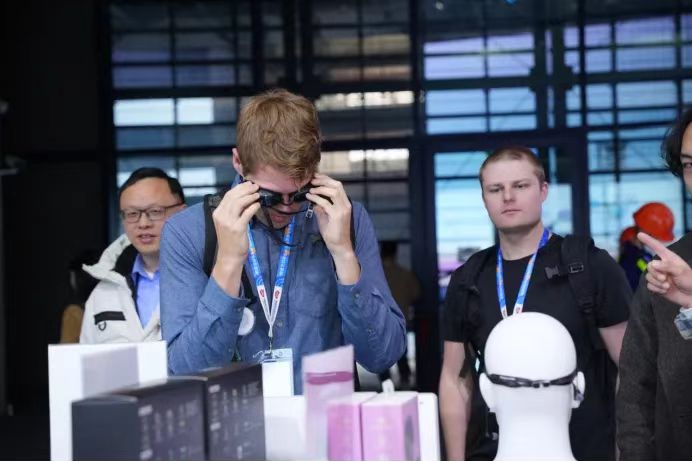
Holoswim 3: GPS + AR Empowerment, Targeting Professional Outdoor Scenarios
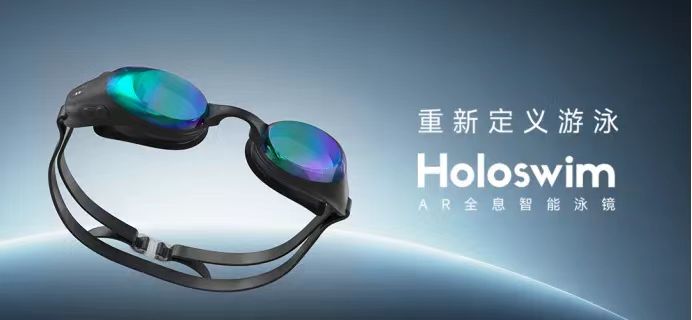
As an iteration of GuangLi’s flagship series, the Holoswim 3 focuses on “data visualization + outdoor safety” as its core selling points. Building upon the AR display technology of its predecessor, it has undergone a dual upgrade in both functionality and appearance, directly targeting professional swimmers and outdoor enthusiasts.
The product’s core competitiveness lies in the combination of real-time AR underwater display and GPS trajectory guidance. Through optical projection technology, users can clearly view key training data such as pace, distance, and time in front of their field of vision without interrupting their swimming rhythm, solving the pain point of “blind swimming” with traditional goggles. The built-in GPS module is a core differentiator from similar products—in open waters such as lakes and oceans, it can record movement trajectories in real time and provide directional guidance, significantly improving the safety of outdoor swimming. This has irreplaceable practical value for triathletes and professionals who conduct long-term outdoor training.
Ecosystem connectivity further strengthens its position as a data hub. The Holoswim 3 can be paired with smartwatches, fitness trackers, and other accessories to sync heart rate data in real time, helping users accurately control training intensity and avoid overexertion. In terms of appearance, the new symmetrical design not only improves visual balance but also enhances comfort during extended wear, while the vibrant coated lenses balance practicality and style.
However, the upgraded functionality also brings potential considerations. With the integration of GPS and AR display modules, its battery life performance needs to be referenced based on official test data; simultaneously, due to technological costs, its price is expected to be higher than ordinary smart swimming goggles, positioning it in the high-end market.
From a target audience perspective, the Holoswim 3 is more suitable for open water swimmers, serious trainees seeking accurate data, and tech enthusiasts who value technological experience and design.

SollaWave: Music at its Core, Focusing on Leisure and Fitness Scenarios
In stark contrast to the Holoswim 3’s “professional orientation,” the SollaWave focuses on “auditory experience,” targeting leisure and fitness enthusiasts, attempting to break the monotony of swimming through the combination of music and AI voice.
Offline music playback is its core function. The built-in storage module allows users to download music in advance, eliminating the need to carry a phone, rely on waterproof bags and cables while swimming, truly achieving “listen as soon as you get in the water.” GuangLi has optimized its in-ear acoustic technology to address the underwater sound transmission characteristics, ensuring clear underwater sound quality and a strong sense of rhythm, turning swimming into an immersive “underwater concert.”
Data feedback employs a “screenless” design—AI voice prompts provide users with training data such as distance and time during swimming breaks or turns, avoiding visual interference with swimming focus and allowing users to concentrate more on the strokes themselves. Furthermore, the rhythm of the music can help users regulate their breathing, indirectly improving athletic performance.
The product’s shortcomings are also apparent: in-ear comfort varies from person to person, and users need to pay attention to earbud size fit; additionally, it lacks GPS positioning, making its safety guidance capabilities in open water far inferior to the Holoswim 3.
SollaWave’s target users are clearly defined: fitness enthusiasts who primarily exercise in indoor pools and have low GPS requirements, those who rely on music to enhance their workout experience, and users who dislike visual distractions and prefer auditory feedback.
Market Positioning and Purchase Decision: Precise Matching to Scenarios is Key
The differentiated positioning of the two products essentially reflects GuangLi’s segmented strategy in the underwater smart device market. To help consumers make informed decisions, the following is a comparison of the two products’ core dimensions:
From a decision-making perspective, if users frequently swim in open water, prioritize the accuracy of training data, or have high requirements for equipment aesthetics, the Holoswim 3 is a better choice; if users primarily exercise in indoor pools, seek a relaxed workout experience, and rely on music to alleviate boredom, the SollaWave offers better value for money.
Price Prediction and Market Outlook
As of the end of the AWE press conference, GuangLi has not yet announced the global unified retail price for both products. Based on their technical specifications, product positioning, and the market pricing of their predecessors, industry analysts predict that the Holoswim 3, with its integrated GPS and AR display technology, will be priced in the high-end range of $350-$450; the SollaWave, as a differentiated leisure product, will be priced more affordably, expected to be between $250-$350.
It should be noted that the above prices are only market predictions and not the official final prices. The final pricing will be announced on GuangLi’s official website and at the AWE launch event. Consumers are advised to pay attention to official channels, as early bird discounts may be available during the initial product launch period.
Conclusion
GuangLi’s newly launched Holoswim 3 and SollaWave have avoided homogeneous competition, instead precisely addressing the needs of different swimming groups through a dual approach of “professional data” and “leisure experience.” The Holoswim 3 pushes AR technology from “conceptual” to “practical,” solving a core safety pain point in open water swimming; the SollaWave takes a different approach, using music to reconstruct the swimming experience, lowering the entry barrier for smart swimming goggles.
For consumers, the key to choosing between the two products lies in “scenario matching”—there is no absolute superiority or inferiority, only differences in whether they suit their own needs. With smart wearable devices continuously penetrating sports scenarios, GuangLi’s dual-product strategy may further solidify its leading position in the underwater smart device field.
Leave a Reply