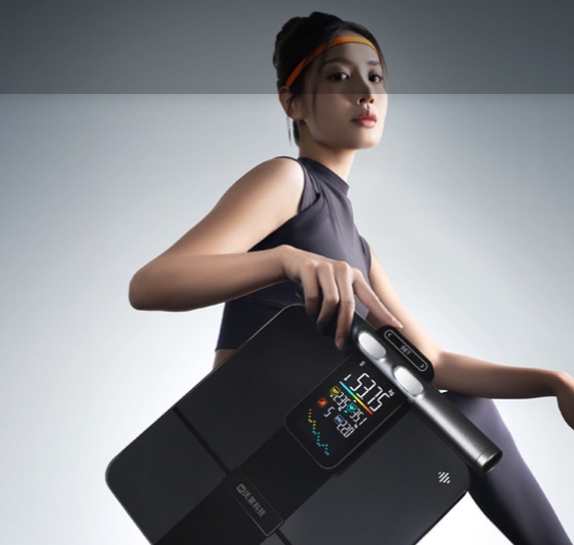
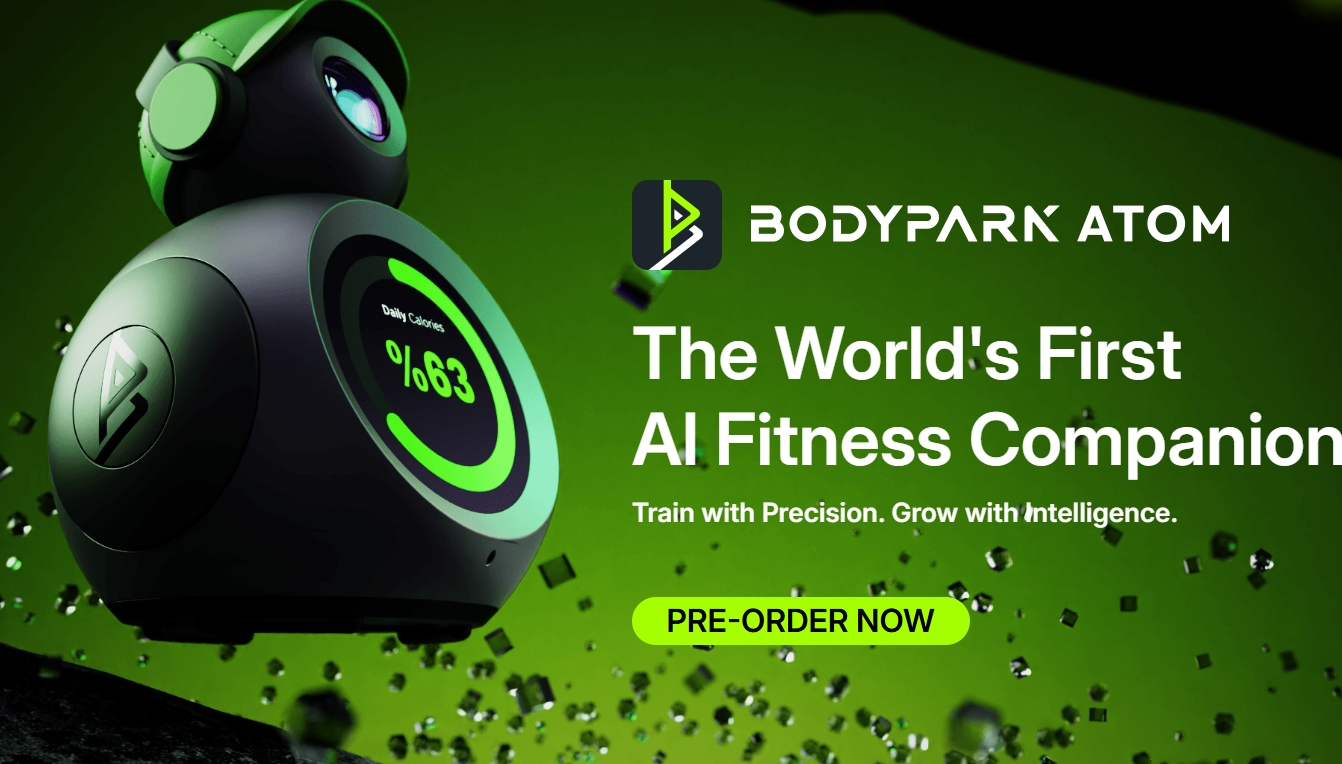
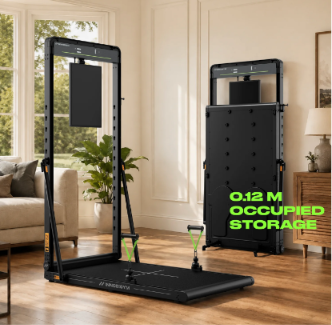
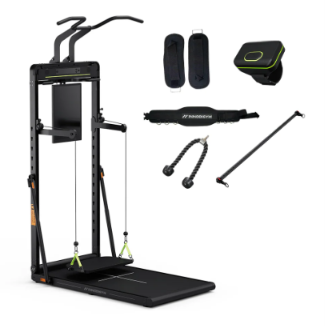
AI fitness hardware is designed for home and personal fitness scenarios. It utilizes artificial intelligence visual recognition, motion analysis, and data algorithms as core technologies to provide functions such as motion correction, intelligent guidance, exercise monitoring, personalized courses, and data tracking.
Aicrunchx has learned that this week, Nike’s Technology Innovation Lab (NSRL) officially launched a new type of compression sock called “Recovery Sleep-Sock”.
The “Recovery Sleep-Sock” is not a traditional sports accessory, but a set of “smart hardware” that incorporates flexible sensing, gradient compression algorithms, and IoT connectivity.
In today’s era of rapid advancements in AIoT and biosensing, Nike is attempting to enter the AI sleep race with a pair of socks.
But can the “Recovery Sleep-Sock” truly help Nike reap the rewards of the AI sleep market?
As long as you have a body, you are an athlete.
Figure 1: As long as you have a body, you are an athlete.
Aicrunchx believes that the breakthrough in hardware architecture is the core barrier to entry for this product.
Unlike the single physical restraint of daytime compression gear, NSRL employs “gradient microcirculation knitting technology.”
Based on extensive biomechanical modeling of athletes, the “Recovery Sleep-Sock” socks deliver differentiated pressure gradients (approximately 8-15 mmHg) to the arch, Achilles tendon, and calf muscles.
During the body’s resting phase, it simulates the venous pump effect, significantly improving blood return efficiency and accelerating the clearance of lactic acid and inflammatory factors.
Even more noteworthy is its sensor solution: a flexible thin-film temperature sensor and a micro-impedance monitoring module are embedded within the sock, using medical-grade silicone encapsulation and a seamless weaving process.
Combined with a low-power MCU and a miniature antenna, it achieves zero-feel-of-absence wear throughout the night and millisecond-level vital sign data acquisition, marking a leap forward in sports textiles towards the form of “wearable electronic terminals.”
Nike’s National Science and Technology Innovation Lab (NSRL)
Figure 2: Nike’s National Science and Technology Innovation Lab (NSRL)
Hardware is merely the carrier; the edge AI of smart hardware and its interconnected ecosystem are the key to success. Medical data shows that a natural drop of 0.5℃-1℃ in core body temperature is the physiological switch that triggers deep sleep.
The edge computing chip of “Recovery Sleep-Sock” can analyze foot microclimate fluctuations in real time and communicate bidirectionally with the smart home hub (temperature control air conditioner, smart mattress) through open protocols to dynamically build a “micro-environment for easy deep sleep”.
All anonymized data will be seamlessly integrated into the Nike Run Club ecosystem. Leveraging machine learning models, the system can not only generate recovery reports that include sleep cycles and HRV variability, but also combine daytime training load to output “dynamic bedtime suggestions” and “next day training intensity warnings.” From passive recording to proactive intervention, Nike is building a “data-driven recovery loop.”
Behind this is the strategic positioning of the sports technology industry as it moves towards the “Elite Sleep” track, a blue ocean market that capital is eagerly seeking.
When daytime athletic performance approaches physiological limits, the quality of nighttime recovery becomes a new variable for breaking through bottlenecks.
For marathon runners and CrossFit enthusiasts, it is a “bio-accelerator” to reduce delayed onset muscle soreness; for people who sit or stand for long periods, it is a “nighttime therapy device” to improve lower limb microcirculation and combat venous stasis; and for tech elites who pursue ultimate efficiency, it transforms 8 hours of sleep into quantifiable and iterative “productivity assets.”
Nike’s recovery socks mark a significant step for smart wearables, moving beyond the “data collection era” and into the “algorithm intervention and biological optimization era.”In the second half of the integration of flexible electronics and AI big data models, whoever can accurately decode the black box of sleep will hold the ticket to the next generation of health hardware.
Recently, Shuangpai Robotics, a company specializing in intelligent wheelchair robots, announced the completion of a tens of millions of yuan Series A financing round, led by Tiantu Capital. This financing, seemingly focused on “traditional assistive devices,” actually signifies a deep convergence of embodied intelligence and the silver economy. Driven by both accelerating aging and the spillover effects of AI technology, intelligent mobility is moving from “concept demonstration” to “essential real-world application,” becoming one of the most promising and certain high-potential tracks in the AI hardware field.
Dual-Faction Robotics Product Line
I. Demand Restructuring: From “Stigma Aids” to “Dignified Travel Terminals”
Data shows that the global population aged 60 and over has now exceeded 1.4 billion and is continuing to climb at an average annual rate of nearly 3%. The United Nations Population Division predicts that this number will double to 2.1 billion by 2050. With the combination of aging and chronic diseases, the proportion of elderly people with mobility impairments or who require daily assistance is constantly increasing, and the demand for mobility aids is experiencing a structural expansion.
However, the global wheelchair and smart mobility market has long been highly fragmented. While traditional manufacturers hold a basic position in the field of electric and mechanical mobility, they have not yet formed absolute leaders in intelligent sub-sectors such as embodied interaction and environmental perception, resulting in a low overall market concentration. Mainstream products are still in the “passive mobility” stage, which is difficult to match the upgraded demands of the global elderly for safe, dignified and autonomous mobility.
For contemporary seniors, transportation tools have long transcended basic functions, carrying the weight of dignity, safety, and social needs. Younger seniors resist being labeled, while older seniors crave “zero learning costs.” The pain points of traditional products—bulky, clunky to operate, and medical-looking—are creating enormous potential for experience upgrades.
This shift in demand provides a clear product definition direction for the age-friendly transformation of AI hardware: smart wheelchairs are no longer cold, impersonal rehabilitation devices, but rather “personalized smart terminals” that integrate mobility, environmental perception, and interactive decision-making.
II. Hardware Breakthrough: A Gradual Implementation Approach is Needed
The key to breaking the deadlock lies in truly integrating intelligence into wheelchairs, rather than simply piling up parameters and hyping up concepts. Companies, represented by industry upstarts, are moving away from the “technical show trap” and towards a technology route that prioritizes user experience and iterates incrementally.
At the underlying hardware level, the self-developed core components have become a watershed moment in the user experience. By collaborating with leading supply chains to customize high-torque-density motors, and by developing lightweight folding structures and aerospace-grade carbon fiber materials, Shuangpai Robotics has effectively overcome engineering pain points such as range anxiety, storage challenges, and unstable vehicle center of gravity.
At the algorithm and control level, multimodal sensor fusion (ultrasound + vision + IMU) combined with edge AI computing power enables dynamic obstacle avoidance, slope anti-slip, fall warning, and adaptive speed adjustment. The introduction of large model capabilities makes voice interaction, rehabilitation guidance, and abnormal behavior recognition possible.
This strategy of “first achieving commercial viability, then adding AI capabilities” ensures product security and usability while also reserving architectural space for subsequent OTA upgrades and data closure. An industry consensus is gradually becoming clear: AI hardware for the elderly must adhere to the engineering logic of “mechanical reliability as the foundation, software experience as the wings.”
III. Business Closed Loop: Overseas Validation and Transformation into Service-Oriented Manufacturing
Verifying technological feasibility is inseparable from establishing a viable business model. The expansion of distribution channels and overseas presence for smart wheelchairs is reshaping the industry’s value chain.
Currently, leading companies have successfully established a three-dimensional distribution channel encompassing “B-end benchmarking + C-end retail + global distribution.” In China, Shuangpai Robotics ‘ products have already entered high-end senior living communities such as Taikang Home and offline senior shopping malls. Globally, its lightweight and easy-to-operate features have enabled it to rapidly penetrate nearly 30 markets, validating the product’s universality in meeting global aging needs.
More noteworthy is the evolution of business models: the industry is shifting from “one-time hardware sales” to “hardware + subscription service (HaaS)”. Real-time gait, heart rate, and environmental data collected by the devices can be extended to fall intervention, rehabilitation advice, and remote medical calls; combined with a “leasing + sharing” model, this effectively lowers the barriers to entry for elderly care institutions and hospitals. Hardware becomes the entry point, while data and services build long-term barriers to entry—this is the core logic behind the heavy investment from capital.
IV. Industry Outlook: The Next Hurdle and Breakthrough Point for AI-Powered Elderly-Friendly Hardware
Despite its promising prospects, AI-powered hardware for the elderly is still in its early stages of commercialization. The industry faces three core challenges:
First, data security and privacy compliance. The collection, transmission, and cloud processing of health and behavioral data must comply with medical-grade standards and the requirements of the Personal Information Protection Law. Data anonymization and localization processing under an edge-cloud collaborative architecture will become standard practice.
Secondly, there’s the “last mile” of age-friendly interaction. Voice recognition needs to adapt to language and speech rate decline, touch interfaces need to be designed to tolerate vision loss and decreased touch accuracy, and the integration of physical buttons and digital interaction still requires extensive user testing.
Third, supply chain mass production and cost control. While developing core components in-house can improve the user experience, it poses stringent challenges to startups in terms of yield control, cash flow, and large-scale delivery.
In the next 3-5 years, the banking sector will undergo a transformation from “single-product intelligence” to “ecosystem interconnection,” and from “usable” to “user-friendly.” Companies with a global perspective, deep expertise in underlying electromechanical algorithms, and a commitment to an age-friendly design philosophy are expected to establish long-term competitive advantages.
Technology Safeguards the Elderly
Conclusion
When AI has wheels, wheelchairs will no longer be passive means of transportation, but intelligent agents with the ability to perceive, make decisions, and provide companionship. The tens of millions of yuan Series A funding is just the beginning; it reflects the business logic of using technology for good and the genuine aspirations of an aging society.
Driven by the wave of smart hardware, senior citizen mobility is undergoing a paradigm shift from “assistive devices” to “life partners.” For smart hardware entrepreneurs, understanding the “dignity and freedom” of the elderly, refining details with engineering thinking, and creating value through data loops may be the best key to unlocking the next trillion-dollar market.
As artificial intelligence moves from data perception to embodied decision-making, sports technology is ushering in a new paradigm revolution. Golf, as one of the most popular sports among high-net-worth individuals globally, has long been plagued by industry pain points such as high barriers to professional training, fragmented data services, and insufficient intelligent decision-making capabilities. Recently, aicrunchx noticed a startup team from the University of Pennsylvania—PathFinder—which is leveraging cutting-edge robotics technology and deep motion cognition to integrate embodied intelligence, multimodal perception, and biomechanical analysis to launch BirdieSense, an intelligent agent terminal for golf scenarios.
I. Tech Geeks × Sports Experts: A Tech Dream Team with Expertise in Sports
The founding team of PathFinder is a hybrid team of “geeks + athletes” with top academic backgrounds and deep sports experience. Core founder Chen Yi (Steve) graduated from the GRASP Robotics Lab at the University of Pennsylvania and has more than 15 years of competitive sports experience, with a best golf score of 89. Co-founders Lin Zixuan and Xu Kaihan also graduated from the robotics major at Penn and have been playing golf for more than 20 years.
Over 95% of the team members are deeply involved in golf, spanning diverse backgrounds including professional players, course managers, and content creators. This “tech geek × sports expert” combination allows the team to be proficient in embodied intelligence and AI algorithms, while also possessing a deep understanding of North American golf culture, training pain points, and commercialization logic. They are not merely technology providers, but “tech people who understand golf,” possessing strong cross-cultural product definition capabilities and localization potential, making them an international entrepreneurial force tailored to reshape the golf AI ecosystem.
II. BirdieSense: The Smart Terminal for Golf, From Data Recording to Proactive Decision Making
BirdieSense (formerly BirdieCoach) is a golf-integrated intelligent agent terminal developed by PathFinder. Relying on its self-developed “integrated brain,” the product integrates multimodal visual perception, biomechanical analysis, and dynamic environment modeling technologies. It can capture swing trajectories, center of gravity distribution, and micro-topography of the course in real time, creating a complete closed loop of “data collection – intelligent diagnosis – strategy generation – training companionship.”
Unlike traditional rangefinders or wearable devices, BirdieSense is implemented as an “AI caddie + virtual coach,” supporting voice interaction, real-time motion correction, and long-term player ability graph construction, enabling AI to truly understand the scene and make proactive decisions.
BirdieSense
From an evaluation perspective, its core advantage lies in the deep integration of sports cognition and AI algorithms. The team has encoded professional training logic into the model, enabling the system not only to identify technical deviations but also to output personalized hitting plans based on wind direction, slope, and physical condition, significantly lowering the barrier to professional guidance. In the North American market, the product precisely addresses the essential skill advancement needs of 28 million active golfers, potentially breaking down the industry barrier of high-priced personal training.
In terms of user experience, its interactive design aligns with the habits of golf, seamlessly integrating into daily swinging rhythms without the need for complicated attire; the data visualization interface is clear and adaptable to users of all levels, from beginners to advanced. In terms of the business model, hardware sales combined with SaaS subscriptions offer high scalability, extending to scenarios such as youth training, course operation optimization, and tournament data services.
As an early-stage product, deployment still faces challenges: sensor stability in extreme weather, generalization capabilities across non-standard terrains, and data privacy compliance all require real-world stress testing. Furthermore, given the mature golf ecosystem in the US, AI needs to clearly define its collaborative role of “empowering coaches and optimizing the experience” to avoid conflicts with traditional systems. Simultaneously, it must be wary of homogeneous competition from existing data platforms like Arccos and ShotLink. BirdieSense must build its core competitive advantage through “embodied decision-making” rather than simply “data aggregation.”
Overall, BirdieSense marks a crucial leap for sports AI from “passive recording” to “active decision-making.” If Product-Market Fit (PMF) can be validated through algorithm iteration, hardware reliability, and channel integration, it has the potential to reshape North American golf training standards and become a key piece of the intelligent sports infrastructure puzzle.
III. Reconstructing Smart Sports Infrastructure Starting with Golf
Golf is undergoing a global return from a “niche social activity” to a “mass sport,” and AI technology is the core engine driving this process. The global AI + sports market is projected to exceed $10 billion by 2025, with capital and technology continuously flowing into training, data monitoring, and event operations.
Against this backdrop, PathFinder chose the United States as its initial market, precisely targeting its over 47 million participants, comprehensive 18-hole golf course network, and high user acceptance of technology. The company has secured tens of millions of yuan in angel investment from Jinqiu Fund, which will be primarily invested in algorithm optimization, hardware engineering, and pilot deployment at benchmark North American golf courses.
The team’s long-term vision extends far beyond golf hardware. Having validated its paradigm with BirdieSense, PathFinder will explore a collaborative system combining humans and AI agents, ultimately reconstructing the intelligent infrastructure of the sports industry. Its technical architecture boasts strong portability, allowing for future horizontal expansion to high-net-worth sports such as tennis and equestrianism, and even extending into mass fitness and sports rehabilitation.
Faced with global competition, PathFinder needs to continuously strengthen its localized operational capabilities, build an open data ecosystem, and form deep collaborations with coaching systems, stadium management, and sports brands. As AI evolves from an “auxiliary tool” to a “scenario-based decision-making terminal,” sports services will achieve a unification of standardization and personalization. Chinese innovation, with its core technologies and vertical scenario insights, is exporting a new paradigm in the global sports technology wave.
A smart meditation cushion called MEIKE is challenging the $27.5 billion global meditation market. This product attempts to elevate traditional meditation from “metaphysics” to “science” using sensors and algorithms. As observers at the intersection of hard technology and psychology, we find its core selling point lies in its “unobtrusive monitoring,” which solves the incongruity of wearable devices in various settings.
MEIKE Smart Meditation Cushion
From Metaphysics to Data: A Paradigm Shift in the Healing Economy The global meditation market is expanding at a CAGR of 23.3%, and is projected to exceed $27.5 billion by 2030. In China, among the 680 million people with sub-optimal mental health, young and middle-aged adults aged 25-49 account for a staggering 66%. However, the market is saturated with products that exploit the placebo effect, such as “thousand-yuan crystals” and “ten-thousand-yuan lucky candles,” revealing a pressing consumer demand for emotional healing and a lack of effective solutions.
The MEIKE cushion from Shenzhen Beyond Mind Technology Co., Ltd. offers another possibility: by capturing heart rate and respiratory rate through built-in sensors, it uses AI algorithms to quantify the effects of meditation. Its founder, Sun Haiyang, holds a master’s degree in psychology, and the core team comes from the Institute of Psychology, Chinese Academy of Sciences—this “psychology + hard technology” background provides professional endorsement for the product.
Form Revolution: Why Abandon Headbands and Watches?
Currently, meditation hardware is mostly concentrated in wearable devices: brain-computer interface headbands (such as Muse) can monitor brainwaves, but they are restrictive; smart rings (such as Ora) focus on sleep and exercise, which conflicts with the meditation scenario. The essence of meditation is “letting go,” while wearable devices “increase” the burden on the body.
MEIKE’s breakthrough lies in the digital upgrade of the “meditation” scenario: the cushion, a basic necessity for meditation, is embedded with sensors to achieve “imperceptible monitoring.” Users do not need to wear additional devices, avoiding distractions caused by the presence of devices. This “old scenario + new technology” approach precisely addresses the core need of meditators to “return to their bodies.”
How Does an AI Coach Work?
MEIKE’s competitive advantage lies in its closed-loop data system and real-time feedback:
● Non-contact monitoring: Captures physiological data while seated, without skin contact;
● AI emotion intervention: Dynamically adjusts the rhythm of guided meditation when anxiety levels rise, acting like an “AI personal trainer”;
● Quantitative assessment: Generates visual reports based on meditation depth, breathing stability, and relaxation level, making progress “visible”;
● Comprehensive content library: Covers needs such as sleep aid and stress reduction, adaptable to environments like offices and bedrooms.
For meditation beginners, real-time feedback effectively establishes practice habits; for experienced users, data reports provide direction for improvement.
MEIKE Helps You Focus
Who needs this “scientific cushion”?
Suitable users include:
● High-pressure corporate employees or entrepreneurs;
● Young and middle-aged people with sleep disorders or anxiety;
● Meditation beginners who need real-time feedback to establish habits;
● Rational users who value scientific data and are skeptical of “mystical healing.”
Price and value: A health investment or a waste of money? Referring to similar high-end meditation hardware (such as the Muse headband, priced at around $250 or more), MEIKE is expected to be priced between $299 and $350. While higher than ordinary cushions, its long-term health investment value makes it worthwhile as a “personalized meditation coach.” It’s important to note that hardware is only an aid; the effectiveness of meditation ultimately depends on consistent practice and cannot replace medical devices.
Conclusion: Rebuilding Inner Order in the Digital Age In the current era of rapid growth in the healing economy, MEIKE represents a rational force: deconstructing meditation with data and empowering tradition with technology. It is not just a cushion, but a bridge connecting mindfulness and technology. For consumers seeking scientific healing solutions, this product deserves to be on their 2026 watchlist.