Author: Gavin

  • Dangbei S7 Ultra Pro AI Projector Review

    Dangbei S7 Ultra Pro AI Projector Review

    Introduction: Projector AIization, From “Watchable” to “Usable”
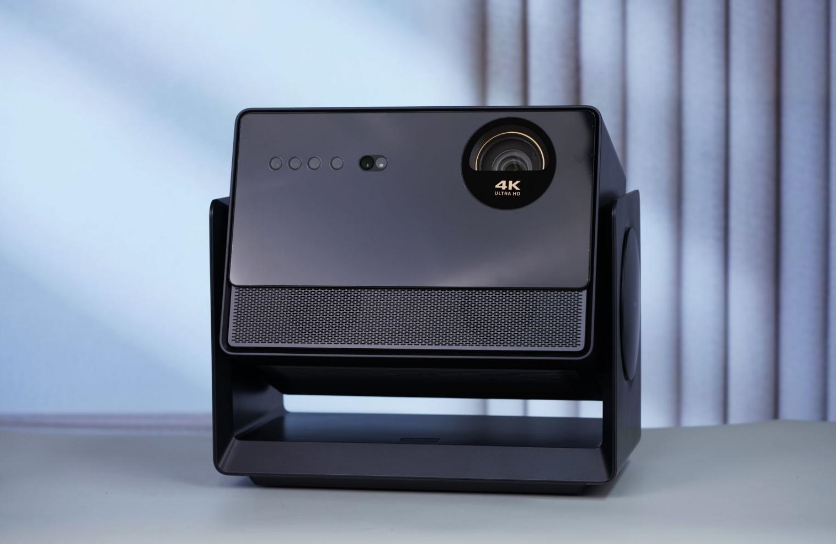
    Dangbei S7 Ultra Pro AI projector front view
    Dangbei S7 Ultra Pro AI projector front view

    On October 9, 2025, Dangbei released the S7 Ultra Pro—a flagship AI smart projector with maxed-out specifications. 4500 CVIA lumens, native 4K, 8000:1 native contrast ratio, Dangbei Super AI OS 6.0, AI super assistant, 360° motorized AI gimbal, full-link liquid cooling, and 24dB noise level. Priced at approximately 9496 yuan, positioned as a premium home cinema.

    Honestly, the projector market has been competitive for years. XGIMI, JMGO, Hisense Vidda, Dangbei—all competing on brightness, resolution, and intelligence. The S7 Ultra Pro’s strategy is clear: establish a “image quality ceiling” with hardware specs, build an “experience moat” with AI OS, and solve “usage pain points” with liquid cooling and gimbal.

    The question is: is 9496 yuan for a projector worth it?

    Product Overview: Dangbei’s Flagship Ambition

    Who is Dangbei? One of China’s top smart projector brands, originally known for “Dangbei Market” and “Dangbei OS,” later entering hardware with a focus on “high brightness + intelligence.” The S7 Ultra Pro is Dangbei’s absolute flagship, with all technical reserves fully deployed.

    Core selling points can be summarized as “three hardware, three software”:

    Three Hardware: 4500 CVIA lumens ultra-high brightness, native 4K resolution, 8000:1 native contrast ratio (dynamic 65000:1).

    Three Software: Dangbei Super AI OS 6.0, customizable AI super assistant, 360° horizontal + 180° vertical motorized AI gimbal.

    Specifications: The Sincerity of Flagship Projector Spec Stacking

    SpecDetails
    Brightness4500 CVIA lumens
    ResolutionNative 4K (3840×2160)
    Contrast8000:1 native / 65000:1 dynamic
    ChipMT9681 flagship chip
    Memory4GB+128GB
    Operating SystemDangbei Super AI OS 6.0
    AI InteractionFar-field voice, light-tracking pointer, gesture control
    AI AssistantAI Super Assistant (customizable)
    CoolingFull-link liquid cooling
    Noise24dB
    Gimbal360° horizontal + 180° vertical motorized AI gimbal
    Optics0.98-1.6:1 optical zoom
    Speckle EliminationEight-layer speckle elimination module, 99.999% removal
    CertificationDolby Vision, HDR10+
    EcosystemMijia interconnection
    Price~9496 yuan

    Data source: Dangbei official launch materials, SMZDM

    What does 4500 CVIA lumens mean? CVIA is a brightness standard established by the China Video Industry Association, stricter than traditional ANSI lumens (typically CVIA value ≈ ANSI value × 0.8-0.9). 4500 CVIA is approximately equivalent to 5000-5600 ANSI lumens, belonging to “top-tier brightness” among projectors—watchable during daytime without closing curtains, unaffected by room lights at night.

    Native 4K resolution means physical pixels are genuinely 3840×2160, not “wobulated 4K” or “XPR technology 4K.” Paired with 8000:1 native contrast ratio, image depth and dark detail performance far exceed “wobulated 4K” products. The dynamic 65000:1 is achieved through dynamic iris, making dark scenes darker and bright scenes brighter when watching movies.

    The MT9681 is MediaTek’s flagship projector chip, with performance comparable to flagship smartphone SoCs. The 4GB+128GB storage configuration is “top-tier” among projectors—most projectors still use 2GB+16GB or 3GB+32GB.

    Deep Analysis: What Does AI OS Actually Change?

    Dangbei Super AI OS 6.0 is the S7 Ultra Pro’s core differentiator. Traditional projector OS simply “plays videos,” while Dangbei’s AI OS aims to be a “smart entertainment center.”

    AI Super Assistant: Users can customize the AI assistant’s wake word, voice, personality, and even set up exclusive knowledge bases. For example, you can create a “movie expert” assistant specializing in film recommendations, director style explanations, and shot language analysis. This assistant runs on an edge-side AI model, enabling basic conversation without internet connectivity.

    Far-Field Voice: No need to press the remote to speak; simply call out “Dangbei Dangbei” to wake it up. Supports multi-turn dialogue and context understanding, such as “recommend a sci-fi movie,” “directed by Nolan,” “not Batman”—the AI can understand.

    Light-Tracking Pointer: The remote emits a light beam; the projector camera tracks the light point position, displaying a cursor on screen. This is much faster than traditional directional buttons for selecting content, especially when inputting text or browsing web pages.

    Gesture Control: Raise hand to pause, wave to flip pages, clench fist to confirm. Suitable for eating without touching the remote, or exercising while operating from a distance.

    360° Motorized AI Gimbal: This is hardware-level AIization. The gimbal built-in gyroscope and AI algorithms automatically recognize projection angles and wall positions, achieving “point and project.” You can place the projector on nightstands, coffee tables, or bookshelves—AI automatically corrects the image (keystone correction, focusing, obstacle avoidance, screen fitting). The 360° horizontal rotation means you can project onto the ceiling, side walls, or even turn around to project onto the wall behind you.

    Mijia Interconnection: Access to the Xiaomi ecosystem, enabling projector control of Mijia devices, or using Xiao Ai to control the projector. For example, saying “cinema mode” while watching movies automatically dims the projector, closes curtains, and changes ambient lighting colors.

    Comparison: S7 Ultra Pro vs XGIMI RS10 Ultra vs JMGO N1S Ultra

    FeatureDangbei S7 Ultra ProXGIMI RS10 UltraJMGO N1S Ultra
    Brightness4500 CVIA3500 CVIA3000 CVIA
    ResolutionNative 4KNative 4KNative 4K
    Contrast8000:1 nativeUnannounced (estimated ~3000:1)1600:1
    ChipMT9681MT9669MT9669
    Memory4GB+128GB4GB+128GB4GB+64GB
    AI OSDangbei Super AI OS 6.0GMUI 6.0Bonfire OS
    Gimbal360° motorized AI gimbalNone (requires stand)None (requires stand)
    CoolingLiquid cooling 24dBAir cooling (~30dB)Air cooling (~28dB)
    Optical Zoom0.98-1.6:11.2:1 fixed1.2:1 fixed
    Speckle EliminationEight-layer 99.999%StandardStandard
    Price~9496 yuan~9999 yuan~8999 yuan

    All three are flagship projectors in the 10,000-yuan range, but differentiation is clear. The Dangbei S7 Ultra Pro wins on “brightness + AI gimbal + liquid cooling noise control,” the XGIMI RS10 Ultra wins on “brand recognition + content ecosystem,” and the JMGO N1S Ultra wins on “tri-color laser color + value for money.”

    If you pursue “watchable during daytime” ultimate brightness, automatic gimbal without stand hassle, and quiet liquid cooling, Dangbei is the best choice. If you prioritize brand after-sales and content integration, XGIMI is more reliable. If you have limited budget but want tri-color laser color performance, JMGO is more suitable.
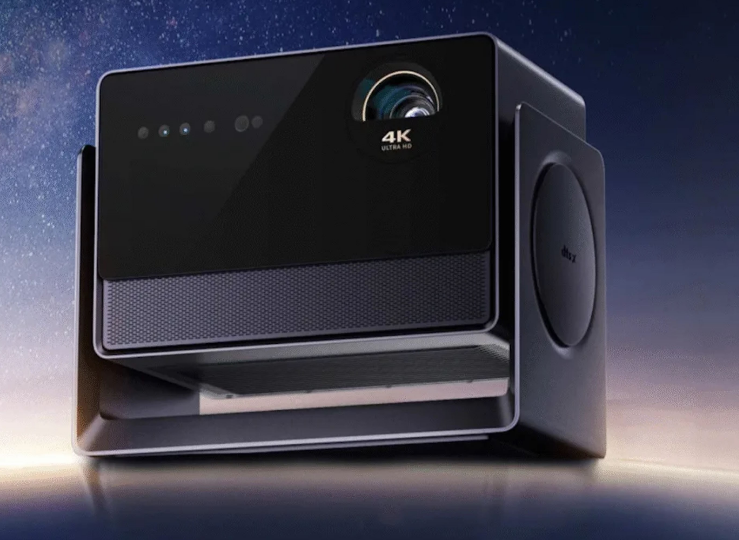
    Dangbei S7 Ultra Pro 4K projector official render
    Dangbei S7 Ultra Pro 4K projector official render

    Pros and Cons

    ProsCons
    4500 CVIA lumens, daytime viewing without pressure9496 yuan price is high, high barrier for entry users
    Native 4K + 8000:1 contrast, top-tier image qualityLarger size, less portable than slim projectors
    AI gimbal auto-correction, free placementLiquid cooling system adds weight and complexity
    Liquid cooling 24dB noise, viewing without disturbanceRich AI OS features but higher learning curve
    Light-tracking pointer + gesture control, novel interactionLight-tracking pointer may fail in strong light environments
    Mijia interconnection, strong ecosystem expansionLimited ecosystem value for non-Mijia users
    Eight-layer speckle elimination, cleaner imageMany competitors at flagship level, choice paralysis

    Who Should Buy

    Recommended for:

    • Families pursuing ultimate image quality with dedicated home theater or living room cinema needs
    • Users sensitive to noise who want near-silent projector operation
    • Mijia ecosystem users needing projectors as smart home hubs
    • Tech enthusiasts willing to pay for AI interaction and gimbal features

    Not recommended for:

    • Users with limited budgets where under 5000 yuan meets needs
    • Renters/frequent movers needing portable slim projectors
    • Pragmatists indifferent to AI features who only need “video playback”
    • Families already owning high-end TVs (such as OLED 77-inch+), where projector improvement is limited

    FAQ

    Q: Can 4500 CVIA lumens be watched during daytime without closing curtains?

    A: Yes, but effects are inferior to nighttime. Recommend using high brightness mode during daytime, or pairing with an ambient light rejecting screen. Any projector struggles under direct sunlight.

    Q: How accurate is the AI gimbal’s auto-correction?

    A: Official claims support “millisecond-level” auto-correction, but complex walls (such as wallpaper, uneven surfaces) may affect results. Recommend projecting onto flat white walls or screens when possible.

    Q: Does liquid cooling require maintenance?

    A: The liquid cooling system is a closed loop, theoretically requiring no maintenance. But after long-term use (3-5 years), professional inspection may be needed. Recommend confirming warranty policies at purchase.

    Q: Can the AI super assistant connect to third-party large models?

    A: Currently only supports Dangbei’s built-in AI model and custom knowledge bases. Official announcements on whether ChatGPT, Wenxin Yiyan, or other third-party models will be supported are pending.

    Conclusion

    The Dangbei S7 Ultra Pro is a “parameter ceiling” level flagship projector. 4500 CVIA lumens, native 4K, and 8000:1 contrast ratio—these three hard metrics have virtually no rivals in the 10,000-yuan projector segment. The AI gimbal, liquid cooling, and light-tracking pointer also genuinely solve traditional projector usage pain points.

    But the 9496 yuan pricing makes it destined to be not a “mass-market blockbuster” but an “enthusiast toy.” For ordinary families, projectors around 5000 yuan are sufficient; but for users pursuing ultimate audiovisual experience and willing to pay for every parameter improvement, the S7 Ultra Pro is one of the most worth-considering options on the market.

    Dangbei’s challenge lies in: how to build true brand moats beyond “hardware spec stacking.” XGIMI has content ecosystem and offline channels, JMGO has the technical label of tri-color laser, and whether Dangbei’s “AI OS” differentiation can maintain leadership depends on subsequent iteration speed and ecosystem expansion capabilities.

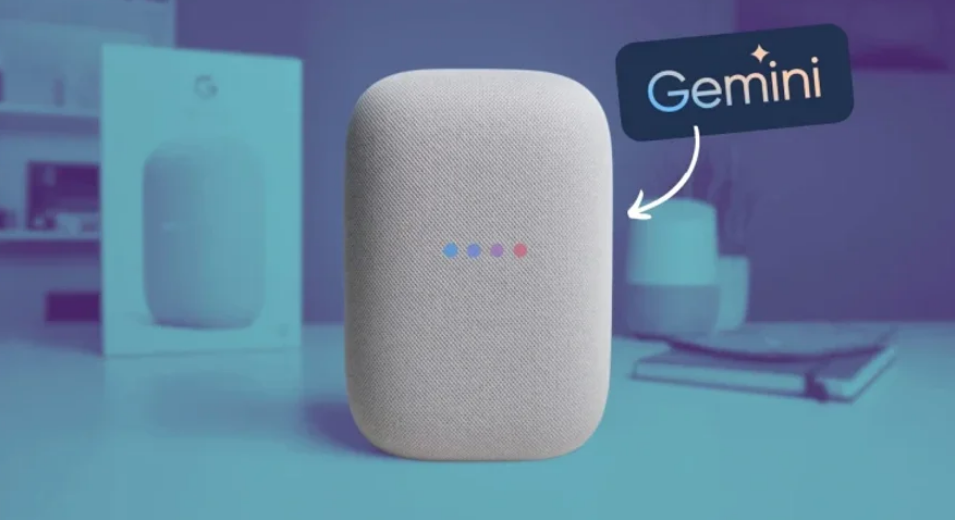
  • Google Home Gemini Preview

    Google Home Gemini Preview

    Introduction: Google Is Finally Getting Serious About Smart Speakers

    Google Nest speaker Gemini AI integration preview
    Google Nest speaker Gemini AI integration preview

    At the October 2025 hardware launch event, Google dropped a bombshell: the next-generation Google Home speaker will be powered by the Gemini large model. Not a patch for the original Google Assistant, but a complete brain replacement—from a rule-based voice assistant to a large model-based AI assistant. Scheduled for spring 2026 launch, estimated at $99, four colors available, 360-degree audio, 3D woven material.

    This news matters because it signals a turning point for the smart speaker industry: voice assistants evolving from toys that “understand a few commands” to butlers that “comprehend complex intentions.” And Google’s choice to use Gemini—their strongest large model—shows they genuinely want to transform smart speakers from “smart home accessories” into “home AI hubs.”

    But the question is: can Gemini in a speaker really change anything? Or is it just another “sounds cool, works dumb” upgrade?

    Product Overview: Gemini Speaker, Not Google Assistant 2.0

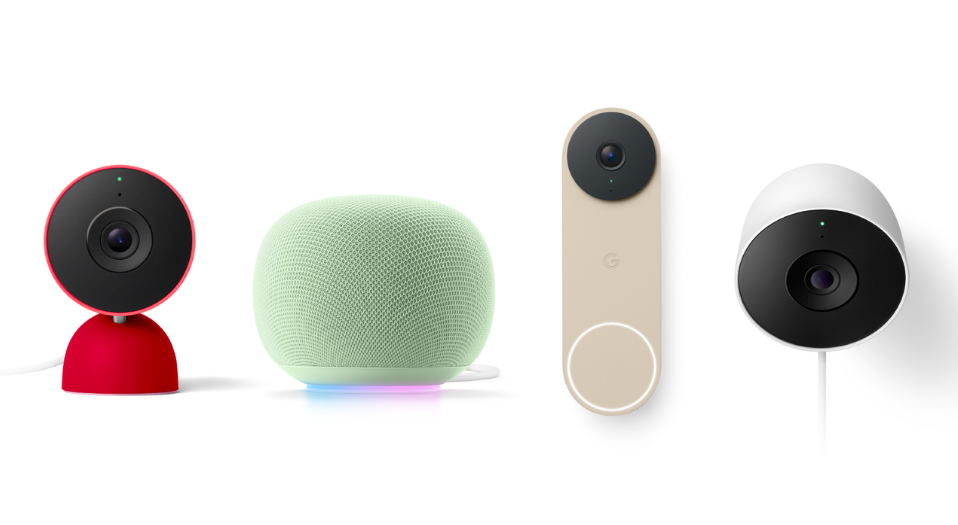
    Google Home Mini red fabric speaker design
    Google Home Mini red fabric speaker design

    The Google Home series has been on sale for nearly a decade, from the original Google Home to Nest Mini, Nest Audio, and Nest Hub, covering entry-level to screen-equipped models across various price points. But the core voice assistant—Google Assistant—has always been a rule-based expert system: you say “turn on the light,” it matches the “turn on the light” command; you say “dim the living room light a bit,” and it might just get confused.

    Gemini integration is not a simple “reskin” but an architectural reconstruction:

    From Rule Matching to Intent Understanding: Google Assistant requires you to say exact command words; Gemini understands natural language. For example, you say “I want to watch a movie tonight, set the mood,” and Gemini can understand: dim lights → close curtains → turn on TV → launch Netflix → adjust volume to appropriate level → lower AC temperature slightly. In the Google Assistant era, this required writing a series of automation scripts.

    From Single-Turn to Multi-Turn Continuous Dialogue: Gemini Live mode supports natural and fluent continuous conversation without needing to say “Hey Google” for every sentence. You can interrupt it, switch topics, add conditions—just like chatting with a real person. This requires the large model’s context memory and reasoning capabilities, which traditional voice assistants cannot achieve.

    From Cloud Processing to Edge-Cloud Collaboration: Some Gemini capabilities will to the device side, enabling faster response and better privacy protection. For example, simple device control and local queries can be completed locally on the speaker; complex multi-step tasks require uploading to cloud processing.

    Specifications: What Does the Gemini Speaker Actually Upgrade?

    SpecDetails (Based on Preview Information)
    AI ModelGoogle Gemini (replacing Google Assistant)
    Audio360-degree omnidirectional audio
    Design3D woven material, eco-friendly and recyclable
    ColorsPorcelain, Hazel, Berry, Jade
    IndicatorBottom LED ring, status visualization
    Voice InteractionFar-field pickup, noise suppression, reverberation cancellation
    Conversation ModeGemini Live (requires Google One Premium subscription)
    Ecosystem ProtocolsMatter, Thread, Zigbee
    PairingCan pair with Google TV Streamer for surround sound
    SensingSound Sensing (anomaly sound detection)
    Estimated Price$99
    Estimated LaunchSpring 2026

    Data source: Google October 2025 hardware launch event, 9to5Google, Android Police

    360-Degree Audio: Not simply “speakers on all sides,” but algorithm-optimized to distribute sound evenly throughout the room. Regardless of which direction you stand from the speaker, the sound quality and volume remain basically consistent. This is far more practical than directional speakers for speakers placed in the center of the living room.

    3D Woven Material: Google’s obsession with environmental sustainability. This material is made from recycled plastic bottles, with a fabric-like texture but acoustic wave transparency—sound can penetrate the material to propagate without distortion from blocking. The four-color design (Porcelain, Hazel, Berry, Jade) transforms the speaker from a “tech product” into a “home decoration.”

    Bottom LED Ring: Status visualization design. Different colors represent different states: white = waking up, blue = processing, red = muted, yellow = notification. This is more intuitive than voice announcements, especially in noisy environments.

    Gemini Live: This is the core selling point, but requires a Google One Premium subscription (approximately $20/month). Live mode supports natural conversation, interruptions, and topic switching, equivalent to installing a “real person assistant” in the speaker. But the question is: how many users are willing to pay an extra $20 per month for a speaker’s AI features?

    Sound Sensing: Anomaly sound detection. The speaker can identify sounds like glass breaking, smoke alarms, and baby crying, automatically notifying users. This function does not rely on additional sensors but is purely achieved through AI audio analysis, demonstrating Gemini’s multimodal capabilities.

    Google 2026 smart speaker four color lineup display
    Google 2026 smart speaker four color lineup display

    Deep Analysis: What Gemini Speakers Can and Cannot Change

    The impact of Gemini integration on the smart speaker industry can be analyzed from three levels:

    First, Interaction Experience: From “Commands” to “Conversations”

    This is the most direct change. Current smart speakers work like this: you say “play Jay Chou’s songs,” it plays; you say “next song,” it switches; you say “lower the volume,” it adjusts. The entire process is a one-way “you issue command → it executes” flow.

    In the Gemini era, interaction becomes bidirectional:

    • You: “Recommend some music suitable for working”
    • Gemini: “What style do you prefer? Light music, jazz, or electronic?”
    • You: “Jazz, but not too loud”
    • Gemini: “Okay, I’ll play Miles Davis’s ‘Kind of Blue’ for you, one of the most classic albums in jazz history. What volume would you like?”
    • You: “30% is fine”
    • Gemini: “Set. If you want to change styles later, just let me know.”

    This conversational interaction transforms the speaker from a “tool” into a “partner.” But the premise is: Gemini’s understanding accuracy is high enough, response speed is fast enough; otherwise, the conversation’s fluency will be interrupted, and the experience will be worse than command-based interaction.

    Second, Smart Home: From “Control” to “Orchestration”

    Current smart home control is essentially “one-to-one”: you say “turn on the light,” the light turns on; you say “turn on the AC,” the AC turns on. Complex scenarios require users to set up automations themselves (such as Google Home’s Routines).

    Gemini’s “orchestration” capability is “many-to-many”: you say “I’m leaving,” and Gemini automatically executes: turn off lights → turn off AC → lock door → start robot vacuum → set security system to away mode → send phone notification “Away, security activated.” More impressively, Gemini can dynamically adjust based on your habits: if you normally don’t turn off the AC when leaving (because you have pets at home), it remembers this exception and won’t turn it off every time.

    This “learning + reasoning + execution” capability is the core advantage of the Gemini large model. But the challenge lies in smart home device compatibility. Google Home supports the Matter protocol, but domestic brands like Xiaomi, Huawei, and Haier have inconsistent Matter support. No matter how smart Gemini is, it cannot control devices that “cannot understand.”

    Third, Business Model: From “Selling Hardware” to “Selling Services”

    At a $99 hardware price point, Google basically makes no money (or possibly loses money). The real profit point is the Google One Premium subscription ($20/month) and control over the smart home ecosystem.

    The Gemini Live subscription model is Google’s key shift from “one-time speaker sales” to “ongoing AI service sales.” If users become accustomed to Gemini Live’s natural conversation, it’s hard to go back to the free Google Assistant. This “habit lock-in” effect is the core of the subscription business model.

    But risks are also obvious: if the Gemini Live experience is not good enough, users won’t pay; if competitors (such as Alexa+Claude, Siri+Apple Intelligence) offer free or cheaper alternatives, Google’s subscription model won’t stand.

    Comparison: Google Home Gemini vs Amazon Echo vs Apple HomePod

    FeatureGoogle Home GeminiAmazon Echo (Alexa+Claude)Apple HomePod (Siri)
    AI ModelGemini (self-developed)Claude (Anthropic partnership)Apple Intelligence (self-developed)
    ConversationGemini Live (subscription)Basic conversation (free)Basic conversation (free)
    Multi-Step CommandsStrong (native to large model)Medium (requires Skills development)Weak (rule-based)
    Audio Quality360-degree omnidirectionalDirectional (varies by model)360-degree omnidirectional (computational audio)
    Smart HomeMatter+Thread+ZigbeeMatter+Zigbee+proprietaryHomeKit+Thread+Matter
    Ecosystem OpennessHigh (Matter-focused)Medium (strong proprietary ecosystem)Low (closed ecosystem)
    Privacy StrategyEdge-cloud collaboration, optional localCloud-based primarilyEdge-side priority
    Price$99 (hardware) + $20/month (Live)$50-200 (hardware, no subscription)$299 (hardware, no subscription)
    ContentYouTube Music, SpotifyAmazon Music, AudibleApple Music, Podcasts

    Three speakers, three paths: Google bets on “AI conversation capabilities + subscription services,” Amazon bets on “ecosystem richness + low-cost hardware,” and Apple bets on “audio quality + privacy + closed ecosystem.”

    If you’re already in the Google ecosystem (Android phone, YouTube, Google Photos), the Gemini speaker is a natural extension. If you deeply use Amazon services (Prime, Audible, Amazon Music), Echo is more integrated. If you’re an Apple ecosystem user, HomePod’s audio quality and privacy are irreplaceable.

    Google Nest ecosystem product lineup collection
    Google Nest ecosystem product lineup collection

    Pros and Cons (Based on Preview Information)

    ProsCons
    Gemini large model understanding far exceeds Google AssistantGemini Live requires subscription ($20/month), increasing usage costs
    Native multi-step complex command support, no scripting neededActual experience to be verified; large model latency may affect conversation fluency
    360-degree audio, consistent quality from any room position$99 hardware pricing may imply audio quality compromises
    3D woven eco-friendly material, high home integrationDomestic users cannot directly use (requires VPN + US-region account)
    Matter protocol support, high ecosystem opennessLow Matter support from domestic smart home brands, limited compatibility
    Sound Sensing anomaly detection without additional sensorsPrivacy concerns: microphone 24/7 listening, data uploaded to cloud
    Can pair with Google TV Streamer for surround soundPairing with Google TV Streamer requires additional device purchase

    Who Should Buy (Based on Preview Information)

    Recommended for:

    • Overseas Google ecosystem users (Android, YouTube, Google Photos)
    • Users with high requirements for AI conversation capabilities willing to pay for Gemini Live subscription
    • Users with Matter-protocol smart home setups needing an open ecosystem hub
    • Tech enthusiasts wanting to experience large model voice interaction as early adopters

    Not recommended for:

    • Domestic users (cannot directly use Google services)
    • Budget-sensitive users unwilling to pay monthly for AI features
    • Deep Apple ecosystem users (HomePod more integrated)
    • Deep Amazon ecosystem users (Echo more integrated)
    • Users extremely sensitive to privacy who reject cloud voice processing

    FAQ

    Q: Is Gemini Live subscription required to use the Gemini speaker?

    A: Basic functions (device control, simple queries, music playback) are free, but natural conversation, multi-step commands, and context memory require Google One Premium subscription (approximately $20/month).

    Q: Can it be purchased and used in China?

    A: Google hardware products are typically not sold in mainland China. Even if obtained through overseas purchasing, VPN network environment and US-region Google account are required for normal full-function use. Domestic users recommend waiting for domestic versions or choosing domestic alternatives.

    Q: Can the Gemini speaker control Xiaomi/Huawei smart home devices?

    A: If devices support the Matter protocol, they can be directly controlled. But domestic brands’ Matter support is inconsistent; recommend confirming specific device compatibility before purchase. Devices not supporting Matter require third-party bridging or cannot connect.

    Q: How is Sound Sensing privacy security? A: Google claims Sound Sensing processes audio locally without uploading to the cloud. But specific implementation details (such as which sounds trigger uploads, data retention policies) require confirmation from the privacy white paper after official release.

    Q: Is audio quality improvement obvious after pairing with Google TV Streamer?

    A: After pairing, stereo or surround sound effects can be achieved, but improvement degree depends on room acoustics and speaker placement. Single-speaker 360-degree audio is already good; pairing mainly expands soundstage rather than improving audio quality.

    Conclusion

    Google Home Gemini integration is the smart speaker industry’s key step from “voice control” toward “AI conversation.” The Gemini large model’s understanding capabilities, reasoning capabilities, and multi-step execution capabilities genuinely have the potential to upgrade smart speakers from “smart home accessories” to “home AI hubs.”

    But this product faces three uncertainties:

    First, experience uncertainty. Large model response latency, understanding accuracy, and conversation fluency in real home environments (with background noise, multiple people speaking, accent variations) need verification after official release.

    Second, business model uncertainty. The $20/month Gemini Live subscription—will users pay? If the free version’s basic functions are already good enough, subscription conversion may be low; if the free version deliberately limits experience to force subscriptions, it will trigger backlash.

    Third, ecosystem uncertainty. The Matter protocol is Google’s open strategy, but domestic smart home market dominance lies with local brands like Xiaomi, Huawei, and Haier. These brands’ Matter support progress directly determines Gemini speaker usability domestically—though domestic users couldn’t use Google services anyway.

    For overseas users, Google Home Gemini is the most anticipated smart speaker upgrade of 2026. For domestic users, it’s more like a “technology”—showing us what large model voice interaction can achieve, then waiting for domestic manufacturers (Xiao Ai + Tongyi Qianwen, Xiaodu + Wenxin Yiyan) to follow.

    Google is getting serious this time, but whether seriousness can win over users will be seen in spring 2026.

  • Zhipu Lingji AI Learning Card Review

    Zhipu Lingji AI Learning Card Review

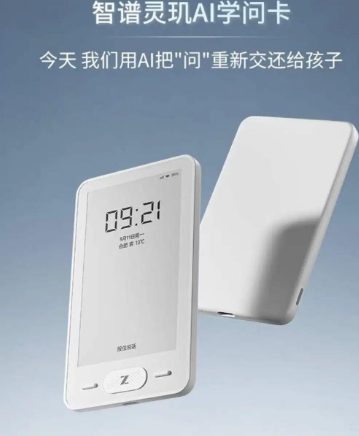
    Zhipu AI recently launched an interesting product—the Lingji AI Learning Card. At 799 yuan, featuring an e-ink screen, powered by the GLM large model, and designed specifically for primary and secondary school students’ Q&A needs. Not a tablet, not a learning machine, but a card-sized device that fits in your pocket.

    This positioning is precise. The current education hardware market is divided between thousand-yuan AI learning machines (iFLYTEK, TAL) and hundred-yuan dictionary pens (NetEase Youdao, Alpha Egg), with a gap for “lightweight AI Q&A” in between. The Lingji Learning Card aims to fill this exact.

    Zhipu Lingji AI Learning Card official promotional poster
    Zhipu Lingji AI Learning Card official promotional poster

    Product Overview: A Card, An AI Tutor

    Who is Zhipu AI? A first-tier domestic large model player, with the GLM series earning solid reputation for Chinese understanding and generation. Previously focused on B2B APIs and C-end chatbots (Zhipu Qingyan), this move into education hardware signals their intent to bring GLM capabilities from “cloud” to “edge.”

    The Lingji Learning Card’s core design philosophy: lightweight, focused, and eye-friendly.

    Lightweight: Card-sized, estimated under 100g—lighter than phones, larger than dictionary pens. The e-ink screen’s extremely low power consumption means one charge lasts a week.

    Focused: Does one thing only—AI Q&A. Not an all-in-one learning machine; no videos, games, or social media. Students with questions about problems, vocabulary, or knowledge points can snap a photo or use voice input, and the GLM large model provides explanations and guidance.

    Eye-Friendly: E-ink screens don’t emit light themselves, relying on ambient light reflection, causing far less eye strain than LCD/OLED displays. This is one of the most important selling points for parents.

    Specifications: How Much Educational Intelligence Fits in One Card

    SpecDetails
    ScreenElectronic Ink Display (E-Ink)
    SizeCard-sized (estimated credit card dimensions)
    AI ModelZhipu GLM Large Model (edge + cloud hybrid)
    FunctionsAI Q&A, knowledge point analysis, learning records
    Input MethodsVoice + photo (likely with camera)
    BatteryE-ink low power consumption, estimated 7-14 days
    ConnectivityWi-Fi/Bluetooth
    Target UsersPrimary and secondary students (ages 6-18)
    Price799 yuan
    Pilot StatusPiloted in multiple schools nationwide

    Data source: Zhipu AI official launch materials

    Hands-On Experience: Can It Replace a Tutor?

    Zhipu Lingji AI Learning Card product features showcase
    Zhipu Lingji AI Learning Card product features showcase

    Bottom line first: The Lingji Learning Card can replace “simple Q&A” tutoring scenarios, but cannot replace “systematic tutoring” or “habit cultivation.”

    AI Q&A Quality: The GLM large model has advantages in Chinese understanding, capable of explaining math problem steps, analyzing Chinese reading comprehension, and explaining English grammar in “human language.” But the common large model weakness—hallucinations (confidently saying nonsense)—is fatal in education scenarios. If Lingji provides a student with a solution containing a formula error, the student might carry that mistake through the entire semester.

    Zhipu’s solution may be an “edge + cloud hybrid” approach: simple questions handled by a local GLM small model, complex questions uploaded to the cloud large model. But regardless, education scenarios demand far higher accuracy than chat scenarios, requiring Zhipu to invest heavily in model training and answer verification.

    Learning Management Features: The Lingji Learning Card likely includes learning records and weak point analysis. After each Q&A session, the AI records the student’s questions, error types, and knowledge mastery status, generating personalized learning reports. If executed well, this feature holds high value for parents—finally eliminating the need to ask “what did you learn today” every evening.

    E-Ink Experience: E-ink’s refresh rate is too low for dynamic content (videos, animations), but static text display is extremely comfortable. For “reading explanations and solutions” learning scenarios, e-ink is a bonus. However, photo input recognition speed and voice input response latency require real-world testing.

    School Pilot Value: Zhipu’s choice to pilot in schools rather than direct-to-consumer sales is smart. In school environments, teachers can supervise usage, provide product feedback, and validate teaching effectiveness. Promoting to parents after successful pilots carries more credibility than direct advertising.

    Comparison: Lingji vs iFLYTEK AI Learning Machine vs Youdao Dictionary Pen

    FeatureZhipu Lingji CardiFLYTEK AI Learning MachineYoudao Dictionary Pen X6 Pro
    Price799 yuan3,000-8,000 yuan1,000-1,500 yuan
    Form FactorE-ink cardTablet/laptopPen-shaped scanner
    AI ModelGLM (self-developed)iFLYTEK Spark (self-developed)Youdao Ziyue (self-developed)
    Function ScopeAI Q&A focusedFull-subject tutoring + videos + exercisesScan translation + listening
    Eye ProtectionE-ink (excellent)LCD screen (average)Small LCD screen (average)
    PortabilityExtremely high (card-level)Low (tablet-level)High (pen-shaped)
    Content EcosystemAI-generated dependentBuilt-in massive coursesBuilt-in dictionary database
    Parental ControlsNaturally restricted (no entertainment)Requires parental mode setupNaturally restricted
    Applicable ScenariosFragmented Q&ASystematic learningVocabulary lookup

    The three products occupy completely different tracks. The iFLYTEK learning machine is a “home classroom,” the Youdao dictionary pen is a “portable dictionary,” and the Lingji Learning Card is a “pocket tutor.” For parents with ample budgets and children needing systematic tutoring, choose iFLYTEK; for children weak in English requiring extensive vocabulary lookup, choose Youdao; for those needing only a lightweight AI Q&A tool with limited budget, Lingji is a solid choice.

    Alpha Egg D1 Ultra AI education hardware reference
    Alpha Egg D1 Ultra AI education hardware reference

    Pros and Cons

    ProsCons
    799 yuan budget-friendly, low trial costSingle-function, only AI Q&A, no videos/exercises
    E-ink eye protection, parent reassuranceLarge model hallucination risk, fatal in education
    Card form factor, always availablePhoto/voice input experience to be verified
    Naturally anti-addiction (no entertainment features)Dependent on school pilot promotion, low C-end awareness
    GLM Chinese understanding advantageOverlaps with Zhipu Qingyan app functions, hardware necessity questionable
    School pilot endorsement, teaching scenario validationBattery life and durability require long-term testing

    Who Should Buy

    Recommended for:

    • Parents of primary and secondary students with limited budgets needing AI Q&A tools
    • Families with extremely high eye protection requirements rejecting LCD screens
    • Children already owning tablets/computers needing supplementary lightweight AI learning tools
    • Families in schools with pilot programs and teacher recommendations

    Not recommended for:

    • Families needing systematic full-subject tutoring and video courses (choose learning machines)
    • Those whose primary need is English vocabulary lookup and translation (choose dictionary pens)
    • Risk-averse parents demanding extremely high large model accuracy with zero tolerance for errors
    • Families already satisfied with the Zhipu Qingyan app (function overlap)

    FAQ

    Q: Does the Lingji Learning Card require internet connectivity?

    A: Simple Q&A may support local edge processing, while complex questions require internet access to the cloud GLM large model. Recommend using in home or school Wi-Fi environments.

    Q: Can the e-ink screen display math problem images and formulas?

    A: E-ink can display static images and text, but with limited grayscale levels; complex geometric graphics may display less effectively than color screens. Formula display is usually fine.

    Q: When will school pilot programs open to parent sales?

    A: Official C-end sales timeline has not been announced. Recommend following Zhipu AI official channels or school notifications.

    Q: Does the 799 yuan include subsequent service fees?

    A: Currently unclear whether subscription or value-added services apply. Recommend confirming whether permanent AI Q&A service is included, or if subsequent paid upgrades are required before purchase.

    Conclusion

    The Zhipu Lingji AI Learning Card is a “precisely positioned” education hardware product. It doesn’t pursue all-in-one capabilities but instead maximizes one thing—AI Q&A—with lightweight design, eye protection, and affordability. At 799 yuan, its pricing sits at the “floor” of AI education hardware, lowering the barrier for parents to try it out.

    But Lingji’s success depends on three critical questions: First, can the GLM large model’s accuracy in education scenarios reach parent-trustworthy levels? Second, can school pilots quickly convert to C-end word-of-mouth? Third, can Zhipu continuously iterate the product rather than following the pattern of many AI hardware products that “peak at launch”?

    If Zhipu can resolve these three questions well, the Lingji Learning Card may become a “blockbuster” in AI education hardware—not because it has the strongest features, but because it has the most precise positioning. In an era where AI learning machines cost thousands of yuan, a 799-yuan pocket AI tutor is indeed a heartwarming choice.

  • Fanyin AI Smart Earbuds Review

    Fanyin AI Smart Earbuds Review

    Introduction: Logistics Industry AIization Starts with a Pair of Earbuds

    The venue of the Fujō AI Headset Launch Event.
    The venue of the Fujō AI Headset Launch Event.

    On June 6, Jiangsu Wurun Chuanlian released a very special AI hardware product—the Fanyin AI Smart Earbuds. Not targeting consumers, not emphasizing audio quality, not competing on noise cancellation depth, but specifically designed for truck drivers: voice-driven cargo finding, order acceptance, navigation, fueling, and waybill inquiry. Simply put, it is an “ear assistant” for China’s 30 million truck drivers, letting them work by talking without looking at their phones or tapping apps while driving.

    This positioning is extremely vertical and extremely smart. In 2026, when AI hardware generally pursues “all-in-one” capabilities, Fanyin chooses subtraction—not building a general AI assistant, but deeply adapting to logistics scenarios. This “vertical industry AI hardware” approach may be the key path for AI evolving from “toy” to “tool.”

    Product Overview: Logistics Intelligent Agent Stuffed into Earbuds

    Who is Wurun Chuanlian? A Jiangsu-based enterprise deeply rooted in logistics informatization for years, with main businesses in logistics platforms, shipping management, and freight matching. They are not major consumer electronics manufacturers, without brand premiums, but they understand the pain points of the logistics industry—drivers operating phones while driving is dangerous, cargo information is scattered, waybill status inquiry is troublesome, and gas station selection relies on experience.

    The core of Fanyin AI Smart Earbuds is not “earbuds” but the voice entry point for a “logistics intelligent agent.” At the hardware level, it is a pair of TWS true wireless earbuds supporting Bluetooth phone connection; at the software level, it features Wurun Chuanlian’s self-developed logistics intelligent agent system, enabling voice interaction across the full logistics workflow.

    Core functions revolve around drivers’ daily workflow:

    Smart Cargo Finding: The driver says “find me cargo,” and the AI automatically matches the most suitable orders from the platform cargo database based on current location, vehicle type, load capacity, and destination preferences, voice-broadcasting cargo information, freight rates, and loading/unloading locations. The driver says “accept” or “decline” to complete the operation.

    Voice Order Acceptance: Traditional order acceptance requires stopping the vehicle, opening the phone app, browsing the order list, and tapping confirm. Fanyin compresses the entire process into one sentence: “Accept cargo from A to B,” with the AI automatically completing order confirmation, contract generation, and electronic signature (via voice confirmation).

    Voice Navigation: Not ordinary map navigation, but “logistics-dedicated navigation”—automatically avoiding height-restricted, weight-restricted, and traffic-restricted roads, prioritizing truck-friendly routes, and real-time broadcasting information about upcoming service areas, gas stations, and repair points.

    Voice Fueling: Say “cheapest nearby gas station,” and the AI automatically compares prices of surrounding stations, combining truck tank capacity and current fuel level to recommend the optimal fueling plan, even supporting voice payment (bound to enterprise accounts or driver personal accounts).

    Waybill Inquiry: “Check today’s waybill progress,” and the AI automatically summarizes all current waybill statuses, voice-broadcasting the number and key milestone information of completed, in-progress, and pending-loading orders.

    Warehouse voice picking system logistics operation
    Warehouse voice picking system logistics operation

    Specifications: How Much Logistics Intelligence Can a Pair of Earbuds Carry?

    SpecDetails
    Form FactorTWS true wireless earbuds
    ConnectivityBluetooth 5.3
    Voice InteractionOffline + online hybrid recognition
    AI ModelLogistics intelligent agent (self-developed)
    Noise CancellationENC call noise reduction
    Battery4 hours per charge / 16 hours with charging case
    WaterproofIPX4
    Wear DetectionIn-ear detection
    Companion AppFanyin Logistics Assistant
    Target UsersTruck drivers, logistics professionals
    PriceUnannounced (expected primarily enterprise procurement)

    Data source: Wurun Chuanlian official launch materials

    Fanyin’s hardware configuration is not aggressive—Bluetooth 5.3, ENC call noise reduction, IPX4 waterproofing, 4-hour battery life per charge, these specs place it in the mid-range among consumer TWS earbuds. But Wurun Chuanlian’s smart move is: instead of competing with AirPods Pro on audio quality and noise cancellation, they invest all R&D resources into the “logistics intelligent agent” software layer.

    The logistics intelligent agent’s technical architecture divides into three layers:

    Perception Layer: Through GPS positioning, vehicle OBD data (optional), and driver voice input, real-time acquisition of vehicle status, location, and task progress.

    Decision Layer: AI algorithms generate optimal decision recommendations based on cargo database, route planning engine, real-time fuel price data, and driver historical preferences. For cargo finding, it considers not just distance and freight rates but also loading/unloading efficiency, return cargo probability, and driver fatigue level.

    Execution Layer: Voice interaction completes the operation loop, while synchronizing in real-time with Wurun Chuanlian’s logistics platform backend, ensuring seamless data flow of order status, vehicle location, and electronic contracts.

    Truck driver Bluetooth headset voice assistant driving
    Truck driver Bluetooth headset voice assistant driving

    Deep Analysis: Where Is the Value of Vertical AI Hardware?

    The emergence of Fanyin AI Smart Earbuds reveals an overlooked trend: the next battlefield for AI hardware may not be “smarter general-purpose devices” but “industry-specialized tools that understand specific sectors better.”

    Precise Pain Point Targeting: Truck drivers’ core pain point is not “earbud audio quality isn’t good enough” but “cannot safely operate phones while driving.” Fanyin replaces 80% of phone operation scenarios with voice interaction, minimizing safety risks. This value is far more important than “noise cancellation depth improving by 5dB.”

    Data Closed Loop: As a logistics platform, Wurun Chuanlian controls cargo data, waybill data, and driver behavior data. Fanyin earbuds serve as a data collection entry point, not only outputting services but also inputting data—driver voice commands, location trajectories, and operation preferences feed back to optimize AI model decision quality. This “hardware + platform + data” closed loop is a barrier difficult for consumer-grade AI hardware to establish.

    Controllable Costs: Vertical AI hardware does not need to pursue “all-in-one” capabilities; models can be smaller, compute requirements lower, and costs more controllable. Fanyin’s logistics intelligent agent does not need to understand Shakespeare, only needs to understand dozens of intents like “find cargo,” “accept order,” “navigate,” “fuel,” and “check waybill.” Model parameters can be controlled within 1B, fully feasible for edge-side execution.

    Clear Business Model: The profitability dilemma of consumer-grade AI hardware is “hardware doesn’t make money, software subscriptions are hard to push.” Fanyin’s business model is “enterprise procurement + platform commission”—logistics companies bulk-purchase earbuds for drivers, while Wurun Chuanlian earns service fees through platform cargo matching. Earbuds are “customer acquisition tools,” the platform is the “profit engine”—this logic is healthier than “making money on earbud margins.”

    But Fanyin also faces challenges:

    Hardware Experience Shortcomings: 4-hour battery life is insufficient for long-distance drivers, requiring frequent charging case recharging; IPX4 waterproofing may be inadequate in rainy or high-humidity environments; ENC noise reduction has limited effectiveness in truck engine noise environments. These issues are already solved in consumer-grade earbuds, but as a software company, Wurun Chuanlian’s hardware capabilities may be a weak point.

    Ecosystem Closed Risk: Fanyin currently only connects to Wurun Chuanlian’s own logistics platform. If drivers simultaneously use multiple platforms (such as Huolala, Manbang, Fuyou Truck), Fanyin’s “smart cargo finding” function is limited. Opening APIs to connect third-party platforms is the necessary path for Fanyin to evolve from “tool” to “platform.”

    Driver Acceptance: The truck driver demographic skews older, with uneven acceptance of new technology. Fanyin’s voice interaction needs to adapt to various dialects, accents, and speaking speeds; AI recognition accuracy directly affects user experience. If a driver says “find cargo” three times and the earbuds don’t respond, this product will be abandoned.

    Comparison: Fanyin vs Consumer AI Earbuds

    FeatureFanyin AI Smart EarbudsiFLYBUDS Nano+Xiaodu Qinghe Earbuds
    PositioningLogistics vertical scenariosMeeting transcription/translationGeneral AI assistant
    Voice InteractionLogistics-specific intentsMeeting/translation/generalGeneral Q&A
    Noise CancellationENC call noise reductionANC active noise cancellationANC active noise cancellation
    Battery4 hours6 hours5 hours
    EcosystemWurun Chuanlian platformiFLYTEK ecosystemBaidu ecosystem
    Target UsersTruck driversBusiness professionalsYoung consumers
    PriceEnterprise procurement~699 yuan~399 yuan
    Business ModelHardware + platform commissionHardware + subscriptionHardware + content

    Fanyin and consumer-grade AI earbuds are completely different tracks. iFLYBUDS focuses on meeting transcription, Xiaodu Qinghe on general AI Q&A, while Fanyin only does logistics scenarios. This “narrow but deep” positioning gives Fanyin irreplaceability in the logistics industry, but also limits market scale—among 30 million truck drivers nationwide, how many can be covered?

    Pros and Cons

    ProsCons
    Deep logistics scenario adaptation, precise pain pointsAverage hardware experience, battery/waterproofing/noise cancellation shortcomings
    Voice interaction frees hands, improves driving safetyCurrently only connects to own platform, closed ecosystem
    Data closed loop strengthens AI decision qualityDriver demographic skews older, uneven new tech acceptance
    Clear business model, enterprise procurement + platform commissionDialect/accent recognition accuracy to be verified
    Vertical AI model small, low cost, edge-side feasibleLow brand recognition, limited channel expansion capability
    Fills logistics industry AI hardware gapInsufficient battery for long-distance driving scenarios

    Who Should Buy

    Recommended for:

    • Logistics transportation companies needing to equip drivers with safe operation tools
    • Truck drivers frequently using logistics platforms for orders and prioritizing driving safety
    • Fleet managers needing real-time monitoring of driver status and waybill progress
    • Existing Wurun Chuanlian platform users, best experience within the ecosystem

    Not recommended for:

    • General consumers not needing logistics functions, where consumer-grade earbuds offer better experience
    • Individual drivers using multiple logistics platforms simultaneously, limited by Fanyin ecosystem
    • Users with high requirements for audio quality and noise cancellation (recommend AirPods Pro/Sony)
    • Short-distance delivery drivers (such as same-city express), limited value of logistics functions

    FAQ

    Q: Must Fanyin earbuds be used with the Wurun Chuanlian platform?

    A: Core functions (smart cargo finding, voice order acceptance, waybill inquiry) require binding a Wurun Chuanlian platform account. Navigation and fueling functions can be used independently, but logistics-dedicated route recommendations require platform data support.

    Q: Does it support dialect recognition?

    A: Official dialect support list has not been published, but the logistics intelligent agent is optimized for truck drivers’ commonly used phrases. Recommend consulting customer service before purchase to confirm support for your commonly used dialect.

    Q: Is 4-hour battery life sufficient for long-distance drivers?

    A: 4 hours per charge is somewhat short for long-distance driving, but extends to 16 hours with the charging case. Recommend long-distance drivers equip a car charger or spare charging case, or recharge during rest stops.

    Q: Can it connect to other logistics platforms (such as Huolala)?

    A: Currently only supports the Wurun Chuanlian platform. Official statements indicate future possible API opening to third-party platforms, but specific timing is unannounced.

    Conclusion

    Fanyin AI Smart Earbuds are an “unsexy but practical” product. They lack stunning hardware parameters, lack dazzling AI function demonstrations, but they solve a real industry pain point—the safety risk of truck drivers operating phones while driving.

    In 2026, when AI hardware generally pursues “all-in-one” capabilities, Fanyin’s choice of “vertical deep cultivation” is worth industry consideration. Logistics, medical, construction, agriculture—every industry has its unique workflow and pain points that general-purpose AI hardware struggles to precisely cover. Fanyin’s model proves that transforming large model capabilities into “industry-specific,” “scenario-specific,” and “voice-driven” forms may be the shortest path for AI hardware evolving from “toy” to “tool.”

    But Fanyin’s success does not depend on the earbuds themselves, but on whether Wurun Chuanlian can continuously expand platform cargo sources, optimize AI decision quality, open the ecosystem to third parties, and improve hardware experience. If these issues are resolved well, Fanyin may become a benchmark case for “vertical industry AI hardware;” if not, it will only be a pair of “functionally single, experience average” ordinary earbuds.