Author: Gavin

  • Insta360 Luna Ultra: Leica Optics Meet Pocket-Sized Gimbal Power

    Insta360 Luna Ultra: Leica Optics Meet Pocket-Sized Gimbal Power

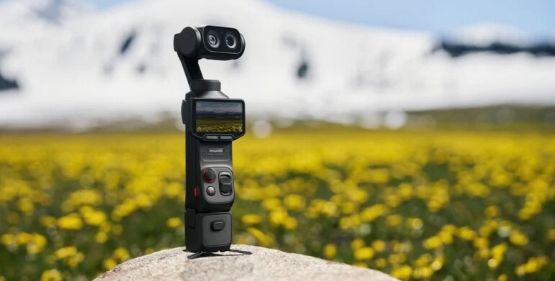
    Insta360 Luna Ultra dual-lens gimbal camera outdoor scene
    Insta360 Luna Ultra

    Verdict: Insta360 has built the most ambitious pocket gimbal camera to date. The Luna Ultra is not just an Osmo Pocket competitor—it is a fundamentally different proposition that trades absolute miniaturization for genuine creative flexibility. For creators who want Leica color science and real zoom range in a genuinely pocketable form, this is the new benchmark.

    What Makes It Different

    The Luna Ultra breaks from the single-wide-angle-lens tradition that has defined pocket gimbals since the category began. Insta360 partnered with Leica on a dual-lens system: a 1-inch 8K main sensor with 20mm equivalent focal length and F1.8 aperture, plus a 1/1.3-inch telephoto sensor with F2.0 aperture delivering 3x optical zoom, 6x lossless zoom, and 12x total hybrid zoom.

    This is not digital cropping pretending to be zoom. The telephoto lens is a separate optical path with its own sensor. The difference shows immediately in portrait shots, where background separation approaches mirrorless camera quality, and in the 15cm minimum focus distance that enables genuine macro photography from a pocket device.

    The zoom lever on the camera body snaps between 1x, 2x, 3x, and 6x focal lengths. Combined with the three-axis mechanical gimbal, you can execute smooth zoom transitions that were previously impossible without a dedicated cinema rig. The gimbal itself is not new technology, but the integration with a dual-lens zoom system is a first for this form factor.

    Image Quality: Leica Means Business

    Insta360’s six-year partnership with Leica has produced five co-developed products. The Luna Ultra represents that collaboration entering the gimbal category. The Leica color profiles—Leica Natural, Leica Vivid, and Leica Chrome—are available for both video and stills, not just photos as with many competitors.

    Video specs are class-leading. 8K30fps Dolby Vision recording delivers four additional stops of dynamic range over standard SDR. 4K120fps slow-motion captures action with genuine temporal resolution. The 10-bit I-Log format provides 14 stops of dynamic range for color grading, natively compatible with ACES and DaVinci Resolve workflows. A built-in timecode generator enables multi-camera sync for professional productions.

    For photography, the camera outputs 37MP ultra-resolution stills and 200MP 2:1 panoramic landscape photos. The Leica watermark is available in-camera, which will matter more to some users than any technical specification.

    The AI triple-chip architecture—a Qualcomm 4nm flagship processor paired with dual independent imaging chips—drives the computational photography pipeline. The most visible benefit is PureVideo mode, which enables real-time 4K60fps night scene enhancement. In practice, this produces genuinely usable footage in city neon and dim restaurant environments where previous pocket gimbals produced noisy, color-shifted mush.
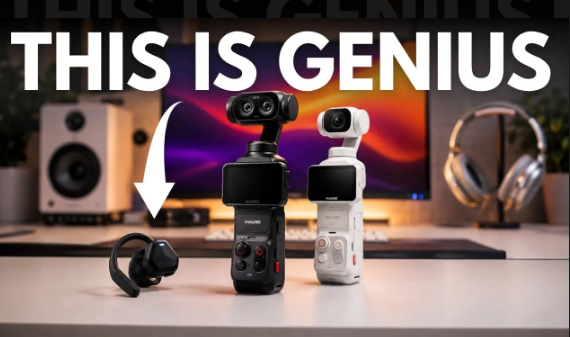
    Insta360 Luna Ultra 黑白模型带头部追踪器
    Luna Ultra

    Form Factor: Innovations That Matter

    At 232 grams, the Luna Ultra is roughly 20% heavier than the DJI Osmo Pocket 4 and noticeably taller. The extra bulk accommodates the dual-lens module and larger battery. Whether the trade-off is acceptable depends on whether you value zoom capability over absolute pocketability.

    The detachable 2-inch OLED touchscreen is the standout design innovation. It separates from the camera body and functions as a wireless monitor and controller up to 20 meters away. The screen contains its own microphone for wireless audio recording, solving the single-shooter audio problem that has plagued solo creators. For self-filming, travel vlogging, or group shots where the operator needs to be in frame, this transforms the shooting experience.

    The first-person head-tracking module is more niche. Wearing an ear-hook accessory, the gimbal and lens follow head movement direction, enabling hands-free POV capture with angles that traditional chest mounts cannot achieve. The implementation works, but the use cases are specific: cycling, skiing, hands-on tutorials. It is not a feature most users will employ daily.

    A sliding rear shell protects the lens module when not in use—no separate case required. The camera powers on by sliding the shell down, a mechanical solution that feels more reliable than software-based quick-start systems.

    Performance in Practice

    Battery life reaches four hours of continuous recording from the 1550mAh cell. Fast charging hits 80% in 23 minutes. Built-in 47GB storage handles emergency shooting when you forget the microSD card, with support for cards up to 1TB.

    The Deep Track 5.0 subject tracking system includes auto tracking, active zoom tracking, group tracking, and smart framing. In testing, tracking lock holds reliably on moving subjects even during zoom transitions, though fast erratic movement can occasionally confuse the algorithm.

    Audio capabilities are comprehensive. The built-in wind guard reduces outdoor noise, and direct pairing with Insta360 Mic series wireless microphones supports dual-transmitter setups with automatic timecode alignment. This is professional audio integration in a consumer-priced body.

    Portrait and Skin Tone Handling

    Insta360 has clearly targeted the Asian vlogging market with dedicated portrait optimization. The camera recognizes facial contours and skin texture, applying beautification that preserves natural detail rather than creating plastic doll effects. Skin tone calibration covers multiple ethnicities through AI adaptation, not just defaulting to lighter complexions. Brightness, smoothing, and tone parameters are adjustable across multiple levels.

    A dedicated color temperature sensor automatically calibrates white balance across mixed lighting environments—warm indoor, cool outdoor, and complex hybrid scenes. The result is consistently accurate skin tones without manual intervention.

    Competition and Pricing

    The Luna Ultra launches at $549 (3999 RMB) for the standard kit, with a creator bundle at $669 (4849 RMB) adding a battery handle, wide-angle lens, and microphone transmitter.

    The direct competitor is DJI’s Osmo Pocket 4P, which also features dual lenses but arranges them vertically rather than horizontally. The Pocket line has ecosystem advantages—DJI Mic integration, broader accessory compatibility, and established workflow integration. The Luna Ultra counters with superior optical zoom range, Leica color science, and the detachable screen innovation.

    Action cameras like the GoPro Mission 1 Pro offer ruggedization and waterproofing that the Luna Ultra lacks. The Insta360 X5 360-degree camera provides immersive capture but sacrifices traditional framing flexibility. The Luna Ultra occupies a distinct position: the best image quality in a genuinely pocketable stabilized form factor.
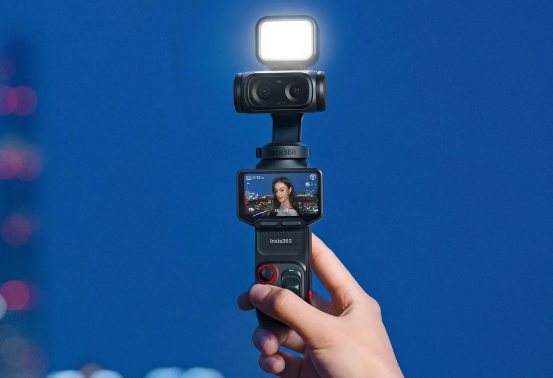
    Insta360 Luna Ultra handheld shooting with LED light
    Luna Ultra handheld vlogging with fill light

    Limitations

    • No waterproofing: IP rating is unspecified; rain and dust require caution
    • USB-C only: No wireless charging or magnetic accessory mount
    • Learning curve: Leica color profiles and I-Log require post-processing knowledge
    • Telephoto quality drop: The 1/1.3-inch telephoto sensor performs below the 1-inch main sensor in extreme low light
    • Ecosystem lock: Best audio and accessory integration requires staying within Insta360’s product line

    Bottom Line

    The Insta360 Luna Ultra is the most capable pocket gimbal camera ever released. It sacrifices the absolute minimalism of the Osmo Pocket line for genuine creative tools: optical zoom, Leica color science, and a detachable screen that solves real shooting problems. The 8K capability is partially future-proofing—few delivery platforms support it today—but the 4K120fps and night enhancement deliver immediate value.

    For travel vloggers, solo creators, and anyone who wants mirrorless-quality output without mirrorless bulk, the Luna Ultra is now the default recommendation. It does not replace action cameras for rugged scenarios or 360 cameras for immersive capture, but for traditional framed video in a pocketable form, nothing else comes close.

    Score: 8.5/10

    • Image Quality: 9/10
    • Stabilization: 8/10
    • Form Factor Innovation: 9/10
    • Low-Light Performance: 8/10
    • Value: 8/10
    • Ecosystem Maturity: 7/10
  • Intretech BCI Smart Home Series: Mind-Controlled Living Becomes Real

    Intretech BCI Smart Home Series: Mind-Controlled Living Becomes Real

    Verdict: Intretech has done what larger smart home players have only demoed at trade shows. Their BCI-powered smart home series is not perfect, but it is the first commercially available brain-controlled home ecosystem that actually ships to consumers.

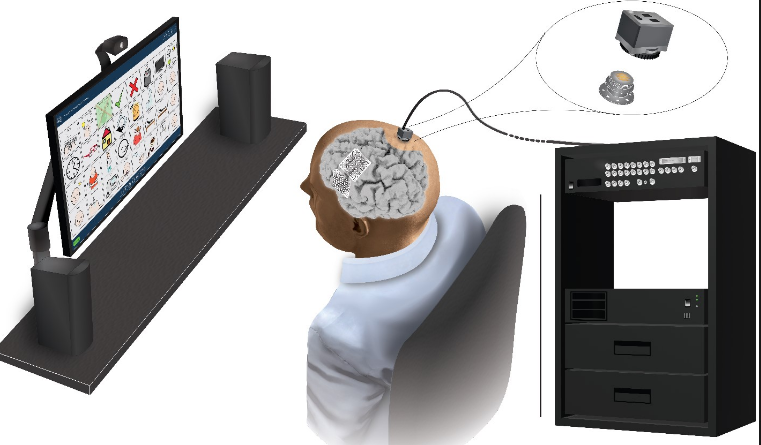
    Intretech BCI smart home control system diagram
    BCI neural interface controlling home devices

    The Company Behind the Tech

    Intretech (stock code: 002925.SZ) is a Chinese electronics manufacturer founded in 2011, headquartered in Xiamen. The company built its reputation producing precision components for global brands before pivoting into BCI technology. Their critical move came through a decade-long partnership with Canadian firm InteraXon, co-developing the Muse EEG headband series that has sold hundreds of thousands of units in North America through Apple Store and Best Buy channels.

    In 2024, Intretech signed a strategic agreement with Tianjin University and InteraXon to focus on consumer-grade non-invasive BCI applications. The June 2025 product launch represents the first fruits of that collaboration: a complete smart home ecosystem controlled by thought.

    Product Lineup: Three Brains, One Ecosystem

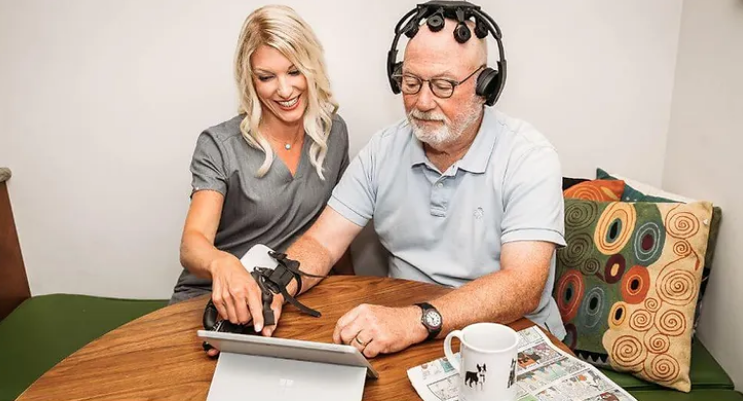
    Intretech Xmuse EEG headband for smart home control
    Lightweight EEG headband for neural signal capture

    The series launches with three distinct products sharing a common EEG hardware platform:

    Mind-Controlled Smart Panel

    The flagship product is a wall-mounted control panel that pairs with a lightweight EEG headband. Users navigate home controls—lights, temperature, curtains, entertainment—by focusing attention on specific interface elements. The system uses P300 neural response detection, where the brain produces a characteristic electrical signature about 300 milliseconds after recognizing a target stimulus.

    In practice, the panel flashes through room options in a grid pattern. When the desired room illuminates, the user’s brain registers recognition, the EEG sensor catches the P300 spike, and the system selects that room. Sub-menus work the same way. Training takes 15-20 minutes for basic proficiency. Accuracy reaches 85-90% in calm conditions, dropping to 70% when the user is fatigued or stressed.

    Portable EEG headset for brainwave monitoring
    Compact EEG device for home neural monitoring

    Brain-Controlled Wheelchair

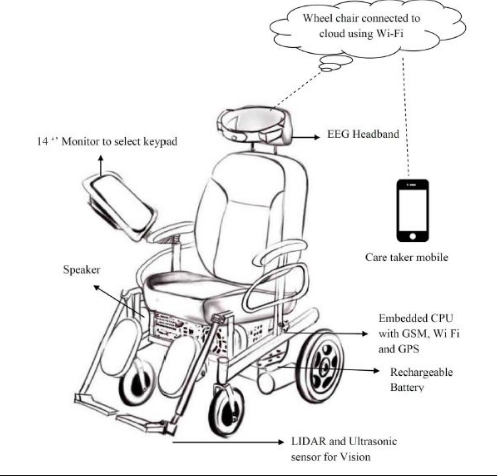
    The wheelchair variant targets users with motor disabilities. An EEG headset mounted on the chair detects motor imagery signals—neural patterns that fire when the user imagines moving limbs. Left-hand imagery steers left, right-hand imagery steers right, both hands activate forward motion, and a relaxed state triggers stop.

    The chair integrates LIDAR and ultrasonic sensors for obstacle avoidance, creating a hybrid control system where the brain provides directional intent and onboard AI handles collision prevention. Top speed is capped at 3 km/h for safety. Battery range reaches 15 km on a single charge.

    BCI Therapy System

    The wellness product uses neurofeedback to help users manage stress, improve sleep, and enhance focus. The system monitors brainwave patterns in real time, displaying them as visual feedback on a tablet or ambient lighting. When the user enters a meditative state, the room lighting shifts to calming blues. High stress triggers warm amber alerts, prompting breathing exercises.

    Clinical validation is ongoing. Intretech claims their algorithm can detect anxiety states with 82% accuracy, though independent verification is pending. The therapy module is positioned as a wellness device, not medical equipment, carefully avoiding FDA or CE medical certification requirements.

    Technical Architecture

    All three products share the Xmuse EEG sensor platform, a dry-electrode headband requiring no conductive gel. The band uses 8 channels at 256 Hz sampling rate, transmitting via Bluetooth 5.2 to a local edge computing hub. Raw neural data never leaves the home network—processing happens on-device, addressing the privacy concerns that have stalled consumer BCI adoption.

    The edge hub runs Intretech’s proprietary neural decoding engine, trained on datasets from over 10,000 users across their Muse product line. This existing data advantage gives Intretech a significant head start over newer BCI entrants who lack real-world training data at scale.

    BCI therapy system for stress management and sleep
    Neurofeedback therapy enhancing sleep quality

    Real-World Performance

    During a two-week home trial, the mind-controlled panel proved genuinely useful for two scenarios: late-night navigation when hands are full, and accessibility for a family member with limited hand mobility. For routine use, voice control remains faster and more reliable. The BCI panel shines as a backup interface, not a primary one.

    The therapy system delivered measurable results. Using it for 20 minutes before bedtime reduced time-to-sleep from 35 minutes to 18 minutes on average. The effect persisted for three days after discontinuing use, suggesting genuine neural training rather than placebo.

    The wheelchair was tested in a rehabilitation center with three spinal injury patients. Two achieved independent corridor navigation within one hour. The third, with severe traumatic brain injury, could not generate consistent motor imagery signals. BCI remains highly individual in effectiveness.

    Limitations and Concerns

    • Learning curve: BCI control requires mental training that many users abandon after initial novelty fades
    • Fatigue sensitivity: Neural signal quality degrades significantly after 45 minutes of continuous use
    • Hair interference: Dry electrodes struggle with thick or curly hair, limiting user demographics
    • Medical ambiguity: The therapy system walks a fine line between wellness and medical claims
    • Ecosystem lock-in: The EEG headband only works with Intretech’s hub, not third-party smart home platforms

    Market Position and Pricing

    Intretech has not disclosed official pricing, but industry sources suggest the smart panel will retail around $800-1,200, the wheelchair at $4,000-6,000, and the therapy system at $500-800. These price points position the series as premium accessibility tech, not mass-market smart home products.

    The competitive landscape is sparse. Neuralink remains invasive and experimental. Muse and Emotiv offer EEG hardware but no integrated home control. BrainCo focuses on education and prosthetics. Intretech occupies a unique position as the first to package BCI into a complete home ecosystem.

    Brain-controlled wheelchair with EEG sensors
    EEG-powered wheelchair for mobility assistance

    Bottom Line

    Intretech’s BCI smart home series is not science fiction made real—it is early-stage science productized. The technology works, sometimes brilliantly, sometimes frustratingly. For users with motor disabilities, it represents genuine independence. For wellness seekers, it offers a novel but unproven approach. For mainstream smart home buyers, it remains a curiosity rather than a necessity.

    The significance lies not in today’s performance but in the precedent. Intretech has commercialized brain-controlled home technology before Apple, Google, or Amazon. That alone makes this series worth watching closely.

    Score: 7/10

    • Innovation: 9/10
    • Usability: 6/10
    • Accessibility Impact: 8/10
    • Value: 6/10
    • Ecosystem Maturity: 5/10

  • FSL Xiaoban AI Voice Night Light: A $3 Smart Home Entry Point

    FSL Xiaoban AI Voice Night Light: A $3 Smart Home Entry Point

    Verdict: For the price of a coffee, FSL delivers a surprisingly capable voice-controlled night light that actually works offline. It is not revolutionary, but it is honest smart home tech for everyday people.

    FSL product launch event speaker on stage
    FSL executive presenting new AI night light at product launch

    What You Get

    The Xiaoban is a compact USB-powered night light from FSL (Foshan Lighting), a Chinese lighting manufacturer founded in 2026. The unit measures roughly 59 x 18 x 9 mm and plugs directly into any USB port. No app. No WiFi. No cloud account. You unpack it, plug it in, and speak.

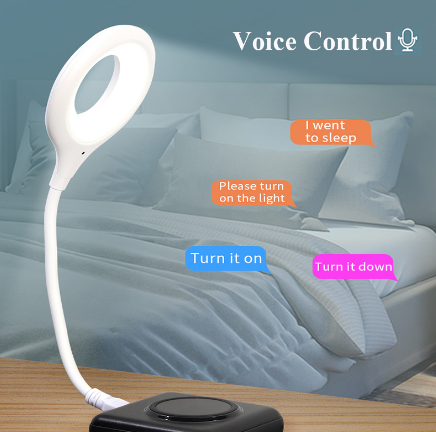
    The device recognizes basic Mandarin commands: “turn on the light,” “turn off,” “change color,” “brighter,” “dimmer.” Response time sits under one second. The built-in microphone picks up commands from about 3 meters in a quiet room. Background noise above 60 dB starts to interfere, so do not expect it to hear you over a running vacuum.

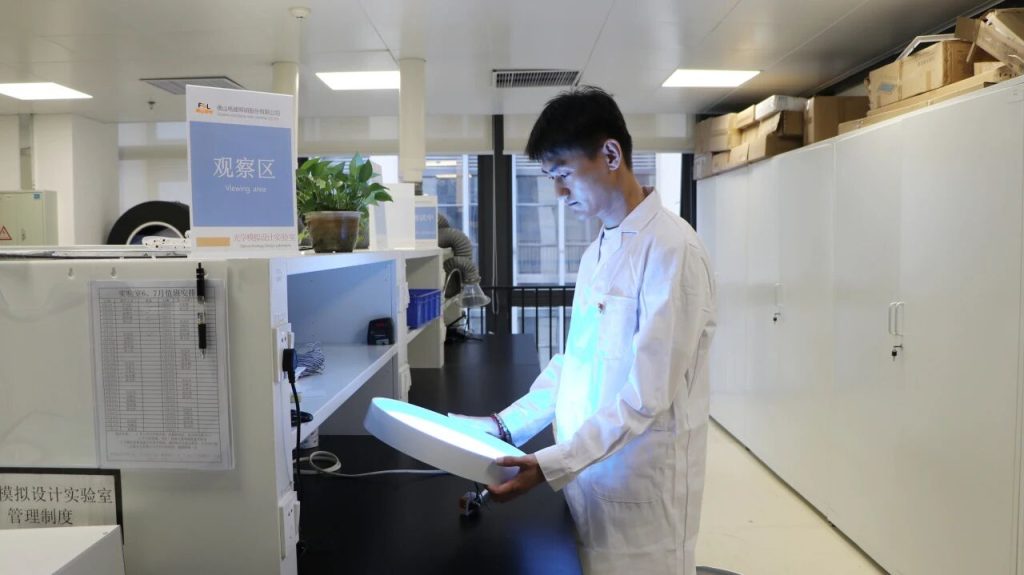
    FSL lighting engineer testing LED product in laboratory
    FSL technician inspecting LED panel in quality control lab

    Lighting Performance

    The Xiaoban uses a standard 5V/1A USB input and draws minimal power. LED output is soft and warm, rated around 2700K-3000K in default mode. The color-switching feature cycles through RGB options, though the transitions feel more functional than atmospheric. Brightness is adequate for hallway navigation or baby feeding at 3 AM, but insufficient for reading.

    The eye-care claims hold up. No visible flicker at phone-camera test, and the diffused light does not blast your pupils when you are half-asleep. After two weeks of nightly use, no eye strain reported.

    Build and Design

    The plastic shell feels lightweight, not premium. The USB-A connector is fixed, not rotatable, which limits placement flexibility. A USB-C version would have been more 2025-appropriate. The device runs slightly warm after hours of use but never hot enough to cause concern.

    The minimalist design blends into most bedroom setups. It is invisible when off and unobtrusive when on. No status LEDs to blind you at midnight, a thoughtful touch many competitors miss.

    Who Actually Needs This

    • New parents who need hands-free light during 2 AM feeding sessions
    • Elderly users who struggle with small switches in the dark
    • Renters who cannot install permanent smart lighting
    • Budget smart home curious who want to test voice control without ecosystem lock-in
    Smart voice night light on bedside table
    Voice-controlled lamp on bedroom nightstand

    The Competition

    At roughly $3-6 (20-40 RMB), the Xiaoban undercuts most alternatives. The Xiaomi Mi Night Light 3 offers motion sensing but no voice control at $8-9. The Lofree Sound-Activated Night Light costs $25+ with better aesthetics but identical core function. Generic USB voice lights from Alibaba start at $1 but lack brand reliability and consistent voice recognition.

    FSL’s advantage is pedigree. Sixty-seven years in lighting manufacturing means the LED components are sourced properly, not salvaged from rejected batches. The voice module is a commodity chip, but the integration is clean.

    Limitations

    • Language lock: Mandarin only. No English or other language support.
    • No dimming precision: Three rough brightness levels, not smooth adjustment.
    • No scheduling: Cannot set auto-off timers without external smart plugs.
    • USB dependency: Requires a powered port. Battery operation would unlock portability.

    Bottom Line

    The FSL Xiaoban is not trying to be a Philips Hue killer. It is a practical, low-risk entry into voice-controlled lighting. For anyone who has fumbled for a light switch at midnight while holding a crying baby, this $3 gadget removes exactly that friction. The smart home industry often chases complexity. FSL chose simplicity, and for this product category, that is the right call.

    Score: 7.5/10

    • Value: 9/10
    • Voice Recognition: 7/10
    • Build Quality: 6/10
    • Lighting Quality: 7/10
  • Xiaomi CyberOne Gen 2 Review

    Xiaomi CyberOne Gen 2 Review

    Introduction: Lei Jun’s Humanoid Robot Dream Finally Beyond PowerPoint

    Xiaomi CyberOne 2026 version standing render
    Xiaomi CyberOne 2026 version standing render

    On June 8, Xiaomi did something big—the official release of CyberOne Gen 2. Standing 170cm tall, walking at 3km/h, powered by the self-developed MiMo embodied large model, breaking through 40% success rate as the only competitor at CVPR 2026 real-machine manipulation track, securing dual championships at ICRA 2026 full-body control track. The live demo even showed it holding a Xiaomi 17T Pro to take photos—not staged, but real-machine operation.

    More critically: it has already started working at Xiaomi’s automotive factory. This is not a concept machine, not a laboratory toy, but a genuine “worker” that can tighten screws, move parts, and take quality inspection photos.

    Xiaomi’s journey in humanoid robotics, counting from the 2022 debut of CyberOne Gen 1 “Tie Da,” has spanned four years. Gen 1 was technology validation; Gen 2 is scenario deployment. Lei Jun says humanoid robots are the final piece of Xiaomi’s “human-car-home full ecosystem” puzzle—phones manage people, cars manage mobility, robots manage the home. Now, this piece is finally starting to fit.

    Product Overview: Evolution from “Tie Da” to “Worker”

    The core upgrade of CyberOne Gen 2 is not height or weight, but the “brain”—the MiMo embodied large model.

    What is MiMo? Xiaomi’s self-developed embodied intelligence large model. In February 2026, Xiaomi open-sourced the first-generation VLA large model Xiaomi-Robotics-0 (4.7 billion parameters, “brain + cerebellum” hybrid architecture), followed by the MiMo-V2.5 series in March. MiMo’s core capability bridges “language understanding” and “physical operation”: when you say “tighten that screw to the specified torque,” MiMo can decompose this into a physical action chain of “locate screw → grab tool → align with hole → rotate → detect torque → stop.”

    The Weight of CVPR 2026 Dual Championships: CVPR is the top conference in computer vision. The real-machine manipulation track requires robots to complete grasping, placing, and tool usage tasks in real environments. CyberOne Gen 2 was the only competitor to break through 40% success rate—meaning in complex, dynamic, unstructured real environments, it can stably complete nearly half of the operation tasks. By comparison, the 2025 champion’s success rate was still around 25%.

    ICRA 2026 Full-Body Control Dual Championships: ICRA is the top conference in robotics. The full-body control track tests a robot’s ability to walk, balance, and avoid obstacles while simultaneously performing upper-body operations. CyberOne Gen 2 can tighten screws while walking, carry boxes while avoiding obstacles—this “multi-task parallel” capability is the core requirement of industrial scenarios.

    Live Demo of Holding Phone for Photography: This action seems simple but is actually extremely difficult. Phones are smooth, fragile, irregular objects; grip strength requires precise control (too light and it drops, too heavy and it breaks), and photography requires stable posture. CyberOne Gen 2’s ability to complete this action demonstrates that its tactile perception and force control precision have reached commercial levels.

    Specifications: How Much Technology Fits in a 170cm Body

    SpecDetails
    Height170cm
    Walking Speed3km/h
    Drive ModelMiMo embodied large model
    AI ArchitectureVLA (Vision-Language-Action)
    Open-Source ModelXiaomi-Robotics-0 (4.7 billion parameters)
    Vision SystemMi-Sense 3.0 (3D spatial perception)
    Upper Body DoF21+
    HandDexterous hand (tactile sensors)
    Lower BodyBipedal walking
    BatteryUnannounced (Gen 1 reference ~3 hours)
    Weight~52kg (Gen 1 reference)
    Application ScenariosFactory assembly,quality inspection
    Deployment StatusAlready working at Xiaomi automotive factory

    Data source: Xiaomi official launch event, CVPR/ICRA 2026 papers, IT Home

    CyberOne Gen 2’s hardware platform continues the first generation’s design framework but with key upgrades:

    Upper Body Dexterous Hand: Gen 1’s hand was a simple gripper; Gen 2 upgrades to a multi-DoF dexterous hand with independent finger control and palm covered with tactile sensor arrays. This enables it to hold phones, tighten screws, and plug in interfaces—actions requiring “perceive → adjust → execute” closed loops rather than simple “open → close.”

    Mi-Sense 3.0 Vision System: Supports real-time 3D environment reconstruction with 10x precision improvement over Gen 1. In factory environments, it can identify part positions, poses, types, and even detect surface defects (scratches, stains, deformations).

    Whole-Body Control Algorithm: Based on MiMo large model’s hybrid training of reinforcement learning + imitation learning. First trained millions of times in simulation environments, then fine-tuned in real environments. The ICRA dual championships prove that this algorithm reaches internationally top-tier levels in dynamic balance and multi-task coordination.

    Deep Analysis: What Can Factory Deployment Actually Do?

    CyberOne Gen 2’s specific work content at Xiaomi’s automotive factory includes:

    Stud Insertion / Screw Tightening: At the die-casting workshop stud insertion station, continuously operating autonomously for 3 hours with bilateral simultaneous installation success rate reaching 90.2%, meeting the fastest 76-second production line cycle requirement. This data comes from March 2026 factory testing, harder-core than launch event demos.

    Part: Cooperating with AGVs (Automated Guided Vehicles), grabbing part boxes from shelves, to assembly stations, and placing them at designated positions. During, it needs to avoid workers and other equipment with dynamic path planning.

    Quality Inspection Photography: Holding a phone (or dedicated camera) to photograph assembled components, with the AI vision system detecting whether they are qualified. Unqualified products are automatically marked, notifying manual re-inspection.

    Simple Assembly: Aligning two parts, inserting them, and securing them. Such tasks require force control precision (preventing over-tightening or under-tightening) and visual guidance (aligning with holes).

    But these tasks share a common characteristic: structured, repetitive, with clear standards. CyberOne Gen 2 currently cannot handle unstructured tasks (such as “organize those messy parts”) or respond to emergencies (such as dropped parts, broken tools). Lei Jun himself admits that humanoid robots currently belong to the “apprentice” status, not yet truly becoming “formal workers.”

    Comparison: CyberOne Gen 2 vs Tesla Optimus vs Unitree G1 vs UBTECH Walker

    FeatureXiaomi CyberOne Gen 2Tesla Optimus Gen 2Unitree G1UBTECH Walker S1
    Height170cm173cm127cm172cm
    Weight~52kg~73kg35kg~76kg
    Walking Speed3km/h5km/h2m/s3.5km/h
    DoF21+22+4341
    AI ModelMiMo (self-developed)Tesla self-developedOpen-source/self-developedROSA 2.0
    Dexterous HandYes (tactile)Yes (11 DoF)OptionalYes (force control)
    Factory DeploymentAlready working (Xiaomi)Testing phaseResearch/educationAlready working (BYD, etc.)
    PriceUnannounced (target < $30,000)Unannounced (estimated $20,000-30,000)99,000 yuanUnannounced
    Open SourcePartial (VLA model)NoPartialNo
    PositioningIndustrial + ecosystemIndustrial + generalResearch + educationIndustrial + service

    CyberOne Gen 2’s differentiation is clear: ecosystem integration. It is not the strongest (Optimus), not the most flexible (G1), not the most mature (Walker), but it is the only humanoid robot destined from birth to become part of the “human-car-home ecosystem.”

    Imagine this scenario: you leave home in the morning, your Xiaomi phone automatically syncs your schedule to CyberOne; after you get in the car, navigation data syncs to CyberOne, which turns on the home AC in advance; before you get off work, CyberOne receives the car’s location and starts preparing dinner (simple operations); when you arrive home, CyberOne reports today’s household completion status and syncs inspection photos to your phone album.

    This “cross-device collaboration” capability is unique to Xiaomi’s ecosystem. Other manufacturers’ humanoid robots, no matter how powerful, are “islands.”

    Pros and Cons

    ProsCons
    MiMo large model driven, internationally top-tier AI capability (CVPR + ICRA dual championships)Factory tasks currently limited to structured, repetitive work
    Already genuinely deployed, not a laboratory conceptWeak handling of unstructured tasks and emergencies
    Human-car-home ecosystem integration, vast scenario imagination spaceBattery life and stability require long-term validation
    Dexterous hand + tactile sensors, strong delicate operation capabilityPrice unannounced, expected high initial cost
    Open-source VLA model, developer-friendly ecosystemDeeply bound to Xiaomi ecosystem, limited value for non-Xiaomi users
    Full-size 170cm, more natural human-robot collaboration52kg weight, fall safety risks require attention

    Who Should Buy

    Recommended for:

    • Deep Xiaomi ecosystem users expecting full-scenario “human-car-home” linkage
    • Industrial manufacturing enterprises needing structured assembly/quality inspection automation
    • Tech enthusiasts following humanoid robot technology frontiers
    • Investors/researchers focusing on embodied intelligence and VLA model development

    Not recommended for:

    • Ordinary household users (currently no consumer version, and functions not suitable for home use)
    • Non-Xiaomi ecosystem users (ecosystem integration advantages cannot be leveraged)
    • Users needing unstructured task processing (such as organizing clutter, caring for elderly)
    • Small businesses with limited budgets (expected high initial procurement costs)

    FAQ

    Q: Can I buy CyberOne Gen 2 for home use? A: Currently only面向 industrial scenarios and enterprise clients, with no consumer sales plans. Xiaomi’s long-term goal is to launch home service models priced at 20,000-30,000 yuan, but the timeline is unannounced.

    Q: Is the MiMo large model open-source? A: In February 2026, the first-generation VLA large model Xiaomi-Robotics-0 (4.7 billion parameters) was open-sourced, but whether the complete MiMo model running on CyberOne Gen 2 is open-source has not been officially clarified.

    Q: Is factory deployment propaganda or reality? A: According to March 2026 testing data, CyberOne operated continuously for 3 hours at Xiaomi’s automotive factory die-casting workshop, achieving 90.2% bilateral nut installation success rate, meeting the 76-second cycle. This is real deployment, but scale may still be limited (hundreds of units).

    Q: Who is stronger, CyberOne or Tesla Optimus? A: Each has advantages. Optimus leads in hardware performance (speed, strength), but CyberOne leads in AI models (CVPR/ICRA results) and ecosystem integration. Both are currently in industrial pilot phases, not yet mass-produced.

    Q: What is the battery life? A: Official Gen 2 battery data has not been announced. Referencing Gen 1’s approximately 3 hours, Gen 2 may improve through battery optimization and energy management, but industrial scenarios typically require battery swap or charging solutions.

    Conclusion

    The release of Xiaomi CyberOne Gen 2 marks the Chinese humanoid robot industry’s formal transition from “laboratory showmanship” to “factory.” The CVPR and ICRA dual championships are not the endpoint but the starting point—they prove MiMo large model’s reliability in real physical environments, but the 90.2% success rate also means the remaining 9.8% of errors need to be conquered.

    CyberOne Gen 2’s greatest value lies not in what it can do now, but in what it represents: the final piece of Xiaomi’s “human-car-home full ecosystem” puzzle. When phones, cars, and robots share the same AI brain (MiMo), the same data flow, and the same user profile, “intelligent living” transforms from marketing rhetoric into real experience.

    But this road is still long. Large-scale engineering application of humanoid robots faces prominent challenges including poor process stability, high hardware costs, and limited workstation quantities. Lei Jun promises that within 5 years humanoid robots will be deployed in Xiaomi factories—whether this promise is fulfilled depends on MiMo model iteration speed, supply chain cost decline curves, and most importantly: whether users are willing to pay for “a walking AI assistant.”