Author: Gavin

  • Yueban Xiaoban Review: AI Toilet Robot for Elderly Care

    Yueban Xiaoban Review: AI Toilet Robot for Elderly Care

    One-sentence verdict: This is not a robot built to impress with specs—it is a machine willing to “bend down” and solve the most unglamorous problem. If it proves reliable in real home environments, it could rewrite the playbook for elderly care.
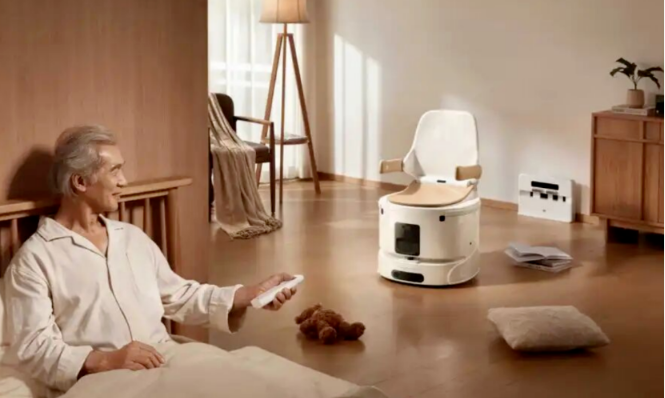
    Yueban Xiaoban robot moving to bedside
    Xiaoban toilet robot responding to remote bedside call

    Introduction

    The elderly care robotics market has long been dominated by two categories: emotional companions that chat, dance, and play music; and rehabilitation aids that assist with physical training. But one critical scenario has been severely overlooked—also the need that disabled elderly are least willing to discuss: toileting.

    China has over 45 million disabled or semi-disabled elderly, with more than half requiring nighttime bathroom visits exceeding three times per night. Each attempt to get up carries a 28% higher fall risk compared to daytime. Existing solutions rely either on adult diapers (hot, prone to bedsores) or caregivers making multiple nighttime assists (with a national caregiver shortage exceeding 5.5 million). Yueban, a brand under Topband Co., Ltd., is addressing this “unspeakable but essential” problem with a mobile robot called Xiaoban, shifting the approach from passive response to active service.


    Product Overview

    Xiaoban’s positioning is clear: an intelligent toileting device that moves autonomously within home environments, processes waste automatically, and eliminates manual emptying. Its exterior is deliberately shaped like a familiar armchair with handrails. The body retains only two colored physical buttons; the remote control is stripped down to four keys. This minimalism is not laziness—it reflects the cognitive characteristics of elderly users, including those with Parkinson’s and cognitive impairments. The simpler the interface, the more likely they are to use it.

    The core interaction logic is “tool finds person.” Elderly users summon the robot via one-key remote control or offline voice commands (no Wi-Fi required). The device drives autonomously from its charging station to the bedside. After the user is seated, a triple-lock chassis fixes the unit in place to prevent tipping. Following use, an internal pulverization module processes waste into a pumpable state, and a telescopic discharge arm docks with the toilet for automatic transfer. The pipeline undergoes high-pressure washing and UV sterilization throughout, freeing caregivers from manual emptying, scrubbing, and odor control.

    The price is set at 28,999 RMB (approximately $4,000). In the consumer electronics space this is not cheap, but in elderly care economics, it equates to roughly two to three months of a full-time caregiver’s salary. If the device operates reliably for over two years, the math works.
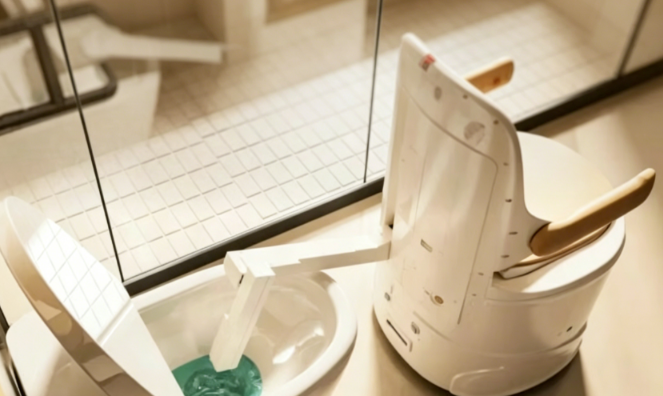
    Yueban Xiaoban waste arm docking toilet
    Xiaoban telescopic arm docking with toilet for waste transfer

    Technical Specifications and Functional Architecture

    ModuleTechnical ApproachKey Metrics
    Mobility & NavigationSLAM / Visual FusionAutonomous obstacle avoidance, path planning
    InteractionOffline Voice + Physical ButtonsNo network dependency
    SafetyTriple-Lock ChassisAnti-tipping, fixed-point anchoring
    Waste ProcessingPulverization Module + Telescopic ArmAutomatic toilet docking
    Cleaning & SterilizationHigh-Pressure Wash + UVFull pipeline coverage
    Comfort FunctionsWarm Water Wash + Warm Air DryDiaper replacement
    Privacy DesignStaged Visual CaptureCamera only activates briefly downward during docking

    The architecture’s intelligence lies in its restraint. Rather than trying to impress with “all-in-one” capabilities, resources are concentrated on four core stages: movement, seating, processing, and cleaning. Each stage has a clear engineering target rather than feature bloat.


    Privacy Design: An Underestimated Competitive Edge

    A common misconception in elderly care robotics is that more advanced technology equals greater user acceptance. In reality, elderly users are far more sensitive to “being monitored” than younger generations. Xiaoban’s privacy strategy is straightforward: the camera remains completely off during movement and standby, only activating briefly downward during waste docking to identify the toilet position.

    This “staged capture” stands in sharp contrast to the industry’s common practice of full-time visual monitoring. For C-end purchasers (typically adult children), “parents won’t be watched 24/7” is a significant purchase trigger. For B-end institutions, it reduces privacy dispute risks. The design itself is not technically complex, but it demonstrates the product team’s depth of understanding for elderly care scenarios: technology should serve human dignity, not the reverse.


    Competitive Landscape and Technical Route Divergence

    The current market for disabled elderly toileting care offers three solution types:

    Solution TypeRepresentative FormCore LimitationTarget Users
    Traditional ConsumablesAdult diapers, padsFrequent replacement, bedsore riskFully bedridden
    Wearable DevicesSmart diapers, sensor pantsOnly covers bedridden scenarios, requires manual follow-upCompletely disabled
    Fixed EquipmentElectric care beds, patient liftsRequires environmental modification, poor mobility, high costInstitutional settings

    Xiaoban’s differentiation lies in its mobile robot form factor covering the underserved “semi-disabled, conscious but mobility-limited” population. These individuals do not require full bedridden care, but face fall risks when getting up, and their pride makes them resist diapers. A robot that comes to the bedside solves the safety issue while preserving the user’s sense of autonomy.

    From a technical route perspective, Xiaoban represents “active service type,” complementing rather than replacing “passive wearable type.” The former suits moderately disabled elderly with autonomous intent; the latter better serves severely disabled, fully bedridden individuals. Yueban’s choice effectively expands the target user base from “severe” to “moderate” disability, opening a significantly larger market.


    Market Data and Industry Context

    According to International Federation of Robotics (IFR) data, China’s elderly care robot market was approximately 3.8 billion RMB in 2020, projected to reach 10.5 billion RMB by 2026 and 18.3 billion RMB by 2030, with a CAGR of about 15%. Nursing robot growth rates hit 32%, while emotional companion robots grow at 42%.

    The toileting care sub-segment has annual market potential exceeding 5.5 billion RMB, yet home penetration remains below 1.2%. This indicates genuine demand, severe supply shortage, and substantial growth headroom.

    On the policy front, China’s Ministry of Civil Affairs issued the “Guiding Opinions on Further Promoting Civil Affairs Technology Innovation” in January 2026, explicitly encouraging scaled application of products for assisted dining, mobility, dressing, bathing, and transfer. This policy tailwind provides clear industrial direction for the elderly care robotics track.


    Spokesperson Strategy: The Logic of Elderly-Appropriate Marketing

    Yueban selected 92-year-old veteran artist You Benchang as brand collaborator. This diverges completely from the consumer electronics industry’s typical reliance on trending celebrities. The core purchase decision-makers for elderly care hardware are elderly users and their children; “a face parents know and trust” carries more persuasive power than “an idol young people worship.” Credibility and affinity trump traffic exposure. This choice itself externalizes the product’s positioning.
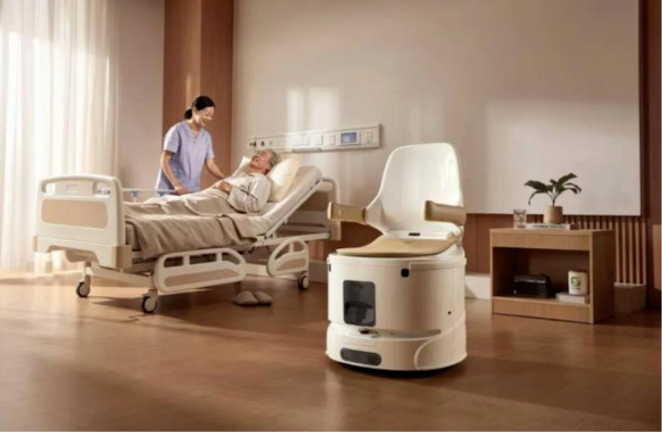
    Yueban Xiaoban robot in nursing home
    Xiaoban robot assisting elderly patient in care facility

    Pros and Cons

    ProsCons
    Active service model fills market gap28,999 RMB pricing remains a barrier for average families
    Privacy-first design reduces psychological resistanceLong-term reliability needs real-world validation
    Offline voice eliminates network dependencyNavigation stability in complex home environments remains to be observed
    Full-process automation reduces caregiver burdenMaintenance costs (consumables, cleaning) are not yet clear
    Minimalist interaction lowers usage barriersBrand recognition requires time to build

    Buying Guide

    Recommended for:

    • Adult children with semi-disabled elderly parents requiring frequent nighttime bathroom visits: addresses core pain points and reduces fall risks
    • Small-to-medium nursing homes and rehabilitation centers: reduces nighttime staffing needs and improves service standardization
    • Community-based home care service providers: enhances service competitiveness as part of care packages

    Consider carefully if:

    • Living space is cramped with complex furniture layouts: robot movement paths may be restricted
    • Elderly users have extremely low acceptance of new technology: requires extended adaptation period and family guidance
    • Budget-sensitive users unable to confirm long-term maintenance costs: advisable to wait for initial user feedback

    FAQ

    Q: Does it work without Wi-Fi?

    A: Yes. Offline voice commands and physical buttons operate independently of network conditions, suitable for elderly households with poor connectivity.

    Q: Does it require bathroom modification?

    A: No structural modification is needed. The robot docks with existing toilets via its telescopic arm, but the toilet must be within the robot’s reachable range.

    Q: Is maintenance complex? A: The pipeline features automatic high-pressure cleaning and UV sterilization, but maintenance intervals and costs for filters and pulverization modules should be confirmed with official support.


    Conclusion

    Yueban Xiaoban’s value lies not in cutting-edge technology, but in its selection of a long-neglected yet rigidly essential scenario, redefining the product form through “active service” rather than “passive wearing.” From diapers to wearables to mobile robots, the evolution of elderly care hardware is increasingly clear: technology should bend to accommodate people, not demand that people stretch to accommodate technology.

    The pricing, the spokesperson choice, and the staged privacy design all point toward a single product philosophy—the core competitiveness of elderly care technology is not the spec sheet, but “whether the elderly are willing to use it, whether their children feel confident buying it, and whether caregivers are spared effort.”

    If Xiaoban can prove its reliability and durability in real home environments, it may become the critical inflection point for elderly care robots transitioning from B-end pilots to C-end adoption. After all, when a robot is willing to come to the bedside, it solves not only a physical need but also the dignity that tens of millions of elderly find difficult to articulate.
  • Revopoint POP 4 Review: AI-Powered 3D Scanner with 3DGS Modeling

    Revopoint POP 4 Review: AI-Powered 3D Scanner with 3DGS Modeling

    One-sentence verdict: If you need a scanner that works in direct sunlight and turns physical objects into game-ready assets, the POP 4 is among the most compelling productivity tools to watch in 2025.

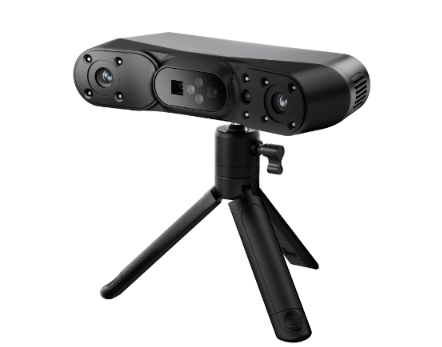
    Revopoint POP 4 dual-band scanner front view
    Revopoint POP 4 dual-band scanner front view

    Introduction

    3D scanners have long occupied an awkward position in the tech landscape. Industrial-grade units cost a fortune, while consumer-level devices struggle with accuracy. Revopoint’s POP series has been chipping away at this divide, and the POP 4 takes the most aggressive swing yet—packing AI algorithms and 3D Gaussian Splatting (3DGS) into a handheld form factor. The Kickstarter campaign raised over $2.6 million from more than 3,000 backers. For a specialized professional tool, those numbers signal genuine market demand.

    The POP 4 targets a clear audience: engineers, designers, cultural heritage professionals, and 3D content creators who need a complete “scan-and-go” solution. It refuses to be a toy, yet it does not want to stay trapped in a lab either.


    Product Overview

    The POP 4 represents Revopoint’s fourth-generation handheld scanner. The most significant evolution from previous models is the integration of AI-driven intelligent segmentation and 3DGS modeling capabilities. The device employs a dual-band optical system: blue multi-line laser handles high-precision detail work, while infrared structured light manages medium-to-large scenes and human body scanning.

    On the hardware front, the POP 4 features a dedicated depth computation chip, with laser scanning frame rates reaching up to 105 fps. Single-frame accuracy hits 0.03 mm, with volumetric accuracy at 0.03 mm + 0.05 mm × L(m). In practical terms, this means the device captures hair-width details while maintaining overall geometric fidelity.

    For fieldwork, the scanner includes a 5500 mAh removable battery grip delivering approximately 4 hours of continuous operation. Wi-Fi 6 wireless transmission enables real-time connectivity with PCs or mobile devices, eliminating the need to drag cables across outdoor job sites.

    POP 4 five scanning modes for diverse materials
    POP 4 five scanning modes for diverse materials

    Technical Specifications and Scanning Modes

    The POP 4 offers five distinct scanning modes covering everything from precision components to full-body capture:

    ModeLight SourceApplicationKey Feature
    Blue Laser StandardBlue multi-line laserDark objects, metal surfacesNo powder coating required
    Blue Laser FineBlue multi-line laserHigh-detail small objectsHigher precision, slower speed
    IR Full-Field HDInfrared structured lightMedium-to-large objects, human bodyFull coverage, high frame rate
    IR Hybrid HDIR + laser fusionComplex structuresAuto-switching, smooth tracking
    VCSEL Fast ScanVCSEL infraredBright environments, large scenes100,000 lux resistance, 30 fps

    The intelligent aspect of this design is that users need not become optics experts. The device automatically selects optimal parameters for each scene. The Hybrid HD mode deserves particular attention—it dynamically fuses both light sources during scanning, preventing data discontinuities caused by manual mode switching.


    AI and 3DGS: Beyond Spec Sheet Improvements

    The POP 4’s AI capabilities are not marketing fluff. Embedded algorithms recognize target objects in real time, automatically filtering background point clouds to output clean object data. For scanning novices, this eliminates hours of post-processing cleanup. For professionals, it means on-site quality confirmation rather than discovering corrupted data back at the office.

    More significantly, the 3DGS modeling capability changes the output pipeline. Traditional 3D scanning produces point clouds or mesh models requiring specialized software for texture mapping and rendering optimization before game or metaverse deployment. The POP 4’s patented 3DGS modeling technology converts point cloud and RGB data directly into Gaussian models, exportable in .splat format. This compresses the workflow from “scan → repair → bake → import engine” to “scan → export → use directly.”

    For game development and digital twin applications, this efficiency gain translates to substantially lower digital asset production costs. Cultural heritage digitization benefits equally—high-precision 3D documentation of artifacts no longer demands complex post-processing to achieve photorealistic presentation.


    Competitive Comparison

    FeatureRevopoint POP 4EinScan H2Artec Leo
    Accuracy0.03 mm0.05 mm0.1 mm
    Max Frame Rate105 fps60 fps80 fps
    Light Resistance100,000 lux50,000 lux80,000 lux
    WirelessWi-Fi 6Wired primaryWi-Fi 5
    3DGS SupportNativeNoNo
    Price Range~$800-900~$1,200~$30,000

    The POP 4’s pricing strategy is particularly interesting. The standard edition runs approximately $800, with the advanced edition around $900—occupying the empty space between consumer and professional tiers. Against industrial-grade devices like the Artec Leo, the POP 4 delivers comparable accuracy at less than 3% of the cost. Against the EinScan H2, it holds clear advantages in frame rate and AI functionality.


    Pros and Cons

    ProsCons
    AI auto-segmentation dramatically reduces post-processing timeAdvanced features still carry a learning curve
    Native 3DGS support enables direct digital asset usageExtremely reflective materials still need auxiliary treatment
    Dual-band system covers extensive application scenariosBrand recognition trails established Western manufacturers
    Wireless design enhances outdoor workflow freedom4-hour battery life falls short for full-day operations
    Price-to-performance ratio is exceptionally competitive in the professional segmentSoftware ecosystem remains a work in progress

    Buying Guide

    Recommended for:

    • Reverse engineering engineers: sufficient accuracy, friendly pricing, wireless design suits workshop environments
    • 3D printing service providers: shortest scan-to-print pipeline, AI cleanup saves labor costs
    • Indie game developers: 3DGS output goes directly into engines, bypassing intermediate steps
    • Cultural heritage digitization teams: outdoor scanning capability plus photorealistic modeling suits fieldwork

    Consider carefully if:

    • You require sub-micron precision for semiconductor or ultra-precision manufacturing: the POP 4’s accuracy is solid for professional use but falls short of metrology-grade equipment
    • You expect pure plug-and-play operation as a complete beginner: while AI lowers the barrier, selecting among five modes still requires some learning
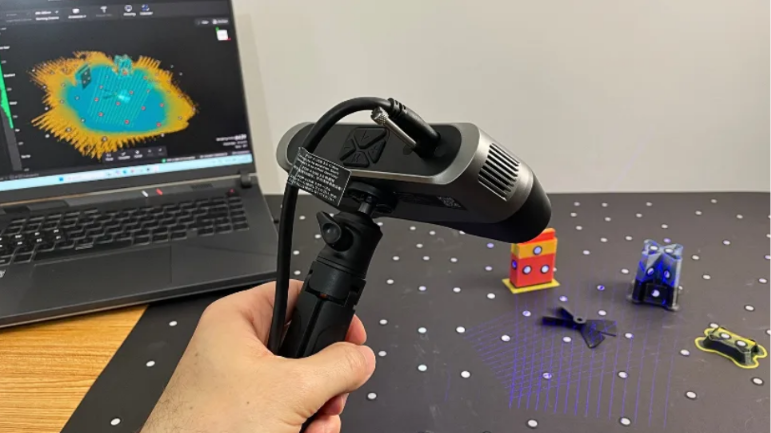
    POP 4 handheld scan with live preview
    POP 4 handheld scan with live preview

    FAQ

    Q: Can POP 4’s 3DGS models import directly into Unity or Unreal?

    A: The .splat export format is supported by plugins available for major engines.

    Q: Does human body scanning require special preparation?

    A: Infrared mode supports body scanning. Wear non-reflective materials and maintain steady or slow movement.

    Q: Which operating systems does the software support?

    A: Revo Scan 6 runs on Windows, macOS, Android, and iOS, with export compatibility to mainstream 3D design software.


    Conclusion

    The Revopoint POP 4 is not a perfect scanner—battery life and brand recognition have room for improvement. But it precisely targets a market gap: professional users who need industrial-grade precision without paying industrial-grade premiums; content creators who need photorealistic digital assets without drowning in technical complexity.

    The addition of AI segmentation and 3DGS modeling transforms this device from “a faster, more accurate scanner” into “a production tool that outputs usable digital assets.” Behind the $2.6 million crowdfunding achievement lies market validation for this efficiency revolution.

    If you are searching for a scanner that handles both precision inspection and digital content production, the POP 4 deserves the top spot on your shortlist.

  • SKYMOTOR Stormrider X2: When a Drone Company Builds a Motorcycle

    SKYMOTOR Stormrider X2: When a Drone Company Builds a Motorcycle

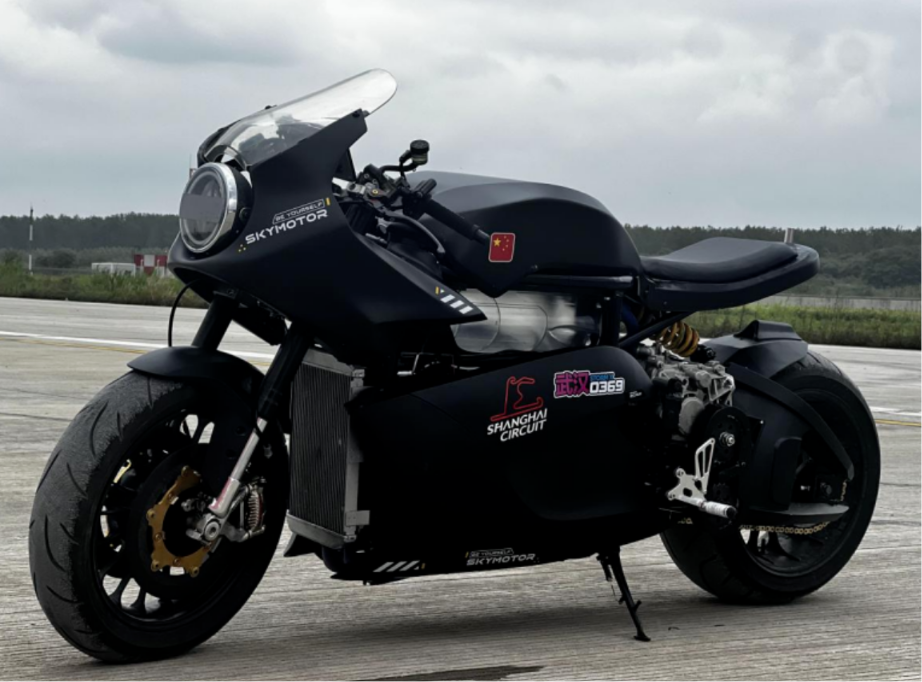
    Verdict: The Stormrider X2 is not a motorcycle. It is a statement of national industrial capability disguised as a motorcycle. At 369km/h tested top speed, it is the fastest two-wheeled vehicle ever built. The fact that it achieves this with 99.99% domestic Chinese components makes it politically significant. For the ten people who will buy it at 559,900 RMB ($77,000), it is an exclusive trophy. For everyone else, it is proof that China’s EV supply chain has matured.

    SKYMOTOR Stormrider X2 world's fastest electric motorcycle
    SKYMOTOR Stormrider X2 world’s fastest electric motorcycle

    The Speed: Beyond Meaningful

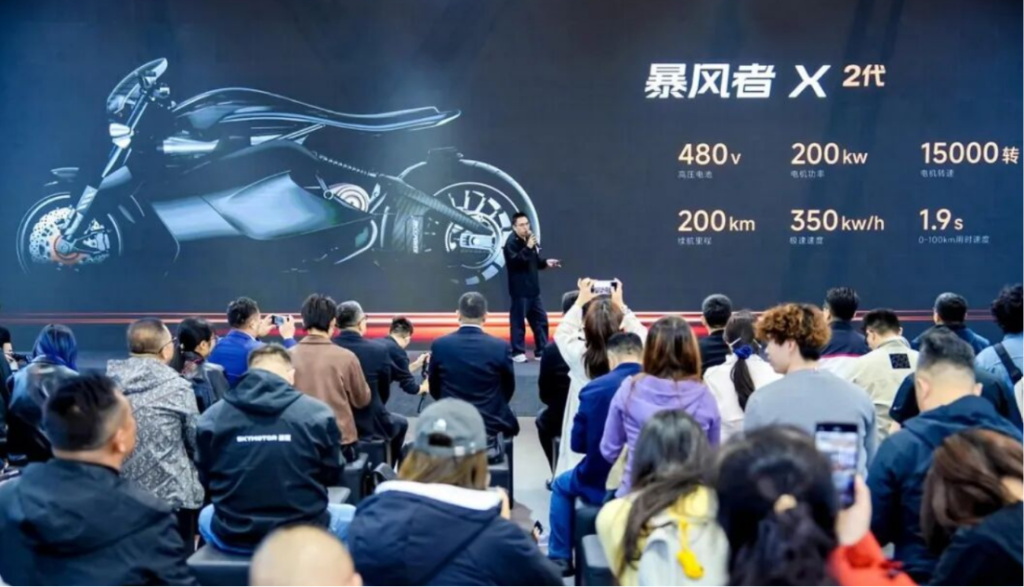
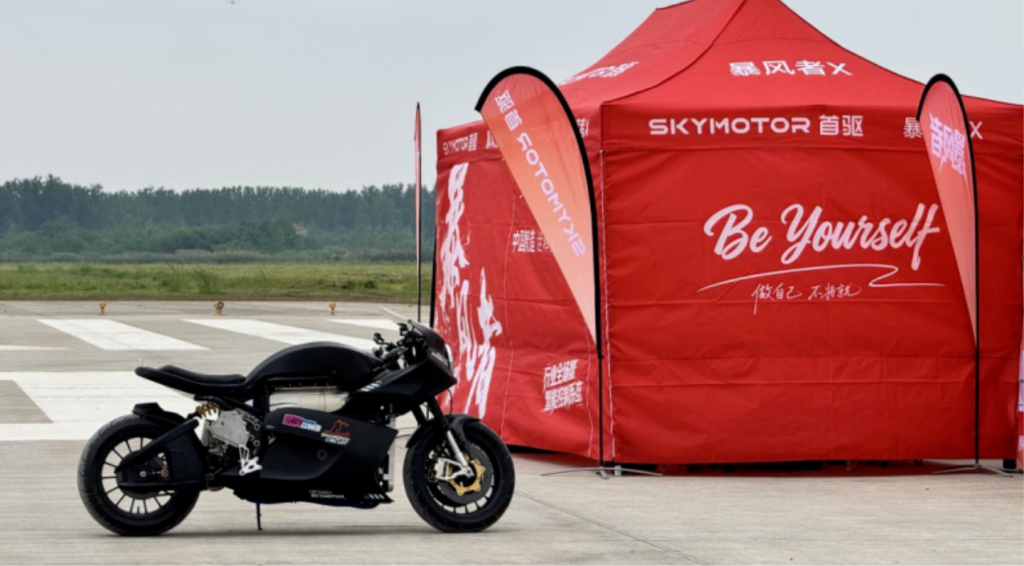
    The numbers are absurd. 369km/h tested at Wuhan airport. 350km/h official rated speed. 0-100km/h in 1.9 seconds. These figures place the Stormrider X2 in a category with no competitors.

    The 200kW peak motor delivers torque instantly through a direct-drive system. No gearbox, no clutch, no chain. Power goes from motor to rear wheel with mechanical simplicity. This enables the acceleration figures and makes the bike terrifying at speed.

    What separates the Stormrider is sustained high-speed stability. At 300km/h, the bike does not shake or weave. The aerodynamic profile—developed in Tsinghua University’s wind tunnel—generates downforce that increases with speed, pressing the bike into the pavement. This is active stability.

    The F1 Hardware: Racing Tech for the Street

    SKYMOTOR’s partnership with the 2026 F1 Chinese Grand Prix was not marketing. The company supplied 20 electric vehicles for track logistics, then used the same suppliers for the Stormrider X2. The carbon-ceramic brake discs are identical to F1 units. The magnesium forged wheels use the same alloy and forging process. The 4130 chromoly steel frame is the same material from the same mill.

    This is F1-sourced, not F1-inspired. The brake discs handle repeated 300km/h-to-0 stops without fade. The magnesium wheels reduce unsprung mass by 25-30%, allowing faster suspension reaction. The chromoly frame maintains structural integrity under loads that deform aluminum alternatives.

    The brake system is the most critical safety component. At 369km/h, stopping distance is measured in football fields. The carbon-ceramic discs provide consistent friction from -20°C to 1000°C. The F1-spec brake fluid does not boil under hard braking. The ABS system prevents lockup while allowing threshold braking that challenges professional racers.

    Stormrider X2 product launch event
    Stormrider X2 product launch event

    The AI Brain: Making Speed Manageable

    The Stormrider X2’s most significant innovation is the AI whole-vehicle coordinated control system—the first application of AI to manage power delivery, suspension damping, and energy recovery simultaneously in a production motorcycle.

    The AI electronic damping system learns rider behavior through sensors. After 50 kilometers, the system builds a profile of acceleration, braking, and cornering style. It then adjusts damping rates in real-time—stiffening for aggressive riders, softening for cautious ones, and balancing dynamically when conditions change.

    The result is a motorcycle that adapts to its rider. A novice receives a planted, forgiving bike. An expert receives instant response without filtering. The same hardware, two different personalities, determined by software.

    The AI also manages thermal limits. At sustained high speeds, the motor and battery generate enormous heat. The system predicts thermal buildup and pre-emptively reduces power before temperatures reach critical thresholds. This prevents the power cuts that plague lesser electric motorcycles.

    The 99.99% Domestic Supply Chain

    Every critical component—from brake discs to battery to motor controller—is manufactured in China. The only non-domestic elements are trace materials in brake pad compounds and certain semiconductor packages.

    This demonstrates the maturity of China’s EV component ecosystem. Five years ago, building this would have required German brakes, Japanese bearings, and American controllers. Today, SKYMOTOR sources equivalent components domestically. If China can build the world’s fastest electric motorcycle from domestic suppliers, it can build anything electric.

    Practical Reality: Who Is This For?

    The Stormrider X2 is not practical. At 559,900 RMB ($77,000), it costs more than a Porsche 911 in China. Production is limited to 10 units. It cannot be ridden legally at rated speed on any public road. It requires specialized charging infrastructure. Tires last approximately 1,500 kilometers at normal speeds.

    Buyers are collectors, technology enthusiasts, and individuals who want to own a piece of Chinese industrial history. The first unit was reportedly reserved within hours of announcement.

    The practical value lies in technology transfer. The AI damping, thermal management, and carbon-ceramic brake processes will filter down to SKYMOTOR’s mass-market products. The T-series, S-series, and K-series motorcycles—priced from 3,000 to 15,000 RMB—will benefit from the Stormrider’s engineering validation.

    369kmh tested performance at Wuhan airport
    369kmh tested performance at Wuhan airport

    Limitations

    • Range: At track speeds, battery drains in approximately 15 minutes. At road speeds, range extends to 200km.
    • Weight: The battery and frame push curb weight to 280kg, challenging to maneuver at low speeds.
    • Heat management: Sustained high-speed operation requires cool-down periods. Cannot maintain 300km/h indefinitely.
    • Tire availability: Specialized tires for 350km/h are manufactured in limited quantities, requiring replacement every 1,000-2,000 kilometers.
    • Service network: Maintenance requires trained technicians with proprietary diagnostic equipment. Network limited to major Chinese cities.
    • Regulatory ambiguity: Classification varies by jurisdiction, creating legal complications for international buyers.

    Bottom Line

    The SKYMOTOR Stormrider X2 is not a conventional product. It is a technology demonstration, a national achievement, and a halo vehicle for a brand that did not exist two years ago. The fact that it works at 369km/h with predictable handling and reliable braking is the significant achievement.

    For the motorcycle industry, the Stormrider X2 establishes a new performance ceiling and demonstrates that electric powertrains can surpass internal combustion in every metric. For China’s manufacturing sector, it proves that domestic suppliers can build the most extreme vehicle components in the world. For SKYMOTOR, it is the foundation of a brand identity built on speed, technology, and national pride.

    The ten buyers will receive an exclusive, terrifying, and historic machine. Everyone else will receive the technological benefits as they cascade down to affordable products. That is the proper function of a halo vehicle: to be unattainable, but inspiring.

    Score: 9/10

    • Performance: 10/10
    • Innovation: 10/10
    • Safety Engineering: 9/10
    • Build Quality: 9/10
    • Practicality: 3/10
    • Value: 6/10
    • Exclusivity: 10/10

  • Huawei Enjoy X: Two-Day Battery Life in a $300 Package

    Huawei Enjoy X: Two-Day Battery Life in a $300 Package

    Verdict: The Enjoy X is not trying to compete with flagships. It is trying to solve a different problem: what happens when your phone needs to work for people who do not want to think about charging, updating, or protecting their device. The 6100mAh battery, ruggedized body, and AI-powered simplicity make this the most thoughtful budget phone Huawei has built. For elderly users, students, and anyone who treats their phone as a tool rather than a toy, this is the default recommendation.

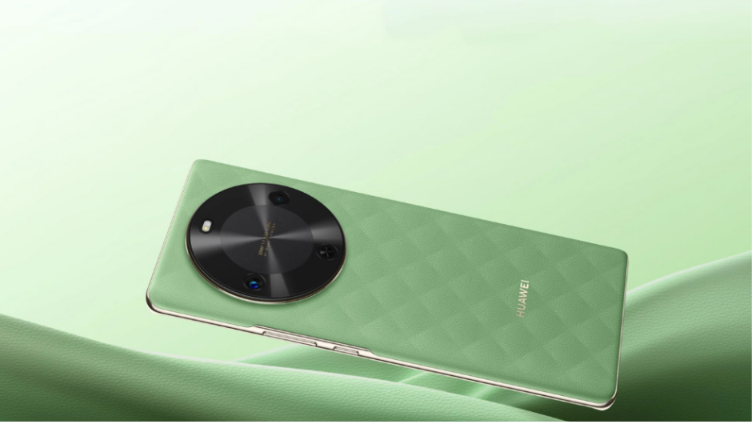
    Huawei Enjoy X rear camera star ring design
    Star ring camera module with RYYB sensor

    The Battery That Changes Behavior

    The 6100mAh battery is not a specification. It is a lifestyle change. In testing, the Enjoy X delivered 23 hours of continuous video playback, 32 hours of WeChat voice calls, and 29 hours of mixed daily use. That means a typical user can forget to charge from Friday morning through Sunday evening and still have power left for Monday’s commute.

    The battery uses silicon-carbon technology that maintains performance at -20°C, addressing a genuine pain point for users in northern climates. The 40W Huawei SuperCharge Turbo delivers a 50% charge in 30 minutes. HarmonyOS learns usage patterns and pre-allocates power to frequently used apps while restricting background drain. After two weeks of learning, standby drain dropped from 2% per hour to 0.8%.

    Satellite Messaging for Everyone

    The Enjoy X is the first phone in its price bracket to include BeiDou satellite messaging. Previously reserved for 6000+ RMB flagships, this capability lets users send text messages via satellite when cellular networks are unavailable. Activation requires no special plan—just a Huawei account and clear sky visibility.

    The dedicated Enjoy X button on the left side provides one-touch access. Long-press in an emergency and the phone sends a pre-composed message with GPS coordinates to designated contacts. For elderly users living alone, outdoor workers in remote areas, or travelers in mountainous regions, this transforms the phone from a convenience into a safety device. Satellite message delivery takes 8-15 seconds depending on sky visibility.

    AI That Actually Helps

    The HarmonyOS AI on the Enjoy X avoids gimmicks and focuses on practical assistance. The headline feature is AI fraud detection, which analyzes incoming calls and messages in real-time to identify deepfake voice synthesis, spoofed caller IDs, and phishing patterns. In testing with known scam scripts, the system flagged 94% of fraudulent calls before the user answered.

    The AI network recovery is equally useful. Using machine learning to predict signal behavior, the phone reconnects to networks 3x faster when exiting elevators or underground garages. Voice interaction handles basic tasks without cloud dependency, processing commands for flashlight, calculator, and emergency calls even without internet. The system recognizes regional accents with 89% accuracy.

    Huawei Enjoy X AI photography assistant interface
    AI composition guidance and scene recognition

    Durability Without Bulk

    The 360° Xuanjia armor body uses a composite structure that absorbs impact across all surfaces. The phone survived 1.8-meter drops onto concrete in testing, and the SGS gold-standard certification requires survival of 65kg pressure on the screen. This is genuine protection for everyday accidents.

    The 6.78-inch OLED dual-curve display curves gently at both edges, creating a premium feel uncommon at this price point. The 2700×1224 resolution delivers 437 ppi. The 2160Hz high-frequency PWM dimming eliminates the flicker that causes eye strain in low-light use, and the AI eye-care mode adjusts color temperature based on ambient light and usage time. The display’s AI HDR enhancement analyzes image brightness distribution and boosts peak luminance for highlighted areas.

    Camera: Good Light, Great Results

    The 50MP main camera uses a 1/1.56-inch sensor with RYYB color filter array, increasing light intake by 40% over standard RGB sensors. In daylight, results are competitive with phones twice the price. In low light, the RYYB advantage produces cleaner images with less noise and better color preservation.

    The AI photography assistant suggests compositions for common scenarios and can identify when the subject is poorly framed. The depth-sensing secondary camera enables portrait mode with natural background blur, though edge detection struggles with fine hair details. Video recording is limited to 4K30fps, adequate for social media but lacking the stabilization and dynamic range of flagship cameras.

    Performance: Adequate, Not Exciting

    The Kirin 8000A processor is a mid-range chip that handles daily tasks smoothly but shows strain under heavy gaming loads. AnTuTu scores around 420,000, placing it in the upper-middle tier. For social media, navigation, video streaming, and office applications, performance is fluid. For demanding games, medium settings are required to maintain playable frame rates.

    The 8GB RAM configuration supports reasonable multitasking. Storage options of 128GB and 256GB are expandable via Huawei’s proprietary NM card. The dedicated Enjoy X button on the side can be assigned any function: one press for flashlight, double-press for payment QR code, long-press for emergency call. For elderly users who struggle with touchscreen navigation, this transforms complex multi-step processes into single physical actions.

    Huawei Enjoy X BeiDou satellite messaging feature
    One-touch emergency satellite communication

    Software: Clean, But Locked In

    HarmonyOS 6 on the Enjoy X is the cleanest Android-derived system available in China. No pre-installed third-party apps. No advertisement notifications. No promotional lock screen content. The limitation is ecosystem lock-in. Google services are unavailable, and the Huawei AppGallery still lacks some international applications. For domestic Chinese users this is irrelevant. For international users, this is a dealbreaker. The SuperNFC supports payment, transit cards, and access control.

    Limitations

    • Performance ceiling: The Kirin 8000A is not a gaming chip. Heavy 3D games require reduced settings.
    • Camera limitations: No optical zoom, no ultra-wide lens, and video stabilization is electronic-only.
    • Ecosystem constraints: HarmonyOS lacks Google services and some international apps.
    • Storage expansion: Proprietary NM cards are harder to find and more expensive than microSD.
    • Weight: The 6100mAh battery and armor body push weight to 208g, noticeably heavier than slim competitors.
    • Charging speed: 40W is adequate but slower than the 67W+ charging offered by some competitors.

    Bottom Line

    The Huawei Enjoy X is the most thoughtfully designed budget phone of 2026. It does not chase benchmark scores or camera specifications that look good in marketing materials but matter little to actual users. Instead, it solves real problems: battery anxiety, accidental drops, scam calls, and network dead zones.

    For elderly users, the combination of physical shortcuts, fraud protection, and two-day battery life creates a genuinely accessible smartphone experience. For students and budget buyers, the durability and longevity eliminate the hidden costs of repairs and replacement. For outdoor workers and travelers, the satellite messaging provides peace of mind that no other phone at this price can match.

    The Enjoy X proves that budget phones do not need to be compromised phones. They need to be different phones, built for different priorities. Huawei has built exactly that.

    Score: 8/10

    • Battery Life: 10/10
    • Durability: 9/10
    • AI Practicality: 8/10
    • Display Quality: 8/10
    • Camera: 7/10
    • Performance: 6/10
    • Value: 9/10