Author: Gavin

  • HUAWEI WATCH FIT 5 Series Launches: Can Enhanced Health Monitoring and Extended Battery Life Reshape the Smartwatch Landscape?

    Huawei officially launched the WATCH FIT 5 series on April 29, 2026, with a global press conference scheduled for May 7 in Bangkok, Thailand. The new lineup includes standard and Pro models, both positioning health monitoring capabilities and battery performance as core differentiators in an increasingly competitive smartwatch market.

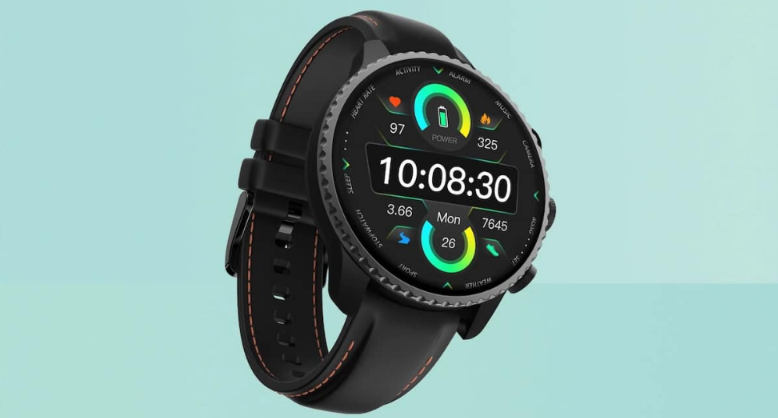
    HUAWEI WATCH FIT 5 Pro
    HUAWEI WATCH FIT 5 Pro

    Health Monitoring Evolution: From Data Recording to Risk Prediction

    The flagship WATCH FIT 5 Pro establishes what Huawei calls a “comprehensive protection system spanning basic vital signs to chronic disease risk assessment.” Beyond conventional 24/7 heart rate, blood oxygen, and sleep monitoring, the Pro model introduces four key capabilities:

    Electrocardiogram (ECG) Analysis enables users to quickly record ECG waveforms by touching the side sensor with their finger, assisting in arrhythmia screening within seconds.

    Pulse Wave Atrial Fibrillation and Premature Beat Alerts provide continuous cardiac rhythm monitoring around the clock. This feature proves particularly valuable for users with cardiovascular health concerns, enabling early detection of occult arrhythmias.

    Vascular Elasticity Detection assesses vascular health through pulse wave conduction velocity, offering early warnings for arteriosclerosis risk. As cardiovascular diseases trend younger globally, this capability fills a critical gap in smartwatch health features.

    Blood Glucose Risk Assessment uses optical signals to indirectly evaluate metabolic status, providing reference warnings for high-risk diabetes populations. It’s important to note this isn’t a professional blood glucose measurement device but rather a risk assessment service based on big data algorithms.

    The Pro model features an upgraded optical sensor system paired with Huawei’s proprietary TruSeen 5.5+ health algorithm. According to Huawei, the new algorithm effectively reduces interference from motion, skin tone, and ambient lighting factors, enhancing the stability and reliability of monitoring data.

    The standard WATCH FIT 5 targets cost-conscious users seeking quality health management features. It shares the same 6 LED and 6 PPG optical heart rate module architecture with the Pro version, supporting precise all-day heart rate monitoring, blood oxygen saturation measurement, scientific sleep tracking, and women’s health management functions.

    The HUAWEI WATCH FIT 5 standard edition offers multiple color options with skin-friendly silicone band, weighing just 27 grams for comfortable extended wear and long battery life.
    The HUAWEI WATCH FIT 5 standard edition offers multiple color options with skin-friendly silicone band, weighing just 27 grams for comfortable extended wear and long battery life.

    Battery Breakthrough: From Daily Charging to Week-Long Power

    Battery life remains a fundamental concern for smartwatch users. Huawei employed different technological approaches to significantly enhance endurance across both models.

    The WATCH FIT 5 standard edition debuts high-silicon battery technology, boosting energy density by over 20% compared to traditional lithium batteries without increasing body weight. Official tests show the standard model delivers up to 7 days of battery life under typical usage scenarios (approximately 50 messages and 10 calls daily, with continuous health monitoring enabled), extending to 10 days under light use conditions.

    The Pro model features a 1.92-inch LTPO flexible display supporting adaptive refresh rate adjustment. This screen can reduce refresh rates to as low as 1Hz depending on displayed content, cutting power consumption by over 30% compared to conventional fixed-refresh displays. LTPO technology enables the Pro model to maintain balanced battery performance despite its expanded sensor suite and feature set.

    Notably, the standard edition weighs just 27 grams with a 9.5mm thickness, achieving equilibrium between extended battery life and comfortable all-day wear. For users requiring continuous health monitoring, the lightweight design substantially improves the wearing experience.

    Design Excellence and Professional Sports Features

    Huawei emphasized premium design and professional sports capabilities in the new series. The WATCH FIT 5 Pro’s Glacier White colorway debuts aerospace-grade nano-ceramic metal craftsmanship, paired with 2.5D sapphire glass and a titanium alloy bezel. Sapphire glass ranks just below diamond on the Mohs hardness scale, effectively preventing everyday scratches.

    For sports functionality, the Pro model supports over 100 exercise modes, adding professional trail running with segment navigation capabilities. Users can plan routes and track pacing across complex terrain. Golf enthusiasts benefit from vector maps for over 17,000 courses worldwide, with data on swing trajectories and putt distances readily accessible. Water resistance extends to 40 meters, covering shallow snorkeling and free diving scenarios.

    The standard edition maintains a clean, practical design philosophy with multiple color options. The silicone band features breathable perforations, enhancing comfort during athletic activities.

    The Huawei WATCH FIT 5 series spans various styles from athletic silicone bands to fashionable woven bands, catering to diverse user preferences.
    The Huawei WATCH FIT 5 series spans various styles from athletic silicone bands to fashionable woven bands, catering to diverse user preferences.

    Pricing Strategy and Market Positioning

    Huawei’s pricing demonstrates clear market segmentation. The WATCH FIT 5 Pro retails starting at 2,099 yuan (approximately $290), dropping to around 1,785 yuan after government trade-in subsidies. Pre-orders began April 29, with full availability from May 15. The standard model starts at 1,099 yuan (approximately $150), reaching approximately 935 yuan after subsidies, officially released on April 29 across all channels.

    Both products target the mid-to-premium segment spanning 1,000-2,000 yuan, competing directly with the Apple Watch SE and Samsung Galaxy Watch FE. With national trade-in subsidy support, domestic smartwatches at comparable price points offer enhanced cost performance.

    Beyond adult wearables, Huawei announced the global return of HUAWEI WATCH KIDS X1 series children’s smartwatches at the press conference. Though specific specifications remain undisclosed, this move signals Huawei’s continued investment in segmented market categories within its wearable ecosystem.

    Industry Outlook: The Next Battlefield for Smartwatches

    Wearable devices stand at a pivotal moment transitioning from “data display” to “proactive intervention.” Traditionally, ECG, blood glucose, and vascular elasticity testing required visiting medical institutions with professional equipment. Today, smartwatches bring these capabilities to everyday consumers, making health management more convenient and continuous.

    However, consumers should maintain realistic expectations regarding the distinction between smartwatch health monitoring and professional medical devices. Industry analysts note that medical-grade wearables must obtain NMPA Class II/III certification, with ECG monitoring errors controlled within 5%, capable of generating medical-grade reports interconnected with hospital systems. Most consumer smartwatches currently offer health data for reference purposes only, with error ranges potentially reaching 10-15%. Buyers should understand their specific needs and set appropriate functional expectations.

    Looking ahead to 2026, smartwatch market competition will intensify further. Advances in sensor technology, AI algorithm optimization, and battery capabilities will continuously improve product experiences. Simultaneously, as health management awareness grows, smartwatches equipped with professional health monitoring capabilities will attract increasingly discerning consumers.

    The WATCH FIT 5 series launch showcases Huawei’s technological prowess in wearables while delivering precise responses to evolving market demands. In the dual core tracks of health management and extended battery life, Huawei is charting its own path forward with concrete product offerings.

  • NVIDIA’s China Market Share Drops to Zero: The End and Beginning of a Tech Contest

    On May 4, 2026, an interview at the US think tank SCSP sent shockwaves through the global tech community. NVIDIA CEO Jensen Huang confirmed in his own words: NVIDIA’s direct sales share in China’s AI accelerator market has dropped to 0%. Behind this number lies the market collapse of a chip giant that once dominated with 80% share in China.

    China's AI chip market is undergoing rapid transformation as domestic manufacturers like Huawei and Cambricon capture market share from international competitors.
    China’s AI chip market is undergoing rapid transformation as domestic manufacturers like Huawei and Cambricon capture market share from international competitors.

    From 80% to Zero: An Irreversible Retreat

    Flash back to 2022, when NVIDIA held absolute dominance in China’s AI chip market. With the CUDA ecosystem and Hopper architecture advantages, this Silicon Valley company was almost the preferred supplier for every Chinese AI enterprise, with market share exceeding 80%.

    The turning point came with the tightening US export controls. To comply with regulations, NVIDIA was forced to cripple GPU performance for China repeatedly—from H100 to H20, each performance cut was followed by even stricter restrictions. In May 2025, the US Department of Commerce extended restrictions from product exports to global usage scenarios, completely blocking NVIDIA’s path in China.

    To preserve its China market, Jensen Huang visited China multiple times to adjust strategies, even modifying products beyond recognition. However, no matter how much he compromised, the wall ultimately didn’t trap China’s AI industry—it trapped NVIDIA itself.

    Domestic Substitution Wave: Who Picked Up the Slump

    Behind the 0%, the market vacuum is being rapidly filled.

    Latest IDC statistics show that in 2025, Chinese GPU and AI chip manufacturers had captured nearly 41% of China’s AI accelerator server market. Bernstein Research predicts that by full year 2026, NVIDIA’s China market share will shrink to approximately 8%, while Huawei and other domestic manufacturers’ share will exceed 50%, AMD will take 12%, and Cambricon will rank third.

    DIGITIMES estimates that 2026 China’s high-end cloud AI accelerator shipments will reach 2.123 million units, a year-over-year surge of 136%. With system integration advantages, Huawei’s market share will easily exceed 50%, ranking first.

    Huawei Ascend’s Rise is the most compelling chapter in this substitution story. In DeepSeek’s tests, the Ascend 910C’s AI inference performance has reached approximately 60% of NVIDIA’s H100. With further optimization through hand-written CANN kernels, the performance gap continues to narrow. In inference scenario Token throughput efficiency tests, the previous generation Ascend 910B already achieved 1.8x NVIDIA H20 performance.

    Cambricon is another player that cannot be ignored. Morgan Stanley’s latest research shows Cambricon’s Q1 performance significantly exceeded expectations, directly driven by strong shipments of the Sanyi 590 chip. Q1 2026 prepayments surged 155% quarter-over-quarter, reaching 1.9 billion yuan, almost entirely supported by new chip production orders.

    NVIDIA CEO Jensen Huang confirmed during an interview that NVIDIA's China AI chip market share has dropped to zero, marking a historic shift in the global AI chip landscape.
    NVIDIA CEO Jensen Huang confirmed during an interview that NVIDIA’s China AI chip market share has dropped to zero, marking a historic shift in the global AI chip landscape.

    Ecosystem Barrier Collapse: The CUDA Moat is Draining

    During the interview, Jensen Huang repeatedly emphasized “software ecosystem is the final barrier,” attempting to maintain NVIDIA’s core advantage. Indeed, the CUDA ecosystem is NVIDIA’s most solid moat—millions of global developers, thousands of pretrained models, countless lines of project code and optimization experience are all built on this platform.

    However, cracks are appearing in this barrier.

    In April 2026, DeepSeek-V4 officially launched and went open source, achieving a historic breakthrough simultaneously: completely breaking free from the CUDA ecosystem, with core code fully migrated from NVIDIA CUDA to Huawei’s CANN heterogeneous computing framework. In DeepSeek’s official technical documentation, Huawei Ascend NPU is directly listed alongside NVIDIA GPU in the hardware verification checklist.

    Previously, the cost of migrating away from CUDA was enormous, with rewriting core operators requiring months of work. Huawei’s CANN framework now achieves over 95% CUDA code compatibility, and with one-click migration tools, code refactoring that originally took months has been reduced to being calculated in hours.

    Beyond Huawei, the open-source community is also accelerating the erosion of CUDA’s barriers. In early 2026, KernelCAT launched a cross-chip operator compiler enabling painless migration between multiple domestic chip brands. The entire ecosystem layer is transforming what was once NVIDIA’s exclusive moat into part of public infrastructure.

    The Talent Code: The Overlooked Underlying Variable

    If hardware and ecosystem breakthroughs are visible hard advances, then talent reserves are the most easily overlooked yet critical variable in this substitution story.

    According to MacroPolo think tank tracking data, the global share of China’s top AI researchers has surged from approximately 11% in 2022 to approximately 44%, nearly quadrupling. The US figure declined from 65% to approximately 38% over the same period. This isn’t a decimal-point shift—it’s a generational-scale workforce displacement.

    A synchronized statistic shows that between 2018 and 2024, Chinese universities’ share in global AI paper citations in the top 10% increased by over 7 percentage points compared to the previous decade, reaching global first place.

    The deeper significance of this trend is that the long-term outcome of AI competition was never determined by a few chips. Each time export controls escalated, China raised its investment in basic research talent by one level. Talent is becoming the most solid foundation for domestic AI chips.

    Outlook: The New Landscape After Zero

    From 85% to 0%, NVIDIA’s China story has temporarily ended. But this isn’t just NVIDIA’s loss—it’s a microcosm of the restructuring of the entire AI industry landscape.

    According to Bernstein estimates, just China’s inference market substitution is sufficient to support domestic enterprises like Huawei and Cambricon toward a hundred-billion-yuan annual production scale. When Huawei Ascend NPU is listed alongside NVIDIA GPU in the hardware verification checklist for production environments of top domestic LLM companies like DeepSeek, the CUDA ecosystem’s monopoly has been completely broken.

    As Jensen Huang gently closed his notebook at the interview’s end, tired eyes hidden in screen reflections, a chapter of NVIDIA’s China AI chip era concluded. And another era—China’s AI chip era—is accelerating to begin.

  • AMD Ryzen AI Halo Review: The “Desktop Supercomputer” That Fits in Your Backpack

    As the computing power race expands from cloud to edge, a quiet battle for “local AI freedom” is unfolding. In May 2026, AMD officially launched its first self-branded AI development platform—the Ryzen AI Halo—a mini PC the size of a paperback dictionary that claims to run language models with over 700 billion parameters locally. Is this product genuinely revolutionary or just clever marketing? Let’s find out.

    Design: Serious Hardware in a Small Package

    The Ryzen AI Halo features a compact, square design that easily fits into a backpack for on-the-go portability. The machine’s top surface displays AMD’s corporate logo, surrounded by a programmable ARGB light strip that creates a cyberpunk-inspired glow in low-light environments.

    The cooling system stands out as a key highlight. AMD equipped it with a dual-fan side-blowing thermal design that maintains reasonable surface temperatures even during extended high-load AI operations. During testing, running continuous local LLM inference for one hour left the chassis only mildly warm—an impressive thermal performance.

    Port configuration offers abundant connectivity options: the rear panel provides multiple USB-C ports, HDMI video output, and wired ethernet, while the front panel reserves commonly used USB-A ports and audio jacks. Notably, this host eliminates traditional graphics card external power requirements, operating with just a single power cable to simplify desktop wiring.

    The Ryzen AI Halo features a compact form factor with multiple connectivity options
    The Ryzen AI Halo features a compact form factor with multiple connectivity options

    Hardware Specifications: Flagship Performance in Your Palm

    The Ryzen AI Halo’s core is AMD’s flagship Ryzen AI Max+ 395 processor, codenamed Strix Halo. This APU features a Zen 5 architecture with 16 cores and 32 threads, accompanied by 40 compute units of RDNA 3.5 integrated graphics and a 50 TOPS NPU.

    Memory configuration represents another major selling point. The Ryzen AI Halo supports up to 128GB LPDDR5X-8533 unified memory, enabling effortless handling of ultra-large-scale models. Unlike traditional PC architectures, AMD’s unified memory design integrates CPU and GPU memory into a single shared pool, eliminating bandwidth bottlenecks in data transfer—a critical advantage for large model inference scenarios requiring frequent parameter loading.

    In standard testing, the Ryzen AI Max+ 395 platform can simultaneously operate up to 6 AI agents while maintaining approximately 45 tokens/s generation speed under high load. For developers pursuing a “smart agent host” experience, this figure means running multiple AI assistants and executing complex multi-task workflows locally.

    Software Ecosystem: Out-of-the-Box Development Experience

    Beyond hardware, software support proves equally crucial. The Ryzen AI Halo comes pre-installed with AMD ROCm 7.2.2 software stack, the core component of AMD’s open-source GPU computing platform. After deep optimization, ROCm now natively supports mainstream AI development tools like LM Studio, ComfyUI, and VS Code, allowing developers to start working without tedious configuration.

    Model compatibility spans a broad range. For open-source models, Llama, Mistral, and other mainstream large language models run smoothly; in image generation, Stable Diffusion XL, FLUX, and similar models perform admirably on this mini host. AMD commits to “Day 0” support for new models, ensuring developers access the latest technology immediately.

    Additionally, the Ryzen AI Halo supports both Windows and Linux dual systems, accommodating users’ preferred development environments. Windows users gain complete Linux development experience through WSL2, while Linux native users directly leverage ROCm’s full capabilities.

    AMD-powered mini PC showcasing thermal design and interface layout
    AMD-powered mini PC showcasing thermal design and interface layout

    Use Cases: Who Needs This “Pocket Supercomputer”?

    Positioning-wise, the Ryzen AI Halo targets three primary user groups:

    AI Developers and Researchers: Those frequently testing models and debugging prompts locally. This device provides sufficient computing power while avoiding accumulating cloud service costs and data leakage risks. For research teams exploring “private deployment” solutions, the Ryzen AI Halo offers a cost-effective starting point.

    Small and Medium Enterprises and Independent Studios: Industry clients with strict data privacy requirements—legal, medical, and financial AI application developers. Local inference ensures sensitive information never leaves the enterprise network while eliminating server build-out costs and maintenance burdens.

    Privacy-Conscious Individual Users: Developers or tech enthusiasts with strong personal data protection preferences. They prefer controlling their own AI tools and data rather than uploading work content to third-party cloud platforms.

    Competitive Analysis: Can It Challenge NVIDIA’s Moat?

    When discussing AI computing devices, NVIDIA remains unavoidable. Currently, the top competitor to Ryzen AI Halo is NVIDIA’s DGX Spark, which also supports 128GB LPDDR5X shared memory but carries a steep $4,699 price tag. In contrast, third-party mini hosts equipped with the Ryzen AI Max+ 395 generally retail between $2,500 and $3,000.

    However, price advantage isn’t AMD’s winning card. NVIDIA’s DGX Spark features GB10 chip supporting 20 Petaflops FP4 AI compute power with on-chip NVLink-C2C achieving 900GB/s interconnect bandwidth, potentially offering advantages in ultra-large-scale context processing. Furthermore, AMD’s ROCm ecosystem still trails NVIDIA’s decade-plus CUDA ecosystem in proprietary acceleration libraries and enterprise-grade tooling.

    AMD’s strategy appears more as “differentiated competition” than “head-on confrontation.” The Ryzen AI Halo targets the niche market of “personal workstations that fit in your backpack”—an attractive option for developers who don’t need DGX Spark’s full capabilities but want to break free from cloud dependency.

    Conclusion: The Right Way to Do Local AI

    After deep experience with this device, two impressions stand out: first, it genuinely delivers on “bringing AI with you”—700 billion parameter model capability means developers can work on AI projects anytime, anywhere, without being constrained by network conditions or cloud service quotas. Second, AMD’s commitment to hardware-software coordination is evident—the pre-installed ROCm ecosystem and direct adaptation of mainstream development tools dramatically lowers the barrier to edge AI usage.

    Of course, this isn’t a perfect solution. ROCm ecosystem maturity requires time to develop, and some CUDA-dependent frameworks may face compatibility issues during migration. But for developers willing to try AMD platforms and embrace open-source ecosystems, the Ryzen AI Halo provides a trustworthy starting point.

    When “AI democratization” transitions from slogan to reality, when edge devices truly gain the capability to compete with cloud services, the era of on-device AI may have already begun.

  • Tech Giants Collectively Bet on Screenless AI Hardware

    When OpenAI announced plans to launch a compact screenless device by the end of 2026 with a target shipment of 100 million units, the entire technology industry was electrified. This announcement not only signifies the birth of a new product but marks a collective bet by tech giants on a “screen-free” AI hardware future.

    From Phones to Screenless Devices: A Fundamental Shift in Interaction Paradigm

    For a long time, smartphones have been the primary interface between humans and the digital world. However, this interaction method has inherent limitations—users must actively take out their devices from pockets, unlock the screen, and find the corresponding application. Tech companies are realizing that a true AI assistant should be as ubiquitous as air, rather than trapped behind a glass screen.

    OpenAI is collaborating with MediaTek and Qualcomm to develop mobile processors, with mass production expected in 2028. But more noteworthy is CEO Sam Altman’s hint that the “ultimate form may not look like a phone we’re familiar with at all”—instead, it would be an AI terminal without apps, relying entirely on voice interaction.

    Conceptual design of Apple’s AI glasses, featuring a design without a display screen and a dual-camera setup that supports gesture control.
    Conceptual design of Apple’s AI glasses, featuring a design without a display screen and a dual-camera setup that supports gesture control.

    Apple is equally accelerating development of its first AI smart glasses, codenamed “N50.” To pursue lightweight design, this device abandons the display screen, adopting a dual-camera solution supporting gesture control, while offloading computing tasks to paired iPhones for power balance. Apple’s designers are testing various frame styles, aiming to make the product look more like fashionable everyday glasses rather than tech gadgets.

    Meta Ray-Ban Has Already Validated the Market

    The Meta Ray-Ban smart glasses feature a minimalist black design and currently hold the largest market share globally, accounting for 85.2% of the market.
    The Meta Ray-Ban smart glasses feature a minimalist black design and currently hold the largest market share globally, accounting for 85.2% of the market.

    In this screenless AI hardware race, Meta has established an absolute lead with its Ray-Ban series. Data shows that Ray-Ban smart glasses currently hold 85.2% of the global smart glasses market—a figure intimidating enough to pressure any competitor.

    Meta’s new AI model, Muse Spark, has begun embedding into the smart glasses ecosystem, significantly enhancing the device’s multimodal understanding capabilities. Users can not only use it for calls and music but also have the AI assistant “see” objects in front of them and provide descriptions or suggestions. This leap from “hearing” to “seeing” transforms smart glasses into a genuine “second brain” for users.

    Supply Chain Challenges and Domestic Opportunities

    The rapid development of screenless AI hardware is reshaping the upstream supply chain landscape. The exponential growth in AI computing demand has driven the optical communication chip market.

    Domestic manufacturer Everbright Huaguang’s VCSEL and optical communication chip product lines saw revenue surge 1036.79% year-over-year in 2025, demonstrating explosive growth.

    However, hidden concerns exist behind this high growth. The manufacturing process for high-end EML chips is more than three times more complex than traditional laser chips, with core patents almost entirely monopolized by international giants.The domestic localization rate remains below 10%. Global high-end production capacity has been locked through 2028, constituting a core bottleneck for screenless AI hardware mass production.

    For Chinese enterprises, this presents both challenges and opportunities. At the Dreame AI smart ring booth at the Canton Fair, on-site contract amounts exceeded one million RMB, demonstrating robust international demand for domestic screenless AI products.

    From Health Monitoring to Children’s Education: Scene Applications for Screenless Design

    Screenless design is finding product-market fit in specific segments.

    In the health wearable sector, Dreame’s AI smart ring weighs only 2.6 grams, delivering an ultra-light, barely noticeable wearing experience. It integrates multimodal sensors to collect round-the-clock health data and leverages AI algorithms for professional analysis. This lightweight solution is highly appealing to health-conscious users who dislike bulky wearable devices.

    The AI-powered smart ring weighs only 2.6 grams and allows for “comfortable wear.” It integrates multi-modal sensors to collect health data 247.
    The AI-powered smart ring weighs only 2.6 grams and allows for “comfortable wear.” It integrates multi-modal sensors to collect health data 247.

    The children’s hardware market also favors screenless design. Seewo’s Seedpace AI interactive story machine for the North American market features no screen as its defining characteristic, using story cards and audio interaction to engage children while allowing parents to manage content through an app. This design directly addresses parents’ concerns about screen harm.

    The Future Contest: Replacement or Supplement?

    Despite the enthusiasm from tech giants, whether screenless AI hardware can truly replace phones remains uncertain. Currently, screenless devices are more likely targeting the “scenario gaps” that phones cannot cover—during exercise, commuting, or when hands are occupied. These scenarios require quick responses and information access rather than deep immersion.

    The real test lies in user experience. Technical maturity, user habit cultivation, commercial pricing, and other factors will determine the ultimate fate of this emerging category. OpenAI’s first device is expected to be priced between $200-300; whether consumers will embrace it remains to be seen in the next 12 months.

    When AI steps out of screens and integrates into everyday items like glasses, rings, and necklaces, our way of interacting with the digital world may undergo fundamental change. This race, just beginning, deserves continued attention.