Author: Gavin

  • Snap Spectacles Gen 6 Launch: First Consumer True AR Glasses

    Snap Spectacles Gen 6 Launch: First Consumer True AR Glasses

    One-sentence verdict: This is not a concept device or developer kit—it is a consumer-grade true AR headset backed by a 100,000-unit production plan. The $2,000 price tag signals AR’s formal entry from “lab toy” to “premium consumer electronics.”
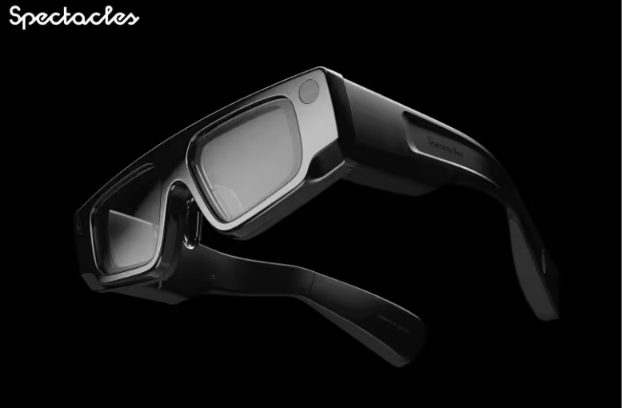
    Snap Spectacles Gen 6 AR glasses product shot
    Snap Spectacles Gen 6 true AR glasses product view

    Breaking News

    On June 16, 2026, Snap Inc. unveiled the sixth-generation Spectacles AR glasses at the Augmented World Expo (AWE) in the United States. This marks the world’s first standalone true AR device targeting general consumers, capable of overlaying virtual objects directly onto the physical world without tethering to phones or external compute units. The glasses feature Qualcomm’s latest XR chipset, built-in cameras with flash, and run a deeply customized Snap OS. Priced between $2,000 and $2,500, the initial production run targets 100,000 units with a projected Fall 2026 launch.


    Full Story

    Snap’s hardware ambitions are not new—the company has been iterating since the first Spectacles camera glasses in 2016 and AR developer kits in 2024. But the sixth-generation Spectacles represent a fundamental shift: this is the first device Snap dares label “consumer-grade” true AR.

    The definition of “true AR” matters here. Existing “AR glasses” on the market are largely notification projectors—displaying alerts, navigation arrows, or translated text in a corner of the lens. The Spectacles Gen 6 performs spatial computing: virtual objects anchor in three-dimensional physical space, allowing users to walk around them, observe from different angles, and interact via hand gestures. This demands independent computing power, precise environmental perception, and sufficiently bright display systems—an engineering challenge far exceeding information-overlay products.

    The Qualcomm XR chipset indicates Snap made no compromises on compute. Built-in cameras and flash suggest the device must not only display AR content but understand its surroundings—using computer vision to recognize objects, surfaces, and spatial relationships so virtual content correctly “sits” on tables or “hangs” on walls.

    Snap OS represents another critical variable. This is not Android ported to glasses, but an operating system redesigned for spatial computing. Gesture interaction, voice control, and eye tracking require entirely new interaction paradigms, while Snap’s decade of AR filter experience through the Lens Studio ecosystem provides a content foundation.

    Snap Spectacles Gen 6 hand gesture AR interaction
    Snap Spectacles Gen 6 spatial hand tracking demo

    Analysis

    Why Snap, Not Meta, Got There First

    Meta’s Ray-Ban smart glasses sell well, but they remain essentially regular glasses with cameras and speakers, lacking true AR display capabilities. Meta’s Orion AR glasses prototype demonstrated impressive technology, yet remains a demonstration device far from mass production.

    Snap’s advantage lies in focus. Meta simultaneously pursues VR (Quest), social platforms (Facebook/Instagram), AI (Llama), and AR—spreading resources across multiple fronts. Snap’s core business is visual social, making AR a natural extension. A decade of Lens ecosystem accumulation gives Snap the world’s largest mobile AR creator community, whose content can migrate directly to the Spectacles platform.

    Yet Snap’s disadvantages are equally clear: limited hardware manufacturing experience, weaker supply chain leverage than Meta, and a much smaller company scale that cannot absorb the financial risk of mass production failure. The initial 100,000-unit plan signals cautious optimism—sufficient to seed a user community without inviting inventory disaster.

    The $2,000-$2,500 Pricing Gamble

    This price range is strategically interesting. It significantly exceeds Meta Ray-Ban’s $300 tier and approaches half of Apple Vision Pro’s $3,500 entry point. Snap clearly avoids price wars, instead attempting to establish “true AR = premium” consumer perception.

    From a cost structure perspective, independent AR glasses’ optical modules, XR chipsets, and sensor arrays make cheap production impossible. $2,000 likely represents the hardware cost floor plus reasonable margin, rather than premium pricing. The question remains: how many consumers will pay this premium for “true AR”?

    The first-batch target user profile is clear: AR developers (needing real hardware for testing and distribution) and frontier experience enthusiasts (early adopters willing to pay for emerging technology). This is not a mass-market product, but an ecosystem-building seed strategy.

    Relationship with Meta Ray-Ban: Complementary or Competitive?

    The two products differ by an order of magnitude in pricing and functional positioning. Ray-Ban Meta is a “smart glasses” device—photography, audio, AI queries, with minimal display capability. Spectacles Gen 6 is an “AR glasses” device—spatial computing, gesture interaction.

    Yet competitive dynamics will emerge. Meta is developing display-equipped AR glasses (codenamed Hypernova), expected in 2027. Snap’s first-mover advantage window spans approximately 12-18 months. If Snap can establish sufficient content ecosystem and developer loyalty during this period, it will possess defensive moats when Meta enters.

    Snap Spectacles Gen 6 worn outdoors daily
    Snap Spectacles Gen 6 user wearing outdoors daily

    Industry Outlook

    The Spectacles Gen 6 launch marks consumer-grade AR’s transition from “technology demonstration” to “usable product.” This represents an important industry milestone, but the journey to “mass product” remains long.

    In the near term (2026-2027), the AR glasses market will show clear stratification: information-notification tier (under $500, e.g., Ray-Ban Meta), spatial computing tier ($2,000-$3,000, e.g., Spectacles Gen 6), and professional tier (above $5,000, e.g., Magic Leap, HoloLens). Snap occupies the middle ground, avoiding low-price red oceans while escaping the sales cycles of enterprise markets.

    In the medium term (2027-2029), the critical variable is optical technology breakthrough. If waveguide or MicroLED production costs drop over 50%, AR glasses’ form factor and weight will shrink dramatically, with prices potentially reaching the $1,000 threshold—the true consumer inflection point. Snap’s 100,000-unit production plan partially serves to probe supply chain readiness for future cost reductions.

    Long-term, the ultimate form of AR glasses is “ordinary glasses + infinite display.” Snap, Meta, and Apple all pursue this direction through different technical paths. Snap chooses to launch standalone devices first to build ecosystems, Meta progresses gradually from smart glasses, while Apple likely waits for complete technology maturity before a decisive strike.


    What’s Next

    • Fall 2026: Initial product launch, tracking first-batch user feedback and return rates
    • End of 2026: Lens Studio for Spectacles developer metrics, content ecosystem progress
    • 2027: Meta Hypernova launch, direct competition with Spectacles begins
    • 2027: Whether Snap releases lower-priced versions or second-generation products

  • Dangbei Air 1S: All-round AI Headset Launch

    Dangbei Air 1S: All-round AI Headset Launch

    Powerful AI Translation & Recording Features

    Dangbei Air 1S translation earbuds conversation
    Dangbei Air 1S earbuds translating face-to-face talk

    Translation stands as the core highlight of Dangbei Air 1S. The headset supports text translation for 190 languages and real-time two-way voice translation for 36 languages, plus compatibility with 27 Chinese dialects, covering an extremely wide range of language demands.

    It is optimized for diversified real-life scenarios. During face-to-face conversations, both sides can view translated text on respective screens without passing phones around. For online calls via WeChat, DingTalk, Lark and other mainstream apps, real-time two-way translation is available, and AI can automatically generate conversation summaries once the call ends. When watching foreign videos or taking online language courses, floating subtitles will pop up on your screen, so you do not need to switch apps and can fully enjoy the content. With ultra-fast response, it works perfectly for overseas travel, international meetings, language learning and other cross-language communication scenarios.

    The AI recording system has also been fully upgraded. Users can record calls on all third-party applications with one tap. Recorded audio will be automatically transcribed into text, and the system will intelligently extract key information and create to-do lists. Equipped with Bluetooth 6.0, the device delivers more stable transmission and higher sound pickup accuracy. It greatly simplifies note-taking work during meetings, interviews and important phone calls, helping users improve work efficiency a lot.

    Premium Design, Audio & Wearing Comfort

    The headset comes with a 2.04-inch AMOLED smart touch screen, turning the charging case into a portable control center. Beyond displaying translation content, the screen supports music playback control, quick device settings and customized wallpapers, covering most daily operations. It inherits the brand’s exclusive antibacterial technology, reaching a 99.9% antibacterial rate. Users with oily ears or sensitive ears can wear it for long hours without worries.

    Dangbei Air 1S earbuds video conference scene
    Dangbei Air 1S ear clip buds in online meeting

    Benefiting from Dangbei’s rich experience in audio and video fields, this headset delivers outstanding sound performance. It adopts dual 12mm large dynamic drivers to enhance sound output. Combined with four-mic AI noise cancellation and directional sound leakage prevention technology, human voices remain clear even in noisy surroundings, and your audio content will not be heard by people nearby, protecting your privacy effectively. Powered by the new WQ7036AX high-performance main chip, the whole system runs smoothly. There is nearly no delay when switching songs, activating AI or changing working modes.

    In terms of wearing experience, it keeps the ergonomic C-shaped bridge made of 0.5mm memory alloy. The structure causes no pressure on ear bones and keeps ears ventilated. Each earpiece weighs only 6.1 grams. The ultra-light design brings almost zero wearing sensation, suitable for all-day use.

    Long Battery Life & Official Launch Details

    Dongbei Air 1S earbuds video conference scene
    Dangbei Air 1S smart case and ear clip buds

    Battery performance is another major advantage of Dangbei Air 1S. Thanks to the innovative energy storage compartment, the total comprehensive battery life reaches 42 hours, and a single ear can play audio continuously for up to 8 hours. It also supports fast charging: just 10 minutes of charging provides 2.5 hours of playback time, which is quite practical for emergency power supplement.

    Dangbei Air 1S will be officially released and available for spot sales across all major e-commerce platforms at 20:00 tonight (Beijing time). The official launch price is 999 RMB (approximately $140 USD), and buyers can enjoy exclusive limited-time launch benefits. If you’re in the market for a versatile AI headset, this launch deal makes it one of the best times to pick one up.

    Integrating functions for office work, travel, entertainment and cross-language communication, this all-in-one headset can meet diverse daily needs. If you are interested, set a reminder and grab it on time tonight.

  • iFLYTEK AI Glasses Launch: 122-Language Translation for $470

    iFLYTEK AI Glasses Launch: 122-Language Translation for $470

    One-sentence verdict: If offline translation and visual translation deliver as promised, these glasses could land on every business traveler’s 2026 packing list—especially at the subsidized $470 price point.

    iFLYTEK AI Glasses worn by businessman
    iFLYTEK AI Glasses on professional user face

    Quick Summary

    On June 15, 2026, iFLYTEK launched its AI Glasses for pre-order on JD.com. Weighing just 40 grams, the glasses feature an end-to-end voice interpretation large model supporting real-time translation across 122 languages (including dialects and accents), covering six translation scenarios with 18 languages available offline. Priced at 4,299 RMB ($595), select regions with national subsidies drop the price to 3,369 RMB ($470). The built-in GlassClaw AI assistant supports one-sentence complex task delegation and automatic meeting summary generation.


    What Happened

    iFLYTEK’s timing for the AI glasses launch is strategically interesting. Huawei’s AI Glasses had previously captured consumer attention at 2,499 RMB ($345), while iFLYTEK’s product clearly targets professional scenarios—translation capability is its core differentiator.

    At 40 grams, the weight sits in the lightweight tier for AI glasses. For reference, Ray-Ban Meta Gen 2 weighs approximately 49 grams, while Huawei Smart Glasses 2nd gen comes in at around 40 grams. iFLYTEK matches competitors on weight while packing 122-language translation and 18-language offline models.

    The breadth of translation scenarios deserves attention. Six scenarios are covered: call translation (real-time interpretation during phone/video calls), online simultaneous interpretation (remote meeting sync translation), live speech interpretation (real-time output during presentations), face-to-face translation (bidirectional dialogue relay), visual translation (look-and-translate, camera recognizes text/menus/street signs with overlaid translations), and audio/video translation (real-time subtitles for foreign language content). This granularity indicates deep understanding of business travel pain points.

    Offline translation supporting 18 languages addresses a critical privacy concern for overseas use. Many business professionals are reluctant to upload sensitive conversations to the cloud; local models eliminate this worry. Offline capability also means functionality remains available in flights, basements, and other network-dead zones.

    The GlassClaw AI assistant is positioned for “one-sentence complex task delegation.” For example, a user might say “compile last week’s meeting highlights and email the team,” and the AI automatically completes information retrieval, summary generation, and email composition. The meeting minutes function targets a common cross-border need—automatically distinguishing speakers and generating multilingual summaries.

    iFLYTEK AI Glasses camera and sensor detail
    iFLYTEK AI Glasses side camera module close-up

    Why It Matters

    The AI glasses market entered a “functional differentiation” phase in 2026. Huawei drives volume through ecosystem integration and aggressive pricing, Meta leverages social content and brand partnerships, while iFLYTEK chose a more vertical path: slicing the business demographic through translation capabilities.

    This choice is strategically sound because translation is a hard need, not a nice-to-have. A cross-border worker won’t buy glasses for their camera, but might seriously consider them if it means eliminating the need for a personal translator. The 122-language coverage (including dialects and accents) theoretically means one pair of glasses suffices from Tokyo streets to Nigerian factories.

    The subsidized pricing at 3,369 RMB ($470) is equally noteworthy. This sits close to Huawei’s 2,499 RMB ($345) while offering professional translation capabilities the latter lacks. For budget-conscious business users, “spend $125 more for 122 languages” is an easy calculation.


    Impact Analysis

    Market impact: The iFLYTEK AI Glasses launch could accelerate AI glasses’ transition from “tech toys” to “productivity tools.” If translation accuracy reaches usable levels, it will cannibalize traditional translation device markets (including iFLYTEK’s own translation hardware lineup) while squeezing demand for entry-level human interpretation services.

    Consumer impact: Business professionals and students may see significantly reduced overseas communication costs. Cross-border meetings previously required advance translation arrangements or rented simultaneous interpretation equipment; now one pair of glasses handles it. Visual translation also adds value for travel scenarios—reading menus, street signs, and product descriptions without pulling out phones and opening translation apps.

    Industry impact: Offline translation capability may become standard for AI glasses. iFLYTEK’s feat of packing 18-language offline models into 40-gram frames demonstrates the feasibility of on-device AI on wearables. This pressures competitors to evolve toward an “offline-first” direction.

    iFLYTEK AI Glasses diverse users group
    iFLYTEK AI Glasses worn by diverse users

    What’s Next

    The iFLYTEK AI Glasses’ success hinges on three critical variables:

    First, translation accuracy. One hundred twenty-two languages sounds impressive, but real-world performance for low-resource languages needs validation. Dialect and accent recognition are particularly prone to failure.

    Second, battery endurance. Real-time translation and visual recognition are both power-hungry operations. The battery capacity fitting into a 40-gram frame determines effective single-use duration.

    Third, wearing comfort. Forty grams is a paper spec; nose pad design, temple pressure distribution, and long-term wearing fatigue only reveal themselves through large-scale user feedback.

    Pre-order data will serve as an important bellwether. If business demographics show higher-than-expected adoption, iFLYTEK may rapidly iterate an international version, further disrupting the global AI glasses market.

  • Luvbotics RUMI Review: Bipedal Home Robot with Emotional AI

    Luvbotics RUMI Review: Bipedal Home Robot with Emotional AI

    One-sentence verdict: If you’ve been waiting for a robot roommate that can walk, act spoiled, and remember your preferences, RUMI is probably the closest thing to that vision in 2026—provided its bipedal stability survives daily wear and tear.

    Luvbotics RUMI emotive eyes close-up
    RUMI robot with glowing expressive eyes outdoors

    Introduction

    The home robot market has long faced a contradiction: wheeled solutions are mature and affordable, but always look like a vacuum cleaner with a screen attached; bipedal designs feel sci-fi premium, yet prices typically start at five figures. Luvbotics’ RUMI attempts to break this deadlock—a fully autonomous bipedal robot at the 6,000 RMB tier, not a crowdfunding concept, but a product that went on open sale at JD.com on June 12.

    This pricing is strategically interesting. It occupies the empty space between “premium toy” and “entry-level service robot,” targeting a specific user group: young people who want pet companionship but dread the hassle, solo dwellers needing emotional outlets, and tech early adopters. RUMI’s core selling point is not task execution, but “presence”—a walking, responsive, gradually familiarizing household member.


    Product Overview

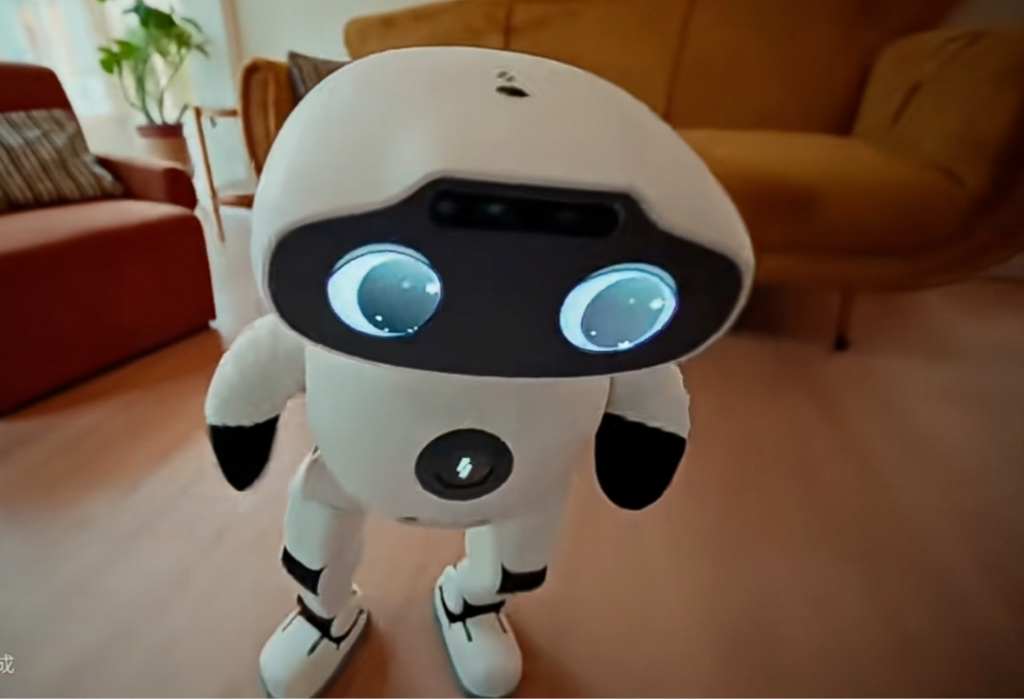
    Luvbotics RUMI standing in living room
    RUMI bipedal home robot in indoor setting

    RUMI’s physical form breaks the stereotype that “home robot = wheeled screen.” The fully autonomous bipedal architecture means it can cross thresholds, transition between carpet and flooring, even “stroll” around your living room. Ninety-five percent of the body is covered in skin-like soft material, with the abdomen maintaining a constant 35-40°C temperature. This thermal design is not a gimmick—it simulates the body warmth of pets or infants, reducing psychological distance between human and machine.

    The perception system comprises a 360° microphone array and binocular depth cameras, enabling full-body environmental awareness. This means RUMI is not “only listening when facing you,” but can respond to calls from any position in the room while understanding your direction and distance.

    Emotional interaction is RUMI’s core differentiator. The system employs a raising-style three-stage architecture: First Meeting (basic interaction), Exploration (unlocking new expressions and movements), and Symbiosis (deep personalized responses). With 50,000+ emotional expression combinations and family-exclusive voice generation, the theoretical result is “your RUMI behaves differently from your neighbor’s.” After each interaction, the AI dynamically adjusts personality parameters—it becomes more enthusiastic when praised, quieter when neglected.


    Technical Specifications and Functional Architecture

    ModuleTechnical ApproachKey Metrics
    LocomotionFully autonomous bipedal walkingNon-wheeled, threshold-crossing capable
    Shell MaterialSkin-like soft material95% coverage
    Haptic InteractionAbdominal thermal module35-40°C temperature maintenance
    Perception360° microphone + binocular depth camerasFull-body environmental awareness
    Emotional EngineRaising-style three-stage AIFirst Meeting → Exploration → Symbiosis
    ExpressionDynamic expressions + exclusive voice50,000+ emotional combinations
    Personality EvolutionInteraction feedback learningDynamic parameter adjustment per exchange

    The architecture’s trade-offs are clear: no resources wasted on “fetching packages” or “cleaning rooms,” but all-in on emotional companionship. Bipedal locomotion increases mobility freedom, soft materials reduce safety concerns, and raising-style AI extends user engagement cycles.

    Luvbotics RUMI mimicking yoga pose
    RUMI robot copying yoga stance with user

    Bipedal Locomotion: Romance vs. Reality

    RUMI’s choice of bipedal over wheeled design is a high-risk, high-reward technical decision. The advantages are obvious: obstacle traversal, more natural movement trajectories, and no need for specially planned flat paths when sharing space with humans. But bipedal stability, battery endurance, and noise control remain engineering challenges.

    What can the 6,000 RMB tier deliver? From official information, RUMI emphasizes “fully autonomous” rather than remote-controlled operation, implying underlying SLAM or visual navigation for autonomous path planning. However, the robustness of bipedal dynamic balance in real home environments—being bumped by pets, stepping on slippers, wet floors—requires extensive user feedback to validate.

    A pragmatic observation: if RUMI’s bipedal system can stay upright in 90% of daily scenarios, it already wins. Because competitors at the same price point cannot even lift their legs.


    Emotional Interaction: From “Voice Assistant” to “Raising Object”

    Existing home companion devices (smart speakers, screen-equipped robots) operate on a “you ask, I answer” model—the relationship is functional. RUMI’s raising-style design attempts to make the relationship emotional.

    The three-stage mechanism borrows from game raising logic: during First Meeting, RUMI behaves like a cautious new roommate; Exploration unlocks more personality facets; Symbiosis forms unique behavior patterns based on your household interaction history. The design’s intelligence lies in creating motivation for continued use—ignore it, and its growth stalls; invest time, and it becomes more “attuned” to you.

    50,000+ emotional expressions sounds like a marketing number, but the key is combination granularity. If RUMI can select different response combinations based on your tone, timing, and context (a lazy morning greeting vs. quiet late-night companionship), rather than randomly playing preset animations, this number has meaning.

    Family-exclusive voice generation is another differentiator. RUMI can learn and mimic specific voice profiles, theoretically replicating family members’ voices. Psychological acceptance of this feature varies—some find it heartwarming, others creepy. Luvbotics making it optional rather than default is a wise choice.


    Competitive Comparison

    FeatureLuvbotics RUMIAmazon AstroXiaomi CyberDogTesla Optimus (Concept)
    LocomotionBipedalWheeledQuadrupedBipedal (R&D)
    Price~$850~$1,450~$1,500Unpriced (est. $20,000+)
    Emotional AIRaising-style three-stageBasic voice + followCommand responseUnreleased
    Material95% soft coverageHard plasticMetal + plasticHard shell
    Thermal InteractionAbdominal 35-40°CNoneNoneNone
    Voice CustomizationFamily-exclusive generationStandard Alexa voiceNoneNone
    AvailabilityOpen saleLimited invite-onlyLimited releaseConcept stage

    RUMI’s competitive advantage is not in individual specs but in combined positioning: it is the only home robot at the $850 tier simultaneously offering bipedal locomotion, soft material, raising-style emotion, and voice customization. Astro and CyberDog lean more “tool-oriented”; Optimus remains far from consumer markets.


    Pros and Cons

    ProsCons
    Bipedal walking delivers real spatial presenceBipedal stability needs long-term validation
    Soft material + thermal design reduces psychological distanceBattery life and noise data not disclosed
    Raising-style AI creates sustained engagement motivationEmotional depth depends on AI training quality
    Family voice customization enhances personalization6,000 RMB remains non-impulse purchase for average families
    Open sale reduces waiting riskLow brand recognition, after-sales network to be built

    Buying Guide

    Recommended for:

    • Solo young professionals/white-collar workers: needing emotional companionship but restricted from pet ownership (renting, allergies, frequent travel)
    • Young families: RUMI serves as a “tech pet” to cultivate children’s AI literacy
    • Tech early adopters: wanting bipedal home robot experience without five-figure investment
    • Adult children of elderly solo dwellers: serving as a physical remote companionship warmer than cameras

    Consider carefully if:

    • You demand extreme robot stability: bipedal designs still carry fall risks on complex terrain
    • Budget-sensitive and indifferent to “raising” concepts: RUMI’s core value requires time investment to materialize
    • Living in extremely small spaces (<20㎡ studio): bipedal mobility advantages cannot be utilized
    Luvbotics RUMI with child outdoors
    RUMI companion robot bonding with child outside

    FAQ

    Q: Does RUMI require Wi-Fi?

    A: Network connection is needed for voice recognition and cloud emotional model updates, but local caching supports basic offline interaction.

    Q: How noisy is bipedal walking?

    A: Official decibel data is not published, but soft material and home positioning suggest noise control was a design priority.

    Q: Can it climb stairs?

    A: Current information does not mention stair capability; expected to support single-floor flat surfaces and threshold crossing only.

    Q: Will pets attack it?

    A: Soft material reduces collision damage, but initial supervised introduction between pets and RUMI is recommended.


    Conclusion

    Luvbotics RUMI is not a perfect home robot—its bipedal stability, battery endurance, and after-sales network all need time to validate. But it precisely targets an overlooked need: people want not just “obedient devices,” but “things with presence.”

    Bipedal locomotion lets it truly “walk into” your living space rather than being trapped on a charging dock. Soft material and thermal design make it feel unlike a machine. Raising-style AI makes it irreplaceable over time. This combination forms RUMI’s core value proposition: not a tool, but a roommate.

    The 6,000 RMB pricing pulls bipedal emotional robots from sci-fi display cases into ordinary family shopping carts. If RUMI can prove its reliability and emotional interaction depth in real home environments, it may become the landmark product signaling home robots’ evolution from “functional devices” to “emotional companions.”

    After all, when a robot remembers you hate cilantro, knows to stay quiet when you’re working late, and says goodnight in your family member’s voice—it has already transcended the realm of “smart” and entered the territory of “companionship.”