One-sentence verdict: This is not a concept device or developer kit—it is a consumer-grade true AR headset backed by a 100,000-unit production plan. The $2,000 price tag signals AR’s formal entry from “lab toy” to “premium consumer electronics.”
Breaking News
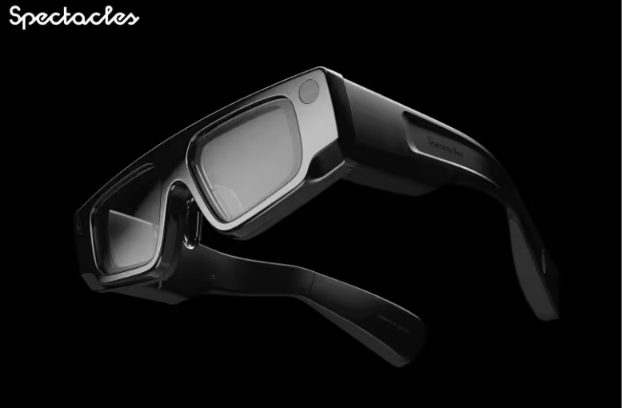
On June 16, 2026, Snap Inc. unveiled the sixth-generation Spectacles AR glasses at the Augmented World Expo (AWE) in the United States. This marks the world’s first standalone true AR device targeting general consumers, capable of overlaying virtual objects directly onto the physical world without tethering to phones or external compute units. The glasses feature Qualcomm’s latest XR chipset, built-in cameras with flash, and run a deeply customized Snap OS. Priced between $2,000 and $2,500, the initial production run targets 100,000 units with a projected Fall 2026 launch.
Full Story
Snap’s hardware ambitions are not new—the company has been iterating since the first Spectacles camera glasses in 2016 and AR developer kits in 2024. But the sixth-generation Spectacles represent a fundamental shift: this is the first device Snap dares label “consumer-grade” true AR.
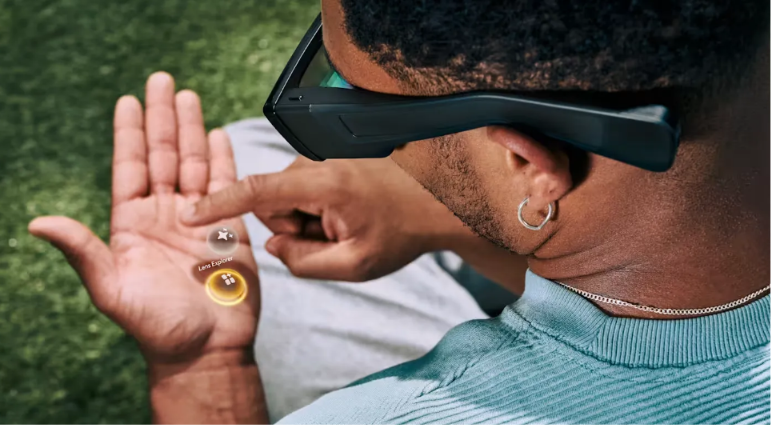
The definition of “true AR” matters here. Existing “AR glasses” on the market are largely notification projectors—displaying alerts, navigation arrows, or translated text in a corner of the lens. The Spectacles Gen 6 performs spatial computing: virtual objects anchor in three-dimensional physical space, allowing users to walk around them, observe from different angles, and interact via hand gestures. This demands independent computing power, precise environmental perception, and sufficiently bright display systems—an engineering challenge far exceeding information-overlay products.
The Qualcomm XR chipset indicates Snap made no compromises on compute. Built-in cameras and flash suggest the device must not only display AR content but understand its surroundings—using computer vision to recognize objects, surfaces, and spatial relationships so virtual content correctly “sits” on tables or “hangs” on walls.
Snap OS represents another critical variable. This is not Android ported to glasses, but an operating system redesigned for spatial computing. Gesture interaction, voice control, and eye tracking require entirely new interaction paradigms, while Snap’s decade of AR filter experience through the Lens Studio ecosystem provides a content foundation.
Analysis
Why Snap, Not Meta, Got There First
Meta’s Ray-Ban smart glasses sell well, but they remain essentially regular glasses with cameras and speakers, lacking true AR display capabilities. Meta’s Orion AR glasses prototype demonstrated impressive technology, yet remains a demonstration device far from mass production.
Snap’s advantage lies in focus. Meta simultaneously pursues VR (Quest), social platforms (Facebook/Instagram), AI (Llama), and AR—spreading resources across multiple fronts. Snap’s core business is visual social, making AR a natural extension. A decade of Lens ecosystem accumulation gives Snap the world’s largest mobile AR creator community, whose content can migrate directly to the Spectacles platform.
Yet Snap’s disadvantages are equally clear: limited hardware manufacturing experience, weaker supply chain leverage than Meta, and a much smaller company scale that cannot absorb the financial risk of mass production failure. The initial 100,000-unit plan signals cautious optimism—sufficient to seed a user community without inviting inventory disaster.
The $2,000-$2,500 Pricing Gamble
This price range is strategically interesting. It significantly exceeds Meta Ray-Ban’s $300 tier and approaches half of Apple Vision Pro’s $3,500 entry point. Snap clearly avoids price wars, instead attempting to establish “true AR = premium” consumer perception.
From a cost structure perspective, independent AR glasses’ optical modules, XR chipsets, and sensor arrays make cheap production impossible. $2,000 likely represents the hardware cost floor plus reasonable margin, rather than premium pricing. The question remains: how many consumers will pay this premium for “true AR”?
The first-batch target user profile is clear: AR developers (needing real hardware for testing and distribution) and frontier experience enthusiasts (early adopters willing to pay for emerging technology). This is not a mass-market product, but an ecosystem-building seed strategy.
Relationship with Meta Ray-Ban: Complementary or Competitive?
The two products differ by an order of magnitude in pricing and functional positioning. Ray-Ban Meta is a “smart glasses” device—photography, audio, AI queries, with minimal display capability. Spectacles Gen 6 is an “AR glasses” device—spatial computing, gesture interaction.
Yet competitive dynamics will emerge. Meta is developing display-equipped AR glasses (codenamed Hypernova), expected in 2027. Snap’s first-mover advantage window spans approximately 12-18 months. If Snap can establish sufficient content ecosystem and developer loyalty during this period, it will possess defensive moats when Meta enters.

Industry Outlook
The Spectacles Gen 6 launch marks consumer-grade AR’s transition from “technology demonstration” to “usable product.” This represents an important industry milestone, but the journey to “mass product” remains long.
In the near term (2026-2027), the AR glasses market will show clear stratification: information-notification tier (under $500, e.g., Ray-Ban Meta), spatial computing tier ($2,000-$3,000, e.g., Spectacles Gen 6), and professional tier (above $5,000, e.g., Magic Leap, HoloLens). Snap occupies the middle ground, avoiding low-price red oceans while escaping the sales cycles of enterprise markets.
In the medium term (2027-2029), the critical variable is optical technology breakthrough. If waveguide or MicroLED production costs drop over 50%, AR glasses’ form factor and weight will shrink dramatically, with prices potentially reaching the $1,000 threshold—the true consumer inflection point. Snap’s 100,000-unit production plan partially serves to probe supply chain readiness for future cost reductions.
Long-term, the ultimate form of AR glasses is “ordinary glasses + infinite display.” Snap, Meta, and Apple all pursue this direction through different technical paths. Snap chooses to launch standalone devices first to build ecosystems, Meta progresses gradually from smart glasses, while Apple likely waits for complete technology maturity before a decisive strike.
What’s Next
- Fall 2026: Initial product launch, tracking first-batch user feedback and return rates
- End of 2026: Lens Studio for Spectacles developer metrics, content ecosystem progress
- 2027: Meta Hypernova launch, direct competition with Spectacles begins
- 2027: Whether Snap releases lower-priced versions or second-generation products
Leave a Reply