Tag: AR Glasses

  • Snap Spectacles Gen 6 Launch: First Consumer True AR Glasses

    Snap Spectacles Gen 6 Launch: First Consumer True AR Glasses

    One-sentence verdict: This is not a concept device or developer kit—it is a consumer-grade true AR headset backed by a 100,000-unit production plan. The $2,000 price tag signals AR’s formal entry from “lab toy” to “premium consumer electronics.”
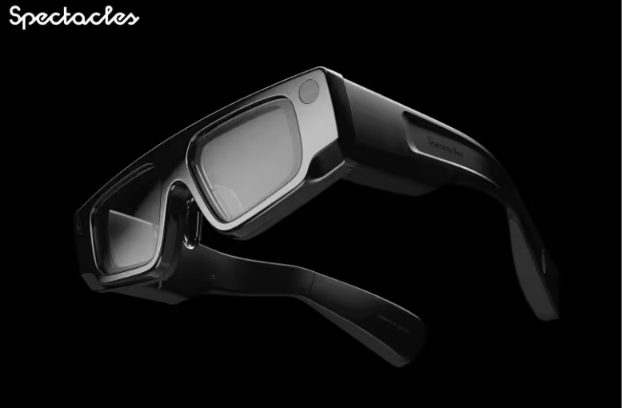
    Snap Spectacles Gen 6 AR glasses product shot
    Snap Spectacles Gen 6 true AR glasses product view

    Breaking News

    On June 16, 2026, Snap Inc. unveiled the sixth-generation Spectacles AR glasses at the Augmented World Expo (AWE) in the United States. This marks the world’s first standalone true AR device targeting general consumers, capable of overlaying virtual objects directly onto the physical world without tethering to phones or external compute units. The glasses feature Qualcomm’s latest XR chipset, built-in cameras with flash, and run a deeply customized Snap OS. Priced between $2,000 and $2,500, the initial production run targets 100,000 units with a projected Fall 2026 launch.


    Full Story

    Snap’s hardware ambitions are not new—the company has been iterating since the first Spectacles camera glasses in 2016 and AR developer kits in 2024. But the sixth-generation Spectacles represent a fundamental shift: this is the first device Snap dares label “consumer-grade” true AR.

    The definition of “true AR” matters here. Existing “AR glasses” on the market are largely notification projectors—displaying alerts, navigation arrows, or translated text in a corner of the lens. The Spectacles Gen 6 performs spatial computing: virtual objects anchor in three-dimensional physical space, allowing users to walk around them, observe from different angles, and interact via hand gestures. This demands independent computing power, precise environmental perception, and sufficiently bright display systems—an engineering challenge far exceeding information-overlay products.

    The Qualcomm XR chipset indicates Snap made no compromises on compute. Built-in cameras and flash suggest the device must not only display AR content but understand its surroundings—using computer vision to recognize objects, surfaces, and spatial relationships so virtual content correctly “sits” on tables or “hangs” on walls.

    Snap OS represents another critical variable. This is not Android ported to glasses, but an operating system redesigned for spatial computing. Gesture interaction, voice control, and eye tracking require entirely new interaction paradigms, while Snap’s decade of AR filter experience through the Lens Studio ecosystem provides a content foundation.
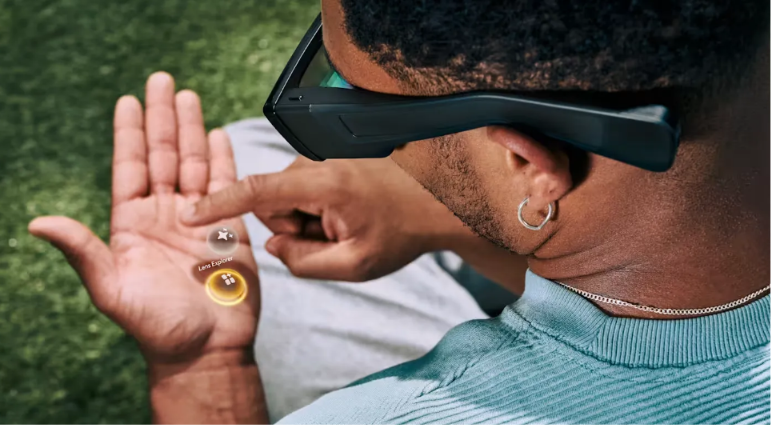
    Snap Spectacles Gen 6 hand gesture AR interaction
    Snap Spectacles Gen 6 spatial hand tracking demo

    Analysis

    Why Snap, Not Meta, Got There First

    Meta’s Ray-Ban smart glasses sell well, but they remain essentially regular glasses with cameras and speakers, lacking true AR display capabilities. Meta’s Orion AR glasses prototype demonstrated impressive technology, yet remains a demonstration device far from mass production.

    Snap’s advantage lies in focus. Meta simultaneously pursues VR (Quest), social platforms (Facebook/Instagram), AI (Llama), and AR—spreading resources across multiple fronts. Snap’s core business is visual social, making AR a natural extension. A decade of Lens ecosystem accumulation gives Snap the world’s largest mobile AR creator community, whose content can migrate directly to the Spectacles platform.

    Yet Snap’s disadvantages are equally clear: limited hardware manufacturing experience, weaker supply chain leverage than Meta, and a much smaller company scale that cannot absorb the financial risk of mass production failure. The initial 100,000-unit plan signals cautious optimism—sufficient to seed a user community without inviting inventory disaster.

    The $2,000-$2,500 Pricing Gamble

    This price range is strategically interesting. It significantly exceeds Meta Ray-Ban’s $300 tier and approaches half of Apple Vision Pro’s $3,500 entry point. Snap clearly avoids price wars, instead attempting to establish “true AR = premium” consumer perception.

    From a cost structure perspective, independent AR glasses’ optical modules, XR chipsets, and sensor arrays make cheap production impossible. $2,000 likely represents the hardware cost floor plus reasonable margin, rather than premium pricing. The question remains: how many consumers will pay this premium for “true AR”?

    The first-batch target user profile is clear: AR developers (needing real hardware for testing and distribution) and frontier experience enthusiasts (early adopters willing to pay for emerging technology). This is not a mass-market product, but an ecosystem-building seed strategy.

    Relationship with Meta Ray-Ban: Complementary or Competitive?

    The two products differ by an order of magnitude in pricing and functional positioning. Ray-Ban Meta is a “smart glasses” device—photography, audio, AI queries, with minimal display capability. Spectacles Gen 6 is an “AR glasses” device—spatial computing, gesture interaction.

    Yet competitive dynamics will emerge. Meta is developing display-equipped AR glasses (codenamed Hypernova), expected in 2027. Snap’s first-mover advantage window spans approximately 12-18 months. If Snap can establish sufficient content ecosystem and developer loyalty during this period, it will possess defensive moats when Meta enters.

    Snap Spectacles Gen 6 worn outdoors daily
    Snap Spectacles Gen 6 user wearing outdoors daily

    Industry Outlook

    The Spectacles Gen 6 launch marks consumer-grade AR’s transition from “technology demonstration” to “usable product.” This represents an important industry milestone, but the journey to “mass product” remains long.

    In the near term (2026-2027), the AR glasses market will show clear stratification: information-notification tier (under $500, e.g., Ray-Ban Meta), spatial computing tier ($2,000-$3,000, e.g., Spectacles Gen 6), and professional tier (above $5,000, e.g., Magic Leap, HoloLens). Snap occupies the middle ground, avoiding low-price red oceans while escaping the sales cycles of enterprise markets.

    In the medium term (2027-2029), the critical variable is optical technology breakthrough. If waveguide or MicroLED production costs drop over 50%, AR glasses’ form factor and weight will shrink dramatically, with prices potentially reaching the $1,000 threshold—the true consumer inflection point. Snap’s 100,000-unit production plan partially serves to probe supply chain readiness for future cost reductions.

    Long-term, the ultimate form of AR glasses is “ordinary glasses + infinite display.” Snap, Meta, and Apple all pursue this direction through different technical paths. Snap chooses to launch standalone devices first to build ecosystems, Meta progresses gradually from smart glasses, while Apple likely waits for complete technology maturity before a decisive strike.


    What’s Next

    • Fall 2026: Initial product launch, tracking first-batch user feedback and return rates
    • End of 2026: Lens Studio for Spectacles developer metrics, content ecosystem progress
    • 2027: Meta Hypernova launch, direct competition with Spectacles begins
    • 2027: Whether Snap releases lower-priced versions or second-generation products
  • MILESEEY Horizon Review: The First AR Glasses That Keep Golfers Eyes-Up

    MILESEEY Horizon Review: The First AR Glasses That Keep Golfers Eyes-Up

    Rating: 8.7/10

    Introduction: The Eyes-Up Era of Golf Has Arrived

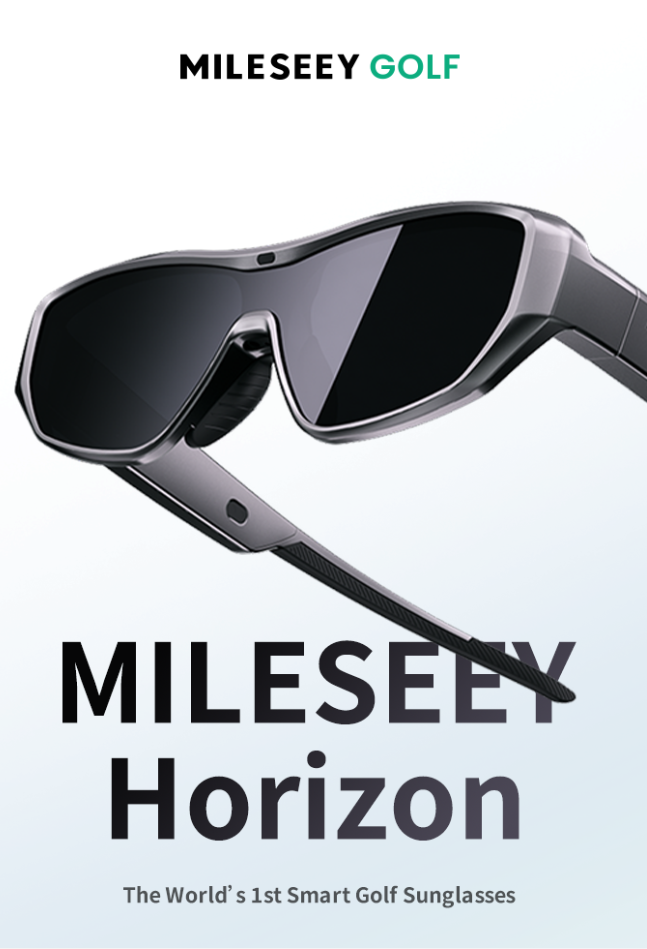
    MILESEEY Horizon smart golf sunglasses front view
    MILESEEY Horizon smart golf sunglasses front view

    Every golfer knows that moment before a shot—you’ve read the course, picked your target, and started to feel the swing. Then you look down. A rangefinder. A watch. A phone. One quick check breaks your rhythm, slows your routine, and makes you second-guess the shot.

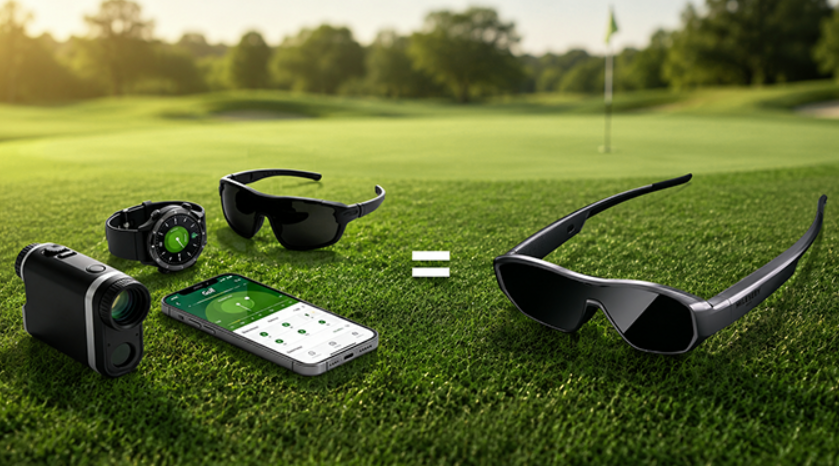
    MILESEEY Horizon exists to eliminate that moment. This is not a concept. It is a production-ready smart golf sunglasses that opened pre-orders and launched on Kickstarter on May 12. Shenzhen Mileseey Technology—the Chinese brand with 15 years in laser measurement and products sold across 50+ countries—crammed a rangefinder, GPS watch, golf app, and sunglasses into a 48g frame.

    Product Overview: Four-in-One, Zero Looking Down

    Horizon’s core logic is brutally clear: lift all golf data into your line of sight so you never look down.

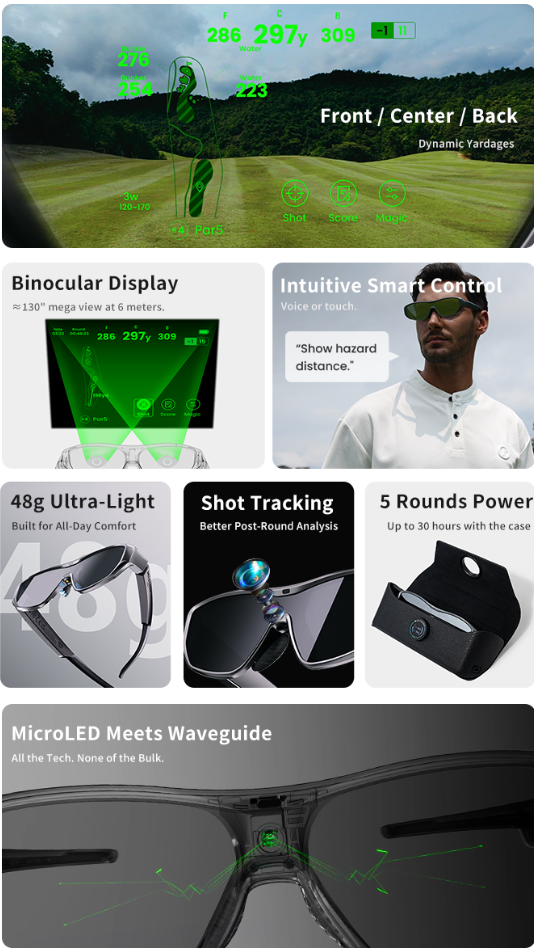
    A 130-inch virtual display projected from 6 meters away. What does this mean? Standing on the tee box, fairway distances, green positions, and bunker locations hover in your vision like a HUD. No turning. No phone fumbling. No rangefinder clicking. The caddie whispering yardages? Now it is written on your retina.

    Built-in GPS with 43,000+ courses worldwide. Front, center, and back pin distances, hazard alerts, live scoring—all refreshed in real time. The kicker: zero subscription fees. Golf is expensive enough. Horizon refuses to charge recurring rent after you buy the hardware.

    MILESEEY Horizon smart golf sunglasses front view
    MILESEEY Horizon smart golf sunglasses front view

    Killer Feature #1: Hypersight™ Display, Clear Under Blazing Sun

    What do AR glasses fear most? Becoming useless in direct sunlight. Horizon packs Hypersight™ display technology with adaptive brightness. Midday sun blasting down? Data stays razor-sharp. Twilight softening? Auto-dims to avoid eye strain.

    Mileseey brings 15 years of laser ranging and optoelectronic imaging expertise. This is not a white-label factory’s first consumer AR rodeo. From core chips to integrated optics, full-stack in-house R&D. That technical foundation makes Horizon sharper and more power-efficient than most “smart glasses” on the market.

    Killer Feature #2: Voice + Touch, Hands Never Leave the Club

    “Hey Horizon, what’s the yardage to the pin?”—voice commands pull data instantly. The touchpad hides on the temple side, tap to switch modes, quiet enough not to disturb playing partners.

    Team Mode is the social weapon: track up to three friends’ scores and key stats in real time. No caddie running back and forth with scorecards. Data syncs across lenses live.

    Killer Feature #3: 48g, All-Day Wear Without Fatigue

    What is 48g? Barely more than a standard pair of sport sunglasses. Magnesium alloy front frame. IP54 splash resistance—sweat and light rain shrugged off. Adjustable soft nose pads keep the fit secure through 18 holes without slipping or pressure marks.

    The smart charging case is more than a battery pack—it carries its own display. Check remaining juice for both glasses and case at a glance. It even shows center-green distances and subtle interactive animations. Toss it in the side pocket of your golf bag, top up between nines.

    Rangefinder watch and phone replaced by Horizon glasses
    Rangefinder watch and phone replaced by Horizon glasses

    Killer Feature #4: Ecosystem Loop, Data Does Not Die After the Round

    Horizon is not an isolated device. Sync with the MILESEEY Golf App to review performance, track progress curves, and strategize for the next round. Connect other Mileseey golf devices to build a fully connected system.

    From the GenePro G1 rangefinder to the Horizon smart glasses, Mileseey is constructing a “connected golf ecosystem.” Data flows across devices. Strategy accumulates in the app. Every swing leaves a trace.

    Specs Comparison: Horizon vs Garmin Approach vs Traditional Rangefinder

    FeatureMILESEEY HorizonGarmin Approach S70Bushnell Pro XE
    Form FactorAR SunglassesGPS WatchHandheld Rangefinder
    Display130-inch virtual screen1.4-inch dialOptical viewfinder
    Weight48g61g~350g
    Course Data43,000+43,000+Requires GPS companion
    Hazard AlertsReal-time AR overlayVibration alertsNone
    Team ModeYesNoNo
    SubscriptionZeroPartial features require subscriptionNone
    Price$599 (early bird)$599$549

    Horizon matches the Garmin Approach S70 in price but lifts data from the wrist to the eyes, freeing hands and reducing head-down moments. Against traditional rangefinders, Horizon is lighter while integrating GPS, scoring, and team features—one device doing four jobs.

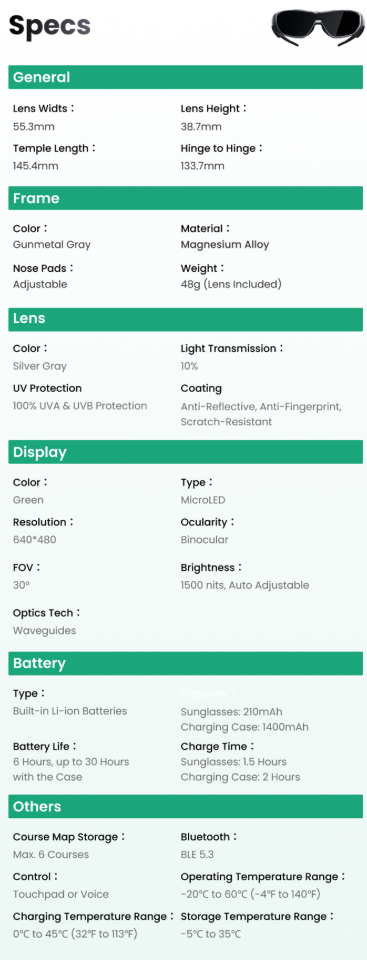
    MILESEEY Horizon product specs and features list
    MILESEEY Horizon product specs and features list

    Design and Wearability: First a Great Pair of Shades

    Horizon’s design team clearly understands golf: first be a pair of sunglasses you want to wear all day, then add the tech. Aviator-style frame, magnesium alloy construction, no cyberpunk awkwardness. Playing partners will not think you are wearing a gadget. They will wonder why you never check your watch.

    Who Should Buy Horizon?

    Highly Recommended For:

    • Mid-to-high handicappers seeking fluid swing rhythm
    • Travelers playing unfamiliar courses needing real-time hazard awareness
    • Advanced players building personal shot archives and data-driven strategy
    • Early adopters who love tech gear and want the next thing

    Consider Alternatives If:

    • You are a minimalist (traditional rangefinder + watch covers your needs)
    • You are budget-sensitive (early bird $599, MSRP $1299)

    Caveats to Note

    • IP54 splash resistance, not IP67 submersion-grade. Stow in the charging case during heavy downpours.
    • Battery life: Officially rated for 5 rounds (~90 holes), actual runtime depends on display brightness and feature usage.
    • Kickstarter risk: As a crowdfunding product, delivery timelines carry uncertainty. Mileseey’s 15-year manufacturing history and 50-country sales network suggest reliable fulfillment, but project updates warrant monitoring.

    Conclusion: A Chinese Team Just Taught Golf Equipment a Lesson

    The MILESEEY Horizon is not existing technology crammed into eyewear. It is data interaction reinvented for the golf scenario. Rangefinder, GPS watch, app, and sunglasses fused into one. Zero subscriptions. 48g. 43,000+ courses. Those numbers represent 15 years of Mileseey’s optoelectronic expertise and a precise understanding of golfer pain points.

    While Garmin and Bushnell compete in traditional form factors, this Chinese company has already built the first AR glasses truly born for golf. If you are planning a trip to the Old Course at St Andrews, Pebble Beach, or just your local weekend 18—Horizon belongs in your bag.


    Bottom Line: The most golf-focused smart wearable on the market. Not perfect, but purpose-built in ways competitors are not.