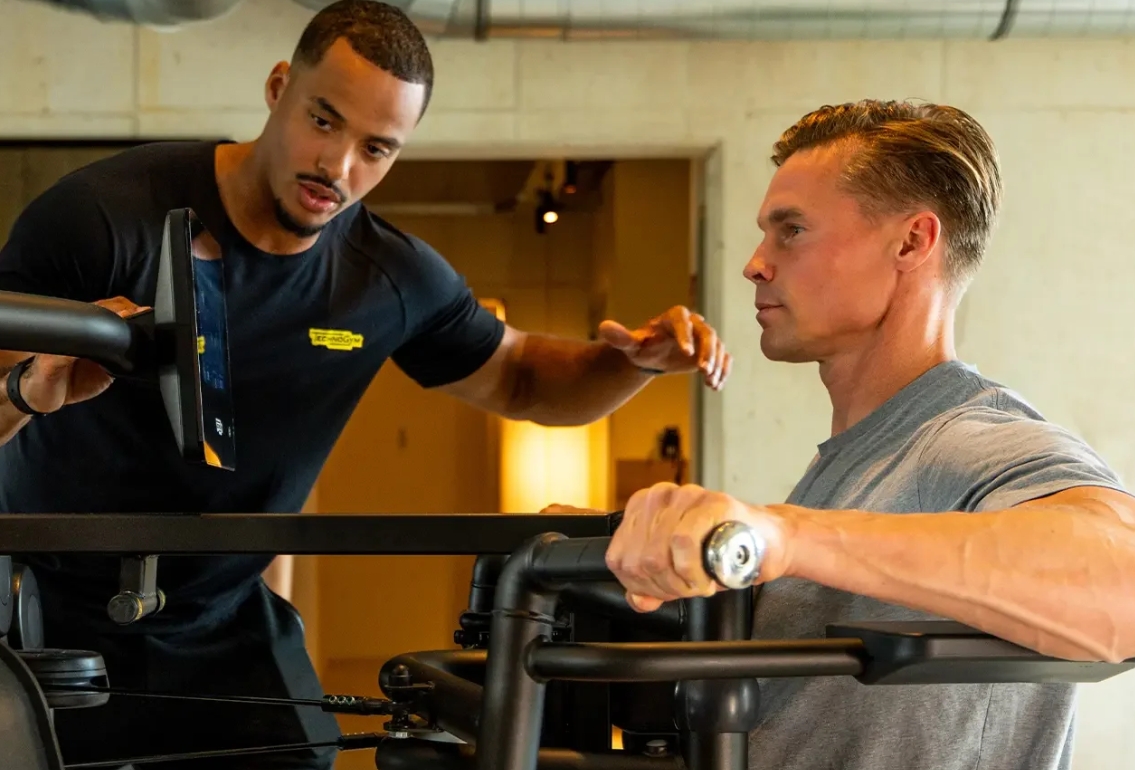
Introduction: Over the decades of evolution in strength training equipment, weight plates, steel cables, and cam structures have long dominated. Training loads rely on manual adjustment by the user, and fixed resistance modes struggle to match differences in effort curves. As the fitness industry moves towards personalization and data-driven approaches, adaptive resistance technology is breaking down the inherent limitations of traditional equipment. On August 13th, Technogym officially launched the Biostrength AI, the brand’s first AI adaptive strength training product line designed for commercial applications. Leveraging its self-developed Biodrive adaptive system and AI motion analysis algorithms, it aims to redefine the standards for professional strength training hardware. This review provides a comprehensive analysis of the hardware architecture, AI adaptive logic, training testing, practical value, and limitations.
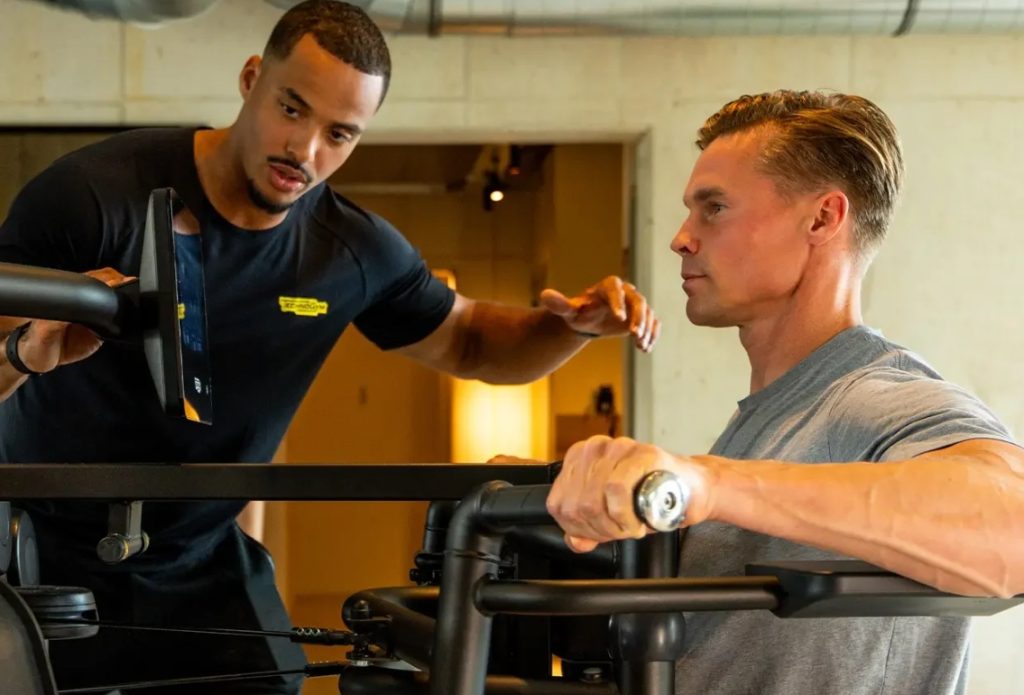
Product Positioning: The Technogym Biostrength AI is positioned as a high-end commercial AI strength training device, targeting boutique commercial gyms, high-end hotel wellness centers, professional sports team training bases, and corporate high-end fitness centers. Unlike ordinary fixed-track strength training equipment and home smart strength stations, its core value lies in its end-to-end AI dynamic adaptive resistance + biomechanical movement correction. It targets professional trainees, advanced personal training courses, and preventative sports rehabilitation, emphasizing efficient, safe, and quantifiable strength training.
Core Hardware and AI Technology Analysis:
The core hardware is the patented Biodrive aerospace-grade adaptive drive system, replacing traditional weights and cam mechanisms. Relying on a servo drive unit, it achieves millisecond-level resistance adjustment and supports six resistance modes: constant resistance, concentric incremental resistance, eccentric reinforcement, explosive power mode, isometric maintenance, and low-impact rehabilitation mode, adapting to different training goals such as muscle building, explosive power enhancement, and progressive overload after injury.
The entire machine integrates multi-dimensional sensing hardware: built-in force sensors, angle encoders, and posture acquisition modules, along with a matching camera for motion capture, with data transmitted in real-time to the onboard AI computing unit. The entire system is integrated into Technogym’s own Mywellness digital ecosystem, synchronizing training data in the cloud and supporting long-term training load tracking and periodic training planning.
AI algorithms are the core differentiator of the product: the device collects parameters such as force exertion speed, force exertion timing, joint angles, and movement stability in real time, dynamically matching them to the body’s natural force exertion curve. Traditional fixed resistance equipment is prone to “advantage gaps” or “pressure peaks” at the top and bottom of movements. Biostrength AI can compensate for resistance in real time, ensuring effective load throughout the entire range of motion. Simultaneously, AI identifies compensatory movements, such as lumbar compensation, shoulder misalignment, and knee valgus, providing real-time warnings on the screen to assist coaches in correcting movements and reducing the risk of injury.
Official data shows that, under the same training duration, this adaptive program can improve training stimulation efficiency by approximately 30%. The core logic is to eliminate ineffective force exertion zones, allowing the target muscle groups to continuously bear effective load.
Actual Training Experience: The entire operation consists of four stages: user identification, training plan retrieval, formal training, and data review. Users log in to the device using their Mywellness account to retrieve preset cycle plans from coaches or directly select preset training templates.
After training begins, the servo system first completes motion data acquisition and calibration, with AI recording the user’s normal force trajectory. During formal training, the resistance is no longer constant: for example, in a seated chest press, it automatically maintains a high load in the pectoral muscle-dominant area and reduces impact at joint pressure points to protect the rotator cuff. In explosive power mode, the system can quickly release resistance to adapt to the needs of rapid extension and contraction compound training; in rehabilitation mode, it limits maximum load and movement speed to avoid overcompensation.
After training, the device instantly generates a complete report, including the single-set force curve, peak strength, force balance, risk of movement compensation, and load recommendations. Coaches can adjust the resistance, range of motion, and rest intervals for the next set based on the data, achieving truly data-driven training rather than relying on subjective feelings to adjust the weights.
The machine boasts excellent noise control, smooth servo drive operation, and no impact noise typical of traditional weights, making it suitable for high-end gym environments. Its modular commercial structure supports high-frequency use throughout the day, meeting the needs of multiple trainees rotating during peak hours.
Key Advantages and Highlights
Truly Dynamic Adaptive Resistance: Utilizing the Biodrive servo system, it achieves millisecond-level load adjustment, breaking free from the limitations of fixed weights. It conforms to the human body’s biomechanical force curve, balancing training efficiency and joint protection, while covering multiple scenarios including muscle building, explosive power, and rehabilitation.
AI Motion Monitoring and Risk Warning: Real-time identification of compensatory movements reduces sports injuries caused by incorrect force application, lowers the risk of self-training for beginners, and enhances the professionalism and safety of personal training sessions.
Full-Chain Digital Ecosystem Integration: Integrated with the Mywellness platform, training data is archived long-term, supporting periodic load management. This facilitates long-term member training tracking and results visualization for facilities, empowering personal training delivery.
Commercial Durability and Strong Scenario Compatibility: Designed for high-intensity B2B use, the machine operates with low noise. Multiple resistance modes can be flexibly switched, and a single device can meet the diverse needs of general members for muscle building, athletes for specialized strength training, and post-operative progressive rehabilitation, improving facility efficiency.
Standardized Professional Training Output: Unified and quantifiable strength data addresses the pain point of inconsistent evaluation standards among different coaches, making it suitable for chain high-end fitness brands to establish standardized advanced strength training courses.
Existing Shortcomings and Limitations:
High Procurement and Maintenance Costs: High-end adaptive servo hardware dictates a significantly higher price point than conventional strength equipment, resulting in a high investment threshold that is difficult for small and medium-sized ordinary gyms to afford, limiting the target audience to high-end venues and professional training institutions.
Higher Space Occupancy and Installation Requirements: Compared to small, single-function strength equipment, the Biostrength AI integrated drive module has specific requirements for power supply and installation space, making relocation and debugging processes complex.
Reliance on Supporting Digital Operation Capabilities: Maximizing the hardware’s value requires coaches to understand force curves and develop periodic adaptive training plans; if the venue only uses it as a regular chest press or leg press machine, the adaptive AI capabilities cannot be fully utilized, significantly reducing cost-effectiveness.
Strongly Closed Self-Developed Ecosystem: Data is primarily integrated into Mywellness’s proprietary platform, with limited access to third-party SaaS management systems, leading to higher costs for multi-brand, mixed-use digital venue integration. Adaptive algorithms still rely on standard movements. Significantly distorted or compensatory movements can affect AI resistance assessment, still requiring basic personal training guidance and cannot completely replace professional coaching evaluation.
Recommended Application Scenarios
✅ Recommended for: High-end boutique fitness studios, five-star hotel fitness centers, professional sports club strength and conditioning training halls, sports rehabilitation centers, and high-end employee fitness spaces in large enterprises, focusing on advanced strength training, specialized strength and conditioning training, and injury prevention training.
❌ Not suitable for: Affordable community gyms, small basic fitness shops, and home use.
Review Summary
Technogym Biostrength AI is not intended to replace a complete set of traditional free weight equipment, but rather to provide a digital upgrade and supplement to a high-end commercial strength training system. In the context of increasing competition in the fitness industry and venues seeking differentiated high-end services, it uses servo-adaptive hardware + AI biomechanical algorithms to solve long-standing pain points of traditional fixed resistance equipment, such as load mismatch, difficulty in quantifying training effects, and joint damage.
Adaptive strength training is an important development direction for commercial fitness hardware, and Technogym’s product represents a mature implementation solution from a leading international brand. For high-end gyms willing to invest in hardware upgrades and focus on professional advanced strength training courses, Biostrength AI can create a differentiated service barrier; however, for ordinary gyms pursuing low-cost operations and primarily offering basic fitness services, the high investment will become a difficult barrier to overcome.
In the long run, as the cost of adaptive servo hardware gradually decreases, AI strength training equipment will penetrate from top-tier gyms to more professional studios, and strength training will shift from “experience-based weight selection” to a fully intelligent era of “data-driven, dynamically adapted” training.
Leave a Reply