Seoul, May 14, 2026 — Samsung Electronics has officially confirmed that its first AI smart glasses, the Galaxy Glasses, will debut at the Galaxy Unpacked event in London on July 22, alongside the Galaxy Z Fold 8 and Z Flip 8. Powered by the Android XR platform and Qualcomm’s AR1 chip, this product will become the first mass-produced AI glasses to reach global consumers, marking the transition of AI wearables from “concept demonstration” to “daily wear.”
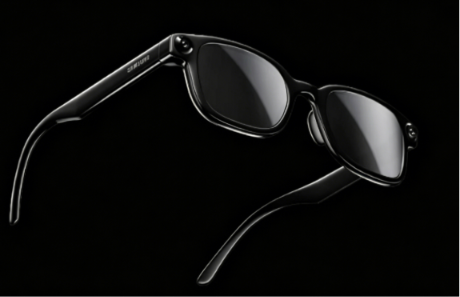
From Concept to Mass Production: Android XR Ecosystem’s Breakthrough Moment
Samsung’s AI glasses strategy is not a solo mission. During the Q4 2025 earnings call, Seong Cho, Executive Vice President of Samsung’s Mobile eXperience business, made it clear that the product had entered the “execution phase,” targeting “rich, immersive multimodal AI experiences.” The triangular alliance with Google and Qualcomm forms the foundation of this ecosystem — Google provides the Android XR operating system and Gemini AI brain, Qualcomm supplies the dedicated AR1 chip, and Samsung handles hardware manufacturing and Galaxy ecosystem integration.
The strategic intent of this open alliance is clear: to challenge Meta’s closed ecosystem in AI glasses. Since Meta’s Ray-Ban collaboration shipped over 5 million units in 2024, the category has proven consumer viability, but Meta’s Llama ecosystem and Ray-Ban hardware have created a de facto closed loop. Android XR’s open positioning allows multiple manufacturers to participate, echoing Android’s path in challenging iOS — building developer ecosystems and user awareness through collective market presence.
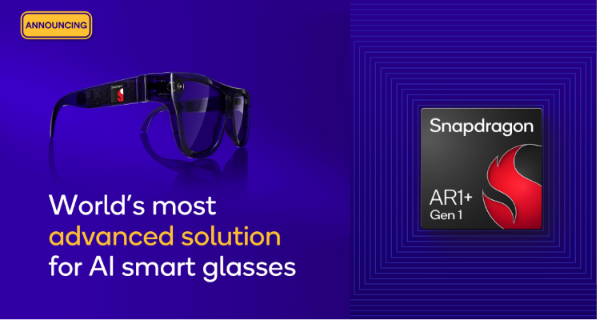
Technically, Qualcomm’s AR1 platform is the key to production feasibility. Unlike the crude approach of cramming headset chips into glasses, the AR1 series is purpose-built for all-day wear, prioritizing battery efficiency and thermal management. The AR1+ Gen 1 variant debuted at AWE 2025, reducing size by 28% while enabling on-device processing of models like Llama 3.2 without requiring phone or cloud connectivity. This means real-time translation, visual recognition, and voice assistant responses can function offline, delivering qualitative improvements in privacy protection, response latency, and battery life.
Dual-Version Strategy: AI Glasses and AR Display in Parallel
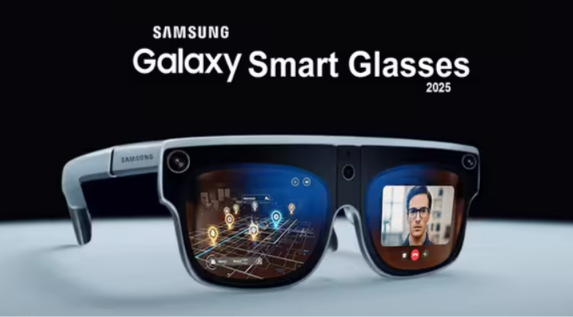
According to Seoul Economic Daily, Galaxy Glasses will launch in two versions: a display-free AI glasses model equipped with cameras, speakers, and microphones, focusing on Gemini voice interaction and scene recognition; and a version with built-in AR display capable of privately overlaying navigation directions and translation captions visible only to the wearer. Both are co-developed by Google and Samsung, with fashion eyewear brands Gentle Monster and Warby Parker collaborating on designs offering multiple styles for different face shapes and aesthetic preferences.
The display-free version is expected to launch first, directly competing with Meta Ray-Ban. Its differentiation lies in deep Gemini AI integration — compared to Llama’s functional limitations on-device, Gemini can access real-time data from Google Search, Maps, and Calendar services, delivering more precise contextual responses. The AR display version’s launch date remains unconfirmed; Google verified in December 2025 that it would ship in 2026 but declined to specify timing.
Samsung positions Galaxy Glasses as an entry-level device for the Galaxy ecosystem rather than a standalone experiment. Users can expect seamless coordination with Galaxy phones, watches, and earbuds: heart rate displays from Galaxy Watch during runs, automatic audio switching to Galaxy Buds for calls, and instant photo sync to Galaxy phones for AI editing. This “persistent AI assistance” across devices creates an ecosystem barrier that single hardware products cannot match.
Industry Inflection Point: The 2026 AI Wearable Showdown
2026 is becoming the decisive year for AI wearable devices. Meta’s Ray-Ban AI glasses have established first-mover advantage with cumulative shipments exceeding 5 million units, but the product remains essentially “headphones with a camera,” with AI functions dependent on the cloud and limited interaction modes. OpenAI’s mysterious AI device developed with former Apple design chief Jony Ive is rumored for a second-half 2026 debut, possibly as a screenless wearable. Google’s own Android XR glasses are also in preparation for a 2026 launch. Samsung’s entry transforms the competition from “Meta’s solo show” into “multi-party warfare.”
Counterpoint Research predicts global AI glasses shipments will exceed 12 million units in 2026, up 200% from approximately 4 million in 2025. Overseas markets outside China will account for roughly 65%, with North America and Europe as core growth regions. Leveraging the global distribution advantages of the Galaxy brand, Samsung could capture 15%-20% market share in its first year, becoming Meta’s most formidable challenger.
Notably, the AI glasses explosion is not an isolated event but the convergence of three technological maturities: on-device AI computing power, lightweight multimodal large models, and consumer-grade AR optics. Qualcomm AR1’s local inference capabilities, Google Gemini Nano’s on-device optimization, and Samsung’s manufacturing expertise in miniaturized hardware collectively push the product from “geek toy” toward “mass consumer” price and experience tiers.
Challenges and Concerns: Privacy, Battery Life, and Killer Apps
Despite the bright prospects, Galaxy Glasses face three major challenges. First is privacy controversy — front-facing cameras in public spaces have triggered widespread debate in Europe and America, with Meta Ray-Ban users repeatedly accused of recording others without consent. Samsung must establish more transparent privacy protection mechanisms in hardware design (such as LED indicators) and software policies (such as shutter sounds).
Second is the battery bottleneck. All-day wear demands at least 8 hours of continuous use, but AR1 platform power consumption and AI inference loads pose severe challenges for micro batteries. Early leak information suggests Galaxy Glasses will deliver approximately 6-8 hours in display-free mode, with the AR display version potentially dropping to 4-6 hours — still short of the “all-day wear” ideal.
The most fundamental bottleneck is the absence of killer applications. Current core AI glasses functions — photography, music listening, voice queries — can all be performed more efficiently by smartphones. The industry has yet to deliver an “irreplaceable scenario” that fundamentally requires the glasses form factor. Samsung and Google must demonstrate unique applications beyond existing experiences at launch; otherwise, Galaxy Glasses risk becoming “a second device for tech enthusiasts” rather than “a necessity for mainstream users.”
Trillion-Dollar Track Ecosystem Battle
The AI wearable market is in the chaotic period before the iPhone moment. Meta has built brand recognition with Ray-Ban, but its closed ecosystem limits innovation velocity. Google is replicating the open strategy with Android XR, yet hardware dependence on partners creates inconsistent experiences. OpenAI holds the strongest model capabilities but lacks hardware manufacturing and channel expertise. Samsung’s entry brings a unique variable — it is the only player simultaneously possessing a global consumer electronics brand, proprietary chip design (Exynos), massive manufacturing capacity, and retail distribution.
Samsung Mobile eXperience head TM Roh has internally defined Galaxy Glasses as “the future entry point of the Galaxy ecosystem.” If this product achieves million-unit sales in the second half of 2026, it will represent not merely hardware success but potentially a replay of the Android smartphone story — using an open ecosystem to challenge a closed empire, ultimately reshaping the industry’s power structure.
For consumers, the London launch on July 22 will be the best window to observe this transformation. Whether AI glasses can evolve from “geek accessories” to “daily essentials,” the answer may arrive in the second half of this year.
Leave a Reply