Tag: News

AI Hardware News coverage, delivering the latest product launches, industry announcements, funding news and market updates. Timely reporting on significant developments shaping the AI hardware landscape.

  • Hypershell Raises $120M: Exoskeletons Enter Price War Era

    Hypershell Raises $120M: Exoskeletons Enter Price War Era

    I. A Post-90s Counterintuitive Choice: Not Robots, But “Power-Ups”

    Hypershell founder Sun Kuan portrait
    Hypershell founder Sun Kuan portrait

    Hypershell founder Sun Kuan, born in the 1990s, started the company in 2021.

    At that time, humanoid robots were trending, with Unitree, Zhiyuan, and Fourier all demonstrating bipedal walking. Sun chose exoskeletons — a seemingly more old-fashioned, bulkier direction.

    His logic was straightforward: humanoid robots replace humans; exoskeletons enhance humans. Replacement is a distant vision; enhancement is the present.

    This logic determined the product form. Hypershell did not pursue full-body heavy equipment, but focused on lower-limb assistance; not extreme load capacity, but weight and cost reduction.

    The self-developed Omega patented architecture compresses the entire machine to approximately 1.8kg, with motor peak power of 800W, offsetting 30% of load perception.

    In 2023, the first-generation product raised over $1 million on overseas crowdfunding platform Kickstarter. In less than three years, Hypershell achieved global sales leadership, with products sold in 70+ countries.

    From having only 200,000 yuan in the bank to raising $120 million, Sun proved a simple truth in hard tech:

    Subtraction is harder than addition, but more likely to yield results.

    II. Why Capital Entering? Exoskeletons Undergoing “Triple Transformation”

    Exoskeleton rental station at scenic park
    Exoskeleton rental station at scenic park

    Ant Group and Meituan co-leading the round sends a clear signal: exoskeletons are no longer niche hardware, but regarded as potential mass-market entry points.

    This industry is currently undergoing triple transformation:

    First, from medical/industrial to consumer markets.

    Traditional exoskeletons cost tens of thousands of dollars and weigh over ten kilograms, locked into hospital and factory scenarios. Hypershell reduced prices to accessible levels (entry model 5,999 yuan), weight under 2kg, directly targeting outdoor hiking, daily commuting, and elderly assistance. This is not simple price reduction, but a complete overhaul of application scenarios.

    Second, from mechanical assistance to AI collaboration.

    The X series launched on May 20 features HyperIntuition algorithm, with core evolution from “preset gait templates” to “end-to-end motion control.” Simply put, previous exoskeletons “followed your movement,” now they attempt to “anticipate your intention.” This leap from passive following to proactive collaboration is the watershed for consumer-grade experience.

    Third, from single hardware to data entry point.

    Exoskeletons run close to the body, naturally collecting gait, movement, and physiological data. When this data forms a closed loop with AI algorithms, the hardware itself becomes a physical interface for human-machine interaction. What Ant and Meituan likely value is this underlying logic.

    III. Track Heating Up: Consumer Exoskeleton “Hundred-Regiment Battle”

    In this blue ocean, Hypershell is not the only player smelling opportunity. Since 2026, the consumer exoskeleton track has visibly accelerated.
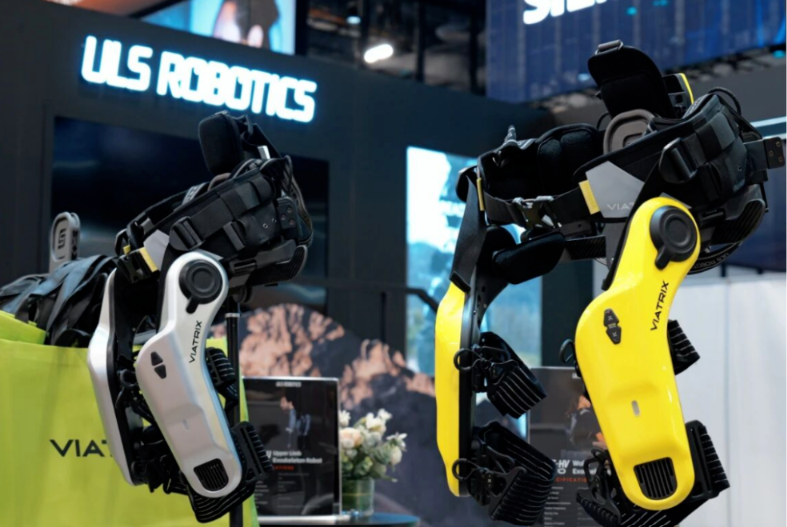
    ULS 机器人 VIATRIX 消费级外骨骼
    ULS 机器人 VIATRIX 消费级外骨骼

    ULS Robotics transformed from industrial-grade, launching its first consumer product VIATRIX in 2025, priced at six to seven thousand yuan, adopting Float360 floating hip joint architecture, even winning an innovation award at CES 2026.

    Cheng Tian Technology’s EasyGo personal exoskeleton priced at 2,500 yuan sold out in 15 seconds; Kenqing Technology’s Ant-H1 Pro designed for elderly users is available on JD.com and Tmall.

    Capital data may more intuitively reflect this: 19 exoskeleton-related funding rounds in 2025, totaling 2.216 billion yuan, far exceeding 2024’s 8 rounds and 292 million yuan.

    Investment logic has shifted from “investing in technological advancement” to “investing in commercialization capability.”

    An industry moving from cold to hot typically shows two signals: first, leading enterprises securing consecutive large funding rounds; second, second-tier players beginning to emerge in batches — and exoskeletons have lit both signals.

    IV. The Real Hard Battle: From “Can Sell” to “Users Willing to Wear Daily”

    But beneath the hype, problems are equally apparent.

    Consumer exoskeletons still face several hard gaps before true “daily integration”:

    Experience gap: Can it achieve “imperceptible”? Existing products mostly achieve “assistance,” but “assistance” and “imperceptible” are clearly different.

    Users can certainly walk farther wearing them, but are they smooth when facing daily high-frequency scenarios like emergency stops, turning, and stairs? Is there response delay?

    These details determine whether exoskeletons are “novelty toys” or “daily equipment.”

    Hypershell’s new HyperIntuition algorithm essentially targets this point.

    Scenario gap: Can outdoor and elderly markets both be served?

    Currently main outdoor hiking and elderly assistance scenarios have vastly different needs. Outdoor users want “enhanced physical ability,” elderly users want “safety and stability.” The same product logic serving both markets inevitably involves compromise. Future segmentation into more refined categories is likely.

    Cognition gap: Why do I need this?

    Although accessible pricing is already low, exoskeletons remain “non-essential” for ordinary consumers.

    Unlike phones as communication tools, unlike headphones as entertainment accessories. How to make consumers feel “this money is well spent” is the marketing challenge for the entire industry.

    V. Conclusion: Exoskeletons’ Ultimate Opponent Is Not Competitors
    Hypershell official website
    Hypershell official website

    Sun Kuan said in an internal speech: “We started from a simple but firm idea — letting people go farther.”

    This statement has two interpretations: physically farther, or life radius expanded farther.

    When exoskeletons are light enough, cheap enough, and smart enough, they may become the “second spring” for elderly people, “physical ability外挂” for outdoor enthusiasts, or even basic equipment on everyone in the future.

    But before that, the ultimate opponent the exoskeleton industry faces is not competitor competition, but consumers’ “habit inertia.”

    Most people haven’t developed the habit of “wearing exoskeletons when going out,” just as many people hadn’t developed the habit of “wearing headphones when going out” ten years ago.

    Hypershell’s $120 million funding is a milestone for this industry from 0 to 1. But from 1 to 100 depends on who can first make “wearing exoskeletons” as natural as wearing glasses.
  • Meta Muse Spark Rollout: Voice, Vision, Wearables Converge

    Meta Muse Spark Rollout: Voice, Vision, Wearables Converge

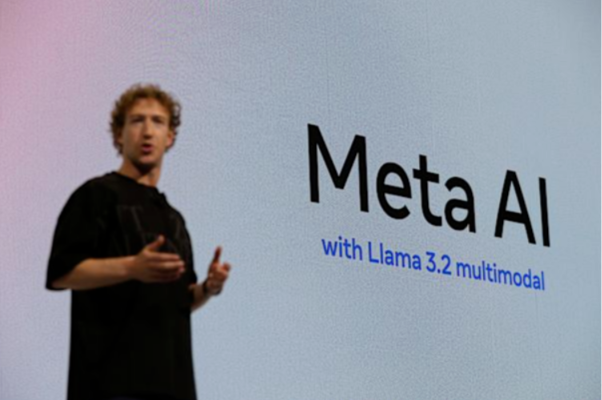
    扎克伯格介绍元人工智能多模态策略
    扎克伯格介绍Meta AI多模态战略

    I. Three Waves, One Goal

    On May 12, Meta announced three major AI updates:

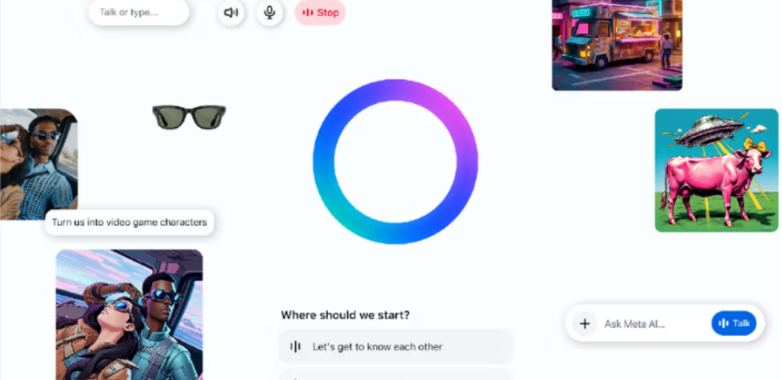
    First, voice conversation upgrade. The Meta AI App integrated Muse Spark, supporting interruption at any time, topic switching, seamless multilingual transitions, and image generation during conversations.

    Second, vision capability expansion. “Live AI” extended from glasses-exclusive to mobile, enabling real-time Q&A by simply opening the camera.

    Third, glasses system overhaul. Ray-Ban Meta and Oakley Meta glasses will receive Muse Spark updates within weeks, with screen-equipped versions coming in summer.

    All three waves target one goal: letting Muse Spark’s “native multimodal” brain occupy every entry point for user-digital world interaction.

    II. What is Muse Spark?

    One month earlier, on April 8, Meta Superintelligence Labs released its first fully proprietary LLM Muse Spark, codenamed “Avocado.”

    This marks a major strategic shift for Meta AI — from the open-source Llama route to proprietary closed models.

    Muse Spark’s core capability is simultaneous processing of voice, text, and vision — not simple concatenation, but native fusion. It supports both “Instant” quick response and “Thinking” deep reasoning modes, and can run multiple sub-agents in parallel for complex tasks.

    On capital expenditure, Meta spent $70-72 billion in 2025, increasing to $115-135 billion in 2026. Zuckerberg stated in the January earnings call: “We rebuilt the foundation in 2025, now we’re rolling out new products in the coming months.”

    Meta AI app voice and image generation interface
    Meta AI app voice and image generation interface

    III. Glasses Data Shines, Meta Goes All In

    Ray-Ban Meta glasses’ market performance is Meta’s core confidence in betting on wearables.

    Q1 2026 earnings show AI glasses DAU tripled year-over-year. Zuckerberg called it “one of the fastest-growing consumer electronics categories.”

    In the global AI glasses market, Meta leads with 85.2% share.

    The update rollout starts in the US and Canada, with screen-equipped versions arriving in summer. This means every frame users see through their glasses, AI can understand in real-time and converse instantly.

    Additionally, WhatsApp, Instagram, Facebook, Messenger, and Threads will fully integrate Meta AI across search, group chats, and posts.

    IV. Meta’s Ambition Extends Beyond Better Glasses

    These three updates appear as feature upgrades, but本质上 represent an entry point war.

    Bringing “Live AI” to mobile cultivates user habits — getting users accustomed to asking AI questions through their camera. When glasses experience becomes good enough, migration cost approaches zero.

    Voice conversation naturalness improvements solve wearable device interaction bottlenecks. Glasses have no keyboard; voice is the only efficient input method. Interruption, topic switching, and multilingual support determine whether users are willing to talk to their glasses in public.

    Muse Spark going proprietary copies OpenAI’s playbook — building moats with proprietary models. Open-source Llama builds reputation; proprietary Muse Spark generates revenue.

    Most noteworthy is the prototype of “proactive AI.”

    In shopping scenarios, AI automatically integrates web results, filters by price/style/distance, presents maps, even @ brand creators. This isn’t search; it’s intent prediction. When AI can “see” products you see, “hear” your needs, and “proactively” push solutions, it ceases being a tool — becoming a shopping guide, secretary, translator, and photographer combined.

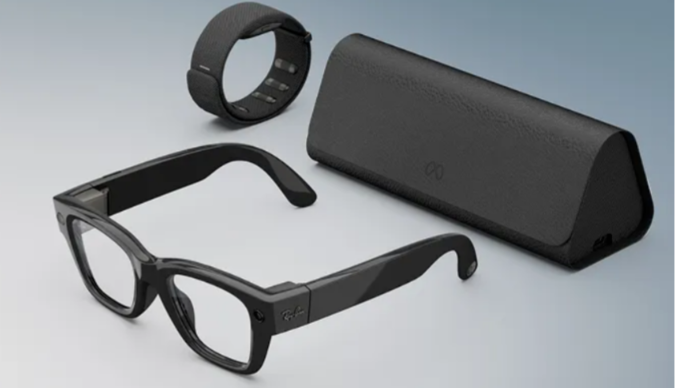
    Meta智能眼镜,带充电盒和腕带
    Meta智能眼镜,带充电盒和腕带

    V. Meta Can’t Wait to Take Mobile’s Lunch

    Meta’s anxiety hides in the data. 85.2% market share looks impressive, but the overall AI glasses market remains small.

    $115-135 billion capital expenditure converts to nearly trillion RMB.

    If AI glasses cannot transform from “novelty toys” to “daily necessities,” Meta’s earnings will suffer.

    So Meta’s strategy is clear —

    First cultivate users through mobile apps, then harvest scenarios with glasses, finally lock in stickiness through ecosystem.

    But the question remains: do users really need a pair of always-online AI glasses?

    VI. Conclusion: Everywhere is the Answer, and the Question

    Meta says AI should live Everywhere.

    This answer is grand, but also exposes a problem: when AI is everywhere, do users still have the right to be “offline”?

    Glasses are more intimate than phones, more concealed, harder to ignore. Every frame they see becomes AI training data. Whether Meta’s privacy policy can keep pace with hardware penetration is the biggest variable ahead.

    Meta is betting $115 billion that AI glasses will become the next computing platform.

    Whether this money burns a future or not, we’ll see in H2 2026.

  • AMD MI400 Series with HBM4 Memory Targets NVIDIA Blackwell Dominance

    AMD MI400 Series with HBM4 Memory Targets NVIDIA Blackwell Dominance

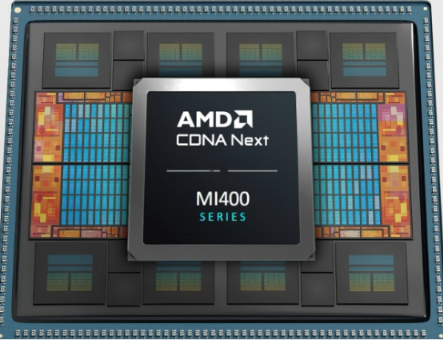
    AMD Instinct MI400 GPU with HBM4 memory
    AMD Instinct MI400 GPU with HBM4 memory

    San Francisco, May 15, 2026 — AMD has officially announced its Advancing AI 2026 conference will take place July 22-23 in San Francisco, where the company will unveil the Instinct MI400 series AI accelerators.

    Built on TSMC’s 2nm process with HBM4 memory, delivering 432GB per GPU and 19.6TB/s bandwidth, this new generation marks AMD’s first substantive challenge to NVIDIA Blackwell’s core specifications, signaling the global AI chip market’s transition from “NVIDIA solo show” to “duopoly competition.”

    From Follower to Challenger: MI400’s Decade-Long Journey

    AMD’s AI chip resurgence is no accident. The 2023 MI300X leveraged 192GB HBM3e memory to achieve competitiveness against NVIDIA H100 in specific inference scenarios, but software ecosystem limitations constrained market penetration. The 2025 MI350 series boosted FP8 compute to 10 PFLOPS with CDNA 4 architecture, gradually closing the hardware gap. Now, the MI400 launch signifies AMD’s strategic transformation from “hardware catching up” to “ecosystem confrontation.”

    The MI400 series’ core breakthrough lies in memory architecture. The HBM4 standard employs 16-layer stacking with 48GB per die and 145% bandwidth improvement over HBM3e. The flagship MI455X integrates 432GB HBM4 — 2.25x NVIDIA B200’s 192GB HBM3e; its 19.6TB/s memory bandwidth is 2.4x B200’s 8TB/s. For large model inference, memory capacity and bandwidth often matter more than raw compute — when model parameters exceed GPU memory, multi-card parallelism or CPU offloading becomes necessary, causing latency spikes. MI400’s memory advantage provides unique competitiveness for single-GPU trillion-parameter inference.

    On process technology, the MI400 series uses TSMC N2 (2nm-class), becoming the first GPU product to employ this advanced node, potentially ahead of NVIDIA Rubin (using N3). With 320 billion transistors — 70% more than MI355X — and 12 compute/IO chiplets in 3D stacking, it achieves density and energy efficiency balance. Single-GPU FP8 compute reaches 20 PFLOPS, FP4 compute hits 40 PFLOPS, matching NVIDIA B200 in raw performance while memory leadership may deliver superior real-world workload performance.

    Helios Rack: AMD’s “AI Factory” Blueprint

    Launched alongside the MI400 series, the Helios rack platform represents AMD’s first foray into rack-scale AI infrastructure integration. This double-wide rack (roughly twice standard server rack width) weighs 7,000 pounds (~3,175 kg), integrating 72 MI455X GPUs and 18 EPYC Venice CPUs, delivering 31TB total HBM4 memory, 1.4PB/s memory bandwidth, and 260TB/s interconnect bandwidth.

    Helios’ compute density is striking: per-rack FP4 inference performance reaches 2.9 ExaFLOPS, FP8 training performance hits 1.4 ExaFLOPS. For comparison, NVIDIA GB200 NVL72 delivers 3.6 ExaFLOPS FP4 inference and 2.5 ExaFLOPS FP4 training. While NVIDIA maintains raw compute advantages, Helios leads in memory capacity (31TB vs 20.7TB) and memory bandwidth (1.4PB/s vs 936TB/s) by approximately 50%. For memory-intensive inference tasks, this advantage may translate to 20%-30% actual throughput improvements.

    Thermal design is another Helios highlight. The double-wide rack provides ample space for liquid cooling systems, with per-rack power consumption around 140kW, comparable to NVIDIA NVL72 (120-130kW). AMD emphasizes Helios adopts Meta’s Open Rack Wide v3 open standard, intended to be replicated and adapted by multiple OEM/ODM partners rather than sold as a tightly controlled exclusive stack like NVIDIA. HPE has become the first major OEM partner to adopt the Helios architecture, with its custom Juniper switch supporting the UALoE (Ultra Accelerator Link over Ethernet) standard, reinforcing the openness positioning.

    AMD Helios double-wide AI rack platform
    AMD Helios double-wide AI rack platform

    Open Ecosystem: UALink and ROCm’s Joint Offensive

    AMD’s core strategy against NVIDIA extends beyond hardware competition to ecosystem openness. The UALink (Ultra Accelerator Link) interconnect standard, backed by AMD, Intel, Google, Meta, Microsoft, and Broadcom, aims to provide an open alternative to NVLink. Unlike NVIDIA’s proprietary NVLink 5 (1.8TB/s), UALink enables cross-vendor GPU cluster interconnectivity, reducing data center dependency on a single supplier.

    On the software front, the ROCm platform now natively supports PyTorch and TensorFlow, eliminating the largest early adoption barrier. While optimized kernel counts (~2,000) still trail CUDA (8,000+), AMD has validated ecosystem feasibility through a 6-gigawatt strategic partnership with OpenAI, Meta’s rack-scale deployment commitment, and Oracle Cloud’s MI355X instance launch. For enterprises with existing NVIDIA-optimized codebases, migration friction remains, but the entry barrier for new adopters has significantly lowered.

    Notably, AMD employs a “precision-segmented” product strategy. The MI400 series is not a single model for all scenarios but divides into three sub-series: MI455X for low-precision AI inference (FP4/FP8/BF16), MI440X for enterprise 8-GPU server deployment, and MI430X retaining full FP64 precision for HPC and scientific computing. This specialization reduces redundant logic, improving power efficiency and cost-effectiveness, contrasting with NVIDIA’s “one card for all” approach.

    Market Landscape: AI Compute’s “Cold War” Era

    The 2026 AI chip market is undergoing structural transformation. NVIDIA, with its CUDA ecosystem moat and mature Blackwell deployment, still commands approximately 80% market share, but supply bottlenecks and customer demands for supplier diversification create a window for AMD.

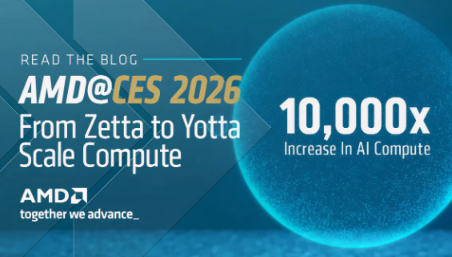
    AMD CEO Lisa Su proposed the “Yottascale” vision at CES 2026: global compute capacity must increase 100x over five years to reach 10 YottaFLOPS, expanding AI users from 1 billion to 5 billion. Behind this grand narrative lies AMD’s judgment that AI infrastructure is transitioning from “high-end niche” to “mass adoption” — when compute demand explodes, a single supplier cannot meet global needs, and open ecosystem cost advantages will emerge.

    Financially, AMD Q4 2025 revenue reached $10.3 billion (+34% YoY), with datacenter GPU business becoming the growth engine. Su projects AI datacenter business will grow approximately 80% annually over the next three to five years, with 2027 sales potentially reaching tens of billions of dollars. MI400 series mass production will be the critical inflection point for this growth curve.

    AMD Yottascale AI compute vision keynote
    AMD Yottascale AI compute vision keynote

    Challenges and Concerns: Software Maturity and Production Timeline

    Despite bright prospects, the MI400 series faces three major challenges. First is the software ecosystem maturity gap. CUDA, with 20 years of accumulation, boasts millions of developers and thousands of enterprise applications; ROCm still lags significantly in optimization depth, toolchain completeness, and developer community scale. For AI workloads dependent on custom CUDA kernels, migration to ROCm requires additional engineering investment and performance tuning.

    Second is production timeline uncertainty. SemiAnalysis reports indicate Helios rack engineering samples and low-volume production are expected in H2 2026, but mass production ramp and first production tokens may be delayed to Q2 2027. This means MI400’s actual 2026 shipment volume may be limited, posing no immediate threat to NVIDIA’s 2026 revenue.

    The most fundamental challenge lies in market perception transformation. NVIDIA has become synonymous with AI compute; the “buy GPU, choose NVIDIA” brand mindset is difficult to shake in the short term. AMD must demonstrate benchmark performance data beyond spec sheets and announce major customer deployment cases at Advancing AI 2026 to establish market confidence that “AMD is a reliable second choice.”

    Power Restructuring in the Trillion-Dollar Track

    The AI chip market is transitioning from “NVIDIA Empire” to “multipolar world.” AMD MI400’s launch, Intel Gaudi’s continued iteration, Google TPU’s vertical integration, and Amazon Trainium’s self-developed route collectively challenge NVIDIA’s dominance. But in this melee, AMD is the only vendor with autonomous capabilities across CPU (EPYC), GPU (Instinct), and interconnect technology (Infinity Fabric/Pensando), giving its “full-stack open” positioning unique ecosystem appeal.

    For datacenter operators and cloud providers, AMD’s rise means enhanced bargaining power and diversified supply chain risk. For AI developers and enterprise users, healthy competition in open ecosystems will reduce compute costs and accelerate innovation cycles. July 22, 2026, in San Francisco, may become a historic node for AI infrastructure power restructuring — when the Helios rack lights up, NVIDIA’s “lonely king” era may officially end.

  • Samsung Galaxy AI Smart Glasses Debut in July

    Samsung Galaxy AI Smart Glasses Debut in July

    Seoul, May 14, 2026 — Samsung Electronics has officially confirmed that its first AI smart glasses, the Galaxy Glasses, will debut at the Galaxy Unpacked event in London on July 22, alongside the Galaxy Z Fold 8 and Z Flip 8. Powered by the Android XR platform and Qualcomm’s AR1 chip, this product will become the first mass-produced AI glasses to reach global consumers, marking the transition of AI wearables from “concept demonstration” to “daily wear.”

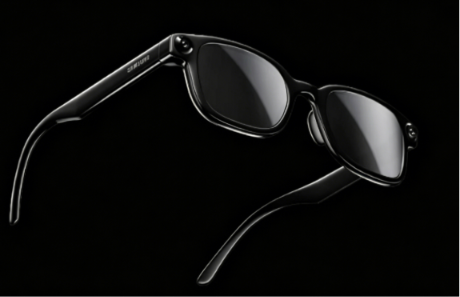
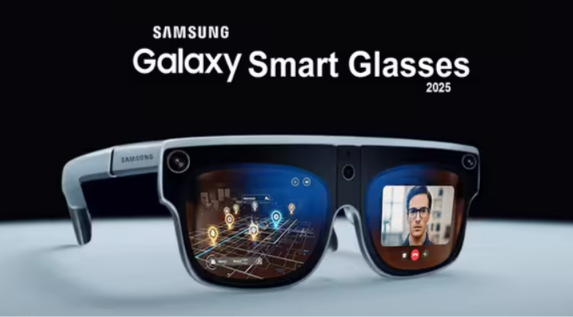
    Samsung Galaxy Glasses leaked design render
    Samsung Galaxy Glasses leaked design render

    From Concept to Mass Production: Android XR Ecosystem’s Breakthrough Moment

    Samsung’s AI glasses strategy is not a solo mission. During the Q4 2025 earnings call, Seong Cho, Executive Vice President of Samsung’s Mobile eXperience business, made it clear that the product had entered the “execution phase,” targeting “rich, immersive multimodal AI experiences.” The triangular alliance with Google and Qualcomm forms the foundation of this ecosystem — Google provides the Android XR operating system and Gemini AI brain, Qualcomm supplies the dedicated AR1 chip, and Samsung handles hardware manufacturing and Galaxy ecosystem integration.

    The strategic intent of this open alliance is clear: to challenge Meta’s closed ecosystem in AI glasses. Since Meta’s Ray-Ban collaboration shipped over 5 million units in 2024, the category has proven consumer viability, but Meta’s Llama ecosystem and Ray-Ban hardware have created a de facto closed loop. Android XR’s open positioning allows multiple manufacturers to participate, echoing Android’s path in challenging iOS — building developer ecosystems and user awareness through collective market presence.

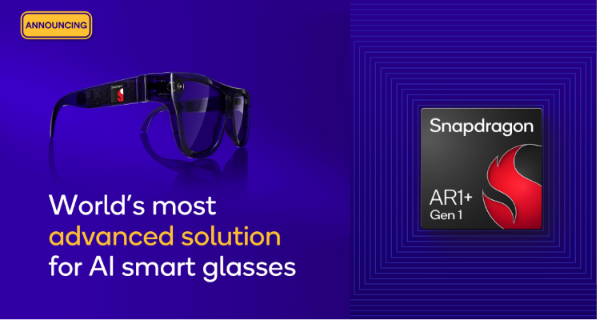
    Technically, Qualcomm’s AR1 platform is the key to production feasibility. Unlike the crude approach of cramming headset chips into glasses, the AR1 series is purpose-built for all-day wear, prioritizing battery efficiency and thermal management. The AR1+ Gen 1 variant debuted at AWE 2025, reducing size by 28% while enabling on-device processing of models like Llama 3.2 without requiring phone or cloud connectivity. This means real-time translation, visual recognition, and voice assistant responses can function offline, delivering qualitative improvements in privacy protection, response latency, and battery life.

    Dual-Version Strategy: AI Glasses and AR Display in Parallel

    Qualcomm Snapdragon AR1+ Gen 1 AI chip platform
    Qualcomm Snapdragon AR1+ Gen 1 AI chip platform

    According to Seoul Economic Daily, Galaxy Glasses will launch in two versions: a display-free AI glasses model equipped with cameras, speakers, and microphones, focusing on Gemini voice interaction and scene recognition; and a version with built-in AR display capable of privately overlaying navigation directions and translation captions visible only to the wearer. Both are co-developed by Google and Samsung, with fashion eyewear brands Gentle Monster and Warby Parker collaborating on designs offering multiple styles for different face shapes and aesthetic preferences.

    The display-free version is expected to launch first, directly competing with Meta Ray-Ban. Its differentiation lies in deep Gemini AI integration — compared to Llama’s functional limitations on-device, Gemini can access real-time data from Google Search, Maps, and Calendar services, delivering more precise contextual responses. The AR display version’s launch date remains unconfirmed; Google verified in December 2025 that it would ship in 2026 but declined to specify timing.

    Samsung positions Galaxy Glasses as an entry-level device for the Galaxy ecosystem rather than a standalone experiment. Users can expect seamless coordination with Galaxy phones, watches, and earbuds: heart rate displays from Galaxy Watch during runs, automatic audio switching to Galaxy Buds for calls, and instant photo sync to Galaxy phones for AI editing. This “persistent AI assistance” across devices creates an ecosystem barrier that single hardware products cannot match.

    Industry Inflection Point: The 2026 AI Wearable Showdown

    2026 is becoming the decisive year for AI wearable devices. Meta’s Ray-Ban AI glasses have established first-mover advantage with cumulative shipments exceeding 5 million units, but the product remains essentially “headphones with a camera,” with AI functions dependent on the cloud and limited interaction modes. OpenAI’s mysterious AI device developed with former Apple design chief Jony Ive is rumored for a second-half 2026 debut, possibly as a screenless wearable. Google’s own Android XR glasses are also in preparation for a 2026 launch. Samsung’s entry transforms the competition from “Meta’s solo show” into “multi-party warfare.”

    Counterpoint Research predicts global AI glasses shipments will exceed 12 million units in 2026, up 200% from approximately 4 million in 2025. Overseas markets outside China will account for roughly 65%, with North America and Europe as core growth regions. Leveraging the global distribution advantages of the Galaxy brand, Samsung could capture 15%-20% market share in its first year, becoming Meta’s most formidable challenger.

    Notably, the AI glasses explosion is not an isolated event but the convergence of three technological maturities: on-device AI computing power, lightweight multimodal large models, and consumer-grade AR optics. Qualcomm AR1’s local inference capabilities, Google Gemini Nano’s on-device optimization, and Samsung’s manufacturing expertise in miniaturized hardware collectively push the product from “geek toy” toward “mass consumer” price and experience tiers.

    Challenges and Concerns: Privacy, Battery Life, and Killer Apps

    Android XR Project Aura glasses concept design
    Android XR Project Aura glasses concept design

    Despite the bright prospects, Galaxy Glasses face three major challenges. First is privacy controversy — front-facing cameras in public spaces have triggered widespread debate in Europe and America, with Meta Ray-Ban users repeatedly accused of recording others without consent. Samsung must establish more transparent privacy protection mechanisms in hardware design (such as LED indicators) and software policies (such as shutter sounds).

    Second is the battery bottleneck. All-day wear demands at least 8 hours of continuous use, but AR1 platform power consumption and AI inference loads pose severe challenges for micro batteries. Early leak information suggests Galaxy Glasses will deliver approximately 6-8 hours in display-free mode, with the AR display version potentially dropping to 4-6 hours — still short of the “all-day wear” ideal.

    The most fundamental bottleneck is the absence of killer applications. Current core AI glasses functions — photography, music listening, voice queries — can all be performed more efficiently by smartphones. The industry has yet to deliver an “irreplaceable scenario” that fundamentally requires the glasses form factor. Samsung and Google must demonstrate unique applications beyond existing experiences at launch; otherwise, Galaxy Glasses risk becoming “a second device for tech enthusiasts” rather than “a necessity for mainstream users.”

    Trillion-Dollar Track Ecosystem Battle

    The AI wearable market is in the chaotic period before the iPhone moment. Meta has built brand recognition with Ray-Ban, but its closed ecosystem limits innovation velocity. Google is replicating the open strategy with Android XR, yet hardware dependence on partners creates inconsistent experiences. OpenAI holds the strongest model capabilities but lacks hardware manufacturing and channel expertise. Samsung’s entry brings a unique variable — it is the only player simultaneously possessing a global consumer electronics brand, proprietary chip design (Exynos), massive manufacturing capacity, and retail distribution.

    Samsung Mobile eXperience head TM Roh has internally defined Galaxy Glasses as “the future entry point of the Galaxy ecosystem.” If this product achieves million-unit sales in the second half of 2026, it will represent not merely hardware success but potentially a replay of the Android smartphone story — using an open ecosystem to challenge a closed empire, ultimately reshaping the industry’s power structure.

    For consumers, the London launch on July 22 will be the best window to observe this transformation. Whether AI glasses can evolve from “geek accessories” to “daily essentials,” the answer may arrive in the second half of this year.