Tag: Multimodal

Multimodal AI hardware section, covering devices with multiple interaction modes including voice, vision and touch. Reviews of products offering versatile input and output options for intuitive user experiences.

  • Meta Muse Spark Rollout: Voice, Vision, Wearables Converge

    Meta Muse Spark Rollout: Voice, Vision, Wearables Converge

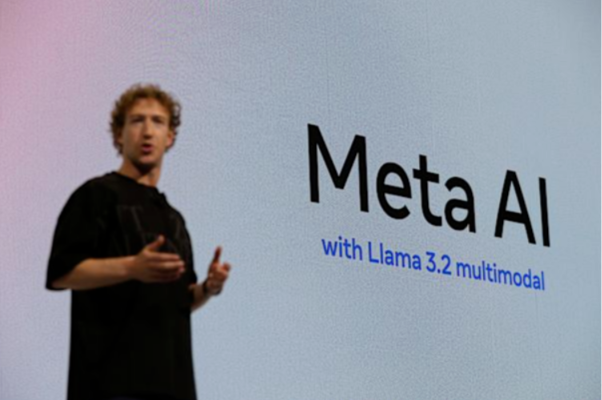
    扎克伯格介绍元人工智能多模态策略
    扎克伯格介绍Meta AI多模态战略

    I. Three Waves, One Goal

    On May 12, Meta announced three major AI updates:

    First, voice conversation upgrade. The Meta AI App integrated Muse Spark, supporting interruption at any time, topic switching, seamless multilingual transitions, and image generation during conversations.

    Second, vision capability expansion. “Live AI” extended from glasses-exclusive to mobile, enabling real-time Q&A by simply opening the camera.

    Third, glasses system overhaul. Ray-Ban Meta and Oakley Meta glasses will receive Muse Spark updates within weeks, with screen-equipped versions coming in summer.

    All three waves target one goal: letting Muse Spark’s “native multimodal” brain occupy every entry point for user-digital world interaction.

    II. What is Muse Spark?

    One month earlier, on April 8, Meta Superintelligence Labs released its first fully proprietary LLM Muse Spark, codenamed “Avocado.”

    This marks a major strategic shift for Meta AI — from the open-source Llama route to proprietary closed models.

    Muse Spark’s core capability is simultaneous processing of voice, text, and vision — not simple concatenation, but native fusion. It supports both “Instant” quick response and “Thinking” deep reasoning modes, and can run multiple sub-agents in parallel for complex tasks.

    On capital expenditure, Meta spent $70-72 billion in 2025, increasing to $115-135 billion in 2026. Zuckerberg stated in the January earnings call: “We rebuilt the foundation in 2025, now we’re rolling out new products in the coming months.”
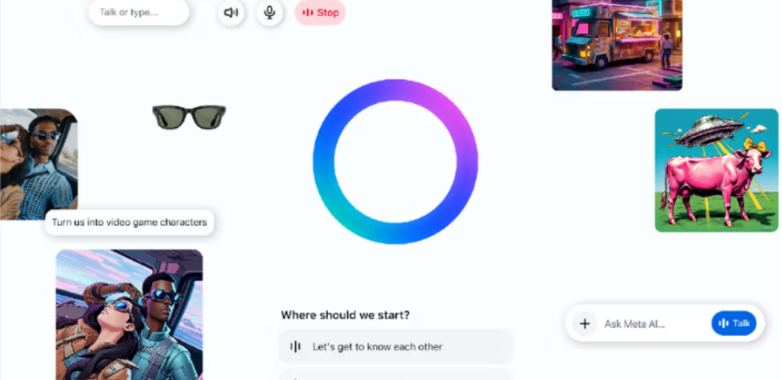
    Meta AI app voice and image generation interface
    Meta AI app voice and image generation interface

    III. Glasses Data Shines, Meta Goes All In

    Ray-Ban Meta glasses’ market performance is Meta’s core confidence in betting on wearables.

    Q1 2026 earnings show AI glasses DAU tripled year-over-year. Zuckerberg called it “one of the fastest-growing consumer electronics categories.”

    In the global AI glasses market, Meta leads with 85.2% share.

    The update rollout starts in the US and Canada, with screen-equipped versions arriving in summer. This means every frame users see through their glasses, AI can understand in real-time and converse instantly.

    Additionally, WhatsApp, Instagram, Facebook, Messenger, and Threads will fully integrate Meta AI across search, group chats, and posts.

    IV. Meta’s Ambition Extends Beyond Better Glasses

    These three updates appear as feature upgrades, but本质上 represent an entry point war.

    Bringing “Live AI” to mobile cultivates user habits — getting users accustomed to asking AI questions through their camera. When glasses experience becomes good enough, migration cost approaches zero.

    Voice conversation naturalness improvements solve wearable device interaction bottlenecks. Glasses have no keyboard; voice is the only efficient input method. Interruption, topic switching, and multilingual support determine whether users are willing to talk to their glasses in public.

    Muse Spark going proprietary copies OpenAI’s playbook — building moats with proprietary models. Open-source Llama builds reputation; proprietary Muse Spark generates revenue.

    Most noteworthy is the prototype of “proactive AI.”

    In shopping scenarios, AI automatically integrates web results, filters by price/style/distance, presents maps, even @ brand creators. This isn’t search; it’s intent prediction. When AI can “see” products you see, “hear” your needs, and “proactively” push solutions, it ceases being a tool — becoming a shopping guide, secretary, translator, and photographer combined.
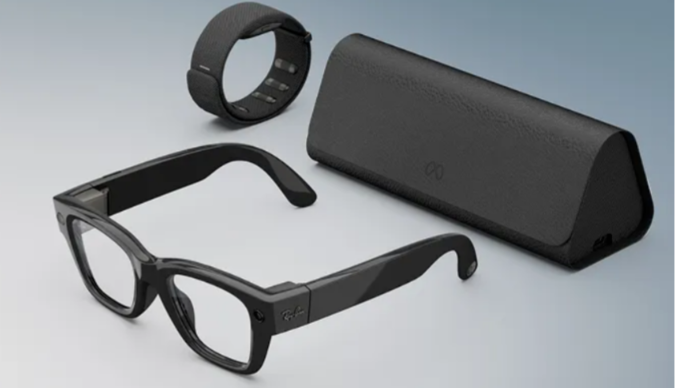
    Meta智能眼镜,带充电盒和腕带
    Meta智能眼镜,带充电盒和腕带

    V. Meta Can’t Wait to Take Mobile’s Lunch

    Meta’s anxiety hides in the data. 85.2% market share looks impressive, but the overall AI glasses market remains small.

    $115-135 billion capital expenditure converts to nearly trillion RMB.

    If AI glasses cannot transform from “novelty toys” to “daily necessities,” Meta’s earnings will suffer.

    So Meta’s strategy is clear —

    First cultivate users through mobile apps, then harvest scenarios with glasses, finally lock in stickiness through ecosystem.

    But the question remains: do users really need a pair of always-online AI glasses?

    VI. Conclusion: Everywhere is the Answer, and the Question

    Meta says AI should live Everywhere.

    This answer is grand, but also exposes a problem: when AI is everywhere, do users still have the right to be “offline”?

    Glasses are more intimate than phones, more concealed, harder to ignore. Every frame they see becomes AI training data. Whether Meta’s privacy policy can keep pace with hardware penetration is the biggest variable ahead.

    Meta is betting $115 billion that AI glasses will become the next computing platform.

    Whether this money burns a future or not, we’ll see in H2 2026.
  • Meta Quest 3S Review: Best Budget VR Under $300

    Meta Quest 3S Review: Best Budget VR Under $300

    Rating: 8.2/10

    The Meta Quest 3S is not the best VR headset, but it may be the most “right” VR headset in 2026. At $299, it packages mixed reality, wireless freedom, and a massive game library into an entry-level bundle with virtually no barrier. If you’ve never experienced VR or want to upgrade from Quest 2, this is currently the safest choice.

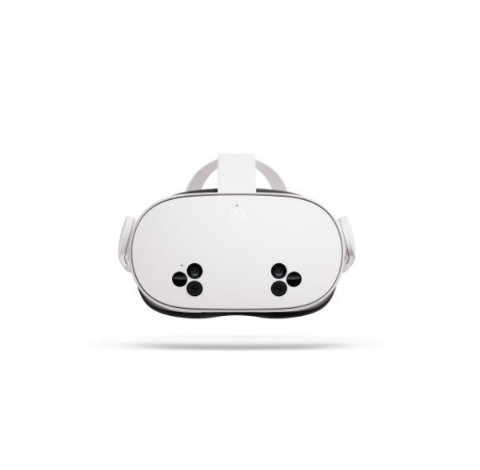
    Meta Quest 3S VR headset front view
    Meta Quest 3S VR headset front view

    Product Overview

    Launched in October 2024, the Quest 3S sits at the entry point of Meta’s current lineup. It shares the exact same Snapdragon XR2 Gen 2 chip and 8GB RAM as the flagship Quest 3, but downgrades the optical system from pancake to Fresnel lenses and drops resolution from 2064×2208 to 1832×1920 per eye — cutting the starting price to $299 (128GB), $200 less than Quest 3.

    Core specifications remain consistent with Quest 3: full-color passthrough cameras, 6DoF inside-out tracking, Touch Plus controllers, Wi-Fi 6E connectivity. This means every game and app that runs on Quest 3 runs on 3S with nearly identical frame rates.

    Performance Analysis

    Visual Experience: Good Enough, Not Stunning

    The Fresnel lenses represent Quest 3S’s biggest compromise. Compared to Quest 3’s pancake lenses, edges are noticeably blurrier with prominent “god rays” in dark scenes. The resolution gap is barely perceptible in actual gameplay, but the lens quality difference is immediately apparent — Quest 3 maintains sharpness from center to edge, while 3S requires keeping your gaze locked to the central “sweet spot” for optimal clarity.

    For fast-paced games like Beat Saber or Gorilla Tag, this limitation matters little since attention stays centered. But for movie watching, reading virtual screens, or exploring open-world games, edge blur accumulates into fatigue.

    Mixed Reality: Pleasantly Surprising

    Full-color passthrough is Quest 3S’s most unexpectedly capable feature. Dual 4MP RGB cameras capture accurate colors with low latency, sufficient to walk around, grab a water bottle, or check phone notifications while wearing the headset. Though grainier than Quest 3, functional completeness is uncompromised — you can play all MR games, place virtual objects on real tables, and turn your living room into a game arena.

    Offering usable mixed reality at $299 is Meta’s dimensional reduction attack on competitors. PlayStation VR2 ($549) lacks passthrough entirely; Apple Vision Pro ($3499) delivers superior MR but at a different price tier.

    Performance and Battery: Flagship-Equivalent

    Thanks to the identical XR2 Gen 2 chip, Quest 3S game frame rates nearly match Quest 3. AAA VR titles like Asgard’s Wrath 2 and Assassin’s Creed Nexus run stably at 72-90fps. The 8GB RAM ensures smooth multitasking and large scene loading.

    Battery life sits at approximately 2-2.5 hours, matching Quest 3. Sufficient for single gaming sessions, but movie watching or extended fitness training requires mid-session charging or a battery head strap.

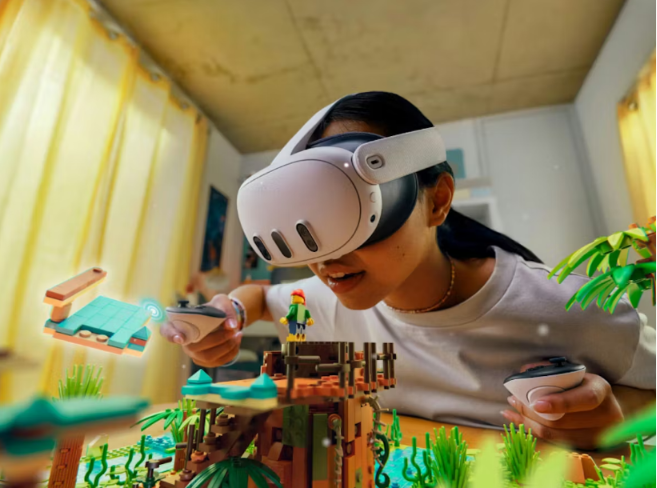
    Quest 3S mixed reality gameplay demo
    Quest 3S mixed reality gameplay demo

    Competitor Comparison

    FeatureQuest 3SQuest 3PlayStation VR2
    Price$299$499$549
    ProcessorXR2 Gen 2XR2 Gen 2Custom AMD
    Resolution (per eye)1832×19202064×22082000×2040
    Lens TypeFresnelPancakeFresnel
    PassthroughFull-colorFull-colorNone
    Requires ConsoleNoNoPS5 Required
    Weight514g515g560g

    Quest 3S’s core advantage is “zero dependency” — no PC, no console, no base stations, just power on and play. This makes it a true consumer product, while PS VR2 remains essentially a PS5 accessory.

    Pros and Cons

    ProsCons
    Flagship chip performance at $299Fresnel lenses with edge blur and god rays
    Full mixed reality functionality retainedThree-step IPD adjustment only
    Wireless design, no external hardware needed2.5-hour battery life
    Massive game library, full Quest app compatibility128GB storage tight for large games
    Lightweight and comfortable for extended wearGrainier passthrough than Quest 3
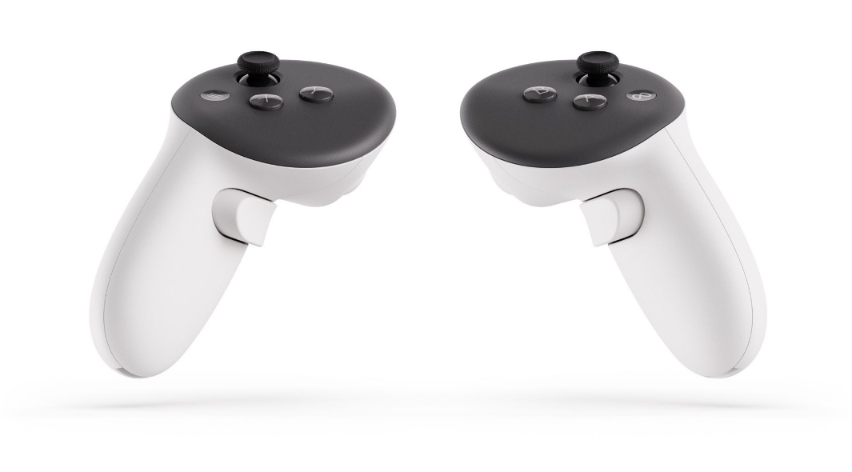
    Meta Touch Plus controllers side view
    Meta Touch Plus controllers side view

    Who Should Buy

    Recommended for:

    • First-time VR users
    • Budget-conscious families wanting mixed reality
    • Quest 2 owners seeking an upgrade
    • Players needing a second headset for guests

    Should Skip:

    • Hardcore gamers demanding maximum visual fidelity (choose Quest 3)
    • Professional users needing extended VR work sessions (choose Vision Pro)
    • Users with existing high-end PC VR setups (3S cannot surpass PC VR quality)

    Conclusion

    The Meta Quest 3S is a product of “smart compromises.” It precisely trims configurations that minimally impact entry-level users (lens quality, resolution) while preserving core elements that determine the experience floor (chip performance, mixed reality, wireless freedom). At $299, no competitor matches its functional completeness.

    Its true value lies not in the spec sheet but in “zero friction” — no researching PC configurations, no setting up sensors, no managing cables. You simply put it on and enter VR. For the average person wanting to try VR in 2026, that zero-barrier access may be the biggest selling point of all.

  • Samsung Galaxy AI Smart Glasses Debut in July

    Samsung Galaxy AI Smart Glasses Debut in July

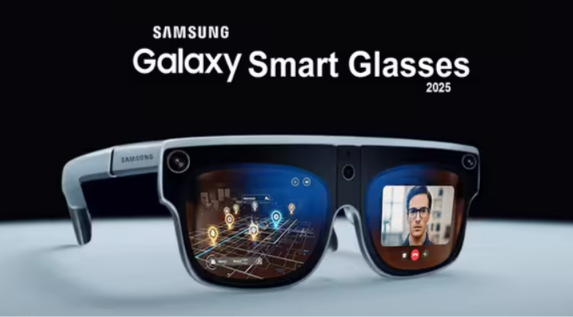
    Seoul, May 14, 2026 — Samsung Electronics has officially confirmed that its first AI smart glasses, the Galaxy Glasses, will debut at the Galaxy Unpacked event in London on July 22, alongside the Galaxy Z Fold 8 and Z Flip 8. Powered by the Android XR platform and Qualcomm’s AR1 chip, this product will become the first mass-produced AI glasses to reach global consumers, marking the transition of AI wearables from “concept demonstration” to “daily wear.”

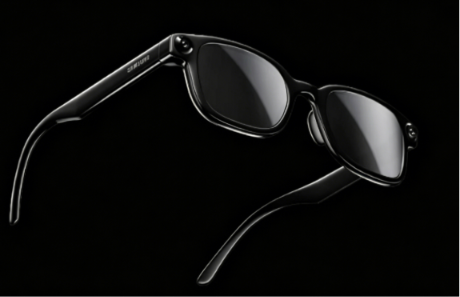
    Samsung Galaxy Glasses leaked design render
    Samsung Galaxy Glasses leaked design render

    From Concept to Mass Production: Android XR Ecosystem’s Breakthrough Moment

    Samsung’s AI glasses strategy is not a solo mission. During the Q4 2025 earnings call, Seong Cho, Executive Vice President of Samsung’s Mobile eXperience business, made it clear that the product had entered the “execution phase,” targeting “rich, immersive multimodal AI experiences.” The triangular alliance with Google and Qualcomm forms the foundation of this ecosystem — Google provides the Android XR operating system and Gemini AI brain, Qualcomm supplies the dedicated AR1 chip, and Samsung handles hardware manufacturing and Galaxy ecosystem integration.

    The strategic intent of this open alliance is clear: to challenge Meta’s closed ecosystem in AI glasses. Since Meta’s Ray-Ban collaboration shipped over 5 million units in 2024, the category has proven consumer viability, but Meta’s Llama ecosystem and Ray-Ban hardware have created a de facto closed loop. Android XR’s open positioning allows multiple manufacturers to participate, echoing Android’s path in challenging iOS — building developer ecosystems and user awareness through collective market presence.

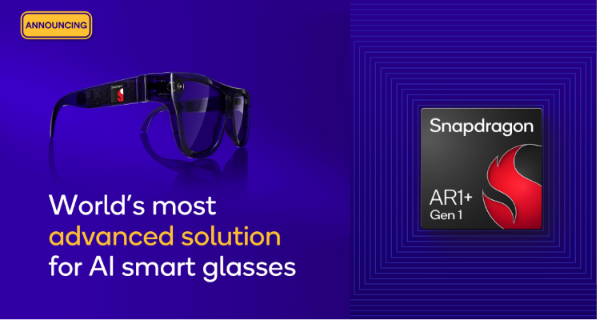
    Technically, Qualcomm’s AR1 platform is the key to production feasibility. Unlike the crude approach of cramming headset chips into glasses, the AR1 series is purpose-built for all-day wear, prioritizing battery efficiency and thermal management. The AR1+ Gen 1 variant debuted at AWE 2025, reducing size by 28% while enabling on-device processing of models like Llama 3.2 without requiring phone or cloud connectivity. This means real-time translation, visual recognition, and voice assistant responses can function offline, delivering qualitative improvements in privacy protection, response latency, and battery life.

    Dual-Version Strategy: AI Glasses and AR Display in Parallel

    Qualcomm Snapdragon AR1+ Gen 1 AI chip platform
    Qualcomm Snapdragon AR1+ Gen 1 AI chip platform

    According to Seoul Economic Daily, Galaxy Glasses will launch in two versions: a display-free AI glasses model equipped with cameras, speakers, and microphones, focusing on Gemini voice interaction and scene recognition; and a version with built-in AR display capable of privately overlaying navigation directions and translation captions visible only to the wearer. Both are co-developed by Google and Samsung, with fashion eyewear brands Gentle Monster and Warby Parker collaborating on designs offering multiple styles for different face shapes and aesthetic preferences.

    The display-free version is expected to launch first, directly competing with Meta Ray-Ban. Its differentiation lies in deep Gemini AI integration — compared to Llama’s functional limitations on-device, Gemini can access real-time data from Google Search, Maps, and Calendar services, delivering more precise contextual responses. The AR display version’s launch date remains unconfirmed; Google verified in December 2025 that it would ship in 2026 but declined to specify timing.

    Samsung positions Galaxy Glasses as an entry-level device for the Galaxy ecosystem rather than a standalone experiment. Users can expect seamless coordination with Galaxy phones, watches, and earbuds: heart rate displays from Galaxy Watch during runs, automatic audio switching to Galaxy Buds for calls, and instant photo sync to Galaxy phones for AI editing. This “persistent AI assistance” across devices creates an ecosystem barrier that single hardware products cannot match.

    Industry Inflection Point: The 2026 AI Wearable Showdown

    2026 is becoming the decisive year for AI wearable devices. Meta’s Ray-Ban AI glasses have established first-mover advantage with cumulative shipments exceeding 5 million units, but the product remains essentially “headphones with a camera,” with AI functions dependent on the cloud and limited interaction modes. OpenAI’s mysterious AI device developed with former Apple design chief Jony Ive is rumored for a second-half 2026 debut, possibly as a screenless wearable. Google’s own Android XR glasses are also in preparation for a 2026 launch. Samsung’s entry transforms the competition from “Meta’s solo show” into “multi-party warfare.”

    Counterpoint Research predicts global AI glasses shipments will exceed 12 million units in 2026, up 200% from approximately 4 million in 2025. Overseas markets outside China will account for roughly 65%, with North America and Europe as core growth regions. Leveraging the global distribution advantages of the Galaxy brand, Samsung could capture 15%-20% market share in its first year, becoming Meta’s most formidable challenger.

    Notably, the AI glasses explosion is not an isolated event but the convergence of three technological maturities: on-device AI computing power, lightweight multimodal large models, and consumer-grade AR optics. Qualcomm AR1’s local inference capabilities, Google Gemini Nano’s on-device optimization, and Samsung’s manufacturing expertise in miniaturized hardware collectively push the product from “geek toy” toward “mass consumer” price and experience tiers.

    Challenges and Concerns: Privacy, Battery Life, and Killer Apps

    Android XR Project Aura glasses concept design
    Android XR Project Aura glasses concept design

    Despite the bright prospects, Galaxy Glasses face three major challenges. First is privacy controversy — front-facing cameras in public spaces have triggered widespread debate in Europe and America, with Meta Ray-Ban users repeatedly accused of recording others without consent. Samsung must establish more transparent privacy protection mechanisms in hardware design (such as LED indicators) and software policies (such as shutter sounds).

    Second is the battery bottleneck. All-day wear demands at least 8 hours of continuous use, but AR1 platform power consumption and AI inference loads pose severe challenges for micro batteries. Early leak information suggests Galaxy Glasses will deliver approximately 6-8 hours in display-free mode, with the AR display version potentially dropping to 4-6 hours — still short of the “all-day wear” ideal.

    The most fundamental bottleneck is the absence of killer applications. Current core AI glasses functions — photography, music listening, voice queries — can all be performed more efficiently by smartphones. The industry has yet to deliver an “irreplaceable scenario” that fundamentally requires the glasses form factor. Samsung and Google must demonstrate unique applications beyond existing experiences at launch; otherwise, Galaxy Glasses risk becoming “a second device for tech enthusiasts” rather than “a necessity for mainstream users.”

    Trillion-Dollar Track Ecosystem Battle

    The AI wearable market is in the chaotic period before the iPhone moment. Meta has built brand recognition with Ray-Ban, but its closed ecosystem limits innovation velocity. Google is replicating the open strategy with Android XR, yet hardware dependence on partners creates inconsistent experiences. OpenAI holds the strongest model capabilities but lacks hardware manufacturing and channel expertise. Samsung’s entry brings a unique variable — it is the only player simultaneously possessing a global consumer electronics brand, proprietary chip design (Exynos), massive manufacturing capacity, and retail distribution.

    Samsung Mobile eXperience head TM Roh has internally defined Galaxy Glasses as “the future entry point of the Galaxy ecosystem.” If this product achieves million-unit sales in the second half of 2026, it will represent not merely hardware success but potentially a replay of the Android smartphone story — using an open ecosystem to challenge a closed empire, ultimately reshaping the industry’s power structure.

    For consumers, the London launch on July 22 will be the best window to observe this transformation. Whether AI glasses can evolve from “geek accessories” to “daily essentials,” the answer may arrive in the second half of this year.