Home

  • Sumbu S3: The Year of Exoskeletons

    Sumbu S3: The Year of Exoskeletons

    For a long time, exoskeleton technology has been confined to specialized fields such as industrial handling, medical rehabilitation, and special operations. High costs, bulky structures, and complex operating procedures have kept it out of reach of ordinary consumers. However, on March 19, 2026, Sumbu, a company specializing in civilian wearable smart exoskeletons, launched its S3 series exoskeleton at the AWE exhibition, attempting to rewrite this landscape. It not only lowers the price of exoskeletons to the thousand-yuan level but also achieves a crucial leap from “professional tools” to “mass consumer products” through lightweight design and intelligent algorithms.

    As one of the first media outlets to receive internal testing devices, our reporter conducted comprehensive testing of the three models in the S3 series (S3 Basic, S3 Pro Advanced, and S3 Ultra Flagship) during the exhibition and the following two weeks. From design and performance to practical application scenarios, we analyze how this “second pair of legs” can shake up the civilian exoskeleton market and how ordinary consumers can choose according to their needs.
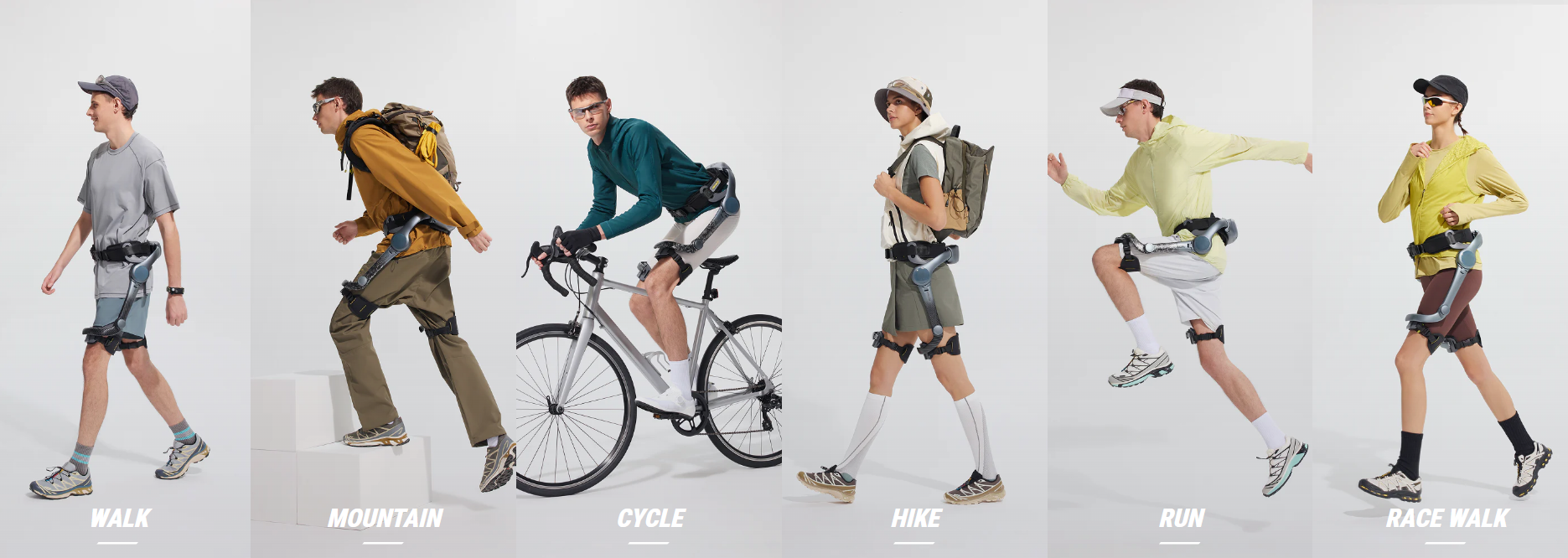
    Sumbu S3 Series
    Sumbu S3 Series

    Design Innovation: Lightweight and Seamless Design, Solving Core Pain Points for Consumer Use

    Traditional exoskeletons are often perceived as cold steel structures and cumbersome strap designs, which has been a major obstacle to their widespread adoption. The core breakthrough of the Sumbu S3 series lies first and foremost in its extreme pursuit of “lightweight” and “ergonomics.”

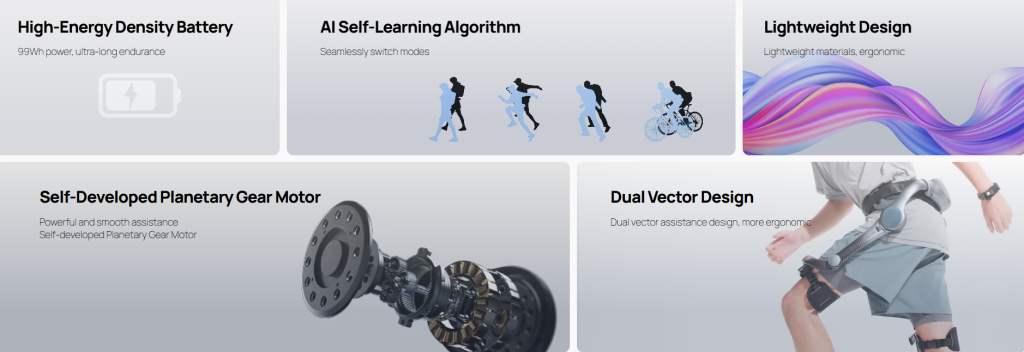
    The entire series utilizes a hybrid structure of aerospace-grade aluminum alloy and carbon fiber composite materials. Official data shows that the entire device weighs only around 2.0 kg—equivalent to only a 15-inch laptop. Furthermore, through optimized lumbar support design, the weight is effectively distributed to the hips and waist, resulting in virtually no noticeable burden when worn. For a device that requires powerful power assistance, this lightweight design represents a significant breakthrough in engineering.

    To address the issue of “foreign object sensation,” the S3 series features targeted optimization in the lumbar support. Its curved design closely conforms to the waist contours of different users, achieving even force distribution. Of particular note is the series’ 100mm infinitely retractable lumbar support, which can support waist circumferences up to 120cm, covering the vast majority of body types from petite women to robust men, offering far greater adaptability than similar products.

    Easy to wear further lowers the barrier to entry for civilian use. Without assistance, a single user can complete the donning process in under a minute—the device abandons the complex locking design of traditional industrial exoskeletons, employing a combination of magnetic attachment and quick-release mechanisms, truly achieving “wearable in everyday life and usable on the go,” breaking the limitation that exoskeletons are “only usable in specific scenarios.”
    Wearable Body Intelligence
    Wearable Body Intelligence

    Core Performance: Embossed Intelligence Empowerment, Breakthroughs in Response Speed ​​and Power Performance

    The S3 series is defined as an “embodied intelligent device,” rather than a simple power booster, primarily due to the synergistic effect of its self-developed power system and intelligent algorithms—a fundamental difference between it and traditional exoskeletons.

    In terms of power, this series is equipped with a planetary gear motor independently developed by Sumbu, with a measured response speed of 0.008 seconds (8 milliseconds). This means that the motor has already completed its assist output the instant the user issues the “lift your leg” command, achieving seamless human-machine collaboration. Peak torque varies across different models: the basic S3 has 28 N·m, the Pro model has 32 N·m, and the Ultra flagship model reaches 36 N·m (at full power), sufficient for high-load scenarios such as climbing hills and stairs. Meanwhile, the motor system has an efficiency exceeding 80% and excellent heat control; even after prolonged walking, the motor surface will not become hot to the touch.

    Intelligent algorithms constitute the “brain” of the S3 series. The device has a built-in nanosecond-level high-speed processor and a self-developed electronic control system, capable of recognizing 13 movement modes within 0.2 seconds, without requiring manual switching by the user. Its core advantages lie in two aspects: first, human-machine closed-loop detection, which uses multi-point sensors on the lower limbs to capture the user’s posture in real time and accurately match the assistance level; second, self-learning capability, where the device continuously records the user’s gait habits, pace, and rhythm. The longer it is used, the more the assistance adapts to the user’s needs, achieving “better harmony with use.”

    Battery life and environmental adaptability ensure its daily use. All models are equipped with automotive-grade high-energy-density batteries, support PD3.1 fast charging, and extreme environment tests show that its operating temperature range covers -20℃ to 60℃, making it suitable for complex scenarios such as extremely cold snowfields and hot deserts. Furthermore, the battery meets aviation carry-on standards, allowing business travelers to board with peace of mind, further expanding its usage scenarios.
    Sumbu S3 Series Pricing
    Sumbu S3 Series Pricing

    Comparison of the three models: tiered positioning, covering different consumer needs

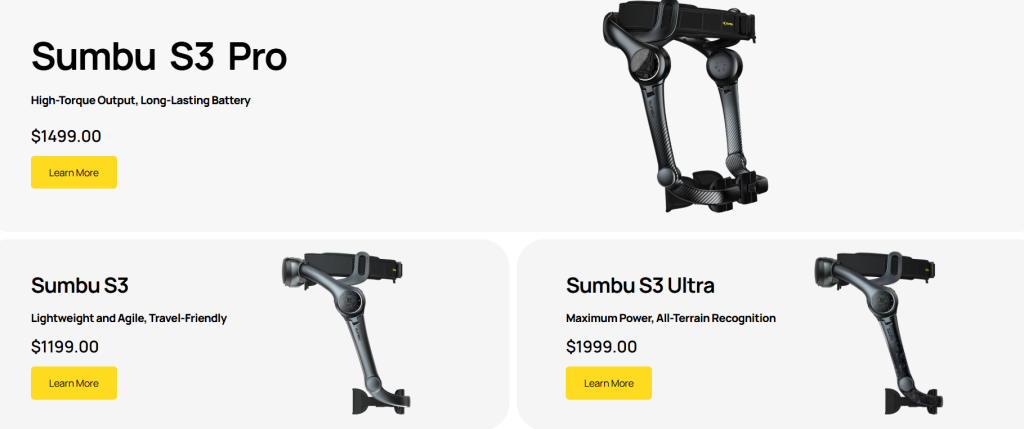
    The S3 series shares a core architecture, but forms a clear tier in configuration, battery life, and smart features, with prices ranging from $1199 to $1999, precisely covering the needs of different consumer groups. The following is a detailed comparative analysis compiled by this newspaper:

    Feature DimensionS3 (Basic Model)S3 Pro (Advanced Version)S3 Ultra (Flagship Model)
    Official pricing$1,199$1,599$1,999
    Core positioningDaily commute, assistance from eldersOutdoor hiking, light exerciseExtreme exploration, professional fitness
    peak torque28 N·m32 N·m36 N·m (Full power version)
    rangeApproximately 15 kilometersApproximately 20 kilometers25 km (99Wh battery)
    Power ModeGentle, Normal, Sport+ Fitness Mode+ Mega Mode (Full Unlocked)
    AI learning abilityBasic gait recognitionEnhanced habit memoryDeep Neural Networks Self-Evolution
    Body materialMainly aviation aluminum alloyAluminum-carbon mixtureAll carbon fiber composite materials
    Protection levelIP54IP54IP54 (Reinforced Structure)
    Recommended audienceUrban commuters, senior citizensWeekend outdoor enthusiastsHardcore gamers, long-distance hikers

    S3 Basic Model ($1199): Affordable Entry-Level Choice

    As a core model breaking the price barrier for civilian exoskeletons, the S3 basic model, while slightly reducing torque and battery life, retains its core 8ms response time and intelligent posture recognition functions. Real-world testing shows that its 15km range is sufficient to cover the daily travel needs of most urban users. Whether it’s daily walks and grocery shopping for the elderly or commuting light for office workers, it meets basic needs, highlighting its cost-effectiveness.

    S3 Pro ($1599): A Balanced All-Round Choice

    The S3 Pro achieves an optimal balance between power and range. Its 20km range and 32N·m peak torque make it suitable for daily urban use as well as weekend outings and light hikes. The newly added Fitness mode is suitable for low-impact gym training and is also ideal for delivery and takeout workers who need to work outdoors for extended periods, making it a rational choice for most consumers.

    S3 Ultra ($1999 USD): The Benchmark of Ultimate Performance

    As the flagship model of the series, the S3 Ultra incorporates all of Sumbu’s top technologies: a full-power torque of 36 N·m, a long battery life of 25 km, and a Mega fully unlocked mode that provides a near-running boost; the all-carbon fiber construction further reduces weight and enhances wearing comfort. This model is primarily aimed at long-distance hikers, mountaineering enthusiasts, and tech geeks seeking the ultimate technological experience, representing the highest level of civilian exoskeleton technology in 2026.

    Safety and Durability: The Core Bottom Line for Civilian Products

    For wearable power devices, safety is the core prerequisite for market acceptance and a key area of ​​investment for Sumbu’s innovation. Real-world testing shows that the S3 series has three core advantages in safety protection:

    Firstly, a preventative safety system. Within 0.5 seconds of power-on, the highly sensitive sensor completes a full self-check. If it detects that the user is in a lying position or not properly fitted, the system immediately locks the assist function to prevent injury from misoperation. This design is particularly user-friendly for middle-aged and elderly users.

    Secondly, a professional Battery Management System (BMS) monitors the battery’s health in real time, effectively preventing overcharging, over-discharging, and overheating risks, ensuring battery safety and lifespan, while meeting automotive-grade safety standards.

    Thirdly, structural durability. The lumbar support features a stress-balanced design to prevent breakage due to excessive stress at a single point; its IP54 dust and water resistance allows it to operate stably in complex environments such as light rain and sandstorms, significantly reducing maintenance costs and extending the device’s lifespan.

    Ecosystem and Interaction: Multi-Platform Adaptation for Personalized Customization

    The S3 series is not limited to the hardware itself but has built a multi-platform interactive ecosystem, supporting联动 control with Android phones, iOS devices, and Apple Watch, balancing convenience and customization needs.

    Users can adjust five power modes, from Gentle to Mega, via the device or mobile app to suit different road conditions and physical states. Exercise data is synchronized to the mobile app in real time, generating health reports such as steps, assistance duration, and calories burned, allowing users to easily track their exercise status. More importantly, in most scenarios, users do not need to operate the device manually; it can automatically recognize terrain (such as uphill or stairs) and adjust the assistance level autonomously, achieving “seamless operation.”

    Purchase Recommendations and Market Outlook

    After two weeks of in-depth testing, this newspaper believes that the core value of the Sumbu S3 series lies in its successful breaking down the civilian barriers of exoskeleton technology—it does not replace the user’s legs, but rather extends the boundaries of human movement through intelligent assistance, making what was once “out-of-reach” wearable smart technology an accessible everyday tool for ordinary consumers.

    For different consumers, this newspaper offers the following purchasing recommendations:

    1. For budget-conscious consumers primarily using the product for short urban trips, or those planning to give it as a gift to elders, the S3 basic model ($1199) is the best choice. Its core experience is consistent with the flagship model, effectively addressing the basic pain points of limited range and offering the best value.
    2. For weekend outdoor enthusiasts, those seeking longer battery life, or those needing reduced burden during outdoor work, the S3 Pro ($1599) is the optimal choice. It achieves a perfect balance between performance and price, with a 20km range covering most weekend outdoor scenarios.
    3. For tech geeks, long-distance hiking enthusiasts, or sports aficionados seeking the ultimate assistive experience, the S3 Ultra ($1999) is the best option. Its full-performance capabilities and all-carbon fiber construction represent the highest level of current civilian exoskeletons.

    From a market perspective, the release of the S3 series marks 2026 as the year civilian exoskeletons become widespread. With continuous technological advancements and further cost reductions, wearable smart devices are expected to become a new growth point for next-generation consumer electronics. With its first-mover advantage, Sumbu, if it can continue to optimize product experience and expand application scenarios, may take a leading position in the civilian exoskeleton market.

    The ultimate meaning of technology lies in making life better. The emergence of the S3 series has not only reshaped the market landscape of exoskeleton technology but also brought the vision of “free travel” into the daily lives of more people.
  • Jupiter JOVE Glasses S1: Boundless Vision

    Jupiter JOVE Glasses S1: Boundless Vision

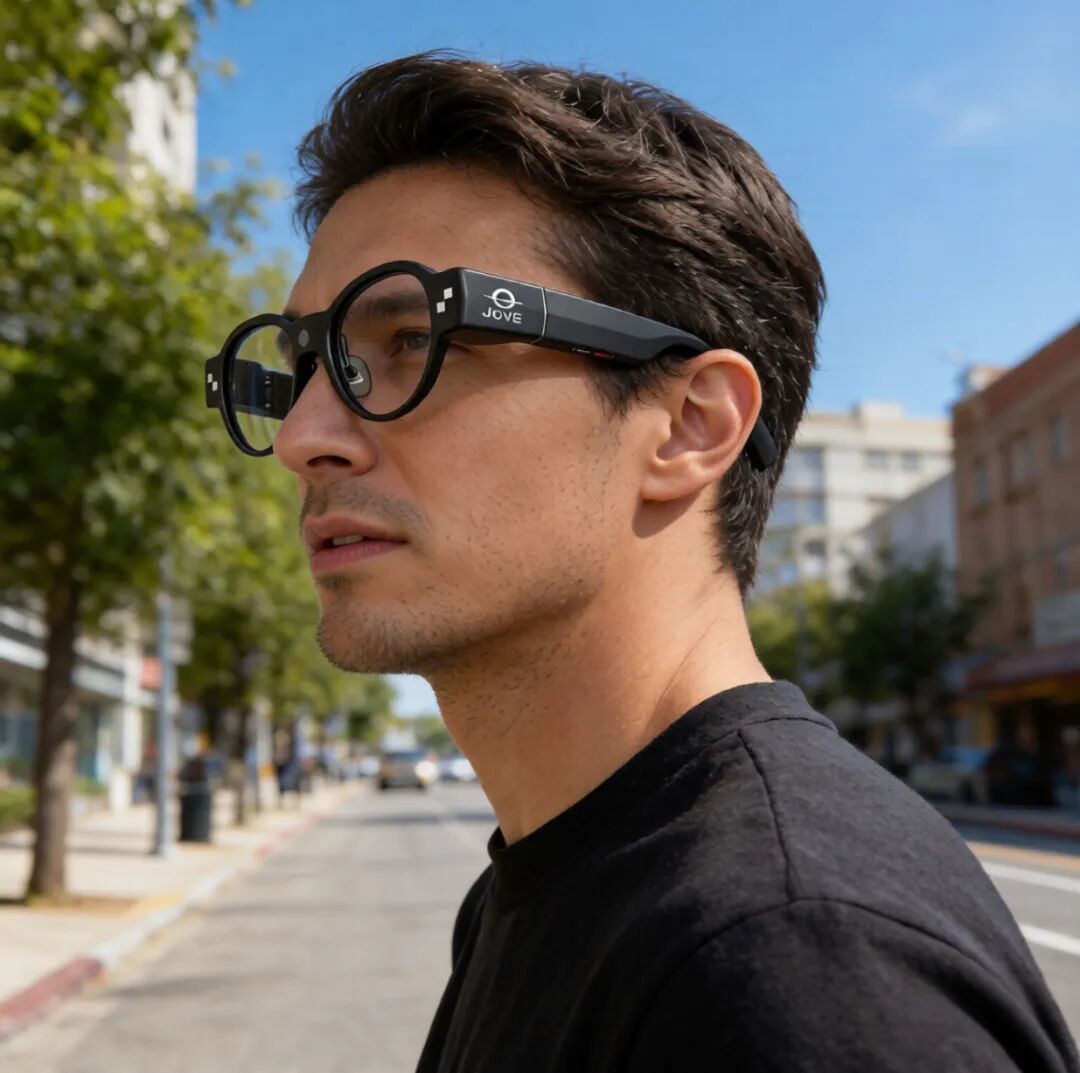
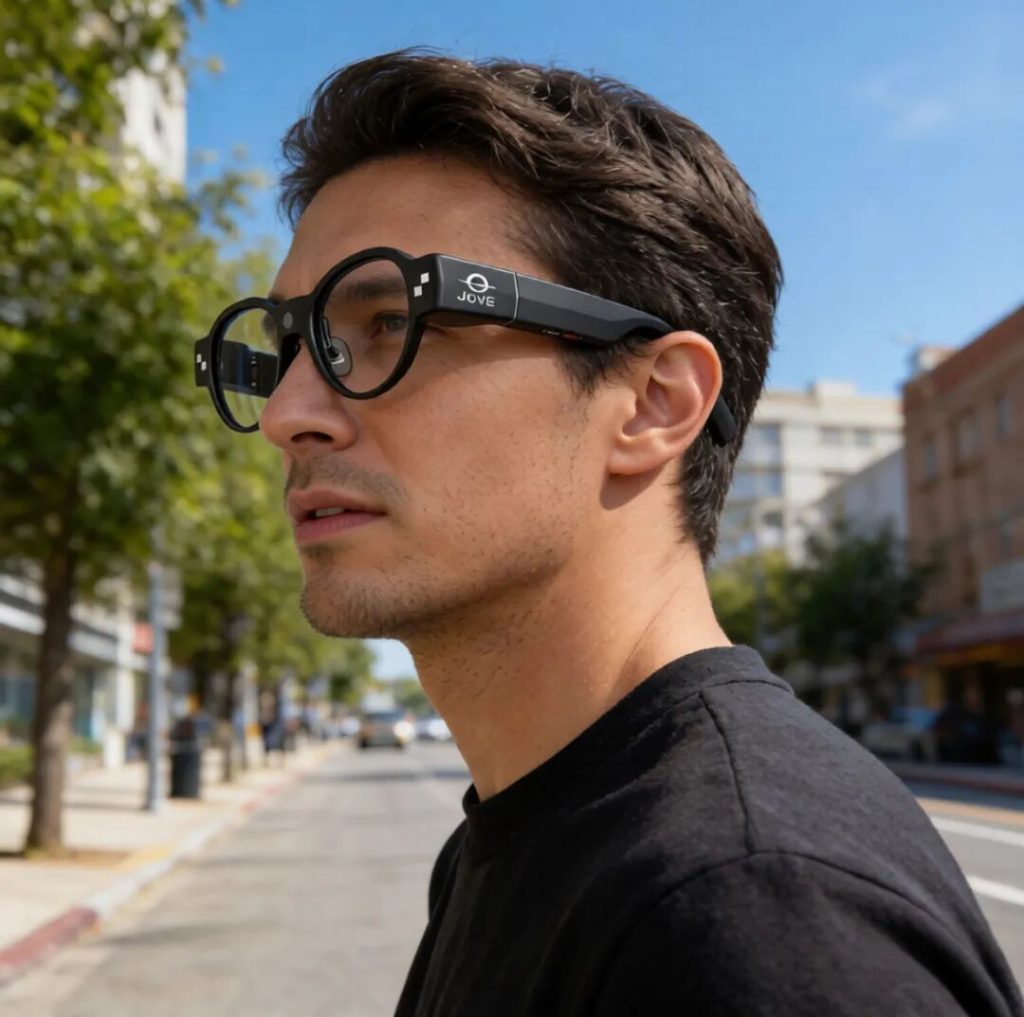
    Jupiter officially launched the JOVE Glasses S1 smart glasses in March 2026. Priced at 4999 RMB (approximately $690 USD), this product, marketed as the “world’s cheapest full-color AI+AR smart glasses,” aims to break down the price barrier of high-end AR technology and drive this category, once considered a “geek toy,” into the mass market.

    In the current era of deep integration between AI big data models and hardware, smart glasses are evolving from auxiliary display devices to “wearable digital assistants.” The debut of the Jupiter S1 not only tests its ability to balance hardware configuration and software experience but will also redefine the cost-effectiveness benchmark for mid-to-high-end AR glasses. This article will analyze whether this product can truly penetrate the mass market, starting from its technological strength, market positioning, and practical application scenarios.

    JOVE Glasses S1
    JOVE Glasses S1

    Core Configuration: An Attempt to “Democratize” High-End Technology

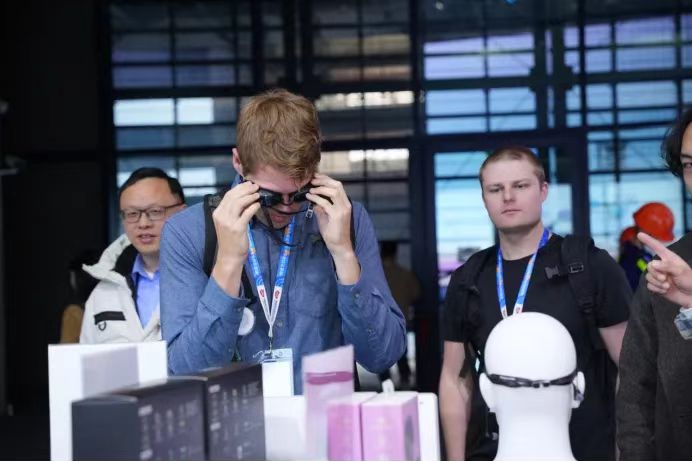
    The core experience of AR glasses depends on display technology. The Jupiter S1 directly targets high-end products in its hardware selection, employing a combination of arrayed waveguides and MicroOLED—a solution previously mostly used in flagship models priced over $1000 USD.

    Unlike the Birdbath solution commonly used in entry-level AR glasses on the market, arrayed waveguide technology achieves full-color display for both eyes while maintaining high light transmittance, avoiding the problem of obstructing the view of reality when worn. Jupiter specifically emphasizes that this product has solved the common “rainbow pattern” optical flaw in waveguide technology. This improvement will significantly enhance the comfort of reading text and overlaying virtual information, and is a key advantage that distinguishes it from similar low-priced products.

    Regarding the imaging system, the S1 is equipped with a 16-megapixel camera and supports low-light AF autofocus. This configuration surpasses the “barcode scanning level” cameras of most smart glasses. In low-light environments such as restaurants and nighttime streets, the camera can still capture clear images, providing image quality assurance for core functions such as AI object recognition and first-person perspective shooting—if the image is blurry, the accuracy of AI recognition will drop significantly, which is a core shortcoming of many previous low-priced AR glasses.

    Regarding wearing comfort, Jupiter did not disclose the specific weight of the S1, but emphasized that it adopts a lightweight design. For wearable devices that require prolonged wear, weight control directly determines user engagement and is crucial to avoiding them becoming gathering dust.

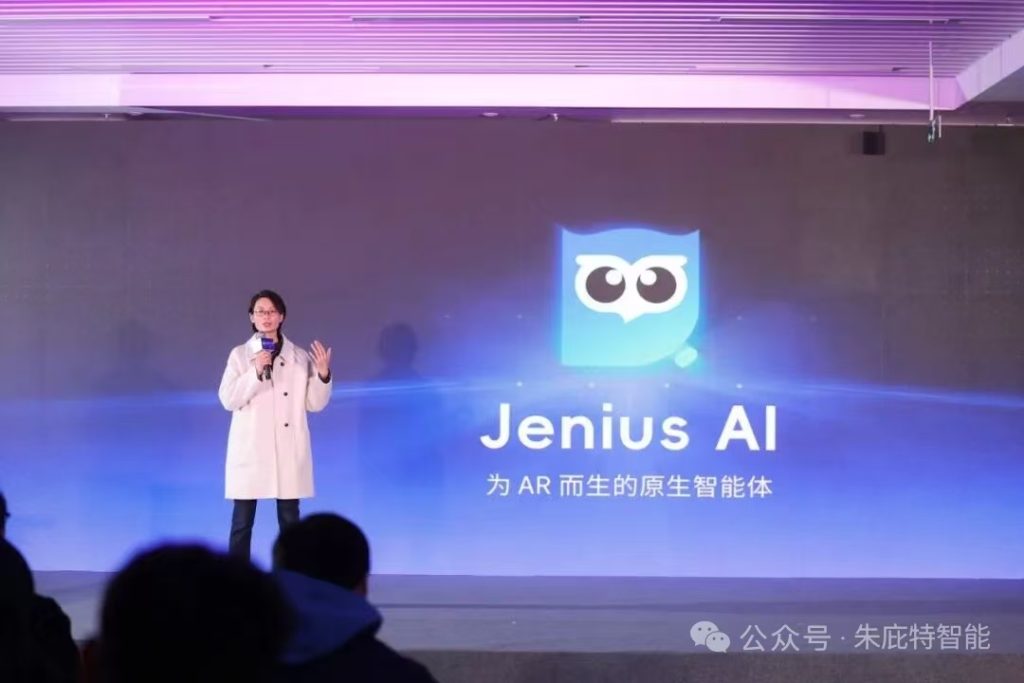
    Software Core: Jenius AI Builds a “Service-Oriented” Intelligent Experience

    If hardware is the foundation of the S1, then Jenius AI is its core differentiating factor. Unlike ordinary Bluetooth glasses or simple display devices, the S1 leverages the resources of its parent company, Tianjudihe, to access nearly a thousand core data interfaces and MCP services, upgrading AI from a “voice-based question-and-answer tool” to a “digital assistant capable of performing tasks.”

    This difference in “service capability” is particularly evident: ordinary AI glasses can only inform users of high-speed rail ticket prices, while the S1 can directly complete the booking process. In the launch event demonstration, a user used the voice command, “Xiaoju, Xiaoju, book me a high-speed rail ticket from Suzhou to Hangzhou for 10 AM tomorrow,” and the glasses immediately displayed train information. After confirmation, the entire order was placed in less than 30 seconds, significantly simplifying the mobile phone operation process.

    In addition, Jenius AI supports functions such as product recognition and price comparison, and smart home control: scanning a product displays its price across the entire internet, preventing users from being overcharged when shopping; a single sentence can control IoT devices such as speakers and lights, making it more intuitive than operating a mobile phone—commands can be issued simultaneously with the user’s gaze, eliminating the need to frequently unlock the phone or switch apps.

    Jeniue AI Born for AR
    Jeniue AI Born for AR

    Application Scenarios: A Dual Strategy from Consumer to Industry-Level

    Jupiter S1 is not limited to the consumer market but also covers both daily life and professional industry scenarios, attempting to broaden the product’s application boundaries.

    In consumer-level scenarios, the teleprompter function meets the needs of users giving speeches, live broadcasts, and presentations, with the script appearing directly on the lens, achieving “freedom of speaking without a script”; the first-person perspective shooting function frees up hands to record moments of life such as cooking and parent-child interaction, achieving “what you see is what you get”; and real-time translation of minor languages ​​breaks down language barriers for users traveling abroad.

    In various industry scenarios, the S1 demonstrates diverse potential: security and specialized industries can utilize it for battlefield vision sharing and AR-based person recognition and early warning; traffic management can use it for vehicle inspection; and engineers can use it to break free from the constraints of “operating while flipping through blueprints,” improving work efficiency. This dual “consumer + industry” approach makes the S1 more competitive among similar products.

    Market Comparison: Is the 4999 RMB (approximately US$690) price tag truly worthwhile?

    The 4999 RMB price is the S1’s most eye-catching highlight and its core weapon for penetrating the market. Although the reference information mentioned a pre-sale price of 4399 RMB, the official guide price was ultimately set at 4999 RMB. Even so, in the category of full-color + waveguide + AI all-in-one machines, its price still has a significant advantage—international brand products with similar configurations generally cost over US$1000.

    From a target audience perspective, the S1 precisely targets four types of users: business professionals who frequently book tickets and need meeting prompts, tech geeks who pursue cutting-edge technology, content creators who need first-person perspective footage, and enterprise users with remote collaboration and on-site verification needs. For these groups, the S1’s price-performance ratio makes it a top choice within a 5000 yuan budget.

    However, potential concerns also exist: Jenius AI’s core capabilities heavily rely on the Tianjudihe data interface. Future service subscription fees or interface adjustments could impact user experience. Furthermore, official battery life data is not detailed; heavy use of AI functions (such as real-time recognition and online ticketing) places high demands on power consumption, and actual battery life performance still needs market testing.

    Conclusion: A game-changer for the mass adoption of AR glasses?

    The release of the Jupiter JOVE Glasses S1 marks the transition of AI+AR hardware from “concept hype” to “practical application.” Priced at 4999 yuan, the S1 brings a high-end array waveguide + Micro OLED display solution to the mainstream market, while Jenius AI endows the glasses with real “functionality,” breaking the industry stereotype that “low price = low configuration.”

    For consumers, the S1 lowers the barrier to experiencing high-end AR technology; for the industry, it may drive the AR glasses market into a new phase of “cost-effective competition.” If potential issues such as battery life and ecosystem stability can be resolved, this product has the potential to become a game-changer in the popularization of AR glasses—after all, in the smart wearable device race, “easy to use and affordable” is always the key to unlocking the mass market.

  • GuangLi New Products Showdown: Holoswim 3 vs SollaWave

    GuangLi New Products Showdown: Holoswim 3 vs SollaWave

    At the AWE (Appliance & Electronics World Expo), GuangLi unveiled two new smart swimming goggles—the Holoswim 3 AR Smart Swim Goggles and the SollaWave AI Smart Music Swim Goggles—competing in the underwater smart device market with two distinct technological approaches. The launch of these two products not only continues GuangLi’s first-mover advantage in the AR underwater device field but also attempts to cover swimming needs across all scenarios, from professional training to recreational fitness, through differentiated positioning.

    Traditional swimming training has long been plagued by “data disconnect” and “monotonous experience”: professional swimmers struggle to obtain real-time core data such as pace and trajectory, while recreational swimmers are often deterred by the monotony of long lanes. GuangLi’s two new products address these two pain points with their respective solutions.

    GPS + AR Empowerment
    GPS + AR Empowerment

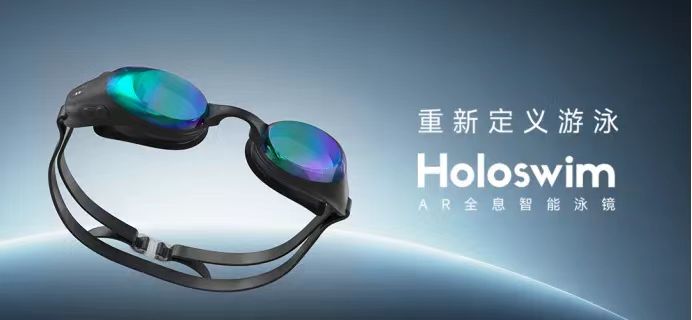
    Holoswim 3: GPS + AR Empowerment, Targeting Professional Outdoor Scenarios

    As an iteration of GuangLi’s flagship series, the Holoswim 3 focuses on “data visualization + outdoor safety” as its core selling points. Building upon the AR display technology of its predecessor, it has undergone a dual upgrade in both functionality and appearance, directly targeting professional swimmers and outdoor enthusiasts.

    The product’s core competitiveness lies in the combination of real-time AR underwater display and GPS trajectory guidance. Through optical projection technology, users can clearly view key training data such as pace, distance, and time in front of their field of vision without interrupting their swimming rhythm, solving the pain point of “blind swimming” with traditional goggles. The built-in GPS module is a core differentiator from similar products—in open waters such as lakes and oceans, it can record movement trajectories in real time and provide directional guidance, significantly improving the safety of outdoor swimming. This has irreplaceable practical value for triathletes and professionals who conduct long-term outdoor training.

    Ecosystem connectivity further strengthens its position as a data hub. The Holoswim 3 can be paired with smartwatches, fitness trackers, and other accessories to sync heart rate data in real time, helping users accurately control training intensity and avoid overexertion. In terms of appearance, the new symmetrical design not only improves visual balance but also enhances comfort during extended wear, while the vibrant coated lenses balance practicality and style.

    However, the upgraded functionality also brings potential considerations. With the integration of GPS and AR display modules, its battery life performance needs to be referenced based on official test data; simultaneously, due to technological costs, its price is expected to be higher than ordinary smart swimming goggles, positioning it in the high-end market.

    From a target audience perspective, the Holoswim 3 is more suitable for open water swimmers, serious trainees seeking accurate data, and tech enthusiasts who value technological experience and design.

    SollaWave
    SollaWave

    SollaWave: Music at its Core, Focusing on Leisure and Fitness Scenarios

    In stark contrast to the Holoswim 3’s “professional orientation,” the SollaWave focuses on “auditory experience,” targeting leisure and fitness enthusiasts, attempting to break the monotony of swimming through the combination of music and AI voice.

    Offline music playback is its core function. The built-in storage module allows users to download music in advance, eliminating the need to carry a phone, rely on waterproof bags and cables while swimming, truly achieving “listen as soon as you get in the water.” GuangLi has optimized its in-ear acoustic technology to address the underwater sound transmission characteristics, ensuring clear underwater sound quality and a strong sense of rhythm, turning swimming into an immersive “underwater concert.”

    Data feedback employs a “screenless” design—AI voice prompts provide users with training data such as distance and time during swimming breaks or turns, avoiding visual interference with swimming focus and allowing users to concentrate more on the strokes themselves. Furthermore, the rhythm of the music can help users regulate their breathing, indirectly improving athletic performance.

    The product’s shortcomings are also apparent: in-ear comfort varies from person to person, and users need to pay attention to earbud size fit; additionally, it lacks GPS positioning, making its safety guidance capabilities in open water far inferior to the Holoswim 3.

    Holoswim 3
    Holoswim 3

    SollaWave’s target users are clearly defined: fitness enthusiasts who primarily exercise in indoor pools and have low GPS requirements, those who rely on music to enhance their workout experience, and users who dislike visual distractions and prefer auditory feedback.

    Market Positioning and Purchase Decision: Precise Matching to Scenarios is Key

    The differentiated positioning of the two products essentially reflects GuangLi’s segmented strategy in the underwater smart device market. To help consumers make informed decisions, the following is a comparison of the two products’ core dimensions:

    From a decision-making perspective, if users frequently swim in open water, prioritize the accuracy of training data, or have high requirements for equipment aesthetics, the Holoswim 3 is a better choice; if users primarily exercise in indoor pools, seek a relaxed workout experience, and rely on music to alleviate boredom, the SollaWave offers better value for money.

    Price Prediction and Market Outlook

    As of the end of the AWE press conference, GuangLi has not yet announced the global unified retail price for both products. Based on their technical specifications, product positioning, and the market pricing of their predecessors, industry analysts predict that the Holoswim 3, with its integrated GPS and AR display technology, will be priced in the high-end range of $350-$450; the SollaWave, as a differentiated leisure product, will be priced more affordably, expected to be between $250-$350.

    It should be noted that the above prices are only market predictions and not the official final prices. The final pricing will be announced on GuangLi’s official website and at the AWE launch event. Consumers are advised to pay attention to official channels, as early bird discounts may be available during the initial product launch period.

    Conclusion

    GuangLi’s newly launched Holoswim 3 and SollaWave have avoided homogeneous competition, instead precisely addressing the needs of different swimming groups through a dual approach of “professional data” and “leisure experience.” The Holoswim 3 pushes AR technology from “conceptual” to “practical,” solving a core safety pain point in open water swimming; the SollaWave takes a different approach, using music to reconstruct the swimming experience, lowering the entry barrier for smart swimming goggles.

    For consumers, the key to choosing between the two products lies in “scenario matching”—there is no absolute superiority or inferiority, only differences in whether they suit their own needs. With smart wearable devices continuously penetrating sports scenarios, GuangLi’s dual-product strategy may further solidify its leading position in the underwater smart device field.

  • Aqara Doorbell Camera Center G410

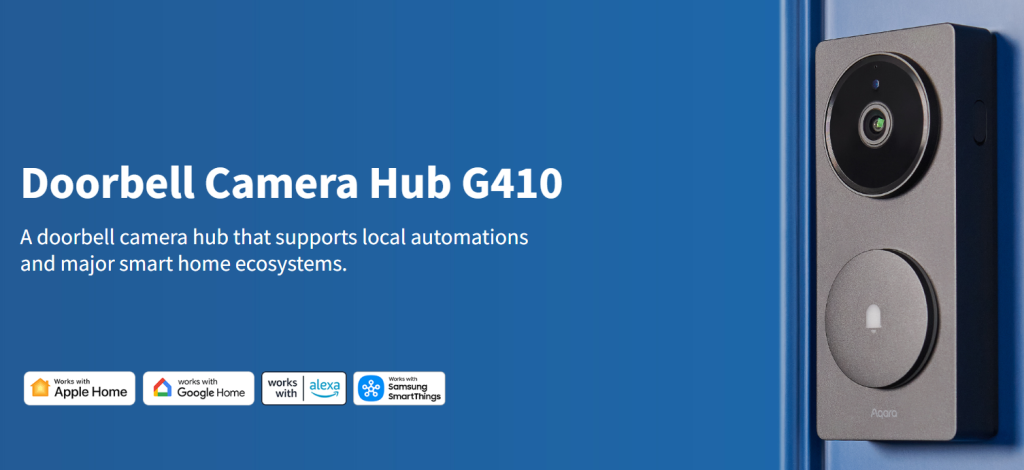
    Aqara Doorbell Camera Center G410

    In today’s increasingly competitive smart home market, doorbell cameras have evolved from simple visitor alert tools into core entry points for home security systems and crucial hubs connecting all smart devices in the house. For mid-to-high-end consumers seeking efficiency, security, and convenience, a product that combines security capabilities with ecosystem compatibility is becoming an essential option for home upgrades.

    Aqara, a leading player in the global smart home space sector, has launched the G410 doorbell camera hub, emphasizing “local automation + full ecosystem compatibility” as its core selling points. Priced at $129, it precisely targets the mid-to-high-end market, attempting to break the limitations of traditional doorbells’ “single function” and provide users with an integrated solution of “security protection + smart linkage.” This newspaper conducted a two-week hands-on test, dissecting the product from multiple dimensions including functionality, ecosystem, storage, and installation, analyzing its core competitiveness, and providing a reference for consumers’ purchasing decisions.

    Aqara G410
    Aqara G410

    I. Product Positioning: More Than Just a Doorbell, It’s the “Invisible Hub” of Whole-House Smart Home

    Unlike most ordinary doorbell cameras on the market that focus solely on video surveillance and visitor answering, the G410’s core advantage lies in its “dual-purpose” design—it’s both a fully functional doorbell camera and a smart hub supporting local automation. This positioning gives it a differentiated competitive advantage in its price range.

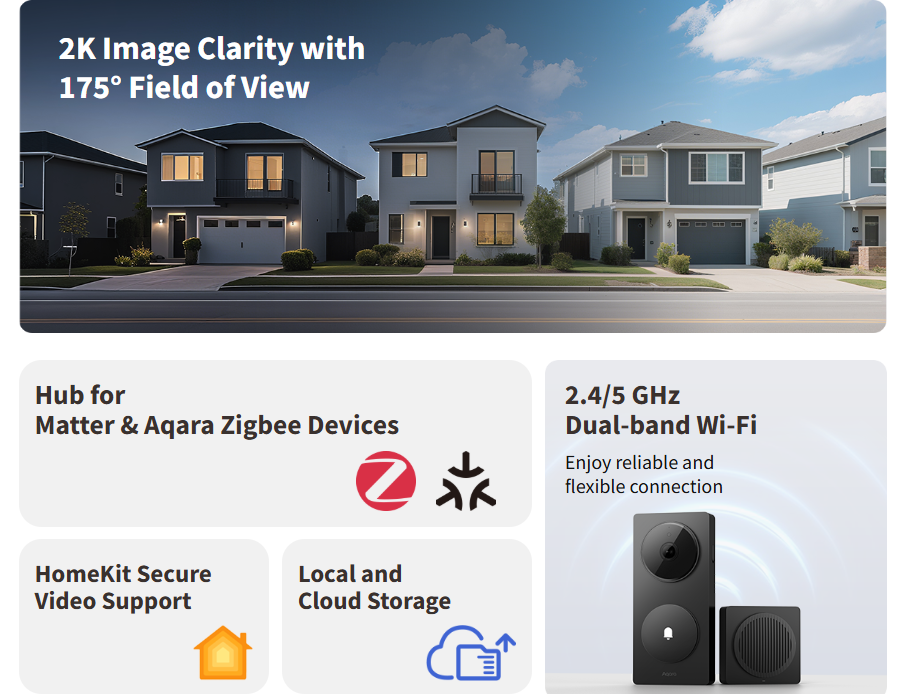
    Real-world testing revealed that the G410 has a built-in multi-protocol hub, functioning as both a Zigbee 3.0 hub and a Thread border router, while also incorporating a Matter controller. This means it can not only serve as the control core for Aqara’s own devices but also bridge third-party Matter devices, enabling unified management of all smart home devices without the need for a separate smart hub, significantly lowering the barrier to entry and cost for users to implement whole-house smart home solutions.

    II. Core Functionality Testing: A Balance Between Precise Security and Convenient User Experience

    1. Remote Answering: 1-2 Second Delay, Eliminating the Pain Point of Missed Visitors

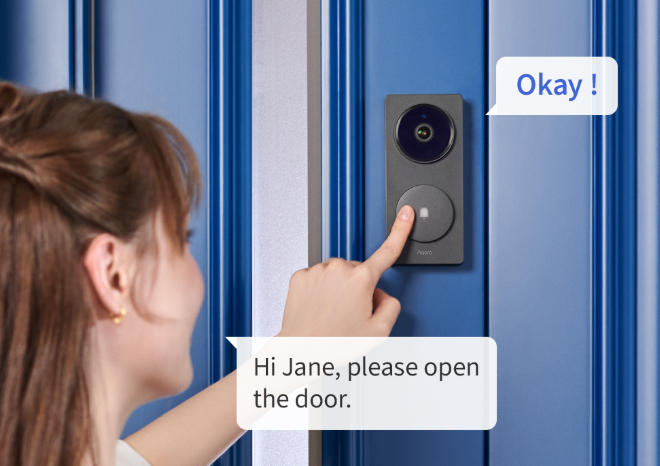
    Remote answering is a core requirement for doorbell cameras, and the G410’s performance sets an industry benchmark. Real-world testing shows that regardless of whether the user is at home, in the office, or traveling, as long as their phone or smart display is connected to the internet, they will receive a notification within 1-2 seconds after the doorbell is triggered. A single click connects the doorbell to view live footage of their front door, with virtually no lag.

    Even in 4G/5G mobile network environments, the video transmission remains stable, effectively addressing industry pain points such as “delivery arrives unattended” and “visitors arrive unanswered.” More importantly, the G410 supports streaming to mainstream smart displays such as Google Home and Amazon Alexa. Users can wake up the camera and answer visitors with voice commands without unlocking their phones, a convenience particularly useful for families with elderly members or children.

    1. Two-way Audio: Clear and Noise-Free, Enhanced Security

    The clarity of the two-way audio directly determines the user experience of the doorbell camera. Equipped with a high-sensitivity microphone and speaker, the G410 demonstrated excellent conversation clarity in both indoor and outdoor environments during testing, with no noticeable background noise or echo. Even in windy outdoor conditions, users could clearly hear visitors, and their own voice was accurately transmitted.

    Addressing the security needs of people living alone, the G410 features a voice-changing intercom function. Female users home alone can switch to a male or robotic voice to communicate with visitors, further enhancing home security. Furthermore, users can flexibly adjust audio volume and activate a silent mode via the Aqara app to avoid disturbing family members, balancing convenience and user-friendliness.

    1. Precise Alarms: AI + Millimeter-Wave Radar, Rejecting False Alarms

    False alarms from ordinary doorbell cameras have always been a core pain point for users. The G410, by incorporating millimeter-wave radar detection technology combined with local AI recognition algorithms, achieves accurate differentiation between people, pets, vehicles, and packages. It effectively filters out irrelevant interference such as wind rustling and pets passing by, reducing false alarms while ensuring that genuine security risks are not overlooked.

    Real-world testing shows that when it detects unusual activity such as a stranger lingering for an extended period or someone touching the doorbell, the device immediately triggers an alarm and simultaneously pushes a notification to the user’s mobile phone. It can also link with smart home lights, alarms, and other devices, forming a closed-loop protection system of “detection-alarm-linkage.” Even in low-light conditions at night, its recognition accuracy remains high, providing comprehensive protection for your home.

    1. Storage Solution: Local + Cloud Dual Options, Balancing Privacy and Convenience

    The flexibility of its storage solution is another major highlight of the G410, meeting both privacy needs and the demands of high-capacity usage scenarios.

    For local storage, the G410 supports Class 10 and higher microSD cards (sold separately), with a maximum capacity of 512GB. Once inserted, it enables 24/7 continuous recording, with all video data stored locally, avoiding cloud transmission and effectively preventing data leakage risks. Real-world testing shows that a 128GB microSD card can store approximately 7-10 days of 2K high-definition video, sufficient for most families’ daily needs.

    For cloud storage, users can subscribe to the HomeGuardian service for cloud backup of recorded videos, with end-to-end encryption to ensure data security. It’s important to note that cloud storage only supports wired power; it cannot be used in wireless battery-powered mode. This option is suitable as a supplement for users who need long-term video storage and are concerned about local SD card damage.

    One-click Viewing
    One-click Viewing

    III. Ecosystem Compatibility: Cross-Platform Adaptation, Unlocking the Limits of Whole-Home Smart Home Technology

    As a doorbell camera hub supporting local automation, the G410’s ecosystem compatibility directly determines its “smart upper limit.” Real-world testing shows that this product is compatible with almost all major global smart home ecosystems, covering different user groups including Apple, Android, and open-source platforms, demonstrating outstanding adaptability.

    1. Seamless HomeKit Adaptation: The “Optimal Choice” for Apple Users

    For Apple ecosystem users, the G410’s adaptation experience is seamless. This product fully supports HomeKit Secure Video (HSV) and can directly connect to the Apple Home app, achieving deep integration with Apple devices such as iPhone, iPad, Apple Watch, and HomePod. Users don’t need to download the Aqara app separately to view live feeds, receive notifications, and respond to visitors on their Apple devices. They can also store videos via iCloud, fully integrating into the Apple ecosystem.

    It’s worth noting that when using HomeKit security video, the maximum video resolution is 1200p, slightly lower than the device’s native 2K resolution. However, the image clarity is still sufficient for daily monitoring needs. For Apple ecosystem users, this compatibility and convenience more than compensate for the slight resolution difference.

    1. Home Assistant Local Integration: A Flexible Choice for Open-Source Users

    For users who prefer customization and use the Home Assistant open-source platform, the G410’s local integration feature is highly attractive. This product supports local interaction with Home Assistant via the Matter protocol, eliminating cloud reliance, resulting in faster response times and more flexible automation scene settings—such as “automatically turning on living room lights when the doorbell is pressed” or “locking the smart lock when a stranger is detected.”

    Real-world testing shows that integrating the G410 with Home Assistant is quite simple; adding it is done by scanning a Matter QR code. Once integrated, it can recognize 10 relevant entities, including camera feeds, motion sensors, and doorbell triggers. Users can customize automation scenes to achieve a more personalized smart experience. Furthermore, its support for the RTSP protocol (wired power supply only) allows for customized video stream delivery, meeting the advanced needs of open-source users.

    1. Multi-Platform Compatibility: Covering Mainstream User Groups

    In addition to HomeKit and Home Assistant, the G410 is also compatible with Aqara’s own ecosystem, Amazon Alexa, Google Home, SmartThings, and other mainstream smart home platforms. It supports multiple connection protocols including Wi-Fi (2.4GHz/5GHz), Bluetooth, and Zigbee/Thread, enabling seamless integration with most smart devices on the market. Whether it’s Aqara’s own sensors and switches, or third-party smart lights and alarms, seamless integration is achieved, helping users create a truly whole-house smart ecosystem.

    IV. Hardware and Installation: Durable and Easy to Install, Adaptable to Diverse Scenarios

    1. Hardware Specifications: Balancing Durability and Flexibility

    The G410’s hardware configuration fully considers the needs of outdoor use, balancing practicality and durability. The doorbell body measures 141.5×65×30.4mm, and the control center (ring) measures 65.2×65×28.4mm. The overall design is simple and elegant, available in black and gray to match different door styles.

    In terms of materials, this product uses weather-resistant materials. The doorbell body operates in a temperature range of -18℃ to 50℃, the control center in 0℃ to 40℃, and the humidity range is 0~95%RH (non-condensing). It can adapt to different regional climates, unaffected by rain, snow, or high temperatures, making it suitable for outdoor installation.

    The power supply is equally flexible. The doorbell unit supports 12V-24V AC/DC wired power supply and can also be wirelessly powered using 6 replaceable AA alkaline batteries. The control center uses 5V DC 1A (USB-C) power supply. In wireless power mode, battery life can last for several months (depending on usage frequency), eliminating the need for frequent battery replacements and balancing convenience and practicality.

    1. Installation Experience: Beginner-Friendly, No Professional Tools Required

    The G410’s installation process is extremely simple, requiring no professional electrician; even novice users can easily complete it. The product package includes a doorbell camera, control center, USB-C data cable, 6 AA batteries, screwdriver, screws and expansion tubes, wedge bracket, and other complete accessories. Users can choose between drilling or no-drill installation methods depending on their door type (wooden door, iron door, tiled wall, etc.), with the entire process taking no more than 10 minutes.

    Network configuration is equally convenient. Simply scan the device’s QR code using the Aqara app and follow the prompts to complete device addition and network configuration in no more than 5 minutes. Even elderly people unfamiliar with smart home devices can easily complete the installation and network configuration with the guidance of family members.

    Multiple Functions
    Multiple Functions

    V. Advantages and Disadvantages Review and Target Audience Definition

    Core Advantages

    1. A two-in-one “doorbell + hub” design, combining security and smart connectivity, eliminating the need for a separate smart hub and offering excellent value;
    2. Extremely strong ecosystem compatibility, fully supporting mainstream platforms such as HomeKit, Home Assistant, and Alexa, covering diverse user groups;
    3. A dual local + cloud storage solution, balancing privacy protection and ease of use, allowing for flexible selection based on user needs;
    4. Accurate alarm recognition, low false alarm rate, clear two-way audio, smooth remote response, and robust core security functions;
    5. Simple installation, flexible power supply, high durability, adaptable to various outdoor scenarios, and easy for novice users to use.

    Areas for Improvement:

    1. When connecting to HomeKit secure video, the resolution drops to 1200p, slightly lower than the native 2K resolution.
    2. Cloud storage only supports wired power supply; it cannot be used with wireless power supply, limiting its use in certain scenarios.
    3. MicroSD cards must be purchased separately and require Class 10 or higher specifications, increasing the initial investment for users.
    4. Some users have reported occasional minor glitches when using HomeKit integration, where the mute button in the Aqara app cannot be operated, requiring adjustment through the Apple Home app.

    Suitable and Unsuitable Users:

    ✅ Recommended for:

    1. Apple ecosystem users who want seamless integration with HomeKit for a convenient smart experience.
    2. Users planning a whole-house smart home system who need a “doorbell + hub” 2-in-1 device to simplify system complexity and reduce investment costs.
    3. Users who prioritize privacy and require local storage, supplemented by cloud storage.
    4. Home Assistant open-source users who need local automated integration and seek flexible, customizable smart scenarios.

    ❌ Not recommended for:

    1. Those who only need basic doorbell functionality, have no need for smart home integration, and prioritize extreme cost-effectiveness (ordinary doorbell cameras are cheaper);
    2. Those who heavily rely on cloud storage and cannot provide wired power (cloud storage cannot be used in wireless power mode).

    VI. Final Purchase Recommendation

    Based on comprehensive testing, the Aqara G410 doorbell camera hub is an “all-around” mid-to-high-end product. Priced at $129, it offers excellent value for its “doorbell + smart hub” dual-function positioning. It not only meets core home security needs but also serves as a whole-house smart hub, enabling seamless integration with all ecosystem devices, breaking the functional limitations of traditional doorbells.

    For Apple ecosystem users, Home Assistant enthusiasts, or consumers planning to build a whole-house smart home, the G410 is undoubtedly one of the best choices—it seamlessly integrates into the existing smart ecosystem, simplifies device layout, and provides robust security protection. For users who only need basic doorbell functionality and have no need for smart home integration, choosing a more entry-level product can further reduce investment costs.

    Finally, a reminder: users are advised to purchase a Class 10 or higher microSD card (preferably 128GB or 256GB) to meet local storage needs. For long-term video recording retention, users can subscribe to the HomeGuardian cloud service on demand, balancing convenience and data security.

    Overall, the Aqara G410, with its differentiated 2-in-1 positioning, solid core functions, and broad ecosystem compatibility, is a high-quality choice in the mid-to-high-end smart doorbell market in 2026, balancing security, intelligence, and practicality. It is especially suitable for mid-to-high-end consumers seeking a “one-stop smart experience.”