Home

  • OBSBOT Meet Flip Launch: 4K AI Webcam for $83

    OBSBOT Meet Flip Launch: 4K AI Webcam for $83

    One-sentence verdict: If you’re tired of laptop webcams delivering unflattering angles and muddy image quality, the Meet Flip proves at $83 that professional meeting experiences don’t require professional budgets.
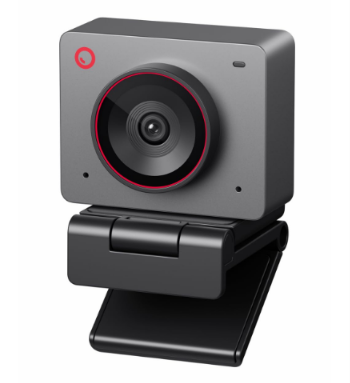
    OBSBOT Meet Flip laptop video meeting scene
    OBSBOT Meet Flip foldable AI webcam design

    Breaking News

    On June 17, 2026, OBSBOT officially launched the Meet Flip, a next-generation 4K AI conference camera. Featuring an integrated flip-fold design weighing only 37.7 grams, the device packs a Sony 1/2-inch stacked CMOS sensor and F/1.8 large aperture, supporting 4K 30fps output. Embedded AI portrait optimization and smart framing algorithms target mobile office, online education, and remote interview scenarios. Priced at 599 RMB ($83), Chinese comedian Li Xueqin serves as brand ambassador.


    Full Story

    OBSBOT is no stranger to the consumer imaging market. The brand, which built its reputation on AI tracking gimbal cameras, has already accumulated mindshare among remote workers through its Tiny series conference cameras. The Meet Flip launch marks OBSBOT’s strategic extension from “desktop fixed devices” to “pocket portable devices.”

    The flip-fold design is Meet Flip’s most immediate product language. When closed, the device resembles a small power bank; flipped open, it reveals the camera and stand without requiring additional installation or calibration. At 37.7 grams, it fits in a pocket alongside keys and lipstick without becoming a burden. The user insight behind this form factor is clear: remote work scenarios have expanded from “home fixed workstations” to “coffee shops, hotels, and co-working spaces”—users need a tool that can set up a professional meeting environment anywhere, not a device that requires careful staging.

    On the hardware front, the Sony 1/2-inch stacked CMOS exceeds conventional configurations for the $83 price tier. For reference, competitors at this price point typically employ 1/4-inch or smaller sensors, with noticeably limited noise control and dynamic range in low-light environments. The F/1.8 large aperture further enhances dark-light performance, meaning even a single hotel room lamp delivers sufficient brightness and detail.

    The 4K 30fps output specification ranks as premium in the conference camera category. Most competitors remain at 1080p 30fps, while 4K resolution presents clearer text edges and graphic details in screen-sharing presentations, whiteboard writing, and document display scenarios. Notably, 4K output demands higher network bandwidth; the device automatically downscales to 1080p or 720p in weak network conditions to maintain fluidity.

    AI capabilities represent OBSBOT’s traditional strength. Meet Flip’s embedded portrait optimization algorithms cover skin tone reproduction, lighting balance, and background blur, while smart framing supports single-person tracking, multi-person split-screen, and close-up switching. These features prove particularly valuable in remote interview scenarios—candidates need not manually adjust camera angles, as the AI automatically ensures facial positioning at optimal screen placement, leaving professional first impressions with interviewers.
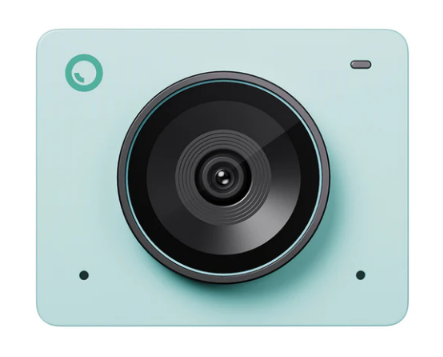
    OBSBOT Meet Flip front lens and body detail
    OBSBOT Meet Flip 4K lens front view detail

    Analysis

    The Tactical Intent Behind $83 Pricing

    The conference camera market has long been polarized: on one side are high-end professional products from Logitech and Poly, priced between $200 and $400; on the other are unbranded 1080p cameras costing less than $20. There is an obvious market gap for branded offerings in the mid-range price bracket of $70–$140.

    Priced at $83, OBSBOT precisely fills this market gap. For remote employees, the choice is no longer a simple matter of whether to purchase a conference camera, but rather to pick between premium professional gear or cost-effective alternatives. The $83 price point lowers the psychological purchasing barrier, framing the expense as comparable to the cost of a cup of coffee under mental accounting logic. Meanwhile, its Sony CMOS sensor and native 4K output deliver credible quality validation, reassuring consumers that the device is far from low-end cheap hardware.

    The selection of Li Xueqin as brand ambassador warrants in-depth analysis. Tech hardware brands usually partner with tech-savvy influencers or business elites for endorsements, yet Li Xueqin’s relatable “everyday office worker” persona closely matches Meet Flip’s core audience: regular remote employees, online learners and content creators. Her brand messaging does not emphasize cutting-edge tech; instead, it frames the device as a daily essential for working people — a far stronger market positioning than mere hardware specifications.

    “Flip Open and Use” Scenario Reconstruction

    Meet Flip’s product philosophy can be summarized in four words: reduce activation cost. The traditional conference camera workflow is: remove from bag → find USB cable → connect to computer → open meeting software → adjust angle → test image. Meet Flip compresses this to: flip open → place → auto-connect.

    This experience optimization proves particularly critical in high-frequency, low-value scenarios. Remote meetings are not film productions; users unwilling to spend five minutes calibrating equipment for a ten-minute standup. Meet Flip’s flip design is fundamentally behavioral design—using physical form to guide users toward a conditioned reflex of “flip open = start meeting.”

    Differentiated Positioning Against Competitors

    FeatureOBSBOT Meet FlipLogitech Brio 500Hikvision DS-U68Laptop Built-in
    Price$83~$165~$110Free
    Weight37.7g~300g~400gN/A
    SensorSony 1/2″ Stacked CMOS1/2.5″ CMOS1/2.8″ CMOS1/6″ or smaller
    ApertureF/1.8F/2.0F/2.0F/2.2+
    Resolution4K 30fps1080p 60fps1080p 30fps720p-1080p
    AI FeaturesPortrait optimization + smart framingAuto-framingBasic trackingNone
    Form FactorFlip-fold portableDesktop fixedDesktop fixedIntegrated

    Meet Flip’s competitive advantage is combinatory: half the price and lighter than professional-tier products, multiples better image quality than laptop webcams, and larger sensors than same-price competitors. This “triangular positioning” leaves it with virtually no direct rivals.

    OBSBOT Meet Flip laptop video meeting scene
    OBSBOT Meet Flip webcam in remote meeting setup

    Industry Impact

    The Meet Flip launch may accelerate the conference camera market’s “consumer-grade” transformation.
    Market impact: The $83 pricing may trigger industry price wars, forcing Logitech, Hikvision, and other brands to adjust entry-level product pricing. Meanwhile, the下放 of Sony stacked CMOS proves supply chain costs have dropped to consumer-acceptable ranges.

    Consumer impact: Professional equipment barriers for remote workers drop significantly. The previous perception that “good cameras = expensive” is shattered, with more users willing to pay for image quality upgrades rather than settling for laptop built-ins.

    Industry impact: The flip-fold design may become a new form factor standard for conference cameras. If Meet Flip sales validate success, expect numerous imitators in the second half of 2026, pushing the entire industry from “desktop fixed” toward “pocket

  • LOHO NIMO Holographic AI Glasses Launch: 29g with Prescription Lenses

    LOHO NIMO Holographic AI Glasses Launch: 29g with Prescription Lenses

    One-sentence verdict: If the ultimate form of AI glasses is “looking like regular glasses,” the LOHO×NIMO partnership may be the closest answer in 2026—and at 2,499 RMB including lenses, it qualifies for mainstream consumer consideration.

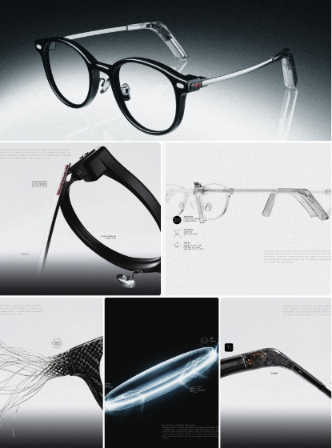
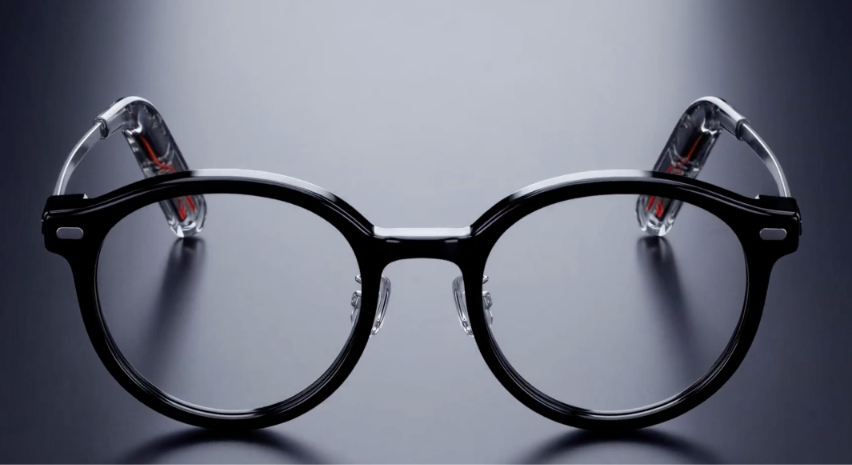
    LOHO NIMO holographic AI glasses product shot
    LOHO NIMO AI glasses lightweight frame design

    Breaking News

    On June 16, 2026, at 7:00 PM, LOHO Eyewear Group and NIMO (Bit Phantom) jointly launched holographic AI glasses. Weighing only 29 grams, the device features binocular volume holographic waveguide technology with 98% light transmittance and 1500 nits eye brightness.

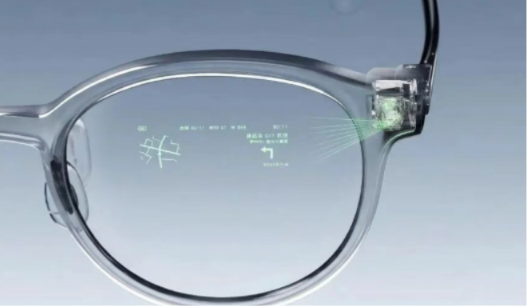
    Core functions include navigation, real-time translation, and smart teleprompting. A camera-free design protects privacy, with 16-hour standby battery. Key breakthrough: supports offline optometry and prescription lens fitting, priced at 2,499 RMB including lenses, shipping 15 days after order. Simultaneously announced: 720 Glasses Festival celebrity endorsement and 100+ new product launches.


    Full Story

    LOHO’s approach to AI glasses diverges completely from tech manufacturers. This traditional eyewear retailer with a nationwide offline store network treats AI glasses not as “digital accessories” but as “next-generation eyewear.”

    The 29-gram weight is a critical number. For reference, regular optical glasses typically weigh 20-40 grams, while mainstream AI glasses (Ray-Ban Meta at ~49g, Huawei Smart Glasses at ~40g, iFLYTEK AI Glasses at ~40g) generally run heavier. LOHO×NIMO achieving 29 grams means it is the first to realize “lighter than most regular glasses”—not a spec victory, but a fundamental shift in wearing experience. Users no longer need to choose between “seeing clearly” and “wearing comfortably.”

    The optical solution employs binocular volume holographic waveguides. This technology’s core advantages are high light transmittance (98%) and slim volume. When users look through the lenses at the outside world, they barely perceive brightness loss; digital information overlays holographically in the field of view, unlike Birdbath solutions that partially obstruct sight. The 1500 nits eye brightness ensures outdoor readability under strong sunlight.

    Functionally, navigation, real-time translation, and smart teleprompting cover high-frequency commuting and office scenarios. Navigation information overlays directly in forward vision, eliminating the need to look down at phones; translated text displays on lenses in real time, suitable for cross-border meetings and travel; teleprompting targets presentations, live streaming, and recording scenarios. This feature selection is restrained, avoiding marginal-utility features like “AI Q&A” or “photo recognition” that dilute core value.

    LOHO NIMO glasses holographic navigation display
    LOHO NIMO holographic waveguide navigation overlay

    Analysis

    Prescription Lenses: The Leap from “Accessory” to “Essential”

    The AI glasses industry has long faced an awkward reality: most products do not support optometry and lens fitting, or require users to seek third-party optical shops. This means myopic users either wear contact lenses beneath AI glasses, or endure blurry vision. Both scenarios severely limit use cases.

    LOHO×NIMO’s solution is direct: leverage LOHO’s nationwide offline store network to provide one-stop optometry, lens fitting, and adjustment services. At 2,499 RMB including lenses, the product effectively bundles “AI functions” with “vision correction.” For myopic users, this is not “buying an extra tech toy” but “upgrading existing glasses”—a psychological account shift that significantly impacts purchase decisions.

    Channel Advantage: Scenario Conversion at Physical Stores

    LOHO operates hundreds of offline stores nationwide, an asset pure internet brands cannot replicate. Users walk in, try on, get eye exams, experience functions, then place orders—a path with conversion rates exponentially higher than “browse specs online → hesitate → abandon.”

    The 720 Glasses Festival IP linkage is equally clever. Embedding AI glasses into an existing annual promotional rhythm, leveraging celebrity endorsements and 100+ new product launches, creates a “browse the glasses festival and discover AI glasses” traffic entry. This is not market education, but market.

    Differentiated Positioning Against Competitors

    FeatureLOHO×NIMOHuawei AI GlassesiFLYTEK AI GlassesRay-Ban Meta
    Weight29g~40g~40g~49g
    OpticsHolographic waveguideWaveguideWaveguideNo AR display
    Transmittance98%~85%~85%N/A
    PrescriptionNative optometry supportPartial supportPartial supportNot supported
    CameraNoneYesYesYes
    Price2,499 RMB with lenses2,499 RMB4,299 RMB$299
    ChannelOffline stores + onlinePrimarily onlinePrimarily onlinePrimarily online

    LOHO×NIMO’s competitive advantage lies not in individual technical specs but in combined positioning: lightest, most glasses-like, only native prescription support, only camera-free. These “mosts” and “onlys” point toward a single user value: burden-free daily wear.


    Industry Impact

    The LOHO×NIMO launch may accelerate AI glasses’ transition from “tech enthusiast toys” to “mainstream consumer products.”

    Market impact: The 2,499 RMB pricing including lenses shifts AI glasses’ decision threshold from “additional purchase” to “normal glasses replacement budget.” China has over 600 million myopic people; if 1% consider AI functions during lens replacement, that represents a 6-million-unit potential market.

    Consumer impact: Myopic users no longer need to sacrifice visual comfort for AI glasses, while non-myopic users gain a lighter, more privacy-friendly option. The camera-free design may trigger industry follow-up, forming a dual-line格局 of “camera-equipped” and “camera-free” versions.

    Industry impact: Traditional eyewear retailers’ entry changes AI glasses’ competitive dimensions. Competition on pure technical specs is shifting toward “technology + channels + service”综合 competition. LOHO’s offline network proves that selling AI glasses, like selling regular glasses, may require optometrists and try-on experiences.

    LOHO NIMO glasses worn daily outdoors
    LOHO NIMO AI glasses user daily wear side view

    What’s Next

    • End of June 2026: First-batch user feedback, focusing on wearing comfort, actual battery performance, and prescription lens fitting quality
    • July 2026: 720 Glasses Festival sales data, validating offline channel conversion efficiency
    • Q3 2026: Whether competitors follow the lightweight + prescription lens direction
    • Q4 2026: Whether camera-free design becomes a new privacy selling point
  • Snap Spectacles Gen 6 Launch: First Consumer True AR Glasses

    Snap Spectacles Gen 6 Launch: First Consumer True AR Glasses

    One-sentence verdict: This is not a concept device or developer kit—it is a consumer-grade true AR headset backed by a 100,000-unit production plan. The $2,000 price tag signals AR’s formal entry from “lab toy” to “premium consumer electronics.”

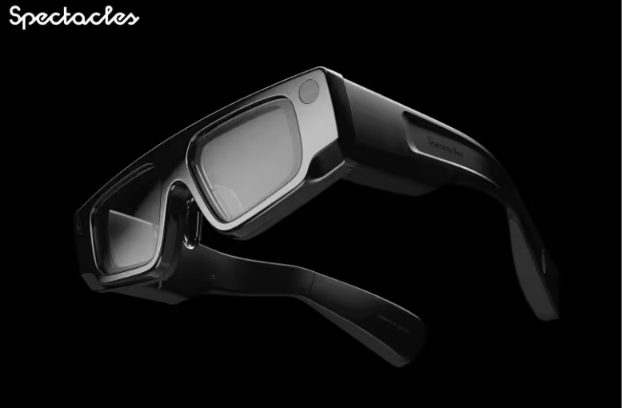
    Snap Spectacles Gen 6 AR glasses product shot
    Snap Spectacles Gen 6 true AR glasses product view

    Breaking News

    On June 16, 2026, Snap Inc. unveiled the sixth-generation Spectacles AR glasses at the Augmented World Expo (AWE) in the United States. This marks the world’s first standalone true AR device targeting general consumers, capable of overlaying virtual objects directly onto the physical world without tethering to phones or external compute units. The glasses feature Qualcomm’s latest XR chipset, built-in cameras with flash, and run a deeply customized Snap OS. Priced between $2,000 and $2,500, the initial production run targets 100,000 units with a projected Fall 2026 launch.


    Full Story

    Snap’s hardware ambitions are not new—the company has been iterating since the first Spectacles camera glasses in 2016 and AR developer kits in 2024. But the sixth-generation Spectacles represent a fundamental shift: this is the first device Snap dares label “consumer-grade” true AR.

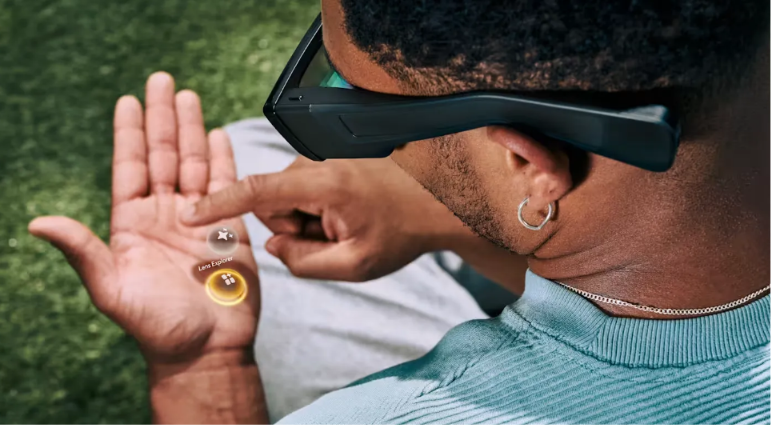
    The definition of “true AR” matters here. Existing “AR glasses” on the market are largely notification projectors—displaying alerts, navigation arrows, or translated text in a corner of the lens. The Spectacles Gen 6 performs spatial computing: virtual objects anchor in three-dimensional physical space, allowing users to walk around them, observe from different angles, and interact via hand gestures. This demands independent computing power, precise environmental perception, and sufficiently bright display systems—an engineering challenge far exceeding information-overlay products.

    The Qualcomm XR chipset indicates Snap made no compromises on compute. Built-in cameras and flash suggest the device must not only display AR content but understand its surroundings—using computer vision to recognize objects, surfaces, and spatial relationships so virtual content correctly “sits” on tables or “hangs” on walls.

    Snap OS represents another critical variable. This is not Android ported to glasses, but an operating system redesigned for spatial computing. Gesture interaction, voice control, and eye tracking require entirely new interaction paradigms, while Snap’s decade of AR filter experience through the Lens Studio ecosystem provides a content foundation.

    Snap Spectacles Gen 6 hand gesture AR interaction
    Snap Spectacles Gen 6 spatial hand tracking demo

    Analysis

    Why Snap, Not Meta, Got There First

    Meta’s Ray-Ban smart glasses sell well, but they remain essentially regular glasses with cameras and speakers, lacking true AR display capabilities. Meta’s Orion AR glasses prototype demonstrated impressive technology, yet remains a demonstration device far from mass production.

    Snap’s advantage lies in focus. Meta simultaneously pursues VR (Quest), social platforms (Facebook/Instagram), AI (Llama), and AR—spreading resources across multiple fronts. Snap’s core business is visual social, making AR a natural extension. A decade of Lens ecosystem accumulation gives Snap the world’s largest mobile AR creator community, whose content can migrate directly to the Spectacles platform.

    Yet Snap’s disadvantages are equally clear: limited hardware manufacturing experience, weaker supply chain leverage than Meta, and a much smaller company scale that cannot absorb the financial risk of mass production failure. The initial 100,000-unit plan signals cautious optimism—sufficient to seed a user community without inviting inventory disaster.

    The $2,000-$2,500 Pricing Gamble

    This price range is strategically interesting. It significantly exceeds Meta Ray-Ban’s $300 tier and approaches half of Apple Vision Pro’s $3,500 entry point. Snap clearly avoids price wars, instead attempting to establish “true AR = premium” consumer perception.

    From a cost structure perspective, independent AR glasses’ optical modules, XR chipsets, and sensor arrays make cheap production impossible. $2,000 likely represents the hardware cost floor plus reasonable margin, rather than premium pricing. The question remains: how many consumers will pay this premium for “true AR”?

    The first-batch target user profile is clear: AR developers (needing real hardware for testing and distribution) and frontier experience enthusiasts (early adopters willing to pay for emerging technology). This is not a mass-market product, but an ecosystem-building seed strategy.

    Relationship with Meta Ray-Ban: Complementary or Competitive?

    The two products differ by an order of magnitude in pricing and functional positioning. Ray-Ban Meta is a “smart glasses” device—photography, audio, AI queries, with minimal display capability. Spectacles Gen 6 is an “AR glasses” device—spatial computing, gesture interaction.

    Yet competitive dynamics will emerge. Meta is developing display-equipped AR glasses (codenamed Hypernova), expected in 2027. Snap’s first-mover advantage window spans approximately 12-18 months. If Snap can establish sufficient content ecosystem and developer loyalty during this period, it will possess defensive moats when Meta enters.

    Snap Spectacles Gen 6 worn outdoors daily
    Snap Spectacles Gen 6 user wearing outdoors daily

    Industry Outlook

    The Spectacles Gen 6 launch marks consumer-grade AR’s transition from “technology demonstration” to “usable product.” This represents an important industry milestone, but the journey to “mass product” remains long.

    In the near term (2026-2027), the AR glasses market will show clear stratification: information-notification tier (under $500, e.g., Ray-Ban Meta), spatial computing tier ($2,000-$3,000, e.g., Spectacles Gen 6), and professional tier (above $5,000, e.g., Magic Leap, HoloLens). Snap occupies the middle ground, avoiding low-price red oceans while escaping the sales cycles of enterprise markets.

    In the medium term (2027-2029), the critical variable is optical technology breakthrough. If waveguide or MicroLED production costs drop over 50%, AR glasses’ form factor and weight will shrink dramatically, with prices potentially reaching the $1,000 threshold—the true consumer inflection point. Snap’s 100,000-unit production plan partially serves to probe supply chain readiness for future cost reductions.

    Long-term, the ultimate form of AR glasses is “ordinary glasses + infinite display.” Snap, Meta, and Apple all pursue this direction through different technical paths. Snap chooses to launch standalone devices first to build ecosystems, Meta progresses gradually from smart glasses, while Apple likely waits for complete technology maturity before a decisive strike.


    What’s Next

    • Fall 2026: Initial product launch, tracking first-batch user feedback and return rates
    • End of 2026: Lens Studio for Spectacles developer metrics, content ecosystem progress
    • 2027: Meta Hypernova launch, direct competition with Spectacles begins
    • 2027: Whether Snap releases lower-priced versions or second-generation products

  • Dangbei Air 1S: All-round AI Headset Launch

    Dangbei Air 1S: All-round AI Headset Launch

    Powerful AI Translation & Recording Features

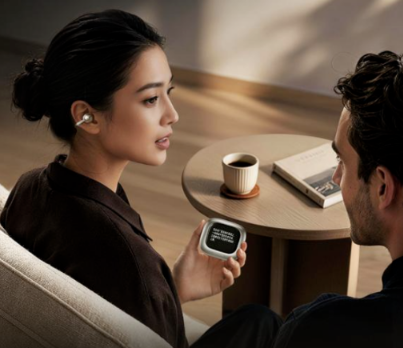
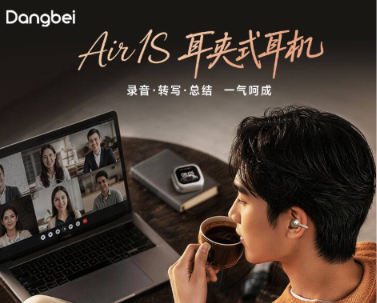
    Dangbei Air 1S translation earbuds conversation
    Dangbei Air 1S earbuds translating face-to-face talk

    Translation stands as the core highlight of Dangbei Air 1S. The headset supports text translation for 190 languages and real-time two-way voice translation for 36 languages, plus compatibility with 27 Chinese dialects, covering an extremely wide range of language demands.

    It is optimized for diversified real-life scenarios. During face-to-face conversations, both sides can view translated text on respective screens without passing phones around. For online calls via WeChat, DingTalk, Lark and other mainstream apps, real-time two-way translation is available, and AI can automatically generate conversation summaries once the call ends. When watching foreign videos or taking online language courses, floating subtitles will pop up on your screen, so you do not need to switch apps and can fully enjoy the content. With ultra-fast response, it works perfectly for overseas travel, international meetings, language learning and other cross-language communication scenarios.

    The AI recording system has also been fully upgraded. Users can record calls on all third-party applications with one tap. Recorded audio will be automatically transcribed into text, and the system will intelligently extract key information and create to-do lists. Equipped with Bluetooth 6.0, the device delivers more stable transmission and higher sound pickup accuracy. It greatly simplifies note-taking work during meetings, interviews and important phone calls, helping users improve work efficiency a lot.

    Premium Design, Audio & Wearing Comfort

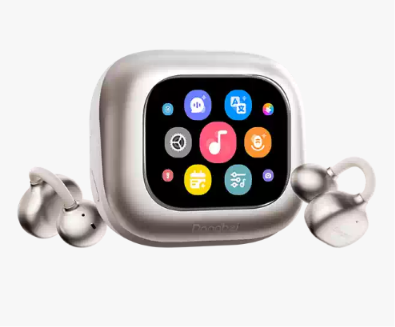
    The headset comes with a 2.04-inch AMOLED smart touch screen, turning the charging case into a portable control center. Beyond displaying translation content, the screen supports music playback control, quick device settings and customized wallpapers, covering most daily operations. It inherits the brand’s exclusive antibacterial technology, reaching a 99.9% antibacterial rate. Users with oily ears or sensitive ears can wear it for long hours without worries.

    Dangbei Air 1S earbuds video conference scene
    Dangbei Air 1S ear clip buds in online meeting

    Benefiting from Dangbei’s rich experience in audio and video fields, this headset delivers outstanding sound performance. It adopts dual 12mm large dynamic drivers to enhance sound output. Combined with four-mic AI noise cancellation and directional sound leakage prevention technology, human voices remain clear even in noisy surroundings, and your audio content will not be heard by people nearby, protecting your privacy effectively. Powered by the new WQ7036AX high-performance main chip, the whole system runs smoothly. There is nearly no delay when switching songs, activating AI or changing working modes.

    In terms of wearing experience, it keeps the ergonomic C-shaped bridge made of 0.5mm memory alloy. The structure causes no pressure on ear bones and keeps ears ventilated. Each earpiece weighs only 6.1 grams. The ultra-light design brings almost zero wearing sensation, suitable for all-day use.

    Long Battery Life & Official Launch Details

    Dongbei Air 1S earbuds video conference scene
    Dangbei Air 1S smart case and ear clip buds

    Battery performance is another major advantage of Dangbei Air 1S. Thanks to the innovative energy storage compartment, the total comprehensive battery life reaches 42 hours, and a single ear can play audio continuously for up to 8 hours. It also supports fast charging: just 10 minutes of charging provides 2.5 hours of playback time, which is quite practical for emergency power supplement.

    Dangbei Air 1S will be officially released and available for spot sales across all major e-commerce platforms at 20:00 tonight (Beijing time). The official launch price is 999 RMB (approximately $140 USD), and buyers can enjoy exclusive limited-time launch benefits. If you’re in the market for a versatile AI headset, this launch deal makes it one of the best times to pick one up.

    Integrating functions for office work, travel, entertainment and cross-language communication, this all-in-one headset can meet diverse daily needs. If you are interested, set a reminder and grab it on time tonight.