On May 4, 2026, an interview at the US think tank SCSP sent shockwaves through the global tech community. NVIDIA CEO Jensen Huang confirmed in his own words: NVIDIA’s direct sales share in China’s AI accelerator market has dropped to 0%. Behind this number lies the market collapse of a chip giant that once dominated with 80% share in China.
From 80% to Zero: An Irreversible Retreat
Flash back to 2022, when NVIDIA held absolute dominance in China’s AI chip market. With the CUDA ecosystem and Hopper architecture advantages, this Silicon Valley company was almost the preferred supplier for every Chinese AI enterprise, with market share exceeding 80%.
The turning point came with the tightening US export controls. To comply with regulations, NVIDIA was forced to cripple GPU performance for China repeatedly—from H100 to H20, each performance cut was followed by even stricter restrictions. In May 2025, the US Department of Commerce extended restrictions from product exports to global usage scenarios, completely blocking NVIDIA’s path in China.
To preserve its China market, Jensen Huang visited China multiple times to adjust strategies, even modifying products beyond recognition. However, no matter how much he compromised, the wall ultimately didn’t trap China’s AI industry—it trapped NVIDIA itself.
Domestic Substitution Wave: Who Picked Up the Slump
Behind the 0%, the market vacuum is being rapidly filled.
Latest IDC statistics show that in 2025, Chinese GPU and AI chip manufacturers had captured nearly 41% of China’s AI accelerator server market. Bernstein Research predicts that by full year 2026, NVIDIA’s China market share will shrink to approximately 8%, while Huawei and other domestic manufacturers’ share will exceed 50%, AMD will take 12%, and Cambricon will rank third.
DIGITIMES estimates that 2026 China’s high-end cloud AI accelerator shipments will reach 2.123 million units, a year-over-year surge of 136%. With system integration advantages, Huawei’s market share will easily exceed 50%, ranking first.
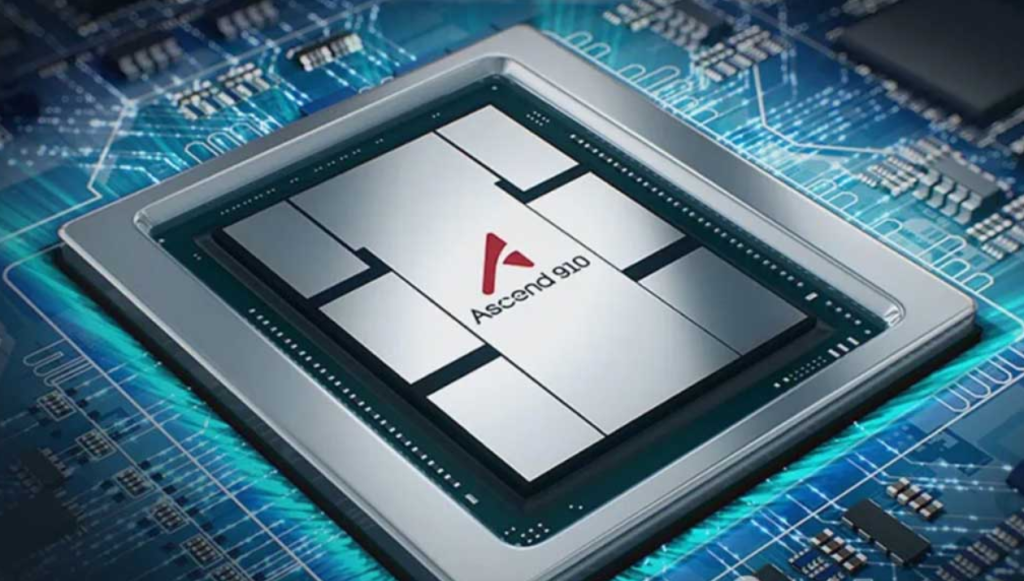
Huawei Ascend’s Rise is the most compelling chapter in this substitution story. In DeepSeek’s tests, the Ascend 910C’s AI inference performance has reached approximately 60% of NVIDIA’s H100. With further optimization through hand-written CANN kernels, the performance gap continues to narrow. In inference scenario Token throughput efficiency tests, the previous generation Ascend 910B already achieved 1.8x NVIDIA H20 performance.
Cambricon is another player that cannot be ignored. Morgan Stanley’s latest research shows Cambricon’s Q1 performance significantly exceeded expectations, directly driven by strong shipments of the Sanyi 590 chip. Q1 2026 prepayments surged 155% quarter-over-quarter, reaching 1.9 billion yuan, almost entirely supported by new chip production orders.
Ecosystem Barrier Collapse: The CUDA Moat is Draining
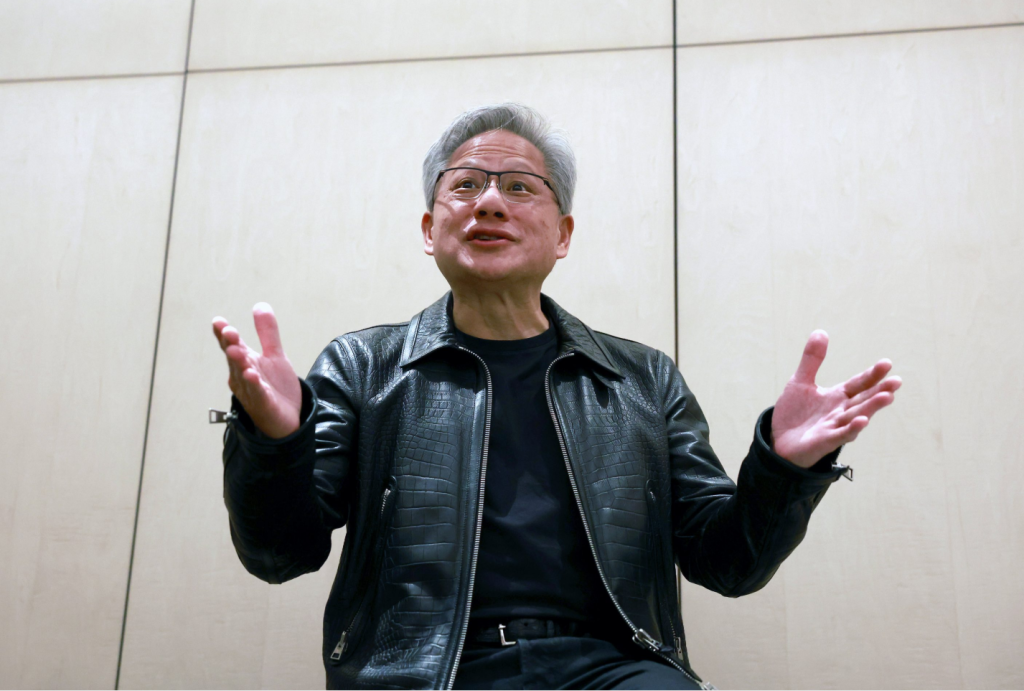
During the interview, Jensen Huang repeatedly emphasized “software ecosystem is the final barrier,” attempting to maintain NVIDIA’s core advantage. Indeed, the CUDA ecosystem is NVIDIA’s most solid moat—millions of global developers, thousands of pretrained models, countless lines of project code and optimization experience are all built on this platform.
However, cracks are appearing in this barrier.
In April 2026, DeepSeek-V4 officially launched and went open source, achieving a historic breakthrough simultaneously: completely breaking free from the CUDA ecosystem, with core code fully migrated from NVIDIA CUDA to Huawei’s CANN heterogeneous computing framework. In DeepSeek’s official technical documentation, Huawei Ascend NPU is directly listed alongside NVIDIA GPU in the hardware verification checklist.
Previously, the cost of migrating away from CUDA was enormous, with rewriting core operators requiring months of work. Huawei’s CANN framework now achieves over 95% CUDA code compatibility, and with one-click migration tools, code refactoring that originally took months has been reduced to being calculated in hours.
Beyond Huawei, the open-source community is also accelerating the erosion of CUDA’s barriers. In early 2026, KernelCAT launched a cross-chip operator compiler enabling painless migration between multiple domestic chip brands. The entire ecosystem layer is transforming what was once NVIDIA’s exclusive moat into part of public infrastructure.
The Talent Code: The Overlooked Underlying Variable
If hardware and ecosystem breakthroughs are visible hard advances, then talent reserves are the most easily overlooked yet critical variable in this substitution story.
According to MacroPolo think tank tracking data, the global share of China’s top AI researchers has surged from approximately 11% in 2022 to approximately 44%, nearly quadrupling. The US figure declined from 65% to approximately 38% over the same period. This isn’t a decimal-point shift—it’s a generational-scale workforce displacement.
A synchronized statistic shows that between 2018 and 2024, Chinese universities’ share in global AI paper citations in the top 10% increased by over 7 percentage points compared to the previous decade, reaching global first place.
The deeper significance of this trend is that the long-term outcome of AI competition was never determined by a few chips. Each time export controls escalated, China raised its investment in basic research talent by one level. Talent is becoming the most solid foundation for domestic AI chips.
Outlook: The New Landscape After Zero
From 85% to 0%, NVIDIA’s China story has temporarily ended. But this isn’t just NVIDIA’s loss—it’s a microcosm of the restructuring of the entire AI industry landscape.
According to Bernstein estimates, just China’s inference market substitution is sufficient to support domestic enterprises like Huawei and Cambricon toward a hundred-billion-yuan annual production scale. When Huawei Ascend NPU is listed alongside NVIDIA GPU in the hardware verification checklist for production environments of top domestic LLM companies like DeepSeek, the CUDA ecosystem’s monopoly has been completely broken.
As Jensen Huang gently closed his notebook at the interview’s end, tired eyes hidden in screen reflections, a chapter of NVIDIA’s China AI chip era concluded. And another era—China’s AI chip era—is accelerating to begin.
Leave a Reply