Introduction: Jia Yueting’s Robotics Education Dream
On May 15, 2026, Faraday Future (FF) buried a teaser in its Q1 earnings report: a “major educational robot product” launching early June.
This is not FF’s first promise. But the context is different—FF has rebranded as a “physical AI company,” with EAI robotics becoming its new revenue engine in the first delivery quarter. Q1 revenue reached $512,000, up 62% YoY, with software skill packages contributing 26%.
More critically, FF’s SEC investigation has concluded with no penalties. Founder Jia Yueting has returned as global CEO, with the founding team fully back in control.
Product Overview: Robotics Ambition in Education
FF defines 2026 as the “inaugural year of EAI robotics education.” The June education product targets building America’s first scalable EAI robotics education system.
Known details so far:
- Positioning: K-12 education scenarios, ages 6-18
- Platform: FF EAI Brain & Open Developer Platform, featuring six developer tools (Brain Blocks, Create Studio, EAI Soul, EAI Scribe, EAI Studio, SDK/API)
- Technology: Sim-to-Real digital twin training, data closed-loop engine, Agent Skills development support
- Ecosystem: Three-tier developer system (Young Futurist/EAI Futurist/EAI Builder), four-tier progression path
Killer Feature #1: From “Building Cars” to “Building People”
FF’s transformation logic is clear:
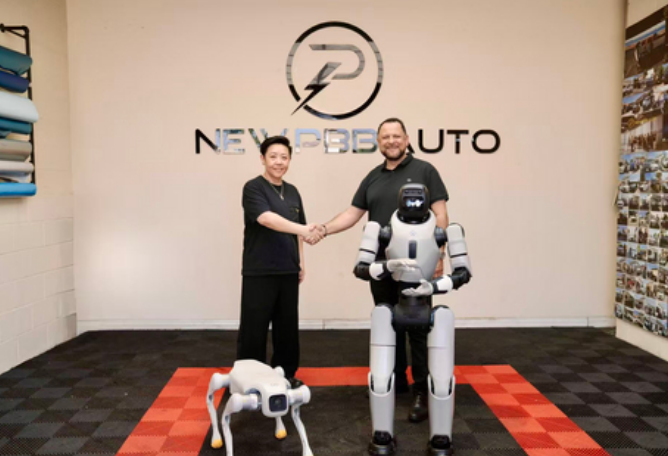
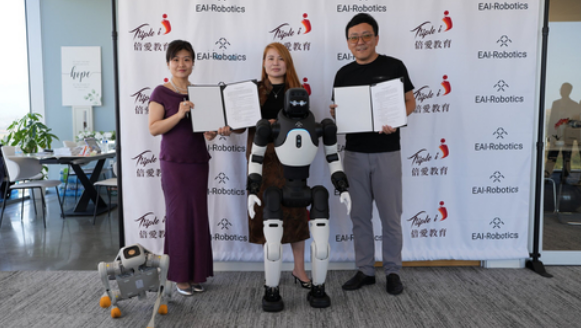
- Futurist: Full-size professional humanoid robot, already demonstrated nine end-to-end Agent Skills (home assistant, commercial security, pet companion, hospitality)
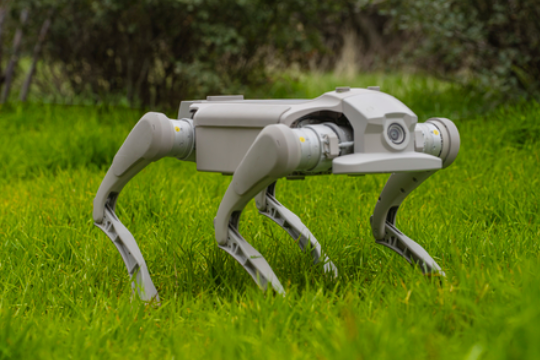
- FX Aegis: Quadruped robot, completed all US compliance certifications, ready for formal delivery
- Education product: Launching early June, form factor unknown (possibly small desktop robot or biomimetic pet)
FF believes education is the largest addressable market for consumer robots in phase one. This aligns with Unitree and Zhiyuan Robotics’ strategy—education before home.

Killer Feature #2: Open Ecosystem, Lowering Development Barriers
The FF EAI Brain platform’s core philosophy: “make robot development as accessible as software development.”
Platform offerings:
- Unified developer portal: Accessible from K-12 students to professional engineers
- Sim-to-Real evolution field: Virtual environment training before physical deployment
- Data closed-loop engine: Real-world deployment data converted to high-quality training data
- Agile development toolchain: Rapid Agent Skills iteration
This open strategy contrasts with Tesla’s closed ecosystem. FF hopes to build a developer community through education, then expand to consumer markets.
Caveats to Note
- Delivery track record: FF’s automotive delivery history is poor; robot on-time delivery remains uncertain
- Funding pressure: $45M financing only covers “first phase ramp-up delivery”; long-term funding still needed
- Market competition: Wonder Workshop, Sphero already occupy the education robotics market; FF faces brand recognition challenges as a new entrant
- Unknown product form: Launching early June, but no product images or technical specs have leaked
Who Should Watch?
Highly Recommended:
- US K-12 school STEM education directors
- Robotics education training institutions
- Developers interested in embodied AI
- Investors tracking Jia Yueting/FF transformation
Consider Waiting:
- Home consumers (waiting for consumer-grade product maturity)
- Budget-sensitive schools (waiting for price announcement)
Future Outlook: The “iPad Moment” for Educational Robots
If FF’s educational robot is priced reasonably ($500-$1,000 range) and the Agent Skills ecosystem enriches quickly, it could become the education robotics field’s “iPad”—not the first, but defining the category standard.
FF’s advantages:
- Sim-to-Real technology: Lowering physical training costs and risks
- Open ecosystem: Attracting developers rather than building closed loops
- US domestic compliance: Multiple certifications passed, avoiding overseas market risks
Rating: 7.8/10 (High Risk, High Potential)
Bottom Line: FF’s most credible pivot yet, but credibility depends entirely on June delivery. For the education robotics market, this could be a disruptor—or another missed deadline.
Leave a Reply