Category: AI for Kids

AI-powered children’s hardware is a consumer-grade product designed specifically for children aged 0-12, with core functions including AI interaction, intelligent companionship, early childhood education, and safety monitoring. It conforms to children’s usage habits and safety standards. It incorporates artificial intelligence capabilities such as voice interaction, image recognition, content recommendation, behavior monitoring, and AI dialogue.

  • Skyworth Youdoo Box Launches AI Motion-Sensing “Growth Console”

    The smart hardware market for motion-sensing devices has long been polarized: on one side are traditional game consoles focused on hardcore gaming that rely on handheld controllers; on the other are cheap motion-sensing cameras with limited functionality and poor recognition accuracy. Unveiled at the Skyworth “All-Scenario Ecosystem” launch event on July 22, the Youdoo Box introduces a brand-new product category: the AI ​​motion-sensing “growth console.” Powered by the proprietary “Guanmiao 3.0” on-device AI vision engine, it enables controller-free, body-only motion interaction, supporting parent-child activities, home fitness, and smart home integration. Based on real-world testing across various scenarios, this article provides an objective breakdown of the actual user experience, strengths, and limitations of this distinctive AI hardware.

    Youdoo Box
    Youdoo Box

    Console with “Dynamic Arm” Design
    I. Hardware Design: Innovative “Dynamic Arm” for Interaction and Privacy Protection
    The Youdoo Box features a minimalist design with a creamy white and warm orange color scheme; its size is comparable to mainstream TV boxes, ensuring it doesn’t take up excessive space on a TV stand. The device’s most distinctive feature is the rotatable camera mount—the “Dynamic Arm”—which sets it apart from similar products on the market:

    Dual-Mode Switching
    When the arm is lifted upward, the 135° ultra-wide-angle “starlight” camera activates, entering motion-sensing interaction mode. Upon exiting the motion-sensing application, the arm automatically folds down, physically covering the lens. Unlike software-based camera deactivation, physical shielding eliminates privacy concerns associated with always-on cameras at the source, making it ideal for households with children.

    Anthropomorphic Interaction Screen
    The top of the arm houses a dot-matrix display that shows dynamic expressions during standby, wake-up, and exercise interactions. This softens the “cold” hardware aesthetic and makes the device more appealing to young children.

    Ports and Setup
    Equipped with HDMI video output and Type-C power input, the device is plug-and-play compatible with the vast majority of smart TVs, offering particularly deep integration with the Skyworth TV ecosystem. When the arm is folded flat, the unit functions as a standard TV box for media playback and screen casting, serving as a versatile device for both entertainment and viewing. Basic Hardware Specifications:
    Camera: 135° ultra-wide-angle starlight lens; supports recognition in low-light environments.
    AI Engine: “Guanmiao 3.0” on-device vision algorithm; local processing ensures motion data does not need to be continuously uploaded to the cloud.
    Interaction Expansion: Supports peripherals such as NFC “Vitality Cards,” motion-sensing light guns, and steering wheels.
    Pricing Tiers: Launch prices are ¥1,999 for the Standard Edition, ¥2,399 for the Flagship Edition, and ¥3,399 for the Collector’s Edition.

    II. Hands-on Test of Core AI Capabilities: How powerful is the “Guanmiao 3.0” vision engine for wearable-free motion sensing?
    The primary pain points for motion-sensing devices have always been motion recognition accuracy, latency, and multi-player compatibility; these were the key areas of focus for this test.

    The “Yuedong Yuanqi Ji” (Vitality Motion Console) is powered by the proprietary “Guanmiao 3.0” AI motion-tracking engine. It supports the recognition of 18 skeletal joints and 21-point hand gesture capture, as well as facial and emotion recognition—all processed locally on the device.

    Test Highlights
    ✅ No controllers or wearable sensors required
    The user’s entire body acts as the controller; the system recognizes jumps, squats, arm swings, sideways movements, and gesture commands. It is highly child-friendly (suitable for ages 3–12), eliminating the risk of controllers being thrown or causing accidental damage.
    ✅ Low-latency interaction
    The official rated end-to-end latency is under 30ms. Real-world experience—including fitness form correction, motion-sensing ball games, and dance-along challenges—shows excellent synchronization between movement and visuals, with no noticeable motion blur even during vigorous actions.
    ✅ Supports up to 4 players on screen
    In multi-player scenarios, the algorithm can distinguish between different users’ skeletons even when limbs overlap or cross. This enables smooth gameplay for family team battles or parent-child cooperative challenges in the living room, breaking the single-player limitation common to many motion-sensing devices.
    ✅ Excellent low-light performance
    The system reliably recognizes human silhouettes even in dim indoor lighting (e.g., in the evening without main lights on), meaning daily home use isn’t strictly dependent on ideal lighting conditions. Objective Limitations
    Due to constraints in edge computing power, there is a limit to long-range recognition capabilities; the optimal distance between the user and the main unit is 2.5–4 meters. Beyond 5 meters, the accuracy of recognizing subtle gestures drops significantly, making the device better suited for living rooms in small-to-medium-sized homes.

    III. Three Core Usage Scenarios

    Scenario 1: Parent-Child Motion-Based Growth (Core Positioning)
    Designed for children aged 3–12, the product offers a curated content library featuring 27 native motion-sensing applications and collaborations with 17 renowned licensed IPs, such as Ultraman, Peppa Pig, Super Wings, and GG Bond.

    Content falls into three categories: motion-based obstacle-course games, posture training for children, and interactive educational games.
    The key difference from static entertainment on tablets or phones is that children remain standing and active throughout, burning energy while playing. A built-in posture correction module provides real-time voice alerts for poor posture, such as slouching or hunching.

    The accompanying health management system addresses essential needs for parents:
    A mobile app allows for remote control of playtime, automatic eye-protection distance alerts, exercise data tracking, and automatic shutdown after a set time. It supports NFC “Vitality Card” unlocking, making it easy for grandparents to operate, and effectively uses physical activity to prevent gaming addiction.

    Scenario 2: Light Home Fitness with AI Motion Correction
    Suitable for adults as well as children. It includes built-in courses for fat-burning, stretching, and aerobics, with AI capturing movement accuracy in real-time. The system flags improper postures and provides instant voice corrections, acting like a basic AI personal trainer in your living room.
    Compared to camera-based fitness apps: it does not rely on a smartphone, offers a better view on a large TV screen, and allows multiple people to train together simultaneously.

    Scenario 3: Skyworth Whole-Home Smart Integration (Differentiating Advantage)
    As part of Skyworth’s full-scenario ecosystem, the “Yuedong Yuanqi” (Vitality) console is more than just a motion-sensing game machine; it serves as the AI ​​visual hub for the living room. Real-world testing confirms it can link with whole-home devices such as Skyworth smart air conditioners, lighting, curtains, and the “Bestie” mobile smart screen:
    Supports customizable motion-sensing gesture commands—such as waving to turn on lights or using specific gestures to activate “Arrive Home” or “Sleep” modes; utilizes human detection to automatically turn on lights when someone enters and switch devices to standby when the room is empty.
    Note: Smart home integration currently prioritizes Skyworth’s own IoT ecosystem; compatibility with third-party brand devices is still being continuously updated and improved.

    IV. Content Ecosystem and Expandability
    Strengths: Official content is updated frequently, with new motion-sensing levels and courses added weekly; supports optional peripherals like light guns and steering wheels to enrich gameplay.
    Weaknesses:
    Lacks a “AAA” gaming ecosystem; positioned for light, family-friendly interaction rather than catering to users seeking large-scale, hardcore games;
    Most high-quality motion-sensing courses and licensed IP content require a paid membership for long-term access;
    Cross-brand smart home integration capabilities still have room for improvement.

    V. Comprehensive Summary of Pros and Cons
    ✅ Pros
    Pure on-device AI motion sensing; requires no wearable devices, ensuring high safety and suitability for young children;
    Physical lens cover design (“Dynamic Arm”) offers robust privacy protection;
    Supports four-player simultaneous motion sensing, balancing child development with family interaction;
    3-in-1 device combining motion-sensing console, TV box, and whole-home visual control hub; high hardware utility;
    Includes comprehensive parental controls, eye protection, and fitness/health tracking systems—addressing key pain points for families with children;
    Deeply integrated into the Skyworth smart home ecosystem, enabling gesture-based control of home appliances.
    ❌ Cons
    Starting price of 1,999 RMB; higher entry barrier compared to standard TV boxes or budget motion-sensing accessories;
    Optimal recognition range is limited; performance drops in large, open-plan living areas (distances exceeding 4.5 meters);
    Content ecosystem leans towards light family entertainment; unsuitable for hardcore gamers;
    Compatibility with third-party smart home devices requires further updates;
    Membership system entails ongoing, long-term costs. VI. Recommendations on Target Audience
    Recommended for:
    Families with children aged 3–12 looking to replace sedentary screen time (like tablets) with active daily movement;
    Skyworth smart home users wanting to set up an AI-powered living room hub for gesture-based control of home appliances;
    Those seeking light home fitness with AI-assisted form correction and interactive entertainment for the whole family;
    Users who prioritize physical privacy protection for cameras and dislike having an exposed camera lens on their device at all times.

    Not recommended for:
    Users whose primary need is playing AAA video games or accessing a massive game library;
    Those on a tight budget looking only for a low-cost TV box for media streaming;
    Homes with very large living rooms where the device would be placed more than 5 meters away from the viewing area;
    Users whose existing smart home devices are all from other brands, lacking an ecosystem of Skyworth appliances.

    Conclusion
    For a long time, motion-sensing hardware has been stuck in a cycle of homogenization, serving either merely as toys or simply as fitness accessories. The Youdoo Box charts a new course by integrating three roles into one: an AI-powered motion-sensing console, a hub for family bonding and child development, and an entry point for smart home control.

    It is neither a replacement for dedicated gaming consoles like the Switch nor a cheap TV box. It addresses genuine pain points for modern families: how to get children away from small screens and foster shared, interactive living room experiences, all while serving as a visual interface for the smart home.

    If you are a family with children, are building a Skyworth smart home ecosystem, and value healthy, shared home entertainment, this AI motion-sensing device offers unique value; however, if your primary goal is high-end media streaming or hardcore gaming, you should consider your choice carefully.
  • In-Depth Review: Mooni M1 AI Portable Learning Companion

    In-Depth Review: Mooni M1 AI Portable Learning Companion

    The market for smart hardware for children has flourished this summer, with a constant stream of smartwatches and large-screen learning tablets; however, most of these struggle to avoid the issue of excessive screen time. Developed by Teeni.AI in collaboration with Alibaba Cloud’s Tongyi Qianwen, the Mooni M1 AI Portable Learning Companion debuts in a lightweight, wearable “AI Pin” format. It emphasizes minimal screen time, all-day AI companionship, and learning during spare moments, targeting children aged 3 to 12 (spanning both preschool and school-age groups). Moving beyond the simple playback functions of traditional storytelling devices or audio players, it features conversational capabilities, emotional intelligence, and calling functions. Is it merely a novel toy, or a practical tool for child development? This article provides a comprehensive breakdown of this distinctive AI hardware based on real-world testing across various scenarios.

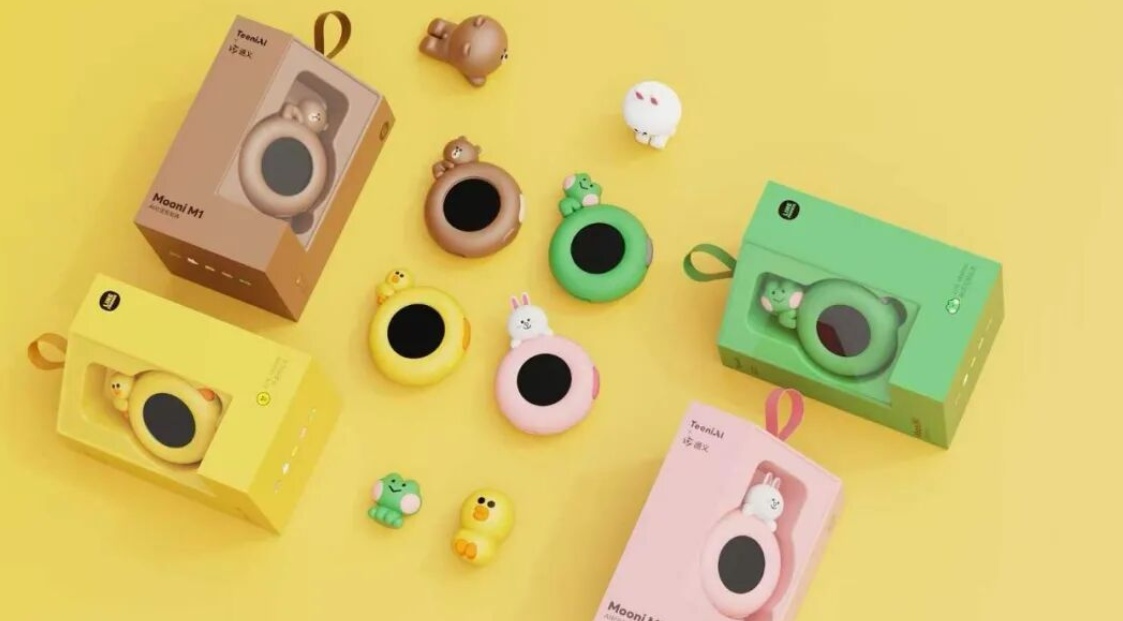
    Mooni M1 AI Product Gift Box
    Mooni M1 AI Product Gift Box


    I. Design and Hardware: Rounded, Lightweight, and Built for Portability

    Actual photo of the Mooni M1
    The Mooni M1 features a cute, rounded body adorned with cartoon accessories—such as Brown Bear or a rabbit—and comes in a variety of colors, including brown, pink, yellow, and green. Weighing just 130g—significantly less than standard children’s smartwatches—it comes with an adjustable lanyard and supports multiple carrying styles: worn around the neck, attached to a backpack, or clipped onto clothing. This ensures a hassle-free experience for children whether they are out playing or commuting to and from school. Material: The casing is wrapped in skin-friendly silicone with no sharp edges, meeting safety standards for children’s products; it features IP67 dust and water resistance, ensuring peace of mind during rainy weather or accidental splashes.
    Screen: Equipped with a compact 1.2-inch color display used solely for showing the AI ​​avatar and call interface; the screen size is intentionally limited to reduce the urge for children to stare at it.
    Interaction Design: The device features distinct buttons for voice commands and power/screen locking, with differentiated sizes and tactile profiles to minimize accidental presses; a top-mounted four-microphone array enables 360° sound pickup, clearly capturing children’s voices even in noisy outdoor environments.
    Connectivity: Built-in 4G Cat.1 module with included IoT data service; it operates independently of home Wi-Fi, ensuring continuous connectivity while outdoors or on the go.
    Charging: Magnetic contact charging and a high-capacity battery provide 10–12 hours of daily use—covering continuous conversation and audio playback—sufficient for a full day out.
    Overall Design Philosophy: It downplays the “digital gadget” aspect while emphasizing the feel of a “portable companion,” making it ideal for families who prefer not to give their children smartphones or smartwatches yet still desire AI companionship and simple communication capabilities.
    II. Core Highlight: Alibaba Cloud’s Custom Large Language Model for Children—Beyond Q&A, It Understands Emotions
    As a children’s AI device co-branded with Tongyi Qianwen, the Mooni M1’s greatest strength lies in its deep optimization for children’s language patterns—setting it apart from similar products that merely scale down general-purpose large models. The device features six virtual AI agents, each with a distinct personality, allowing children to freely switch between companions:
    ✅ Teeni (Curious Companion): Encyclopedia-style Q&A and general knowledge, answering imaginative questions;
    ✅ Polly (English Companion): Immersive bilingual conversation, vocabulary practice, and spoken language interaction;
    ✅ Mia (Storytelling Companion): Collaborative storytelling, allowing the child to co-write fairy tales;
    ✅ Hug (Emotional Companion): Recognizes emotions, offering comfort during low moods and helping process negative feelings;
    ✅ Bunny (Exploration Companion): Travel-related knowledge and tips for city outings;
    ✅ Curious Cat Box (Wonder Box): Educational quizzes and brain-teasing games. Hands-on Interaction Experience
    Many traditional AI devices for children suffer from stiff dialogue, an inability to handle multi-turn conversations, and a rigid “one question, one answer” format. The Mooni M1 supports continuous dialogue with long-context awareness, accommodating the non-linear, imaginative thinking patterns of children.
    Child: “What is the largest animal in the ocean?”
    After receiving the answer, the child follows up: “Is it afraid of sharks?” The AI ​​maintains the conversational thread and answers coherently without requiring the question to be repeated.
    Furthermore, the voice synthesis moves away from robotic, electronic tones, employing a child-friendly, human-like voice that includes natural pauses and emotional inflection.
    Regarding safety, the device features a multi-layered content firewall and a built-in hardware-level physical mute switch that cuts power to the microphone with a single press. All voice data is transmitted via end-to-end encryption, and content involving violence, sensationalism, or inappropriateness is automatically filtered out, giving parents peace of mind regarding the AI’s output.
    III. Hands-on Testing of Three Core Scenarios: Integrated Study Companion, Communication, and Audio Immersion

    1. AI Study Companion for “Snackable” Learning Moments
      It does not focus on intensive drills or rote practice; instead, it is designed for learning during spare moments—such as commutes, travel, or outdoor activities. It comes with built-in synchronized textbook audio, graded English picture books, traditional Chinese culture content, and “BoBo Radio” (featuring science and general knowledge programs).
      Free from screen constraints, children can listen while walking and learn while playing. If a question arises, they can wake the AI ​​with a single button press to ask in real-time, turning outdoor exploration into an interactive science lesson.
    2. Simple Communication + Basic Location Tracking for Safety
      Many parents of young children worry that smartwatches are overly complex, leading to addiction to social features or apps. The Mooni M1 makes strategic choices regarding functionality:
      It supports two-way voice calls, with a whitelist configured via the parent app to ensure calls are restricted to family members;
      It reports real-time location, allowing parents to check the child’s whereabouts remotely via their phones;
      A note on limitations: The positioning accuracy is suitable for general reference within neighborhoods, parks, or streets, but it lacks the advanced safety features found in some smartwatches, such as floor-level positioning or water-hazard alerts.
      With no social networking apps and no ability to freely add strangers, the risk of addiction is significantly reduced, making it an ideal transitional communication device before a child graduates to a full smartwatch.
    3. Emotional Companionship: Bridging the Gap When Parents Are Away
      When parents are busy and cannot be present, children can confide their worries or share interesting stories with the AI. Unlike cold, mechanical Q&A tools, this AI companion can listen and offer empathetic guidance, helping to cultivate a child’s communication skills. Its advantages are particularly evident during outings, camping trips, and long-distance travel.
      IV. Parental Control System
      Managed via the companion Mooni mobile app:
      Remotely set usage hours and schedule device locks;
      Customize content libraries to block topics unsuitable for children;
      Manage contacts and monitor battery levels and online status;
      Remotely push audio content, such as scheduled stories or English lessons.
      The control logic is simple and intuitive—no complex settings—making it easy for grandparents to use as well.
      V. Objective Limitations (Important to Know Before Buying)
      This review aims for neutrality; please be aware of a few notable shortcomings:
      Limited positioning capabilities: Provides only basic location data without geofencing, location history, or danger alerts; safety features fall far short of children’s smartwatches in the 1,000-yuan price range;
      Magnetic charging is less convenient than universal Type-C; if you forget the proprietary cable while out, you cannot easily recharge;
      No camera or AI image recognition; lacks hardware features like scanning text or photographing homework problems;
      Continuous high-frequency conversation drains the battery quickly; connecting to a power source is recommended for long periods of nighttime listening;
      Does not support large-scale local offline storage; heavy usage relies on a 4G network.
      VI. Target Audience & Buying Summary
      ✅ Highly Recommended For
      Preschoolers and early elementary students (ages 3–8) whose parents do not yet wish to buy a smartwatch;
      Children who frequently travel, go camping, or commute to after-school care and need lightweight communication and AI companionship;
      Parents wanting to limit screen time and seeking screen-free or small-screen learning hardware;
      Families looking for English immersion (“ear training”) and general knowledge enrichment, valuing natural AI conversation.
      ❌ Not Recommended For
      Students over 10 who specifically need to photograph homework or have AI grade their incorrect answers;
      Those whose primary needs are high-precision tracking and comprehensive outdoor safety features;
      Those wanting a single device that handles classroom communication, payments, and extensive social networking functions.
      Conclusion
      Current AI hardware for children tends toward two extremes: one category piles on screens and entertainment features, easily leading to addiction; the other sticks to traditional player designs, offering stiff, limited interaction. The Mooni M1 AI portable learning companion has carved out a unique niche: it serves as a “low-screen” growth companion, featuring a lightweight, wearable design and AI-driven, emotionally engaging conversations. While it is not an all-in-one learning device—and cannot replace dedicated learning tablets or high-end smartwatches for children—it fills a gap in the market for digital products aimed at younger children by offering early-stage companionship, audio-based learning during spare moments, and simple communication capabilities.
      If you prioritize interactive companionship and reducing your child’s screen time—seeking a gentle, lightweight AI-powered early learning experience—the Mooni M1 is worth considering. However, if your primary needs are comprehensive safety tracking and homework assistance, it is best used in conjunction with a children’s smartwatch or a dedicated learning device.
  • In-Depth Review: Redmi Kids Watch Pro

    In-Depth Review: Redmi Kids Watch Pro

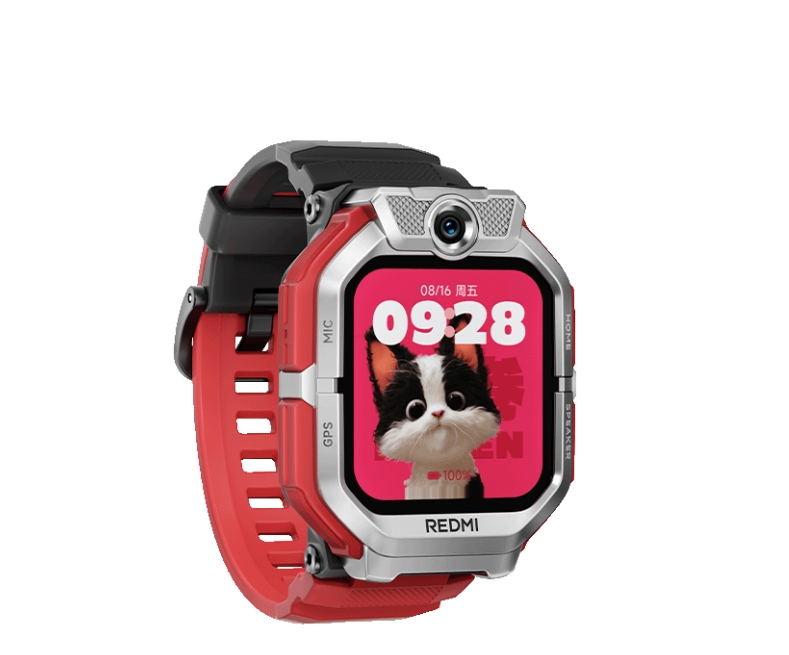
    With a wave of new smart hardware for children hitting the market this summer, parents’ core priorities when choosing a kids’ watch remain consistent: accurate positioning, clear communication, robust safety features, and controllable usage that prevents addiction. Recently launched, the Redmi Kids Watch Pro—Redmi’s flagship wearable for children—highlights two key features: “dual-chip offline positioning” and a “flip-style dual-camera system.” Priced at ¥1,199 at launch (and ¥888.25 after government subsidies), it competes directly in the premium (1,000-yuan range) kids’ watch market. Based on real-world testing across various scenarios, this article objectively breaks down the product’s highlights, user experience, and target audience.

    Redmi Kids Watch Pro
    Redmi Kids Watch Pro

    Flip-style side camera structure
    I. Hands-on with the Design: A Flip Structure Balancing Utility and Aesthetics
    The Redmi Kids Watch Pro features a distinctive hexagonal “mecha-style” design and comes in two colors—Vibrant Red and Energetic Purple—making it suitable for both boys and girls. The device utilizes rounded corners and edges to minimize the risk of bumps or scratches.
    It sports a 1.68-inch, 360×390 HD touchscreen. This offers a larger viewing area than most watches in the same price range (which typically feature 1.4- or 1.6-inch screens) and remains clearly visible even in bright outdoor sunlight.
    The standout feature is the flip-style camera module, equipped with 5-megapixel cameras on both the front and back. This highly flexible design allows for angle adjustments during video calls. Children can take selfies, capture scenery, or use AI object recognition without awkwardly twisting their wrists—solving the common issue of limited shooting angles found in standard fixed-camera watches.
    The strap is made of skin-friendly liquid silicone with numerous ventilation holes, ensuring comfort and preventing sweat buildup during prolonged wear. It supports 20-meter swim-grade water resistance, meaning there is no need to remove the watch for daily activities like hand-washing, getting caught in the rain, or playing in the pool.
    Hardware specs include a 1GB RAM + 8GB storage configuration, ensuring smooth system operation and app installation without significant lag.
    The overall weight is well-balanced, making it comfortable for elementary school students to wear daily. A minor downside is the rugged “mecha” aesthetic; the watch may look somewhat bulky on very young children, so it is best suited for school-aged children between 6 and 14. II. Core Highlight: All-Scenario Positioning System – Addressing Parents’ Biggest Concerns
    Positioning capability is the watch’s most competitive selling point and a key advantage distinguishing it from rivals in the same class. Many children’s watches on the market suffer from common flaws: location drift when entering underground garages, subways, or building interiors, and total loss of contact if the device goes offline or shuts down.

    1. Dual-Chip Architecture | Emergency Positioning Even When Powered Off
      The watch employs an independent dual-chip design, with the positioning module featuring its own low-power chip. Leveraging the Xiaomi “Find My” distributed device network, it supports positioning for up to five days without network assistance—even when the watch is offline or has automatically shut down due to low battery.
      Note on real-world testing: This feature requires the parent’s smartphone to run HyperOS 3.0 or later. It relies on nearby Xiaomi/Redmi devices to broadcast and receive location data. While it serves as an emergency fail-safe rather than a standard real-time tracking method, it significantly increases the chances of locating a child if they go missing.
    2. AI Floor-Level Positioning 3.0 – No More Vague Location Points
      Equipped with an upgraded AI positioning algorithm and “Smart Floor-Lock” technology, the watch can identify the approximate floor where the child is located within residential complexes, malls, or office buildings. Parents no longer see just a vague, flat map coordinate; the location data provides much greater utility when children take elevators alone or move between floors at school.
    3. Safety Alerts for Specific Scenarios
      Water Hazard Alerts: When enabled, the watch displays a local pop-up alert and sends a notification to parents if the child approaches dangerous bodies of water such as rivers, ponds, or reservoirs—an incredibly useful feature for summer outdoor activities and park visits.
      Subway Route Tracking: Continuous positioning is maintained while traveling on underground rail systems, fully recording transit stations and routes—solving the common issue where watches lose signal immediately upon entering tunnels.
      Standard features include geofencing, school-commute monitoring, one-touch SOS, and historical route playback, creating a multi-layered safety net.

    III. AI Features, Communication, and Learning Experience

    1. On-Device AI Assistant for Children
      Features a built-in voice assistant powered by a large language model (LLM) tailored for children. It supports voice Q&A, classical poetry recitation, Chinese-English translation, vocabulary lookups, and AI-powered object recognition via the camera. Unlike general-purpose LLMs, the content is filtered through safety controls designed for young users to prevent exposure to inappropriate information. Children can ask questions whenever they arise, turning the watch into a handy, on-the-go learning assistant.
    2. HD Video Calling
      Equipped with a flip-style dual 5MP camera setup, the video call clarity surpasses that of many entry-level watches with single cameras. It features a built-in pressure-relief speaker, ensuring sufficient volume for calls even in noisy outdoor environments. It supports standard voice calls and “Micro-chat” messaging; it also supports logging into the kids’ versions of WeChat and QQ, adding friends via a simple “tap-to-connect” action, and even adding friends across different brands of kids’ watches, offering greater social flexibility.
    3. Learning and Health Monitoring
      The watch integrates a dictionary, spoken language assessment tools, and synchronized audio learning resources. Built-in sensors monitor heart rate, blood oxygen levels, step counts, and sleep status around the clock, automatically generating weekly health reports sent to the parent’s phone. It includes 18 sports modes to track data from outdoor activities like running and cycling, making it easy for parents to stay informed about their child’s physical activity.

    IV. Parental Control System: Balancing Freedom and Boundaries
    Comprehensive management features are essential for families with school-age children:
    ✅ Class Mode: Scheduled deactivation of calls and entertainment functions to prevent classroom distractions;
    ✅ App Whitelist: Restricts app installations and automatically blocks games and short-video apps;
    ✅ Secure Pocket Money Payments: Supports Alipay/WeChat payments for kids with customizable daily spending limits set by parents to prevent excessive or unauthorized spending;
    ✅ Granular Permission Management: Manual control over allowed contacts, friend requests, and location sharing.
    The control system is logically designed and easy to use, allowing even parents who aren’t tech-savvy to get up to speed quickly. V. Real-world Limitations and Things to Note
    Reviews shouldn’t just focus on the positives; here are a few points to consider before purchasing:
    Offline positioning has usage conditions: It relies on the network of other Xiaomi ecosystem devices. In remote suburbs or open areas lacking Xiaomi devices, the effectiveness of emergency positioning may decrease, so do not rely solely on this feature;
    740mAh battery: Offers 1–2 days of battery life with normal daily use, but power drains faster with frequent video calls or continuous positioning; it is best to get into the habit of charging it every night;
    System entertainment apps are moderate in number, leaning more towards utility; if you are looking for a vast library of children’s games or cartoons, the content ecosystem is somewhat limited compared to certain competitors;
    The “mecha-style” casing is drop-resistant but prone to fine scratches; using a protective case is recommended.

    VI. Who Is This For? Buying Summary
    ✅ Recommended for:
    Primary school students aged 6–14 who commute to/from school or take public transport alone;
    Parents who use Xiaomi/Redmi phones and want to utilize the offline emergency positioning feature (which works even when the watch is powered off);
    Parents who prioritize outdoor safety and frequently take their children to parks, waterfronts, or shopping malls;
    Those with a budget of 800–1100 RMB who want features like a flip-up dual-camera setup and precise floor-level positioning, and who seek a well-rounded overall experience.
    ❌ Not suitable for:
    Toddlers under 3 years old; users seeking ultra-long battery life (e.g., a full week); users looking for a massive library of children’s entertainment content.

    Conclusion
    In the competitive market for children’s smartwatches priced around 1,000 RMB, the Redmi Kids Watch Pro avoids simply piling on gimmicky features; instead, it focuses squarely on safety and positioning—the aspects parents care about most. The flip-up dual-camera setup enhances daily communication, and robust parental controls make it well-suited for school environments. With a purchase price of around 888 RMB (after government subsidies), it offers highly competitive value for money.
    For modern parents, a children’s smartwatch is essentially a “safety net tool” rather than an entertainment device. If your top priority is keeping track of your child’s location at all times and having multiple layers of emergency protection, the Redmi Kids Watch Pro—launched this summer—is an AI-powered device well worth considering.

  • Aoganwei Moxy Launch: Tactile AI Plush Toy Without Cameras

    Aoganwei Moxy Launch: Tactile AI Plush Toy Without Cameras

    One-sentence verdict: If a plush toy can make users feel genuinely understood through touch alone, Moxy proves that AI companionship does not need cameras or conversations to create emotional bonds—and at $96, it tests whether tactile interaction can carve out its own category.

    Aoganwei Moxy tactile AI plush toy
    Aoganwei Moxy tactile AI plush toy product

    Quick Summary

    On June 15, 2026, Aoganwei launched Moxy, the world’s first AI interactive plush toy with systematic tactile perception, available for pre-order exclusively on JD.com. Priced at 699 RMB ($96) for the launch period, the product abandons cameras and voice dialogue entirely, relying on full-body tactile sensors to recognize touch actions including petting, patting, kneading, and shaking. Each interaction influences Moxy’s personality development, eventually generating an exclusive MBTI label. The product represents Aoganwei’s strategic move from B2B sensor supplier to consumer AI hardware.


    What Happened

    Current AI companion toys universally rely on voice dialogue as core interaction, using cameras and microphones to capture information. This creates two persistent problems: privacy concerns from always-on visual and audio monitoring, and homogeneous experiences where every product feels like a voice assistant stuffed into a stuffed animal.

    Moxy breaks this mold by making touch the primary interaction channel. High-sensitivity tactile sensor arrays embedded across the body precisely recognize multiple touch actions—petting, patting, kneading, ear-pinching, shaking—with varying force and location. The toy responds in real time: gentle strokes trigger pleasant vibrations and soft chirps; excessive force elicits small emotional reactions; calling its name produces lively responses. The entire interaction requires no screen and no voice conversation.

    Moxy AI plush toy market comparison
    Moxy AI toy vs competitors market view

    The official positioning sums this as “no peeking, no cameras guarding privacy; no chatting, no voice dialogue for comfortable companionship.” This returns the product to the physical companionship essence of traditional plush toys.

    The personality development system represents Moxy’s second core pillar. Every touch interaction continuously influences the toy’s character trajectory, eventually cultivating unique personality traits and generating an exclusive MBTI label. The companion app displays real-time emotional states, joy value changes, and growth history. It also supports “Moxy social” interactions between users, extending single-person human-machine companionship into lightweight social attributes.

    The form factor employs a “faceless” plush design without fixed facial features, weakening electronic device associations while strengthening customization potential. Users freely accessorize with hair ornaments, glasses, hats, and other decorations, adapting to different scene styles. Essentially, the product becomes a customizable “emotional carrier.”


    Why It Matters

    Moxy’s significance extends beyond being a novel toy. It represents a fundamental rethinking of how AI should interact with humans in intimate spaces.

    The camera-free, voice-free design is not merely a privacy feature but an interaction philosophy. Cameras create surveillance anxiety even when inactive; microphones raise concerns about who might be listening. By removing both, Moxy eliminates the psychological friction that prevents users from forming casual, habitual relationships with AI devices. A child can hug Moxy without parental concerns about video recording. An adult can keep Moxy on their pillow without worrying about nighttime audio capture.

    The tactile-first approach also addresses a genuine limitation of voice-based AI companions: conversation fatigue. Talking to AI is cognitively demanding—it requires formulation, listening, and interpretation. Touch is pre-verbal, instinctive, and emotionally direct. A stressed user does not need to explain their feelings to Moxy; squeezing harder communicates distress automatically. This non-verbal emotional channel is something no voice assistant can replicate.

    Aoganwei’s background as a sensor manufacturer rather than a toy company explains the technical depth. Founded in November 2023 as a joint venture between Guangdong Audiwell (a Beijing Stock Exchange-listed sensor manufacturer with deep ultrasonic and piezoelectric expertise) and SaiGan Technology (focused on high-flexibility electronic skin and tactile perception algorithms), Aoganwei possesses combined capabilities in materials, devices, algorithms, and mass production.

    The company has established the industry’s first flexible tactile sensor mass production line, with products covering industrial tactile sensing, automotive electronics, and consumer electronics. Prior to Moxy, its technology primarily served B2B scenarios like robotic dexterous hands and smart buttons. Moxy represents the company’s first C-end terminal product.

    From an industrial logic perspective, Aoganwei’s entry into the consumer hardware sector represents the expansion of core technology application scenarios to the mass consumer market: the company has integrated industrial-grade high-precision tactile perception capabilities into plush toys, to verify the commercial value of tactile AI in the field of emotional companionship.

    This also marks a typical exploratory move by Chinese sensor manufacturers. They are no longer content to remain upstream suppliers, and instead use terminal products to test more possibilities for translating technologies into commercial applications.


    Impact Analysis

    Market impact: Moxy’s launch could establish “tactile AI” as a distinct category within AI companionship, separate from voice-centric smart toys and screen-based virtual pets. If sales validate demand, expect rapid follower products from established toy manufacturers and emerging sensor startups.

    Consumer impact: Users gain a privacy-respecting emotional outlet that requires no verbal articulation of feelings. For children, this means companionship without digital addiction risks. For adults, it offers stress relief without the cognitive load of maintaining conversation.

    Industry impact: The product demonstrates a viable path for sensor manufacturers to build consumer brands around their core technologies. Rather than selling components to toy makers, Aoganwei captures full margin and brand value by going direct-to-consumer. This vertical integration model could inspire other Chinese sensor and actuator companies to launch their own terminal products.

    Moxy tactile interaction hands holding
    Moxy tactile interaction user hands holding

    What’s Next

    The product’s success depends on three variables:

    First, tactile fidelity in real-world use. The sensor array must distinguish intentional emotional touches from accidental bumps, backpack compressions, and washing machine encounters. Durability testing will reveal whether industrial-grade sensors survive consumer-grade abuse.

    Second, personality depth over time. The MBTI generation mechanic is clever marketing, but users will judge the system by whether Moxy genuinely feels different after weeks of interaction, or merely cycles through preset responses. The difference between “growing personality” and “randomized behavior” is subtle but critical for long-term retention.Third, social feature traction. The “Moxy social” friend interaction feature is an interesting experiment, but lightweight social layers in single-purpose apps often struggle to achieve network effects. Whether users genuinely want to share their plush toy’s emotional state with strangers remains to be proven.