Category: AI for Kids

AI-powered children’s hardware is a consumer-grade product designed specifically for children aged 0-12, with core functions including AI interaction, intelligent companionship, early childhood education, and safety monitoring. It conforms to children’s usage habits and safety standards. It incorporates artificial intelligence capabilities such as voice interaction, image recognition, content recommendation, behavior monitoring, and AI dialogue.

  • WIKO Xingzai Unboxing: Do Young People Need This?

    WIKO Xingzai Unboxing: Do Young People Need This?

    Introduction: When AI Evolves from Tool to Pet

    WIKO Xingzai AI companion toy promotional poster
    WIKO Xingzai AI companion toy promotional poster

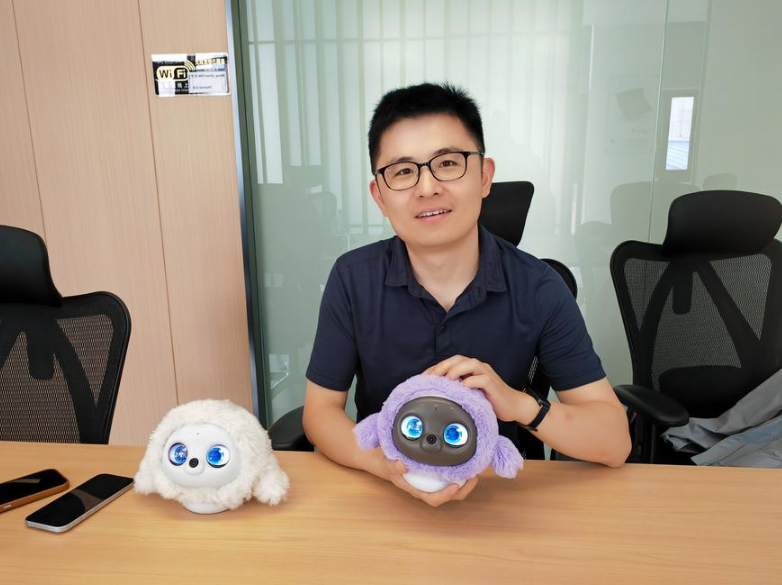
    At the Huawei Nova 16 launch event on May 30, alongside phones, a fluffy little creature emerged—Xingzai. It is not a phone accessory, not a smart speaker, but an AI companion toy that hangs on your bag. It turns its head toward you when you speak, shrinks shyly when you pet its forehead, and shakes excitedly when you sway it. Priced at 499 yuan, powered by Huawei Xiaoyi large model, with Wi-Fi plus 4G dual-network independent operation.

    Honestly, my first reaction seeing the product images was: is this not just an upgraded electronic pet? But after getting hands-on, I discovered WIKO aims far beyond that. Xingzai’s core selling point is not “can talk” but “reacts”—every head turn, every light change, every body tremor simulates real pet feedback logic.

    Product Overview: A New Species in Huawei’s Ecosystem

    First, clarifying relationships: WIKO is not a Huawei subsidiary but a deep ecosystem partner. Huawei provides Xiaoyi large model and HarmonyOS ecosystem connectivity; WIKO handles R&D, design, production, and sales. Xingzai is WIKO’s first AI companion product built on Huawei technology, with the nova planet IP licensed from Huawei’s youth-focused nova brand.

    Xingzai measures 110x110x125mm and weighs approximately 260g, similar to a smartphone. The magnetic design attaches directly to backpacks or purses, becoming a fashion accessory on the go. This positioning is clever—traditional AI toys are mostly bulky and home-bound, while Xingzai breaks scenario limitations entirely.

    Specifications: How Much Tech Fits in This Small Body

    SpecDetails
    Dimensions110x110x125mm
    Weight~260g
    AttachmentMagnetic design
    AI ModelHuawei Xiaoyi large model
    NetworksWi-Fi + 4G dual
    Battery1900mAh
    Battery Life6 hours continuous dialogue / 48 hours standby
    InteractionsVoice + touch + shake + sound-following head turn
    MemoryExclusive diary memory, intimacy unlocks
    Price499 yuan

    Data source: WIKO official launch materials

    Huawei fluffy AI pet toy handheld display
    Huawei fluffy AI pet toy handheld display

    Hands-On Experience: Does It Actually Touch Your Heart

    Sound-Following Head Turn: This is Xingzai’s most moving feature. Speak from the left, its head turns left, starry eyes lighting up, simulating “I am listening to you attentively.” The psychological logic is precise—humans have innate affinity for “being watched,” and head-turning delivers stronger emotional impact than mere voice replies.

    Touch Interaction: Petting the forehead triggers shyness (softened lights + slight body shrink), while prolonged petting triggers (flashing lights + gentle trembling). These reactions are not random but based on Xiaoyi large model’s learning of interaction frequency and duration—the more you interact, the more it understands you.

    Shake Reaction: A gentle shake makes Xingzai tremble excitedly, with starry eyes flashing rapidly, simulating a pet being amused. This scenario shines at friend gatherings, maximizing social appeal.

    Voice Dialogue: Powered by Xiaoyi large model, natural language understanding is solid. It chats about daily life, tells jokes, offers advice, and adjusts responses based on your mood. When you are down, it comforts you; when happy, it celebrates with you. The exclusive diary memory system records your conversations, forming “shared memories,” with more interaction modes unlocking as intimacy grows.

    Independent Operation: Wi-Fi plus 4G dual-network support means no phone connection needed outdoors. Whether on the subway, at a cafe, or camping, Xingzai works normally. Traditional AI toys become mere plush fabric without phones; Xingzai solves this pain point.
    AI companion pet toy physical product display
    AI companion pet toy physical product display

    Comparison: WIKO Xingzai vs Traditional AI Toys vs LOVOT

    FeatureWIKO XingzaiTraditional AI Story MachineJapan LOVOT
    Price499 yuan200-500 yuan~3000 yuan + monthly fee
    PortabilityMagnetic bag charm, portableHome use onlyHome use only
    Dynamic InteractionHead turn + tremor + lightsNoneMovement + expressions + body heat
    AI ModelHuawei Xiaoyi large modelBasic voice chipSelf-developed emotional AI
    NetworksWi-Fi + 4G independentRequires phone/Wi-FiRequires Wi-Fi
    PositioningYouth fashion accessoryChildren’s educationPremium emotional companion

    Xingzai’s differentiation is clear: more dynamic interaction and independent networks than traditional AI toys, an order of magnitude cheaper than LOVOT. At 499 yuan for an emotionally responsive, go-anywhere AI buddy, the barrier is low for young people.

    Pros and Cons

    ProsCons
    Magnetic design, truly portable companionship260g is slightly heavy on bags
    Multi-modal interaction, genuine emotional feedback6-hour battery, heavy use needs daily charging
    Huawei Xiaoyi large model, natural conversationsPlush material not dirt-resistant, outdoor use requires care
    499 yuan friendly price, low trial costLimited functional depth, unsuitable for deep emotional dependence
    Wi-Fi + 4G independent, no phone tetheringCurrently supports Chinese interaction only

    Who Should Buy

    Recommended for:

    • Young female users who love cute accessories
    • Urban youth living alone needing emotional companionship
    • Students curious about AI toys on limited budgets
    • Frequent outdoor activity users needing portable companions

    Not recommended for:

    • Pragmatists indifferent to plush toys
    • Users needing deep emotional anchors (professional counseling recommended)
    • Consumers seeking premium robot experiences

    FAQ

    Q: Does Xingzai require a Huawei phone? A: No. Xingzai supports independent Wi-Fi and 4G operation; any brand phone can pair, though Huawei/HarmonyOS users get the most complete experience.

    Q: Is the diary memory function secure? A: Dialogue data is stored locally and on Huawei cloud, following Huawei privacy protection policies. Users can delete memory records anytime.

    Q: Is it washable? A: The plush cover is detachable for cleaning; internal electronics must not be submerged. Wipe the shell regularly with a damp cloth.

    Conclusion

    WIKO Xingzai is not a technological revolution but a scenario innovation. It transforms AI companionship from “toys left at home” to “buddies taken outdoors,” lowering the experience barrier for AI emotional products at a friendly 499 yuan price. With Huawei Xiaoyi large model and dual-network independence, it has no direct competitors at this price point.

    But Xingzai faces a fundamental question: what is the ultimate value of AI companion toys? Replacing real pets, or serving as temporary patches for loneliness? If Xingzai makes you smile while waiting for the subway or gives you someone to talk to during late work nights, then 499 yuan is worth it. But if you expect it to become a true emotional pillar, you may need to wait for AI to evolve a few more generations.
  • Faraday Future’s EAI Educational Robot: Jia Yueting’s Next Bet on Physical AI

    Faraday Future’s EAI Educational Robot: Jia Yueting’s Next Bet on Physical AI

    Introduction: Jia Yueting’s Robotics Education Dream

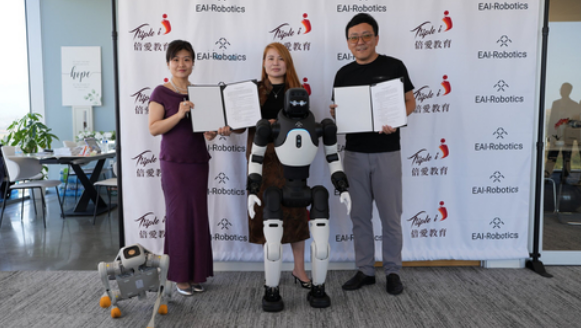
    FF EAI robot lineup humanoid and quadruped
    FF EAI robot lineup humanoid and quadruped

    On May 15, 2026, Faraday Future (FF) buried a teaser in its Q1 earnings report: a “major educational robot product” launching early June.

    This is not FF’s first promise. But the context is different—FF has rebranded as a “physical AI company,” with EAI robotics becoming its new revenue engine in the first delivery quarter. Q1 revenue reached $512,000, up 62% YoY, with software skill packages contributing 26%.

    More critically, FF’s SEC investigation has concluded with no penalties. Founder Jia Yueting has returned as global CEO, with the founding team fully back in control.

    Product Overview: Robotics Ambition in Education

    FF FX Aegis quadruped robot grass field outdoor
    FF FX Aegis quadruped robot grass field

    FF defines 2026 as the “inaugural year of EAI robotics education.” The June education product targets building America’s first scalable EAI robotics education system.

    Known details so far:

    • Positioning: K-12 education scenarios, ages 6-18
    • Platform: FF EAI Brain & Open Developer Platform, featuring six developer tools (Brain Blocks, Create Studio, EAI Soul, EAI Scribe, EAI Studio, SDK/API)
    • Technology: Sim-to-Real digital twin training, data closed-loop engine, Agent Skills development support
    • Ecosystem: Three-tier developer system (Young Futurist/EAI Futurist/EAI Builder), four-tier progression path

    Killer Feature #1: From “Building Cars” to “Building People”

    FF’s transformation logic is clear:

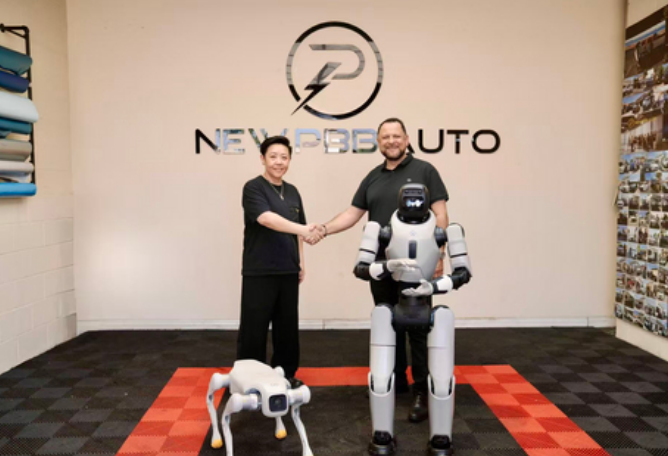
    • Futurist: Full-size professional humanoid robot, already demonstrated nine end-to-end Agent Skills (home assistant, commercial security, pet companion, hospitality)
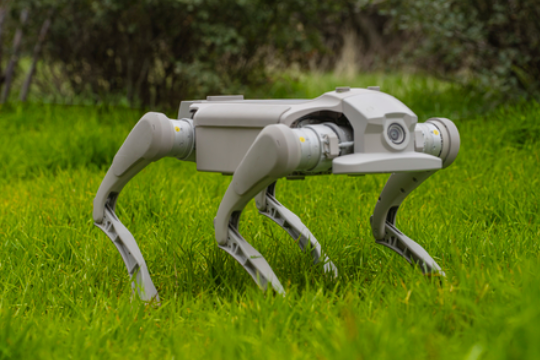
    • FX Aegis: Quadruped robot, completed all US compliance certifications, ready for formal delivery
    • Education product: Launching early June, form factor unknown (possibly small desktop robot or biomimetic pet)

    FF believes education is the largest addressable market for consumer robots in phase one. This aligns with Unitree and Zhiyuan Robotics’ strategy—education before home.

    Killer Feature #2: Open Ecosystem, Lowering Development Barriers

    The FF EAI Brain platform’s core philosophy: “make robot development as accessible as software development.”

    Platform offerings:

    • Unified developer portal: Accessible from K-12 students to professional engineers
    • Sim-to-Real evolution field: Virtual environment training before physical deployment
    • Data closed-loop engine: Real-world deployment data converted to high-quality training data
    • Agile development toolchain: Rapid Agent Skills iteration

    This open strategy contrasts with Tesla’s closed ecosystem. FF hopes to build a developer community through education, then expand to consumer markets.

    Caveats to Note

    • Delivery track record: FF’s automotive delivery history is poor; robot on-time delivery remains uncertain
    • Funding pressure: $45M financing only covers “first phase ramp-up delivery”; long-term funding still needed
    • Market competition: Wonder Workshop, Sphero already occupy the education robotics market; FF faces brand recognition challenges as a new entrant
    • Unknown product form: Launching early June, but no product images or technical specs have leaked

    Who Should Watch?

    Highly Recommended:

    • US K-12 school STEM education directors
    • Robotics education training institutions
    • Developers interested in embodied AI
    • Investors tracking Jia Yueting/FF transformation

    Consider Waiting:

    • Home consumers (waiting for consumer-grade product maturity)
    • Budget-sensitive schools (waiting for price announcement)

    Future Outlook: The “iPad Moment” for Educational Robots

    FF EAI Brain developer platform interface screen
    FF EAI Brain developer platform interface screen

    If FF’s educational robot is priced reasonably ($500-$1,000 range) and the Agent Skills ecosystem enriches quickly, it could become the education robotics field’s “iPad”—not the first, but defining the category standard.

    FF’s advantages:

    • Sim-to-Real technology: Lowering physical training costs and risks
    • Open ecosystem: Attracting developers rather than building closed loops
    • US domestic compliance: Multiple certifications passed, avoiding overseas market risks

    Rating: 7.8/10 (High Risk, High Potential)

    Bottom Line: FF’s most credible pivot yet, but credibility depends entirely on June delivery. For the education robotics market, this could be a disruptor—or another missed deadline.

  • Jollybubu’s First AI Interactive Doll

    Jollybubu’s First AI Interactive Doll

    Since completing its tens of millions of yuan angel round of financing last October, Lingji Tianci has always held a clear industry vision: to become “the Nintendo of children’s AI”.

    After months of refinement and scenario testing, on April 6, 2026, Jollybubu, the company’s first AI interactive doll, finally met with countless families. This is not an electronic toy piled up with specifications, but a smart terminal designed for family fun, specifically for children aged 3-12. It attracts children with its task-based mechanism and highly interactive experience, responds to parents’ expectations with systematic educational content, and is committed to “training” a unique and exclusive growth partner for each child.

    Jollybubu
    Jollybubu

    In the current era of rapid iteration in AI hardware, Jollybubu has chosen a restrained yet precise path of innovation. Its product pioneers a “split-type intelligent agent hardware” architecture, cleverly separating the core computing module from the secure interactive terminal.

    For children, it is a gentle companion that can listen, speak, and interact; for parents, the built-in child content safety filtering and privacy protection mechanism, combined with the “task-based” progressive gameplay, truly realizes the “listen-learn-practice” educational loop.

    Parents can easily track interaction patterns and skill development curves through the accompanying app, providing peace of mind. Jollybubu doesn’t prioritize long screen time; instead, it embeds AI’s “intelligence” into a warm, tactile experience, allowing technology to return to its essential purpose of companionship.

    Open the story channel, and the doll will instantly “transform” into the protagonist of the story. Unlike the one-way playback of traditional audio, Jollybubu uses contextualized voice guidance, branching plot choices, and immersive interactive sound effects to allow children to get into the story while “listening” and extend their imagination.

    From classic fairy tales to cutting-edge science stories, each tale features an open ending and role-playing opportunities. As children drive the plot forward, they subtly cultivate a love of reading and boundless imagination. Here, listening to stories is no longer a passive experience, but a series of fantastical journeys woven by the children themselves.

    In daily companionship, Jollybubu is a child’s most understanding and caring playmate. Based on a custom-designed large-scale children’s model, the doll supports in-depth, scenario-based intelligent dialogue, not only accurately responding to a child’s whimsical ideas but also providing emotional responses in a gentle and encouraging tone.

    It’s also a helpful life assistant: it supports customized weather forecasts and schedule reminders, allows for sharing fun encyclopedic knowledge anytime, and helps establish time management skills. As children gradually develop habits, Jollybubu naturally transitions into an “invisible coach” for independent living, gently supporting each stage of growth with the delicacy and patience of AI.

    Learning should not be a tedious task, but rather a joyful exploration. The subject exploration module covers multiple fields such as Chinese, mathematics, English, and natural sciences, cleverly integrating core knowledge points into quizzes and situational games.

    The system dynamically adjusts the difficulty based on the child’s cognitive level, making learning as easy as playing. Through instant feedback, achievement badges, and positive incentives, children consolidate knowledge and build confidence through play, truly breaking the traditional dilemma of “learning versus play.”

    Jollybubu firmly believes that true AI education should not confine children to virtual worlds, but rather guide them towards real-world interaction. Jollybubu has specially designed a “Social and Critical Thinking Development” module:

    In interest group discussions, the system deliberately hides the “standard answer,” guiding children to express multiple viewpoints on the same topic and cultivate critical thinking and independent thinking skills through communication. The accompanying educational games fully support two-player battles, whether it is parent-child cooperation or partner competition, they can exercise logical thinking and reaction speed in a fun way, making real-world emotional connection the core of the experience.

    Every child’s growth trajectory is unique. Jollybubu’s ultimate goal is to “train” a personalized character doll for each child. With the accumulation of daily interactions, the built-in AI will continuously learn the child’s personality preferences, interest map, and cognitive pace. Through continuous data fine-tuning and emotional memory, it will gradually evolve into a growth partner that truly understands, accompanies, and inspires the child’s desire to explore.

    From the debut of its first product to the realization of its “Children’s AI Nintendo Paradise” ecosystem blueprint, Jollybubu   is ushering in a new era of family-friendly education with its flexible hardware form factor and powerful AI core. On April 6, 2026, Jollybubu will upgrade its companionship and continue its exploration. Jollybubu is ready to embrace every curious and sparkling childhood.

  • LEGO 2026 Smart Bricks

    LEGO 2026 Smart Bricks

    LEGO World
    LEGO World

    Release date: March 2, 2026

    Product reviewed: LEGO Star Wars Smart Brick Series

    Reference Price: Starting at approximately $100 per set, complete set at approximately $250

    Recommended age: 9 years and up

    Keywords: Internet of Things, speech synthesis, NFC interaction, immersive experience

    Introduction: The Leap from “Assembly” to “Symbiosis”

    At the 2026 Consumer Electronics Show (CES), LEGO showcased a groundbreaking new product—a smart brick with a microcomputer, speakers, and sensors. Months later, this product, hailed as “LEGO’s most important evolution in half a century,” finally opened its doors to consumers worldwide on the 1st of this month.

    This initial launch focuses on the Star Wars IP, encompassing several classic designs including the Millennium Falcon. This is more than just a simple packaging upgrade; LEGO is attempting to transform the traditional building experience into a “living” game with digital interactivity. So, is this little “smart brick” truly worth the price?

    I. Technical Architecture: The Beginning of an Ecosystem

    Unlike previous systems that relied solely on electric power, the new intelligent system is built on a more complex three-layer architecture, designed to enable perception and feedback between objects:

    1. SMART Brick: The “brain” of the system. This is a specially modified classic 2×4 block that integrates the main control chip, battery, and audio unit. It is responsible for processing commands and outputting visual and auditory feedback.
    2. Smart Tag: Equivalent to an “information carrier.” This is a special NFC patch that is attached to the surface of a building or vehicle to define the object’s attributes (such as “airplane” or “house”).
    3. SMART Minifigure: A character with a unique ID. When a minifigure with a built-in chip approaches a specific area, it can be recognized by the intelligent core and trigger a preset storyline.

    It is worth noting that all three are indispensable to achieve maximum effectiveness, but Lego ‘s current sales strategy does not seem to be very friendly.

    II. Interactive Experience: A Coexistence of Surprises and Compromises

    In actual use, we focused on testing two dimensions: character interaction and physical feedback.

    1. Story-driven voice feedback

    The most intuitive function is the characters’ “dialogue.” For example, placing Han Solo’s AI character in the Mos Eisley tavern scene will automatically play the sound effects of the two confronting each other. However, the technology here does not directly play back the pre-recorded movie soundtrack, but rather uses text-synthesized electronic voices.

    The advantage of this technology is its high flexibility, theoretically allowing for an unlimited generation of new lines; the disadvantage is that the timbre is somewhat stiff and the texture is rather mechanical. Some players jokingly describe the sound as “like someone talking on the phone while using a vacuum cleaner,” which vividly expresses the roughness of the sound but also reflects the limitations of current synthesis technology in emotional expression. For fans who pursue highly realistic sound, this may be an unacceptable disappointment.

    2. Physical sensor linkage

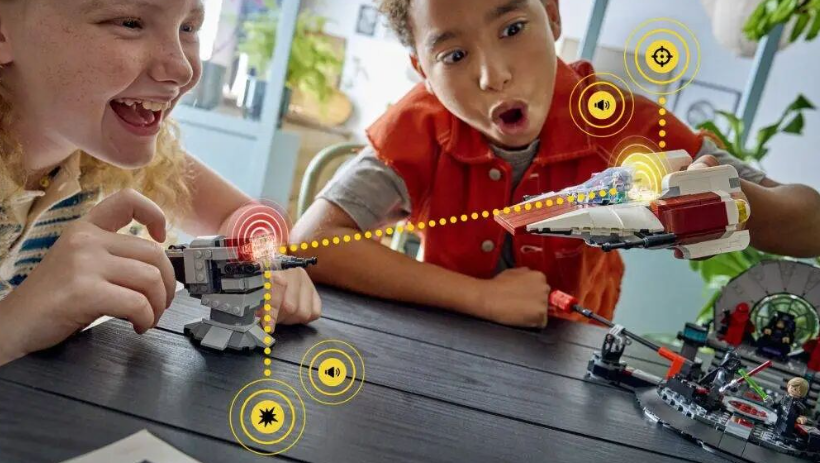
    The smart building blocks are more than just a player; they also retain the attribute of being a “sensor.” On a Red Five X-Wing fighter jet model, we discovered an ingenious detail: a physical spring structure is connected to a red switch on the fuselage. When the player presses this button, the physical displacement is captured by the internal sensor, triggering the sound effect of the fighter jet firing.

    This method of combining mechanical structures with digital signals is more tangible than simple NFC sensing, and it brings “playing with building blocks” back to the hands-on operation itself, rather than just staring at the screen.

    LEGO Star Wars Smart Brick Series
    LEGO Star Wars Smart Brick Series

    III. Cost Analysis: The Consumption Barriers Caused by Fragmentation

    Despite the product’s innovative nature, its initial marketing strategy sparked considerable controversy.

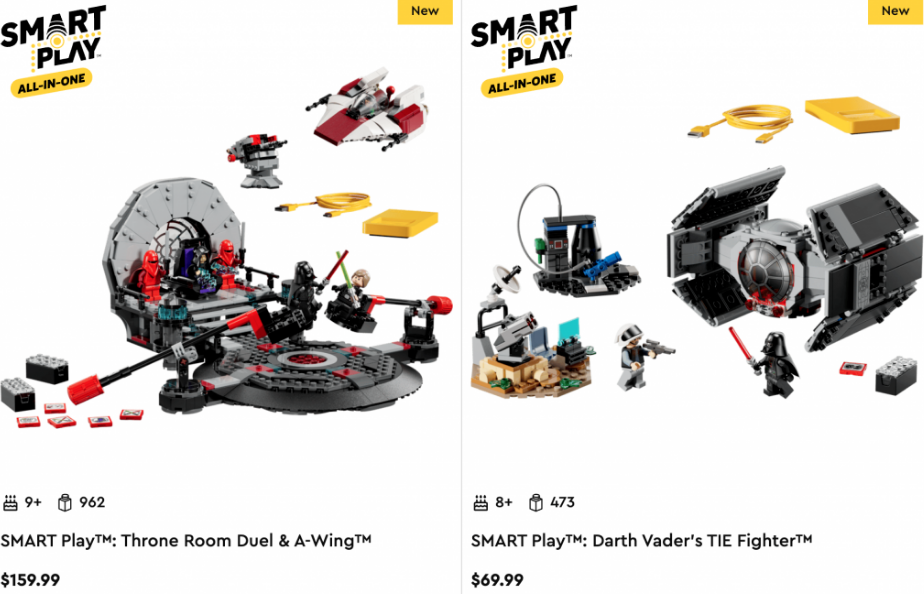
    Of the eight launch sets currently released on the official website, only some are equipped with the core “Smart Blocks.” This means that if players want to experience the full Star Wars universe crossover, they cannot simply rely on purchasing individual large items (such as the expensive Millennium Falcon); they will also need to supplement with specific basic sets.

    LEGO Smart Components
    LEGO Smart Components

    Taking the creation of a small, dynamic scene comprising “spaceship + scene + key characters” as an example, consumers often need to hold the following three products simultaneously:

    • Vehicles equipped with smart building blocks (such as the X-Wing or TIE fighter jets)
    • Scene packages that include smart tags (such as Yoda’s Hut)
    • The main character figure equipped with an NFC chip (usually included in other sets).

    Roughly calculated, to obtain the full interactive capabilities of the three components mentioned above, the total expenditure for users could reach $250. Considering that the smart blocks cannot be sold individually and there is no option to repurchase from existing inventory, this bundled sales strategy significantly raises the entry barrier for ordinary users. For users who only want to try a small portion of the features, the cost-effectiveness appears low.

    IV. Summary of Advantages and Disadvantages

    ✅ Points to be commended:

    1. The ecosystem has enormous potential: once the hardware becomes widespread, players will be able to freely combine storylines like building blocks, making it possible to recreate the grand scenes of an entire movie.
    2. Innovative Interaction Logic: The hybrid interaction method combining physical buttons and NFC increases the fun of exploration.
    3. Compatibility preserved: You can still create using regular LEGO pieces; the smart features are just overlays and do not completely enclose the creative space.

    ❌ Existing shortcomings:

    1. Low voice fidelity: The synthesized voice has poor quality and lacks the emotional color of a realistic performance.
    2. Difficulty in obtaining spare parts: Uneven distribution of core components, forcing decentralized purchases, leads to a surge in total costs.
    3. Lack of standalone sales: Currently, it is not possible to purchase “smart building blocks” separately to replace the old model, which hinders the upgrade path for existing users.

    V. Purchase Recommendations

    Recommended purchase:

    If you’re a die-hard Star Wars fan with a generous budget and want to be among the first to experience LEGO’s future interactive direction, this set offers a unique perspective. It makes you feel like the model in your hands is no longer static, but has come to life.

    We recommend waiting and observing:

    If you value the pure experience of building the set, or have high expectations for the sound quality of children’s toys (especially if you have a child at home who is sensitive to sound), the current version may not meet your expectations. Furthermore, the high cost of exchanging parts is a significant consideration if you plan to collect the entire set.

    Conclusion

    The Starting Path of LEGO
    The Starting Path of LEGO

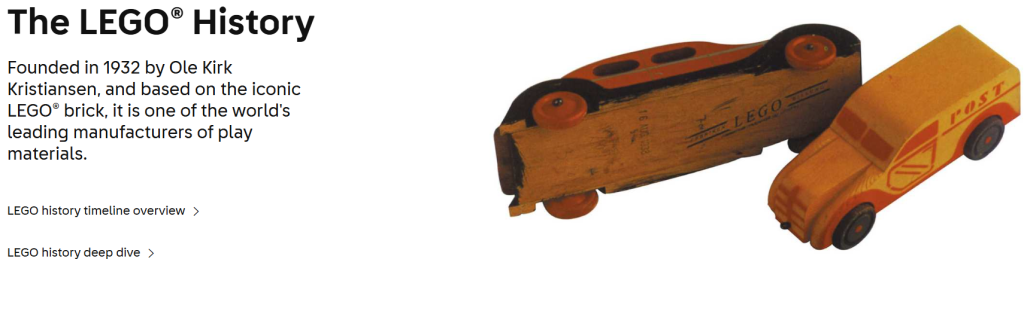
    From its first wooden toy car in 1932 to this intelligent building block set launched in March 2026, LEGO has always adhered to its “play well” brand philosophy, providing high-quality play experiences for users around the world.

    The SMART Brick series is undoubtedly a solid step forward for LEGO in its digital transformation. It technically proves the possibility of combining physical bricks with digital content, but there is still room for optimization in its commercial application.

    With the launch of more non-IP-based smart kits and the possibility of independent supply of core components, this system may become more accessible. But for now, it’s more like an expensive and fascinating technological experiment .