Home

  • NVIDIA’s China Market Share Drops to Zero: The End and Beginning of a Tech Contest

    On May 4, 2026, an interview at the US think tank SCSP sent shockwaves through the global tech community. NVIDIA CEO Jensen Huang confirmed in his own words: NVIDIA’s direct sales share in China’s AI accelerator market has dropped to 0%. Behind this number lies the market collapse of a chip giant that once dominated with 80% share in China.
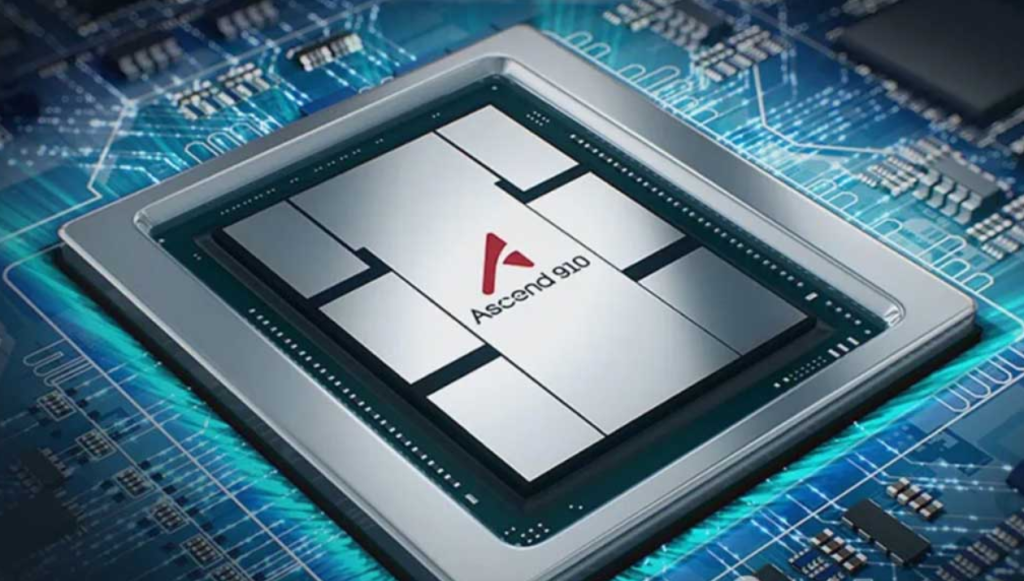
    China's AI chip market is undergoing rapid transformation as domestic manufacturers like Huawei and Cambricon capture market share from international competitors.
    China’s AI chip market is undergoing rapid transformation as domestic manufacturers like Huawei and Cambricon capture market share from international competitors.

    From 80% to Zero: An Irreversible Retreat

    Flash back to 2022, when NVIDIA held absolute dominance in China’s AI chip market. With the CUDA ecosystem and Hopper architecture advantages, this Silicon Valley company was almost the preferred supplier for every Chinese AI enterprise, with market share exceeding 80%.

    The turning point came with the tightening US export controls. To comply with regulations, NVIDIA was forced to cripple GPU performance for China repeatedly—from H100 to H20, each performance cut was followed by even stricter restrictions. In May 2025, the US Department of Commerce extended restrictions from product exports to global usage scenarios, completely blocking NVIDIA’s path in China.

    To preserve its China market, Jensen Huang visited China multiple times to adjust strategies, even modifying products beyond recognition. However, no matter how much he compromised, the wall ultimately didn’t trap China’s AI industry—it trapped NVIDIA itself.

    Domestic Substitution Wave: Who Picked Up the Slump

    Behind the 0%, the market vacuum is being rapidly filled.

    Latest IDC statistics show that in 2025, Chinese GPU and AI chip manufacturers had captured nearly 41% of China’s AI accelerator server market. Bernstein Research predicts that by full year 2026, NVIDIA’s China market share will shrink to approximately 8%, while Huawei and other domestic manufacturers’ share will exceed 50%, AMD will take 12%, and Cambricon will rank third.

    DIGITIMES estimates that 2026 China’s high-end cloud AI accelerator shipments will reach 2.123 million units, a year-over-year surge of 136%. With system integration advantages, Huawei’s market share will easily exceed 50%, ranking first.

    Huawei Ascend’s Rise is the most compelling chapter in this substitution story. In DeepSeek’s tests, the Ascend 910C’s AI inference performance has reached approximately 60% of NVIDIA’s H100. With further optimization through hand-written CANN kernels, the performance gap continues to narrow. In inference scenario Token throughput efficiency tests, the previous generation Ascend 910B already achieved 1.8x NVIDIA H20 performance.

    Cambricon is another player that cannot be ignored. Morgan Stanley’s latest research shows Cambricon’s Q1 performance significantly exceeded expectations, directly driven by strong shipments of the Sanyi 590 chip. Q1 2026 prepayments surged 155% quarter-over-quarter, reaching 1.9 billion yuan, almost entirely supported by new chip production orders.
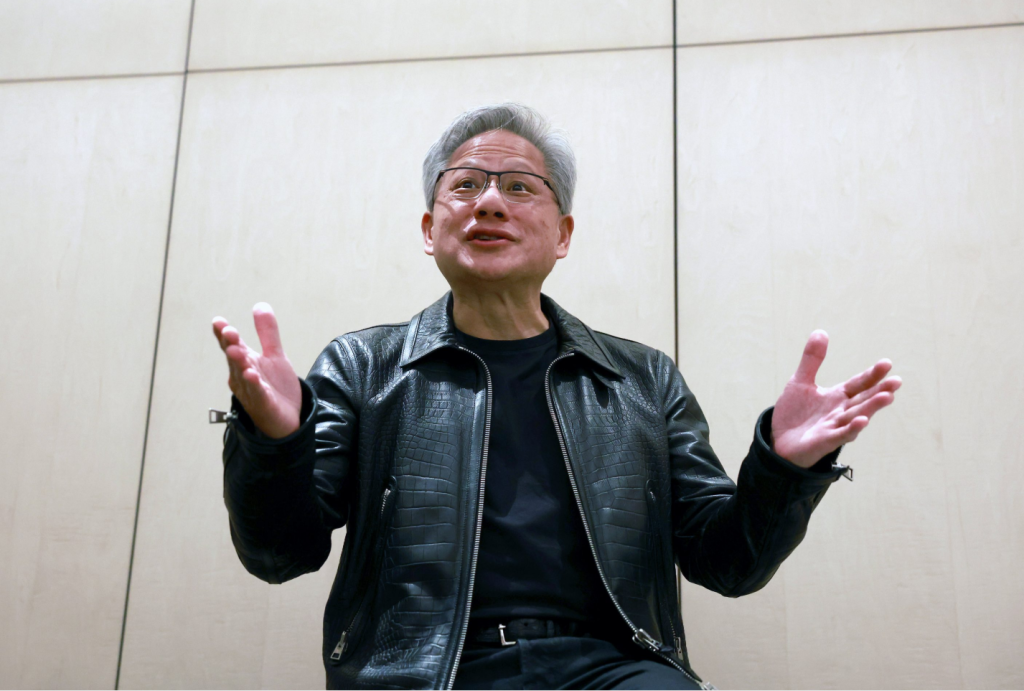
    NVIDIA CEO Jensen Huang confirmed during an interview that NVIDIA's China AI chip market share has dropped to zero, marking a historic shift in the global AI chip landscape.
    NVIDIA CEO Jensen Huang confirmed during an interview that NVIDIA’s China AI chip market share has dropped to zero, marking a historic shift in the global AI chip landscape.

    Ecosystem Barrier Collapse: The CUDA Moat is Draining

    During the interview, Jensen Huang repeatedly emphasized “software ecosystem is the final barrier,” attempting to maintain NVIDIA’s core advantage. Indeed, the CUDA ecosystem is NVIDIA’s most solid moat—millions of global developers, thousands of pretrained models, countless lines of project code and optimization experience are all built on this platform.

    However, cracks are appearing in this barrier.

    In April 2026, DeepSeek-V4 officially launched and went open source, achieving a historic breakthrough simultaneously: completely breaking free from the CUDA ecosystem, with core code fully migrated from NVIDIA CUDA to Huawei’s CANN heterogeneous computing framework. In DeepSeek’s official technical documentation, Huawei Ascend NPU is directly listed alongside NVIDIA GPU in the hardware verification checklist.

    Previously, the cost of migrating away from CUDA was enormous, with rewriting core operators requiring months of work. Huawei’s CANN framework now achieves over 95% CUDA code compatibility, and with one-click migration tools, code refactoring that originally took months has been reduced to being calculated in hours.

    Beyond Huawei, the open-source community is also accelerating the erosion of CUDA’s barriers. In early 2026, KernelCAT launched a cross-chip operator compiler enabling painless migration between multiple domestic chip brands. The entire ecosystem layer is transforming what was once NVIDIA’s exclusive moat into part of public infrastructure.

    The Talent Code: The Overlooked Underlying Variable

    If hardware and ecosystem breakthroughs are visible hard advances, then talent reserves are the most easily overlooked yet critical variable in this substitution story.

    According to MacroPolo think tank tracking data, the global share of China’s top AI researchers has surged from approximately 11% in 2022 to approximately 44%, nearly quadrupling. The US figure declined from 65% to approximately 38% over the same period. This isn’t a decimal-point shift—it’s a generational-scale workforce displacement.

    A synchronized statistic shows that between 2018 and 2024, Chinese universities’ share in global AI paper citations in the top 10% increased by over 7 percentage points compared to the previous decade, reaching global first place.

    The deeper significance of this trend is that the long-term outcome of AI competition was never determined by a few chips. Each time export controls escalated, China raised its investment in basic research talent by one level. Talent is becoming the most solid foundation for domestic AI chips.

    Outlook: The New Landscape After Zero

    From 85% to 0%, NVIDIA’s China story has temporarily ended. But this isn’t just NVIDIA’s loss—it’s a microcosm of the restructuring of the entire AI industry landscape.

    According to Bernstein estimates, just China’s inference market substitution is sufficient to support domestic enterprises like Huawei and Cambricon toward a hundred-billion-yuan annual production scale. When Huawei Ascend NPU is listed alongside NVIDIA GPU in the hardware verification checklist for production environments of top domestic LLM companies like DeepSeek, the CUDA ecosystem’s monopoly has been completely broken.

    As Jensen Huang gently closed his notebook at the interview’s end, tired eyes hidden in screen reflections, a chapter of NVIDIA’s China AI chip era concluded. And another era—China’s AI chip era—is accelerating to begin.
  • AMD Ryzen AI Halo Review: The “Desktop Supercomputer” That Fits in Your Backpack

    As the computing power race expands from cloud to edge, a quiet battle for “local AI freedom” is unfolding. In May 2026, AMD officially launched its first self-branded AI development platform—the Ryzen AI Halo—a mini PC the size of a paperback dictionary that claims to run language models with over 700 billion parameters locally. Is this product genuinely revolutionary or just clever marketing? Let’s find out.

    Design: Serious Hardware in a Small Package

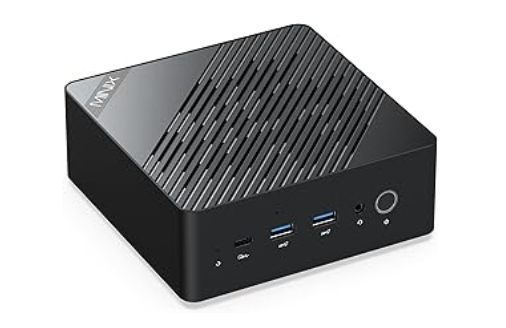
    The Ryzen AI Halo features a compact, square design that easily fits into a backpack for on-the-go portability. The machine’s top surface displays AMD’s corporate logo, surrounded by a programmable ARGB light strip that creates a cyberpunk-inspired glow in low-light environments.

    The cooling system stands out as a key highlight. AMD equipped it with a dual-fan side-blowing thermal design that maintains reasonable surface temperatures even during extended high-load AI operations. During testing, running continuous local LLM inference for one hour left the chassis only mildly warm—an impressive thermal performance.

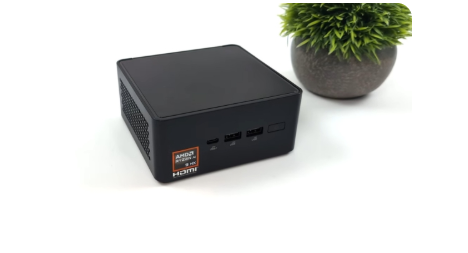
    Port configuration offers abundant connectivity options: the rear panel provides multiple USB-C ports, HDMI video output, and wired ethernet, while the front panel reserves commonly used USB-A ports and audio jacks. Notably, this host eliminates traditional graphics card external power requirements, operating with just a single power cable to simplify desktop wiring.

    The Ryzen AI Halo features a compact form factor with multiple connectivity options
    The Ryzen AI Halo features a compact form factor with multiple connectivity options

    Hardware Specifications: Flagship Performance in Your Palm

    The Ryzen AI Halo’s core is AMD’s flagship Ryzen AI Max+ 395 processor, codenamed Strix Halo. This APU features a Zen 5 architecture with 16 cores and 32 threads, accompanied by 40 compute units of RDNA 3.5 integrated graphics and a 50 TOPS NPU.

    Memory configuration represents another major selling point. The Ryzen AI Halo supports up to 128GB LPDDR5X-8533 unified memory, enabling effortless handling of ultra-large-scale models. Unlike traditional PC architectures, AMD’s unified memory design integrates CPU and GPU memory into a single shared pool, eliminating bandwidth bottlenecks in data transfer—a critical advantage for large model inference scenarios requiring frequent parameter loading.

    In standard testing, the Ryzen AI Max+ 395 platform can simultaneously operate up to 6 AI agents while maintaining approximately 45 tokens/s generation speed under high load. For developers pursuing a “smart agent host” experience, this figure means running multiple AI assistants and executing complex multi-task workflows locally.

    Software Ecosystem: Out-of-the-Box Development Experience

    Beyond hardware, software support proves equally crucial. The Ryzen AI Halo comes pre-installed with AMD ROCm 7.2.2 software stack, the core component of AMD’s open-source GPU computing platform. After deep optimization, ROCm now natively supports mainstream AI development tools like LM Studio, ComfyUI, and VS Code, allowing developers to start working without tedious configuration.

    Model compatibility spans a broad range. For open-source models, Llama, Mistral, and other mainstream large language models run smoothly; in image generation, Stable Diffusion XL, FLUX, and similar models perform admirably on this mini host. AMD commits to “Day 0” support for new models, ensuring developers access the latest technology immediately.

    Additionally, the Ryzen AI Halo supports both Windows and Linux dual systems, accommodating users’ preferred development environments. Windows users gain complete Linux development experience through WSL2, while Linux native users directly leverage ROCm’s full capabilities.

    AMD-powered mini PC showcasing thermal design and interface layout
    AMD-powered mini PC showcasing thermal design and interface layout

    Use Cases: Who Needs This “Pocket Supercomputer”?

    Positioning-wise, the Ryzen AI Halo targets three primary user groups:

    AI Developers and Researchers: Those frequently testing models and debugging prompts locally. This device provides sufficient computing power while avoiding accumulating cloud service costs and data leakage risks. For research teams exploring “private deployment” solutions, the Ryzen AI Halo offers a cost-effective starting point.

    Small and Medium Enterprises and Independent Studios: Industry clients with strict data privacy requirements—legal, medical, and financial AI application developers. Local inference ensures sensitive information never leaves the enterprise network while eliminating server build-out costs and maintenance burdens.

    Privacy-Conscious Individual Users: Developers or tech enthusiasts with strong personal data protection preferences. They prefer controlling their own AI tools and data rather than uploading work content to third-party cloud platforms.

    Competitive Analysis: Can It Challenge NVIDIA’s Moat?

    When discussing AI computing devices, NVIDIA remains unavoidable. Currently, the top competitor to Ryzen AI Halo is NVIDIA’s DGX Spark, which also supports 128GB LPDDR5X shared memory but carries a steep $4,699 price tag. In contrast, third-party mini hosts equipped with the Ryzen AI Max+ 395 generally retail between $2,500 and $3,000.

    However, price advantage isn’t AMD’s winning card. NVIDIA’s DGX Spark features GB10 chip supporting 20 Petaflops FP4 AI compute power with on-chip NVLink-C2C achieving 900GB/s interconnect bandwidth, potentially offering advantages in ultra-large-scale context processing. Furthermore, AMD’s ROCm ecosystem still trails NVIDIA’s decade-plus CUDA ecosystem in proprietary acceleration libraries and enterprise-grade tooling.

    AMD’s strategy appears more as “differentiated competition” than “head-on confrontation.” The Ryzen AI Halo targets the niche market of “personal workstations that fit in your backpack”—an attractive option for developers who don’t need DGX Spark’s full capabilities but want to break free from cloud dependency.

    Conclusion: The Right Way to Do Local AI

    After deep experience with this device, two impressions stand out: first, it genuinely delivers on “bringing AI with you”—700 billion parameter model capability means developers can work on AI projects anytime, anywhere, without being constrained by network conditions or cloud service quotas. Second, AMD’s commitment to hardware-software coordination is evident—the pre-installed ROCm ecosystem and direct adaptation of mainstream development tools dramatically lowers the barrier to edge AI usage.

    Of course, this isn’t a perfect solution. ROCm ecosystem maturity requires time to develop, and some CUDA-dependent frameworks may face compatibility issues during migration. But for developers willing to try AMD platforms and embrace open-source ecosystems, the Ryzen AI Halo provides a trustworthy starting point.

    When “AI democratization” transitions from slogan to reality, when edge devices truly gain the capability to compete with cloud services, the era of on-device AI may have already begun.

  • Tech Giants Collectively Bet on Screenless AI Hardware

    When OpenAI announced plans to launch a compact screenless device by the end of 2026 with a target shipment of 100 million units, the entire technology industry was electrified. This announcement not only signifies the birth of a new product but marks a collective bet by tech giants on a “screen-free” AI hardware future.

    From Phones to Screenless Devices: A Fundamental Shift in Interaction Paradigm

    For a long time, smartphones have been the primary interface between humans and the digital world. However, this interaction method has inherent limitations—users must actively take out their devices from pockets, unlock the screen, and find the corresponding application. Tech companies are realizing that a true AI assistant should be as ubiquitous as air, rather than trapped behind a glass screen.

    OpenAI is collaborating with MediaTek and Qualcomm to develop mobile processors, with mass production expected in 2028. But more noteworthy is CEO Sam Altman’s hint that the “ultimate form may not look like a phone we’re familiar with at all”—instead, it would be an AI terminal without apps, relying entirely on voice interaction.

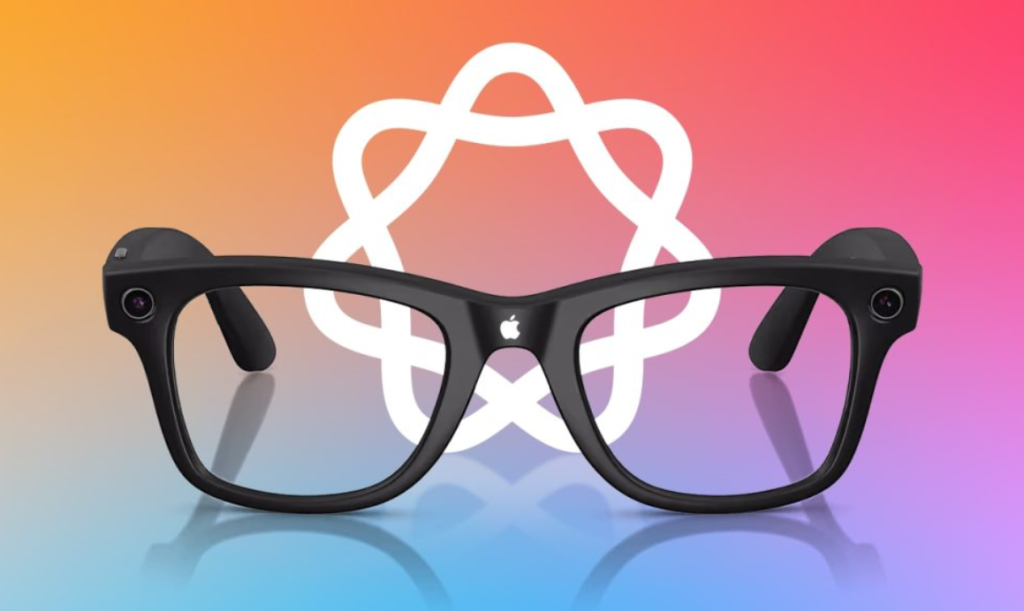
    Conceptual design of Apple’s AI glasses, featuring a design without a display screen and a dual-camera setup that supports gesture control.
    Conceptual design of Apple’s AI glasses, featuring a design without a display screen and a dual-camera setup that supports gesture control.

    Apple is equally accelerating development of its first AI smart glasses, codenamed “N50.” To pursue lightweight design, this device abandons the display screen, adopting a dual-camera solution supporting gesture control, while offloading computing tasks to paired iPhones for power balance. Apple’s designers are testing various frame styles, aiming to make the product look more like fashionable everyday glasses rather than tech gadgets.

    Meta Ray-Ban Has Already Validated the Market

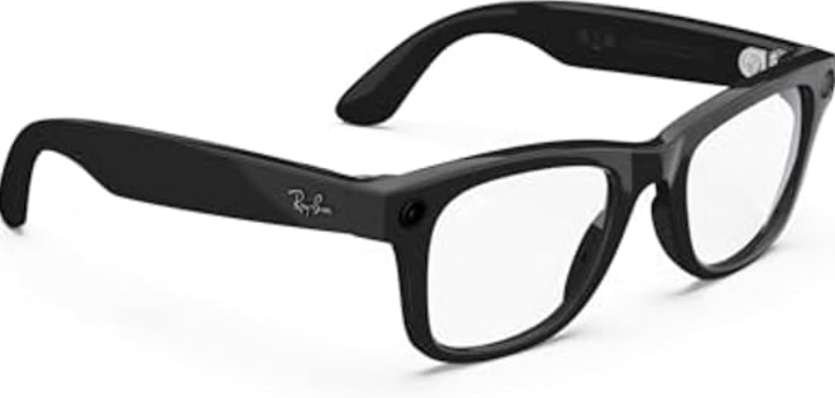
    The Meta Ray-Ban smart glasses feature a minimalist black design and currently hold the largest market share globally, accounting for 85.2% of the market.
    The Meta Ray-Ban smart glasses feature a minimalist black design and currently hold the largest market share globally, accounting for 85.2% of the market.

    In this screenless AI hardware race, Meta has established an absolute lead with its Ray-Ban series. Data shows that Ray-Ban smart glasses currently hold 85.2% of the global smart glasses market—a figure intimidating enough to pressure any competitor.

    Meta’s new AI model, Muse Spark, has begun embedding into the smart glasses ecosystem, significantly enhancing the device’s multimodal understanding capabilities. Users can not only use it for calls and music but also have the AI assistant “see” objects in front of them and provide descriptions or suggestions. This leap from “hearing” to “seeing” transforms smart glasses into a genuine “second brain” for users.

    Supply Chain Challenges and Domestic Opportunities

    The rapid development of screenless AI hardware is reshaping the upstream supply chain landscape. The exponential growth in AI computing demand has driven the optical communication chip market.

    Domestic manufacturer Everbright Huaguang’s VCSEL and optical communication chip product lines saw revenue surge 1036.79% year-over-year in 2025, demonstrating explosive growth.

    However, hidden concerns exist behind this high growth. The manufacturing process for high-end EML chips is more than three times more complex than traditional laser chips, with core patents almost entirely monopolized by international giants.The domestic localization rate remains below 10%. Global high-end production capacity has been locked through 2028, constituting a core bottleneck for screenless AI hardware mass production.

    For Chinese enterprises, this presents both challenges and opportunities. At the Dreame AI smart ring booth at the Canton Fair, on-site contract amounts exceeded one million RMB, demonstrating robust international demand for domestic screenless AI products.

    From Health Monitoring to Children’s Education: Scene Applications for Screenless Design

    Screenless design is finding product-market fit in specific segments.

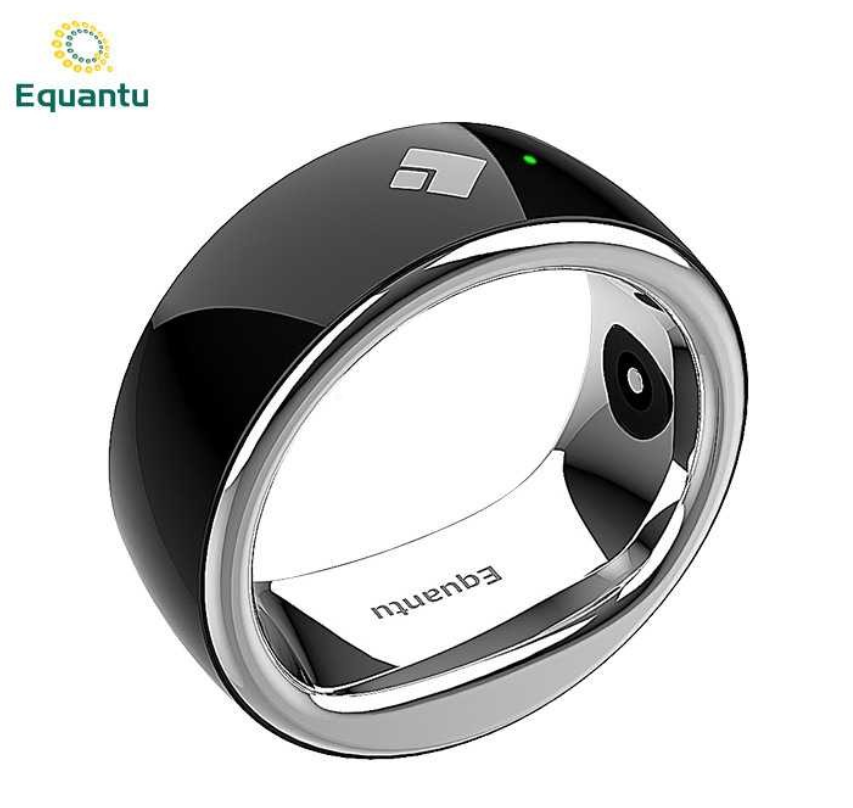
    In the health wearable sector, Dreame’s AI smart ring weighs only 2.6 grams, delivering an ultra-light, barely noticeable wearing experience. It integrates multimodal sensors to collect round-the-clock health data and leverages AI algorithms for professional analysis. This lightweight solution is highly appealing to health-conscious users who dislike bulky wearable devices.

    The AI-powered smart ring weighs only 2.6 grams and allows for “comfortable wear.” It integrates multi-modal sensors to collect health data 247.
    The AI-powered smart ring weighs only 2.6 grams and allows for “comfortable wear.” It integrates multi-modal sensors to collect health data 247.

    The children’s hardware market also favors screenless design. Seewo’s Seedpace AI interactive story machine for the North American market features no screen as its defining characteristic, using story cards and audio interaction to engage children while allowing parents to manage content through an app. This design directly addresses parents’ concerns about screen harm.

    The Future Contest: Replacement or Supplement?

    Despite the enthusiasm from tech giants, whether screenless AI hardware can truly replace phones remains uncertain. Currently, screenless devices are more likely targeting the “scenario gaps” that phones cannot cover—during exercise, commuting, or when hands are occupied. These scenarios require quick responses and information access rather than deep immersion.

    The real test lies in user experience. Technical maturity, user habit cultivation, commercial pricing, and other factors will determine the ultimate fate of this emerging category. OpenAI’s first device is expected to be priced between $200-300; whether consumers will embrace it remains to be seen in the next 12 months.

    When AI steps out of screens and integrates into everyday items like glasses, rings, and necklaces, our way of interacting with the digital world may undergo fundamental change. This race, just beginning, deserves continued attention.

  • Tesla Optimus V3 Officially Enters Mass Production: The Commercialization Inflection Point Arrives

    2026 marks a landmark moment for the humanoid robot industry. On April 23, Tesla officially announced that the third-generation Optimus humanoid robot V3 will begin mass production at the California Fremont Factory in late July to August 2026. Notably, the production line undertaking this historic mission is not newly built but converted from the lines previously used for Tesla’s flagship models, the Model S and Model X.

    Tesla formally announced the discontinuation of Model S and Model X in January 2026. Official data shows these two classic models accounted for less than 3% of 2025 deliveries. Behind the discontinuation decision lies Musk’s strategic pivot toward robotics. The Fremont Factory space, once filled with aluminum body welding and falcon-wing door installation, is being transformed into an automated fortress producing one million robots annually.

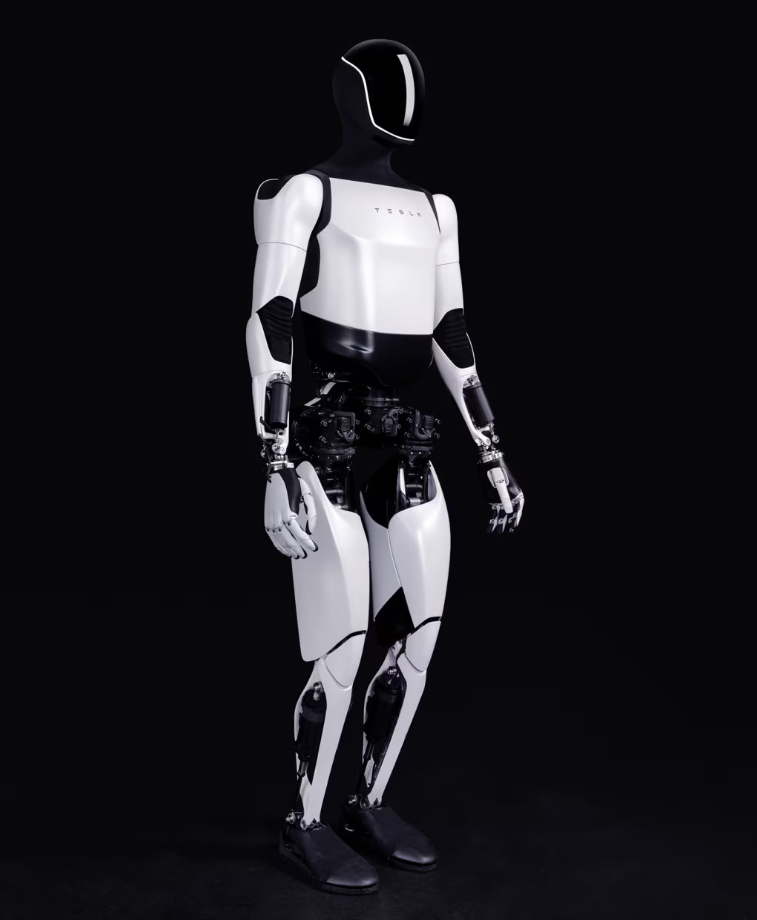
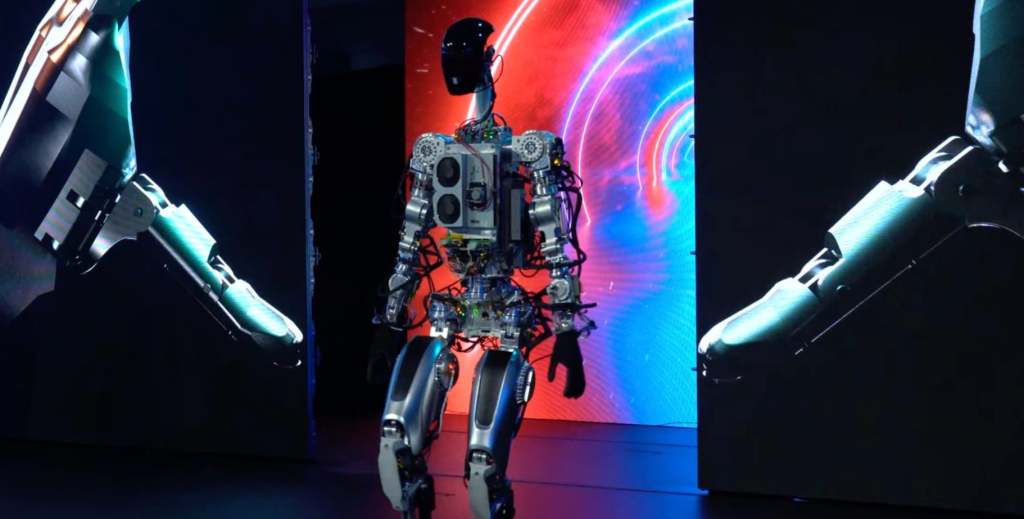
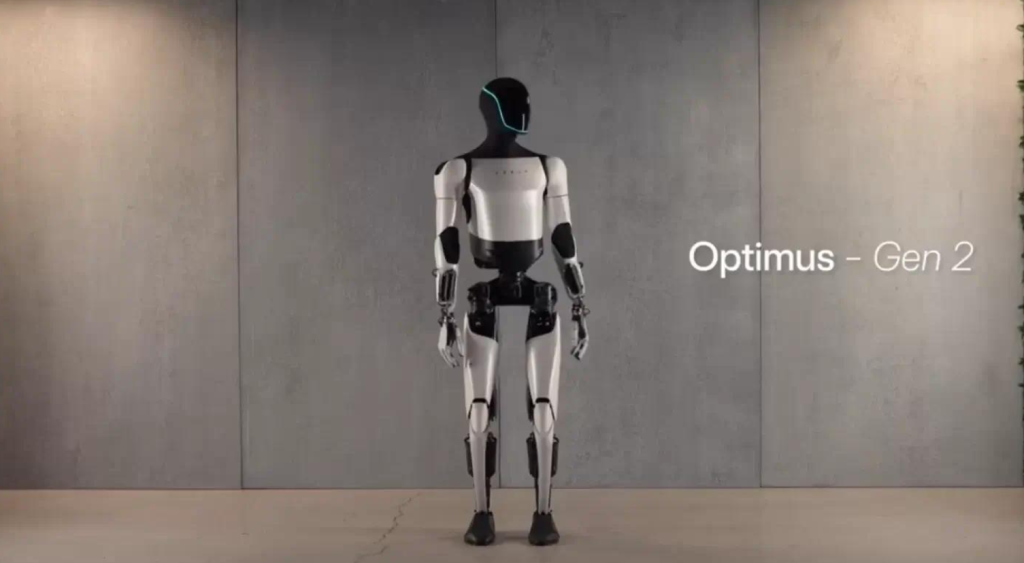
    Tesla Optimus humanoid robot display, showcasing its sleek and streamlined design
    Tesla Optimus humanoid robot display, showcasing its sleek and streamlined design

    Ambitions Behind Million-Unit Annual Capacity

    Tesla’s disclosed production plan reveals the tech giant’s grand ambitions. According to the plan, the converted Fremont Factory line has a designed annual capacity of one million humanoid robots. Simultaneously, Tesla is already deploying second-generation production lines at the Texas Super Factory, with a long-term target annual capacity of 10 million units.

    What does this number mean? The current global humanoid robot market annual shipments fall short of 10,000 units. Tesla’s production target exceeds the total market volume by over 100 times. Musk previously stated that he estimates the humanoid robot market valuation could reach $25 trillion by 2050, accounting for 80% of Tesla’s future total market value.

    However, industry insiders caution that initial production ramp-up will be “very slow.” The Optimus V3 contains over 10,000 unique components and represents an entirely new product category. The production line requires time to磨合. Musk candidly admitted that currently, they cannot predict the exact ramp-up speed.

    Tesla Optimus robot with sci-fi aesthetic, presenting precision mechanical structure
    Tesla Optimus robot with sci-fi aesthetic, presenting precision mechanical structure

    From $55,000 to $20,000: The Cost Challenge Remains

    The biggest challenge for mass production lies in cost control. Currently, each Optimus unit costs approximately $55,000 to manufacture, while Tesla’s mass production target is to push costs below $20,000—a reduction exceeding 60%.

    The high cost stems from technical difficulties in core components. The Optimus’ dexterous hand has 22 degrees of freedom, requiring manipulation capabilities similar to human hands. This places extremely high demands on the transmission system. Additionally, the core component for 14 linear joints—planetary roller screws—requires precision errors controlled within ±6 micrometers. Currently, the number of suppliers globally capable of stable mass production of this component remains limited.

    Supply chain restructuring is Tesla’s core strategy for cost reduction. Unlike directly adopting the automotive supply chain, Tesla chose to redesign components from first principles. Disclosed information shows 70% of core components will come from domestic suppliers, including Tuopu Group (actuators), Sanhua Intelligent Control (rotary joints), and Green Harmonic (harmonic reducers), with costs 40% lower than Japanese and German products.

    Commercialization Path: Factories First, Homes Later

    In terms of application scenarios, Tesla has adopted a pragmatic “internal first, external later” strategy. The Optimus V3 plans to deliver to enterprise customers in the second half of 2026, then expand to external scenarios in 2027.

    Currently, Tesla is conducting internal testing at the Austin factory, having Optimus perform simple tasks like material handling to accumulate actual operational data. This “verify in our own factory first, then promote externally” approach closely mirrors Xiaomi’s robotics deployment path.

    Looking across the industry, humanoid robot commercialization has already shown divergence. Domestic companies like UBTECH and Zhiyuan Robotics have achieved substantive breakthroughs in industrial scenarios. Zhiyuan Robotics particularly achieved its 10,000th general embodied intelligence robot offline in March 2026. However, the consumer market still needs to wait for the explosion. The core obstacle remains the balance between cost and reliability—surveys show 78% of household users have a psychological price point below a few thousand yuan, while current high-end models still cost hundreds of thousands of yuan.

    Tesla Optimus robot with sci-fi aesthetic, presenting precision mechanical structure
    Tesla Optimus robot with sci-fi aesthetic, presenting precision mechanical structure

    Industry Impact and Future Outlook

    Tesla Optimus V3’s mass production holds benchmark significance for the entire humanoid robot industry. Led by Tesla, tech giants including Honda, Toyota, Baidu, and Xiaomi have intensified their layout, accelerating the global humanoid robot industry from technology verification toward commercial deployment.

    Nevertheless, challenges remain formidable. Beyond costs, the durability of core components is also a limiting factor. Current joint module service life is approximately one year, far below the 5+ years required for industrial applications. The dexterous hand longevity issue is equally prominent. Early adoption of full tendon-drive solutions revealed problems like insufficient grip strength and material wear.

    Despite this, the industry remains optimistic about humanoid robot prospects. Kaiyuan Securities pointed out that 2026 is the critical node for humanoid robots transitioning from “0 to 1.” As the supply chain matures and scale effects emerge, the humanoid robot cost curve will continue declining, and the commercialization process is expected to accelerate. For the entire manufacturing sector, the intelligent transformation brought by humanoid robots may be just beginning.