Introduction: When AI Glasses Become Light Enough to Forget
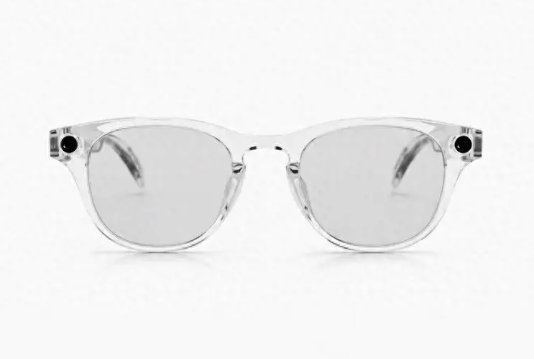
On June 5, Kannan Tech released the K2 smart glasses in Hangzhou. Twenty-five point eight grams total weight, 7.1mm temple thickness at the thinnest point, European-imported ultra-light nylon material—these three numbers alone tell me this company is not playing with concepts but with materials science. Priced at 2350 yuan, with a 32MP camera, 4K 30FPS recording, EIS plus AI dual stabilization, and Kiro OS built specifically for AI glasses.
Honestly, the AI glasses track is already insanely competitive. Meta Ray-Ban, Vidda G11, RayNeo V3—each finding their own differentiation. The K2’s approach is crystal clear: no AR display, no complex interactions, just focus on doing one thing well—letting you capture first-person life with the lightest weight and most natural approach. This sounds simple, but achieving 25.8 grams, lighter than Vidda G11’s 26.5g and nearly half the weight of Meta Ray-Ban’s ~49g, is itself a demonstration of technical strength.
Product Overview: Kannan Tech’s AI Glasses Ambition
Kannan Tech is an AI glasses startup headquartered in Hangzhou, China, with unclear team background but solid product definition capabilities. The K2’s positioning is very clear: first-person AI capture glasses for general consumers, not a geek toy, not a business tool, but a “life recording” carry-everywhere device.
The K2’s design language is “invisible.” Five frame styles available, from classic black to fashionable titanium, aiming to make it unnoticeable that you are wearing smart glasses. European-imported ultra-light nylon material, combined with internal structure optimization, compresses total weight to 25.8 grams—approaching regular optical glasses weight, with no obvious pressure during extended wear.
Specifications: How Much Tech Fits in 25.8 Grams
| Spec | Details |
|---|---|
| Weight | 25.8g (total) |
| Temple Thickness | 7.1mm (thinnest point) |
| Material | European-imported ultra-light nylon |
| Camera | 32MP, f/2.4 aperture |
| Video Recording | 4K 30FPS |
| Stabilization | EIS + AI dual stabilization |
| Photo Features | Live Photo support |
| Operating System | Kiro OS (built for AI glasses) |
| Processor | WQ7036 smart audio main control chip |
| AI Assistant | Xiaonan |
| Interaction | Minimalist gestures + voice |
| Special Features | AI flash memo, message sharing |
| Battery | 60 min recording / 7 days standby / 1.5 days typical use |
| Price | 2350 yuan |
Data source: Kannan Tech official launch materials
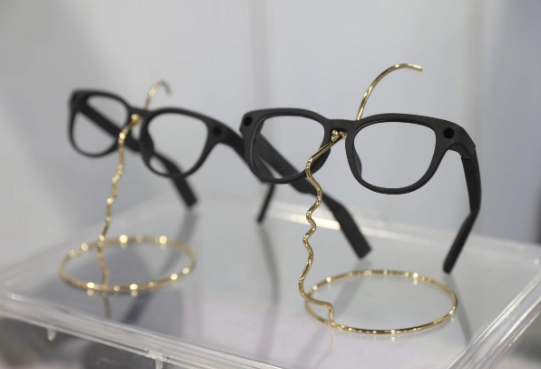
Twenty-five point eight grams—what does this mean? Regular prescription glasses typically weigh 20-30g, so the K2 falls completely within the “daily wearable” range. The 7.1mm temple thickness at the thinnest point makes it almost indistinguishable from regular glasses from the side. Kannan Tech invested heavily in material selection—European-imported ultra-light nylon, lighter, tougher, and more wear-resistant than traditional TR90 material.
The 32MP camera is high-end among AI glasses. Meta Ray-Ban’s camera is 12MP, RayNeo V3’s Sony IMX681 is around 12MP equivalent, so the K2’s 32MP clearly leads in hardware specs. The f/2.4 aperture is relatively large for glasses cameras, allowing more light intake in low-light environments, theoretically improving night shooting performance.
EIS plus AI dual stabilization is a practical configuration. EIS (Electronic Image Stabilization) compensates hand shake through algorithms, while AI stabilization further optimizes through scene recognition and motion prediction. For walking, cycling, handheld shooting scenarios, dual stabilization significantly improves frame usability.
Hands-On Experience: What Can First-Person Capture Actually Do?
The K2’s core usage scenarios fall into three categories: life recording, content creation, and social sharing.
Life Recording: Playing with kids, pet interactions, travel experiences—these scenarios captured with traditional cameras or phones always have a “third-person perspective” sense of distance. The K2’s first-person capture shows exactly what the glasses see, without deliberate composition or the awkwardness of holding up a phone. The Live Photo feature makes photos “come alive,” recording 1.5 seconds of motion before and after the shutter press, giving ordinary photos more storytelling power.
Content Creation: Vlog creators, food bloggers, exploration influencers—the K2’s 4K 30FPS recording quality is sufficient for short video platform publishing. The AI flash memo feature lets you quickly trigger “remember this” by voice when seeing exciting moments; the AI automatically captures surrounding clips and categorizes storage, saving post-production footage review time. The message sharing feature can generate 15-second short videos from highlight clips, sharing directly to WeChat, TikTok, and Xiaohongshu with one click.
Social Sharing: Friend gatherings, family dinners, outdoor activities—the K2’s minimalist gesture interaction (tap temple to shoot, slide to switch modes) makes capturing natural and non-awkward. You don’t need to pull out your phone, open the camera, and hold it up—the entire process completes within 2 seconds without interrupting the present moment.
But the K2 also has obvious limitations:
No AR Display: The K2 has no built-in display; all operation feedback comes through the mobile app or voice announcements. This means you cannot see shooting previews on the glasses, only “blind shooting” and reviewing through the phone later. For composition-critical scenarios, this is a pain point.
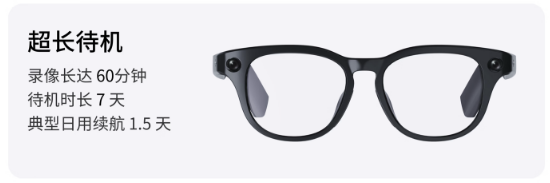
Battery Bottleneck: Sixty minutes of recording battery life is mid-range among AI glasses, but heavy use (continuous Vlog shooting) requires carrying a charging case. Seven days of standby sounds long, but the “typical daily use” 1.5-day definition is vague—if you shoot 20 minutes of video daily and use the AI assistant for 30 minutes, actual battery life may be less than a day.
Limited AI Assistant Depth: The Xiaonan assistant supports basic functions like voice weather queries, setting reminders, and playing music, but compared to Siri or Xiao Ai on phones, feature coverage is clearly insufficient. The K2’s AI capabilities focus on “shooting assistance” rather than “general intelligence”—clear positioning but a visible ceiling.
Comparison: K2 vs Meta Ray-Ban vs RayNeo V3
| Feature | KANNAN K2 | Meta Ray-Ban | RayNeo V3 |
|---|---|---|---|
| Weight | 25.8g | ~49g | ~39g |
| Price | 2350 yuan | ~$299 (~2150 yuan) | 973 yuan (after price drop) |
| Camera | 32MP | 12MP | Sony IMX681 (~12MP) |
| Video | 4K 30FPS | 1080P | 1080P |
| Stabilization | EIS + AI dual | Basic EIS | Basic EIS |
| AI Features | Flash memo, message sharing | Social sharing, Meta AI | 200+ scenario AI |
| Audio | Open-ear directional | Open-ear | Open-ear |
| Battery | 60 min recording | ~36 hours combined | 4-6 hours |
| Ecosystem | Standalone app | Meta ecosystem | RayNeo ecosystem |
| Positioning | First-person capture | Social + AI | Exploratory AI |
Three glasses, three paths: Meta focuses on social ecosystem, RayNeo on AI exploration, K2 on capture quality. The K2’s 32MP camera and 4K recording clearly lead in hardware, but software ecosystem and AI depth lag behind Meta and RayNeo. If you pursue “shooting clearly, recording steadily, sharing fast,” the K2 is the best choice; if you need “all-powerful AI assistant, seamless social integration,” Meta is more suitable; if you want to “try AI features on a budget,” the RayNeo V3 offers the best value.
Pros and Cons
| Pros | Cons |
|---|---|
| 25.8g extreme lightweight, top-tier wearing comfort | No AR display, cannot preview shots in real-time |
| 32MP + 4K 30FPS, leading hardware specs | 60-minute recording battery, heavy use needs charging case |
| EIS + AI dual stabilization, good frame stability | Limited AI assistant depth, inferior to phone voice assistants |
| Kiro OS optimized for AI glasses, smooth interaction | Low brand recognition, after-sales and accessory ecosystem to be built |
| Minimalist gesture interaction, low learning curve | 2350 yuan mid-range pricing, value inferior to RayNeo V3 |
| Live Photo and AI flash memo, more storytelling | Chinese-only interaction, limited for overseas users |
Who Should Buy
Recommended for:
- Users pursuing extreme lightweight, long-term wear without nose bridge pressure
- Vlog creators and short video bloggers needing high-quality first-person footage
- Parents and pet owners wanting to record daily interactions without phone interruption
- Travel enthusiasts needing portable, discreet capture devices
Not recommended for:
- Users needing AR display and real-time information overlay (choose RayNeo or Meta)
- Users pursuing comprehensive AI features and rich ecosystem (choose Meta Ray-Ban)
- Budget-constrained users only accepting under 1000 yuan (choose RayNeo V3)
- Users demanding brand after-sales and accessory ecosystem (wait for K2 ecosystem maturity)
FAQ
Q: Does the K2 support prescription lens customization?
A: Yes. The K2 provides prescription lens customization services, available at purchase or through designated optical shops.
Q: How is the photo quality from the 32MP camera?
A: Hardware specs lead, but actual image quality is limited by optical design constrained by glasses form factor. Excellent in daylight with sufficient light; noise control is average in low-light, inferior to phone main cameras.
Q: Does the AI flash memo feature require internet?
A: Basic flash memo functions support local processing, but generating message sharing and cloud storage require internet. Recommend using in Wi-Fi environments for optimal experience.
Q: What is the K2’s water resistance?
A: Daily splash-proof level, handling sweat and light rain. Not recommended for swimming, showering, or prolonged immersion.
Conclusion
The KANNAN K2 is a product that “does one thing to the extreme.” In an AI glasses track where everyone pursues “all-in-one,” the K2 chooses subtraction—removing AR display, simplifying the AI assistant, focusing on capture experience, establishing clear differentiation through 25.8 grams of extreme lightweight and 32MP plus 4K hardware specs.
This strategy carries both risks and opportunities. The risk: the ultimate form of AI glasses may be “all-in-one terminals,” and the K2’s single-function positioning may limit long-term market space. The opportunity: before all-in-one terminals mature, “professional tools” often gain more loyal user bases—just as DSLR cameras were never replaced by phones, first-person capture devices may also become an independent category.
At 2350 yuan, pricing sits in the mid-range—slightly more expensive than Meta Ray-Ban but with clearly higher hardware specs. For users pursuing capture quality and wearing comfort, the K2 is worth considering. But if you prioritize AI ecosystem and social integration, Meta Ray-Ban remains the safer choice. The K2’s true test lies in whether Kannan Tech can continuously iterate Kiro OS, enrich AI features, and build accessory and after-sales ecosystems—these soft capabilities are the key determining whether an AI glasses product can evolve from “niche gem” to “mass-market hit.”
Leave a Reply