Tag: Smart Glasses

Glasses-type wearable devices equipped with built-in cameras, microphones, and bone conduction units. Through embedded AI chips, they enable real-time voice translation, photo capture, information reminders, and other functions. Unlike traditional glasses, smart glasses eliminate the need to check phones for information, as AI assistants can directly “see” content in the user’s field of view and provide instant feedback. The Meta Ray-Ban series currently holds the highest global market share for smart glasses products.

  • Oakley Meta HSTN: Meta’s First Sport-Focused AI Glasses Launch

    Oakley Meta HSTN: Meta’s First Sport-Focused AI Glasses Launch

    Meta has officially partnered with Oakley to launch the Oakley Meta HSTN, its first performance-oriented AI smart glasses. Priced at $399, this device targets athletes and outdoor enthusiasts with upgraded cameras, longer battery life, and sport-specific features. Moreover, pre-orders open on July 11, with standard models shipping later this summer.
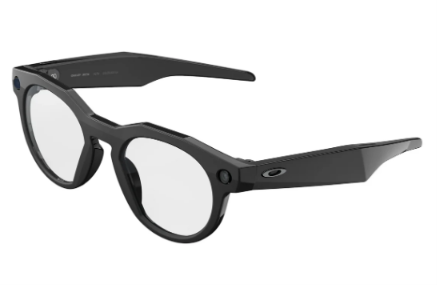
    Oakley Meta HSTN black frame camera
    Oakley Meta HSTN black frame with camera

    What Makes HSTN Different

    The Oakley Meta HSTN stands apart from the Ray-Ban Meta lineup because it prioritizes athletic performance over casual style. Consequently, it features IPX4 water resistance to handle sweat and rain, while the 8-hour battery life covers entire marathons or golf rounds. In addition, Oakley’s signature PRIZM lens technology enhances visibility across varying light conditions.

    The camera system sees a major upgrade. The 12-megapixel ultra-wide sensor now captures 3K video at 2880 by 1620 resolution, a significant jump from the Ray-Ban Meta’s 1080p output. Furthermore, it records up to 3 minutes of continuous footage, enough for complete action sequences. The five-microphone array includes wind noise reduction, ensuring clear audio during cycling or running.

    For safety, open-ear speakers let users hear music and AI responses while remaining aware of surrounding traffic. Therefore, road cyclists and trail runners can stay connected without compromising situational awareness.
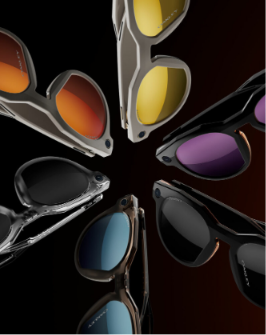
    Oakley Meta HSTN color variants
    Oakley Meta HSTN multiple color options displayed

    Meta AI for Athletes

    Meta AI serves as the HSTN’s core intelligence. Users activate it with “Hey Meta” and ask sport-specific questions in real time. For example, golfers can inquire how wind affects their upcoming shot, and runners can request pace and heart rate zone updates. Meanwhile, the assistant also handles translation, object recognition, and music identification.

    All processing runs through the Meta AI App on a connected phone, since the glasses themselves lack standalone computing power. However, this dependency means users must carry their smartphones during workouts.

    Battery and Pricing

    The HSTN delivers 8 hours of typical use per charge, with 19 hours in standby mode. The included charging case adds roughly 40 extra hours, bringing total portability to 48 hours. Additionally, a 20-minute fast charge restores 50% capacity.

    Meta offers two pricing tiers. The standard collection starts at $399 with six frame and lens combinations. Alternatively, a limited-edition 50th-anniversary model costs $499 and features gold accents with 24K PRIZM lenses.

    Initial launch markets include the United States, Canada, United Kingdom, Ireland, France, Italy, Spain, Austria, Belgium, Australia, Germany, Sweden, Norway, Finland, and Denmark. Mexico, India, and the United Arab Emirates will follow later this year.

    How HSTN Stacks Against Rivals

    The HSTN occupies a unique niche. Compared to the Ray-Ban Meta, it offers higher video resolution, doubled battery life, and sport-optimized optics. On the other hand, it costs $100 more and features a bulkier frame less suited for daily wear.

    Against the Apple Vision Pro, the HSTN weighs a fraction as much and costs nearly one-tenth the price. However, it lacks the immersive spatial computing capabilities of Apple’s headset.
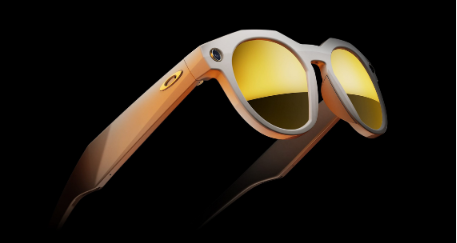
    Oakley Meta HSTN gold edition
    Oakley Meta HSTN limited gold edition model.

    The table below summarizes the key differences:

    FeatureOakley Meta HSTNRay-Ban MetaApple Vision Pro
    Weight~50g~50g600-650g
    Camera12MP, 3K video12MP, 1080pNone
    Battery8h + 48h total4h + 36h total2-2.5h
    Water ResistanceIPX4IPX4None
    AI AssistantMeta AIMeta AISiri
    Lens TechPRIZM/TransitionsStandardNone
    Price$399$299$3,499

    Who Should Buy HSTN

    The HSTN suits athletes who want hands-free POV recording and real-time coaching data. Likewise, outdoor content creators benefit from the durable build and high-resolution capture. Oakley loyalists already familiar with the brand’s lens technology will find the transition seamless.

    However, budget-conscious buyers may prefer the Ray-Ban Meta at $299, since it offers the same core AI features for less. Similarly, users seeking an everyday wearable might find the sporty frame too conspicuous for office or casual settings.

    Final Verdict

    The Oakley Meta HSTN is not revolutionary, but it represents a smart strategic expansion. Meta and EssilorLuxottica are building a multi-brand AI glasses ecosystem, and Oakley brings authentic athletic credibility that Ray-Ban cannot match.

    For sports enthusiasts, the HSTN offers the best balance of performance, durability, and AI intelligence currently available. The 3K camera and 8-hour battery justify the $100 premium over the Ray-Ban Meta for anyone who actually plans to use these glasses during workouts.

    For everyone else, the Ray-Ban Meta remains the better value. But if you have been waiting for AI glasses that can keep up with your training schedule, the HSTN is the closest answer yet.
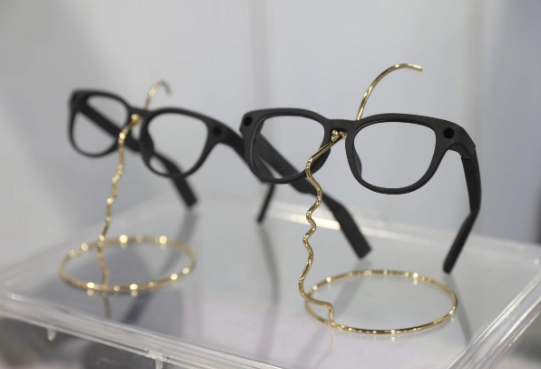
    Oakley Meta HSTN: Meta’s First Sport-Focused AI Glasses Launch

    Meta has officially partnered with Oakley to launch the Oakley Meta HSTN, its first performance-oriented AI smart glasses. Priced at $399, this device targets athletes and outdoor enthusiasts with upgraded cameras, longer battery life, and sport-specific features. Moreover, pre-orders open on July 11, with standard models shipping later this summer.

    What Makes HSTN Different

    The Oakley Meta HSTN stands apart from the Ray-Ban Meta lineup because it prioritizes athletic performance over casual style. Consequently, it features IPX4 water resistance to handle sweat and rain, while the 8-hour battery life covers entire marathons or golf rounds. In addition, Oakley’s signature PRIZM lens technology enhances visibility across varying light conditions.

    The camera system sees a major upgrade. The 12-megapixel ultra-wide sensor now captures 3K video at 2880 by 1620 resolution, a significant jump from the Ray-Ban Meta’s 1080p output. Furthermore, it records up to 3 minutes of continuous footage, enough for complete action sequences. The five-microphone array includes wind noise reduction, ensuring clear audio during cycling or running.

    For safety, open-ear speakers let users hear music and AI responses while remaining aware of surrounding traffic. Therefore, road cyclists and trail runners can stay connected without compromising situational awareness.

    Meta AI for Athletes

    Meta AI serves as the HSTN’s core intelligence. Users activate it with “Hey Meta” and ask sport-specific questions in real time. For example, golfers can inquire how wind affects their upcoming shot, and runners can request pace and heart rate zone updates. Meanwhile, the assistant also handles translation, object recognition, and music identification.

    All processing runs through the Meta AI App on a connected phone, since the glasses themselves lack standalone computing power. However, this dependency means users must carry their smartphones during workouts.

    Battery and Pricing

    The HSTN delivers 8 hours of typical use per charge, with 19 hours in standby mode. The included charging case adds roughly 40 extra hours, bringing total portability to 48 hours. Additionally, a 20-minute fast charge restores 50% capacity.

    Meta offers two pricing tiers. The standard collection starts at $399 with six frame and lens combinations. Alternatively, a limited-edition 50th-anniversary model costs $499 and features gold accents with 24K PRIZM lenses.

    Initial launch markets include the United States, Canada, United Kingdom, Ireland, France, Italy, Spain, Austria, Belgium, Australia, Germany, Sweden, Norway, Finland, and Denmark. Mexico, India, and the United Arab Emirates will follow later this year.

    How HSTN Stacks Against Rivals

    The HSTN occupies a unique niche. Compared to the Ray-Ban Meta, it offers higher video resolution, doubled battery life, and sport-optimized optics. On the other hand, it costs $100 more and features a bulkier frame less suited for daily wear.

    Against the Apple Vision Pro, the HSTN weighs a fraction as much and costs nearly one-tenth the price. However, it lacks the immersive spatial computing capabilities of Apple’s headset.

    The table below summarizes the key differences:

    表格

    FeatureOakley Meta HSTNRay-Ban MetaApple Vision Pro
    Weight~50g~50g600-650g
    Camera12MP, 3K video12MP, 1080pNone
    Battery8h + 48h total4h + 36h total2-2.5h
    Water ResistanceIPX4IPX4None
    AI AssistantMeta AIMeta AISiri
    Lens TechPRIZM/TransitionsStandardNone
    Price$399$299$3,499

    Who Should Buy HSTN

    The HSTN suits athletes who want hands-free POV recording and real-time coaching data. Likewise, outdoor content creators benefit from the durable build and high-resolution capture. Oakley loyalists already familiar with the brand’s lens technology will find the transition seamless.

    However, budget-conscious buyers may prefer the Ray-Ban Meta at $299, since it offers the same core AI features for less. Similarly, users seeking an everyday wearable might find the sporty frame too conspicuous for office or casual settings.

    Final Verdict

    The Oakley Meta HSTN is not revolutionary, but it represents a smart strategic expansion. Meta and EssilorLuxottica are building a multi-brand AI glasses ecosystem, and Oakley brings authentic athletic credibility that Ray-Ban cannot match.

    For sports enthusiasts, the HSTN offers the best balance of performance, durability, and AI intelligence currently available. The 3K camera and 8-hour battery justify the $100 premium over the Ray-Ban Meta for anyone who actually plans to use these glasses during workouts.

    For everyone else, the Ray-Ban Meta remains the better value. But if you have been waiting for AI glasses that can keep up with your training schedule, the HSTN is the closest answer yet.
  • KANNAN K2 AI Smart Glasses Review: 25.8 Grams of First-Person AI Capture

    KANNAN K2 AI Smart Glasses Review: 25.8 Grams of First-Person AI Capture

    Introduction: When AI Glasses Become Light Enough to Forget

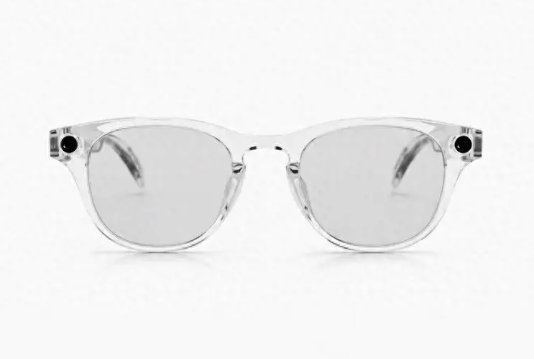
    KANNAN K2 transparent frame front view
    KANNAN K2 transparent frame front view

    On June 5, Kannan Tech released the K2 smart glasses in Hangzhou. Twenty-five point eight grams total weight, 7.1mm temple thickness at the thinnest point, European-imported ultra-light nylon material—these three numbers alone tell me this company is not playing with concepts but with materials science. Priced at 2350 yuan, with a 32MP camera, 4K 30FPS recording, EIS plus AI dual stabilization, and Kiro OS built specifically for AI glasses.

    Honestly, the AI glasses track is already insanely competitive. Meta Ray-Ban, Vidda G11, RayNeo V3—each finding their own differentiation. The K2’s approach is crystal clear: no AR display, no complex interactions, just focus on doing one thing well—letting you capture first-person life with the lightest weight and most natural approach. This sounds simple, but achieving 25.8 grams, lighter than Vidda G11’s 26.5g and nearly half the weight of Meta Ray-Ban’s ~49g, is itself a demonstration of technical strength.

    Product Overview: Kannan Tech’s AI Glasses Ambition

    Kannan Tech is an AI glasses startup headquartered in Hangzhou, China, with unclear team background but solid product definition capabilities. The K2’s positioning is very clear: first-person AI capture glasses for general consumers, not a geek toy, not a business tool, but a “life recording” carry-everywhere device.

    The K2’s design language is “invisible.” Five frame styles available, from classic black to fashionable titanium, aiming to make it unnoticeable that you are wearing smart glasses. European-imported ultra-light nylon material, combined with internal structure optimization, compresses total weight to 25.8 grams—approaching regular optical glasses weight, with no obvious pressure during extended wear.

    Specifications: How Much Tech Fits in 25.8 Grams

    SpecDetails
    Weight25.8g (total)
    Temple Thickness7.1mm (thinnest point)
    MaterialEuropean-imported ultra-light nylon
    Camera32MP, f/2.4 aperture
    Video Recording4K 30FPS
    StabilizationEIS + AI dual stabilization
    Photo FeaturesLive Photo support
    Operating SystemKiro OS (built for AI glasses)
    ProcessorWQ7036 smart audio main control chip
    AI AssistantXiaonan
    InteractionMinimalist gestures + voice
    Special FeaturesAI flash memo, message sharing
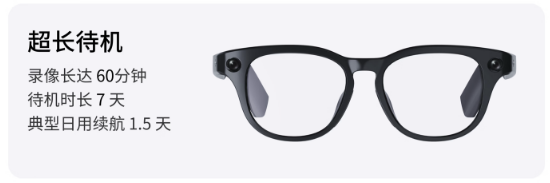
    Battery60 min recording / 7 days standby / 1.5 days typical use
    Price2350 yuan

    Data source: Kannan Tech official launch materials

    KANNAN K2 black frame product display
    KANNAN K2 black frame product display

    Twenty-five point eight grams—what does this mean? Regular prescription glasses typically weigh 20-30g, so the K2 falls completely within the “daily wearable” range. The 7.1mm temple thickness at the thinnest point makes it almost indistinguishable from regular glasses from the side. Kannan Tech invested heavily in material selection—European-imported ultra-light nylon, lighter, tougher, and more wear-resistant than traditional TR90 material.

    The 32MP camera is high-end among AI glasses. Meta Ray-Ban’s camera is 12MP, RayNeo V3’s Sony IMX681 is around 12MP equivalent, so the K2’s 32MP clearly leads in hardware specs. The f/2.4 aperture is relatively large for glasses cameras, allowing more light intake in low-light environments, theoretically improving night shooting performance.

    EIS plus AI dual stabilization is a practical configuration. EIS (Electronic Image Stabilization) compensates hand shake through algorithms, while AI stabilization further optimizes through scene recognition and motion prediction. For walking, cycling, handheld shooting scenarios, dual stabilization significantly improves frame usability.

    Hands-On Experience: What Can First-Person Capture Actually Do?

    The K2’s core usage scenarios fall into three categories: life recording, content creation, and social sharing.

    Life Recording: Playing with kids, pet interactions, travel experiences—these scenarios captured with traditional cameras or phones always have a “third-person perspective” sense of distance. The K2’s first-person capture shows exactly what the glasses see, without deliberate composition or the awkwardness of holding up a phone. The Live Photo feature makes photos “come alive,” recording 1.5 seconds of motion before and after the shutter press, giving ordinary photos more storytelling power.

    Content Creation: Vlog creators, food bloggers, exploration influencers—the K2’s 4K 30FPS recording quality is sufficient for short video platform publishing. The AI flash memo feature lets you quickly trigger “remember this” by voice when seeing exciting moments; the AI automatically captures surrounding clips and categorizes storage, saving post-production footage review time. The message sharing feature can generate 15-second short videos from highlight clips, sharing directly to WeChat, TikTok, and Xiaohongshu with one click.

    Social Sharing: Friend gatherings, family dinners, outdoor activities—the K2’s minimalist gesture interaction (tap temple to shoot, slide to switch modes) makes capturing natural and non-awkward. You don’t need to pull out your phone, open the camera, and hold it up—the entire process completes within 2 seconds without interrupting the present moment.

    But the K2 also has obvious limitations:

    No AR Display: The K2 has no built-in display; all operation feedback comes through the mobile app or voice announcements. This means you cannot see shooting previews on the glasses, only “blind shooting” and reviewing through the phone later. For composition-critical scenarios, this is a pain point.

    Battery Bottleneck: Sixty minutes of recording battery life is mid-range among AI glasses, but heavy use (continuous Vlog shooting) requires carrying a charging case. Seven days of standby sounds long, but the “typical daily use” 1.5-day definition is vague—if you shoot 20 minutes of video daily and use the AI assistant for 30 minutes, actual battery life may be less than a day.

    Limited AI Assistant Depth: The Xiaonan assistant supports basic functions like voice weather queries, setting reminders, and playing music, but compared to Siri or Xiao Ai on phones, feature coverage is clearly insufficient. The K2’s AI capabilities focus on “shooting assistance” rather than “general intelligence”—clear positioning but a visible ceiling.

    Comparison: K2 vs Meta Ray-Ban vs RayNeo V3

    FeatureKANNAN K2Meta Ray-BanRayNeo V3
    Weight25.8g~49g~39g
    Price2350 yuan~$299 (~2150 yuan)973 yuan (after price drop)
    Camera32MP12MPSony IMX681 (~12MP)
    Video4K 30FPS1080P1080P
    StabilizationEIS + AI dualBasic EISBasic EIS
    AI FeaturesFlash memo, message sharingSocial sharing, Meta AI200+ scenario AI
    AudioOpen-ear directionalOpen-earOpen-ear
    Battery60 min recording~36 hours combined4-6 hours
    EcosystemStandalone appMeta ecosystemRayNeo ecosystem
    PositioningFirst-person captureSocial + AIExploratory AI

    Three glasses, three paths: Meta focuses on social ecosystem, RayNeo on AI exploration, K2 on capture quality. The K2’s 32MP camera and 4K recording clearly lead in hardware, but software ecosystem and AI depth lag behind Meta and RayNeo. If you pursue “shooting clearly, recording steadily, sharing fast,” the K2 is the best choice; if you need “all-powerful AI assistant, seamless social integration,” Meta is more suitable; if you want to “try AI features on a budget,” the RayNeo V3 offers the best value.

    KANNAN K2 battery life promotional feature
    KANNAN K2 battery life promotional feature

    Pros and Cons

    ProsCons
    25.8g extreme lightweight, top-tier wearing comfortNo AR display, cannot preview shots in real-time
    32MP + 4K 30FPS, leading hardware specs60-minute recording battery, heavy use needs charging case
    EIS + AI dual stabilization, good frame stabilityLimited AI assistant depth, inferior to phone voice assistants
    Kiro OS optimized for AI glasses, smooth interactionLow brand recognition, after-sales and accessory ecosystem to be built
    Minimalist gesture interaction, low learning curve2350 yuan mid-range pricing, value inferior to RayNeo V3
    Live Photo and AI flash memo, more storytellingChinese-only interaction, limited for overseas users

    Who Should Buy

    Recommended for:

    • Users pursuing extreme lightweight, long-term wear without nose bridge pressure
    • Vlog creators and short video bloggers needing high-quality first-person footage
    • Parents and pet owners wanting to record daily interactions without phone interruption
    • Travel enthusiasts needing portable, discreet capture devices

    Not recommended for:

    • Users needing AR display and real-time information overlay (choose RayNeo or Meta)
    • Users pursuing comprehensive AI features and rich ecosystem (choose Meta Ray-Ban)
    • Budget-constrained users only accepting under 1000 yuan (choose RayNeo V3)
    • Users demanding brand after-sales and accessory ecosystem (wait for K2 ecosystem maturity)

    FAQ

    Q: Does the K2 support prescription lens customization?

    A: Yes. The K2 provides prescription lens customization services, available at purchase or through designated optical shops.

    Q: How is the photo quality from the 32MP camera?

    A: Hardware specs lead, but actual image quality is limited by optical design constrained by glasses form factor. Excellent in daylight with sufficient light; noise control is average in low-light, inferior to phone main cameras.

    Q: Does the AI flash memo feature require internet?

    A: Basic flash memo functions support local processing, but generating message sharing and cloud storage require internet. Recommend using in Wi-Fi environments for optimal experience.

    Q: What is the K2’s water resistance?

    A: Daily splash-proof level, handling sweat and light rain. Not recommended for swimming, showering, or prolonged immersion.

    Conclusion

    The KANNAN K2 is a product that “does one thing to the extreme.” In an AI glasses track where everyone pursues “all-in-one,” the K2 chooses subtraction—removing AR display, simplifying the AI assistant, focusing on capture experience, establishing clear differentiation through 25.8 grams of extreme lightweight and 32MP plus 4K hardware specs.

    This strategy carries both risks and opportunities. The risk: the ultimate form of AI glasses may be “all-in-one terminals,” and the K2’s single-function positioning may limit long-term market space. The opportunity: before all-in-one terminals mature, “professional tools” often gain more loyal user bases—just as DSLR cameras were never replaced by phones, first-person capture devices may also become an independent category.

    At 2350 yuan, pricing sits in the mid-range—slightly more expensive than Meta Ray-Ban but with clearly higher hardware specs. For users pursuing capture quality and wearing comfort, the K2 is worth considering. But if you prioritize AI ecosystem and social integration, Meta Ray-Ban remains the safer choice. The K2’s true test lies in whether Kannan Tech can continuously iterate Kiro OS, enrich AI features, and build accessory and after-sales ecosystems—these soft capabilities are the key determining whether an AI glasses product can evolve from “niche gem” to “mass-market hit.”

  • iFLYTEK AI Smart Glasses: When China’s Voice AI Leader Makes Eyewear

    iFLYTEK AI Smart Glasses: When China’s Voice AI Leader Makes Eyewear

    Introduction: When China’s Voice AI Leader Makes Glasses

    iFLYTEK AI glasses product render front view
    NVIDIA COMPUTEX venue Taipei Music Center entrance

    On May 28, 2026, iFLYTEK launched an AI glasses product. No keynote, no press conference—just a product video and a spec sheet.

    But this may be the most important AI glasses product in the Chinese market—not because of the most radical technology, but because it understands Chinese users best.

    Product Overview: Voice-First, Office-Oriented

    iFLYTEK AI glasses’ core logic is completely different from Meta Ray-Ban:

    • Meta Ray-Ban: Photo + social + music, targeting young consumers
    • iFLYTEK: Voice + translation + meetings, targeting working professionals

    Hardware specs:

    • Weight: 6.5g per ear, ~35g total (with frame)
    • Audio: Open-ear audio, directional sound transmission, environmental awareness
    • Battery: ~6 hours continuous use, charging case provides 3 additional full charges
    • Lenses: Supports prescription custom lenses for myopia/hyperopia/astigmatism/presbyopia, medical-grade optical center fitting
    • AI: Spark large language model, wake word “Xiao Fei Xiao Fei”

    Killer Feature #1: Spark LLM, Voice Interaction at Its Peak

    iFLYTEK’s 24 years of voice technology accumulation make this glasses’ voice interaction potentially the best among all AI glasses:

    • Wake-up: “Xiao Fei Xiao Fei”, response speed <500ms
    • Translation: Real-time translation for 60+ languages including Chinese, English, Japanese, Korean, German, French, Spanish, Russian
    • Meetings: Auto-recording meeting content, generating structured minutes (to-do/decisions/questions)
    • Q&A: Knowledge Q&A based on Spark LLM, covering professional domains

    More critical is offline capability: Core voice recognition and simple translation support offline operation, no phone connectivity required. For frequent travelers and poor-signal scenarios, this is essential.

    Killer Feature #2: Medical-Grade Optical Customization

    This is iFLYTEK glasses’ most underrated feature. It supports:

    • Myopia (0-1000 degrees)
    • Hyperopia (0-600 degrees)
    • Astigmatism (0-200 degrees)
    • Presbyopia (+100-+400 degrees)

    Through medical-grade optical center custom lenses, ensuring precise pupil distance, pupil height, and vertex distance matching. This is not “buy glasses get AI free,” but “the AI glasses themselves are good glasses.”

    Killer Feature #3: 1,499 Yuan, Price Slasher

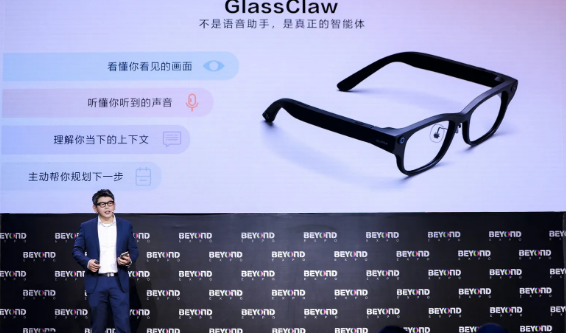
    iFLYTEK GlassClaw AI agent presentation stage
    iFLYTEK GlassClaw AI agent on presentation stage

    Pricing strategy:

    • Standard version: 1,499 yuan (with basic lenses)
    • Custom version: 1,999 yuan (with medical-grade optical custom lenses)
    • Pre-sale: Starts June 15

    Comparison:

    • Meta Ray-Ban: $299-$379 (~¥2,100-2,700)
    • Huawei Smart Glasses: ¥1,699-2,499
    • Xiaomi AI Glasses: ¥1,299 (fewer features)

    iFLYTEK’s price is not the lowest, but the feature focus is highest—every yuan spent buys office productivity, not photo/social function premiums.

    Specs Comparison: iFLYTEK vs Meta Ray-Ban vs Huawei

    FeatureiFLYTEK AI GlassesMeta Ray-BanHuawei Smart Glasses
    Price¥1,499¥2,100-2,700¥1,699-2,499
    Weight6.5g/ear~50g total~45g total
    Camera❌ None✅ 12MP❌ None
    Voice Interaction✅ Spark LLM✅ Meta AI✅ HarmonyOS AI
    Real-time Translation✅ 60+ languages✅ Limited✅ Limited
    Meeting Recording✅ Auto minutes❌ None✅ Simple recording
    Offline Capability✅ Core offline❌ Needs network❌ Needs network
    Optical Custom✅ Medical-grade❌ Basic lenses❌ Basic lenses
    Battery6h + case 3×4-6h4-5h
    Target UserWorking professionalsYoung consumersHuawei ecosystem users

    iFLYTEK’s differentiation is razor-sharp: the only AI glasses pushing “voice office” to the extreme while keeping price under 1,500 yuan.

    Caveats to Note

    • No camera: Cannot take photos/videos, unsuitable for scenarios requiring visual recording (site inspection, travel documentation)
    • Design: Traditional glasses form factor, lacks tech aesthetic; young users may find it “not cool enough”
    • Ecosystem closed: Primarily iFLYTEK ecosystem; integration depth with third-party apps (DingTalk, Lark, Notion) unverified
    • Battery limit: 6 hours may be insufficient for all-day meeting scenarios, requiring mid-day charging
    • Pre-sale risk: Pre-sale starts June 15; actual delivery time and quality control unknown
    iFLYTEK AI glasses MWC 2026 exhibition display
    iFLYTEK AI glasses MWC 2026 exhibition display

    Who Should Buy?

    Highly Recommended:

    • Business professionals attending frequent international meetings (real-time translation essential)
    • Product managers/consultants needing extensive meeting documentation
    • Working professionals requiring vision correction (medical-grade optical customization)
    • Entry-level users wanting to experience AI glasses on a budget

    Consider Alternatives:

    • Visual content creators (no camera is a dealbreaker)
    • Young users pursuing tech aesthetic (design is conservative)
    • Heavy photo/social users (Meta Ray-Ban more suitable)

    Future Outlook: The “Office Entry” for AI Glasses

    iFLYTEK AI glasses represent an overlooked direction: AI glasses are not phone replacements, but enhancement tools for specific scenarios.

    In office scenarios, its value is:

    • Check information, translate, record without pulling out your phone
    • Listen to meetings, take calls without wearing headphones
    • Generate meeting minutes without carrying a laptop

    If iFLYTEK can iterate quickly (adding camera, extending battery, deepening third-party integration), it could become the “office entry” for AI glasses in the Chinese market—just as iFLYTEK Input Method became the “voice entry” years ago.


    Rating: 8.5/10 (Value Pick)

    Bottom Line: The best voice-focused AI glasses for office scenarios at this price point. For Chinese working professionals, this is the most practical AI wearable of 2026.

  • L’Attitude 52°N Berlin Review: The First AI Glasses Built for Travelers

    L’Attitude 52°N Berlin Review: The First AI Glasses Built for Travelers

    Rating: 8.9/10

    L'Attitude 52°N Berlin Dune Aviator frame on model
    L’Attitude 52°N Berlin Dune Aviator frame on model

    Introduction: While Tech Giants Are Still Pitching, This Chinese Team Already Shipped

    The smart glasses market went absolutely insane this year. Google I/O 2026 just showcased its AI audio glasses concept co-developed with Samsung and styled by Gentle Monster. Meanwhile, a relatively unknown Chinese startup has already put its unit on shelves.

    The L’Attitude 52°N Berlin series opened pre-orders on May 19, with full sales beginning May 26. This is not a PowerPoint product. It has already raised over $400,000 on Kickstarter, won the IFA 2025 Innovation Award, and drawn attention from both WIRED and T3. More importantly, its founding team comes from the core product leadership of OPPO, OnePlus, and HTC—people who know exactly how to build wearable devices that are both beautiful and functional.

    Product Overview: Not Glasses with AI, But an AI Terminal Born for Travel

    The Berlin series adopts the classic Aviator double-bridge frame, available in Obsidian and Dune colorways. The entire unit weighs approximately 50g, constructed from Swiss EMS TR90 thermoplastic with titanium alloy hinges. The nano-grade crafted pivot boasts hardness roughly 3x that of standard steel. With IP65 body protection and an IP67-rated charging case, it handles rain, dust, and sweat better than you do.

    But what truly sets Berlin apart is its refusal to be a “jack of all trades.” Instead, it zeroes in on one scenario: outdoor travel and exploration.

    Killer Feature #1: 107° Ultra-Wide Field of View

    The Ray-Ban Meta camera is decent. L’Attitude 52°N went straight for a 12MP Sony IMX681 with a 107° field of view. What does this mean? Standing before the Mona Lisa at the Louvre, you do not need to step back three paces to capture the entire hall. Trekking along an Alpine ridge, you do not need to turn your head to record snow peaks on both sides.

    Even smarter is Flexible Framing technology—switch between portrait and landscape with one touch. Portrait for Instagram Stories, landscape for travel vlogs. Video records at 1080p/30fps with selectable durations of 30 seconds, 1 minute, or 3 minutes. With 32GB of local storage, shoot first and sync later, even without connectivity.

    T3’s hands-on review noted: “Images came out clear, colourful and very decent—arguably better than through my Gen 1 Ray-Bans.”

    Killer Feature #2: Goya AI Companion, Smarter Than a Tour Guide

    Berlin’s AI assistant is named Goya (paying homage to Spanish Romantic painter Francisco Goya), powered by a Google Gemini-trained cultural exploration model. This is not generic ChatGPT-style Q&A. It is vertically optimized for travel scenarios:

    • AI Tour Guide: Point at landmarks or museum artifacts. “Hey Goya, what’s the story of the Mona Lisa?” It delivers professional-grade commentary.
    • Live Translation: Supports English, German, French, Spanish, Italian, Japanese, and more. No more guessing menu items or street signs.
    • Travel Concierge: Restaurant recommendations, local discoveries, ask while you walk.

    A WIRED journalist tested it on-site with Goya’s most horrifying masterpiece, Saturn Devouring His Son—Goya responded fluently.

    Killer Feature #3: Offline Intercom for No-Network Environments

    This is Berlin’s most underrated killer feature. Via the dedicated Intercom Sports Band accessory, it supports offline group intercom for up to 8 people, requiring zero cellular signal. In mountains, islands, or deserts with no coverage, this is your safety lifeline.

    Imagine: a four-person team climbing Siguniang Mountain, the lead spots rockfall risk and notifies the entire squad instantly. A family gets separated at Disneyland, no need to hunt for signal—just talk through the glasses. This kind of scenario-hardened functionality is something neither Meta nor Google currently offers.

    L'Attitude 52°N Berlin Obsidian Aviator frame with camera module
    L’Attitude 52°N Berlin Obsidian Aviator frame with camera module

    Killer Feature #4: Battery Life and Fast Charging, Built for All-Day Adventures

    The built-in 200mAh battery delivers up to 6 hours per charge. The charging case provides 8-10 full additional charges, totaling approximately 66 hours of combined use. 20 minutes of fast charging reaches roughly 70%—power up during lunch, shoot all afternoon.

    Compared to the Ray-Ban Meta’s 4-5 hour single-charge life, Berlin is clearly optimized for long-haul travel.

    Specs Comparison: Berlin vs Ray-Ban Meta

    FeatureL’Attitude 52°N BerlinRay-Ban Meta Gen 2
    Weight~50g~50g
    Camera12MP, 107° FOV12MP, standard FOV
    Video1080p/30fps1080p
    AI AssistantGoya (Gemini cultural model)Meta AI (general model)
    Offline IntercomYes (8-person)No
    ProtectionIP65 (glasses) / IP67 (case)IPX4
    Battery6h + 66h total with case4-5h
    Fast Charge20min to 70%None
    Price$399$299-379

    Berlin runs roughly $20-100 more, but trades that for wider FOV, longer battery life, stronger protection, and deep travel-scenario optimization. For serious outdoor enthusiasts, the math works.

    Design and Wearability: First a Great Pair of Glasses, Then a Tech Product

    Gary Chen’s team understands one truth: smart glasses must first be glasses you actually want to wear every day.

    Berlin’s Aviator silhouette carries more visual identity than Ray-Ban Meta’s Wayfarer, with the double-bridge design radiating “pilot cool.” T3’s review observed: “They look more street-fashion than sports gear—but I can also picture skiers wearing them on the piste.”

    Nano-grade UV-hardened protective coating, scratch-resistant treatment, Swiss EMS TR90 construction—these details scream: this is not a toy, but gear built to accompany you up mountains and across deserts.

    Who Should Buy Berlin?

    Highly Recommended For:

    • Frequent international travelers and digital nomads
    • Hiking, mountaineering, and cycling enthusiasts
    • Museum and art exhibition regulars (the AI tour guide is genuinely transformative)
    • Adventure teams requiring off-grid communication

    Consider Alternatives If:

    • You are a daily commuter (feature overkill; Ray-Ban Meta is cheaper)
    • You are budget-sensitive ($399 base, plus $50 for photochromic lenses)

    Note on the Subscription Model

    Berlin includes a 12-month free AI feature trial, after which a paid subscription is required. Founder Gary Chen states pricing is still being finalized, but emphasizes that “most features will remain free, with only advanced capabilities charged,” analogizing to “hiring a British Museum tour guide for about $3.”

    For Kickstarter early backers, lifetime free AI access was promised—a show of good faith to early supporters and a commitment kept.

    Conclusion: A Chinese Team Just Taught the Global Market a Lesson

    The L’Attitude 52°N Berlin is not a spec-sheet stuffer. It is a scenario definer. It solves travel photography pain points with a 107° ultra-wide lens. It reinvents the museum experience with the Goya AI guide. It fills the outdoor communication gap with offline intercom. The former OPPO/OnePlus team has transferred their extreme user-scenario understanding from smartphones to eyewear, intact.

    While Google and Meta are still educating the market with general-purpose products, this Chinese company has already built the first AI glasses truly born for travel. If you are planning an Iceland ring road trip, a Nepal trek, or a Paris museum marathon this year—Berlin belongs on your gear list.


    Bottom Line: The most travel-focused AI glasses on the market. Not perfect, but purpose-built in ways competitors are not.