Tag: Smart Glasses

Glasses-type wearable devices equipped with built-in cameras, microphones, and bone conduction units. Through embedded AI chips, they enable real-time voice translation, photo capture, information reminders, and other functions. Unlike traditional glasses, smart glasses eliminate the need to check phones for information, as AI assistants can directly “see” content in the user’s field of view and provide instant feedback. The Meta Ray-Ban series currently holds the highest global market share for smart glasses products.

  • Zhongjian Tech Funding Signals Smart Glasses Market Split

    Zhongjian Tech Funding Signals Smart Glasses Market Split

    I. Funding and Team Composition

    Smart glasses company Zhongjian Technology, founded in 2023, has completed three funding rounds totaling tens of millions of yuan. Investors include Shokz, Gaofeng Patience Fund (under Professor Gao Bingqiang), Haochen Capital, SEEFund, listed company Appotronics (688007), and Professor Gao Bingqiang personally, with Qiyu Capital serving as exclusive financial advisor. Funds will advance R&D, with the first-generation product already completed.

    Founder Zhao Peng is a gold medalist of the 26th National Physics Competition, with a bachelor’s and PhD from Tsinghua University’s Department of Electronic Engineering, specializing in novel display and micro-nano optoelectronics technologies, with multiple SCI papers published. His career includes serving as Research Institute Director at Appotronics, responsible for frontier technology R&D and industrialization, focusing on novel displays and AR glasses, covering team building, technology innovation, product planning, R&D implementation, and business development. Zhao has traditional glasses industry resources, with relatives working in Danyang, a major glasses manufacturing hub.

    Danyang glasses factory lens coating production line
    Danyang glasses factory lens coating production line

    Among investors, Shokz is a bone conduction headphone company, Appotronics is Zhao’s former employer, and Professor Gao Bingqiang is an emeritus professor at HKUST’s Department of Electronic and Computer Engineering.

    II. Technical Solution and Product Form

    Zhongjian Technology’s core product is smart zoom daily glasses using electrochromic zoom optical devices, changing lens optical properties through electrical signals. The product integrates distance sensors, inertial sensors, posture sensors, etc., automatically adjusting lens power based on viewing distance.
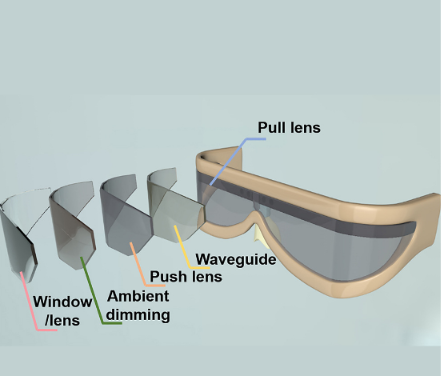
    Electrochromic zoom glasses lens structure diagram
    Electrochromic zoom glasses lens structure diagram

    For anti-dizziness design, the product filters non-zoom noise signals by identifying user movement intentions through sensors. The zoom experience approaches single-vision glasses. The team is simultaneously advancing eye-tracking technology, further reducing dizziness through gaze-point adjustment. Optical design adopts a full-stack self-developed solution, with self-developed zoom components.

    The ultimate target form is consistent with ordinary glasses, but early versions will be strongly function-oriented with a tech-style appearance, integrating full automation and strong interaction functions, with subsequent iterations gradually reducing form factor and simplifying design. The product is planned for crowdfunding in 2026.

    III. Market Background and Demand Analysis

    With information technology development, myopia prevalence among post-80s and post-90s generations has risen significantly. The industry saying “age 43, eye transition” refers to people in their 40s beginning to experience presbyopia, with declining dynamic focusing ability, creating “myopia-presbyopia coexistence” vision needs. Current market solutions include using two pairs of glasses or progressive multifocal lenses.
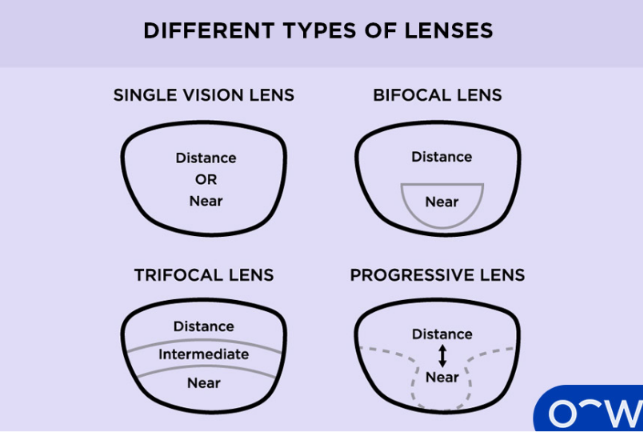
    :单焦、双焦、三焦点和渐进镜片比较
    :单焦、双焦、三焦和渐进镜片对比

    Progressive multifocal lenses integrate multiple focal points on a single lens, simultaneously satisfying far, mid, and near vision needs, but suffer from narrow usable field of view, obvious dizziness, high channel fitting costs, and expensive retail prices. Electrochromic zoom optical devices can achieve single-lens zoom, higher integration, smaller size and weight, and lower cost. This technology has currently reached the industrialization critical point.

    China’s glasses market has exceeded 100 billion yuan scale.

    IV. Industry Competition Landscape

    From 2025 to 2026, the smart glasses market remains active. Public information shows: Xiaomi AI glasses entered the market at 1999 yuan starting price; Meta Ray-Ban continues iterating; Thunderbird Innovation completed Series C funding; Fourth Paradigm partnered with Anyka Microelectronics to release 13-megapixel full-scene AI glasses; Meizu StarV Snap AI shooting glasses with Snapdragon AR1 chip went on sale; XREAL, Yingmu Technology and other AR manufacturers actively raised funding.

    These products generally feature AI functions (shooting, voice assistant, real-time translation, etc.) as core selling points. Zhongjian Technology’s product positioning differs, with core functions being optometric zoom and AI functions as subsequent add-on directions.

    CES 2026 most anticipated smart glasses collection
    CES 2026 most anticipated smart glasses collection

    V. Analysis Perspectives

    1. Track Divergence Signal

    The smart glasses market is developing two parallel paths: one with AI interaction as core, emphasizing shooting, voice, translation and other functions, represented by Meta Ray-Ban, Xiaomi AI glasses, etc.; the other with optometric functions as core, emphasizing solving real vision problems, with Zhongjian Technology representing this path. The two paths are not mutually exclusive, but current product definition stages have different emphases.

    2. Crowdfunding Model Rationality

    Choosing crowdfunding as the debut channel has dual significance for electrochromic zoom as an entirely new category: first, validating real market demand; second, obtaining early user feedback to guide subsequent iterations. Considering progressive multifocal lenses’ long-standing user experience pain points, if the electrochromic zoom solution can achieve expected optical performance and wearing comfort, there is clear replacement space.

    3. Technology Maturity Assessment

    The judgment that electrochromic zoom devices “have reached the industrialization critical point” can be verified from two dimensions: first, Zhongjian Technology’s first-generation product has been completed; second, funding continues to be invested in R&D rather than mass production, indicating the product remains in optimization stage rather than large-scale manufacturing. The crowdfunding timeline set for 2026 also reflects the team’s prudent assessment of technology maturation pace.

    4. Competition Boundary Uncertainty

    Current smart glasses market competition boundaries have not solidified. AI-function-centered products may integrate zoom capabilities in future versions, while optometric-function-centered products are also planning to add AI functions. The two paths’ endgame may be convergence, but in the short term, product definition differences will determine respective target user groups and pricing strategies.

    5. Investors’ Industrial Logic

    Among the investor portfolio, Shokz (acoustic wearable devices), Appotronics (novel displays), and Professor Gao Bingqiang (semiconductors) represent different technology dimensions respectively, indicating capital recognizes the long-term logic of “glasses as visual entry point,” but has not formed consensus on specific technology paths, adopting a diversified layout strategy.
  • Samsung Galaxy AI Smart Glasses Debut in July

    Samsung Galaxy AI Smart Glasses Debut in July

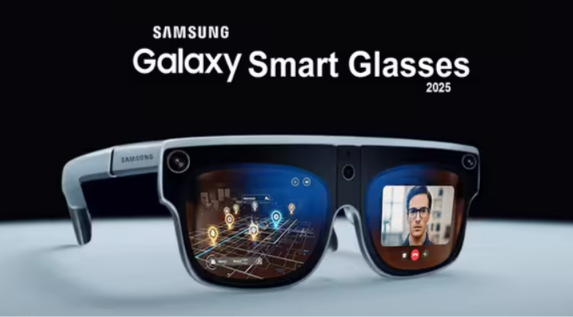
    Seoul, May 14, 2026 — Samsung Electronics has officially confirmed that its first AI smart glasses, the Galaxy Glasses, will debut at the Galaxy Unpacked event in London on July 22, alongside the Galaxy Z Fold 8 and Z Flip 8. Powered by the Android XR platform and Qualcomm’s AR1 chip, this product will become the first mass-produced AI glasses to reach global consumers, marking the transition of AI wearables from “concept demonstration” to “daily wear.”

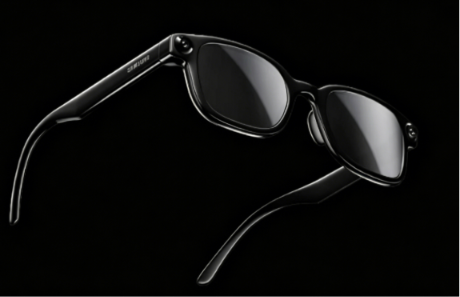
    Samsung Galaxy Glasses leaked design render
    Samsung Galaxy Glasses leaked design render

    From Concept to Mass Production: Android XR Ecosystem’s Breakthrough Moment

    Samsung’s AI glasses strategy is not a solo mission. During the Q4 2025 earnings call, Seong Cho, Executive Vice President of Samsung’s Mobile eXperience business, made it clear that the product had entered the “execution phase,” targeting “rich, immersive multimodal AI experiences.” The triangular alliance with Google and Qualcomm forms the foundation of this ecosystem — Google provides the Android XR operating system and Gemini AI brain, Qualcomm supplies the dedicated AR1 chip, and Samsung handles hardware manufacturing and Galaxy ecosystem integration.

    The strategic intent of this open alliance is clear: to challenge Meta’s closed ecosystem in AI glasses. Since Meta’s Ray-Ban collaboration shipped over 5 million units in 2024, the category has proven consumer viability, but Meta’s Llama ecosystem and Ray-Ban hardware have created a de facto closed loop. Android XR’s open positioning allows multiple manufacturers to participate, echoing Android’s path in challenging iOS — building developer ecosystems and user awareness through collective market presence.

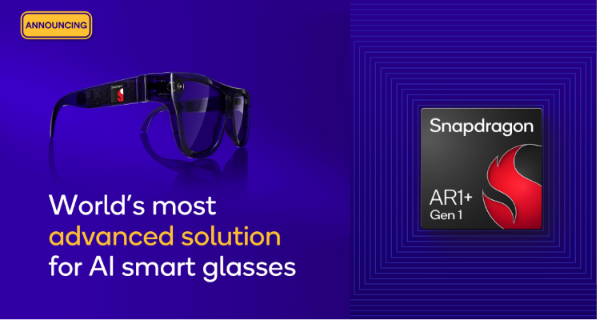
    Technically, Qualcomm’s AR1 platform is the key to production feasibility. Unlike the crude approach of cramming headset chips into glasses, the AR1 series is purpose-built for all-day wear, prioritizing battery efficiency and thermal management. The AR1+ Gen 1 variant debuted at AWE 2025, reducing size by 28% while enabling on-device processing of models like Llama 3.2 without requiring phone or cloud connectivity. This means real-time translation, visual recognition, and voice assistant responses can function offline, delivering qualitative improvements in privacy protection, response latency, and battery life.

    Dual-Version Strategy: AI Glasses and AR Display in Parallel

    Qualcomm Snapdragon AR1+ Gen 1 AI chip platform
    Qualcomm Snapdragon AR1+ Gen 1 AI chip platform

    According to Seoul Economic Daily, Galaxy Glasses will launch in two versions: a display-free AI glasses model equipped with cameras, speakers, and microphones, focusing on Gemini voice interaction and scene recognition; and a version with built-in AR display capable of privately overlaying navigation directions and translation captions visible only to the wearer. Both are co-developed by Google and Samsung, with fashion eyewear brands Gentle Monster and Warby Parker collaborating on designs offering multiple styles for different face shapes and aesthetic preferences.

    The display-free version is expected to launch first, directly competing with Meta Ray-Ban. Its differentiation lies in deep Gemini AI integration — compared to Llama’s functional limitations on-device, Gemini can access real-time data from Google Search, Maps, and Calendar services, delivering more precise contextual responses. The AR display version’s launch date remains unconfirmed; Google verified in December 2025 that it would ship in 2026 but declined to specify timing.

    Samsung positions Galaxy Glasses as an entry-level device for the Galaxy ecosystem rather than a standalone experiment. Users can expect seamless coordination with Galaxy phones, watches, and earbuds: heart rate displays from Galaxy Watch during runs, automatic audio switching to Galaxy Buds for calls, and instant photo sync to Galaxy phones for AI editing. This “persistent AI assistance” across devices creates an ecosystem barrier that single hardware products cannot match.

    Industry Inflection Point: The 2026 AI Wearable Showdown

    2026 is becoming the decisive year for AI wearable devices. Meta’s Ray-Ban AI glasses have established first-mover advantage with cumulative shipments exceeding 5 million units, but the product remains essentially “headphones with a camera,” with AI functions dependent on the cloud and limited interaction modes. OpenAI’s mysterious AI device developed with former Apple design chief Jony Ive is rumored for a second-half 2026 debut, possibly as a screenless wearable. Google’s own Android XR glasses are also in preparation for a 2026 launch. Samsung’s entry transforms the competition from “Meta’s solo show” into “multi-party warfare.”

    Counterpoint Research predicts global AI glasses shipments will exceed 12 million units in 2026, up 200% from approximately 4 million in 2025. Overseas markets outside China will account for roughly 65%, with North America and Europe as core growth regions. Leveraging the global distribution advantages of the Galaxy brand, Samsung could capture 15%-20% market share in its first year, becoming Meta’s most formidable challenger.

    Notably, the AI glasses explosion is not an isolated event but the convergence of three technological maturities: on-device AI computing power, lightweight multimodal large models, and consumer-grade AR optics. Qualcomm AR1’s local inference capabilities, Google Gemini Nano’s on-device optimization, and Samsung’s manufacturing expertise in miniaturized hardware collectively push the product from “geek toy” toward “mass consumer” price and experience tiers.

    Challenges and Concerns: Privacy, Battery Life, and Killer Apps

    Android XR Project Aura glasses concept design
    Android XR Project Aura glasses concept design

    Despite the bright prospects, Galaxy Glasses face three major challenges. First is privacy controversy — front-facing cameras in public spaces have triggered widespread debate in Europe and America, with Meta Ray-Ban users repeatedly accused of recording others without consent. Samsung must establish more transparent privacy protection mechanisms in hardware design (such as LED indicators) and software policies (such as shutter sounds).

    Second is the battery bottleneck. All-day wear demands at least 8 hours of continuous use, but AR1 platform power consumption and AI inference loads pose severe challenges for micro batteries. Early leak information suggests Galaxy Glasses will deliver approximately 6-8 hours in display-free mode, with the AR display version potentially dropping to 4-6 hours — still short of the “all-day wear” ideal.

    The most fundamental bottleneck is the absence of killer applications. Current core AI glasses functions — photography, music listening, voice queries — can all be performed more efficiently by smartphones. The industry has yet to deliver an “irreplaceable scenario” that fundamentally requires the glasses form factor. Samsung and Google must demonstrate unique applications beyond existing experiences at launch; otherwise, Galaxy Glasses risk becoming “a second device for tech enthusiasts” rather than “a necessity for mainstream users.”

    Trillion-Dollar Track Ecosystem Battle

    The AI wearable market is in the chaotic period before the iPhone moment. Meta has built brand recognition with Ray-Ban, but its closed ecosystem limits innovation velocity. Google is replicating the open strategy with Android XR, yet hardware dependence on partners creates inconsistent experiences. OpenAI holds the strongest model capabilities but lacks hardware manufacturing and channel expertise. Samsung’s entry brings a unique variable — it is the only player simultaneously possessing a global consumer electronics brand, proprietary chip design (Exynos), massive manufacturing capacity, and retail distribution.

    Samsung Mobile eXperience head TM Roh has internally defined Galaxy Glasses as “the future entry point of the Galaxy ecosystem.” If this product achieves million-unit sales in the second half of 2026, it will represent not merely hardware success but potentially a replay of the Android smartphone story — using an open ecosystem to challenge a closed empire, ultimately reshaping the industry’s power structure.

    For consumers, the London launch on July 22 will be the best window to observe this transformation. Whether AI glasses can evolve from “geek accessories” to “daily essentials,” the answer may arrive in the second half of this year.

  • Tech Giants Collectively Bet on Screenless AI Hardware

    When OpenAI announced plans to launch a compact screenless device by the end of 2026 with a target shipment of 100 million units, the entire technology industry was electrified. This announcement not only signifies the birth of a new product but marks a collective bet by tech giants on a “screen-free” AI hardware future.

    From Phones to Screenless Devices: A Fundamental Shift in Interaction Paradigm

    For a long time, smartphones have been the primary interface between humans and the digital world. However, this interaction method has inherent limitations—users must actively take out their devices from pockets, unlock the screen, and find the corresponding application. Tech companies are realizing that a true AI assistant should be as ubiquitous as air, rather than trapped behind a glass screen.

    OpenAI is collaborating with MediaTek and Qualcomm to develop mobile processors, with mass production expected in 2028. But more noteworthy is CEO Sam Altman’s hint that the “ultimate form may not look like a phone we’re familiar with at all”—instead, it would be an AI terminal without apps, relying entirely on voice interaction.

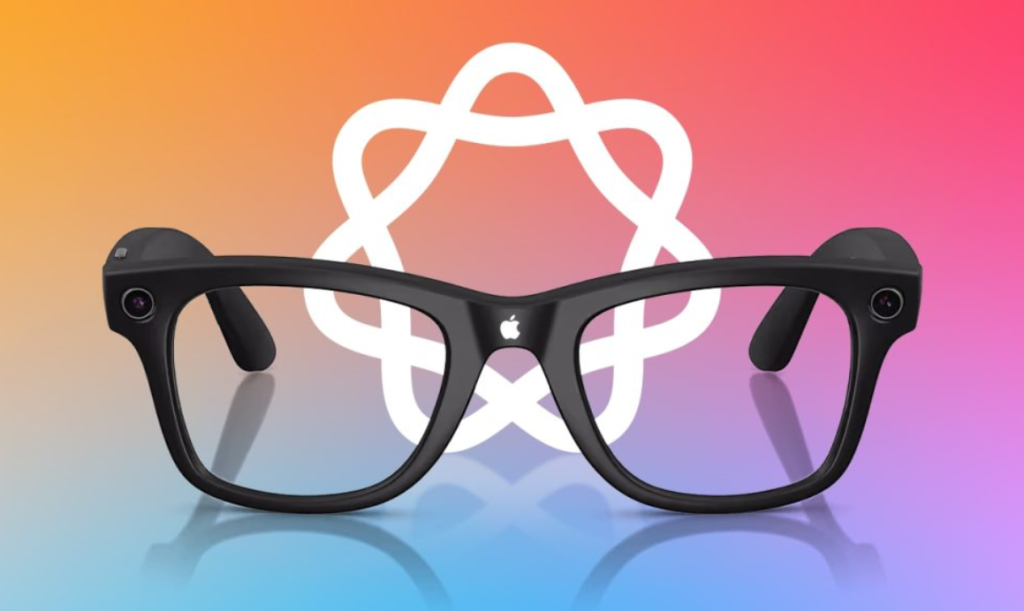
    Conceptual design of Apple’s AI glasses, featuring a design without a display screen and a dual-camera setup that supports gesture control.
    Conceptual design of Apple’s AI glasses, featuring a design without a display screen and a dual-camera setup that supports gesture control.

    Apple is equally accelerating development of its first AI smart glasses, codenamed “N50.” To pursue lightweight design, this device abandons the display screen, adopting a dual-camera solution supporting gesture control, while offloading computing tasks to paired iPhones for power balance. Apple’s designers are testing various frame styles, aiming to make the product look more like fashionable everyday glasses rather than tech gadgets.

    Meta Ray-Ban Has Already Validated the Market

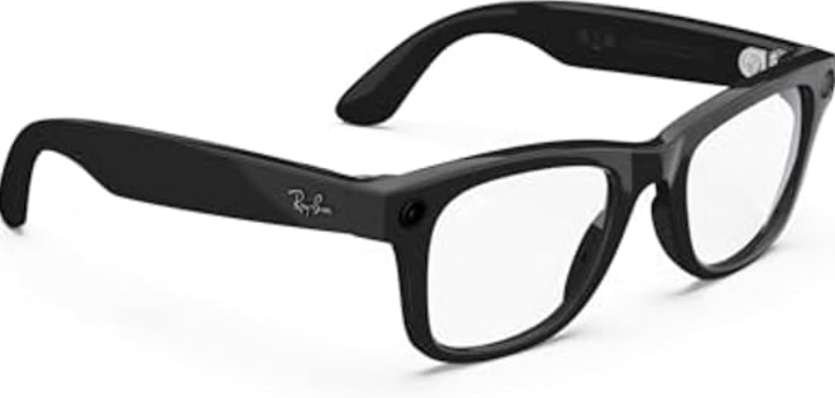
    The Meta Ray-Ban smart glasses feature a minimalist black design and currently hold the largest market share globally, accounting for 85.2% of the market.
    The Meta Ray-Ban smart glasses feature a minimalist black design and currently hold the largest market share globally, accounting for 85.2% of the market.

    In this screenless AI hardware race, Meta has established an absolute lead with its Ray-Ban series. Data shows that Ray-Ban smart glasses currently hold 85.2% of the global smart glasses market—a figure intimidating enough to pressure any competitor.

    Meta’s new AI model, Muse Spark, has begun embedding into the smart glasses ecosystem, significantly enhancing the device’s multimodal understanding capabilities. Users can not only use it for calls and music but also have the AI assistant “see” objects in front of them and provide descriptions or suggestions. This leap from “hearing” to “seeing” transforms smart glasses into a genuine “second brain” for users.

    Supply Chain Challenges and Domestic Opportunities

    The rapid development of screenless AI hardware is reshaping the upstream supply chain landscape. The exponential growth in AI computing demand has driven the optical communication chip market.

    Domestic manufacturer Everbright Huaguang’s VCSEL and optical communication chip product lines saw revenue surge 1036.79% year-over-year in 2025, demonstrating explosive growth.

    However, hidden concerns exist behind this high growth. The manufacturing process for high-end EML chips is more than three times more complex than traditional laser chips, with core patents almost entirely monopolized by international giants.The domestic localization rate remains below 10%. Global high-end production capacity has been locked through 2028, constituting a core bottleneck for screenless AI hardware mass production.

    For Chinese enterprises, this presents both challenges and opportunities. At the Dreame AI smart ring booth at the Canton Fair, on-site contract amounts exceeded one million RMB, demonstrating robust international demand for domestic screenless AI products.

    From Health Monitoring to Children’s Education: Scene Applications for Screenless Design

    Screenless design is finding product-market fit in specific segments.

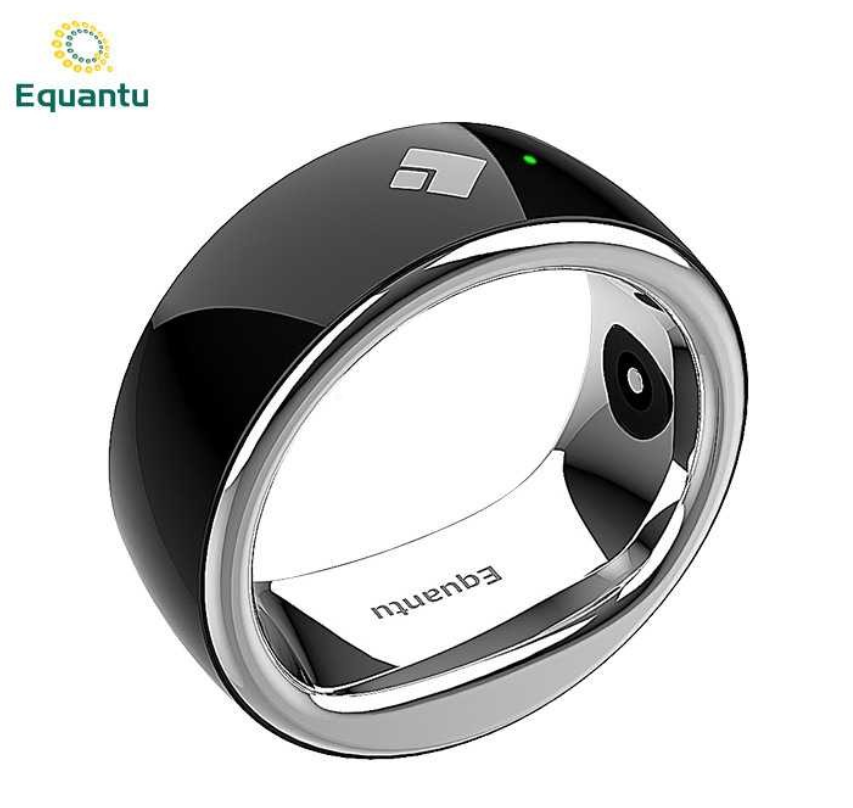
    In the health wearable sector, Dreame’s AI smart ring weighs only 2.6 grams, delivering an ultra-light, barely noticeable wearing experience. It integrates multimodal sensors to collect round-the-clock health data and leverages AI algorithms for professional analysis. This lightweight solution is highly appealing to health-conscious users who dislike bulky wearable devices.

    The AI-powered smart ring weighs only 2.6 grams and allows for “comfortable wear.” It integrates multi-modal sensors to collect health data 247.
    The AI-powered smart ring weighs only 2.6 grams and allows for “comfortable wear.” It integrates multi-modal sensors to collect health data 247.

    The children’s hardware market also favors screenless design. Seewo’s Seedpace AI interactive story machine for the North American market features no screen as its defining characteristic, using story cards and audio interaction to engage children while allowing parents to manage content through an app. This design directly addresses parents’ concerns about screen harm.

    The Future Contest: Replacement or Supplement?

    Despite the enthusiasm from tech giants, whether screenless AI hardware can truly replace phones remains uncertain. Currently, screenless devices are more likely targeting the “scenario gaps” that phones cannot cover—during exercise, commuting, or when hands are occupied. These scenarios require quick responses and information access rather than deep immersion.

    The real test lies in user experience. Technical maturity, user habit cultivation, commercial pricing, and other factors will determine the ultimate fate of this emerging category. OpenAI’s first device is expected to be priced between $200-300; whether consumers will embrace it remains to be seen in the next 12 months.

    When AI steps out of screens and integrates into everyday items like glasses, rings, and necklaces, our way of interacting with the digital world may undergo fundamental change. This race, just beginning, deserves continued attention.