Introduction: Valve Finally Returns
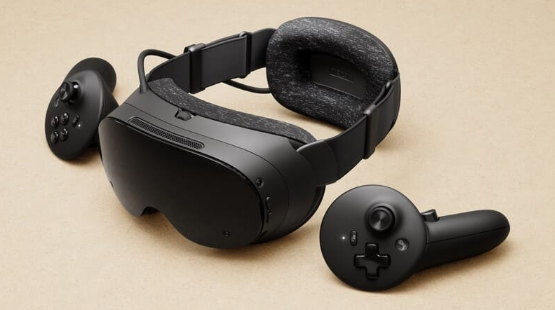
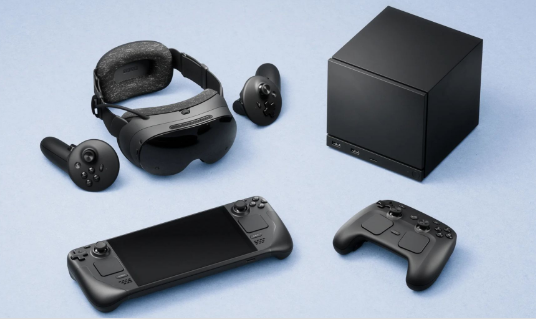
In 2019, Valve Index burst onto the scene with its 144Hz refresh rate and Index controllers’ “finger tracking,” becoming the ceiling of PC VR at the time. Then Valve disappeared—no new VR hardware for six years, watching Meta Quest evolve from a 3DoF toy to the Quest 3 mixed reality flagship. Until November 12, 2025, when Valve suddenly dropped three bombs: Steam Machine console, Steam Controller, and Steam Frame VR headset. Early 2026 launch, pricing unannounced, but estimated at $499-599 for 256GB and $699-799 for 1TB.
Steam Frame is not a simple Index upgrade, but a “streaming-first” standalone VR headset. It wants to answer one question: if a VR headset can both play mobile-level VR independently and wirelessly stream PC AAA titles, why bother with cables?
Product Overview: The VR Piece of Steam’s Ecosystem Puzzle
Valve’s hardware strategy is clear: Steam Deck handles mobile scenarios, Steam Machine handles living room scenarios, and Steam Frame handles immersive scenarios. All three devices share the SteamOS system, the same game library, and the same microSD card. Your saves, settings, and progress seamlessly switch between the three devices.
Steam Frame’s core positioning is “streaming-first.” It packs a Snapdragon 8 Gen 3 processor and 16GB memory, capable of running some VR games and Android apps independently, but the real selling point is the 6GHz wireless adapter—plug it into your PC, and the headset directly streams PC VR content with low latency. Dual-radio architecture: one handles audio-visual streaming, one handles WiFi networking, without interference.
Specifications: Valve’s Spec Monster Sincerity
| Spec | Details |
|---|---|
| Processor | Snapdragon 8 Gen 3 (4nm) |
| Memory | 16GB LPDDR5X |
| Storage | 256GB/1TB + microSD |
| Display | Dual 2160×2160 LCD |
| Refresh Rate | 72/90/120Hz, experimental 144Hz |
| Field of View | 110° |
| Optics | Pancake lenses |
| Tracking | Inside-out 6DoF (4 monochrome cameras) |
| Eye Tracking | Yes, Foveated Streaming |
| Wireless Streaming | 6GHz dedicated adapter, dual-radio |
| Weight | ~440g (with battery) |
| Battery | Rear-mounted design, front-rear weight balance |
| System | SteamOS VR edition |
| Compatibility | SteamVR, OpenXR, Android apps |
Data source: Valve official launch materials, Wareable, Engadget, VideoCardz
The Snapdragon 8 Gen 3 is a 2024 flagship phone chip, with performance near phone-level rather than PC-level. This means Steam Frame’s standalone capabilities are limited—running Half-Life: Alyx smoothly? Impossible. But paired with 6GHz wireless streaming, a PC’s RTX 4090 can be “lent” to the headset, which is Valve’s true intention.
Dual 2160×2160 resolution per eye, totaling approximately 4.3K, slightly higher than Quest 3’s 2064×2208 but far below Vision Pro’s 4K Micro-OLED. Pancake lenses make the body thinner, but optical efficiency is inferior to traditional Fresnel lenses, and brightness may be limited. The 110° field of view is moderate—narrower than Index’s 130° but on par with Quest 3’s 110°.
Foveated Streaming is Steam Frame’s technical highlight. Through eye tracking, the system only renders high-resolution images in your gaze area, reducing resolution in peripheral areas to save substantial bandwidth. Official claims suggest bandwidth efficiency improvements of over 10x—meaning equivalent quality with less wireless streaming latency and compression artifacts.
Deep Analysis: Where Steam Frame’s Chances Lie
Valve has three clear competitive advantages with Steam Frame:
First, Steam library ecosystem moat. Steam has over 70,000 games, including more than 5,000 VR titles. The Quest 3 store has only a few hundred VR games, and Meta’s strict content review means many PC VR classics (like Half-Life: Alyx, Beat Saber) have no Quest versions. Steam Frame directly compatible with the entire SteamVR library—an advantage Meta cannot replicate.
Second, open platform positioning. Meta Quest is a closed ecosystem; apps must pass Meta store review. Steam Frame runs SteamOS, supports OpenXR standards, and developers can freely publish content. Valve even provides CAD drawings and circuit specifications, letting users 3D print replacement face cushions and head straps—this “modular” thinking is unique in the VR industry.
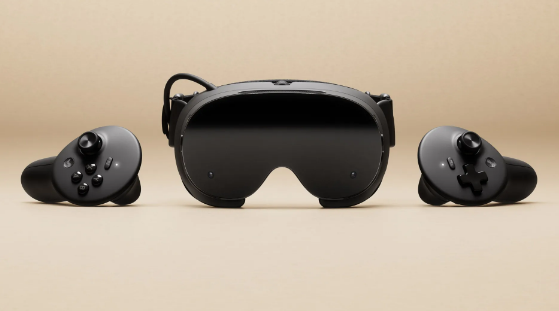
Third, PC streaming experience optimization. Existing wireless streaming solutions (like Virtual Desktop, Air Link) rely on home WiFi, with unstable latency and image quality. Steam Frame’s 6GHz dedicated adapter bypasses the router, directly establishing a private PC-to-headset link, paired with Foveated Streaming, theoretically achieving near-wired connection experience.
But Steam Frame’s challenges are equally severe:
Insufficient standalone performance. The Snapdragon 8 Gen 3 can probably run Resident Evil 4 VR, but Half-Life: Alyx and Microsoft Flight Simulator must rely on PC streaming. This means users without high-end PCs can only play “mobile-level” VR, significantly compromising the experience.
Weight and comfort. At 440g including battery, lighter than Quest 3’s 515g but much lighter than Index’s 809g. The rear-mounted battery design helps front-rear weight balance, but comfort during extended wear (over 1 hour) remains to be verified. Pancake lenses are thin, but edge clarity may degrade.
Price competitiveness. Estimated $499-799 pricing offers no advantage over Quest 3 ($499) and Quest 3S ($299). Vision Pro is expensive ($3,499) but positioned completely differently. Steam Frame needs to convince users: is spending $200-300 more for the Steam library and open ecosystem worth it?
Content moderation gray area. Valve’s open strategy means adult, violent, and extreme content may more easily enter the platform. While Steam PC already has mature content rating systems, VR’s immersion makes sensitive content more impactful. How Valve balances “openness” and “compliance” is a long-term challenge.
Comparison: Steam Frame vs Meta Quest 3 vs Apple Vision Pro
| Feature | Steam Frame | Meta Quest 3 | Apple Vision Pro |
|---|---|---|---|
| Price | $499-799 (estimated) | $499 (128GB) | $3,499 |
| Weight | ~440g | ~515g | 600-650g |
| Resolution | 2160×2160 per eye | 2064×2208 per eye | 4K Micro-OLED per eye |
| Refresh Rate | 72-144Hz | 72-120Hz | 90-100Hz |
| Field of View | 110° | 110° | 100° |
| Tracking | Inside-out 6DoF | Inside-out 6DoF | Inside-out 6DoF |
| Eye Tracking | Yes (Foveated Streaming) | No | Yes (Foveated Rendering) |
| Wireless Streaming | 6GHz dedicated adapter | WiFi (Air Link) | Only Mac/iPhone mirroring |
| Standalone Performance | Snapdragon 8 Gen 3 | Snapdragon XR2 Gen 2 | M2+R1 (extremely powerful) |
| Game Library | SteamVR (5000+ VR games) | Meta Store (few hundred) | Very few native VR games |
| Ecosystem Openness | Fully open | Closed review | Closed review |
| Mixed Reality | Monochrome passthrough (no color) | Full-color passthrough | Full-color passthrough |
Steam Frame’s differentiation is clear: it’s not the strongest standalone device (Vision Pro), nor the cheapest (Quest 3S), but the “best wireless companion for PC VR players.” If you already have a high-end PC and Steam library, Steam Frame is an upgrade replacement for Quest 3; if you only want to play standalone VR games, Quest 3 offers better value; if you pursue spatial computing and productivity, Vision Pro is another dimension.
Pros and Cons
| Pros | Cons |
|---|---|
| Full SteamVR library compatibility, unbeatable game resources | Limited standalone performance, heavy games depend on PC streaming |
| 6GHz dedicated streaming, theoretically better latency and quality | 440g weight comfort during extended wear to be verified |
| Foveated Streaming saves bandwidth, improves experience | Higher price than Quest 3, value advantage not obvious |
| Fully open ecosystem, high developer freedom | No color passthrough, mixed reality weaker than Quest 3 |
| Modular design, customizable accessories | Content moderation gray area, sensitive content risks |
| Shared ecosystem with Steam Deck/Machine | Shipping date not final, potential delays |
Who Should Buy
Recommended for:
- Players with high-end PCs and SteamVR game libraries
- VR enthusiasts tired of Quest’s closed ecosystem, seeking open platforms
- Business travelers needing portable VR large screens
- Valve Index legacy users wanting wireless upgrade without abandoning Steam library
Not recommended for:
- Users without high-end PCs, only wanting standalone VR games (Quest 3 more suitable)
- Budget-constrained users—$299 Quest 3S is sufficient
- Users pursuing mixed reality and productivity scenarios (Vision Pro or Quest 3 better)
- Users demanding brand stability—Valve hardware often delays and stocks out
FAQ
Q: Does Steam Frame require Steam Machine?
A: No. Any PC supporting SteamVR can pair with the 6GHz adapter for wireless streaming. Steam Machine is just Valve’s recommended “living room companion.”
Q: Does Foveated Streaming affect image quality?
A: Theoretically no. Eye tracking ensures your gaze area is always full resolution, with only peripheral areas reduced—human peripheral vision naturally has low resolution, so no noticeable difference is perceived.
Q: Does it support prescription lenses?
A: Valve has not announced, but Index supports custom lens inserts, so Steam Frame likely will have similar solutions.
Q: How long is the battery life?
A: Official data not announced. Referencing Quest 3’s 2-3 hours, Steam Frame’s 440g weight may allow a larger battery, but 6GHz streaming consumes significant power, so actual battery life may be similar.
Conclusion
Steam Frame is Valve’s “belated response” to the VR industry. Six years ago, Index defined the ceiling of PC VR; in six years, Meta’s Quest series captured the standalone VR market. Steam Frame is not Index’s successor, but a new species—it acknowledges standalone VR’s performance limitations, instead using wireless streaming to “borrow” PC computing power to the headset, while preserving the open advantages of the Steam ecosystem.
This strategy is smart and risky. Smart because it avoids head-to-head competition with Quest 3 on standalone performance, instead building differentiation through the Steam library and open ecosystem; risky because whether wireless streaming can truly approach wired experience, and whether $499-799 pricing can convince enough PC VR players to upgrade.
2026 will be a pivotal year for VR hardware: Meta Quest 4, Apple Vision Pro 2, and Sony PS VR2 successor may all debut. Whether Steam Frame can stand out in this melee depends on three factors: whether streaming latency is low enough, whether pricing is competitive enough, and whether Valve’s production can keep up (referencing Steam Deck’s long-term stock shortages).
Leave a Reply