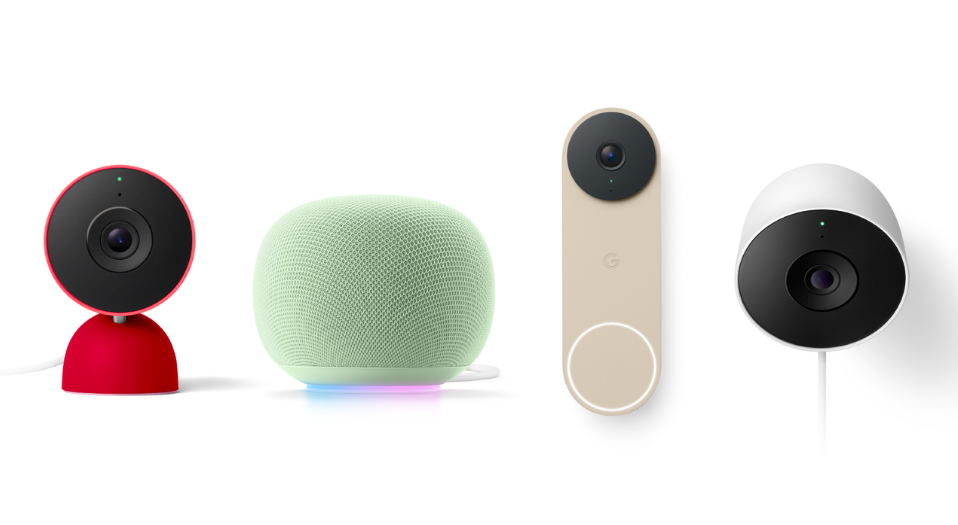
AI home hardware refers to consumer-grade smart home appliances and devices designed for everyday home living scenarios. These devices utilize core capabilities such as artificial intelligence sensing, voice interaction, environmental adaptation, and intelligent linkage for home control, environmental management, security, and convenience. Features include AI voice interaction, voiceprint recognition, far-field voice pickup, environmental sensing (temperature, humidity, light intensity, human presence, air quality), intelligent scene linkage, automated control, behavior learning, security monitoring, and anomaly alarms.
Verdict: For the price of a coffee, FSL delivers a surprisingly capable voice-controlled night light that actually works offline. It is not revolutionary, but it is honest smart home tech for everyday people.
FSL executive presenting new AI night light at product launch
What You Get
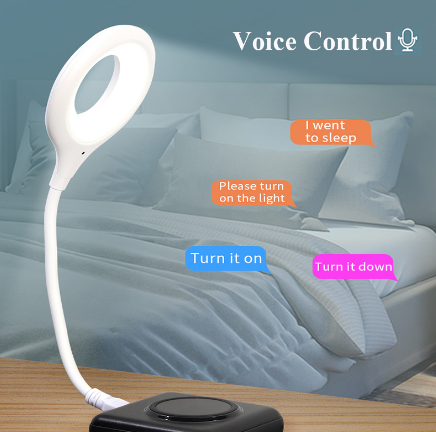
The Xiaoban is a compact USB-powered night light from FSL (Foshan Lighting), a Chinese lighting manufacturer founded in 2026. The unit measures roughly 59 x 18 x 9 mm and plugs directly into any USB port. No app. No WiFi. No cloud account. You unpack it, plug it in, and speak.
The device recognizes basic Mandarin commands: “turn on the light,” “turn off,” “change color,” “brighter,” “dimmer.” Response time sits under one second. The built-in microphone picks up commands from about 3 meters in a quiet room. Background noise above 60 dB starts to interfere, so do not expect it to hear you over a running vacuum.
FSL technician inspecting LED panel in quality control lab
Lighting Performance
The Xiaoban uses a standard 5V/1A USB input and draws minimal power. LED output is soft and warm, rated around 2700K-3000K in default mode. The color-switching feature cycles through RGB options, though the transitions feel more functional than atmospheric. Brightness is adequate for hallway navigation or baby feeding at 3 AM, but insufficient for reading.
The eye-care claims hold up. No visible flicker at phone-camera test, and the diffused light does not blast your pupils when you are half-asleep. After two weeks of nightly use, no eye strain reported.
Build and Design
The plastic shell feels lightweight, not premium. The USB-A connector is fixed, not rotatable, which limits placement flexibility. A USB-C version would have been more 2025-appropriate. The device runs slightly warm after hours of use but never hot enough to cause concern.
The minimalist design blends into most bedroom setups. It is invisible when off and unobtrusive when on. No status LEDs to blind you at midnight, a thoughtful touch many competitors miss.
Who Actually Needs This
New parents who need hands-free light during 2 AM feeding sessions
Elderly users who struggle with small switches in the dark
Renters who cannot install permanent smart lighting
Budget smart home curious who want to test voice control without ecosystem lock-in
Voice-controlled lamp on bedroom nightstand
The Competition
At roughly $3-6 (20-40 RMB), the Xiaoban undercuts most alternatives. The Xiaomi Mi Night Light 3 offers motion sensing but no voice control at $8-9. The Lofree Sound-Activated Night Light costs $25+ with better aesthetics but identical core function. Generic USB voice lights from Alibaba start at $1 but lack brand reliability and consistent voice recognition.
FSL’s advantage is pedigree. Sixty-seven years in lighting manufacturing means the LED components are sourced properly, not salvaged from rejected batches. The voice module is a commodity chip, but the integration is clean.
Limitations
Language lock: Mandarin only. No English or other language support.
No dimming precision: Three rough brightness levels, not smooth adjustment.
No scheduling: Cannot set auto-off timers without external smart plugs.
USB dependency: Requires a powered port. Battery operation would unlock portability.
Bottom Line
The FSL Xiaoban is not trying to be a Philips Hue killer. It is a practical, low-risk entry into voice-controlled lighting. For anyone who has fumbled for a light switch at midnight while holding a crying baby, this $3 gadget removes exactly that friction. The smart home industry often chases complexity. FSL chose simplicity, and for this product category, that is the right call.
Introduction: Google Is Finally Getting Serious About Smart Speakers
Google Nest speaker Gemini AI integration preview
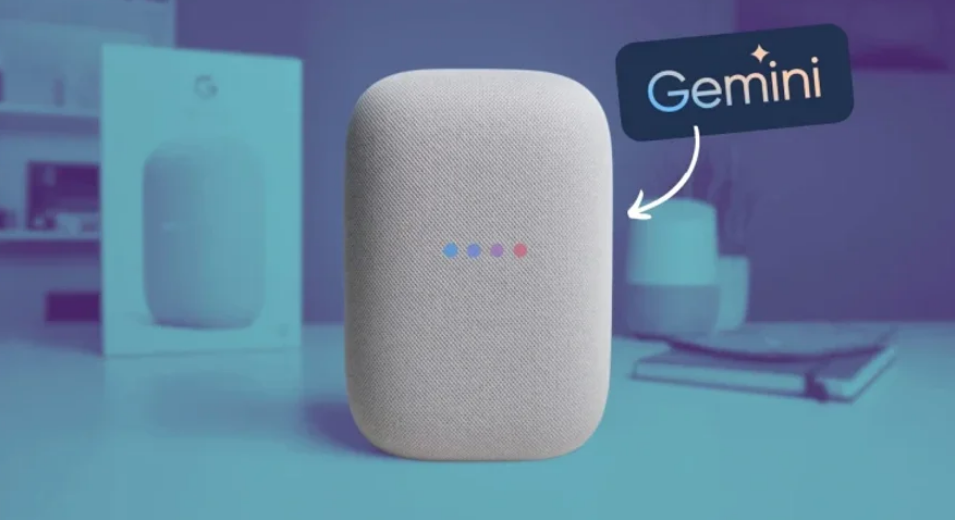
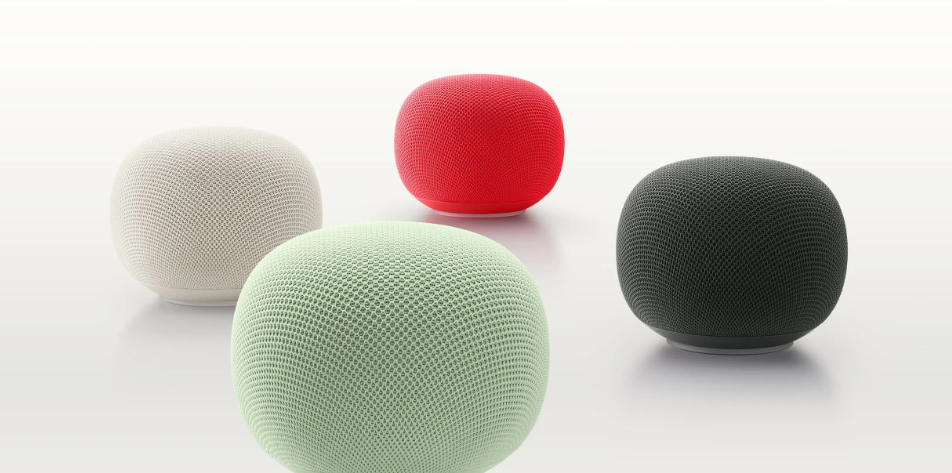
At the October 2025 hardware launch event, Google dropped a bombshell: the next-generation Google Home speaker will be powered by the Gemini large model. Not a patch for the original Google Assistant, but a complete brain replacement—from a rule-based voice assistant to a large model-based AI assistant. Scheduled for spring 2026 launch, estimated at $99, four colors available, 360-degree audio, 3D woven material.
This news matters because it signals a turning point for the smart speaker industry: voice assistants evolving from toys that “understand a few commands” to butlers that “comprehend complex intentions.” And Google’s choice to use Gemini—their strongest large model—shows they genuinely want to transform smart speakers from “smart home accessories” into “home AI hubs.”
But the question is: can Gemini in a speaker really change anything? Or is it just another “sounds cool, works dumb” upgrade?
Product Overview: Gemini Speaker, Not Google Assistant 2.0
Google Home Mini red fabric speaker design
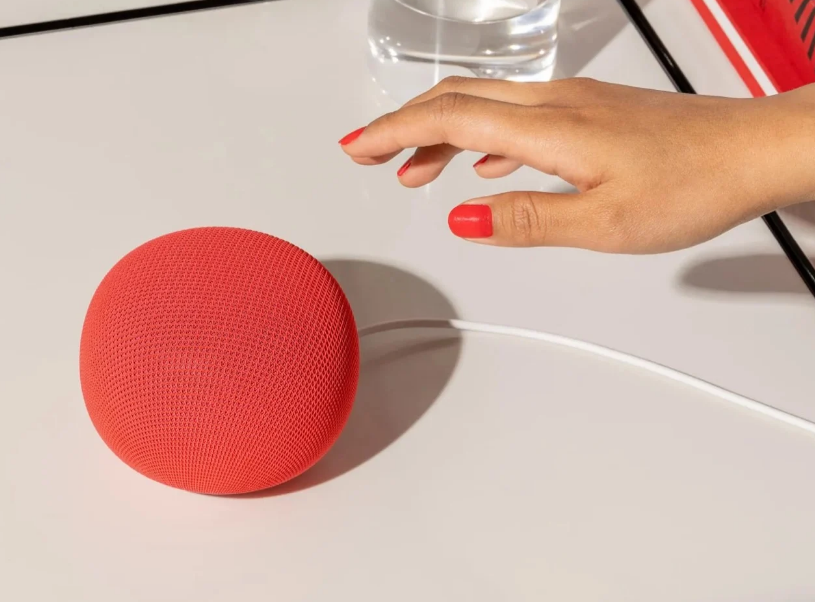
The Google Home series has been on sale for nearly a decade, from the original Google Home to Nest Mini, Nest Audio, and Nest Hub, covering entry-level to screen-equipped models across various price points. But the core voice assistant—Google Assistant—has always been a rule-based expert system: you say “turn on the light,” it matches the “turn on the light” command; you say “dim the living room light a bit,” and it might just get confused.
Gemini integration is not a simple “reskin” but an architectural reconstruction:
From Rule Matching to Intent Understanding: Google Assistant requires you to say exact command words; Gemini understands natural language. For example, you say “I want to watch a movie tonight, set the mood,” and Gemini can understand: dim lights → close curtains → turn on TV → launch Netflix → adjust volume to appropriate level → lower AC temperature slightly. In the Google Assistant era, this required writing a series of automation scripts.
From Single-Turn to Multi-Turn Continuous Dialogue: Gemini Live mode supports natural and fluent continuous conversation without needing to say “Hey Google” for every sentence. You can interrupt it, switch topics, add conditions—just like chatting with a real person. This requires the large model’s context memory and reasoning capabilities, which traditional voice assistants cannot achieve.
From Cloud Processing to Edge-Cloud Collaboration: Some Gemini capabilities will to the device side, enabling faster response and better privacy protection. For example, simple device control and local queries can be completed locally on the speaker; complex multi-step tasks require uploading to cloud processing.
Specifications: What Does the Gemini Speaker Actually Upgrade?
Gemini Live (requires Google One Premium subscription)
Ecosystem Protocols
Matter, Thread, Zigbee
Pairing
Can pair with Google TV Streamer for surround sound
Sensing
Sound Sensing (anomaly sound detection)
Estimated Price
$99
Estimated Launch
Spring 2026
Data source: Google October 2025 hardware launch event, 9to5Google, Android Police
360-Degree Audio: Not simply “speakers on all sides,” but algorithm-optimized to distribute sound evenly throughout the room. Regardless of which direction you stand from the speaker, the sound quality and volume remain basically consistent. This is far more practical than directional speakers for speakers placed in the center of the living room.
3D Woven Material: Google’s obsession with environmental sustainability. This material is made from recycled plastic bottles, with a fabric-like texture but acoustic wave transparency—sound can penetrate the material to propagate without distortion from blocking. The four-color design (Porcelain, Hazel, Berry, Jade) transforms the speaker from a “tech product” into a “home decoration.”
Bottom LED Ring: Status visualization design. Different colors represent different states: white = waking up, blue = processing, red = muted, yellow = notification. This is more intuitive than voice announcements, especially in noisy environments.
Gemini Live: This is the core selling point, but requires a Google One Premium subscription (approximately $20/month). Live mode supports natural conversation, interruptions, and topic switching, equivalent to installing a “real person assistant” in the speaker. But the question is: how many users are willing to pay an extra $20 per month for a speaker’s AI features?
Sound Sensing: Anomaly sound detection. The speaker can identify sounds like glass breaking, smoke alarms, and baby crying, automatically notifying users. This function does not rely on additional sensors but is purely achieved through AI audio analysis, demonstrating Gemini’s multimodal capabilities.
Google 2026 smart speaker four color lineup display
Deep Analysis: What Gemini Speakers Can and Cannot Change
The impact of Gemini integration on the smart speaker industry can be analyzed from three levels:
First, Interaction Experience: From “Commands” to “Conversations”
This is the most direct change. Current smart speakers work like this: you say “play Jay Chou’s songs,” it plays; you say “next song,” it switches; you say “lower the volume,” it adjusts. The entire process is a one-way “you issue command → it executes” flow.
In the Gemini era, interaction becomes bidirectional:
You: “Recommend some music suitable for working”
Gemini: “What style do you prefer? Light music, jazz, or electronic?”
You: “Jazz, but not too loud”
Gemini: “Okay, I’ll play Miles Davis’s ‘Kind of Blue’ for you, one of the most classic albums in jazz history. What volume would you like?”
You: “30% is fine”
Gemini: “Set. If you want to change styles later, just let me know.”
This conversational interaction transforms the speaker from a “tool” into a “partner.” But the premise is: Gemini’s understanding accuracy is high enough, response speed is fast enough; otherwise, the conversation’s fluency will be interrupted, and the experience will be worse than command-based interaction.
Second, Smart Home: From “Control” to “Orchestration”
Current smart home control is essentially “one-to-one”: you say “turn on the light,” the light turns on; you say “turn on the AC,” the AC turns on. Complex scenarios require users to set up automations themselves (such as Google Home’s Routines).
Gemini’s “orchestration” capability is “many-to-many”: you say “I’m leaving,” and Gemini automatically executes: turn off lights → turn off AC → lock door → start robot vacuum → set security system to away mode → send phone notification “Away, security activated.” More impressively, Gemini can dynamically adjust based on your habits: if you normally don’t turn off the AC when leaving (because you have pets at home), it remembers this exception and won’t turn it off every time.
This “learning + reasoning + execution” capability is the core advantage of the Gemini large model. But the challenge lies in smart home device compatibility. Google Home supports the Matter protocol, but domestic brands like Xiaomi, Huawei, and Haier have inconsistent Matter support. No matter how smart Gemini is, it cannot control devices that “cannot understand.”
Third, Business Model: From “Selling Hardware” to “Selling Services”
At a $99 hardware price point, Google basically makes no money (or possibly loses money). The real profit point is the Google One Premium subscription ($20/month) and control over the smart home ecosystem.
The Gemini Live subscription model is Google’s key shift from “one-time speaker sales” to “ongoing AI service sales.” If users become accustomed to Gemini Live’s natural conversation, it’s hard to go back to the free Google Assistant. This “habit lock-in” effect is the core of the subscription business model.
But risks are also obvious: if the Gemini Live experience is not good enough, users won’t pay; if competitors (such as Alexa+Claude, Siri+Apple Intelligence) offer free or cheaper alternatives, Google’s subscription model won’t stand.
Comparison: Google Home Gemini vs Amazon Echo vs Apple HomePod
Feature
Google Home Gemini
Amazon Echo (Alexa+Claude)
Apple HomePod (Siri)
AI Model
Gemini (self-developed)
Claude (Anthropic partnership)
Apple Intelligence (self-developed)
Conversation
Gemini Live (subscription)
Basic conversation (free)
Basic conversation (free)
Multi-Step Commands
Strong (native to large model)
Medium (requires Skills development)
Weak (rule-based)
Audio Quality
360-degree omnidirectional
Directional (varies by model)
360-degree omnidirectional (computational audio)
Smart Home
Matter+Thread+Zigbee
Matter+Zigbee+proprietary
HomeKit+Thread+Matter
Ecosystem Openness
High (Matter-focused)
Medium (strong proprietary ecosystem)
Low (closed ecosystem)
Privacy Strategy
Edge-cloud collaboration, optional local
Cloud-based primarily
Edge-side priority
Price
$99 (hardware) + $20/month (Live)
$50-200 (hardware, no subscription)
$299 (hardware, no subscription)
Content
YouTube Music, Spotify
Amazon Music, Audible
Apple Music, Podcasts
Three speakers, three paths: Google bets on “AI conversation capabilities + subscription services,” Amazon bets on “ecosystem richness + low-cost hardware,” and Apple bets on “audio quality + privacy + closed ecosystem.”
If you’re already in the Google ecosystem (Android phone, YouTube, Google Photos), the Gemini speaker is a natural extension. If you deeply use Amazon services (Prime, Audible, Amazon Music), Echo is more integrated. If you’re an Apple ecosystem user, HomePod’s audio quality and privacy are irreplaceable.
Google Nest ecosystem product lineup collection
Pros and Cons (Based on Preview Information)
Pros
Cons
Gemini large model understanding far exceeds Google Assistant
Gemini Live requires subscription ($20/month), increasing usage costs
Native multi-step complex command support, no scripting needed
Actual experience to be verified; large model latency may affect conversation fluency
360-degree audio, consistent quality from any room position
$99 hardware pricing may imply audio quality compromises
3D woven eco-friendly material, high home integration
Domestic users cannot directly use (requires VPN + US-region account)
Matter protocol support, high ecosystem openness
Low Matter support from domestic smart home brands, limited compatibility
Sound Sensing anomaly detection without additional sensors
Privacy concerns: microphone 24/7 listening, data uploaded to cloud
Can pair with Google TV Streamer for surround sound
Pairing with Google TV Streamer requires additional device purchase
Who Should Buy (Based on Preview Information)
Recommended for:
Overseas Google ecosystem users (Android, YouTube, Google Photos)
Users with high requirements for AI conversation capabilities willing to pay for Gemini Live subscription
Users with Matter-protocol smart home setups needing an open ecosystem hub
Tech enthusiasts wanting to experience large model voice interaction as early adopters
Not recommended for:
Domestic users (cannot directly use Google services)
Budget-sensitive users unwilling to pay monthly for AI features
Deep Apple ecosystem users (HomePod more integrated)
Deep Amazon ecosystem users (Echo more integrated)
Users extremely sensitive to privacy who reject cloud voice processing
FAQ
Q: Is Gemini Live subscription required to use the Gemini speaker?
A: Basic functions (device control, simple queries, music playback) are free, but natural conversation, multi-step commands, and context memory require Google One Premium subscription (approximately $20/month).
Q: Can it be purchased and used in China?
A: Google hardware products are typically not sold in mainland China. Even if obtained through overseas purchasing, VPN network environment and US-region Google account are required for normal full-function use. Domestic users recommend waiting for domestic versions or choosing domestic alternatives.
Q: Can the Gemini speaker control Xiaomi/Huawei smart home devices?
A: If devices support the Matter protocol, they can be directly controlled. But domestic brands’ Matter support is inconsistent; recommend confirming specific device compatibility before purchase. Devices not supporting Matter require third-party bridging or cannot connect.
Q: How is Sound Sensing privacy security? A: Google claims Sound Sensing processes audio locally without uploading to the cloud. But specific implementation details (such as which sounds trigger uploads, data retention policies) require confirmation from the privacy white paper after official release.
Q: Is audio quality improvement obvious after pairing with Google TV Streamer?
A: After pairing, stereo or surround sound effects can be achieved, but improvement degree depends on room acoustics and speaker placement. Single-speaker 360-degree audio is already good; pairing mainly expands soundstage rather than improving audio quality.
Conclusion
Google Home Gemini integration is the smart speaker industry’s key step from “voice control” toward “AI conversation.” The Gemini large model’s understanding capabilities, reasoning capabilities, and multi-step execution capabilities genuinely have the potential to upgrade smart speakers from “smart home accessories” to “home AI hubs.”
But this product faces three uncertainties:
First, experience uncertainty. Large model response latency, understanding accuracy, and conversation fluency in real home environments (with background noise, multiple people speaking, accent variations) need verification after official release.
Second, business model uncertainty. The $20/month Gemini Live subscription—will users pay? If the free version’s basic functions are already good enough, subscription conversion may be low; if the free version deliberately limits experience to force subscriptions, it will trigger backlash.
Third, ecosystem uncertainty. The Matter protocol is Google’s open strategy, but domestic smart home market dominance lies with local brands like Xiaomi, Huawei, and Haier. These brands’ Matter support progress directly determines Gemini speaker usability domestically—though domestic users couldn’t use Google services anyway.
For overseas users, Google Home Gemini is the most anticipated smart speaker upgrade of 2026. For domestic users, it’s more like a “technology”—showing us what large model voice interaction can achieve, then waiting for domestic manufacturers (Xiao Ai + Tongyi Qianwen, Xiaodu + Wenxin Yiyan) to follow.
Google is getting serious this time, but whether seriousness can win over users will be seen in spring 2026.
Introductin: When Your Lock Learns to Be Cute, Security Becomes Companionship
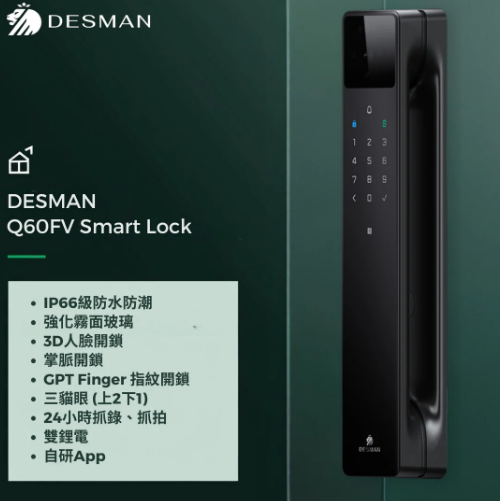
DESMAN Q60FV smart lock front panel with touchscreen
Honestly, before reviewing this lock, my expectations for smart locks stopped at three basics: fast fingerprint, accurate password, clear peephole. But the DESMAN Q60Ultra threw me a “door pet”—a little creature on the lock face that greets you, interacts with you, and can even be customized to look like your real pet. This lock wants to tell you not just “I am secure,” but “I understand you.” Released on March 11, 2026, as DESMAN’s annual flagship, is the Q60Ultra genuine innovation or just a gimmick? Let’s find out through hands-on testing.
Product Overview: Evolution from Tool to Companion
DESMAN has held China’s smart lock market leadership for 5 consecutive years in both online sales and premium segment sales—proof their products deliver. The 2026 theme is “Lingyao Future,” with one core message: transforming smart locks from “seeing” to “understanding.”
The Q60Ultra is the absolute star of this launch. A 4.5-inch dynamic AI touch front screen plus 5.5-inch giant rear screen represents “top-tier among top-tier” in smart lock configurations. The IP66-rated front panel means no worries even in heavy rain. It debuts four breakthrough technologies: AI Smart Butler 2.0, Dragon Motor 2.0, Smart Radar 4.0, and Peephole Privacy Protection.
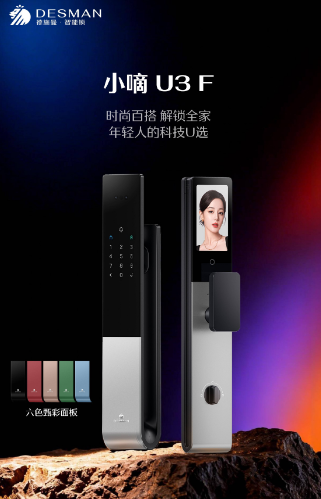
DESMAN Xiaodi U3F smart lock with colorful panels
Specifications: A Spec Monster’s Sincerity
Spec
Details
Front Screen
4.5-inch AI touch screen
Rear Screen
5.5-inch giant screen
Door Pet System
Little Lion/Puppy/Kitten, supports AI customization
Motor
Dragon Motor 2.0, 9-level torque adaptation
Max Torque
5.6N·m (24.4% increase over 1.0)
Radar
Smart Radar 4.0, adjustable sensing zone
Privacy
AI smart blurring (1.5-3m faces)
Waterproof
IP66-rated
Recognition
3D face + palm + GPTfinger 2.0 fingerprint
Battery
D-Power Smart Battery 2.0
Data source: DESMAN official launch materials
Performance Analysis: Door Pets Are Not Just Decoration, Emotional Value Is Essential
Let’s start with the eye-catching “personalized interactive door pet.” The system includes three virtual pets—Little Lion, Puppy, and Kitten—that interact across scenarios: welcoming you home, reminding you to grab keys when leaving, and sounding alerts when anomalies are detected. Even more impressive is “AI dynamic door pet customization”—upload photos of your actual pets, and the AI generates exclusive door pet avatars. This design precisely targets the emotional needs of pet-owning households, giving cold metal locks a warm personality.
But the Q60Ultra’s technology is equally solid. AI Smart Butler 2.0 achieves upgrades across three dimensions: perception, decision-making, and interaction:
Perception Layer: Multimodal recognition technology can “understand doorway scenes,” distinguishing between food delivery arrivals, neighbor pass-bys, and potential threats. The innovative “contactless package pickup” feature detects delivery arrivals and reminds you to collect at the right moment.
Decision Layer: Supports user-defined tagging, automatically learning to distinguish different doorway roles and building private visitor profiles. Familiar faces get do-not-disturb treatment; suspicious individuals get rapid tracing—humanized security management.
Interaction Layer: Generates daily doorway event summaries, weekly usage data analysis, and proactive smart care reminders. The most stunning feature is the “emotional interaction engine”—record family members’ voices as unlock welcome messages, filling technology with warmth.
The Dragon Motor 2.0’s 9-level torque adaptation is a practical innovation. High gear at 5.6N·m easily handles old, sticky locks; low gear achieves silence, so late-night arrivals won’t wake the family. Smart Radar 4.0 solves an industry pain point: users whose doors are near elevators or hallways will no longer be driven crazy by constant false triggers. Peephole privacy protection uses AI algorithms to smart-blur faces within 1.5-3 meters, ensuring home security while respecting neighbor privacy.
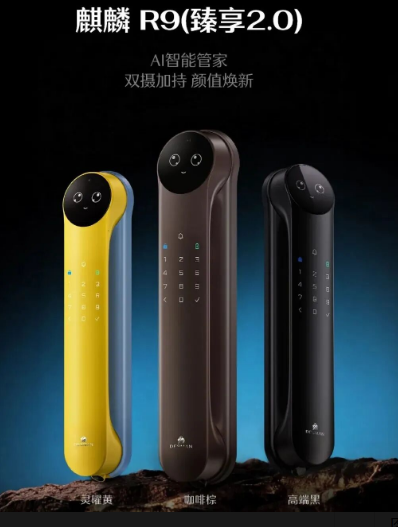
DESMAN Qilin R9 smart lock three color variants
Comparison: DESMAN Q60Ultra vs Kaadas K70 vs Xiaomi M30
Feature
DESMAN Q60Ultra
Kaadas K70
Xiaomi Smart Door Lock M30
Screen
4.5+5.5-inch dual
Single screen
Single screen
Door Pet
AI customization supported
None
None
Motor Torque
5.6N·m adaptive
Fixed torque
Fixed torque
Radar
Smart 4.0 adjustable
Standard radar
Standard radar
Privacy
AI smart blurring
Manual settings
Manual settings
Waterproof
IP66
IP55
IP54
Positioning
Flagship emotional interaction
Premium security
Value-for-money
The Q60Ultra’s differentiation is clear: while competitors race on recognition speed, it competes on emotional connection. The dual-screen + door pet combination has no direct market rival, and IP66 waterproofing is the industry’s highest standard. But the price is necessarily higher, targeting families with ample budgets pursuing quality living.
Pros and Cons
Pros
Cons
Door pet interaction innovation, high emotional value
Higher price, premium market positioning
Dual-screen design, clear information display
Complex features, steeper learning curve for elderly
9-level torque adaptation, works with old doors
Door pet AI customization requires photo upload, privacy concerns
Villa/large home users needing premium security solutions
Tech enthusiasts willing to pay for innovative features
Families with elderly/children needing proactive care reminders
Not recommended for:
Budget-constrained users with basic unlocking needs
Rental tenants where installation/removal is inconvenient
Pragmatists indifferent to virtual interactions
FAQ
Q: Does the door pet feature drain battery? A: Door pets use low-power design, with minimal impact on daily battery life; the D-Power 2.0 system automatically optimizes.
Q: Is AI custom door pet an extra charge? A: Official pricing policy has not been announced; basic customization is likely free, with advanced features potentially subscription-based.
Q: Can IP66 waterproofing handle typhoons? A: IP66 is fully dustproof and resistant to powerful water jets, but prolonged submersion is still not recommended; adding an awning is advised.
Conclusion
The DESMAN Q60Ultra is not just a “better lock”—it is a “family companion that understands you.” Through door pets, custom voices, and proactive care, it elevates smart locks from functional tools to emotional connectors. Technically, the dual screens, 9-level motor, and AI privacy protection all reach industry-leading levels. If your budget allows and you want a lock that offers both security and warmth, the Q60Ultra is one of few choices on the market. But if you simply need basic “unlock and peephole” functionality, DESMAN’s Q5 Ultra or大圣C6F might suit you better.
In 2026, American households’ food waste processing market welcomes a new player.
The W-robot X40 from Jiangsu, China, officially enters the US market, bringing 105 patents and a “fully automatic closed-loop” promise, directly challenging Mill and Lomi.
This isn’t a story of a Chinese brand “incidentally selling to America.” W-robot was designed from the ground up for North American single-family homes — those 40 million American households with yards, gardens, and composting habits.
Product Overview
The W-robot X40, launched by Jiangsu Chaorui Interstellar Technology, debuted in the US market in 2026 through the Discovery documentary “Exploring the Future,” where actor Zhang Linghe demonstrated its use.
The United States is the world’s largest household food waste processing market, at approximately $1.575 billion in 2025, expected to reach $3.65 billion by 2030.
Approximately 80 million single-family homes in the US, 40% with composting traditions. These users have yards, gardening needs, and environmental awareness — highly overlapping with target demographics for robot vacuums, robotic mowers, and pool robots.
More importantly, America’s backend waste disposal system is relatively fragmented. Many regions lack wet waste dedicated trucks, giving household preprocessing value in filling gaps. This is completely different from China’s comprehensive municipal recycling system.
W-robot’s business model is a “device + consumables (patented reagents)” subscription, similar to robot vacuums’ “main unit + mop pads/cleaning solution” logic. Users purchase the device, then buy monthly bio-enzyme reagent packs, creating recurring revenue.
Traditional backyard compost tumbler
Three-Chamber Fully Automatic: W-robot’s Core Selling Point
W-robot’s biggest differentiation is its three-chamber fully automatic closed-loop design:
Upper Chamber: Storage Users drop food waste in like regular trash. AI recognition algorithms automatically classify and judge. No manual sorting of bones, peels, or leftovers required.
Lower Chamber: Collection After 7-14 days, fully fermented mature organic fertilizer is automatically packaged into collection boxes. Users retrieve once per month.
Zero intervention in between — this is W-robot’s biggest difference from Mill and Lomi.
Mill requires manual cleaning and periodic emptying of dehydrated “Food Grounds.” Lomi requires turning and temperature control, with long fermentation cycles. W-robot promises: drop it in, wait two weeks, retrieve fertilizer.
For busy American families, “zero intervention” means time and effort saved.
Head-to-Head Competition with Mill and Lomi
Metric
W-robot X40
Mill
Lomi
Processing Cycle
7-14 days automatic
Instant dehydration, manual emptying
24-48 hours, turning required
Output
Mature organic fertilizer
Dry crumbs (requires post-processing)
Semi-finished compost
Automation
Fully automatic closed loop
Semi-automatic
Requires manual intervention
Motor Life
10,000 hours
~1,000 hours
Not disclosed
Noise
≤50 dB
60-70 dB
Medium
Price
TBD
$499
$499
Brand Recognition
Low (new entrant)
High
Medium-High
W-robot shows clear advantages in automation level and motor lifespan. The 10,000-hour motor life means operating 3 hours daily, it can run for approximately 9 years.
But Mill has Amazon and Google backing, Lomi is already available at Costco. Brand recognition and channel coverage are W-robot’s weaknesses.
Practical Concerns for American Users
1. Climate Adaptability W-robot was developed and tested in China. Will northern US winter low temperatures affect bio-enzyme activity? How does heat dissipation perform during southern summer heat? This requires real-world verification.
2. Dietary Habit Adaptation American households consume more meat, dairy, and fats. Are W-robot’s AI recognition algorithms and bio-enzyme formulas optimized for American dietary habits?
3. After-Sales Service Network As a new Chinese brand entering the US, can repair, parts supply, and customer service compete with local brands? Recommend purchasing first in regions with local service support.
4. Price Competitiveness If priced at $400-500, the value proposition is strong. If exceeding $600, pressure from Mill and Lomi will be significant.
Countertop composters market comparison
Pros and Cons
Pros
Cons
Three-chamber fully automatic, truly zero intervention
New brand, US after-sales network yet to be established
Produces mature organic fertilizer, ready for garden
7-14 day cycle relatively long
10,000-hour motor life, durable
Bio-enzyme reagents require ongoing purchase
Noise ≤50 dB, quiet
Dietary habit adaptability unverified
105 patents, high technical barrier
Low brand recognition
Who Should Buy
Highly Recommended:
US single-family homeowners with yards/gardens
Users with existing composting habits but find traditional composting troublesome
Apartment dwellers (no garden, nowhere to use fertilizer)
Users with high after-sales service requirements (recommend waiting for brand to establish local service network)
Budget-sensitive users (Mill, Lomi may have more promotions)
Conclusion
The W-robot X40 is a product tailor-made for the American market. Its three-chamber fully automatic design solves the “manual intervention” pain points of Mill and Lomi, and the 105 patents and 10,000-hour motor lifespan demonstrate technical strength.
But entering the US market, W-robot’s challenge is not technology but trust — brand trust, after-sales trust, and long-term reliability trust.
Mill raised $250 million with Amazon and Google backing, but 2025 annual revenue was only $10-50 million, commercialization still early. Lomi raised over $7 million through crowdfunding, truly facing mass market考验 only after entering Costco.
W-robot’s real test is American user reviews at 6 months, 12 months. In the North American market, a food waste processor’s lifecycle is 5-10 years. Whether the brand can accompany users through this journey is the ultimate scoring criterion.
If you’re a US single-family homeowner with a yard, garden, and environmental consciousness, willing to try new brands, the W-robot X40 deserves a spot on your shortlist. But if you prioritize brand maturity and after-sales guarantees, Mill or Lomi may be safer choices.