Rating: 9.4/10
In 2026, American households’ food waste processing market welcomes a new player.
The W-robot X40 from Jiangsu, China, officially enters the US market, bringing 105 patents and a “fully automatic closed-loop” promise, directly challenging Mill and Lomi.
This isn’t a story of a Chinese brand “incidentally selling to America.” W-robot was designed from the ground up for North American single-family homes — those 40 million American households with yards, gardens, and composting habits.
Product Overview
The W-robot X40, launched by Jiangsu Chaorui Interstellar Technology, debuted in the US market in 2026 through the Discovery documentary “Exploring the Future,” where actor Zhang Linghe demonstrated its use.
Core specifications:
| Parameter | Specification |
|---|---|
| Weight | Not disclosed (desktop size) |
| Processing Cycle | 7-14 days fully automatic |
| Processing Mode | Physical cutting + high-temp heating + bio-enzyme catalysis |
| Adjustable Duration | 2/4/8 hour three levels |
| Noise Control | ≤50 dB |
| Motor Lifespan | 10,000 hours |
| Patent Count | 105 (including 3 international invention patents) |
| Target Market | US single-family homes |
Source: Chaorui Interstellar Official Materials
Why Did W-robot Choose the US Market?
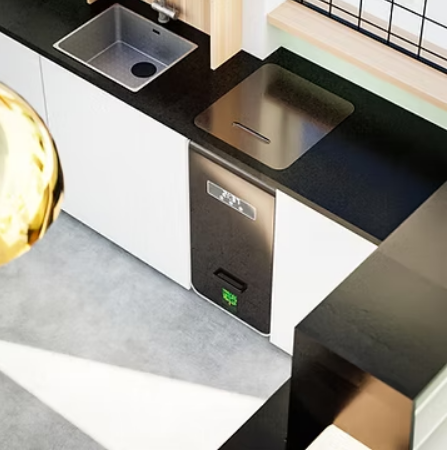
The United States is the world’s largest household food waste processing market, at approximately $1.575 billion in 2025, expected to reach $3.65 billion by 2030.
Approximately 80 million single-family homes in the US, 40% with composting traditions. These users have yards, gardening needs, and environmental awareness — highly overlapping with target demographics for robot vacuums, robotic mowers, and pool robots.
More importantly, America’s backend waste disposal system is relatively fragmented. Many regions lack wet waste dedicated trucks, giving household preprocessing value in filling gaps. This is completely different from China’s comprehensive municipal recycling system.
W-robot’s business model is a “device + consumables (patented reagents)” subscription, similar to robot vacuums’ “main unit + mop pads/cleaning solution” logic. Users purchase the device, then buy monthly bio-enzyme reagent packs, creating recurring revenue.
Three-Chamber Fully Automatic: W-robot’s Core Selling Point
W-robot’s biggest differentiation is its three-chamber fully automatic closed-loop design:
Upper Chamber: Storage Users drop food waste in like regular trash. AI recognition algorithms automatically classify and judge. No manual sorting of bones, peels, or leftovers required.
Middle Chamber: Processing Physical cutting + high-temperature heating + bio-enzyme catalytic decomposition, with 2/4/8 hour adjustable duration. Patented reagents accelerate decomposition, producing organic fertilizer and water.
Lower Chamber: Collection After 7-14 days, fully fermented mature organic fertilizer is automatically packaged into collection boxes. Users retrieve once per month.
Zero intervention in between — this is W-robot’s biggest difference from Mill and Lomi.
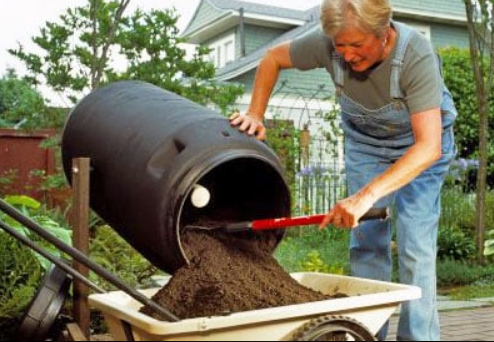
Mill requires manual cleaning and periodic emptying of dehydrated “Food Grounds.” Lomi requires turning and temperature control, with long fermentation cycles. W-robot promises: drop it in, wait two weeks, retrieve fertilizer.
For busy American families, “zero intervention” means time and effort saved.
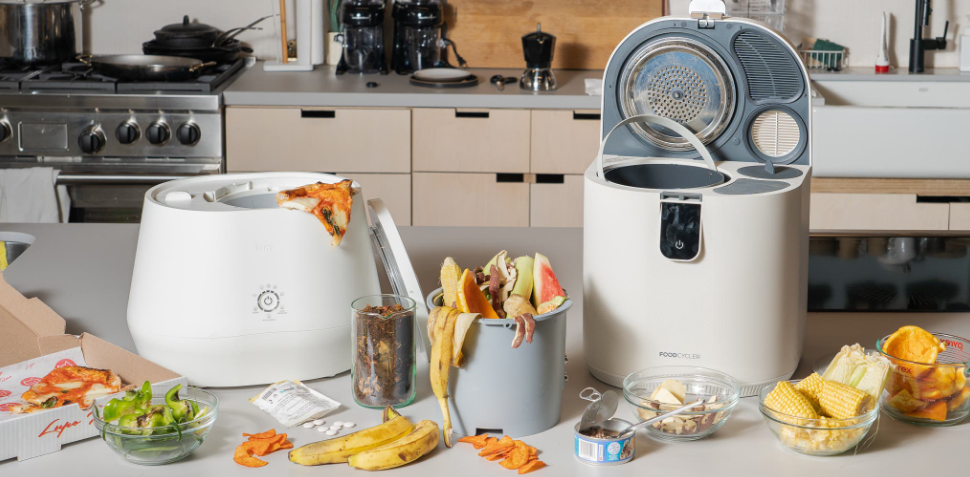
Head-to-Head Competition with Mill and Lomi
| Metric | W-robot X40 | Mill | Lomi |
|---|---|---|---|
| Processing Cycle | 7-14 days automatic | Instant dehydration, manual emptying | 24-48 hours, turning required |
| Output | Mature organic fertilizer | Dry crumbs (requires post-processing) | Semi-finished compost |
| Automation | Fully automatic closed loop | Semi-automatic | Requires manual intervention |
| Motor Life | 10,000 hours | ~1,000 hours | Not disclosed |
| Noise | ≤50 dB | 60-70 dB | Medium |
| Price | TBD | $499 | $499 |
| Brand Recognition | Low (new entrant) | High | Medium-High |
W-robot shows clear advantages in automation level and motor lifespan. The 10,000-hour motor life means operating 3 hours daily, it can run for approximately 9 years.
But Mill has Amazon and Google backing, Lomi is already available at Costco. Brand recognition and channel coverage are W-robot’s weaknesses.
Practical Concerns for American Users
1. Climate Adaptability W-robot was developed and tested in China. Will northern US winter low temperatures affect bio-enzyme activity? How does heat dissipation perform during southern summer heat? This requires real-world verification.
2. Dietary Habit Adaptation American households consume more meat, dairy, and fats. Are W-robot’s AI recognition algorithms and bio-enzyme formulas optimized for American dietary habits?
3. After-Sales Service Network As a new Chinese brand entering the US, can repair, parts supply, and customer service compete with local brands? Recommend purchasing first in regions with local service support.
4. Price Competitiveness If priced at $400-500, the value proposition is strong. If exceeding $600, pressure from Mill and Lomi will be significant.
Pros and Cons
| Pros | Cons |
|---|---|
| Three-chamber fully automatic, truly zero intervention | New brand, US after-sales network yet to be established |
| Produces mature organic fertilizer, ready for garden | 7-14 day cycle relatively long |
| 10,000-hour motor life, durable | Bio-enzyme reagents require ongoing purchase |
| Noise ≤50 dB, quiet | Dietary habit adaptability unverified |
| 105 patents, high technical barrier | Low brand recognition |
Who Should Buy
Highly Recommended:
- US single-family homeowners with yards/gardens
- Users with existing composting habits but find traditional composting troublesome
- Environmentally conscious families pursuing “zero waste lifestyle”
- Tech early adopters willing to try new brands
Should Wait:
- Apartment dwellers (no garden, nowhere to use fertilizer)
- Users with high after-sales service requirements (recommend waiting for brand to establish local service network)
- Budget-sensitive users (Mill, Lomi may have more promotions)
Conclusion
The W-robot X40 is a product tailor-made for the American market. Its three-chamber fully automatic design solves the “manual intervention” pain points of Mill and Lomi, and the 105 patents and 10,000-hour motor lifespan demonstrate technical strength.
But entering the US market, W-robot’s challenge is not technology but trust — brand trust, after-sales trust, and long-term reliability trust.
Mill raised $250 million with Amazon and Google backing, but 2025 annual revenue was only $10-50 million, commercialization still early. Lomi raised over $7 million through crowdfunding, truly facing mass market考验 only after entering Costco.
W-robot’s real test is American user reviews at 6 months, 12 months. In the North American market, a food waste processor’s lifecycle is 5-10 years. Whether the brand can accompany users through this journey is the ultimate scoring criterion.
If you’re a US single-family homeowner with a yard, garden, and environmental consciousness, willing to try new brands, the W-robot X40 deserves a spot on your shortlist. But if you prioritize brand maturity and after-sales guarantees, Mill or Lomi may be safer choices.
Leave a Reply