Category: AI Robot

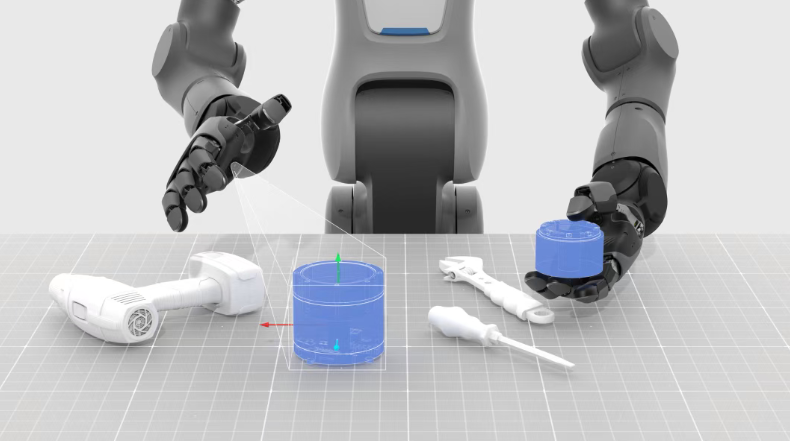
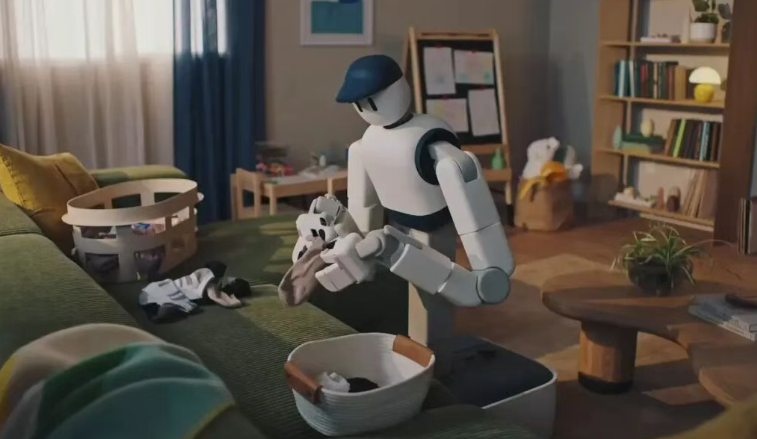
AI robots are intelligent systems that integrate artificial intelligence and robotics technology, with the ability to perceive the environment, make autonomous decisions, and perform tasks.

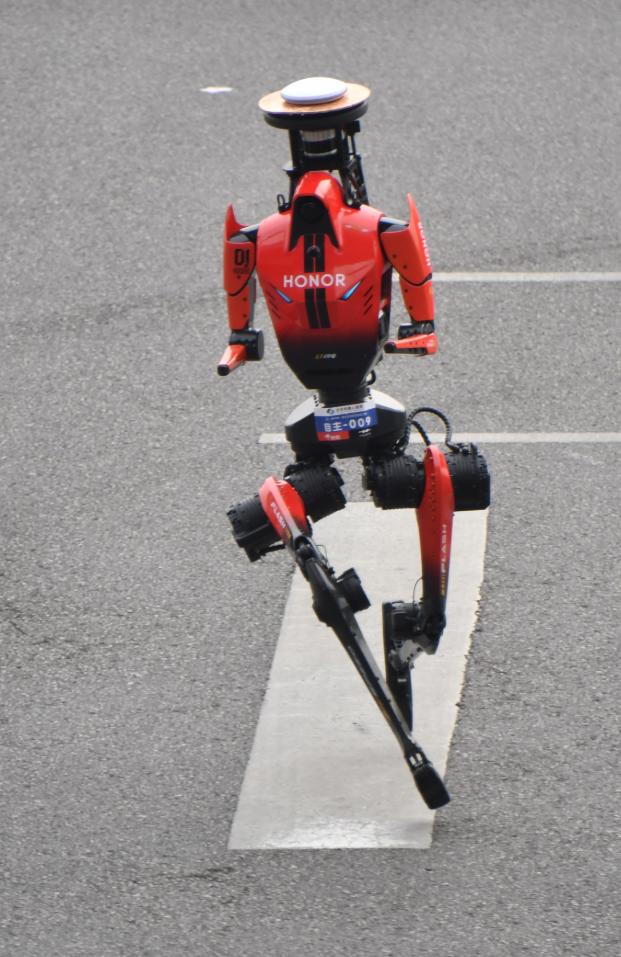
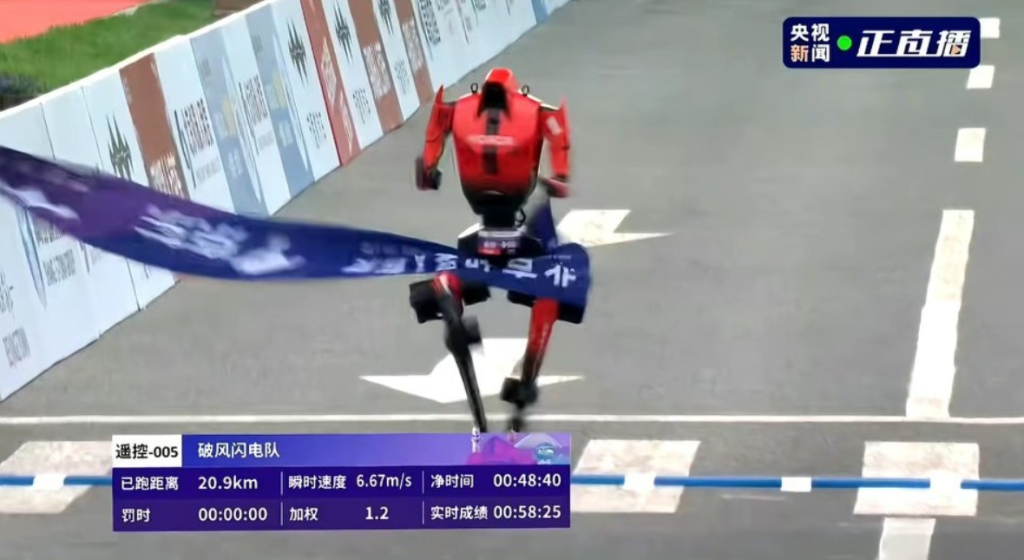
  • Honor’s “Lightning” Robot Claims Victory: Humanoid Robot Marathon Record Shattered

    On April 19, 2026, the Beijing Yizhuang Half Marathon witnessed an epic showdown between technology and speed. In the second edition of the world’s first humanoid robot marathon, Honor Smart Technology Development Co., Ltd.’s “Lightning” robot crossed the finish line first with a net time of 48 minutes and 19 seconds, dramatically surpassing last year’s championship time of 2 hours and 40 minutes. This achievement not only outpaced numerous human runners but also broke the human men’s half marathon world record of 57 minutes and 20 seconds.

    Record-Breaking Participation Scale

    The scale of this year’s event was truly remarkable. Compared to last year when only 6 robots completed the race, this year’s competition attracted over 300 humanoid robots to compete alongside each other. Competing teams included industry leaders such as Beijing Humanoid Robot Innovation Center, Honor, Unitree, and Sunyan Dynamics, as well as research institutions from Tsinghua University, Peking University, and University of Science and Technology of China. The event scale grew nearly fivefold from last year, with 26 mainstream brands participating.

    Notably, 40% of competing robots utilized autonomous navigation, adding technical depth and entertainment value to the competition. According to test data, 90% of participating teams completed the race this year, with 25 teams achieving speeds exceeding 20 km/h, accounting for 40% of all participants. These numbers reflect the rapid advancement of China’s humanoid robot technology over the past year.

    Linkage Intelligent Manufacturing: The Hidden Champion Behind Victory

    The complete structural components and surface treatment services for Honor’s championship robot were all provided by Linkage Intelligent Manufacturing, with related products already in batch production. Beyond core structural component supply, Linkage possesses critical technologies for humanoid robot execution layers, including servo motors, reducers, drivers, and motion controllers. The company can provide customers with head assemblies, dexterous hand assemblies, limb assemblies, as well as high-power charging and thermal solution core hardware support.

    As the core supplier of the “Lightning” robot, Linkage Intelligent Manufacturing’s technical capabilities were fully validated during this competition. From the robot’s “skeleton” to its “joints,” every precision component affects ultimate athletic performance and stability.
    China's Humanoid Robot Industry Accelerates
    China’s Humanoid Robot Industry Accelerates

    As the world’s first consumer electronics giant to deploy a self-developed humanoid robot in competition, Honor demonstrated Chinese technology enterprises’ ambitions in embodied intelligence. Besides “Lightning,” Honor also deployed the “Yuanqizai” robot to compete for the “Best Walking Gait Award.” This robot’s ultra-realistic walking gait attracted significant audience attention.

    Shandong Youbote Intelligent Robot Co., Ltd.’s third-generation “Xingzhe Taishan” also successfully completed the race. Compared to the second-generation product that debuted in 2025, the third-generation “Xingzhe Taishan” saw its maximum movement speed increase to 4 meters per second (approximately 14.4 km/h), climbing step height reach 30 cm, and gradient climbing angle reach 20 degrees. The team specifically designed a new liquid cooling system for motor heat dissipation and installed higher energy density battery packs.
    Xingzhe Taishan
    Xingzhe Taishan

    Additionally, Beijing’s locally developed “Tianyi” traffic police robot made its debut at the event. Wearing distinctive traffic officer fluorescent green attire, it stood in the designated area, continuously making left-turn gestures with voice prompts, demonstrating the application potential of humanoid robots in urban management.

    Technical Breakthroughs: From “Able to Run” to “Running Well”

    A humanoid robot running a marathon sounds simple but presents immense challenges. Heat issues from long-distance running, mechanical fatigue, and adaptation to complex terrain (more than 10 types including slopes and curves) are all challenges that technical teams must overcome.

    To prepare for this competition, Youbote’s team entered “marathon mode” in early March 2026, having robots run a complete half marathon on real roads every day. Engineers rode alongside on bicycles to observe data and modify code on-site. The team collected running posture data from sports enthusiasts and conducted nearly 100 hours of simulation training, helping the robot’s running gait evolve from jerky to smooth, with more natural arm swings and knee bends.

    The Future Is Here

    This year’s Humanoid Robot Half Marathon was not merely a competitive event but a comprehensive review of China’s AI hardware industry. From chips to structural components, from algorithms to materials, countless technical breakthroughs converged and took shape along the 21-kilometer course. As technology continues to iterate, humanoid robots are moving from laboratories to broader application scenarios—industrial manufacturing, medical assistance, home services, urban management…

    When scenes of robots competing alongside humans become commonplace, we may be witnessing the dawn of an entirely new era.
  • A Truly Reliable Fire Safety Solution: Vicon Intelligent Sprinkler System

    A Truly Reliable Fire Safety Solution: Vicon Intelligent Sprinkler System

    Currently, the number of fires worldwide remains consistently high, posing significant safety hazards. Traditional fire rescue systems, considering time constraints and infrastructure limitations, often take 15-45 minutes to arrive at the scene and begin firefighting operations.

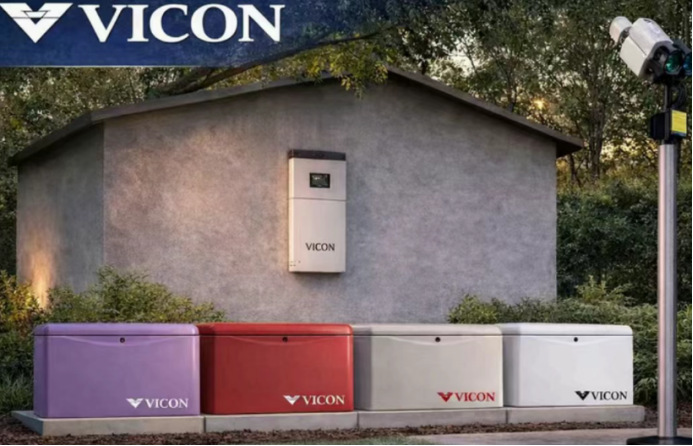
    Vicon Intelligent Sprinkler System
    Vicon Intelligent Sprinkler System

    During this time, ordinary people often can only use basic firefighting equipment or evacuate the scene immediately, helplessly watching their property being relentlessly consumed by flames.

    Addressing this safety gap, the Vicon Home AI Fire Protection System, developed by a team led by Chinese engineer Victor Duan, is breaking through with a “proactive defense” logic. It weakens the fire and reduces losses during the crucial time before firefighters arrive.

    This article, based on aicrunchx test data, breaks down the technical architecture and provides a truly reliable fire safety solution brought by AI fire protection systems.

    🔍 Why have traditional fire prevention equipment reached their limits?

    Data shows that the United States experiences over 380,000 residential fires annually, resulting in direct property losses exceeding $11 billion. Traditional smoke detectors can only provide “after-the-fact warnings” and cannot intervene in the early stages of a fire’s spread.

    Vicon’s core logic is to bring firefighting capabilities down to each household’s yard: through AI multispectral flame and smoke recognition and a thermal sensing array, it triggers an early warning tens of minutes before an open flame contacts the building, and activates a high-pressure water curtain to form a physical barrier.

    Vicon Product Matrix and Core Technical Parameters

    • AI Fire Source Recognition Engine: Equipped with a local edge AI chip, integrating temperature sensing and visual algorithms, it boasts a 99.99% accuracy rate, millisecond-level response, and can operate independently even without a network connection.
    • Adaptive High-Pressure Sprinkler Network: 360° wide-angle sprinklers can quickly cover the building facade, supporting dual-mode switching between solar and mains power, and compatible with residential water storage facilities such as yard swimming pools and rainwater collection tanks.
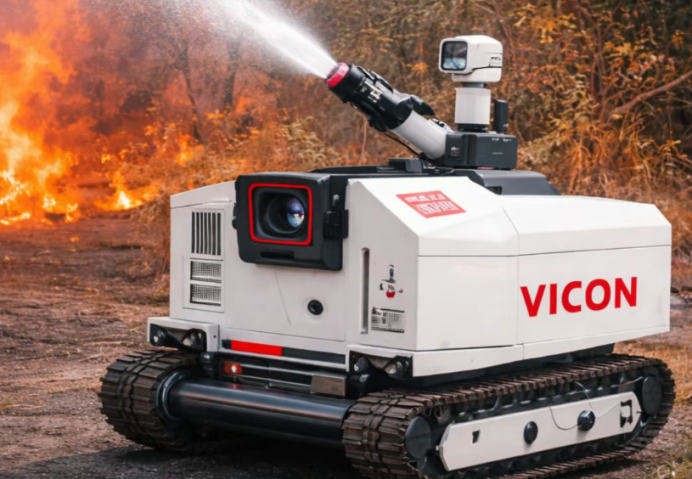
    • Third-Generation Mobile AI Firefighting Robot: Upgraded from “fixed protection” to “autonomous inspection + dynamic decision-making.” Built-in SLAM positioning and a local inference model, it can automatically track heat source trajectories and adjust the spray angle.
    • End-to-End Intelligent Hub: The accompanying APP supports real-time water pressure/power monitoring, seamless switching between automatic and manual modes, meets consumer-grade ready-to-use standards, and requires no structural modifications. Design Team: A Breakthrough in Engineering with a Chinese Team

    Vicon is not just a concept project, but a tangible technology company deeply rooted in hardware implementation. Founder Victor Duan has 20 years of experience in emergency equipment R&D, comes from a four-generation manufacturing family, and leads core structural design and supply chain quality control. Co-founder Janice Jia has 17 years of experience in North American channel operations, responsible for offline regional expansion and ecosystem integration with insurance/construction companies. The R&D team spans sensor algorithms, fluid dynamics engineering, and North American UL/CSA compliance certification, taking less than 5 months from proof of concept to mass production deployment. Currently, Vicon has completed joint testing with over 70 construction companies and 3 leading insurance companies, achieving cumulative revenue of millions of dollars.

    Vicon AI Firefighting Robot
    Vicon AI Firefighting Robot

    Purchase Guide: How to Determine if it’s Right for Your Home?

    • Target Audience and Scenarios: High Fire Risk (WUI) residential areas, timber/light steel villas, detached houses with independent water tanks, and homeowners seeking home insurance discounts.
    • Budget Reference (USD): The starting price for the first-generation fixed smart sprinkler system is approximately $2,499–$4,999 (fluctuating based on house size and sprinkler head number); the initial price for the third-generation mobile AI fire-fighting robot is approximately $12,500. Some partner insurance companies offer a $3,000/year premium credit or 0% interest installment plans.
    • Deployment and Compliance Recommendations: Before purchasing, confirm the roof drainage slope, exterior wall material, and water supply access distance; prioritize officially certified channels offering a 3-year hardware warranty + lifetime OTA firmware upgrades; it is recommended to register with the local fire department.

    Conclusion

    As AI moves from the cloud to the yard, home security is undergoing a generational leap from “passive alarm” to “active suppression.”

    Vicon, with its Chinese-made engineering efficiency and algorithmic precision, accurately fills the hardware gap in North American wildfire protection. For homeowners in high-fire-risk areas, this is not just a consumer-grade smart hardware device, but also an insurance-grade asset to withstand extreme weather. Stay tuned to aicrunchx for more AI hardware reviews, where we’ll guide you through understanding and using AI in the AI ​​era.

  • How are Dexterous Hands Reshaping Robots and Entering Our Lives

    How are Dexterous Hands Reshaping Robots and Entering Our Lives

    In the past, it was considered amazing for a robot to be able to run and jump; now, the real skill is to be able to steadily pick up a screw and gently fold a shirt.

    As embodied intelligence moves from “walking” to “working,” the biggest obstacle between ideal and reality is no longer chip computing power, but rather the end effectors that can truly “shake hands” with the physical world. Dexterous hands (and bionic hands) are rapidly transforming from sophisticated teaching tools in laboratories into core engines for industrial application.

    The choice of technological path is returning to pragmatism. Early on, the industry was obsessed with making it “as human-like as possible,” and five-fingered bionics became the standard. But reality quickly offered a better solution:

    Pacini proactively eliminated its little finger, using a four-finger solution to cover 85% of industrial scenarios, reducing hardware costs by 20%; Sunday Robotics’ three-finger design targets 80% of household chores, using fewer joints to achieve higher reliability.

    Pasini 's four-finger design
    Pasini ‘s four-finger design

    This is not a compromise, but a precise trade-off. In terms of underlying transmission technology, the industry has also figured out the characteristics of each: chord drives are like human tendons, flexible but prone to fatigue and loosening; direct drive motors have precise force and zero backlash, but heat generation and size are major drawbacks; linkage structures are sturdy and durable, but sacrifice the flexibility of the joints.

    Today, leading manufacturers are no longer “betting” on a single solution, but rather modularly assembling it to create a system that adapts to scientific research, factory assembly, and light-duty scenarios. Dexterous hands are no longer focused on “looking like a human,” but rather on “doing things beautifully.”

    More noteworthy is that dexterous hands have evolved from “execution components” to “data entry points.” Xiaomi and several startups have simultaneously launched isomorphic “haptic gloves”: when a person wears them to work, data such as fingertip pressure, grasping angle, and sliding friction are synchronized in real time, allowing the robot to directly “copy the work.” This “human-teacher-machine” model significantly bypasses the trial-and-error costs of traditional reinforcement learning, exponentially shortening the algorithm training cycle.

    Sunday Robotics
    Sunday Robotics

    Meanwhile, the industrial chain is experiencing a dual recovery in manufacturing and capital. From Zhaowei Electromechanical’s highly integrated micro motors to Lingxin Qiaoshou achieving a monthly production of thousands of units and covering all technical routes, and Yinshi Robotics’ self-developed micro servo electric cylinders connecting upstream and downstream, the domestic supply chain is pushing down the price of what were once “luxury goods” costing hundreds of thousands of yuan to the thousands or even hundreds of yuan level. When the cost curve and the data flywheel form a positive cycle, the large-scale popularization of dexterous hands is only a matter of time.

    Imagine this morning: before you’re fully awake, a robot in the kitchen has already steadily cracked an egg with three fingers, while its other flexible hand gently pushes warm milk towards you. This isn’t science fiction; it’s the everyday reality that’s about to become a reality after dexterity robots have broken the thousand-yuan mark in cost and crossed the critical reliability barrier.

    For consumers, the true significance of dexterous hands lies not in making robots “look like humans,” but in enabling robots to “truly do work for humans.” In the past, most home robots were limited to sweeping and playing music, essentially “smart speakers with wheels.”

    A pair of dexterous hands capable of precise force control and material perception will completely streamline the final step of housework: it can distinguish the washing intensity of silk from wool, locate medicines deep in drawers without looking, and provide just the right amount of assistance when the elderly get up. Home service will shift from “standardized instructions” to “personalized companionship,” and robots will no longer be cold executors, but rather considerate and understanding life collaborators.

    Of course, the road to widespread adoption is not smooth. First and foremost is safety: the robotic fingers come into direct contact with the human body, requiring a medical-grade margin of error. Secondly, privacy is paramount; frequent physical interactions will record a vast amount of family habits, and the anonymization and attribution of this data urgently need to be standardized. Finally, there’s the psychological barrier: whether users can truly trust a machine that “touches you” still requires time and experience to refine. However, the direction of technological evolution is irreversible. When the dexterous hand moves from the industrial production line to the living room dining table, the human-machine relationship will undergo a quiet but profound transformation.

    We no longer need to adapt to the logic of machines; instead, machines will learn to adapt to human habits. For ordinary families, this might mean dual-income parents can spend an extra hour with their children, elderly people living alone can receive more peace of mind , and weary city dwellers can have more uninterrupted time without being interrupted by trivial matters. After all, the essence of technology has always been to serve humanity.