Category: AI Robot

AI robots are intelligent systems that integrate artificial intelligence and robotics technology, with the ability to perceive the environment, make autonomous decisions, and perform tasks.

  • Unitree Technology IPO: The “CATL Moment” for Robotics

    Unitree Technology IPO: The “CATL Moment” for Robotics

    Introduction: The “CATL Moment” for Robotics Has Arrived
    Unitree G1 humanoid robot assembling robot parts
    Unitree G1 humanoid robot assembling robot parts

    On June 1, 2026, at the Shanghai Stock Exchange. Unitree Technology passed its STAR Market IPO review, becoming the first humanoid robotics stock on A-shares.

    From March 20 acceptance to June 1 approval, only 73 days. This is the second deal under the STAR Market “pre-review” mechanism, but its significance far exceeds the first (Changxin Technology)—because Unitree represents not semiconductors, but robotics, physical AI, embodied intelligence.

    Product Overview: From Quadruped to Humanoid, From Toy to Tool

    Unitree Technology’s product lines:

    • Quadruped robots: Go2, B2, Aliengo, cumulative sales exceeding 33,000 units, global market share leader for consecutive years
    • Humanoid robots: H1 (industrial-grade), G1 (consumer-grade, starting at 99,000 yuan), 2025 shipments exceeding 5,500 units, global number one
    • Core components: Self-developed joint motors, reducers, controllers, LiDAR

    Financial data:

    • 2023 revenue: 159 million yuan
    • 2024 revenue: 393 million yuan
    • 2025 revenue: 1.699 billion yuan (335% YoY growth)
    • 2025 non-GAAP net profit: 591 million yuan
    • Gross margin: 60.13%

    Killer Feature #1: Full-Stack Self-Development, Vertical Integration
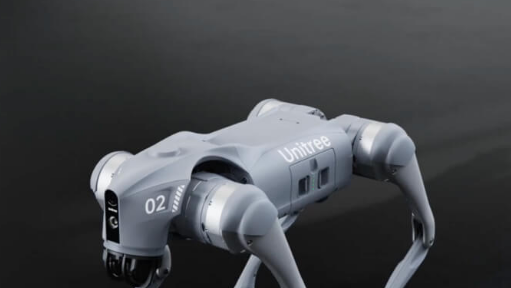
    Unitree Go2 quadruped robot official product shot
    Unitree Go2 quadruped robot official product shot

    Unitree Technology’s core competitiveness is not any single technology, but full-stack self-development capability:

    • Joint motors: Self-developed high torque-density motors, leading power-to-weight ratio in the industry
    • Reducers: Self-developed planetary reducers, replacing imported Harmonic Drive
    • Controllers: Self-developed motion controllers, supporting whole-body dynamics control
    • Perception systems: Self-developed LiDAR + vision fusion, cost only 1/3 of imported solutions
    • AI models: Self-developed motion control large models, Sim-to-Real migration success rate exceeding 95%

    This vertical integration capability allows Unitree’s product costs to be an order of magnitude lower than Boston Dynamics, while achieving 80%+ of the performance.

    Killer Feature #2: Consumer-Grade Humanoid Robots, Starting at 99,000 Yuan

    G1 humanoid robot priced at 99,000 yuan starting. What does this mean?

    • Boston Dynamics Atlas: ~$2 million (lease only)
    • Tesla Optimus: estimated $20,000 (not yet mass-produced)
    • Figure AI: ~$150,000 (enterprise-grade)
    • Unitree G1: 99,000 yuan (~$14,000)

    Unitree has brought humanoid robot prices to the “individual consumer affordable” range. 2025 G1 shipments exceeding 5,500 units prove real market demand exists.

    Killer Feature #3: IPO Raising 4.2 Billion Yuan, Where Is It Going?

    Unitree Technology is raising 4.202 billion yuan, invested in four major projects:

    1. Intelligent robot model R&D (1.5 billion): Embodied intelligence large models, Sim-to-Real platform
    2. Robot body R&D (1.2 billion): Next-generation joints, lightweight materials, energy systems
    3. New intelligent robot product development (800 million): Consumer-grade humanoid robots, service robots
    4. Intelligent robot manufacturing base (700 million): 100,000-unit annual capacity

    This means Unitree’s strategy for the next 3 years is clear: shifting from “selling robots” to “selling intelligence”—hardware is the carrier, AI models are the core moat.
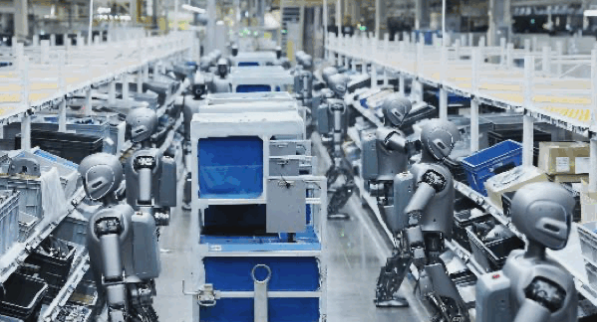
    Unitree robotics factory with production line interior
    Unitree robotics factory with production line interior

    Specs Comparison: Unitree vs Boston Dynamics vs Tesla vs Figure AI

    FeatureUnitree TechnologyBoston DynamicsTeslaFigure AI
    Founded201619922021 (robotics division)2022
    Product FormQuadruped + HumanoidHumanoid (Atlas)Humanoid (Optimus)Humanoid (Figure 01)
    Price99k-390k yuan$2M (lease)Estimated $20K (not mass-produced)$150K
    Shipments5,500 units (2025)Very few0Very few
    CommercializationProfitableLoss-makingNot startedLoss-making
    Core AdvantageCost + Mass productionTechnology leadershipBrand + CapitalStrong fundraising

    Unitree’s differentiation is razor-sharp: **it is the only humanoid robot company simultaneously satisfying “technology usable,” “price affordable,” and “mass production deliverable.”**

    Caveats to Note

    • Profit volatility: Q1 2026 non-GAAP net profit down 52.55% YoY, due to significant increases in R&D and sales expenses
    • Intensifying competition: 2025 humanoid robot revenue share 51.78%, but industry heat gradually cooling, market competition intensifying
    • Technology gap: Compared to Boston Dynamics, dynamic balance and complex terrain adaptation still lag
    • Valuation risk: Post-IPO valuation may be excessive, need to watch whether performance supports stock price
    • Overseas expansion: Currently mainly in China, European and American market expansion faces competition from Boston Dynamics, Tesla, etc.

    Who Should Watch the Unitree IPO?

    Highly Recommended:

    • Robotics industry investors (first pure robotics stock on A-shares)
    • AI/embodied intelligence researchers (Sim-to-Real technology leadership)
    • Manufacturing automation directors (99,000-yuan humanoid robot ROI calculable)
    • Education/research institutions (open-source ecosystem, developer-friendly)

    Consider Waiting:

    • Short-term speculators (post-IPO stock price volatility high)
    • Pure software investors (hardware manufacturing risk higher than software)
    • Overseas users (waiting for overseas sales channels to establish)
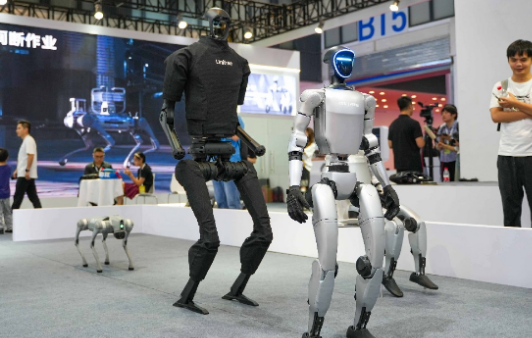
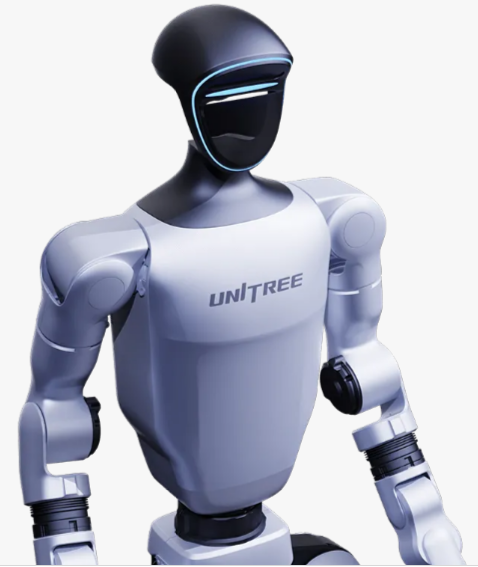
    Unitree G1 humanoid robot official promotional poster
    Unitree G1 humanoid robot official promotional poster

    Future Outlook: From “China’s First Robotics Stock” to “Global Robotics Platform”

    The significance of Unitree Technology’s IPO lies not only in raising 4.2 billion yuan, but in validating a business model:

    Consumer-grade humanoid robots can be profitable, mass-produced, and listed.

    This will bring to the entire industry:

    1. Capital confidence: Proving the robotics track is not a “money-burning bottomless pit”
    2. Supply chain maturity: Scale production driving upstream motor, reducer, sensor cost reductions
    3. Talent aggregation: Listed company brand attracting global robotics talent
    4. Ecosystem expansion: From industrial to home, from B2B to B2C

    If Unitree can build the planned 100,000-unit annual manufacturing base as scheduled, and further drive G1 prices below 50,000 yuan, humanoid robots may enter the “home service” scenario within 3-5 years—cleaning, cooking, companionship, care.

    This is not science fiction. This is what Unitree is doing.


    Rating: 9/10 (Industry Milestone)

    Bottom Line: Unitree’s IPO proves consumer humanoid robots can be a real business, not just a research project. For the global robotics industry, this is the moment when “possible” becomes “profitable.”
  • LeXiang M1 Robot Integrates Tencent OpenClaw AI Agent

    LeXiang M1 Robot Integrates Tencent OpenClaw AI Agent

    The Embodied AI Era Officially Begins

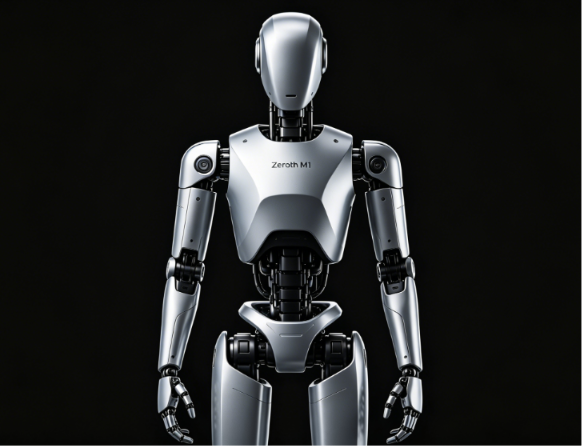
    On May 9, 2026, Suzhou LeXiang Intelligent Technology Co., Ltd. officially announced that its embodied intelligence brand Zeroth’s M1 humanoid robot has successfully integrated with Tencent’s OpenClaw ecosystem, becoming the world’s first mass-producible humanoid robot to connect to this platform.

    Embodied AI robot M1 official debut
    Embodied AI robot M1 official debut

    This milestone partnership marks AI Agent’s expansion from cloud and desktop applications to home physical terminals for the first time, completing the critical transition from “screen intelligence” to “embodied intelligence.”

    At the launch event, LeXiang Technology and Tencent Cloud jointly demonstrated the results of this collaboration. Users can now remotely send commands to the “OpenClaw Agent” through the QQ interface, with the AI agent controlling the M1 robot to perform actions such as walking, turning, and following its owner. This natural language-driven robot control approach redefines human-robot interaction in home scenarios.

    Technical Breakthrough: A Complete Loop from Cloud to Physical Terminals

    The core value of the M1 robot’s integration with the OpenClaw ecosystem lies in achieving a complete AI Agent loop. Traditionally, AI Agents primarily run in cloud or desktop environments, with users interacting with AI through screens. Through collaboration with Tencent OpenClaw, the M1 robot gains a direct connection between cloud-based AI brain and physical body.

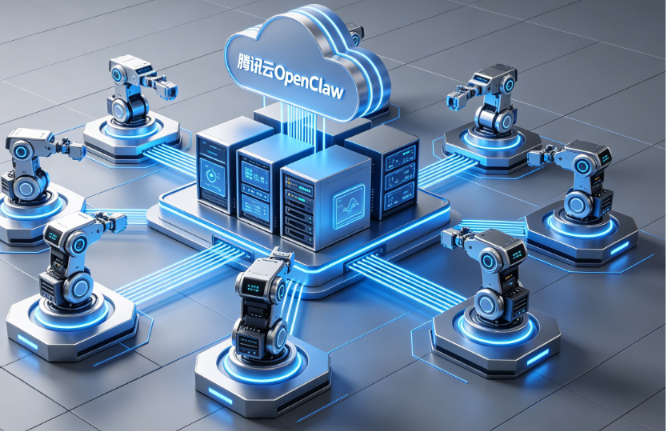
    Specifically, Tencent Cloud’s QClaw platform provides the M1 robot with powerful cloud inference capabilities. When users send commands via QQ, the cloud-based AI Agent parses user intent and directly controls the robot’s motion system to execute corresponding actions. This integrated “perception-decision-execution” capability is precisely the core characteristic of embodied intelligence.

    At the launch event, LeXiang Technology’s CEO stated: “We believe AI of the future should not be trapped in screens. The M1 robot gives AI its first real physical body, enabling it to interact in authentic three-dimensional space.” This philosophy clearly illustrates the essence of embodied intelligence—moving AI beyond the digital world into entities capable of perceiving environments and executing tasks.

    Cloud AI connects physical robot body
    Cloud AI connects physical robot body

    Commercial Landing: 10,000-Unit Target and Ecosystem Expansion

    Significantly, LeXiang Technology has reached an intention with Tencent for 10,000 hardware terminal integrations, demonstrating strong confidence in this collaborative direction. The M1 robot has successfully connected to OpenClaw and entered internal testing, with plans for official launch in late May and pre-sales starting in the first half of the year.

    This commercial rollout timeline reflects LeXiang Technology’s pragmatic approach to embodied intelligence deployment. Unlike many companies still in the concept stage, LeXiang Technology possesses mass production capabilities, making it an ideal hardware carrier for Tencent’s OpenClaw ecosystem. Through the 10,000-unit target, both parties aim to accumulate real-world scenario data through scaled applications, further optimizing user experience.

    For Tencent, choosing the M1 robot as OpenClaw ecosystem’s first physical terminal reflects its emphasis on home scenarios. As Tencent’s AI Agent platform expands from cloud and desktop into the physical world, humanoid robots serve as the ideal carrier for completing this expansion.

    Industry Significance: Filling the AI-Robot Integration Gap

    From an industry perspective, LeXiang Technology’s M1 robot integration with OpenClaw fills the “AI Agent + Household Robot” integration gap. In prior development, AI Agent and household robot sectors evolved separately, lacking effective intersection.

    On one hand, AI Agents primarily operated in virtual environments—capable of processing information and invoking tools, but lacking physical execution capabilities. On the other hand, traditional household robots, while possessing locomotion abilities, had limited intelligence, struggling to understand complex commands or enabling natural interaction. The emergence of the M1 robot precisely bridges this gap—it possesses locomotion capabilities while gaining powerful AI reasoning through OpenClaw.

    This integration represents a significant direction in AI development. Industry observers widely agree that with large model technology maturation, embodied intelligence will become the next major battlefield for AI commercialization. As a typical carrier of embodied intelligence, humanoid robots are transitioning from laboratories to households.

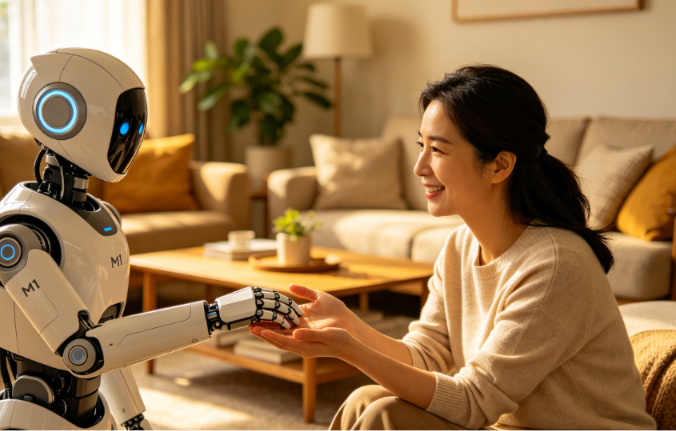
    Humanoid robot serves smart home
    Humanoid robot serves smart home

    Market Prospects: Scaling Path for Household Robots

    LeXiang Technology’s 10,000-unit target for the M1 robot, while seemingly conservative, reflects current challenges in embodied intelligence commercialization. Compared to mature consumer electronics like smartphones and smart speakers, household robots face higher technical barriers and user expectations.

    First is the price factor. Currently, mass-producible humanoid robots are generally priced in the tens of thousands of yuan range, exceeding most consumers’ budgets. LeXiang Technology needs to control costs while ensuring product performance to attract a broader user base.

    Second is scenario adaptation. Home environments are complex and variable; robots need to handle various unexpected situations. Making robots genuine helpful assistants in family life rather than expensive toys is a question all players must answer.

    Finally, privacy and security. Introducing robots into homes means extensive data collection and processing; users’ privacy protection concerns cannot be ignored. LeXiang Technology needs to establish trust at the technical architecture level, reassuring users about safety.

    Despite challenges, the market prospects for embodied intelligence remain widely optimistic. Analysts predict that by 2030, the global household robot market could exceed 100 billion dollars. As a pioneer in this track, LeXiang Technology’s collaboration with Tencent will accumulate valuable experience for industry development.

    Final Thoughts

    From screens to bodies, AI is gaining genuine “freedom of action.” LeXiang Technology’s M1 robot integration with Tencent OpenClaw marks the formal opening of the embodied intelligence era. When AI is no longer just text and sound, but can walk, turn, and interact with family members, the integration of intelligent technology and daily life enters an entirely new phase.

    What follows is whether the M1 robot’s official launch proceeds as scheduled and whether the 10,000-unit target is successfully achieved. These questions will be answered in the second half of the year. Regardless, May 9, 2026, has been inscribed in AI development history—the critical step from concept to reality for embodied intelligence, hereby established.

  • Tesla Optimus V3 Officially Enters Mass Production: The Commercialization Inflection Point Arrives

    2026 marks a landmark moment for the humanoid robot industry. On April 23, Tesla officially announced that the third-generation Optimus humanoid robot V3 will begin mass production at the California Fremont Factory in late July to August 2026. Notably, the production line undertaking this historic mission is not newly built but converted from the lines previously used for Tesla’s flagship models, the Model S and Model X.

    Tesla formally announced the discontinuation of Model S and Model X in January 2026. Official data shows these two classic models accounted for less than 3% of 2025 deliveries. Behind the discontinuation decision lies Musk’s strategic pivot toward robotics. The Fremont Factory space, once filled with aluminum body welding and falcon-wing door installation, is being transformed into an automated fortress producing one million robots annually.

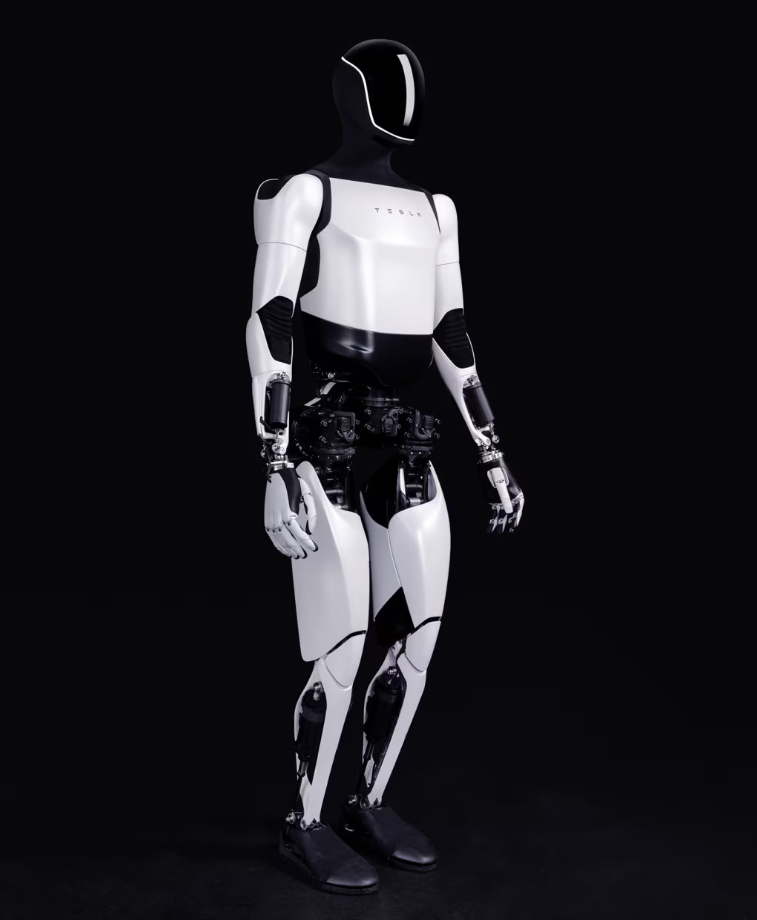
    Tesla Optimus humanoid robot display, showcasing its sleek and streamlined design
    Tesla Optimus humanoid robot display, showcasing its sleek and streamlined design

    Ambitions Behind Million-Unit Annual Capacity

    Tesla’s disclosed production plan reveals the tech giant’s grand ambitions. According to the plan, the converted Fremont Factory line has a designed annual capacity of one million humanoid robots. Simultaneously, Tesla is already deploying second-generation production lines at the Texas Super Factory, with a long-term target annual capacity of 10 million units.

    What does this number mean? The current global humanoid robot market annual shipments fall short of 10,000 units. Tesla’s production target exceeds the total market volume by over 100 times. Musk previously stated that he estimates the humanoid robot market valuation could reach $25 trillion by 2050, accounting for 80% of Tesla’s future total market value.

    However, industry insiders caution that initial production ramp-up will be “very slow.” The Optimus V3 contains over 10,000 unique components and represents an entirely new product category. The production line requires time to磨合. Musk candidly admitted that currently, they cannot predict the exact ramp-up speed.

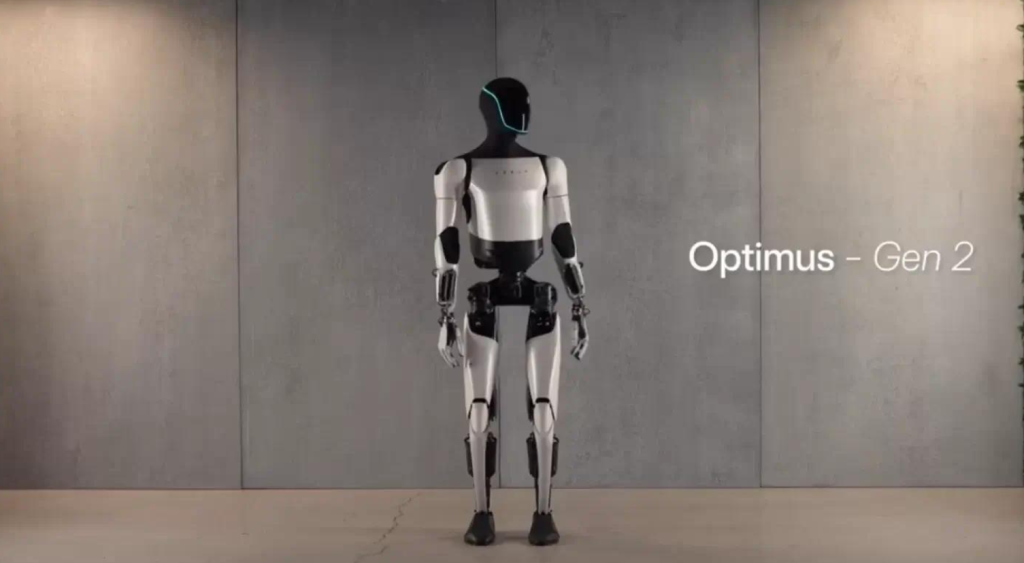
    Tesla Optimus robot with sci-fi aesthetic, presenting precision mechanical structure
    Tesla Optimus robot with sci-fi aesthetic, presenting precision mechanical structure

    From $55,000 to $20,000: The Cost Challenge Remains

    The biggest challenge for mass production lies in cost control. Currently, each Optimus unit costs approximately $55,000 to manufacture, while Tesla’s mass production target is to push costs below $20,000—a reduction exceeding 60%.

    The high cost stems from technical difficulties in core components. The Optimus’ dexterous hand has 22 degrees of freedom, requiring manipulation capabilities similar to human hands. This places extremely high demands on the transmission system. Additionally, the core component for 14 linear joints—planetary roller screws—requires precision errors controlled within ±6 micrometers. Currently, the number of suppliers globally capable of stable mass production of this component remains limited.

    Supply chain restructuring is Tesla’s core strategy for cost reduction. Unlike directly adopting the automotive supply chain, Tesla chose to redesign components from first principles. Disclosed information shows 70% of core components will come from domestic suppliers, including Tuopu Group (actuators), Sanhua Intelligent Control (rotary joints), and Green Harmonic (harmonic reducers), with costs 40% lower than Japanese and German products.

    Commercialization Path: Factories First, Homes Later

    In terms of application scenarios, Tesla has adopted a pragmatic “internal first, external later” strategy. The Optimus V3 plans to deliver to enterprise customers in the second half of 2026, then expand to external scenarios in 2027.

    Currently, Tesla is conducting internal testing at the Austin factory, having Optimus perform simple tasks like material handling to accumulate actual operational data. This “verify in our own factory first, then promote externally” approach closely mirrors Xiaomi’s robotics deployment path.

    Looking across the industry, humanoid robot commercialization has already shown divergence. Domestic companies like UBTECH and Zhiyuan Robotics have achieved substantive breakthroughs in industrial scenarios. Zhiyuan Robotics particularly achieved its 10,000th general embodied intelligence robot offline in March 2026. However, the consumer market still needs to wait for the explosion. The core obstacle remains the balance between cost and reliability—surveys show 78% of household users have a psychological price point below a few thousand yuan, while current high-end models still cost hundreds of thousands of yuan.

    Tesla Optimus robot with sci-fi aesthetic, presenting precision mechanical structure
    Tesla Optimus robot with sci-fi aesthetic, presenting precision mechanical structure

    Industry Impact and Future Outlook

    Tesla Optimus V3’s mass production holds benchmark significance for the entire humanoid robot industry. Led by Tesla, tech giants including Honda, Toyota, Baidu, and Xiaomi have intensified their layout, accelerating the global humanoid robot industry from technology verification toward commercial deployment.

    Nevertheless, challenges remain formidable. Beyond costs, the durability of core components is also a limiting factor. Current joint module service life is approximately one year, far below the 5+ years required for industrial applications. The dexterous hand longevity issue is equally prominent. Early adoption of full tendon-drive solutions revealed problems like insufficient grip strength and material wear.

    Despite this, the industry remains optimistic about humanoid robot prospects. Kaiyuan Securities pointed out that 2026 is the critical node for humanoid robots transitioning from “0 to 1.” As the supply chain matures and scale effects emerge, the humanoid robot cost curve will continue declining, and the commercialization process is expected to accelerate. For the entire manufacturing sector, the intelligent transformation brought by humanoid robots may be just beginning.

  • China’s Humanoid Robot Mass Production Breakthrough: How 15-Minute Production Line Changeover is Reshaping Industry Rules

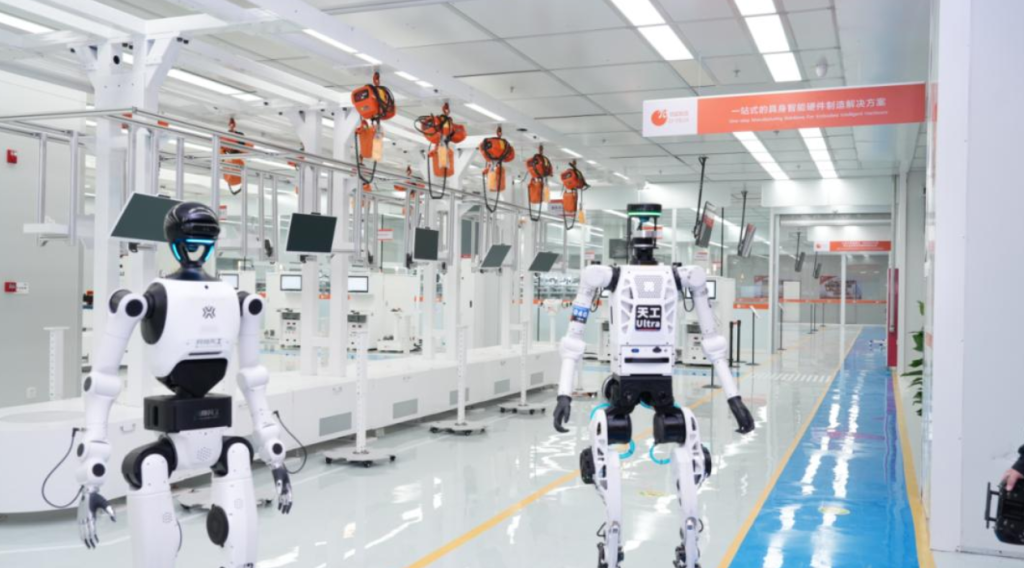
    A figure overlooking the Linkage Intelligent Manufacturing embodied intelligence factory
    A figure overlooking the Linkage Intelligent Manufacturing embodied intelligence factory

    On April 17, 2026, at the Beijing Yizhuang Xiaomi Intelligent Port, an ordinary-looking launch ceremony might have changed the fate of China’s humanoid robot industry.

    The first batch of humanoid robots officially rolled off the production line at Linkage Intelligent Manufacturing’s Beijing Embodied Intelligence Super Factory—including industry-leading models like Tiangong Ultra and Tiangong 3.0. As the first high-automation, high-compatibility, full-chain embodied intelligence super factory in the Beijing-Tianjin-Hebei region, it marks China’s humanoid robot industry’s official transition from “laboratory demonstrations” to “large-scale mass production.”

    Breaking the “Easy R&D, Difficult Mass Production” Pain Point

    The humanoid robot industry has an open secret: prototypes are easy to make, but mass production is extremely difficult.

    UbTech spent 13 years reaching “thousand-unit mass production”; Tesla’s Optimus, announced in 2022, has repeatedly delayed its mass production timeline. Why? Because humanoid robots are incredibly complex—dozens of joints need precise coordination, control systems must respond in real-time, and heat dissipation, battery life, and reliability are all major obstacles.

    More critically, traditional factories are often designed for single products. Switching robot models might require rebuilding entire production lines, making mass production costly and time-consuming.

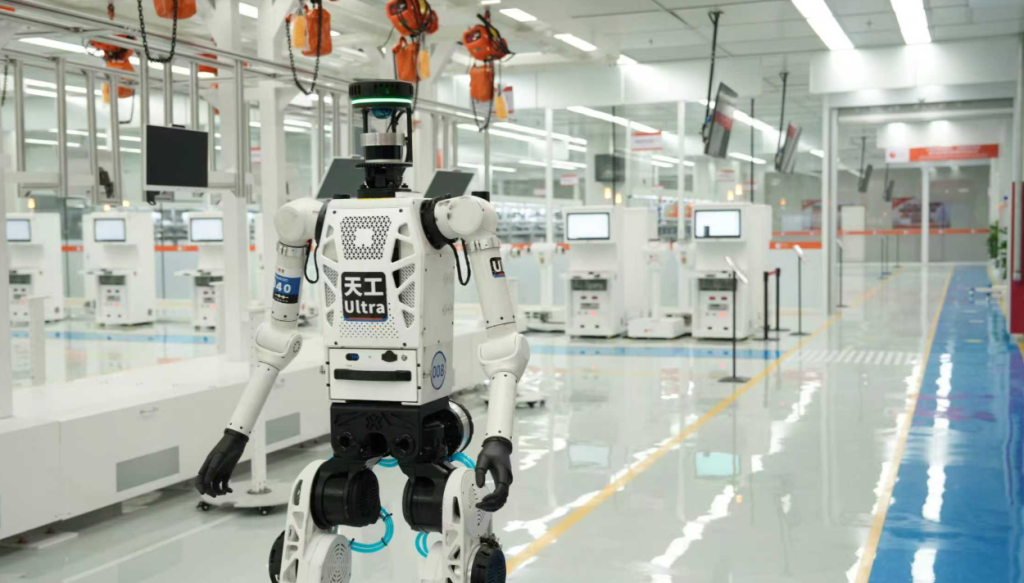
    The robot features a white body with black joints, a distinctive blue light ring on its head, and Tiangong Ultra markings on its chest. The fact
    The robot features a white body with black joints, a distinctive blue light ring on its head, and Tiangong Ultra markings on its chest. The fact

    Linkage Intelligent Manufacturing’s super factory changed this situation. Through three core capabilities, the factory achieved efficient and flexible mass manufacturing:

    • Multi-model mixed-line production: Joint line changeover time under 15 minutes—produce Tiangong Ultra today, switch to Tiangong 3.0 tomorrow
    • Full-chain manufacturing: Core components, joint modules, complete assembly, and testing verification—all under one roof
    • Flexible production: Testing platforms compatible with multi-protocol automatic docking, workstation adaptability for different sizes and configurations

    From “Single-Point Breakthrough” to “Industrial Ecosystem”

    In recent years, China’s humanoid robot industry showed “single-point breakthrough” characteristics—this company excels in motion control, that company leads in algorithms, another does components well. But these were isolated islands that couldn’t connect.

    Now, a complete industrial closed loop is forming:

    • Upstream: CATL supplies batteries and other core components
    • Midstream: Beijing Humanoid Robot Innovation Center focuses on R&D, Linkage Intelligent Manufacturing handles manufacturing
    • Downstream: Application scenarios like automotive manufacturing, consumer electronics, and power inspection continue expanding

    More importantly, this super factory doesn’t serve just one company—it opens to the entire industry. It aims to become the “public infrastructure” for the embodied intelligence industry, enabling all companies that want to make robots to access its mass production capabilities.

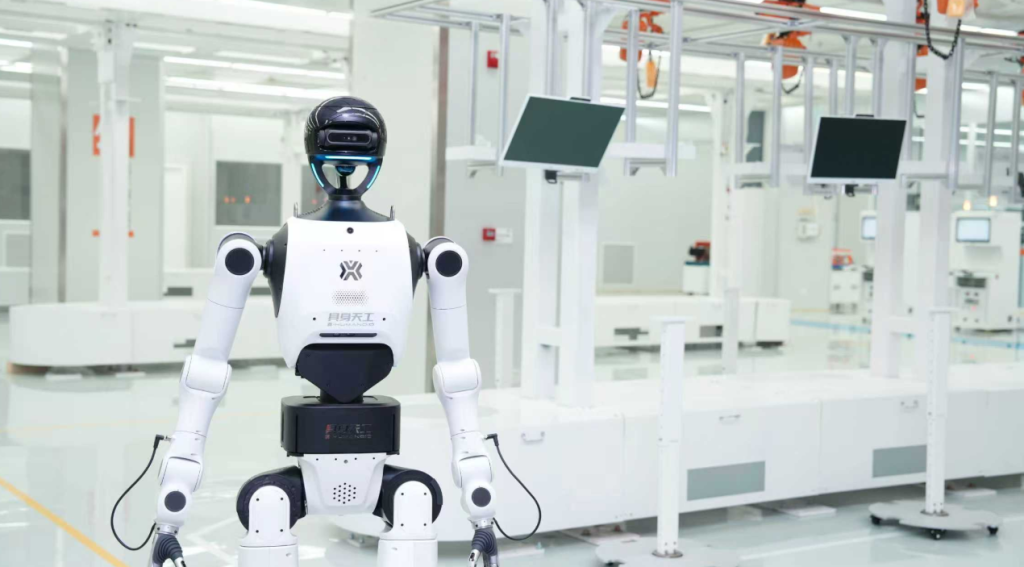
    The Tiangong embodied robot standing confidently in the factory setting, displaying its mechanical joints and blue lighting accents.
    The Tiangong embodied robot standing confidently in the factory setting, displaying its mechanical joints and blue lighting accents.

    Tiangong Ultra: From Half-Marathon Champion to Mass Production

    The first batch of models off the line represents the highest level of current humanoid robots.

    Tiangong Ultra is the world’s first humanoid robot to complete a half-marathon. In April 2025, it finished the 21.0975-kilometer race in 2 hours 40 minutes 42 seconds, winning the championship. This robot achieves a maximum running speed of 12km/h and can withstand 45N·s impulse, equivalent to a professional boxer’s powerful strike. It maintains stable movement across various complex terrains including slopes, stairs, grass, gravel, and sand, validating reliability in challenging environments.

    Tiangong 3.0, released in February 2026, goes even further. Standing approximately 1.69 meters tall and weighing 62 kilograms with 43 degrees of freedom, it can climb over approximately 1-meter-high obstacles with one hand, work flexibly on rough terrain, precisely dial knobs, and even perform complex movements like somersaults, table tennis bouncing, and dancing. As the industry’s first full-size humanoid robot achieving tactile interaction-based whole-body high-dynamic motion control, its operational precision is maintained at the millimeter level.

    Ten-Thousand-Unit Production Capacity: Aiming for the Global First Tier

    Look at the capacity plan: 10,000 units annually in 2026, 500,000 units annually by 2030.

    What does this mean? Tesla Optimus’ 2025 capacity plan was 10,000 units with a goal of reaching 100,000 units by 2027. Linkage Intelligent Manufacturing’s super factory plan is already targeting the global first tier.

    More notably, this factory has already received batch ODM orders from multiple North American AI and robotics companies. Foreign companies using Chinese factories to manufacture robots—this is not just a victory in production capacity, but a victory in the entire industry chain.

    The Super Factory’s Core Strengths

    What makes this super factory exceptional?

    Full-chain manufacturing capability: Traditional humanoid robot manufacturing is typically divided—one company makes joints, another assembles, a third tests. Coordination costs between these stages are high. But this super factory integrates everything: precision structural components, joint module manufacturing, complete robot assembly, multi-condition parallel testing, and 24-hour smart logistics. Parts go in one end; fully tested robots come out the other.

    High flexibility: Traditional factories might need to shut down for days to switch products. But this factory’s joint line requires only 15 minutes for changeover. Standardized interfaces, modular design, AI systems automatically adjusting production line configurations—small-batch, multi-variety, fast-iteration demands are perfectly met here.

    High automation: You can hardly see workers in this factory. Component handling, assembly, testing, and storage are all automated systems. Operating 24 hours a day without stopping not only improves efficiency but, more importantly, ensures product consistency. Every robot coming off the line has equally stable quality.

    A Chinese Sample of Industrial Ecosystem

    The Beijing Humanoid Robot Innovation Center, the R&D entity behind Tiangong robots, has an interesting shareholder structure:

    • Beijing Xiaomi Robot Technology Co., Ltd. (28.57%): Provides consumer hardware support and ecosystem collaboration
    • Beijing UbTech Intelligent Robot Co., Ltd. (28.57%): Leads full-stack robot technology R&D
    • Beijing Jingcheng Electromechanical Industry Investment Co., Ltd. (28.57%): Provides industrial-grade robot application support
    • Beijing Yizhuang Robot Technology Industry Development Co., Ltd. (14.29%): Provides policy support and scenario opening

    Xiaomi’s consumer electronics experience, UbTech’s robotics technology, Jingcheng Electromechanical’s manufacturing capabilities, and Yizhuang’s policy support—the four parties working together form a complete “technology + manufacturing + ecosystem” closed loop.

    CEO Xiong Youjun stated that technology open-sourcing is key to industry development. The structural drawings, software architecture, and electrical systems of “Tiangong 1.0” are fully open-sourced; the large-scale multi-configuration intelligent robot dataset and evaluation benchmark “RoboMIND” are completely open to external parties; the “HuiSi KaiWu” platform is also open to the industry. Only through technology open-sourcing and ecosystem sharing can the entire industry progress rapidly.

    From “Can Dance” to “Can Work”

    From Tiangong 1.0 LITE’s release in April 2024, to Tiangong Ultra’s half-marathon championship in April 2025, to the super factory’s production launch in April 2026—in less than two years, Tiangong robots completed the evolution from “learning to walk” to “walking briskly.”

    When tens of thousands of humanoid robots roll off this production line, when more automotive factories, logistics warehouses, and power inspection scenarios use these robots, when robot costs drop to levels affordable for ordinary enterprises—

    Then, the humanoid robot industry will truly usher in its own “iPhone moment.”