Category: AI Robot

AI robots are intelligent systems that integrate artificial intelligence and robotics technology, with the ability to perceive the environment, make autonomous decisions, and perform tasks.

  • Faraday Future FX Navi Review: Quadruped Robot Dog for Education

    Faraday Future FX Navi Review: Quadruped Robot Dog for Education

    One-sentence verdict: If the “phone as brain” cost advantage and 9-level curriculum depth can withstand real classroom testing, the FX Navi may be the most cost-effective entry ticket in consumer quadruped educational robots—provided parents are comfortable with ongoing content fees.
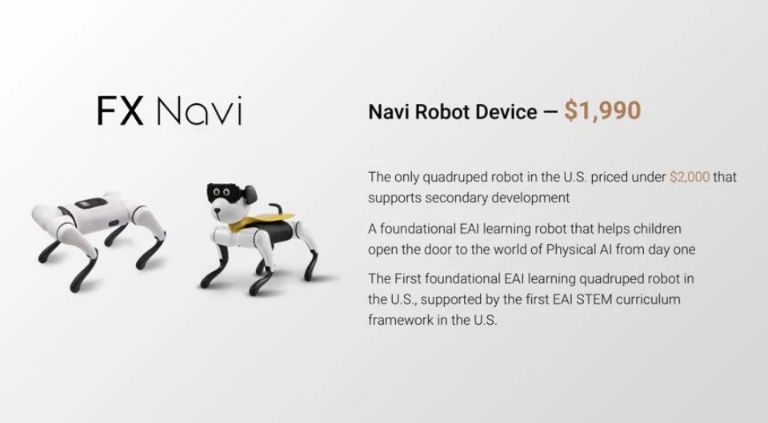
    Faraday Future FX Navi quadruped robot $1,990 poster
    Faraday Future FX Navi quadruped robot $1,990 posterv

    Introduction

    Educational robots have long occupied an awkward market position. Industrial-grade quadruped platforms like Boston Dynamics Spot cost $75,000, putting them out of reach for schools and families. Low-end programming toys like Sony toio are affordable but cannot deliver real robot interaction experiences. Faraday Future’s FX Navi attempts to break this deadlock—packing quadruped locomotion, STEM curriculum, and secondary development capabilities into a $1,990 base package.

    The FX Navi launched for immediate purchase on June 17, 2026, targeting families and schools with technology education needs. It features 12 joint motors, uses iOS/Android phones as the computing “brain,” includes a 9-level EAI STEM curriculum (annual fee $490), and offers a $390 permanent enhancement pack unlocking secondary development capabilities.


    Product Overview

    The FX Navi is Faraday Future’s first consumer-facing educational robot, and Jia Yueting’s latest attempt to cross over from electric vehicles to robotics. In stark contrast to the FF 91’s production struggles, the FX Navi chose a more pragmatic path: avoiding autonomous driving-level complexity to focus on “affordable embodied intelligence education.”

    The core design trade-off is “phone as brain”: the robot dog body handles only mechanical execution and sensor acquisition, while computation and AI processing are entirely offloaded to the user’s iOS or Android phone. This architecture significantly reduces base hardware costs (no need for built-in high-performance processors) while leveraging devices users already own. Twelve joint motors enable basic locomotion—walking, turning, sitting, standing, and simple obstacle avoidance.

    For battery life, the FX Navi includes a rechargeable battery delivering approximately 2 hours per charge, with support for use-while-charging. The lightweight plastic body keeps total weight under 3 kg, making it easy for children to carry and store.


    Technical Specifications and Curriculum

    The FX Navi offers a 9-level EAI STEM curriculum covering a complete learning path from kindergarten through high school:

    LevelThemeCore ContentAge Range
    Level 1-2Motion Control BasicsForward, backward, turning, speed adjustment5-7 years
    Level 3-4Sensor CognitionDistance detection, sound recognition, light sensing8-10 years
    Level 5-6Programming LogicConditional judgment, loop structures, event triggers11-13 years
    Level 7-8AI Algorithm IntroductionImage recognition, voice commands, path planning14-16 years
    Level 9Comprehensive ProjectSelf-designed tasks, team collaboration competitions17+ years

    The annual curriculum fee of $490 includes video tutorials, project assignments, and online Q&A. The $390 permanent enhancement pack unlocks secondary development capabilities: modifying walking algorithms, adding custom sensors, and integrating third-party AI services.
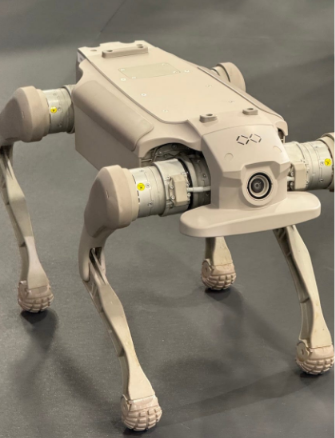
    FX Navi robot dog joint motors close-up
    FX Navi robot dog joint motors close-up

    The intelligence of this curriculum design lies in transforming “playing with robots” into “learning engineering.” Each level has clear skill objectives and quantifiable learning outcomes, allowing parents to track their children’s progress rather than buying a toy that gathers dust.


    “Phone as Brain”: Beyond Cost Cutting

    The FX Navi’s “phone as brain” design is not merely a cost compromise but an expression of educational philosophy.

    Traditional educational robots like LEGO Mindstorms suffer from fixed hardware and closed functionality, with students quickly hitting ceilings. The FX Navi achieves a “hardware-standardized, software-infinitely-extensible” architecture by using the phone as the computing hub. Users’ phones upgrade annually, and the robot dog’s “intelligence” upgrades along with them—meaning the FX Navi won’t become obsolete two years after purchase.

    A deeper benefit is lowered secondary development barriers. Students can use familiar mobile app interfaces (rather than unfamiliar embedded systems) to program robot control, creating a gentler learning curve. Support for Python and JavaScript allows advanced students to directly call mainstream AI frameworks like TensorFlow Lite, enabling genuine machine learning projects.

    Yet risks exist equally: phone performance varies enormously, with budget models potentially unable to run complex AI inference smoothly; Bluetooth/Wi-Fi connection stability directly impacts classroom experience; parents may be unwilling to let children occupy phones for extended periods.


    Competitive Comparison

    FeatureFaraday Future FX NaviUnitree Go2 EduXiaomi CyberDog 2Sony toio
    Price$1,990 base~$1,400~$1,800~$280
    Curriculum9-level EAI STEMNoDeveloper docs onlyBasic programming
    Annual Fee$490NoneNoneNone
    QuadrupedSupportedSupportedSupportedNot supported
    Secondary Dev$390 unlockSupportedSupportedLimited
    Phone DependencyRequiredOptionalOptionalNot required
    Target Age5-17 years12+ years14+ years6-10 years

    The FX Navi’s pricing strategy is particularly interesting. At $1,990 base + $490 annual + $390 skill pack, three-year total cost reaches approximately $3,850. Against Unitree Go2 Edu ($1,400, no curriculum) and CyberDog 2 ($1,800, developer-oriented), the FX Navi costs more but offers a more complete educational. Against Sony toio ($280, basic programming), the FX Navi delivers real quadruped robot experience rather than wheeled toys.
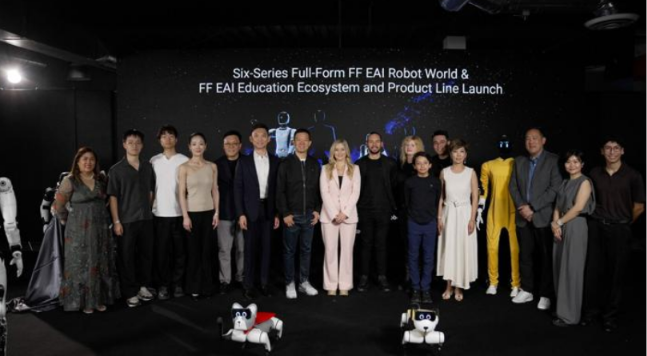
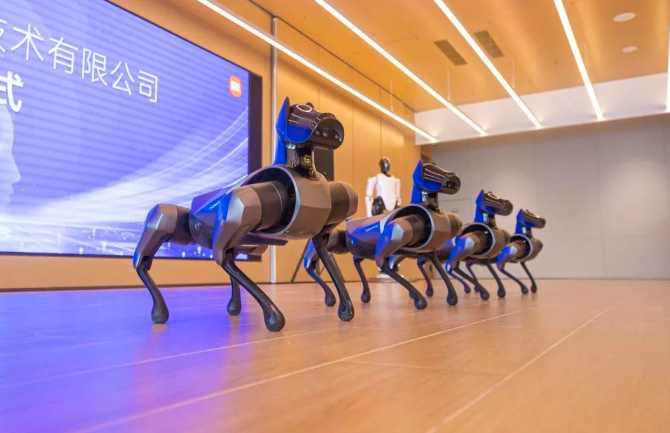
    Faraday Future FX Navi launch event with team
    Faraday Future FX Navi launch event with team

    Pros and Cons

    ProsCons
    $1,990 base lowers quadruped robot entry barrierMust depend on phone, budget models limit experience
    9-level curriculum provides systematic learning path$490 annual fee increases long-term cost
    “Phone as brain” enables continuous compute upgrades2-hour battery insufficient for full-day classes
    Secondary development cultivates advanced engineering thinkingBrand trust affected by FF 91 production struggles
    Lightweight design suits child operation and storagePlastic body durability remains to be validated

    Buying Guide

    Recommended for:

    • Middle-class families with tech education budgets: systematic curriculum + real robot experience proves more effective than fragmented online courses
    • Private schools and training institutions: needing standardized STEM teaching tools, with 9-level curriculum ready to embed into teaching systems
    • Students planning to enter robotics competitions: secondary development capabilities support custom projects with strong competition adaptability
    • Tech enthusiasts curious about the FF brand: wanting to experience Jia Yueting’s “new story” product

    Consider carefully if:

    • Budget-sensitive and unwilling to pay annual fees: three-year total cost nears $4,000, far exceeding one-time programming toys
    • Needing phone-independent operation: classroom phone management is complex, and occupies students’ personal devices
    • Pursuing industrial-grade precision and performance: the FX Navi is an educational tool, not a research platform, with limited 12-motor locomotion capability
    • Low trust in Faraday Future brand: FF 91 delivery history may affect purchase confidence

    FAQ

    Q: Does the FX Navi require phone connection to function? 

    A: Yes. The robot dog body handles mechanical execution; all computation and AI processing is completed through the mobile app. Offline mode only supports basic motion control.

    Q: Can the 9-level curriculum be purchased separately? 

    A: No. The curriculum is bundled with hardware sales; the $490 annual fee begins counting upon device activation.

    Q: What programming foundation is needed for secondary development? 

    A: Levels 7-8 require basic Python; Level 9 and the enhancement pack require familiarity with API calls and simple algorithms.

    Q: Does it support multi-robot collaboration? 

    A: Yes. Through mobile apps on the same Wi-Fi network, up to 3 FX Navi units can achieve formation collaboration.

    Q: Is the body waterproof? 

    A: No. Indoor dry environment use is recommended; avoid liquid splashing.


    Conclusion

    The Faraday Future FX Navi is not a perfect educational robot—battery life, phone dependency, and brand trust all have room for improvement. But it precisely targets a market gap: families and schools who want real quadruped robot experience without paying industrial-grade premiums; students who need systematic STEM learning rather than scattered programming toys.

    The “phone as brain” architecture transforms this device from “a cheaper robot dog” into “an upgradeable education platform.” Behind the $1,990 pricing lies a bet that content monetization can sustain hardware innovation.
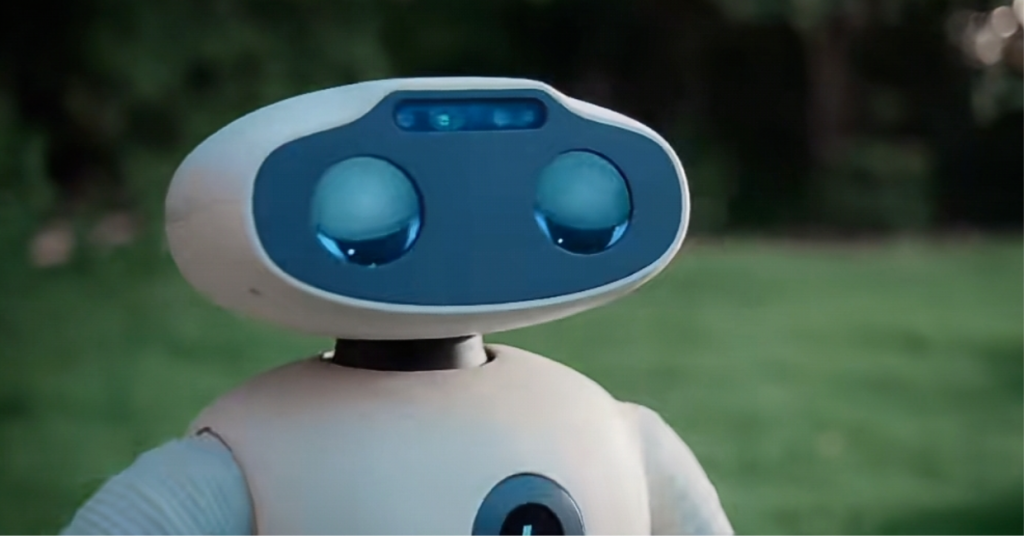
  • Luvbotics RUMI Review: Bipedal Home Robot with Emotional AI

    Luvbotics RUMI Review: Bipedal Home Robot with Emotional AI

    One-sentence verdict: If you’ve been waiting for a robot roommate that can walk, act spoiled, and remember your preferences, RUMI is probably the closest thing to that vision in 2026—provided its bipedal stability survives daily wear and tear.

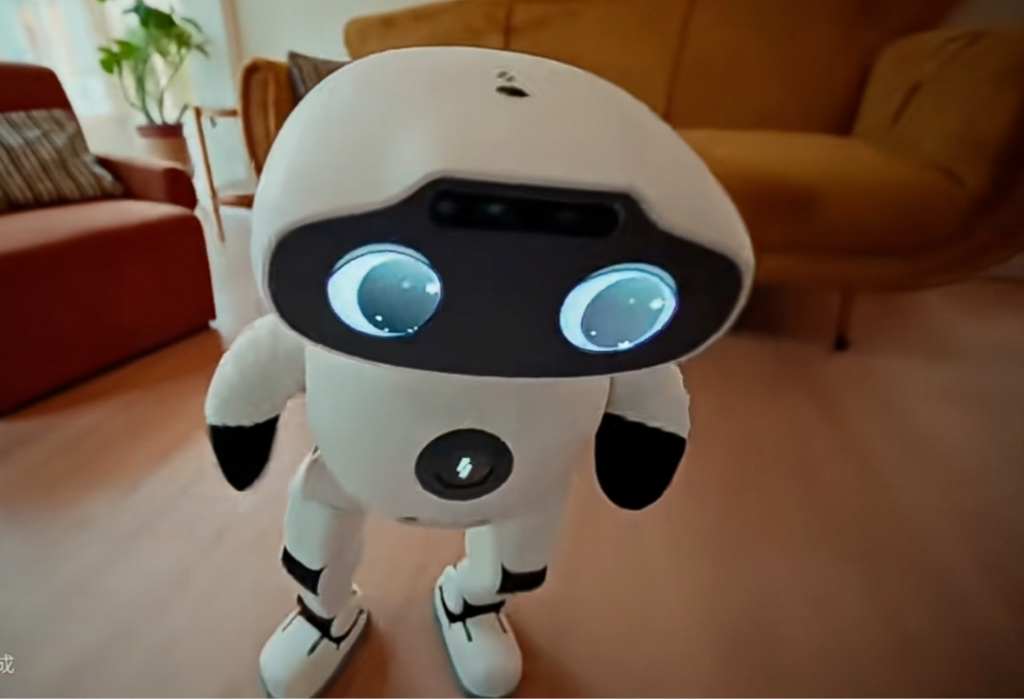
    Luvbotics RUMI emotive eyes close-up
    RUMI robot with glowing expressive eyes outdoors

    Introduction

    The home robot market has long faced a contradiction: wheeled solutions are mature and affordable, but always look like a vacuum cleaner with a screen attached; bipedal designs feel sci-fi premium, yet prices typically start at five figures. Luvbotics’ RUMI attempts to break this deadlock—a fully autonomous bipedal robot at the 6,000 RMB tier, not a crowdfunding concept, but a product that went on open sale at JD.com on June 12.

    This pricing is strategically interesting. It occupies the empty space between “premium toy” and “entry-level service robot,” targeting a specific user group: young people who want pet companionship but dread the hassle, solo dwellers needing emotional outlets, and tech early adopters. RUMI’s core selling point is not task execution, but “presence”—a walking, responsive, gradually familiarizing household member.


    Product Overview

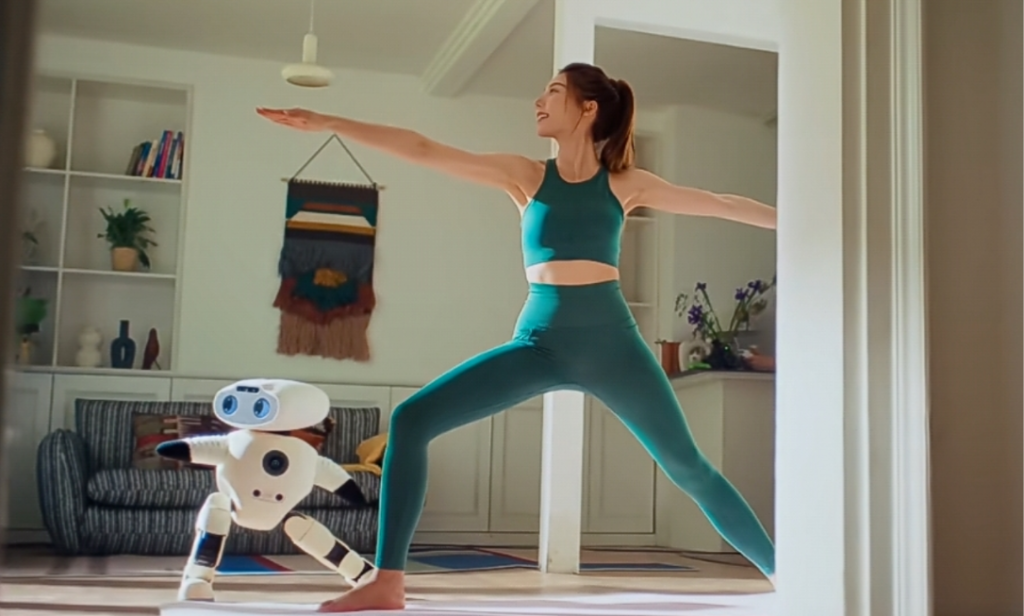
    Luvbotics RUMI standing in living room
    RUMI bipedal home robot in indoor setting

    RUMI’s physical form breaks the stereotype that “home robot = wheeled screen.” The fully autonomous bipedal architecture means it can cross thresholds, transition between carpet and flooring, even “stroll” around your living room. Ninety-five percent of the body is covered in skin-like soft material, with the abdomen maintaining a constant 35-40°C temperature. This thermal design is not a gimmick—it simulates the body warmth of pets or infants, reducing psychological distance between human and machine.

    The perception system comprises a 360° microphone array and binocular depth cameras, enabling full-body environmental awareness. This means RUMI is not “only listening when facing you,” but can respond to calls from any position in the room while understanding your direction and distance.

    Emotional interaction is RUMI’s core differentiator. The system employs a raising-style three-stage architecture: First Meeting (basic interaction), Exploration (unlocking new expressions and movements), and Symbiosis (deep personalized responses). With 50,000+ emotional expression combinations and family-exclusive voice generation, the theoretical result is “your RUMI behaves differently from your neighbor’s.” After each interaction, the AI dynamically adjusts personality parameters—it becomes more enthusiastic when praised, quieter when neglected.


    Technical Specifications and Functional Architecture

    ModuleTechnical ApproachKey Metrics
    LocomotionFully autonomous bipedal walkingNon-wheeled, threshold-crossing capable
    Shell MaterialSkin-like soft material95% coverage
    Haptic InteractionAbdominal thermal module35-40°C temperature maintenance
    Perception360° microphone + binocular depth camerasFull-body environmental awareness
    Emotional EngineRaising-style three-stage AIFirst Meeting → Exploration → Symbiosis
    ExpressionDynamic expressions + exclusive voice50,000+ emotional combinations
    Personality EvolutionInteraction feedback learningDynamic parameter adjustment per exchange

    The architecture’s trade-offs are clear: no resources wasted on “fetching packages” or “cleaning rooms,” but all-in on emotional companionship. Bipedal locomotion increases mobility freedom, soft materials reduce safety concerns, and raising-style AI extends user engagement cycles.

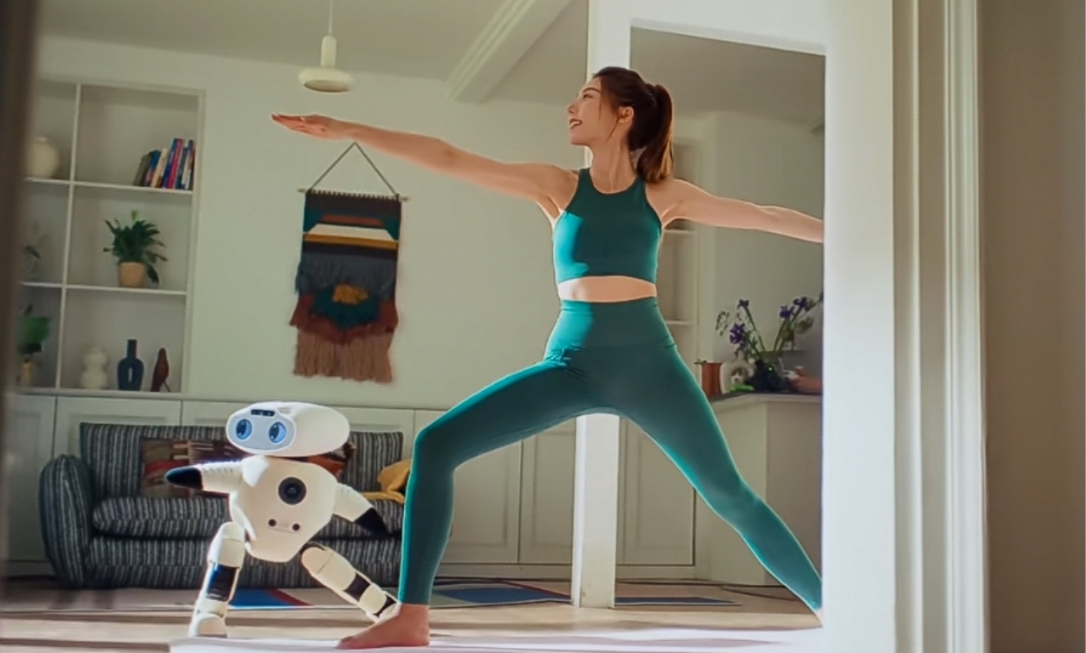
    Luvbotics RUMI mimicking yoga pose
    RUMI robot copying yoga stance with user

    Bipedal Locomotion: Romance vs. Reality

    RUMI’s choice of bipedal over wheeled design is a high-risk, high-reward technical decision. The advantages are obvious: obstacle traversal, more natural movement trajectories, and no need for specially planned flat paths when sharing space with humans. But bipedal stability, battery endurance, and noise control remain engineering challenges.

    What can the 6,000 RMB tier deliver? From official information, RUMI emphasizes “fully autonomous” rather than remote-controlled operation, implying underlying SLAM or visual navigation for autonomous path planning. However, the robustness of bipedal dynamic balance in real home environments—being bumped by pets, stepping on slippers, wet floors—requires extensive user feedback to validate.

    A pragmatic observation: if RUMI’s bipedal system can stay upright in 90% of daily scenarios, it already wins. Because competitors at the same price point cannot even lift their legs.


    Emotional Interaction: From “Voice Assistant” to “Raising Object”

    Existing home companion devices (smart speakers, screen-equipped robots) operate on a “you ask, I answer” model—the relationship is functional. RUMI’s raising-style design attempts to make the relationship emotional.

    The three-stage mechanism borrows from game raising logic: during First Meeting, RUMI behaves like a cautious new roommate; Exploration unlocks more personality facets; Symbiosis forms unique behavior patterns based on your household interaction history. The design’s intelligence lies in creating motivation for continued use—ignore it, and its growth stalls; invest time, and it becomes more “attuned” to you.

    50,000+ emotional expressions sounds like a marketing number, but the key is combination granularity. If RUMI can select different response combinations based on your tone, timing, and context (a lazy morning greeting vs. quiet late-night companionship), rather than randomly playing preset animations, this number has meaning.

    Family-exclusive voice generation is another differentiator. RUMI can learn and mimic specific voice profiles, theoretically replicating family members’ voices. Psychological acceptance of this feature varies—some find it heartwarming, others creepy. Luvbotics making it optional rather than default is a wise choice.


    Competitive Comparison

    FeatureLuvbotics RUMIAmazon AstroXiaomi CyberDogTesla Optimus (Concept)
    LocomotionBipedalWheeledQuadrupedBipedal (R&D)
    Price~$850~$1,450~$1,500Unpriced (est. $20,000+)
    Emotional AIRaising-style three-stageBasic voice + followCommand responseUnreleased
    Material95% soft coverageHard plasticMetal + plasticHard shell
    Thermal InteractionAbdominal 35-40°CNoneNoneNone
    Voice CustomizationFamily-exclusive generationStandard Alexa voiceNoneNone
    AvailabilityOpen saleLimited invite-onlyLimited releaseConcept stage

    RUMI’s competitive advantage is not in individual specs but in combined positioning: it is the only home robot at the $850 tier simultaneously offering bipedal locomotion, soft material, raising-style emotion, and voice customization. Astro and CyberDog lean more “tool-oriented”; Optimus remains far from consumer markets.


    Pros and Cons

    ProsCons
    Bipedal walking delivers real spatial presenceBipedal stability needs long-term validation
    Soft material + thermal design reduces psychological distanceBattery life and noise data not disclosed
    Raising-style AI creates sustained engagement motivationEmotional depth depends on AI training quality
    Family voice customization enhances personalization6,000 RMB remains non-impulse purchase for average families
    Open sale reduces waiting riskLow brand recognition, after-sales network to be built

    Buying Guide

    Recommended for:

    • Solo young professionals/white-collar workers: needing emotional companionship but restricted from pet ownership (renting, allergies, frequent travel)
    • Young families: RUMI serves as a “tech pet” to cultivate children’s AI literacy
    • Tech early adopters: wanting bipedal home robot experience without five-figure investment
    • Adult children of elderly solo dwellers: serving as a physical remote companionship warmer than cameras

    Consider carefully if:

    • You demand extreme robot stability: bipedal designs still carry fall risks on complex terrain
    • Budget-sensitive and indifferent to “raising” concepts: RUMI’s core value requires time investment to materialize
    • Living in extremely small spaces (<20㎡ studio): bipedal mobility advantages cannot be utilized
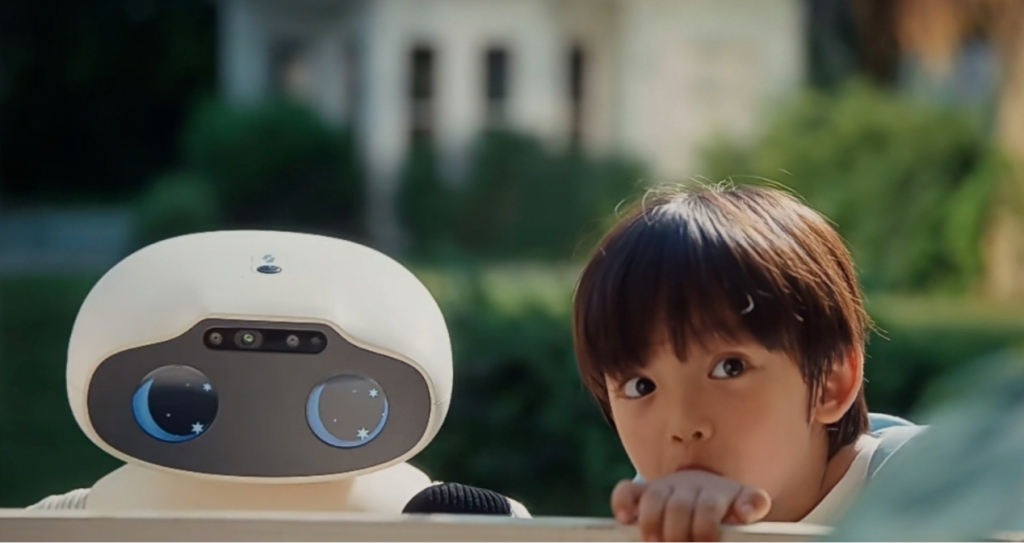
    Luvbotics RUMI with child outdoors
    RUMI companion robot bonding with child outside

    FAQ

    Q: Does RUMI require Wi-Fi?

    A: Network connection is needed for voice recognition and cloud emotional model updates, but local caching supports basic offline interaction.

    Q: How noisy is bipedal walking?

    A: Official decibel data is not published, but soft material and home positioning suggest noise control was a design priority.

    Q: Can it climb stairs?

    A: Current information does not mention stair capability; expected to support single-floor flat surfaces and threshold crossing only.

    Q: Will pets attack it?

    A: Soft material reduces collision damage, but initial supervised introduction between pets and RUMI is recommended.


    Conclusion

    Luvbotics RUMI is not a perfect home robot—its bipedal stability, battery endurance, and after-sales network all need time to validate. But it precisely targets an overlooked need: people want not just “obedient devices,” but “things with presence.”

    Bipedal locomotion lets it truly “walk into” your living space rather than being trapped on a charging dock. Soft material and thermal design make it feel unlike a machine. Raising-style AI makes it irreplaceable over time. This combination forms RUMI’s core value proposition: not a tool, but a roommate.

    The 6,000 RMB pricing pulls bipedal emotional robots from sci-fi display cases into ordinary family shopping carts. If RUMI can prove its reliability and emotional interaction depth in real home environments, it may become the landmark product signaling home robots’ evolution from “functional devices” to “emotional companions.”

    After all, when a robot remembers you hate cilantro, knows to stay quiet when you’re working late, and says goodnight in your family member’s voice—it has already transcended the realm of “smart” and entered the territory of “companionship.”

  • Xiaomi CyberOne Gen 2 Review

    Xiaomi CyberOne Gen 2 Review

    Introduction: Lei Jun’s Humanoid Robot Dream Finally Beyond PowerPoint

    Xiaomi CyberOne 2026 version standing render
    Xiaomi CyberOne 2026 version standing render

    On June 8, Xiaomi did something big—the official release of CyberOne Gen 2. Standing 170cm tall, walking at 3km/h, powered by the self-developed MiMo embodied large model, breaking through 40% success rate as the only competitor at CVPR 2026 real-machine manipulation track, securing dual championships at ICRA 2026 full-body control track. The live demo even showed it holding a Xiaomi 17T Pro to take photos—not staged, but real-machine operation.

    More critically: it has already started working at Xiaomi’s automotive factory. This is not a concept machine, not a laboratory toy, but a genuine “worker” that can tighten screws, move parts, and take quality inspection photos.

    Xiaomi’s journey in humanoid robotics, counting from the 2022 debut of CyberOne Gen 1 “Tie Da,” has spanned four years. Gen 1 was technology validation; Gen 2 is scenario deployment. Lei Jun says humanoid robots are the final piece of Xiaomi’s “human-car-home full ecosystem” puzzle—phones manage people, cars manage mobility, robots manage the home. Now, this piece is finally starting to fit.

    Product Overview: Evolution from “Tie Da” to “Worker”

    The core upgrade of CyberOne Gen 2 is not height or weight, but the “brain”—the MiMo embodied large model.

    What is MiMo? Xiaomi’s self-developed embodied intelligence large model. In February 2026, Xiaomi open-sourced the first-generation VLA large model Xiaomi-Robotics-0 (4.7 billion parameters, “brain + cerebellum” hybrid architecture), followed by the MiMo-V2.5 series in March. MiMo’s core capability bridges “language understanding” and “physical operation”: when you say “tighten that screw to the specified torque,” MiMo can decompose this into a physical action chain of “locate screw → grab tool → align with hole → rotate → detect torque → stop.”

    The Weight of CVPR 2026 Dual Championships: CVPR is the top conference in computer vision. The real-machine manipulation track requires robots to complete grasping, placing, and tool usage tasks in real environments. CyberOne Gen 2 was the only competitor to break through 40% success rate—meaning in complex, dynamic, unstructured real environments, it can stably complete nearly half of the operation tasks. By comparison, the 2025 champion’s success rate was still around 25%.

    ICRA 2026 Full-Body Control Dual Championships: ICRA is the top conference in robotics. The full-body control track tests a robot’s ability to walk, balance, and avoid obstacles while simultaneously performing upper-body operations. CyberOne Gen 2 can tighten screws while walking, carry boxes while avoiding obstacles—this “multi-task parallel” capability is the core requirement of industrial scenarios.

    Live Demo of Holding Phone for Photography: This action seems simple but is actually extremely difficult. Phones are smooth, fragile, irregular objects; grip strength requires precise control (too light and it drops, too heavy and it breaks), and photography requires stable posture. CyberOne Gen 2’s ability to complete this action demonstrates that its tactile perception and force control precision have reached commercial levels.

    Specifications: How Much Technology Fits in a 170cm Body

    SpecDetails
    Height170cm
    Walking Speed3km/h
    Drive ModelMiMo embodied large model
    AI ArchitectureVLA (Vision-Language-Action)
    Open-Source ModelXiaomi-Robotics-0 (4.7 billion parameters)
    Vision SystemMi-Sense 3.0 (3D spatial perception)
    Upper Body DoF21+
    HandDexterous hand (tactile sensors)
    Lower BodyBipedal walking
    BatteryUnannounced (Gen 1 reference ~3 hours)
    Weight~52kg (Gen 1 reference)
    Application ScenariosFactory assembly,quality inspection
    Deployment StatusAlready working at Xiaomi automotive factory

    Data source: Xiaomi official launch event, CVPR/ICRA 2026 papers, IT Home

    CyberOne Gen 2’s hardware platform continues the first generation’s design framework but with key upgrades:

    Upper Body Dexterous Hand: Gen 1’s hand was a simple gripper; Gen 2 upgrades to a multi-DoF dexterous hand with independent finger control and palm covered with tactile sensor arrays. This enables it to hold phones, tighten screws, and plug in interfaces—actions requiring “perceive → adjust → execute” closed loops rather than simple “open → close.”

    Mi-Sense 3.0 Vision System: Supports real-time 3D environment reconstruction with 10x precision improvement over Gen 1. In factory environments, it can identify part positions, poses, types, and even detect surface defects (scratches, stains, deformations).

    Whole-Body Control Algorithm: Based on MiMo large model’s hybrid training of reinforcement learning + imitation learning. First trained millions of times in simulation environments, then fine-tuned in real environments. The ICRA dual championships prove that this algorithm reaches internationally top-tier levels in dynamic balance and multi-task coordination.

    Deep Analysis: What Can Factory Deployment Actually Do?

    CyberOne Gen 2’s specific work content at Xiaomi’s automotive factory includes:

    Stud Insertion / Screw Tightening: At the die-casting workshop stud insertion station, continuously operating autonomously for 3 hours with bilateral simultaneous installation success rate reaching 90.2%, meeting the fastest 76-second production line cycle requirement. This data comes from March 2026 factory testing, harder-core than launch event demos.

    Part: Cooperating with AGVs (Automated Guided Vehicles), grabbing part boxes from shelves, to assembly stations, and placing them at designated positions. During, it needs to avoid workers and other equipment with dynamic path planning.

    Quality Inspection Photography: Holding a phone (or dedicated camera) to photograph assembled components, with the AI vision system detecting whether they are qualified. Unqualified products are automatically marked, notifying manual re-inspection.

    Simple Assembly: Aligning two parts, inserting them, and securing them. Such tasks require force control precision (preventing over-tightening or under-tightening) and visual guidance (aligning with holes).

    But these tasks share a common characteristic: structured, repetitive, with clear standards. CyberOne Gen 2 currently cannot handle unstructured tasks (such as “organize those messy parts”) or respond to emergencies (such as dropped parts, broken tools). Lei Jun himself admits that humanoid robots currently belong to the “apprentice” status, not yet truly becoming “formal workers.”

    Comparison: CyberOne Gen 2 vs Tesla Optimus vs Unitree G1 vs UBTECH Walker

    FeatureXiaomi CyberOne Gen 2Tesla Optimus Gen 2Unitree G1UBTECH Walker S1
    Height170cm173cm127cm172cm
    Weight~52kg~73kg35kg~76kg
    Walking Speed3km/h5km/h2m/s3.5km/h
    DoF21+22+4341
    AI ModelMiMo (self-developed)Tesla self-developedOpen-source/self-developedROSA 2.0
    Dexterous HandYes (tactile)Yes (11 DoF)OptionalYes (force control)
    Factory DeploymentAlready working (Xiaomi)Testing phaseResearch/educationAlready working (BYD, etc.)
    PriceUnannounced (target < $30,000)Unannounced (estimated $20,000-30,000)99,000 yuanUnannounced
    Open SourcePartial (VLA model)NoPartialNo
    PositioningIndustrial + ecosystemIndustrial + generalResearch + educationIndustrial + service

    CyberOne Gen 2’s differentiation is clear: ecosystem integration. It is not the strongest (Optimus), not the most flexible (G1), not the most mature (Walker), but it is the only humanoid robot destined from birth to become part of the “human-car-home ecosystem.”

    Imagine this scenario: you leave home in the morning, your Xiaomi phone automatically syncs your schedule to CyberOne; after you get in the car, navigation data syncs to CyberOne, which turns on the home AC in advance; before you get off work, CyberOne receives the car’s location and starts preparing dinner (simple operations); when you arrive home, CyberOne reports today’s household completion status and syncs inspection photos to your phone album.

    This “cross-device collaboration” capability is unique to Xiaomi’s ecosystem. Other manufacturers’ humanoid robots, no matter how powerful, are “islands.”

    Pros and Cons

    ProsCons
    MiMo large model driven, internationally top-tier AI capability (CVPR + ICRA dual championships)Factory tasks currently limited to structured, repetitive work
    Already genuinely deployed, not a laboratory conceptWeak handling of unstructured tasks and emergencies
    Human-car-home ecosystem integration, vast scenario imagination spaceBattery life and stability require long-term validation
    Dexterous hand + tactile sensors, strong delicate operation capabilityPrice unannounced, expected high initial cost
    Open-source VLA model, developer-friendly ecosystemDeeply bound to Xiaomi ecosystem, limited value for non-Xiaomi users
    Full-size 170cm, more natural human-robot collaboration52kg weight, fall safety risks require attention

    Who Should Buy

    Recommended for:

    • Deep Xiaomi ecosystem users expecting full-scenario “human-car-home” linkage
    • Industrial manufacturing enterprises needing structured assembly/quality inspection automation
    • Tech enthusiasts following humanoid robot technology frontiers
    • Investors/researchers focusing on embodied intelligence and VLA model development

    Not recommended for:

    • Ordinary household users (currently no consumer version, and functions not suitable for home use)
    • Non-Xiaomi ecosystem users (ecosystem integration advantages cannot be leveraged)
    • Users needing unstructured task processing (such as organizing clutter, caring for elderly)
    • Small businesses with limited budgets (expected high initial procurement costs)

    FAQ

    Q: Can I buy CyberOne Gen 2 for home use? A: Currently only面向 industrial scenarios and enterprise clients, with no consumer sales plans. Xiaomi’s long-term goal is to launch home service models priced at 20,000-30,000 yuan, but the timeline is unannounced.

    Q: Is the MiMo large model open-source? A: In February 2026, the first-generation VLA large model Xiaomi-Robotics-0 (4.7 billion parameters) was open-sourced, but whether the complete MiMo model running on CyberOne Gen 2 is open-source has not been officially clarified.

    Q: Is factory deployment propaganda or reality? A: According to March 2026 testing data, CyberOne operated continuously for 3 hours at Xiaomi’s automotive factory die-casting workshop, achieving 90.2% bilateral nut installation success rate, meeting the 76-second cycle. This is real deployment, but scale may still be limited (hundreds of units).

    Q: Who is stronger, CyberOne or Tesla Optimus? A: Each has advantages. Optimus leads in hardware performance (speed, strength), but CyberOne leads in AI models (CVPR/ICRA results) and ecosystem integration. Both are currently in industrial pilot phases, not yet mass-produced.

    Q: What is the battery life? A: Official Gen 2 battery data has not been announced. Referencing Gen 1’s approximately 3 hours, Gen 2 may improve through battery optimization and energy management, but industrial scenarios typically require battery swap or charging solutions.

    Conclusion

    The release of Xiaomi CyberOne Gen 2 marks the Chinese humanoid robot industry’s formal transition from “laboratory showmanship” to “factory.” The CVPR and ICRA dual championships are not the endpoint but the starting point—they prove MiMo large model’s reliability in real physical environments, but the 90.2% success rate also means the remaining 9.8% of errors need to be conquered.

    CyberOne Gen 2’s greatest value lies not in what it can do now, but in what it represents: the final piece of Xiaomi’s “human-car-home full ecosystem” puzzle. When phones, cars, and robots share the same AI brain (MiMo), the same data flow, and the same user profile, “intelligent living” transforms from marketing rhetoric into real experience.

    But this road is still long. Large-scale engineering application of humanoid robots faces prominent challenges including poor process stability, high hardware costs, and limited workstation quantities. Lei Jun promises that within 5 years humanoid robots will be deployed in Xiaomi factories—whether this promise is fulfilled depends on MiMo model iteration speed, supply chain cost decline curves, and most importantly: whether users are willing to pay for “a walking AI assistant.”

  • UBTECH U1 Humanoid Robot Review

    UBTECH U1 Humanoid Robot Review

    Introduction: From Factory to Living Room, the Humanoid Robot’s “Dimension Reduction” Journey

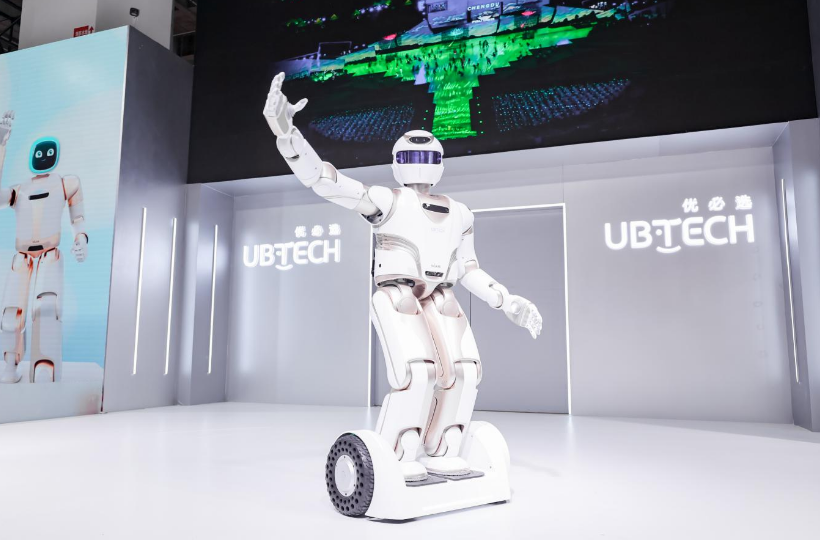
    UBTECH Walker humanoid robot exhibition display waving gesture on stage
    UBTECH Walker humanoid robot exhibition display

    On June 6, UBTECH did something big—released its first consumer-grade full-size ultra-bionic humanoid robot, the U1 Series. Standing approximately 1.7 meters tall, with 41 high-performance servo joints, ROSA 2.0 operating system, multi-modal perception system, capable of chatting, dancing, accompanying children in learning, and caring for the elderly. Priced at 299,000 yuan.

    What does 299,000 yuan mean? The price of a Tesla Model 3, a down payment on a small apartment in a second-tier city, or three years’ salary for a senior nanny. UBTECH dares to set this price because they position the U1 not as a “toy” but as a “family member.”

    But the question is: can AI technology in 2026 truly make a 1.7-meter robot a qualified family member?

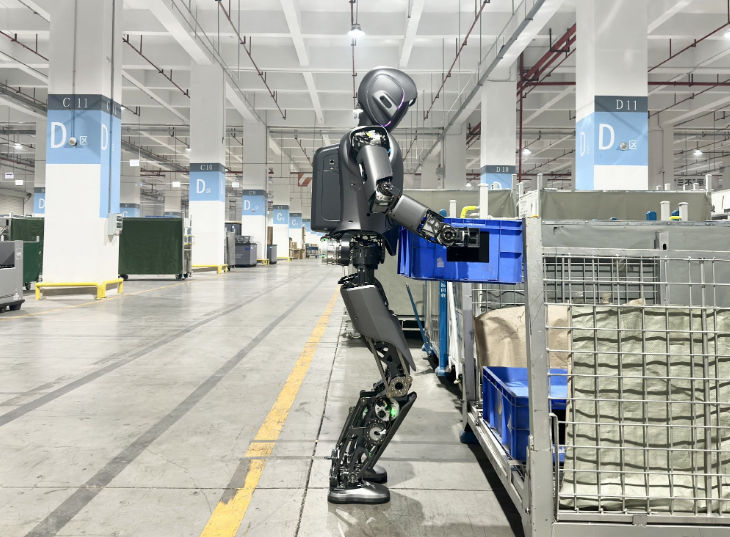
    UBTECH Walker S1 industrial humanoid robot factory training in automotive plant
    UBTECH Walker S1 industrial robot factory training

    Product Overview: UBTECH’s Consumer “UWORLD”

    Who is UBTECH? China’s humanoid robot first stock (09880.HK), founded in 2012, with Walker series industrial humanoid robots already undergoing training in BYD, Dongfeng Liuzhou, and FAW-Volkswagen automotive factories. On May 20, 2026, UBTECH launched its consumer brand “UWORLD,” with the U1 as the brand’s first product.

    U1’s core specifications:

    Height and Structure: Approximately 1.7 meters, close to average adult male height, with 41 high-performance servo joints (excluding dexterous hands), paired with multi-dimensional force sensing, multi-eye stereo vision, omnidirectional hearing, and inertial ranging perception systems. This joint count is top-tier among consumer-grade humanoid robots—Unitree G1 has 43 degrees of freedom but only stands 1.27 meters tall; Zhiyuan A Series has approximately 30 degrees of freedom.

    Operating System: ROSA 2.0, UBTECH’s self-developed robot operating system. Compared to version 1.0, 2.0 shows significant improvements in task planning, multi-modal fusion, and emotional computing. The U1 features a lightweight embodied large model, optimizing human-robot interaction experience for home unstructured scenarios.

    Interaction Capabilities: Voice dialogue, facial expression recognition, gesture understanding, and tactile feedback. The U1 can recognize family members’ emotional states and provide empathetic responses through voice, expressions, and movements. For example, when detecting a child’s low mood, it proactively tells stories and dances to cheer them up; when detecting an elderly person’s prolonged inactivity, it reminds them to get up and move around.

    Motion Capabilities: Bipedal walking, stair climbing, bending to pick up objects, pushing and pulling furniture. UBTECH’s motion control algorithms accumulated on the industrial Walker series have been transferred to the U1. But consumer scenarios have far higher safety requirements than factories—the U1’s joint torque control is gentler, and collision detection sensitivity is higher, avoiding injuries to people or damage to furniture in home environments.

    Battery and Charging: Official battery life data has not been announced, but referencing the industrial Walker S2’s 3-minute autonomous battery swap technology, the U1 may adopt similar swap or fast-charging solutions. In home scenarios, the U1 is expected to require charging 1-2 times daily.

    Specifications: The Confidence of Full-Stack Self-Development

    SpecDetails
    Height~1.7 meters
    WeightUnannounced (estimated 60-80kg)
    Servo Joints41 high-performance servo joints
    Perception SystemMulti-dimensional force + multi-eye stereo vision + omnidirectional hearing + inertial ranging
    Operating SystemROSA 2.0
    AI ModelLightweight embodied large model
    InteractionVoice + vision + touch + gesture
    MotionBipedal walking, stair climbing, bending to pick up
    ScenariosEmotional companionship, education and entertainment, home services
    Price299,000 yuan
    BrandUWORLD (UBTECH consumer brand)

    Data source: UBTECH official launch materials, Caixin, IT Home

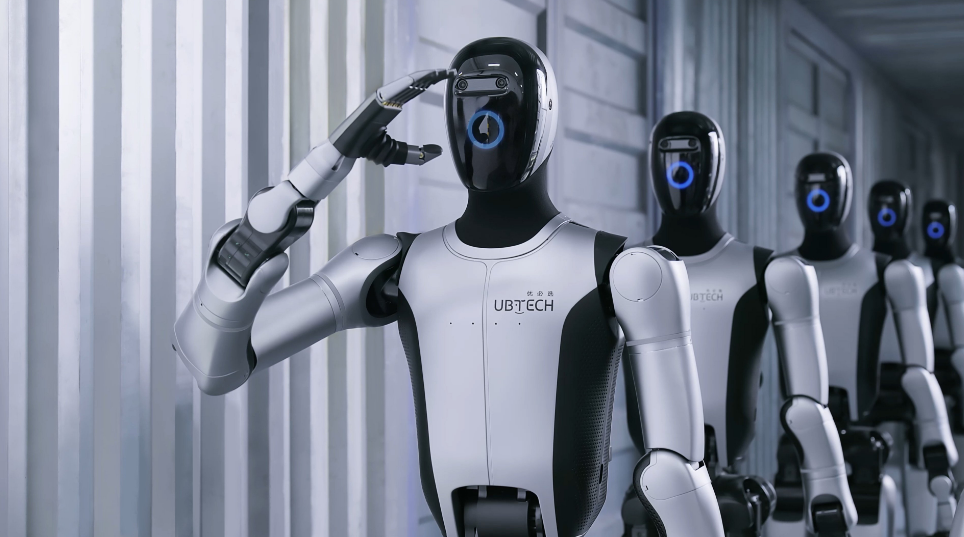
    UBTECH 2026 humanoid robot production line with multiple robots in corridor
    UBTECH 2026 humanoid robot production line

    Deep Analysis: What Does 299,000 Yuan for the U1 Actually Buy?

    The U1’s 299,000 yuan pricing sits in the “high-end entry” range among consumer-grade humanoid robots. Compared to competitors: Unitree G1 at 99,000 yuan (1.27m height, 35kg), Zhiyuan A Series at approximately 150,000-200,000 yuan, Songyan Dynamics Bumi at under 10,000 yuan (0.94m height, 12kg). The U1’s pricing is significantly higher than these “miniaturized” competitors, but the U1’s full-size (1.7m) and ultra-bionic design also provide completely different experience dimensions.

    Emotional Companionship Value: The U1’s core selling point is not “doing chores” but “companionship.” Its 1.7-meter height allows it to communicate with children at eye level and walk alongside elderly people shoulder-to-shoulder—this “equal posture” is something small robots cannot provide. The ultra-bionic design—realistic facial expressions, natural body movements, warm voice tones—makes the U1 more like a “person” than a “machine,” reducing users’ psychological distance.

    Education and Entertainment Value: The U1 can accompany children with homework, tell stories, practice English speaking, and learn programming. ROSA 2.0’s education module supports personalized learning path planning, adjusting content based on children’s age, interests, and learning progress. But a key question here is: can the U1’s educational content quality compete with professional educational robots (such as iFLYTEK AI learning machines) or online education platforms (such as Yuanfudao)?

    Home Service Value: The U1 can execute simple home service tasks—handing over objects, switching lights on/off, medication reminders, and companionship walks. But do not expect it to cook, clean, or do laundry—these complex operations require more advanced dexterous hands and stronger environmental understanding capabilities, which current technology levels cannot achieve. The U1’s home service value is more “auxiliary” than “replacement.”

    Social Prestige Value: The 299,000 yuan pricing itself carries “luxury” attributes. Owning a U1 is, to some extent, a symbol of technological strength and consumption capability. This social value cannot be ignored among high-end consumer groups—just like the first batch of people who bought Tesla Model S, they bought not only a car but also a “sense of the future.”

    But the U1 also faces severe challenges:

    Technology Maturity: Humanoid robots’ autonomous operation capabilities in home environments are currently at the “demonstration level” rather than the “practical level.” The U1 can walk, talk, and recognize emotions, but its robustness in complex home environments (cluttered floors, narrow spaces, unexpected situations) requires extensive real-world usage validation. Whether UBTECH’s experience accumulated in industrial scenarios can smoothly migrate to home scenarios is unknown.

    Safety and Privacy: A 1.7-meter robot moving around the home environment poses far higher safety risks than small robots. Is the U1’s collision detection, emergency braking, and anti-tipping mechanism sufficiently reliable? With cameras and microphones working 24/7, how is family privacy data protected? UBTECH needs to provide clear technical solutions and legal commitments.

    Maintenance Costs: With 41 servo joints, any damage requires professional repair. 299,000 yuan is the purchase price; subsequent maintenance, software upgrades, and content subscription fees may amount to tens of thousands of yuan annually. For ordinary families, this is a considerable expense.

    Substitutability Competition: 299,000 yuan can hire a full-time nanny for three years, or buy a high-end robot vacuum + an AI learning machine + a smart speaker + a tablet computer, with combined functional coverage possibly broader. The U1’s value lies in “integration” and “emotional connection,” but whether this value is sufficient to convince users to abandon the “functional combination” solution still requires market validation.

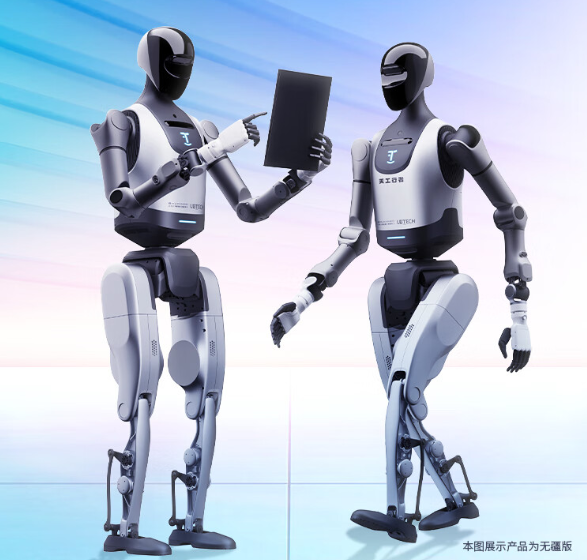
    UBTECH Tiangong Xingzhe humanoid robot product display with two versions comparison
    UBTECH Tiangong Xingzhe robot product display

    Comparison: U1 vs Unitree G1 vs Zhiyuan A Series

    FeatureUBTECH U1Unitree G1Zhiyuan A SeriesSongyan Bumi
    Height~1.7m1.27m~1.6m0.94m
    Weight~60-80kg (estimated)35kg~50kg12kg
    Degrees of Freedom4143~30~20
    Price299,000 yuan99,000 yuan150,000-200,000 yuan<10,000 yuan
    PositioningFamily companionship/educationResearch/education/light companionshipIndustrial/service/homeChildren’s companionship
    Operating SystemROSA 2.0Open-source/self-developedSelf-developedSelf-developed
    Interaction DepthEmotional multi-modalBasic voice/remote controlTask-orientedSimple voice
    MotionBipedal/stair climbingBipedal walkingBipedal walkingWheeled/bipedal
    Brand BackgroundIndustrial leader to consumerResearch-level startupIndustrial-level startupStartup newcomer
    Production CapacityEnd of 2026 announcementIn mass productionSmall-scale productionPre-order stage

    The U1’s differentiation is clear: full-size, ultra-bionic, emotional interaction, and industrial-grade technology transfer. Unitree G1’s advantage is cost-performance and research ecosystem, Zhiyuan A Series’ advantage is industrial scenario landing experience, and Songyan Bumi’s advantage is extremely low barrier. The U1 targets “budget-unconstrained, experience-focused, emotion-valuing” high-end family users.

    Pros and Cons

    ProsCons
    1.7m full-size, emotional interaction experience approaching human299,000 yuan pricing extremely high, ordinary families cannot afford
    41 servo joints, top-tier motion capability in industryHome scenario technology maturity to be verified
    UBTECH industrial-grade technology transfer, reliability guaranteedHigh maintenance costs, strong professional repair dependency
    ROSA 2.0 + embodied large model, AI capabilities continuously evolvingLimited complex household chore capabilities (cannot cook/clean)
    Ultra-bionic design, reducing user psychological distancePrivacy and safety issues require clear commitments
    Consumer brand “UWORLD” independently operatedProduction scale and delivery capacity to be confirmed

    Who Should Buy

    Recommended for:

    • High-net-worth families pursuing cutting-edge technology experiences with ample budgets
    • Families with children or elderly members needing emotional companionship and auxiliary care
    • Tech enthusiasts and early adopters willing to pay for the humanoid robot concept
    • Enterprise/institutional procurement for display, education, and research scenarios

    Not recommended for:

    • Ordinary families for whom 299,000 yuan far exceeds consumption budgets
    • Users needing robots to execute complex household chores (cooking, cleaning, laundry)
    • Users with extremely high technology maturity requirements unwilling to bear early product risks
    • Families with living spaces under 80 square meters where a 1.7-meter robot’s movement is restricted

    FAQ

    Q: Can the U1 do household chores?

    A: The U1 currently can execute simple auxiliary tasks such as handing over objects, switching devices, and reminders, but cannot execute complex household chores like cooking, cleaning, or laundry. These functions require more advanced dexterous hands and environmental understanding capabilities, expected to gradually achieve realization in 2027-2028.

    Q: What is the U1’s battery life?

    A: Official battery life data has not been announced. Referencing the industrial Walker S2’s 3-minute autonomous battery swap technology, the U1 may adopt swap or fast-charging solutions. In home scenarios, daily charging 1-2 times is expected.

    Q: Is the U1 safe? Could it injure children or elderly people?

    A: The U1’s joint torque control is gentler than the industrial version, and collision detection sensitivity is higher, but the 1.7m/60-80kg form factor still poses risks in home environments. Recommend first use under adult supervision, avoiding letting young children interact with the U1 alone.

    Q: Are subsequent maintenance costs high?

    A: Maintenance costs for 41 servo joints are not low. UBTECH has not announced specific maintenance plans, but referencing industrial robot maintenance costs, annual maintenance expenses may range from 10,000-30,000 yuan. Recommend confirming maintenance policies and parts pricing before purchase.

    Conclusion

    The release of UBTECH’s U1 marks China’s humanoid robot industry formally moving from “industrial experimentation” to “consumer landing.” The 299,000 yuan pricing is a “brave” signal in the 2026 humanoid robot market—UBTECH believes there are already enough high-end families willing to pay for an “AI family member.”

    But the U1’s success does not depend on how spectacular the launch demonstration is, but on its real performance after entering homes: can it give appropriate comfort when a child cries? Can it promptly alert when an elderly person falls? Can it walk stably in complex home environments without bumping into furniture? Can it maintain reliability over long-term use without frequent failures?

    Answers to these questions require revelation after first-batch user deliveries at the end of 2026. UBTECH has established clear production ramp-up plans—2026 industrial humanoid robot annual production capacity target of 5,000 units, expanding to 10,000 units in 2027. The U1’s consumer-grade production scale and delivery rhythm will directly impact market confidence.

    Humanoid robots entering homes is the “moon landing moment” of the AI era. The U1 may be the first “AI member” of Chinese families, or it may be another “concept ahead of product” expensive toy. The 299,000 yuan price buys not just a robot, but a vote for “future lifestyle.” Are you willing to cast this vote?