Category: AI for Work

AI Work Hardware refers to consumer-grade devices and peripherals—driven primarily by artificial intelligence—that deeply embed capabilities for perception, comprehension, reasoning, decision-making, and continuous learning into their core system architecture and operational logic. Designed for use in personal, home, and small-office environments, these tools serve to support daily workflows such as AI generation, creative production, office tasks, and learning.

  • Historic Milestone: Domestic AI Chips Surpass 50% Market Share in China, Huawei Ascend Leads Substitution

    On May 7, 2026, IDC and the China Semiconductor Industry Association jointly released their latest market report, revealing that domestic AI chips surpassed the 50% market share threshold in China for the first time in Q1 2026, reaching 52.3%. This milestone data not only sets a new historical record but also marks a critical turning point in China’s AI computing autonomy, ending the near-monopoly of foreign chips in the Chinese market.

    Four-Year Quintupling Growth: Historic Reversal from Following to Competing

    Over the past four years, domestic AI chips have achieved remarkable growth in market share. From less than 10% in 2022 to 41% in 2025 and 52.3% in Q1 2026, the market share has quintupled in just four years. Meanwhile, foreign giants have seen their market shares halved—NVIDIA’s share in China plummeted from a peak of 95% to 42.7%, while AMD maintains around 4%, marking the complete collapse of the monopoly pattern.
    Modern AI data center equipped with domestic chip infrastructure
    Modern AI data center equipped with domestic chip infrastructure

    In national strategic sectors such as government, finance, and energy, domestic chip procurement has exceeded 70%, becoming the main battlefield for domestic substitution. This breakthrough reflects not only market choice but also the comprehensive improvement of domestic chips in performance, reliability, and supply chain security.

    Tiered Competitive Landscape: Huawei Ascend Takes Commanding Lead

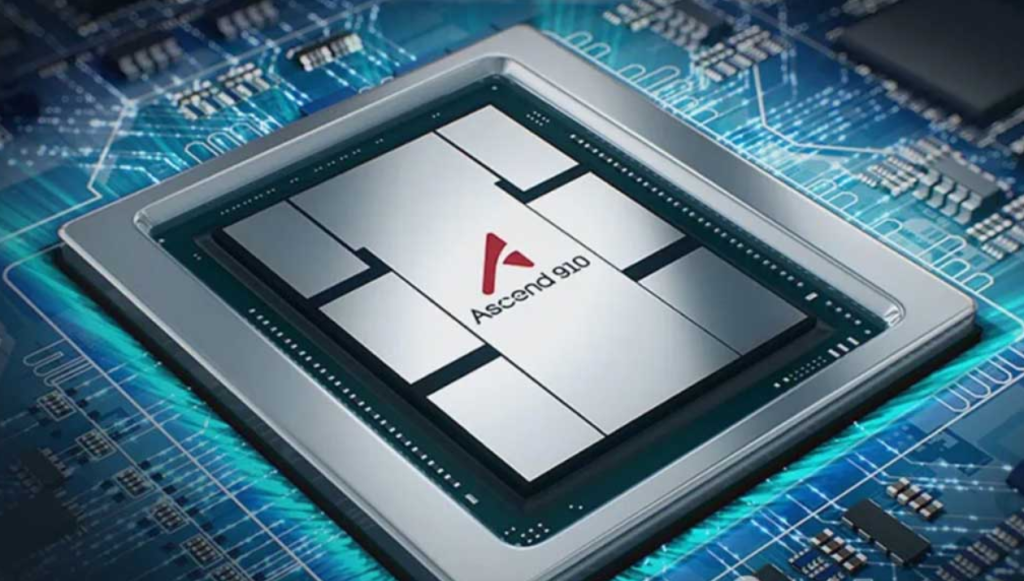
    The domestic AI chip camp has formed a clear tiered competitive landscape. The first tier is led by Huawei Ascend, which firmly holds the top position in China with 37% market share, accounting for nearly 70% of total domestic chip volume. The Ascend 950PR achieves 1.56 PFLOPS inference performance, 2.87 times that of NVIDIA’s China-exclusive H20, becoming the core choice for government and enterprise procurement.
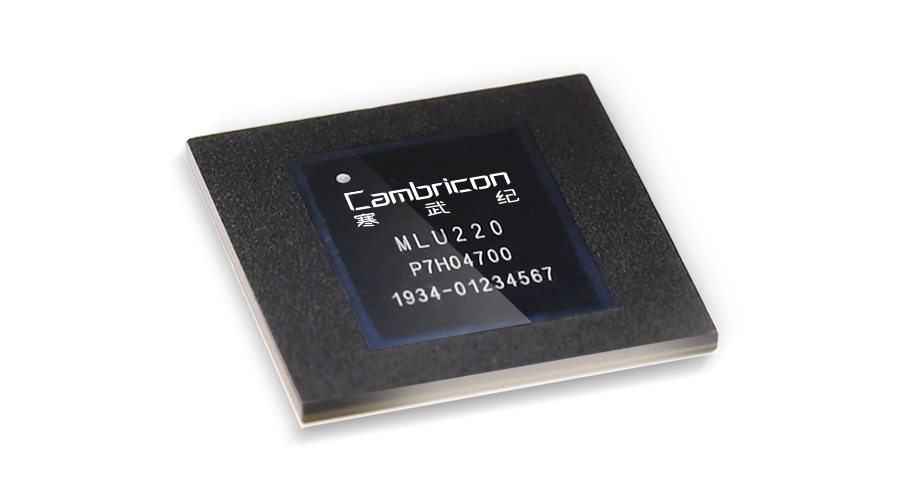
    Cambricon MLU series AI processor, a key player in domestic chip ecosystem
    Cambricon MLU series AI processor, a key player in domestic chip ecosystem

    The second tier includes Alibaba T-Head (6.6%), Cambricon (4.2%), and Hygon (3.5%), collectively accounting for 14.3% market share. Among them, Cambricon delivered particularly impressive Q1 performance, with revenue surging 159.56% YoY and achieving quarterly profitability for the first time, marking a crucial step in commercialization.

    Third-tier companies such as MetaX, Biren, and Moore Threads collectively hold approximately 1% market share but have significantly accelerated technology catching-up. Some products have already entered the supply chains of leading internet companies, demonstrating enormous market potential.

    Three Core Breakthroughs: Performance Lead + Ecosystem Maturity + Cost Advantage

    Behind the market share breakthrough of domestic AI chips lies the comprehensive improvement of three core competitiveness factors. First is the comprehensive lead in inference performance. Products such as Huawei Ascend 950PR and Cambricon Siyuan 370 demonstrate significant energy efficiency advantages, with single-card computing power increased by over 30%, perfectly adapting to high-concurrency inference scenarios.

    Second is the accelerated breaking of ecosystem barriers. Domestic frameworks such as MindSpore and Baidu PaddlePaddle have achieved deep synergy with chips. Leading large models like DeepSeek V4 have included domestic chips in their hardware verification lists, reducing end-to-end latency by 35%. The improved software-hardware synergy provides users with complete domestic solutions.
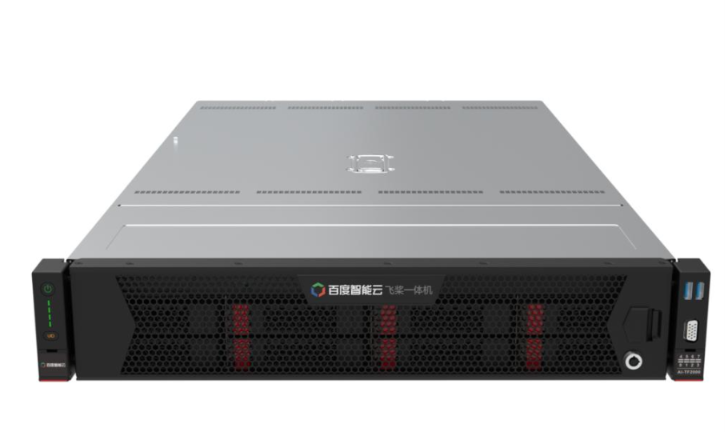
    Baidu PaddlePaddle AI integrated server, showcasing domestic software-hardware synergy
    Baidu PaddlePaddle AI integrated server, showcasing domestic software-hardware synergy

    In terms of cost advantage, domestic chips are 40%-60% cheaper than comparable imported products with stable supply, unaffected by overseas export controls. Against the backdrop of increasing global supply chain uncertainty, supply chain security has become a key consideration in enterprise procurement decisions.

    Strong Capital Market Reaction: Industry Chain Stocks Surge Collectively

    Following the announcement of domestic AI chips’ market share breakthrough, the capital market reacted swiftly. Huawei Ascend industry chain-related companies saw collective stock price increases, with Digital China, Talkweb Information, and Changshan Beiming hitting daily limit-ups. Ascend server shipments grew 280% YoY. Cambricon rose 12.3% in a single day, Hygon gained 8.7%, and Unigroup Guoxin increased 7.5%.

    Notably, AI infrastructure providers such as Inspur and Sugon, benefiting from the domestic chip substitution wave, have orders extending to the end of the year. This market performance reflects investor confidence in the long-term development of China’s domestic AI chip industry.

    Strategic Significance: Computing Autonomy Eliminates Technology Dependency

    The strategic significance of this historic breakthrough far exceeds the market share figure itself. First, computing autonomy in key sectors effectively prevents external technology blockade risks, safeguarding national digital economy security. Second, AI chip localization accelerates downstream industries such as large models, intelligent manufacturing, and autonomous driving, forming a complete ecosystem closed loop.

    In international competition, domestic chips have begun to emerge in global markets. Huawei Ascend has entered Southeast Asian and Middle Eastern markets, directly competing with NVIDIA. This marks an important step for China’s AI chip industry from following and competing to leading.

    Challenges and Outlook: High-End Training Chips Still Need Breakthroughs

    Despite the historic breakthrough, the domestic AI chip industry still faces challenges. High-end AI training chips hold only 15% market share, still lagging behind international top levels; some professional software adaptations are insufficient, and the developer ecosystem needs further growth; some core components still rely on imports, and full autonomy remains a long-term endeavor.

    However, with the National Integrated Circuit Industry Investment Fund Phase III leading DeepSeek investment, Huawei Ascend 950 series initiating generational transition, and leading companies achieving profitability one after another, China’s domestic AI chip industry is transitioning from R&D investment to commercial returns. In the next 2-3 years, there is a 60%-70% probability that “Ascend + DeepSeek” will form a closed domestic AI loop, with China poised to become the global second AI pole.

    The Kunpeng Ascend Developer Conference 2026 will be held in Beijing from May 22 to 23, focusing on Kunpeng and Ascend 950 series chip architectures. This major event will further promote domestic computing ecosystem construction and inject new momentum into the sustainable development of China’s AI chip industry.

  • Micron 245TB 6600 ION SSD Deep Review: Pioneering the Storage Revolution in the AI Era

    As AI training datasets expand exponentially, traditional storage solutions face unprecedented pressure. The capacity density and latency bottlenecks of hard disk drives (HDDs), combined with the per-drive capacity limits of traditional enterprise solid-state drives (SSDs), have become the “Achilles’ heel” constraining AI infrastructure expansion. Against this backdrop, Micron Technology’s 245TB 6600 ION SSD, launched in May 2026 with the world’s highest commercial capacity, directly targets this pain point.

    Modern data center infrastructure with high-density server racks optimized for AI workloads
    Modern data center infrastructure with high-density server racks optimized for AI workloads

    I. Capacity Revolution: From Terabyte to “Near-Petabyte” Scale

    For AI data lakes needing to store hundreds of petabytes of training data, storage density is the primary consideration. The Micron 6600 ION SSD achieves a staggering 245TB per drive through its proprietary G9 276-layer 3D QLC NAND flash technology. What does this number mean in practical terms?

    The EDSFF E3.L form factor version can deploy up to 176.9PB of storage capacity in a standard 36U rack, saving 82% of rack space compared to equivalent-capacity HDD deployments. In other words, storage capacity that originally required nearly 6 racks can now be achieved with just 1 rack, directly alleviating data center space constraints.

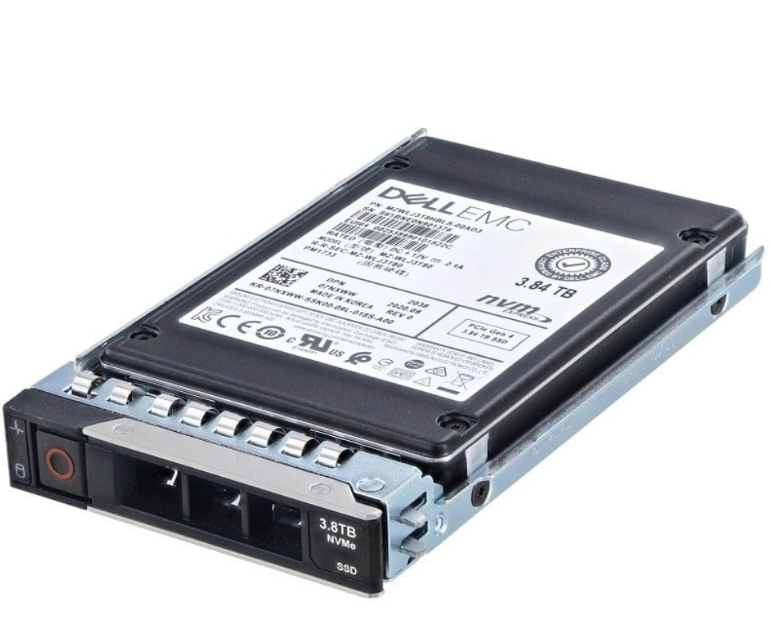
    Enterprise NVMe SSD showing the high-density design that enables 245TB in a single drive form factor
    Enterprise NVMe SSD showing the high-density design that enables 245TB in a single drive form factor

    Compared with current mainstream enterprise SSDs, Micron’s advantage is even more pronounced. Currently available mainstream enterprise SSDs generally top out at 30TB to 80TB capacities. Even flagship products like the Samsung PM1733 require several times more drive positions than the Micron solution when building hyperscale AI data lakes, leading to increased rack occupancy and cabling complexity.

    II. Performance Analysis: Tailored for AI Workloads

    AI training and inference are typically read-intensive workloads requiring storage systems with extremely high sequential read bandwidth and random read IOPS to feed data to GPUs quickly. The Micron 6600 ION SSD delivers impressive performance in this regard:

    • Sequential Read Bandwidth: Up to 13.7GB/s
    • Random Read IOPS: Reaching 1.78 million
    • Sequential Write Speed: 3GB/s (QLC characteristic, read-optimized positioning)
    • Random Write IOPS: 42,000

    Micron lab test data shows that in AI data preprocessing scenarios, its speed is 8.6 times faster than HDD systems, with latency reduced to 1/29th of HDDs. This means data preparation time before model training can be significantly shortened, and expensive GPU computing power no longer sits idle waiting for data.

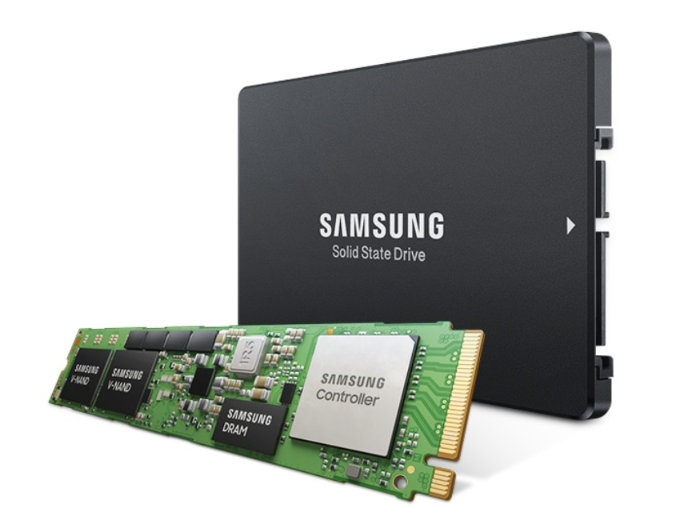
    Internal architecture of data center SSD showing V-NAND technology and controller design
    Internal architecture of data center SSD showing V-NAND technology and controller design

    In object storage scenarios, the Micron 6600 ION SSD’s advantages are equally significant. Throughput per watt reaches 435 times that of HDD solutions, time-to-first-byte response improves 96 times, and overall throughput increases 58 times. These numbers represent a qualitative leap in retrieval and loading efficiency for AI training datasets.

    III. Energy Efficiency Revolution: Long-Term Value from a Power Consumption Perspective

    As AI data center scales expand, power consumption has become a core operational cost and expansion bottleneck. Storage device energy efficiency is critically important. The Micron 6600 ION SSD’s peak power consumption is only 30W, translating to approximately 0.12W per TB.

    Compared with HDD solutions, this advantage is even more significant. One 245TB Micron SSD equals approximately eight 32TB HDDs in capacity, but the latter’s total power consumption would far exceed 30W. More importantly, the multi-drive parallelism and additional controllers required by HDDs to achieve comparable throughput performance would further push up overall system power consumption.

    At 1EB deployment scale, HDD solutions require 1.9 times more energy than Micron SSD solutions. This energy efficiency advantage translates into measurable sustainability benefits:

    • Annual Energy Savings: 921 MWh
    • Annual Carbon Reduction: 438 metric tons (equivalent to the annual absorption of over 9,000 mature trees)
    • HVAC Cooling Savings: Over 3.14 billion BTU per year

    IV. Technical Core: Breakthrough of 276-Layer QLC NAND

    The Micron 6600 ION SSD is built on G9 276-layer 3D QLC NAND, technology that is at least one generation ahead of competing QLC used in data center SSDs. Sumit Sadana, Micron Executive Vice President and Chief Business Officer, noted that Micron has now led the industry for three consecutive generations in introducing innovative, leading NAND technology.

    While QLC (4-bit/cell) flash memory does not match TLC in write performance, Micron’s controller and firmware optimization, combined with the 16KB Indirection Unit (IU) design, successfully balances capacity and performance. Larger IUs mean fewer DRAM mapping entries are required for a given capacity. While this may introduce some write amplification, this trade-off is perfectly appropriate for read-intensive AI workloads.

    Micron’s vertical integration strategy also deserves attention—from NAND flash and DRAM to controllers and firmware, all developed in-house. This end-to-end control ensures product consistency and optimization headroom, representing a core advantage that competitors find difficult to replicate.

    V. TCO Analysis: More Than Just Purchase Price

    Total Cost of Ownership (TCO) includes procurement costs, electricity costs, space leasing costs, and operational expenses. In this comprehensive dimension, the Micron 6600 ION SSD demonstrates unique value:

    Initial Procurement Cost: While the per-drive purchase price of QLC SSDs exceeds that of HDDs, considering the 245TB per drive capacity, its $/TB is actually competitive. More importantly, one drive replacing multiple drives means fewer controllers, cables, and switch ports—hidden cost savings that are often overlooked.

    Operational Cost Advantages:

    • Electricity Costs: Peak power consumption is only 50% of equivalent-capacity HDD solutions
    • Space Costs: 82% rack space savings directly reduce data center leasing expenses
    • Operational Costs: Fewer drive positions mean lower failure rates and maintenance complexity
    • Cooling Costs: Lower power consumption directly translates to reduced air conditioning loads

    Jeff Janukowicz, Research Vice President at IDC, points out: “Rapidly growing AI datasets are shifting storage economics from per-drive efficiency to rack-level efficiency. Operators need more usable capacity per rack while staying within strict power and cooling constraints. Micron’s 245TB drives deliver the density required to scale AI data pipelines without increasing data center footprints.”

    VI. Application Scenarios: Who Needs This Product Most?

    The Micron 6600 ION SSD’s precise positioning gives it irreplaceable value in the following scenarios:

    1. AI Data Lakes and Training Dataset Storage
    For organizations training trillion-parameter models, such as OpenAI and Google DeepMind, data loading speed directly determines training cycles. 8.6x faster data preprocessing means significantly shorter training times.

    2. Hyperscale Cloud Service Providers
    Cloud providers like AWS, Azure, and GCP face triple pressures of capacity, performance, and cost when building object storage services. The Micron 6600 ION’s rack-level density advantage makes it a strong candidate for replacing HDDs at warm and cold storage tiers.

    3. Content Delivery Networks (CDNs)
    CDN nodes need to respond quickly to user requests while storing massive media content. The 13.7GB/s sequential reads and 96x faster time-to-first-byte response perfectly align with CDN requirements.

    4. Enterprise Backup and Archiving
    As data volumes explode, enterprise backup and archiving systems are migrating from tape to disk. The 245TB per drive capacity significantly shortens backup windows and dramatically improves recovery speeds.

    VII. Market Background and Competitive Landscape

    The 2026 storage market is experiencing a rare supply-demand dynamic—both HDD and SSD markets face supply constraints simultaneously. On the HDD side, high supplier concentration (Seagate, Western Digital, Toshiba) limits capacity expansion, while demand for nearline HDDs for AI training datasets continues to push $/TB prices higher.

    On the SSD side, NAND supply is tight while the transition to higher-layer 3D NAND is underway. QLC NAND has moved from a cost-optimization tier to a strategic enabler for AI data lakes. The three major suppliers—Micron, Samsung, and SK hynix—all face strong demand for AI-optimized storage.

    Notably, Micron exited the consumer DRAM market in 2025 (closing the Crucial RAM business), focusing almost all production capacity on serving hyperscale customers and AI companies. This strategic transformation is fully embodied in the 6600 ION SSD.

    VIII. Challenges and Limitations

    Despite its clear advantages, the Micron 6600 ION SSD still faces some challenges:

    QLC Write Endurance: Pure 128KB sequential write endurance is 1.0 Drive Writes Per Day (DWPD), random write endurance is 0.3 DWPD at 16KB granularity and 0.075 DWPD at 4KB granularity. This means the product is better suited for read-intensive workloads and not ideal for high-write scenarios.

    Write Performance Compromise: The 3GB/s sequential writes and 42,000 random write IOPS lag compared to high-end TLC SSDs. But this is precisely the product’s positioning—designed specifically for read-optimized scenarios.

    Ecosystem Maturity: While the EDSFF E3.L form factor represents the future direction, server and storage system support still requires time to gain widespread adoption, with the U.2 form factor playing an important role during the transition period.

    IX. Conclusion: A New Foundation for AI Infrastructure

    Jeremy Werner, Micron Senior Vice President and General Manager of the Core Data Center Business Unit, summarizes the product’s significance precisely: “AI workloads are driving massive growth in shared data, continuing the shift of data center storage share from HDDs toward SSDs. With 245TB in a single SSD, the Micron 6600 ION makes solid state storage the clear choice for modern data centers.”

    The 245TB capacity breakthrough is more than just a numerical record—it represents a paradigm shift in storage architecture. It proves that high-capacity SSDs are no longer exclusive to high-end performance scenarios but can penetrate warm and even cold storage tiers, engaging in genuine economic competition with HDDs.

    For enterprises building next-generation AI infrastructure, the Micron 6600 ION SSD provides an opportunity to rethink storage architecture—shifting from “stacking more hardware” to “intelligently optimizing value per rack.” In an era where power and space have become scarce resources, this mindset shift may be more important than pure technological breakthroughs.

    As Travis Vigil, Dell Technologies Senior Vice President, puts it: “When you can fit significantly more storage into every rack, the math changes: less power, less floor space, less operational overhead.” This is the new storage math of the 245TB era.

  • China Mobile Launches World’s First AI-eSIM: A Game-Changer for Connected Devices

    On May 5, 2026, China Mobile dropped a bombshell. The telecom giant officially announced that the world’s first AI-eSIM product would debut at the 2026 Mobile Cloud Conference in Suzhou from May 7-9. This technological breakthrough not only signals the impending disappearance of physical SIM cards but heralds a future where every smart device will possess its own “AI brain.”

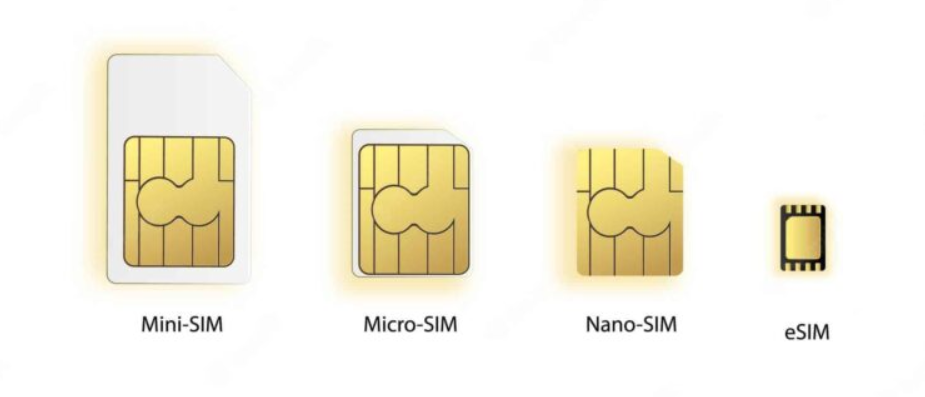
    SIM card evolution from traditional physical card to AI-eSIM intelligent chip.
    SIM card evolution from traditional physical card to AI-eSIM intelligent chip.

    From “Plastic Card” to “Intelligent Chip”

    Tracing the evolution of SIM cards, from the Full SIM of 1991 to today’s nanoSIM, changes have primarily focused on size reduction. The emergence of eSIM in 2016 eliminated the physical card but remained essentially a “networking tool”—all intelligent operations still required relaying through smartphone apps or cloud servers.

    AI-eSIM is entirely different. It deeply integrates four major functions—communication connectivity, AI large models, security capabilities, and digital identity—directly into a millimeter-scale chip.

    What does this mean? Devices with AI-eSIM are “intelligent the moment they connect.” Without expensive local computing chips or smartphone relaying, devices can now “think” and “judge” independently.

    Four Core Capabilities Reshaping Smart Experiences

    China Mobile has defined four core capabilities for AI-eSIM, each directly addressing pain points in current smart devices.

    Intelligent Brain is the standout feature. The built-in intelligent invocation framework enables real-time scheduling of China Mobile’s self-developed JiuTian AI large model, reducing interaction latency by over 60% compared to traditional solutions. Smartwatches respond instantly to analyze health data or translate languages without waiting for smartphone processing.

    Hardware-level Security Foundation solves the security anxiety of the IoT era. Security capabilities are “soldered” into the chip’s core, giving each device a unique “digital ID” with immutable identity information. Whether smart cars, drones, or industrial robots, all gain carrier-grade security guarantees.

    End-to-Cloud Integrated Digital Account brings unprecedented convenience. When users switch phones or toys, personalized settings and AI memory inherit with one click, no reconfiguration needed. According to official sources, AI-eSIM is planned for small-scale commercial use in 2026, with full rollout by 2027.

    Five Scenarios Transforming Daily Life

    AI-eSIM deployment will fundamentally change smart experiences across multiple domains.

    In smart wearables, watches and glasses will completely break free from smartphone tethering. With standalone connectivity, users heading out for a run need only wear a smartwatch to handle calls, payments, navigation, health monitoring and more—all independently.

    Smart home will also see genuine evolution. AI-eSIM-equipped air conditioners automatically adjust temperature based on user body temperature, refrigerators monitor food freshness and auto-order supplies, and robot vacuums independently plan routes and avoid obstacles. Whole-home intelligence no longer requires complex gateway configuration or smartphone coordination.

    For the children’s toy market, AI-eSIM brings revolutionary change. Smart toys equipped with this technology can naturally converse with children without smartphone dependency—telling stories, teaching English, answering questions—all independently. This protects children’s eyesight while freeing parents’ hands.

    In connected vehicles, AI-eSIM enables autonomous cars to intelligently schedule optimal networks, maintaining stable connectivity even at highway speeds or in remote areas. In-vehicle voice assistants’ response time will improve to “instant,” making driving safer.

    Fundamental Transformation of Operator Role

    The deeper significance lies in AI-eSIM driving operators’ transformation from “traffic管道” to “intelligent service provider.”

    Previously, users purchased call time and data packages from operators. In the future, users will purchase integrated “communication + AI + security + identity” smart services. This shift will redefine operators’ position in the industry chain.

    According to industry forecasts, by 2027 AI-eSIM will cover massive scenarios including smart wearables, smart home, connected vehicles, and industrial sensors. The long-anticipated vision of “Internet of Everything” finally has solid technical foundation.

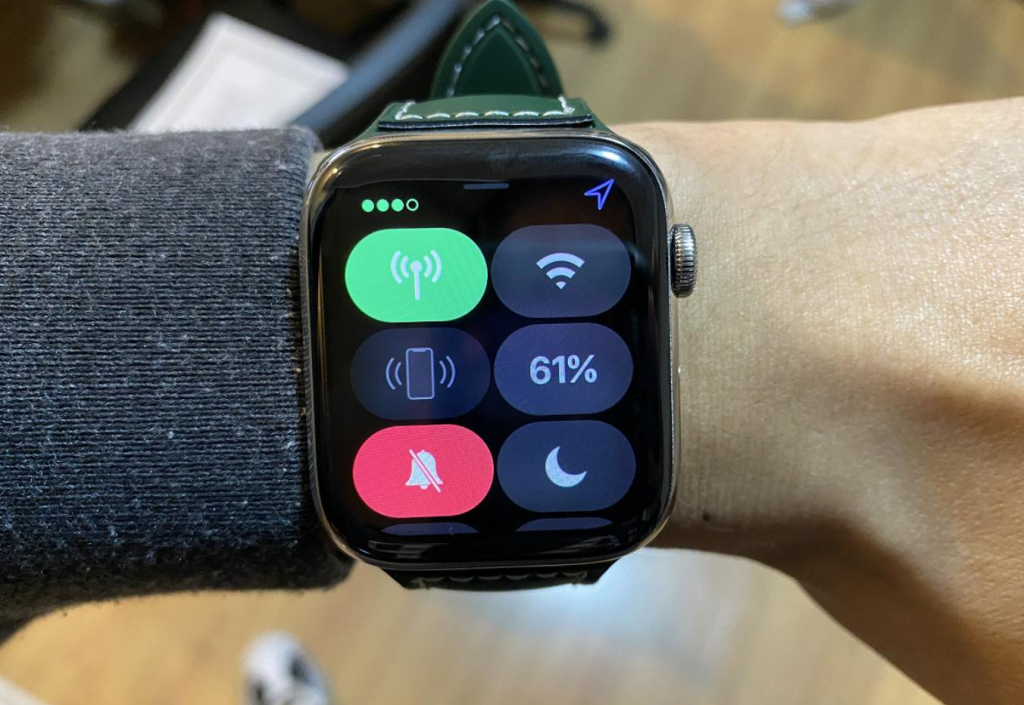
    Smart wearable device ecosystem—standalone connectivity will reshape user interaction experiences.
    Smart wearable device ecosystem—standalone connectivity will reshape user interaction experiences.

    Meta AI Glasses Hit Singapore: Ray-Ban and Oakley Lines Expand

    On the same day across the ocean, Meta accelerated its AI hardware expansion. On May 6, Meta officially announced the launch of both Ray-Ban Meta and Oakley Meta AI glasses in the Singapore market.

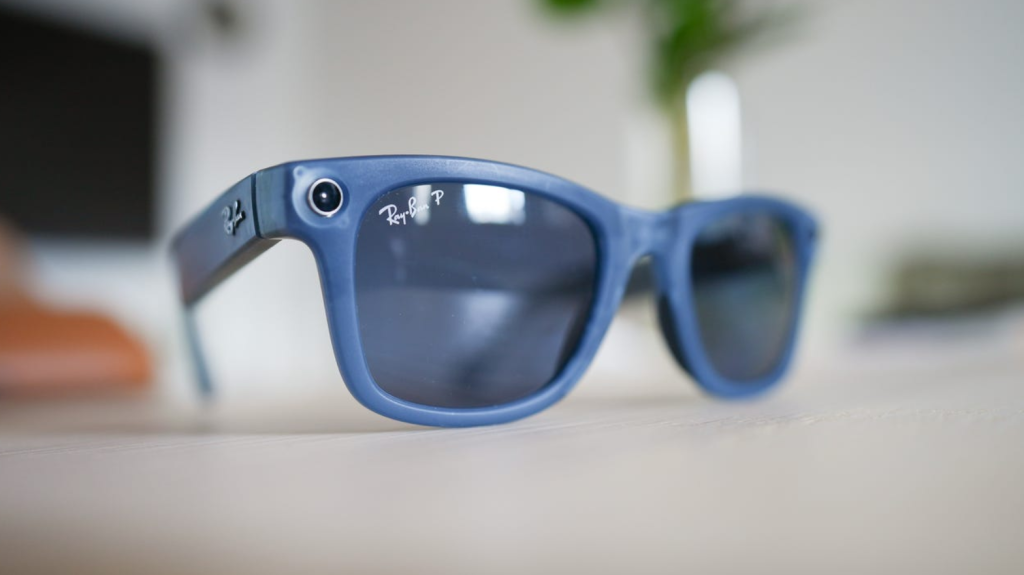
    Ray-Ban Meta smart glasses featuring 12-megapixel camera and Meta AI capabilities.
    Ray-Ban Meta smart glasses featuring 12-megapixel camera and Meta AI capabilities.

    Oakley Line: AI Powerhouse for Sports Scenarios

    The Oakley Meta series targets sports scenarios, launching two core products: HSTN and Vanguard.

    Oakley Meta HSTN merges Oakley’s classic sports design with Meta’s AI technology. Built-in 12-megapixel ultra-wide camera supports 3K ultra-HD video recording, paired with open-ear speakers and Meta AI integration, delivering 8-hour battery life.

    Oakley Meta Vanguard targets high-intensity sports scenarios, integrating Strava, Garmin and other mainstream fitness apps for real-time sports performance insights. First-person camera and 9-hour ultra-long battery life let sports enthusiasts focus entirely on training.

    Ray-Ban Line: Smart Upgrades for Everyday Wear

    The Ray-Ban Meta series continues expanding its product matrix, adding Blayzer Optics and Scriber Optics as two new prescription lens options. Featuring slimmer, lighter frame designs specifically for nearsighted users.

    All second-generation products across the lineup have upgraded Meta AI capabilities, adding multi-language real-time translation, hands-free food logging, nutrition tracking, and message summarization functions. Classic Wayfarer, Skyler, and Headliner styles are simultaneously available.

  • NVIDIA’s China Market Share Drops to Zero: The End and Beginning of a Tech Contest

    On May 4, 2026, an interview at the US think tank SCSP sent shockwaves through the global tech community. NVIDIA CEO Jensen Huang confirmed in his own words: NVIDIA’s direct sales share in China’s AI accelerator market has dropped to 0%. Behind this number lies the market collapse of a chip giant that once dominated with 80% share in China.

    China's AI chip market is undergoing rapid transformation as domestic manufacturers like Huawei and Cambricon capture market share from international competitors.
    China’s AI chip market is undergoing rapid transformation as domestic manufacturers like Huawei and Cambricon capture market share from international competitors.

    From 80% to Zero: An Irreversible Retreat

    Flash back to 2022, when NVIDIA held absolute dominance in China’s AI chip market. With the CUDA ecosystem and Hopper architecture advantages, this Silicon Valley company was almost the preferred supplier for every Chinese AI enterprise, with market share exceeding 80%.

    The turning point came with the tightening US export controls. To comply with regulations, NVIDIA was forced to cripple GPU performance for China repeatedly—from H100 to H20, each performance cut was followed by even stricter restrictions. In May 2025, the US Department of Commerce extended restrictions from product exports to global usage scenarios, completely blocking NVIDIA’s path in China.

    To preserve its China market, Jensen Huang visited China multiple times to adjust strategies, even modifying products beyond recognition. However, no matter how much he compromised, the wall ultimately didn’t trap China’s AI industry—it trapped NVIDIA itself.

    Domestic Substitution Wave: Who Picked Up the Slump

    Behind the 0%, the market vacuum is being rapidly filled.

    Latest IDC statistics show that in 2025, Chinese GPU and AI chip manufacturers had captured nearly 41% of China’s AI accelerator server market. Bernstein Research predicts that by full year 2026, NVIDIA’s China market share will shrink to approximately 8%, while Huawei and other domestic manufacturers’ share will exceed 50%, AMD will take 12%, and Cambricon will rank third.

    DIGITIMES estimates that 2026 China’s high-end cloud AI accelerator shipments will reach 2.123 million units, a year-over-year surge of 136%. With system integration advantages, Huawei’s market share will easily exceed 50%, ranking first.

    Huawei Ascend’s Rise is the most compelling chapter in this substitution story. In DeepSeek’s tests, the Ascend 910C’s AI inference performance has reached approximately 60% of NVIDIA’s H100. With further optimization through hand-written CANN kernels, the performance gap continues to narrow. In inference scenario Token throughput efficiency tests, the previous generation Ascend 910B already achieved 1.8x NVIDIA H20 performance.

    Cambricon is another player that cannot be ignored. Morgan Stanley’s latest research shows Cambricon’s Q1 performance significantly exceeded expectations, directly driven by strong shipments of the Sanyi 590 chip. Q1 2026 prepayments surged 155% quarter-over-quarter, reaching 1.9 billion yuan, almost entirely supported by new chip production orders.

    NVIDIA CEO Jensen Huang confirmed during an interview that NVIDIA's China AI chip market share has dropped to zero, marking a historic shift in the global AI chip landscape.
    NVIDIA CEO Jensen Huang confirmed during an interview that NVIDIA’s China AI chip market share has dropped to zero, marking a historic shift in the global AI chip landscape.

    Ecosystem Barrier Collapse: The CUDA Moat is Draining

    During the interview, Jensen Huang repeatedly emphasized “software ecosystem is the final barrier,” attempting to maintain NVIDIA’s core advantage. Indeed, the CUDA ecosystem is NVIDIA’s most solid moat—millions of global developers, thousands of pretrained models, countless lines of project code and optimization experience are all built on this platform.

    However, cracks are appearing in this barrier.

    In April 2026, DeepSeek-V4 officially launched and went open source, achieving a historic breakthrough simultaneously: completely breaking free from the CUDA ecosystem, with core code fully migrated from NVIDIA CUDA to Huawei’s CANN heterogeneous computing framework. In DeepSeek’s official technical documentation, Huawei Ascend NPU is directly listed alongside NVIDIA GPU in the hardware verification checklist.

    Previously, the cost of migrating away from CUDA was enormous, with rewriting core operators requiring months of work. Huawei’s CANN framework now achieves over 95% CUDA code compatibility, and with one-click migration tools, code refactoring that originally took months has been reduced to being calculated in hours.

    Beyond Huawei, the open-source community is also accelerating the erosion of CUDA’s barriers. In early 2026, KernelCAT launched a cross-chip operator compiler enabling painless migration between multiple domestic chip brands. The entire ecosystem layer is transforming what was once NVIDIA’s exclusive moat into part of public infrastructure.

    The Talent Code: The Overlooked Underlying Variable

    If hardware and ecosystem breakthroughs are visible hard advances, then talent reserves are the most easily overlooked yet critical variable in this substitution story.

    According to MacroPolo think tank tracking data, the global share of China’s top AI researchers has surged from approximately 11% in 2022 to approximately 44%, nearly quadrupling. The US figure declined from 65% to approximately 38% over the same period. This isn’t a decimal-point shift—it’s a generational-scale workforce displacement.

    A synchronized statistic shows that between 2018 and 2024, Chinese universities’ share in global AI paper citations in the top 10% increased by over 7 percentage points compared to the previous decade, reaching global first place.

    The deeper significance of this trend is that the long-term outcome of AI competition was never determined by a few chips. Each time export controls escalated, China raised its investment in basic research talent by one level. Talent is becoming the most solid foundation for domestic AI chips.

    Outlook: The New Landscape After Zero

    From 85% to 0%, NVIDIA’s China story has temporarily ended. But this isn’t just NVIDIA’s loss—it’s a microcosm of the restructuring of the entire AI industry landscape.

    According to Bernstein estimates, just China’s inference market substitution is sufficient to support domestic enterprises like Huawei and Cambricon toward a hundred-billion-yuan annual production scale. When Huawei Ascend NPU is listed alongside NVIDIA GPU in the hardware verification checklist for production environments of top domestic LLM companies like DeepSeek, the CUDA ecosystem’s monopoly has been completely broken.

    As Jensen Huang gently closed his notebook at the interview’s end, tired eyes hidden in screen reflections, a chapter of NVIDIA’s China AI chip era concluded. And another era—China’s AI chip era—is accelerating to begin.