Author: Gavin

  • XREAL Aura: First Android XR Glasses Hit Consumer Market

    XREAL Aura: First Android XR Glasses Hit Consumer Market

    XREAL has officially unveiled Aura, the world’s first consumer-grade XR glasses running Google’s Android XR platform. At just 95 grams with a 70-degree field of view, Aura bridges the gap between bulky headsets and everyday eyewear. Moreover, it arrives this fall with a price ceiling of $1,500, making it one of the most accessible high-end XR devices yet.
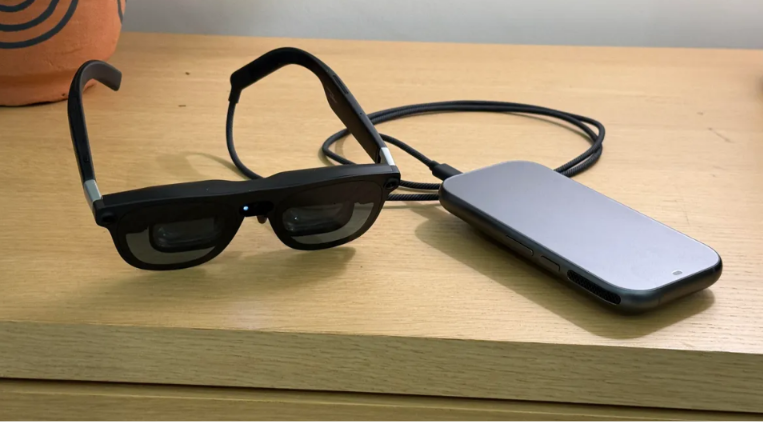
    XREAL Aura glasses with compute puck
    XREAL Aura glasses connected to compute puck

    What Makes Aura Different

    Aura stands out because it runs native Android XR, not a stripped-down companion OS. Consequently, millions of apps from Google Play work on day one, including spatial versions of Google Maps, YouTube, and Chrome. In addition, Google baked Gemini AI directly into the platform, so Aura can understand what you see and offer real-time context.

    The hardware uses a split design. The glasses themselves weigh merely 95 grams, while a tethered compute puck houses the Snapdragon Reality Elite chip and battery. Therefore, XREAL keeps the weight off your face without sacrificing performance. Furthermore, the glasses pack an X1S spatial coprocessor for real-time rendering and 6DoF tracking.

    Optically, Aura employs next-generation birdbath optics with optical see-through passthrough. As a result, users see the real world directly through transparent lenses while digital overlays float in space. Additionally, the lenses feature electronically adjustable dimming, which adapts to ambient light and reduces washout in bright environments.

    The Google-Qualcomm-XREAL Alliance

    Aura marks a strategic shift for Google. Previously, Android XR only powered Samsung’s Galaxy XR headset, a niche enterprise device. Now, Aura brings the platform to consumers for the first time. In fact, Google treats XR as its fourth screen alongside phones, tablets, and watches.
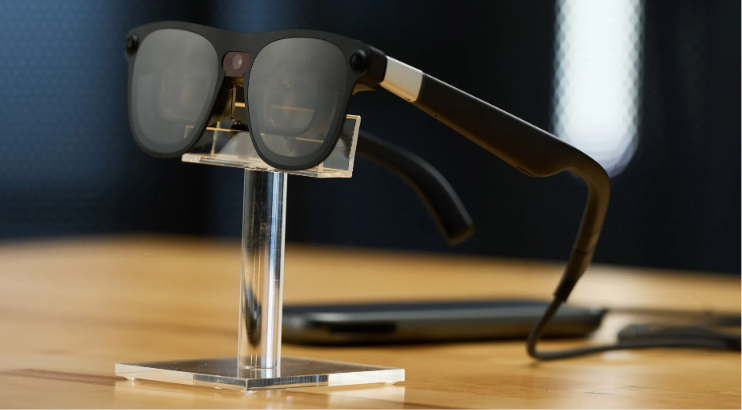
    XREAL Aura glasses display stand
    XREAL Aura glasses on display stand

    The Snapdragon Reality Elite chip inside the compute puck delivers enough horsepower for spatial multitasking, hand tracking, and immersive video. Meanwhile, Gemini AI enables multimodal interactions—Aura can identify objects, translate text, and guide repairs simply by looking at them. During AWE 2026 demos, attendees experienced spatial Google Maps navigation, 180°/360° YouTube videos, and multi-window Chrome browsing.

    Over 100 XR-optimized apps are already in development. Thus, Aura launches with both a massive existing library and a growing native ecosystem.

    Pricing and Availability

    XREAL opened reservations immediately after the AWE announcement. For $99, buyers receive a $199 launch credit, effectively saving $100. Alternatively, a $299 Founder Priority Pass guarantees launch-day delivery and includes special-edition hardware. Notably, all 2,000 Founder units sold out within 36 hours.

    The company confirmed the base model will not exceed $1,500 before tax. However, XREAL has not disclosed the exact final price. Initial launch markets include the United States, United Kingdom, Japan, Canada, and South Korea, with European availability following soon after.

    How Aura Stacks Against Rivals

    Aura occupies a unique position. Compared to the Apple Vision Pro, it weighs one-seventh as much and costs less than half the price. On the other hand, it sacrifices some immersion with a smaller field of view. Against the Meta Quest 3, Aura offers superior AI through Gemini and deeper app integration via Google Play, though it trails in raw gaming performance.
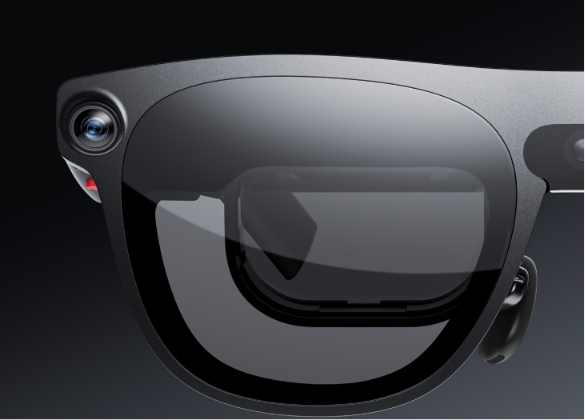
    XREAL Aura front camera view
    XREAL Aura front view showing camera

    The table below summarizes the key differences:

    FeatureXREAL AuraApple Vision ProMeta Quest 3
    Weight95g600-650g515g
    Field of View70°~100°110°
    OpticsOST PassthroughVST VideoVST Video
    OSAndroid XRvisionOSHorizon OS
    AI AssistantGeminiSiriMeta AI
    Price≤$1,500$3,499$499
    Form FactorGlassesHeadsetHeadset

    Who Should Buy Aura

    Aura suits tech enthusiasts eager to explore Android XR early. Likewise, content creators benefit from its portable spatial computing capabilities. Developers targeting the Android XR platform should also consider it as a reference device.

    However, budget-conscious buyers may find the $1,500 ceiling steep, especially since the final price remains undisclosed. Similarly, hardcore gamers might prefer the wider field of view and stronger performance of dedicated headsets.

    Final Verdict

    Aura is not perfect. The tethered puck adds cable clutter, and four-hour battery life demands frequent charging. Nevertheless, it represents the most credible consumer XR launch since Meta Quest 2. Google, Qualcomm, and XREAL each bring essential pieces—ecosystem, silicon, and hardware design—to create a genuinely wearable spatial computer.

    For anyone waiting for AR glasses that actually work, Aura is the closest answer in 2026.
  • BodyPark ATOM Review: A $199 AI Coach That Watches Your Form

    One-Sentence Verdict

    If you want a pocket-sized device that counts your reps, corrects your squat depth, and generates a post-workout report like a professional coach, the BodyPark ATOM is the most credible AI fitness companion to hit the consumer market—provided you have decent lighting and don’t mind a camera watching you sweat.

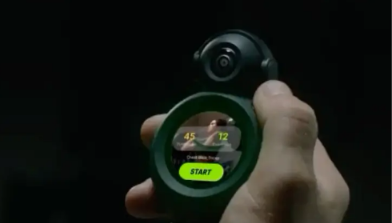
    BodyPark ATOM front display view
    BodyPark ATOM front view with AMOLED display

    Introduction: When AI Starts Watching Your Squats

    The home fitness market has a persistent pain point: people buy equipment, use it a few times with poor form, injure themselves, and the equipment gathers dust. Personal trainers solve the form problem, but $50-100 per hour prices most people out. BodyPark wants to break this cycle with AI—not by demonstrating exercises through an app, but by using a camera to “see” your movement and shouting “knees caving in, push them out” while you are halfway through a squat.

    In late 2025, BodyPark ATOM launched on Kickstarter, gaining 2,587 backers and raising HK$ 5,143,458 (approximately $650,000 USD) in 49 days, exceeding its goal by 13 times and becoming the most supported project in the AI fitness category. Founder Yili Lin (Alex), leading a team from Google, Xiaomi, Volkswagen, BCG, and Mobvoi, positions this 155-gram pocket device as “the coach’s eye”—not replacing phones or watches, but understanding movement itself.

    Product Overview: A Personal Trainer in Your Pocket

    The BodyPark ATOM is a palm-sized AI fitness companion weighing 155 grams, with a 90×71×60 mm body. The front features a 1.43-inch circular AMOLED display (466×466 resolution, 326 PPI), a 160° ultra-wide camera (1/2.8-inch CMOS, up to 720P), a built-in 3W speaker, and a microphone. The back uses a MagMount magnetic design for attaching to desks, racks, or tripods, with 5°-40° angle adjustment.

    The camera coverage is impressive: horizontal 161°, vertical 106°, diagonal 200°, capturing the full body even at arm’s length. This means you don’t need to retreat across the room to “be seen,” nor squint at a tiny phone screen. For privacy, ATOM includes a removable colored privacy cap to physically block the camera when not training.

    Battery life is solid: the 2000mAh cell delivers 72 hours of standby or 7+ hours of continuous high-intensity use, charged via USB-C (5V/2A). For users training one hour daily, that means charging roughly every three days.

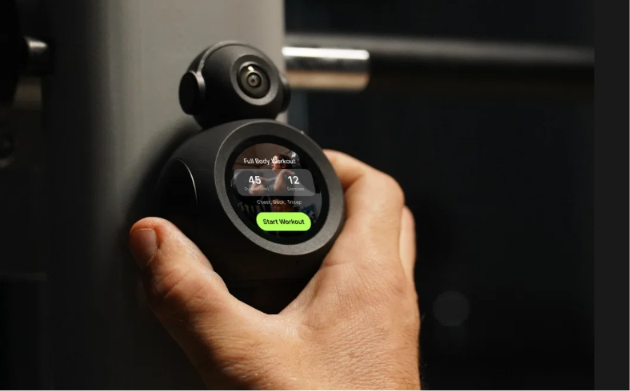
    Hand holding ATOM in gym
    User holding ATOM in a gym setting

    Technical Analysis: How DeepBody “Sees” Movement

    ATOM’s core is BodyPark’s proprietary DeepBody™ AI motion engine, trained on over 500,000 real-world movement samples, achieving 96% AP (Average Precision) in Human Pose Estimation—outperforming models of similar scale. It recognizes 1,000+ exercises and tracks 34+ skeletal keypoints in real time.

    Key technical specifications:

    ParameterSpecification
    Pose Estimation Accuracy96% AP
    Skeletal Keypoints34+
    Exercise Library1,000+
    Training Samples500,000+
    Camera FOVH 161°, V 106°, D 200°
    Display1.43″ AMOLED, 466×466, 326 PPI
    Weight155g
    Battery2000mAh, 72h standby, 7h+ active
    ConnectivityBLE5.3, Wi-Fi 2.4G
    LLM IntegrationGemini, DeepSeek, Qwen

    Unlike smartwatches that merely count reps, ATOM focuses on “movement quality”—whether squat depth is sufficient, whether the barbell path is vertical, whether the spine remains neutral. The Multi-Agent Fitness Engine integrates proprietary algorithms with large models such as Gemini, DeepSeek, and Qwen, creating a closed loop from plan generation to real-time correction.

    Training Experience: From “Follow Along” to “Get Corrected”

    ATOM’s training flow has three stages:

    Pre-workout: Users set goals via voice, text, or DIY programming, and the AI generates personalized plans from a 1,000+ exercise library. The system supports a six-dimensional training model covering cardiorespiratory endurance, muscular endurance, flexibility and mobility, speed and agility, stability and coordination, and muscular strength, with five intensity levels per dimension.

    During workout: The camera captures movement in real time, the AI identifies posture deviations in milliseconds, and provides voice feedback. During squats, it prompts “squat deeper,” “knees out,” or “keep chest up.” It counts reps automatically, eliminating manual operation. The 1.43-inch screen shows progress and key data, but voice feedback keeps your eyes off the screen.

    ATOM tracking workout pose
    ATOM tracking a workout with pose overlay

    Post-workout: It generates detailed reports covering range of motion (ROM), displacement, velocity, power, and stability, with video playback. Users can review movement trajectories, much like the motion analysis software professional coaches use.

    In practice, ATOM performs best in well-lit, uncluttered home environments. Complex lighting, fast motion, or multi-person scenes reduce recognition accuracy. Voice feedback is clear in quiet settings, but noisy gyms may require Bluetooth earphones.

    Competitive Comparison: A Dimensional Reduction Attack on the Budget Market

    FeatureBodyPark ATOMPeloton GuideTempo MoveApple Fitness+
    Price$199$295$395$9.99/mo
    Form FactorPocket deviceBar cameraCabinet with weightsSoftware only
    Camera160° ultra-wide120°3D visionNone
    Keypoints34+Major jointsFull bodyNone
    Real-time CorrectionVoice + visualVisual cuesVisual cuesNone
    Exercise Library1,000+LimitedLimitedVideo library
    Adaptive PlansAI dynamicFixed coursesFixed coursesRecommendation
    PortabilityExcellentLowModerateExcellent
    BrandChinese BrandUS BrandUS BrandUS Brand

    ATOM’s core advantage is “value plus portability.” Peloton Guide and Tempo Move offer similar functionality at nearly double the price with no portability. Apple Fitness+ is cheaper but lacks hardware feedback—the difference between “following a video” and “being corrected in real time” is fundamental. For renters, frequent travelers, or anyone unwilling to dedicate significant space to fitness equipment, ATOM’s pocket form is decisive.

    Conclusion

    The BodyPark ATOM is not the first AI fitness device, but it may be the first to transform “AI replaces personal trainers” from a marketing slogan into an actual experience. The $199 pricing strategy is aggressively disruptive—it compresses human motion analysis technology previously belonging to sports laboratories and professional gyms into a pocket-sized consumer device.

    From a market validation perspective, $650,000 in crowdfunding and 2,587 backers prove real demand exists. From a technical innovation perspective, 96% pose estimation accuracy and 34+ keypoint tracking lead the consumer segment. From a user experience perspective, “real-time voice correction” genuinely solves home fitness’s biggest pain point—repetition without feedback is not only inefficient but dangerous.

    Of course, ATOM will not fully replace human coaches. Emotional support, personalized motivation, and complex injury rehabilitation guidance remain human advantages. But for the vast population thinking “I want to train safely and effectively at home, but I don’t know if my form is right,” ATOM offers an unprecedented low-barrier solution.If you have been searching for a fitness device that truly “sees” your movement rather than merely “counts your reps,” the BodyPark ATOM deserves a spot on your 2026 shopping list. It may not be the ultimate answer, but it is likely a crucial step toward AI fitness moving from concept to mainstream adoption.

  • Looki L1 Review: AI Wearable That Turns Your Day Into a Comic Strip

    One-Sentence Verdict

    If you want a wearable that remembers your life so you don’t have to, and delivers a hand-drawn comic of your Tuesday morning, the Looki L1 is the most original AI memory device on the market—just don’t expect it to replace your phone camera.

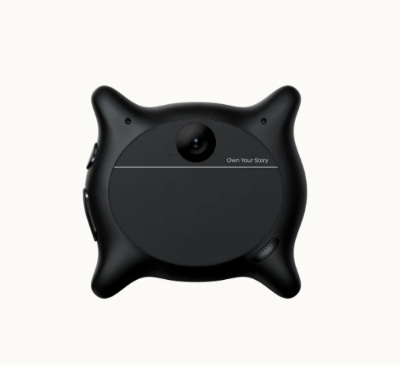
    Black Looki camera front view with lens
    Black Looki camera front view with lens

    Introduction: From “Remember to Shoot” to “Forget About It”

    We live in a paradox: smartphones make photography easier than ever, yet the moments worth revisiting often happen while the phone remains in a pocket. Shenzhen Guangzhi Shikong Technology (Looki) wants to solve this—not by making you pull out your phone more, but by making you forget about photography entirely.

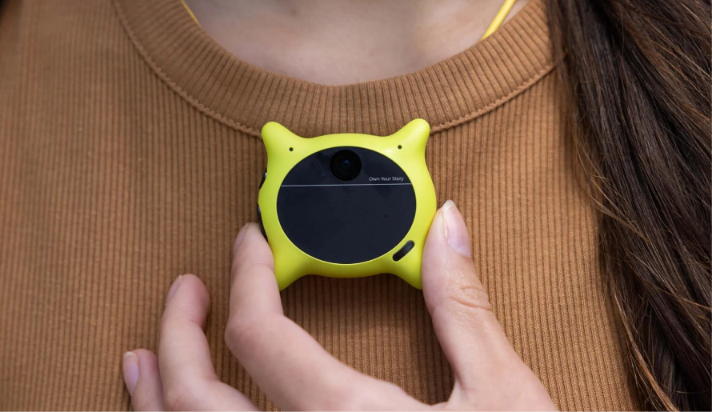
    Unveiled at CES 2026 and priced at $199 USD, the Looki L1 is a 32-gram AI wearable camera that hangs on your chest. It automatically records 9-to-15-second clips every 2-3 minutes, then while you sleep, cloud AI assembles those fragments into daily vlogs, comic strips, and a searchable memory timeline. It is an “AI Life Manager”—a digital co-pilot for your memory.

    Product Overview: A Little Monster on Your Chest

    The Looki L1 looks like a tiny monster with claws—50.5×16.8×48.0 mm, 32 grams, available in black, white, and green. The front houses a Sony IMX681 camera (12MP, 4K photos, 1080P at 30fps, 16mm lens, f/2.2, 109° FOV), 3 MEMS microphones, a touch area, and a status light. The back has magnetic points for attaching to metal surfaces.

    Two mounting options exist: the default magnetic lanyard (which doubles as the charging cable), and the separately sold Go Clip magnetic attachment. The lanyard uses a “sandwich” structure—device, clothing layer, inner magnetic base. However, users report that in crowded environments, the magnetic connection can detach. A protective case is recommended.

    The body carries IP67 water resistance, a 375mAh battery delivering 9-13 hours, and 32GB local storage. The core processor is the Qualcomm Snapdragon W5 (4nm), paired with a NationalChip GX8002 AI voice chip for on-device sensing.

    Core Features: Passive Recording, Active Recall

    The Looki L1’s core purpose is recovery—it preserves the fragments of the day that human memory routinely discards. Three primary modes are available:

    Story Mode is the default, capturing 9-to-15-second clips every 2-3 minutes. Total daily footage remains manageable, neither producing hours of material nor missing too many moments.

    Expo Mode recognizes conference scenarios, capturing context and extracting follow-up suggestions from conversations.

    Fitness Mode tracks movement and offers real-time cues such as post-run stretch recommendations.

    All content stores locally first, with selective upload to private AWS cloud space. AI processing happens overnight, delivering a “daily digest” each morning—including summaries, mood palettes, and the device’s most distinctive feature: AI-generated comic stories.

    Yellow Looki worn on chest daily
    Yellow Looki worn on chest daily

    AI Comics: The Most Unique Memory Carrier

    If the Looki L1 has only one feature worth talking about, it is comic generation. Every morning, the app presents a hand-drawn comic strip based on the previous day’s activities—not photo filters, but genuine illustration-style panels with surprisingly accurate depictions. Weekly comics appear at week’s end, pulling meaningful moments from the past seven days.

    Reviewers call this one of the most original software features in consumer technology. “You need to experience receiving a comic of your own Tuesday to understand why it works.” For parents, seeing children illustrated in comic form carries considerable novelty.

    Of course, AI output remains inconsistent. Sometimes it produces impressive recaps; other times, ultra-short clips with almost no substance. Early character renderings may resemble “strangers from an adjacent multiverse,” requiring over a week of data before the AI gradually “learns” its owner.

    Voice Interaction and Ask Looki

    Long-pressing the front touch area wakes the Looki AI assistant for daily Q&A. The “Ask Looki” feature allows natural language queries in the app—such as “What did I eat today?”—with the AI extracting relevant clips from the memory timeline.

    The voice memo function supports automatic extraction of key points and summaries. For meeting notes, this offers some value, though reviewers note that in noisy environments, voice wake and recognition reliability drops significantly.

    Privacy: The Unavoidable Social Contract

    Looki emphasizes “local-first” architecture—content defaults to local storage, end-to-end encrypted, with users controlling uploads, and Looki claims they never use user data to train AI models. A status light stays on during recording, providing transparency.

    Yet these measures cannot solve the fundamental issue: wearing a camera all day changes the social contract. In museums and parks, this is manageable. In meetings or workplace environments, it may violate corporate policies regarding recording and confidential conversations. One reviewer put it sharply: “Acceptance is not the same as explicit permission.”

    For users hoping to deploy Looki professionally, this is a serious limitation. Even if the device does not violate rules, the discomfort of those around the wearer may make sustained use difficult.

    Competitive Comparison

    FeatureLooki L1Meta Ray-BanPlaud NotePinNarrative Clip
    Form FactorChest magneticSmart glassesPin badgeClip camera
    Weight32g~49g15g~20g
    Camera12MP, 4K photos12MPNone8MP
    Video1080P at 30fps1080PNoneNone
    AI OutputVlog/Comic/JournalBasic recognitionTranscriptionNone
    Storage32GB localCloudCloudCloud
    Battery9-13h4-6h20h2 days
    Price$199$299+$169Discontinued
    BrandChinese BrandGlobal BrandGlobal BrandDiscontinued

    The Looki L1’s uniqueness lies in “AI narrative”—it does not accumulate footage, but transforms material into meaningful story carriers. Meta glasses lean toward social sharing, Plaud focuses on audio transcription, while Looki attempts to become a “memory outsourcing service.”

    AI comic storyboard from daily footage
    AI comic storyboard from daily footage

    Conclusion

    The Looki L1 is not a perfect product—inconsistent AI output, modest image quality, terrible seated framing, and real privacy concerns all hold it back. Yet it may be one of the most credible first-generation products in the AI wearable space, because it starts from a practical premise: human memory is unreliable, and passive recording plus AI curation may be a viable path to solving that problem.

    It will not replace your phone camera, nor will it become standard equipment for work scenarios. But for those who want to effortlessly record life yet lack the discipline to manually organize footage, the Looki L1 offers a genuinely unique value proposition. The AI comic feature alone makes it worth attention from technology enthusiasts—it is a rare original software innovation in consumer tech.

    If you travel frequently, attend exhibitions, or simply want to transform mundane daily moments into reviewable stories, the Looki L1 is worth trying. Just remember: it is a “memory companion,” not a photographer. Expect Instagram-level photos and you will be disappointed. Expect help remembering the otherwise forgotten scraps of an ordinary day, and it may be exactly the device you are looking for.

  • NAOYUN EEG Earphones Review: A Brain-Computer Interface in Your Ears

    NAOYUN EEG Earphones Review: A Brain-Computer Interface in Your Ears

    One-Sentence Verdict

    If you want a brain-computer interface that fits in your pocket and delivers real-time neurofeedback during your commute, the NAOYUN EEG Earphones are the most ambitious consumer BCI wearable to watch in 2026.

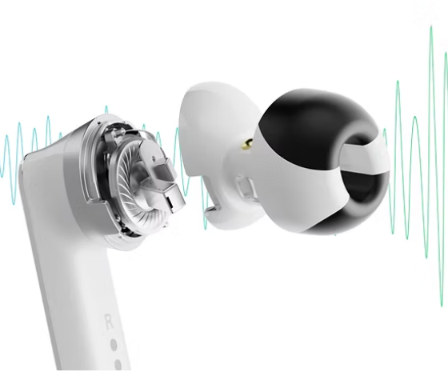
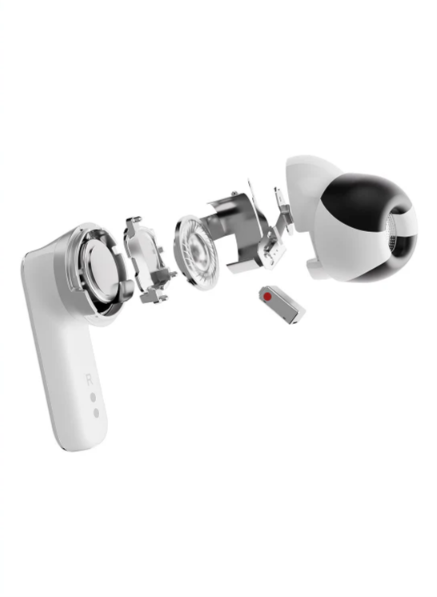
    NAOYUN Veetra Alpha EEG earphone exploded view showing internal components
    NAOYUN Veetra Alpha EEG earphone exploded view with brainwave sensors

    Introduction: From Medical Labs to Daily Commutes

    Brain-computer interfaces have long been trapped in laboratories. Neuralink’s invasive chips require cranial surgery, while traditional EEG devices involve electrode arrays, cables, and conductive gel. Shanghai Naoyun Technology wants to change that—they packed professional-grade EEG detection into a 6-gram TWS earbud.

    Launched in March 2026, the NAOYUN EEG Earphones are the world’s first consumer product to integrate clinical-grade EEG brainwave detection with Hi-Fi audio. Founder Wang Chaoyang leads a team from Bosch Siemens, Haier, and Viomi, and the company has secured angel funding led by Viomi Technology. Their mission: bring brain health monitoring into daily life, from commuting to office work, from studying to relaxation.

    This is not a concept. NAOYUN has completed small-batch prototype production and plans to showcase at CES 2026 before launching on Kickstarter.

    Product Overview: A 6-Gram Brain Lab

    The core breakthrough of the NAOYUN EEG Earphones lies in “invisibility” and “lightness.” Each earbud weighs just 6 grams, virtually indistinguishable from standard premium TWS earbuds, eliminating the “medical device” feel of traditional EEG equipment. The key innovation is the built-in patented flower-shaped dry electrodes—no conductive gel required, users simply wear the earbuds to start EEG acquisition, with setup completed in approximately ten seconds.

    According to crowdfunding user feedback, the in-ear design effectively solves electrode-skin contact stability, avoiding defects common in traditional EEG headbands such as displacement and signal interruption. For users who value privacy and want to use the device in public scenarios, this “invisible” design is a core competitive advantage.

    Technical Analysis: A Goldmine of Signals in Your Ear

    NAOYUN’s technical architecture centers on “in-ear brain-computer” technology. Founder Wang Chaoyang explains: “The biological signals from the ear are a rich goldmine, containing not only EEG but also EMG and ECG signals. Moreover, the ear is inherently a sound sensor, allowing integration with speech and semantics.”

    Key technical specifications:

    ParameterSpecification
    Weight6g per earbud
    Electrode TypePatented flower-shaped dry electrodes + metal sensors
    EEG Accuracy>95% (Cohen Kappa ≈ 0.8)
    Brainwave BandsTheta, Alpha, Beta, Gamma
    Setup Time~10 seconds
    Audio24-bit/192kHz Hi-Res
    ANC35dB
    Battery Life5 hours per charge, 40 hours with case
    EMG ControlFacial muscle gesture recognition

    Compared to traditional EEG devices requiring one hour of preparation, NAOYUN’s ten-second setup represents an order-of-magnitude improvement. Signal acquisition inside the ear canal is unaffected by skull bone or scalp potentials, providing stronger and more stable readings.

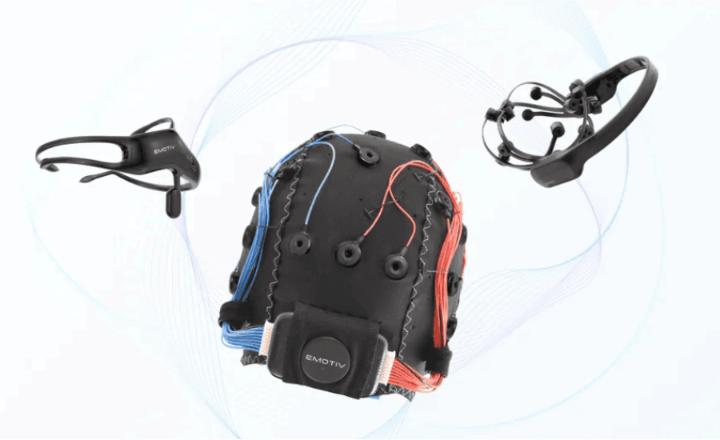
    Emotiv EEG headset product lineup for brainwave monitoring
    Emotiv EEG headset lineup showing professional brain monitoring devices

    AI Algorithms and Training Modes: Beyond Monitoring, Real Training

    NAOYUN’s AI algorithms do more than visualize brainwaves—they provide closed-loop training. The companion app includes four core training modes:

    Neurofeedback cognitive training combines n-back and go/no-go tasks with live EEG feedback to regulate prefrontal cortex activity and build sustained attention.

    Guided breathing with binaural beats uses music to facilitate resonant breathing at 0.1Hz frequency, with binaural beats tailored to the user’s real-time brain state.

    Guided meditation with EEG feedback detects mind-wandering states via default mode network activity and delivers audio cues to redirect attention when the mind drifts.

    Brainwave feedback games reinforce sensorimotor rhythm through operant conditioning, using interactive gameplay that responds directly to the user’s brainwave output to strengthen focus over time.

    The app analyzes Theta, Alpha, Beta, and Gamma brainwave patterns and produces personalized reports that visualize brain state, meditation progress, and focus levels.

    EMG Gesture Control: Hands-Free Operation

    NAOYUN also incorporates EMG electromyography detection, reading tiny electrical signals produced by facial muscle movement near the ear. This enables hands-free control—for example, answering calls by clenching teeth, no voice commands or buttons required. The system also supports play/pause, smart home control, and gaming interactions.

    This feature is revolutionary for interaction in motion scenarios or when both hands are busy. Combined with tiny muscle signals, it already enables specific “thought commands.”

    Competitive Comparison

    FeatureNAOYUN EEG EarphonesNeurable MW75Emotiv MN8Muse S
    Form FactorTWS in-earOver-ear headphonesIn-ear earbudsHeadband
    Weight6g per bud~300g~50g~60g
    ElectrodesFlower-shaped dryEmbedded sensorsConductive elastomerDry electrodes
    EEG ChannelsMulti-channelLimited2 + 4 referenceMulti-channel
    AudioHi-Res 24-bit/192kHzHigh-qualityBasic audioNone
    ANC35dBYesNoNo
    EMG ControlYesNoNoNo
    Training Modes4 modesBasicBasicMeditation
    Price RangeTBD (crowdfunding)$499$300-500$249-399
    Brand OriginChinese BrandUS BrandUS BrandUS Brand

    NAOYUN’s core advantage: it is the only product integrating multi-channel EEG, Hi-Res audio, ANC, and EMG gesture control into a 6-gram TWS form factor. The Neurable MW75 weighs fifty times more; the Emotiv MN8 leans toward professional use with weak audio; and the Muse S is a headband unsuitable for public settings.

    NAOYUN Veetra Alpha earbud disassembled components and sensors
    NAOYUN Veetra Alpha earbud components showing EEG electrode design

    Pros and Cons

    Pros:

    • World’s first in-ear EEG TWS earphones, leading in form factor innovation
    • 6-gram weight enables all-day imperceptible wear
    • Ten-second setup versus one-hour traditional preparation, dramatically lowering barriers
    • Ear canal signal stability superior to scalp-based EEG
    • Four-mode closed-loop training, not just monitoring but real training
    • EMG gesture control expands interaction dimensions
    • Hi-Res audio plus 35dB ANC without compromising sound quality

    Cons:

    • EEG accuracy during movement still requires validation
    • Long-term durability of in-ear electrodes remains unconfirmed
    • As a Chinese Brand, low brand recognition in overseas markets
    • Crowdfunding stage, with production quality and delivery risks
    • AI algorithm personalization requires data accumulation
    • Five-hour battery life slightly insufficient for all-day monitoring

    Conclusion

    The NAOYUN EEG Earphones are not a perfect product—signal stability during movement, long-term durability, and brand recognition all have room for improvement. However, they precisely address an industry pain point: how to bring brain-computer interfaces from laboratories into daily life.

    For the past decade, the wearable market has been dominated by smartwatches and fitness trackers that “only quantify the body, not interpret the mind.” As information overload intensifies, managing focus and mental stress is becoming increasingly important. The consumerization of BCI technology is the core track for wearable devices in the next decade. NAOYUN represents the first large-scale attempt in this trend.

    From a hardware innovation perspective, compressing medical-grade brain-computer technology into a 6-gram TWS earphone is an engineering achievement worthy of respect. From a commercial perspective, China’s nearly 500 million sleep disorder sufferers, tens of millions of meditation practitioners, and vast high-pressure workforce constitute a substantial market foundation.

    If you have been waiting for a consumer-grade device that can “read” your brain state, the NAOYUN EEG Earphones deserve a spot on your 2026 shopping list. They may not be the ultimate form of brain-computer interfaces, but they are likely a crucial step toward bringing BCI into mainstream daily life.