XREAL has officially unveiled Aura, the world’s first consumer-grade XR glasses running Google’s Android XR platform. At just 95 grams with a 70-degree field of view, Aura bridges the gap between bulky headsets and everyday eyewear. Moreover, it arrives this fall with a price ceiling of $1,500, making it one of the most accessible high-end XR devices yet.
What Makes Aura Different
Aura stands out because it runs native Android XR, not a stripped-down companion OS. Consequently, millions of apps from Google Play work on day one, including spatial versions of Google Maps, YouTube, and Chrome. In addition, Google baked Gemini AI directly into the platform, so Aura can understand what you see and offer real-time context.
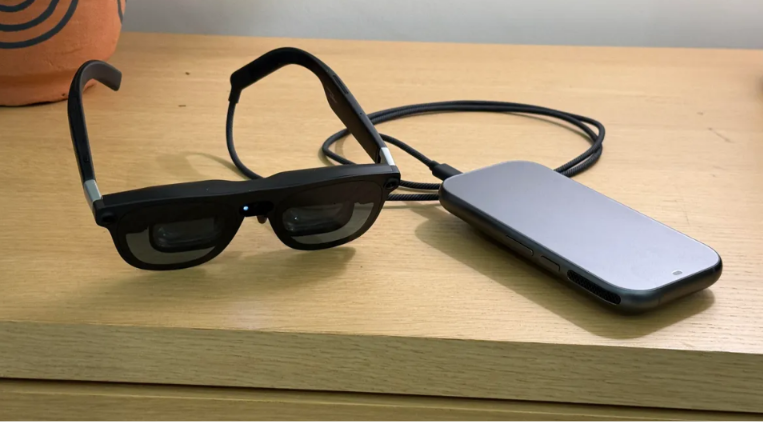
The hardware uses a split design. The glasses themselves weigh merely 95 grams, while a tethered compute puck houses the Snapdragon Reality Elite chip and battery. Therefore, XREAL keeps the weight off your face without sacrificing performance. Furthermore, the glasses pack an X1S spatial coprocessor for real-time rendering and 6DoF tracking.
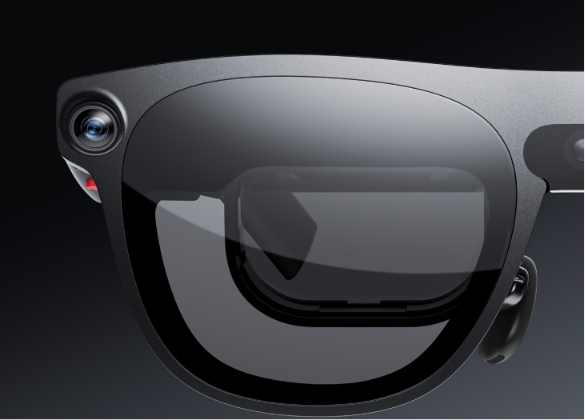
Optically, Aura employs next-generation birdbath optics with optical see-through passthrough. As a result, users see the real world directly through transparent lenses while digital overlays float in space. Additionally, the lenses feature electronically adjustable dimming, which adapts to ambient light and reduces washout in bright environments.
The Google-Qualcomm-XREAL Alliance
Aura marks a strategic shift for Google. Previously, Android XR only powered Samsung’s Galaxy XR headset, a niche enterprise device. Now, Aura brings the platform to consumers for the first time. In fact, Google treats XR as its fourth screen alongside phones, tablets, and watches.
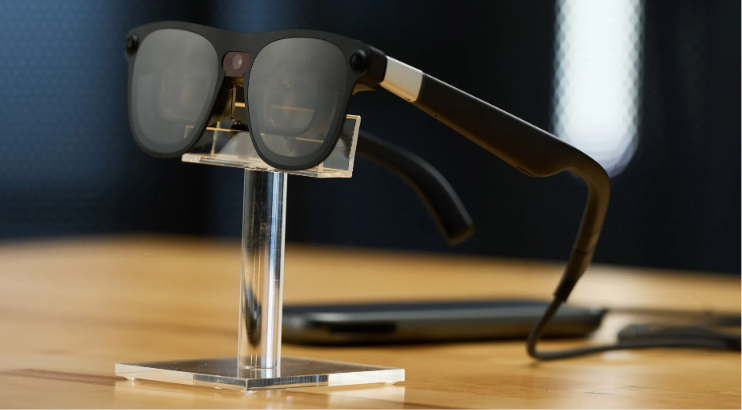
The Snapdragon Reality Elite chip inside the compute puck delivers enough horsepower for spatial multitasking, hand tracking, and immersive video. Meanwhile, Gemini AI enables multimodal interactions—Aura can identify objects, translate text, and guide repairs simply by looking at them. During AWE 2026 demos, attendees experienced spatial Google Maps navigation, 180°/360° YouTube videos, and multi-window Chrome browsing.
Over 100 XR-optimized apps are already in development. Thus, Aura launches with both a massive existing library and a growing native ecosystem.
Pricing and Availability
XREAL opened reservations immediately after the AWE announcement. For $99, buyers receive a $199 launch credit, effectively saving $100. Alternatively, a $299 Founder Priority Pass guarantees launch-day delivery and includes special-edition hardware. Notably, all 2,000 Founder units sold out within 36 hours.
The company confirmed the base model will not exceed $1,500 before tax. However, XREAL has not disclosed the exact final price. Initial launch markets include the United States, United Kingdom, Japan, Canada, and South Korea, with European availability following soon after.
How Aura Stacks Against Rivals
Aura occupies a unique position. Compared to the Apple Vision Pro, it weighs one-seventh as much and costs less than half the price. On the other hand, it sacrifices some immersion with a smaller field of view. Against the Meta Quest 3, Aura offers superior AI through Gemini and deeper app integration via Google Play, though it trails in raw gaming performance.
The table below summarizes the key differences:
| Feature | XREAL Aura | Apple Vision Pro | Meta Quest 3 |
| Weight | 95g | 600-650g | 515g |
| Field of View | 70° | ~100° | 110° |
| Optics | OST Passthrough | VST Video | VST Video |
| OS | Android XR | visionOS | Horizon OS |
| AI Assistant | Gemini | Siri | Meta AI |
| Price | ≤$1,500 | $3,499 | $499 |
| Form Factor | Glasses | Headset | Headset |
Who Should Buy Aura
Aura suits tech enthusiasts eager to explore Android XR early. Likewise, content creators benefit from its portable spatial computing capabilities. Developers targeting the Android XR platform should also consider it as a reference device.
However, budget-conscious buyers may find the $1,500 ceiling steep, especially since the final price remains undisclosed. Similarly, hardcore gamers might prefer the wider field of view and stronger performance of dedicated headsets.
Final Verdict
Aura is not perfect. The tethered puck adds cable clutter, and four-hour battery life demands frequent charging. Nevertheless, it represents the most credible consumer XR launch since Meta Quest 2. Google, Qualcomm, and XREAL each bring essential pieces—ecosystem, silicon, and hardware design—to create a genuinely wearable spatial computer.
For anyone waiting for AR glasses that actually work, Aura is the closest answer in 2026.
Leave a Reply