Tag: XREAL

XREAL, formerly named Nreal, is a Chinese leading maker of lightweight consumer AR glasses founded in 2017. The letter X stands for bridging virtual and real worlds.
Its glasses connect to phones, PCs and game consoles to create a huge portable virtual screen for work, gaming and streaming. Equipped with self-developed optical engines and spatial chips, they deliver wide-view, low-latency AR visuals. It ranks top globally in consumer AR glass shipments and cooperates closely with Google on Android XR systems.
  • XREAL Aura: First Android XR Glasses Hit Consumer Market

    XREAL Aura: First Android XR Glasses Hit Consumer Market

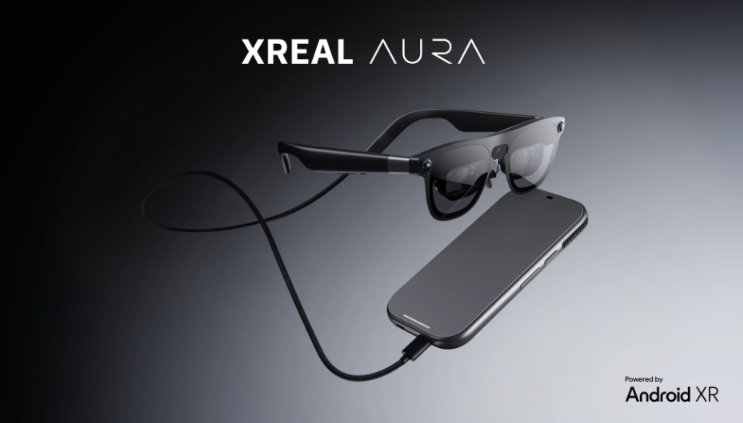
    XREAL has officially unveiled Aura, the world’s first consumer-grade XR glasses running Google’s Android XR platform. At just 95 grams with a 70-degree field of view, Aura bridges the gap between bulky headsets and everyday eyewear. Moreover, it arrives this fall with a price ceiling of $1,500, making it one of the most accessible high-end XR devices yet.
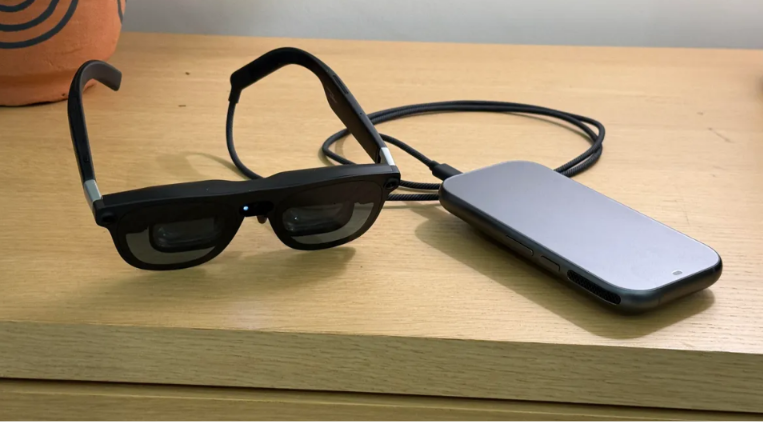
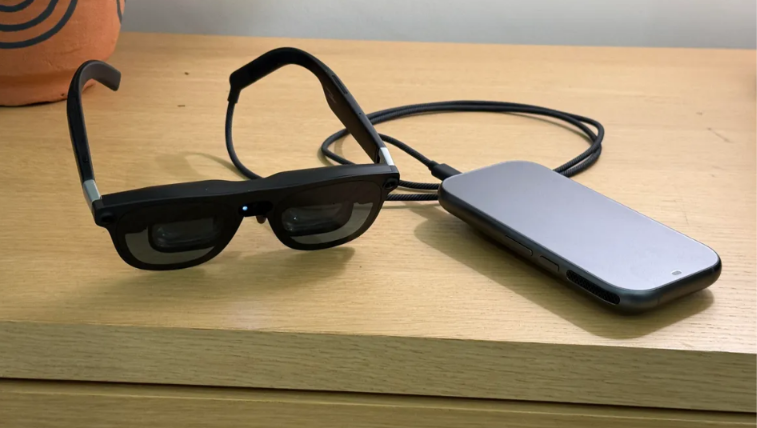
    XREAL Aura glasses with compute puck
    XREAL Aura glasses connected to compute puck

    What Makes Aura Different

    Aura stands out because it runs native Android XR, not a stripped-down companion OS. Consequently, millions of apps from Google Play work on day one, including spatial versions of Google Maps, YouTube, and Chrome. In addition, Google baked Gemini AI directly into the platform, so Aura can understand what you see and offer real-time context.

    The hardware uses a split design. The glasses themselves weigh merely 95 grams, while a tethered compute puck houses the Snapdragon Reality Elite chip and battery. Therefore, XREAL keeps the weight off your face without sacrificing performance. Furthermore, the glasses pack an X1S spatial coprocessor for real-time rendering and 6DoF tracking.

    Optically, Aura employs next-generation birdbath optics with optical see-through passthrough. As a result, users see the real world directly through transparent lenses while digital overlays float in space. Additionally, the lenses feature electronically adjustable dimming, which adapts to ambient light and reduces washout in bright environments.

    The Google-Qualcomm-XREAL Alliance

    Aura marks a strategic shift for Google. Previously, Android XR only powered Samsung’s Galaxy XR headset, a niche enterprise device. Now, Aura brings the platform to consumers for the first time. In fact, Google treats XR as its fourth screen alongside phones, tablets, and watches.
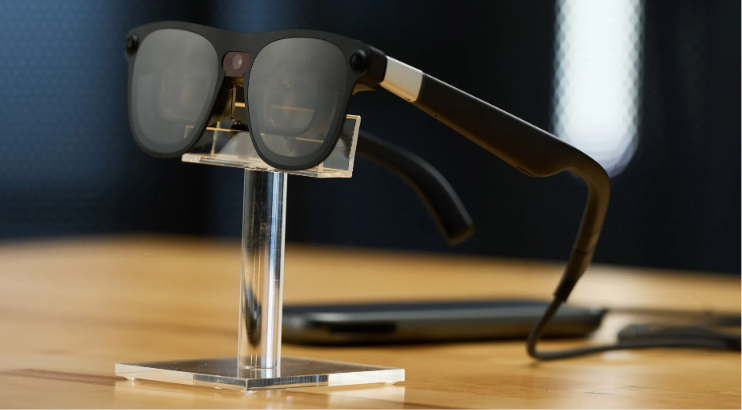
    XREAL Aura glasses display stand
    XREAL Aura glasses on display stand

    The Snapdragon Reality Elite chip inside the compute puck delivers enough horsepower for spatial multitasking, hand tracking, and immersive video. Meanwhile, Gemini AI enables multimodal interactions—Aura can identify objects, translate text, and guide repairs simply by looking at them. During AWE 2026 demos, attendees experienced spatial Google Maps navigation, 180°/360° YouTube videos, and multi-window Chrome browsing.

    Over 100 XR-optimized apps are already in development. Thus, Aura launches with both a massive existing library and a growing native ecosystem.

    Pricing and Availability

    XREAL opened reservations immediately after the AWE announcement. For $99, buyers receive a $199 launch credit, effectively saving $100. Alternatively, a $299 Founder Priority Pass guarantees launch-day delivery and includes special-edition hardware. Notably, all 2,000 Founder units sold out within 36 hours.

    The company confirmed the base model will not exceed $1,500 before tax. However, XREAL has not disclosed the exact final price. Initial launch markets include the United States, United Kingdom, Japan, Canada, and South Korea, with European availability following soon after.

    How Aura Stacks Against Rivals

    Aura occupies a unique position. Compared to the Apple Vision Pro, it weighs one-seventh as much and costs less than half the price. On the other hand, it sacrifices some immersion with a smaller field of view. Against the Meta Quest 3, Aura offers superior AI through Gemini and deeper app integration via Google Play, though it trails in raw gaming performance.
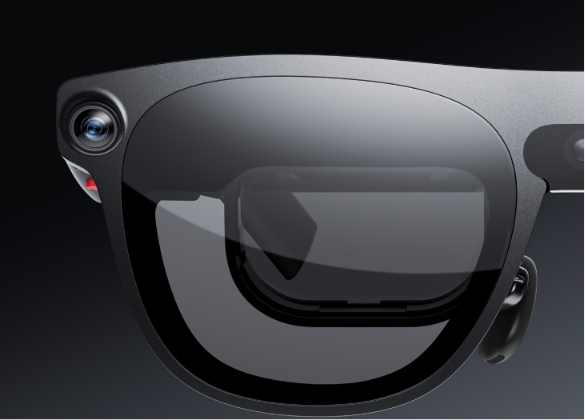
    XREAL Aura front camera view
    XREAL Aura front view showing camera

    The table below summarizes the key differences:

    FeatureXREAL AuraApple Vision ProMeta Quest 3
    Weight95g600-650g515g
    Field of View70°~100°110°
    OpticsOST PassthroughVST VideoVST Video
    OSAndroid XRvisionOSHorizon OS
    AI AssistantGeminiSiriMeta AI
    Price≤$1,500$3,499$499
    Form FactorGlassesHeadsetHeadset

    Who Should Buy Aura

    Aura suits tech enthusiasts eager to explore Android XR early. Likewise, content creators benefit from its portable spatial computing capabilities. Developers targeting the Android XR platform should also consider it as a reference device.

    However, budget-conscious buyers may find the $1,500 ceiling steep, especially since the final price remains undisclosed. Similarly, hardcore gamers might prefer the wider field of view and stronger performance of dedicated headsets.

    Final Verdict

    Aura is not perfect. The tethered puck adds cable clutter, and four-hour battery life demands frequent charging. Nevertheless, it represents the most credible consumer XR launch since Meta Quest 2. Google, Qualcomm, and XREAL each bring essential pieces—ecosystem, silicon, and hardware design—to create a genuinely wearable spatial computer.

    For anyone waiting for AR glasses that actually work, Aura is the closest answer in 2026.
  • Xreal Aura Launch: First Android XR Glasses with Gemini AI

    Xreal Aura Launch: First Android XR Glasses with Gemini AI

    One-sentence verdict: If Google can leverage its decade of Android ecosystem investment to make spatial computing feel as natural as using a smartphone, the Xreal Aura may be the first XR device that mainstream users actually want to wear—and not just for novelty.

    Xreal Aura glasses with compute unit
    Xreal Aura眼镜和桌面计算单元

    Quick Summary

    On June 18, 2026, Xreal officially opened reservations for the Aura, the world’s first XR glasses powered by Android XR and Qualcomm’s Snapdragon Reality Elite chip. Co-developed with Google, the device features a 70-degree field of view, weighs 95 grams, and employs OST optical see-through technology. A dual-chip architecture pairs the Snapdragon Reality Elite for Android XR, Gemini, and spatial computing with Xreal’s self-developed X1S chip for display and sensor processing. The glasses support temple controls and ten-finger gesture input, with Gemini AI enabling multimodal interactions. Reservations opened at $99 deposit and $299 priority pre-order, with Fall 2026 launches planned for the US, UK, Japan, Canada, and South Korea.


    What Happened

    The XR industry has spent years in experimental phases, with various form factors emerging but few achieving genuine consumer viability. The Xreal Aura represents a potential inflection point: not another prototype or developer kit, but a product backed by two of tech’s most powerful ecosystems.

    Project Aura consists of two components: the glasses themselves, responsible for display; and a wired compute unit roughly smartphone-sized, handling processing. Xreal, which built its reputation on lightweight AR glasses with industry-leading optics, designed the eyewear portion. The 70-degree field of view stands out in the AR glasses category, delivering an almost bezel-less experience within the wearer’s vision. At 95 grams, the glasses alone are lighter than most competing headsets, though the compute unit adds separate carrying burden.

    Xreal Aura Android XR official render
    Xreal Aura AndaR official product render

    The dual-chip architecture merits attention. The Snapdragon Reality Elite handles Android XR, Gemini AI, and spatial computing workloads, while Xreal’s self-developed X1S chip manages display processing and sensor fusion. This division of labor suggests neither company fully trusted the other to handle their respective strengths—Google wanted control over the software and AI stack, Xreal insisted on owning the optical and display experience.

    OST optical see-through represents a deliberate choice against camera-based passthrough. Rather than capturing the real world through cameras and displaying it on screens, Aura lets users see reality directly through transparent lenses with digital overlays. This reduces latency, preserves natural depth perception, and eliminates the uncanny valley effect that plagues video-passthrough headsets. The trade-off is lower immersion for fully virtual content, a compromise Xreal and Google clearly believe favors mainstream adoption.


    Why It Matters

    The Xreal Aura’s significance extends beyond hardware specifications. Three strategic elements distinguish it from existing XR devices.

    First, the Android XR ecosystem. Unlike Meta’s Horizon OS or Apple’s visionOS, which launched with limited native applications, Android XR inherits over a decade of Android development. From day one, users can download millions of existing Android phone and tablet applications. Google Maps and YouTube already feature XR adaptations, with YouTube’s extensive panoramic video library particularly suited to glasses form factors. This ecosystem advantage eliminates the “app desert” problem that plagued early VR and AR platforms.

    Second, Gemini AI integration. Early hands-on reports indicate Gemini operates as a genuine AI agent rather than a voice assistant. Commands like “find that video on YouTube” execute without manual browsing. Photo capture enables immediate AI-powered editing—removing unwanted objects, extracting ingredient lists from recipe photos, adding event schedules to Google Calendar. These actions synchronize across all Google-account-linked devices instantly. The multimodal capability—understanding vision, voice, and context simultaneously—transforms the glasses from a display device into an ambient intelligence layer.

    Third, the content strategy. Rather than relying solely on third-party developers, Google and Xreal pre-installed flagship experiences: “Project Hail Mary: Interstellar Journey,” a holographic game developed with original author Andy Weir, and “Factions,” a 3D XR game from the Fallout franchise. These anchor titles demonstrate spatial computing’s potential while providing immediate value for early adopters who might otherwise face a content drought.

    Xreal Aura woman wearing glasses
    Xreal Aura lightweight glasses worn daily

    Impact Analysis

    Market impact: The Xreal Aura could accelerate XR’s transition from “enthusiast niche” to “mainstream computing platform.” Google’s Android ecosystem provides immediate software legitimacy that Meta and Apple needed years to build. If Aura achieves even modest sales volumes, it validates the “glasses + compute unit” form factor for competitors considering similar architectures.

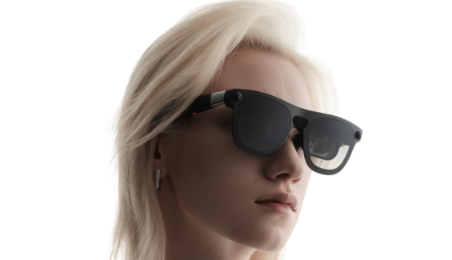
    Consumer impact: Users gain access to spatial computing without sacrificing social acceptability. At under 100 grams, Aura resembles oversized sunglasses more than cyberpunk headgear. The OST design means users maintain eye contact and environmental awareness—critical for public spaces where opaque headsets feel isolating. For existing Android users, the learning curve approaches zero; the interface extends familiar apps into three-dimensional space rather than inventing new interaction paradigms.

    Industry impact: The dual-chip partnership model—one company handling software and AI, another managing optics and display—may become a template for XR collaborations. Few manufacturers possess excellence across all domains; Aura demonstrates that strategic specialization can yield superior products faster than vertical integration attempts. This could encourage more partnerships between optical specialists and platform giants.


    What’s Next

    Several variables will determine whether the Aura achieves commercial success beyond enthusiast circles:

    First, the compute unit’s portability and battery life. A wired connection to a separate device, however smartphone-sized, introduces friction that fully integrated headsets avoid. Whether users accept this trade-off for lighter eyewear depends on typical usage scenarios and charging logistics.

    Second, gesture latency and accuracy. Early reports describe “slight delay” in hand tracking—acceptable for prototypes, potentially frustrating for daily use. Google’s AI capabilities may compensate through predictive algorithms, but physical responsiveness remains critical for immersive satisfaction.

    Third, pricing transparency. Current reservation options ($99 deposit, $299 priority pre-order) reveal nothing about final retail pricing. If the total package exceeds $1,000, mainstream adoption faces significant headwinds regardless of ecosystem strength.

    Fourth, regional rollout speed. The initial five-country launch (US, UK, Japan, Canada, South Korea) excludes China and major European markets. Given Xreal’s Chinese origins and Google’s limited China presence, domestic availability timing remains uncertain and strategically significant.