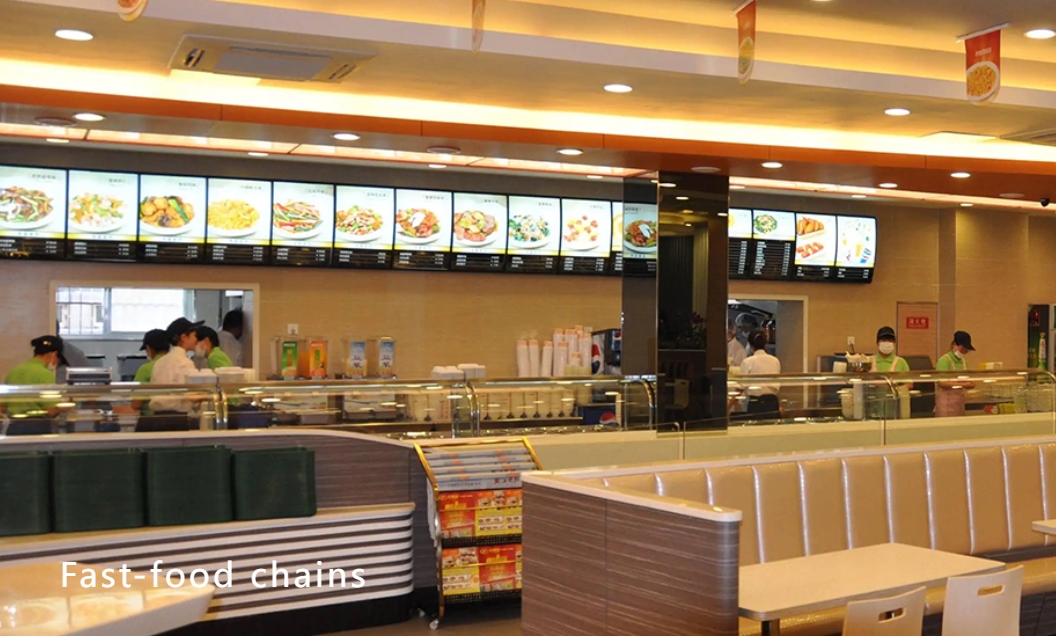
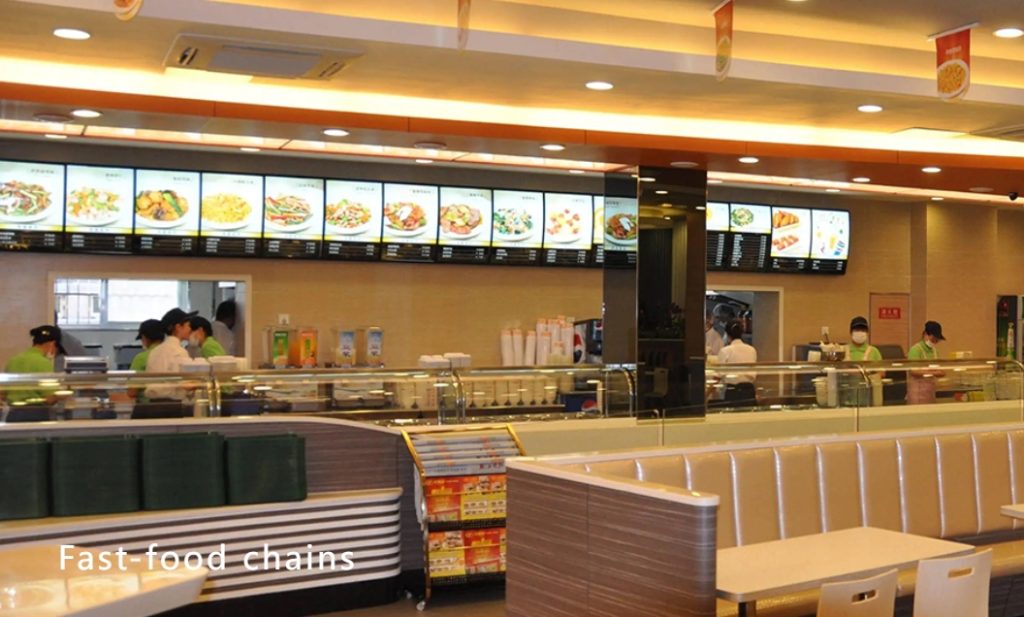
In the kitchen of a Chinese restaurant in Manhattan, New York, a fully stainless steel intelligent device precisely stir-fries chili and pork, its heat control rivaling that of a seasoned Chinese chef. In the kitchen of a fast-food chain in Shanghai, the same equipment allows one employee to oversee two machines simultaneously, doubling food preparation efficiency during peak hours. This transformative device is the TC-40EA medium-sized intelligent cooking robot launched by T-Chef China—not only a microcosm of the intelligentization wave in China’s catering industry but also embodies the ambition of “standardizing Chinese cuisine for overseas markets,” carving out a niche in the global commercial kitchen equipment market.
Industry Boom: A Golden Track Driven by Pain Points
The global catering industry is facing a profound efficiency crisis: continuously rising labor costs, a shortage of professional chefs, and difficulties in implementing standardized dishes. The emergence of intelligent cooking robots has become the key to solving this predicament.
2025 has been dubbed the “Year Zero of Cooking Robots” by the industry. Currently, the industry is characterized by three types of players competing: specialized robot companies leveraging their vertical technological advantages; cross-industry technology and home appliance giants utilizing their supply chain and capital advantages; and catering and supply chain companies exploring new models through resource integration. The focus of competition has shifted from individual devices to integrated solutions encompassing “hardware + software + data + supply chain.”
The combined forces of policy, demand, and technology have further fueled the industry’s growth. Taking Shanghai as an example, a related action plan released in November 2025 explicitly encourages catering companies to equip themselves with intelligent cooking robots. On the market side, the investment in an intelligent cooking robot can be recouped within 1-3 years through cost savings on labor, making it a core choice for catering companies to reduce costs and increase efficiency. On the technological side, the deep integration of AI and robotics technologies has led to increasingly mature functions such as high-precision temperature control and intelligent seasoning, driving the product’s leap from “automation” to “intelligence.” Of particular note is that intelligent cooking robots capable of Chinese stir-frying have become a unique and advantageous industry in China, and the demand for “Chinese cuisine going global” is continuously driving its expansion in overseas markets.
Product Analysis: The TC-40EA’s “All-Round Midfielder” Positioning and Core Competitiveness
T-Chef’s TC-40EA is precisely positioned for mid-sized commercial scenarios, falling between the smaller TC-20EA and the larger TC-300 series. It perfectly balances food preparation efficiency and space utilization, targeting core scenarios such as chain restaurants, group catering, and overseas Chinese restaurants, becoming an “all-rounder” for intelligent kitchen upgrades.
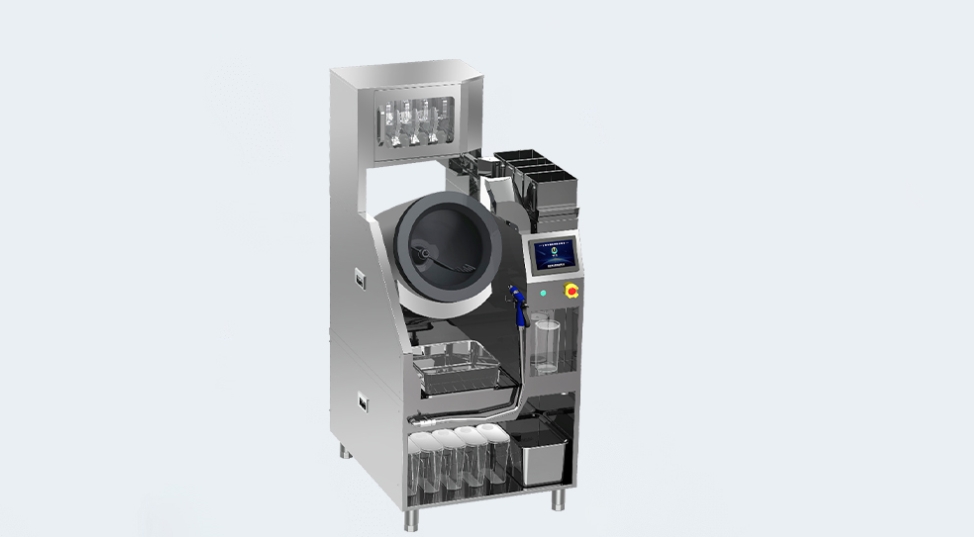
From a core performance perspective, the TC-40EA’s competitiveness lies in three dimensions: “precision, efficiency, and convenience.” Its integrated IH electromagnetic heating technology boasts a thermal efficiency of over 90%, saving 30%-40% more energy compared to traditional gas heating. Stir-frying temperatures can reach 250℃, accurately replicating the “wok hei” (wok aroma) of Chinese cooking, with a taste comparable to that of a professional chef—a Chinese restaurant owner in New Zealand, after trying it, immediately ordered three units due to the authentic taste of his stir-fried pork with chili. In terms of automation, this equipment supports both manual and automatic modes, enabling fully automated feeding, seasoning, stir-frying, serving, and cleaning—all without human intervention. It can cook up to 4kg in a single batch, completing a Chinese dish in just 4-5 minutes. One machine can replace multiple chefs, significantly reducing labor costs.
Intelligent features further enhance its competitiveness: the equipment has over 1000 built-in recipes and supports log recording for standardized management in chain stores; it features a color touchscreen with voice, light, and text prompts, allowing even inexperienced staff to operate it with simple training; it has multiple safety functions including pot temperature monitoring, overheat protection, and fault self-diagnosis; and its built-in water gun improves cleaning efficiency by 60%.
For the North American market, T-Chef offers a customized version, the TC-40EA-US, which has obtained international authoritative certifications such as ETL, ETL Sanitation, FCC, and UL, complies with NSF/ANSI Std.4 requirements, and is compatible with the North American 208V/60Hz AC 3P+N voltage standard. More innovatively, this version introduces a “humanoid robot” design, equipped with a “smart eye” interaction module in its head. This module provides real-time feedback on cooking progress and equipment status, upgrading kitchen supervision from “passive experience-based reliance” to “proactive, visual control.”
However, the TC-40EA is not without its flaws. Its 130kg weight and large size make it difficult to move, placing certain demands on the load-bearing capacity of the kitchen floor. The unit’s purchase price is in the mid-to-high range, creating initial financial pressure for small and medium-sized catering businesses. It still cannot completely replace experienced chefs when dealing with complex knife skills and personalized creative cooking scenarios. Furthermore, its automatic seasoning system has specific requirements for seasoning specifications and relies on standardized ingredient pre-processing, potentially increasing subsequent consumable and labor costs.
Competitive Landscape: Differentiated Competition in the Mid-to-High-End Market
The mid-sized commercial intelligent cooking robot market has entered a stage of fierce competition. The T-Chef TC-40EA faces dual challenges from both domestic and international brands. Its core competitors include the Utcook Chef G3 E, Aican H22, pcooker 5000P/E, as well as the flygood MS-C40 and SEMIKRON SK-40Pro.
Compared to domestic competitors, the TC-40EA’s core advantages lie in its balanced performance and overseas adaptability. The Utcook Chef G3 E focuses on community and elderly care scenarios, offering higher temperature control accuracy, but its overseas presence is weaker. The Aican H22 boasts a recipe library of over 2000 recipes, adapting to central kitchens for takeout, but its ability to reproduce the smoky flavor of a hot pot is slightly inferior. The pcooker 5000P/E has a fast heating speed and flexible overseas adaptability, but it is noisier and more difficult to clean. The TC-40EA balances culinary taste, automation, and scenario adaptability, while the customized TC-40EA-US version gives it a differentiated advantage in overseas markets.
Compared to overseas brands, the TC-40EA stands out with its cost-effectiveness and suitability for Chinese cooking. The German-backed Flygood MS-C40 boasts durability and supports both electromagnetic and gas dual-mode heating, but its price is relatively high and its level of intelligence is average. The Taiwanese brand Semikron SK-40Pro offers excellent value, but its after-sales service is unreliable. The T-Chef TC-40EA, positioned in the mid-to-high-end cost-effectiveness range, features a more complete AI algorithm and cloud platform ecosystem, and better understands the needs of Chinese cooking, especially in reproducing the “wok hei” (wok aroma) effect, outperforming most overseas competitors.
Industry analysts point out that the core of current market competition has shifted from “parameter comparison” to “scenario adaptability and service empowerment.” T-Chef’s TC-XaaS service model breaks down professional kitchen capabilities into ready-to-use digital modules. Through the cloud, it enables recipe updates, equipment monitoring, and predictive maintenance. This “equipment + service” model has fostered strong customer loyalty among chain restaurants.
Future Trends: From “Automation” to “Ecosystem,” Chinese Cuisine Goes Global as a New Blue Ocean
With technological iteration and market maturity, the intelligent cooking robot industry is experiencing six major development trends, and Chinese companies like T-Chef are leveraging their first-mover advantage to attempt to dominate the global industry landscape.
Firstly, technology is shifting from “experience replication” to “intelligent decision-making.” In the future, cooking robots will integrate AI big data models, IoT, and other technologies, possessing autonomous learning capabilities. They can dynamically adjust cooking parameters based on ingredient freshness and user taste preferences, achieving personalized cooking for each individual. T-Chef has assembled a team led by a PhD born in the 1990s to develop an “embodied intelligence brain for catering,” driving product upgrades from “replicating flavors” to “optimizing flavors.”
Secondly, the market is expanding deeper into B2B and penetrating into B2C. In the short term, group catering, fast food, and chain restaurants will remain the core growth drivers in the B2B market; in the long term, equipment will upgrade towards miniaturization and lightweight design, gradually penetrating the home market. Overseas markets will become a new blue ocean, with intelligent cooking robots capable of Chinese stir-frying being packaged with pre-prepared dishes and compound seasonings, becoming the core carrier for the “standardization of Chinese cuisine going global.”
Thirdly, industry standardization will continue to improve. The implementation of national standards in November 2026 will eliminate technologically outdated products and promote healthy competition within the industry; simultaneously, overseas compliance requirements will force companies to strengthen international certifications and improve the global adaptability of their products.
Fourthly, the business model is shifting from “equipment sales” to “full-service empowerment.” The closed-loop ecosystem of “hardware + software + data + supply chain” will become mainstream, and service models such as TC-XaaS will help catering companies reduce operating costs and improve efficiency.
Fifthly, human-machine collaboration will become the mainstream model in kitchens. Robots will handle repetitive, standardized cooking tasks, while chefs will shift towards creative work such as menu development and digitalization of processes, reshaping the talent division of the catering industry.
Sixth, green energy conservation will become a core competitive advantage. With the advancement of the “dual-carbon” policy, technologies such as electromagnetic heating and waste heat recovery will become widespread, making equipment energy consumption and environmental performance crucial competitive advantages for businesses.
Conclusion
The rise of T-Chef TC-40EA not only reflects the rapid development of China’s intelligent cooking robot industry but also demonstrates the breakthrough capabilities of “Made in China” in the commercial equipment sector. With its balanced performance, comprehensive service ecosystem, and precise scenario positioning, TC-40EA has already secured a place in domestic and international markets, and its global expansion is driving Chinese culinary culture and Chinese intelligent manufacturing technology onto the world stage.
However, challenges remain: the cost barriers for small and medium-sized catering enterprises, the technical limitations of complex cooking scenarios, and localization adaptation for overseas markets are all hurdles that Chinese companies like T-Chef need to overcome. However, it is certain that with the continuous iteration of technology and the constant innovation of business models, intelligent cooking robots will gradually become the “infrastructure” of the catering industry, and Chinese companies are expected to occupy a leading position in this kitchen revolution.


Leave a Reply