At the Samsung Galaxy Unpacked event on July 22, 2026, the next generation of dual-flagship smartwatches—the Galaxy Watch 9 and Galaxy Watch Ultra 2—officially debuted. Both products feature the latest Snapdragon wearable platform and on-device Galaxy AI, building their core competitiveness around AI health monitoring. The product lines are distinct: one targets daily urban health management, while the other caters to outdoor extreme sports enthusiasts. While most smart hardware remains stuck in the “data collection” phase, this new lineup from Samsung attempts a leap forward: evolving the wrist-worn device from a mere health tracker into an all-day AI health assistant.
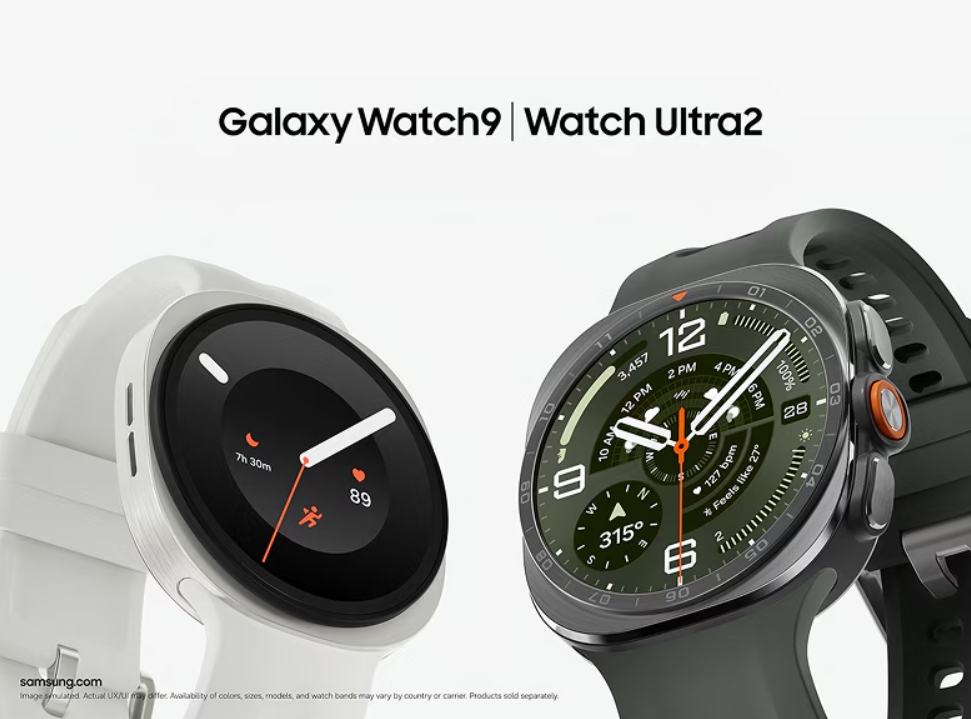
I. Design and Hardware: Clear Positioning for Two User Groups
Galaxy Watch 9 — The Versatile Urban Daily Driver
The Galaxy Watch 9 retains Samsung’s signature “round-face, square-body” lug-less design. It comes in two sizes (40mm and 44mm) and features an Armor Aluminum body that is just 8.6mm thick. The 40mm model weighs as little as 31.5g, ensuring minimal discomfort when worn during sleep.
It sports a Super AMOLED display with a peak brightness of 3,000 nits, offering excellent visibility for daily commutes and indoor environments. Sapphire crystal glass comes standard across the lineup, providing superior scratch and wear resistance.
Hardware specifications include the Snapdragon Wear Elite (3nm) processor and 2GB RAM/32GB storage. Battery capacities are 390mAh (40mm) and 445mAh (44mm), offering up to 30 hours of battery life under typical use. It also meets MIL-STD-810H military standards and holds an IP68 water resistance rating.
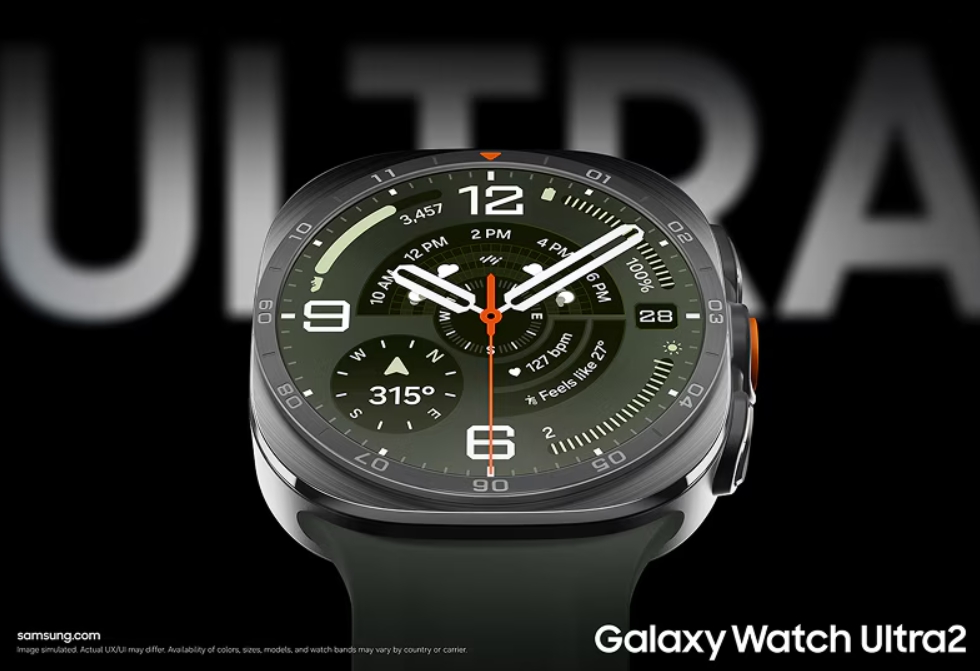
Galaxy Watch Ultra 2 — The Hardcore Outdoor Flagship
The Ultra 2 features a significantly upgraded market position, available exclusively with a large 47mm dial. Its titanium body balances lightweight construction with impact resistance, while the “Titanium Shadow Gray” and “Titanium Frost Silver” colorways offer a rugged aesthetic. Peak screen brightness has been boosted to 5,000 nits, ensuring clear visibility in harsh midday sunlight or on mountain trails without the need to shield the screen with one’s hand. Hardware Highlights: Powered by the same Snapdragon wearable chip and upgraded to a generous 2GB RAM + 64GB storage configuration; features a massive built-in 800mAh battery offering up to 60 hours of runtime—eliminating the need for a charger during short camping trips or two-day excursions; equipped with L1+L5 dual-band GPS for significantly enhanced positioning accuracy.
Top-Tier Durability: Rated IP69K (dust and high-pressure water resistance) and 10ATM water-resistant; certified to the EN13319 standard for professional diving equipment, supporting dive monitoring up to 40 meters and catering to specialized activities such as trail running, triathlons, open-water swimming, and diving.
>
Core Hardware Commonality: Both models share the same core processor and support on-device AI computing. Health data analysis and voice interactions do not rely entirely on smartphone cloud services; local data processing ensures both rapid response times and data privacy.
II. Key Highlight: Galaxy AI Redefines Wrist-Based Health Monitoring
The most significant innovations in this generation center on AI health algorithms and the second-generation BioActive integrated biosensor. While previous smartwatches merely passively recorded heart rate and blood oxygen levels, the Watch9 and Ultra2 leverage AI to deliver trend analysis, risk alerts, and personalized health recommendations, representing the most feature-complete lineup of consumer AI health wearables to date.
1. Major New Feature: AI-Powered Sleep Apnea Risk Monitoring
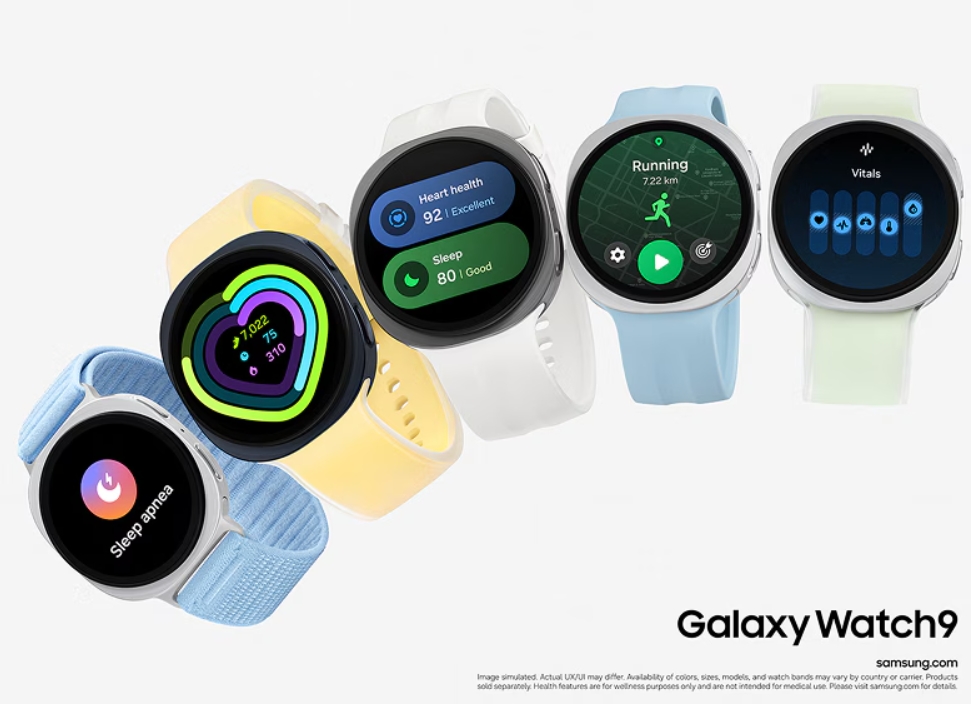
The entire series features a sleep apnea screening algorithm. The watch continuously collects data on breathing fluctuations, blood oxygen levels, and heart rate throughout the night, using AI to detect instances of interrupted breathing. By aggregating sleep data over multiple days, the system assesses the potential risk of moderate-to-severe sleep apnea and offers lifestyle improvement suggestions.
Going beyond simple tracking of sleep stages, this feature directly addresses a common modern health issue and represents a trending area in the consumer health wearable market.
*Note: Monitoring results are for general reference only and do not replace professional medical diagnosis. *
2. Continuous AI Cardiovascular Health Monitoring
- AI-powered ECG screening for Atrial Fibrillation (AFib), allowing for one-touch ECG waveform recording at any time;
- Heart Health Scoring System: AI integrates resting heart rate, heart rate variability (HRV), and activity load to generate an intuitive cardiovascular health score;
- New Daily Cardiopulmonary Load Analysis: Automatically assesses whether daily exercise volume is excessive and estimates recovery time, helping to prevent strain caused by overexertion.
3. Ultra2-Exclusive AI Sports Capabilities
Leveraging a larger battery and professional-grade sensors, the Ultra2 introduces AI-based sweat loss analysis and smart hydration reminders. During workouts, it calculates sweat loss relative to body weight and automatically suggests optimal hydration timing and intake amounts—ideal for long-distance running, trail running, and other endurance activities.
A dedicated trail running mode precisely tracks elevation changes, ascent data, and terrain impact; AI dynamically adjusts pacing recommendations to reduce the risk of outdoor injuries. A professional diving app is also coming soon to track ascent/descent speeds and safety thresholds.
4. Samsung AI Health Assistant: Ecosystem Integration
The new Samsung AI Health Assistant (Beta) has launched, enabling seamless data sharing between the watch and the Galaxy Ring. The AI aggregates multi-dimensional metrics—including all-day activity, sleep, body temperature, and blood oxygen levels—to provide comprehensive health insights rather than just isolated figures. Examples include: “Sleep has been consistently light over the past week; consider adjusting your bedtime” or “Resting heart rate is trending upward; pay attention to stress management.”
III. System Experience, Battery Life, and Ecosystem
Powered by Wear OS with the One UI Watch interface, the system offers significantly improved fluidity compared to the previous generation. The new 3nm chip eliminates multitasking lag and enhances stability for notifications, offline music playback, and background workout tracking.
Compatibility has been optimized; beyond Samsung devices, other mainstream Android phones can now fully access the vast majority of health features, eliminating the issue of restricted functionality found in earlier versions. Real-world Battery Life Reference
- Galaxy Watch 9: With Always-On Display (AOD) enabled, all-day health monitoring, and one hour of daily exercise, it offers standard battery life for mainstream smartwatches (requiring a nightly charge); disabling AOD can extend usage to nearly 40 hours.
- Galaxy Watch Ultra 2: Easily exceeds 45 hours under similar usage conditions and can surpass 100 hours in power-saving mode, placing it at the top tier for battery performance among large-screen flagship smartwatches.
In terms of the ecosystem, the watches support integration with numerous third-party fitness platforms (such as Strava and iFIT), while a wide variety of watch faces and third-party apps expand the range of daily use cases.
IV. Objective Overview of Strengths and Weaknesses
✅ Key Strengths
- Leading Health Features: Highlights such as sleep apnea detection and continuous AI-driven cardiovascular monitoring directly address common health needs.
- Clear Product Differentiation: The lineup is clearly segmented—everyday users can choose the Watch 9, while outdoor enthusiasts can opt for the Ultra 2—avoiding internal market overlap.
- On-Device AI Processing: Protects the privacy of sensitive health data; also supports integration with the Samsung smart ring to build a comprehensive wearable health ecosystem.
- High-End Hardware: The Ultra 2 features professional-grade diving capabilities and dual-frequency GPS—specs rarely found at this price point—challenging the market dominance of specialized outdoor sports watches.
⚠️ Current Limitations
- Standard Battery Life: The Watch 9 offers mainstream battery performance without a breakthrough improvement; heavy users will still need to charge it daily.
- Android Dependency: Some advanced health features require an Android phone, resulting in limited functionality within the iPhone ecosystem.
- Weight: The Ultra 2 features a titanium body weighing 61.5g; users with slender wrists may feel a noticeable heaviness during prolonged wear.
- Non-Medical Grade: All health monitoring features are intended for daily reference only and are not certified for medical diagnosis.
V. Buying Recommendations
- Choose Galaxy Watch 9 (Starting at 2,499 RMB)
Ideal for urban office workers, female users, and those with a specific need for sleep monitoring. Best for users who prioritize a lightweight fit, daily health management, and casual workouts; suitable for those with a moderate budget who do not require extreme outdoor or diving capabilities. – Choose the Galaxy Watch Ultra2 (5,299 RMB)
Ideal for long-distance runners, trail hikers, and diving enthusiasts; suitable for those who require long battery life, high-precision GPS, and rugged durability, frequently engage in prolonged outdoor activities, and want a premium, all-in-one smartwatch that meets every need.
VI. Conclusion: A Bellwether for the New Wave of AI Health Hardware Competition
Looking at the recent flurry of AI-powered health hardware releases, the Samsung Galaxy Watch 9 and Ultra2 chart a clear path forward: combining sensor hardware upgrades with on-device large AI models to shift the focus from mere “data collection” to “health insights.”
In the past, consumers prioritized battery life, watch faces, and notifications when buying smartwatches; today, there is increasing emphasis on tracking sleep, heart health, and long-term physical well-being. Samsung’s dual-flagship strategy perfectly aligns with the current trends in consumer health wearables.
If your needs center on daily vital sign monitoring, sleep management, and light exercise, the Galaxy Watch 9 offers a balanced, versatile choice. If, however, you love outdoor exploration and want a premium wearable that handles both daily commuting and extreme environments, the Galaxy Watch Ultra2 is a standout AI health flagship worth experiencing.
Leave a Reply