Home

  • Smart Wheelchair Robots Address the Challenges of Aging

    Smart Wheelchair Robots Address the Challenges of Aging

    Recently, Shuangpai Robotics, a company specializing in intelligent wheelchair robots, announced the completion of a tens of millions of yuan Series A financing round, led by Tiantu Capital. This financing, seemingly focused on “traditional assistive devices,” actually signifies a deep convergence of embodied intelligence and the silver economy. Driven by both accelerating aging and the spillover effects of AI technology, intelligent mobility is moving from “concept demonstration” to “essential real-world application,” becoming one of the most promising and certain high-potential tracks in the AI hardware field.
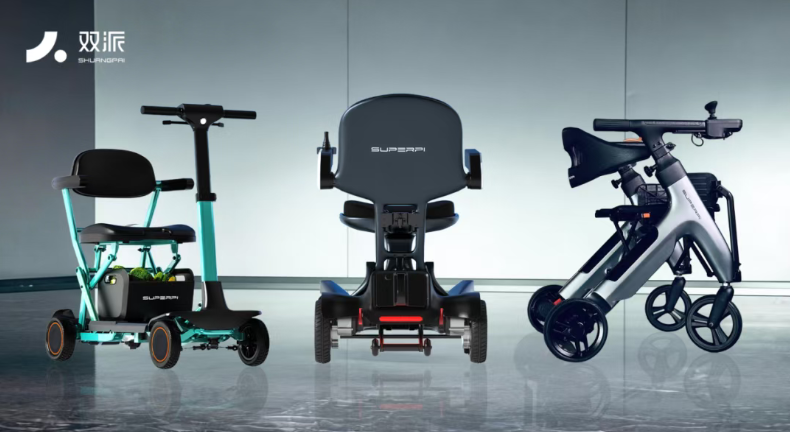
    Dual-Faction Robotics Product Line
    Dual-Faction Robotics Product Line

    I. Demand Restructuring: From “Stigma Aids” to “Dignified Travel Terminals”

    Data shows that the global population aged 60 and over has now exceeded 1.4 billion and is continuing to climb at an average annual rate of nearly 3%. The United Nations Population Division predicts that this number will double to 2.1 billion by 2050. With the combination of aging and chronic diseases, the proportion of elderly people with mobility impairments or who require daily assistance is constantly increasing, and the demand for mobility aids is experiencing a structural expansion.

    However, the global wheelchair and smart mobility market has long been highly fragmented. While traditional manufacturers hold a basic position in the field of electric and mechanical mobility, they have not yet formed absolute leaders in intelligent sub-sectors such as embodied interaction and environmental perception, resulting in a low overall market concentration. Mainstream products are still in the “passive mobility” stage, which is difficult to match the upgraded demands of the global elderly for safe, dignified and autonomous mobility.

    For contemporary seniors, transportation tools have long transcended basic functions, carrying the weight of dignity, safety, and social needs. Younger seniors resist being labeled, while older seniors crave “zero learning costs.” The pain points of traditional products—bulky, clunky to operate, and medical-looking—are creating enormous potential for experience upgrades.

    This shift in demand provides a clear product definition direction for the age-friendly transformation of AI hardware: smart wheelchairs are no longer cold, impersonal rehabilitation devices, but rather “personalized smart terminals” that integrate mobility, environmental perception, and interactive decision-making.

    II. Hardware Breakthrough: A Gradual Implementation Approach is Needed

    The key to breaking the deadlock lies in truly integrating intelligence into wheelchairs, rather than simply piling up parameters and hyping up concepts. Companies, represented by industry upstarts, are moving away from the “technical show trap” and towards a technology route that prioritizes user experience and iterates incrementally.

    At the underlying hardware level, the self-developed core components have become a watershed moment in the user experience. By collaborating with leading supply chains to customize high-torque-density motors, and by developing lightweight folding structures and aerospace-grade carbon fiber materials, Shuangpai Robotics has effectively overcome engineering pain points such as range anxiety, storage challenges, and unstable vehicle center of gravity.

    At the algorithm and control level, multimodal sensor fusion (ultrasound + vision + IMU) combined with edge AI computing power enables dynamic obstacle avoidance, slope anti-slip, fall warning, and adaptive speed adjustment. The introduction of large model capabilities makes voice interaction, rehabilitation guidance, and abnormal behavior recognition possible.

    This strategy of “first achieving commercial viability, then adding AI capabilities” ensures product security and usability while also reserving architectural space for subsequent OTA upgrades and data closure. An industry consensus is gradually becoming clear: AI hardware for the elderly must adhere to the engineering logic of “mechanical reliability as the foundation, software experience as the wings.”

    III. Business Closed Loop: Overseas Validation and Transformation into Service-Oriented Manufacturing

    Verifying technological feasibility is inseparable from establishing a viable business model. The expansion of distribution channels and overseas presence for smart wheelchairs is reshaping the industry’s value chain.

    Currently, leading companies have successfully established a three-dimensional distribution channel encompassing “B-end benchmarking + C-end retail + global distribution.” In China, Shuangpai Robotics ‘ products have already entered high-end senior living communities such as Taikang Home and offline senior shopping malls. Globally, its lightweight and easy-to-operate features have enabled it to rapidly penetrate nearly 30 markets, validating the product’s universality in meeting global aging needs.

    More noteworthy is the evolution of business models: the industry is shifting from “one-time hardware sales” to “hardware + subscription service (HaaS)”. Real-time gait, heart rate, and environmental data collected by the devices can be extended to fall intervention, rehabilitation advice, and remote medical calls; combined with a “leasing + sharing” model, this effectively lowers the barriers to entry for elderly care institutions and hospitals. Hardware becomes the entry point, while data and services build long-term barriers to entry—this is the core logic behind the heavy investment from capital.


    IV. Industry Outlook: The Next Hurdle and Breakthrough Point for AI-Powered Elderly-Friendly Hardware

    Despite its promising prospects, AI-powered hardware for the elderly is still in its early stages of commercialization. The industry faces three core challenges:

    First, data security and privacy compliance. The collection, transmission, and cloud processing of health and behavioral data must comply with medical-grade standards and the requirements of the Personal Information Protection Law. Data anonymization and localization processing under an edge-cloud collaborative architecture will become standard practice.

    Secondly, there’s the “last mile” of age-friendly interaction. Voice recognition needs to adapt to language and speech rate decline, touch interfaces need to be designed to tolerate vision loss and decreased touch accuracy, and the integration of physical buttons and digital interaction still requires extensive user testing.

    Third, supply chain mass production and cost control. While developing core components in-house can improve the user experience, it poses stringent challenges to startups in terms of yield control, cash flow, and large-scale delivery.

    In the next 3-5 years, the banking sector will undergo a transformation from “single-product intelligence” to “ecosystem interconnection,” and from “usable” to “user-friendly.” Companies with a global perspective, deep expertise in underlying electromechanical algorithms, and a commitment to an age-friendly design philosophy are expected to establish long-term competitive advantages.

    Technology Safeguards the Elderly
    Technology Safeguards the Elderly

    Conclusion

    When AI has wheels, wheelchairs will no longer be passive means of transportation, but intelligent agents with the ability to perceive, make decisions, and provide companionship. The tens of millions of yuan Series A funding is just the beginning; it reflects the business logic of using technology for good and the genuine aspirations of an aging society.

    Driven by the wave of smart hardware, senior citizen mobility is undergoing a paradigm shift from “assistive devices” to “life partners.” For smart hardware entrepreneurs, understanding the “dignity and freedom” of the elderly, refining details with engineering thinking, and creating value through data loops may be the best key to unlocking the next trillion-dollar market.


  • AI Accompanying a New Industry? DIY Bionic Robot Éloi Arrives

    AI Accompanying a New Industry? DIY Bionic Robot Éloi Arrives

    DIY Bionic Robot Éloi
    DIY Bionic Robot Éloi

    introduction

    As artificial intelligence rapidly permeates the physical world, consumer robots are undergoing a paradigm shift from “functional execution tools” to “emotionally symbiotic partners.” Traditional hardware development often pursues ultimate efficiency, precision, and obedience, while neglecting the most fundamental needs of human-machine relationships: psychological acceptance and emotional connection.

    Emerging explorations, exemplified by the DIY bionic robot Éloi, are attempting to solve the challenge of truly integrating AI into home scenarios through underlying architectural innovation and interactive logic reconstruction.

    aicrunchx will systematically analyze its design philosophy and market strategy from three dimensions: the R&D team’s technological background, the core selling points of the products, and the evolution of AI in the industry, and will also analyze its implications for the future of smart hardware.

    Éloi 's Concept Design
    Éloi ‘s Concept Design

    I. R&D Team: Cross-disciplinary Integration and a “Life-like” Technological Philosophy

    The product’s R&D system exhibits a rare combination of “engineering aesthetics × underlying algorithms.” Core members possess both top-tier experience in developing bionic robots for theme parks and cutting-edge AI architecture capabilities from Silicon Valley. This background allows them to break free from the traditional path of robot development that emphasizes movement and control while neglecting expression. The team introduced the “breathing” principle from dynamic character design into hardware development, believing that the realism of a robot does not stem from the mechanical replication of movements, but rather from non-standardized, random micro-reactions and instinctive feedback.

    In terms of algorithm architecture, the team abandoned the response logic that relied solely on large language models and built a unified framework centered on visual, language, and environmental awareness (VLE), and pioneered the integration of an “instinctive response layer.” Building upon their long-term accumulation of data annotation in the field of human micro-expressions and behavioral intentions, the team deeply coupled emotion recognition, environmental understanding, and autonomous feedback mechanisms, enabling the system to possess human-like psychological states such as curiosity, boredom, and resistance. Furthermore, the hardware design employing a localized, detachable memory chip not only completely cuts off the path of cloud data uploads to ensure privacy but also allows “personality and interactive memory” to detach from a single physical carrier, achieving lossless transfer and intergenerational continuation of the digital soul.

    II. Core Selling Points: Modular Co-creation and Anti-Tool-Based Interaction

    Éloi’s product definition directly addresses the homogenization pain point of current companion hardware, and its core selling points can be summarized as “physical flexibility” and “interaction without tooling”.

    On the hardware side, the product uses a magnetic modular skull platform, allowing users to freely replace facial features, skin, and hairstyle components. Advanced users can even modify the structure within the frame. This highly open DIY feature, combined with a semi-humanoid static layout, effectively avoids the “uncanny valley effect” that can easily be caused by full-size mobile robots, significantly lowering the psychological defense threshold in the home setting.

    On the interaction level, Éloi deliberately downplays its “command-response” tool attributes, instead emphasizing a “two-way” companionship logic. In standby mode, the device maintains its dynamic presence through subtle blinks, environmental scanning, and simulated chest rise and fall; its built-in self-testing system provides warnings about component wear in a human-like tone, transforming cold troubleshooting into emotional communication. More importantly, its response latency is precisely anchored within the 0.2 to 0.3 second range. This value is not simply a pursuit of technological limits, but rather a psychological test based on the rhythm of human conversation: too fast appears mechanical, too slow appears sluggish, and only this range can restore the natural rhythm of real interaction.

    The product does not pursue absolute efficiency and compliance, but rather retains a moderate degree of “imperfection” to stimulate users’ emotional investment and willingness to care for it, thus truly elevating it from a “home appliance” to a “co-creating family member”.

    III. Analysis of the AI Companionship Industry: From “One-Way Obedience” to “Two-Way Symbiosis”

    Currently, the AI companionship market is generally trapped in the dilemma of “screen dependence” and “emotional fast food”. Most products provide instant gratification by eliminating all interaction friction, but this leads to fragile user stickiness, shallow emotional connection, and ultimately degenerates into short-lived novelty consumption.

    This product’s entry strategy offers a breakthrough for the industry: the essence of companionship is not one-way taking, but rather the building of relationships that require mutual investment. Its development path clearly avoids the embodied track, which is still in its critical stage, and prioritizes focusing on high-cognition static companionship scenarios, solving “psychological acceptance” first and then iterating on “physical movement”.

    This aligns with the objective laws of technological evolution and allows for a buffer period for market education. In the future, the competitive barriers for AI companion hardware will shift from simple computing power and supply chain efficiency to a comprehensive capability encompassing “content IP creation + community ecosystem operation + emotional algorithm optimization”.

    Only by placing robots in real-life narratives, allowing them to have independent personalities and emotional fluctuations, and even retaining a moderate amount of “trouble” (such as needing attention or getting bored), can we break the “use and then turn off” fate of tools and establish a long-term emotional bond similar to that of pet ownership.

    Conclusion

    Éloi’s exploration marks a shift in companion robots from simply piling on technology to focusing on humanistic care. The R&D team, anchored by a sense of “life,” has reshaped the role of AI devices in the home through modular hardware, localized memory, and anti-tool-like interaction.

    In today’s world where AI hardware is becoming increasingly widespread, these gadgets may not be able to replace human labor for the time being, but they are awakening genuine emotional connections in a warmer and more restrained way. With the iteration of multimodal algorithms and the maturity of flexible supply chains, intelligent agents with the ability to resonate with emotions are expected to become the infrastructure of future homes. How to accurately balance technological rationality and human warmth will be a question of our time that all players must continue to answer.

  • MOTOSTUHL Lavenne R9: AI Ergonomic Chair

    MOTOSTUHL Lavenne R9: AI Ergonomic Chair

    Preface: The Furniture Industry’s “AI Moment”

    As we stand in 2026, artificial intelligence is no longer a novel concept; however, deeply integrating it into traditional furniture remains a significant challenge.

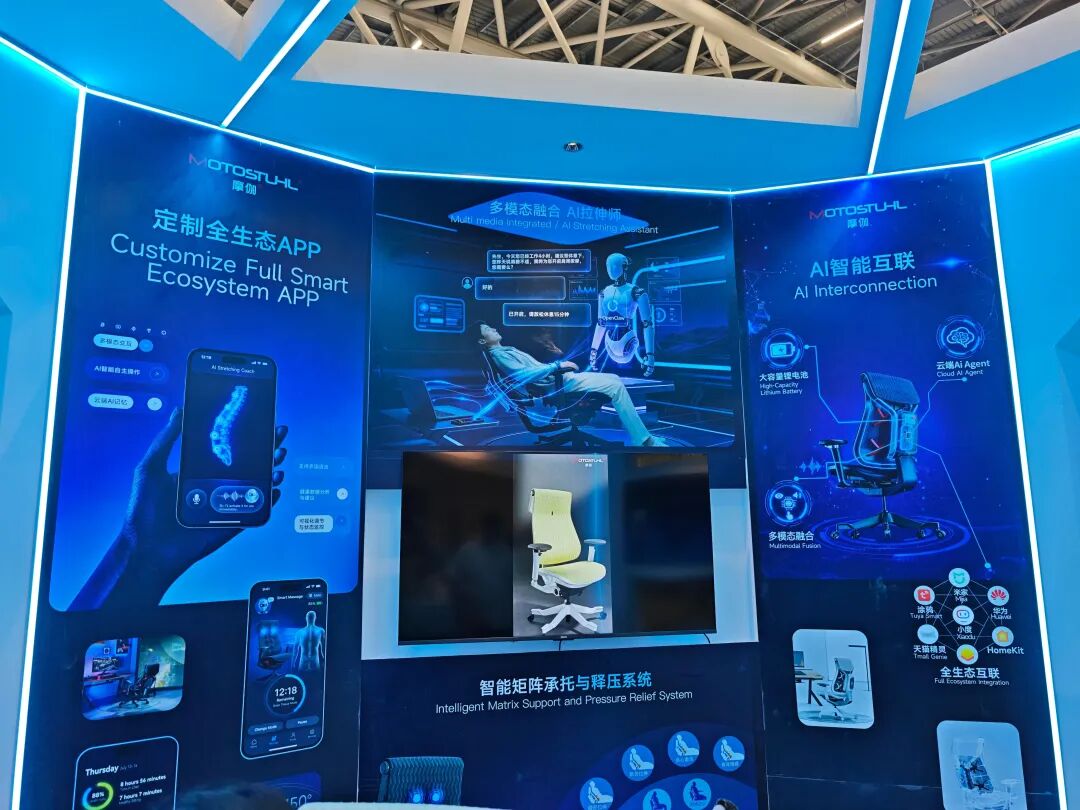
    Recently, MOTOSTUHL unveiled its latest product—the Lavenne R9—at the 57th China International Furniture Fair (Guangzhou). The company claims it is a truly authentic “AI chair.”

    Rather than merely layering on voice control capabilities, the Lavenne R9 attempts to fundamentally reimagine the sitting experience through sophisticated algorithms.

    So, is this high-priced AI ergonomic chair just another gimmick within the AI ​​hardware sphere, or is it a powerful product capable of truly reshaping the landscape of traditional furniture?

    AICRUNCHX brings you an exclusive hands-on review and buying guide straight from the 57th China International Furniture Fair (Guangzhou).

    MOTOSTUHL Lavenne R9
    MOTOSTUHL Lavenne R9

    Core Hardware: The 16-Airbag Bionic System

    The standout feature of the Lavenne R9 is its proprietary “Four-Layer Suspension Backrest Bionic Movement System.”
    While traditional ergonomic chairs rely on mechanical structures to provide passive support, the R9 features 16 independently controlled airbags embedded within its backrest. These airbags can precisely inflate and deflate to adjust support at various points along the torso, adapting to the user’s unique body shape. Our on-site testing revealed that these adjustments are remarkably responsive and virtually silent. Furthermore, when combined with its patented “Forward-Tilting Drift” function, the backrest and seat cushion can tilt forward in sync with the user’s posture while working at a desk; this real-time adjustment of support intensity effectively alleviates pressure on the lumbar spine.

    The AI ​​Experience: From “Commands” to “Perception”

    Upon connecting to the OpenClaw collaborative system, the Lavenne R9 demonstrates the level of intelligence one would expect in 2026:
    Natural Language Interaction: Users simply need to say, “I’m ready for my lunch break,” and the backrest airbags automatically adjust to an enveloping configuration, creating a comfortable environment for reclining and resting.

    Cloud-Based Memory & Health Analysis: The chair records user preferences and automatically switches to the appropriate mode the moment a user sits down. Through future OTA updates, the AI ​​will be able to remember specific health-related needs (e.g., “my shoulders feel stiff”) and proactively ask if the user would like to initiate a massage session during rest periods.

    Active Intervention: If sensors detect that a user has remained seated without moving for two hours, the AI ​​will issue a voice reminder to stand up; alternatively, it may utilize subtle airbag adjustments to correct the user’s sitting posture, guiding the spine back into a naturally aligned and balanced state. Ecosystem Integration: The New Hub for Smart Homes

    For users with a fully integrated smart home system, the R9’s compatibility is highly appealing. It supports major ecosystems such as Huawei, Mijia, Xiaodu, Tmall Genie, and HomeKit.

    The scenarios demonstrated on-site were impressive: as you take your seat, pressure sensors trigger a chain reaction—automatically opening the curtains, powering on your computer, and adjusting the lighting and air conditioning temperature. The chair is no longer merely a passive piece of furniture; it has evolved into the “launcher” for your workspace environment.

    Price Speculation and Competitive Analysis

    As of March 29, 2026, Moga has not yet officially announced a unified global price for the R9. Based on its flagship positioning, patented technologies, and AI computing costs, AICRUNCHX has analyzed current market trends to offer the following estimates:
    Estimated Price: $1,200 – $2,000 USD
    Compared to Traditional Flagships (e.g., Herman Miller): Slightly higher in price, but offers a distinct advantage through its active AI adjustments and smart ecosystem integration.
    Compared to Standard Smart Chairs: Represents a “tier-above” competitive advantage (a decisive leap in capability), though it comes with a higher barrier to entry.

    Buying Guide: Who Should Buy?

    Recommended For:
    Tech Enthusiasts: Those seeking the latest AI hardware experiences and eager to experiment with new features delivered via OTA updates.
    Heavy Desk Users: Individuals who spend over 6 hours a day seated at a desk and require precise lumbar support as well as health-monitoring reminders.
    Smart Home Users: Those who already possess a compatible smart home ecosystem and wish to enable “sit-down-and-work” scenario automation.
    Proceed with Caution:
    Budget-Conscious Buyers: The price point is significantly higher than that of standard ergonomic chairs.
    Priority on Stability: Some advanced AI features still rely on network connectivity and cloud services; those who prefer purely mechanical reliability should weigh this carefully.
    Environments Without Internet: If a Wi-Fi connection is unavailable, the core smart functionalities of the chair will be inaccessible.
    Conclusion
    The Moga Lavenne R9 demonstrates the potential for furniture to transition toward “active intelligence.” While some advanced features may still require future OTA updates for full refinement, its 16-airbag system and comprehensive ecosystem connectivity capabilities are sufficient to establish it as a benchmark product in the 2026 smart furniture market.
    If you have a generous budget and crave the ultimate office experience, the Lavenne R9 is well worth adding to your shortlist. However, for the average user, a traditional flagship ergonomic chair may still represent a more cost-effective choice.

  • PathFinder: AI Agent Reshaping the Golf Ecosystem

    PathFinder: AI Agent Reshaping the Golf Ecosystem

    As artificial intelligence moves from data perception to embodied decision-making, sports technology is ushering in a new paradigm revolution. Golf, as one of the most popular sports among high-net-worth individuals globally, has long been plagued by industry pain points such as high barriers to professional training, fragmented data services, and insufficient intelligent decision-making capabilities. Recently, aicrunchx noticed a startup team from the University of Pennsylvania—PathFinder—which is leveraging cutting-edge robotics technology and deep motion cognition to integrate embodied intelligence, multimodal perception, and biomechanical analysis to launch BirdieSense, an intelligent agent terminal for golf scenarios.

    I. Tech Geeks × Sports Experts: A Tech Dream Team with Expertise in Sports

    The founding team of PathFinder is a hybrid team of “geeks + athletes” with top academic backgrounds and deep sports experience. Core founder Chen Yi (Steve) graduated from the GRASP Robotics Lab at the University of Pennsylvania and has more than 15 years of competitive sports experience, with a best golf score of 89. Co-founders Lin Zixuan and Xu Kaihan also graduated from the robotics major at Penn and have been playing golf for more than 20 years.

    Over 95% of the team members are deeply involved in golf, spanning diverse backgrounds including professional players, course managers, and content creators. This “tech geek × sports expert” combination allows the team to be proficient in embodied intelligence and AI algorithms, while also possessing a deep understanding of North American golf culture, training pain points, and commercialization logic. They are not merely technology providers, but “tech people who understand golf,” possessing strong cross-cultural product definition capabilities and localization potential, making them an international entrepreneurial force tailored to reshape the golf AI ecosystem.

    II. BirdieSense: The Smart Terminal for Golf, From Data Recording to Proactive Decision Making

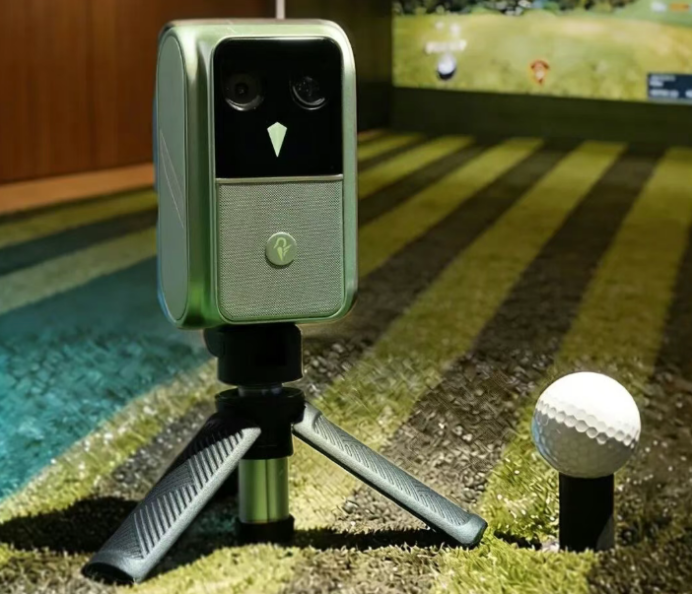
    BirdieSense (formerly BirdieCoach) is a golf-integrated intelligent agent terminal developed by PathFinder. Relying on its self-developed “integrated brain,” the product integrates multimodal visual perception, biomechanical analysis, and dynamic environment modeling technologies. It can capture swing trajectories, center of gravity distribution, and micro-topography of the course in real time, creating a complete closed loop of “data collection – intelligent diagnosis – strategy generation – training companionship.”

    Unlike traditional rangefinders or wearable devices, BirdieSense is implemented as an “AI caddie + virtual coach,” supporting voice interaction, real-time motion correction, and long-term player ability graph construction, enabling AI to truly understand the scene and make proactive decisions.

    BirdieSense
    BirdieSense

    From an evaluation perspective, its core advantage lies in the deep integration of sports cognition and AI algorithms. The team has encoded professional training logic into the model, enabling the system not only to identify technical deviations but also to output personalized hitting plans based on wind direction, slope, and physical condition, significantly lowering the barrier to professional guidance. In the North American market, the product precisely addresses the essential skill advancement needs of 28 million active golfers, potentially breaking down the industry barrier of high-priced personal training.

    In terms of user experience, its interactive design aligns with the habits of golf, seamlessly integrating into daily swinging rhythms without the need for complicated attire; the data visualization interface is clear and adaptable to users of all levels, from beginners to advanced. In terms of the business model, hardware sales combined with SaaS subscriptions offer high scalability, extending to scenarios such as youth training, course operation optimization, and tournament data services.

    As an early-stage product, deployment still faces challenges: sensor stability in extreme weather, generalization capabilities across non-standard terrains, and data privacy compliance all require real-world stress testing. Furthermore, given the mature golf ecosystem in the US, AI needs to clearly define its collaborative role of “empowering coaches and optimizing the experience” to avoid conflicts with traditional systems. Simultaneously, it must be wary of homogeneous competition from existing data platforms like Arccos and ShotLink. BirdieSense must build its core competitive advantage through “embodied decision-making” rather than simply “data aggregation.”

    Overall, BirdieSense marks a crucial leap for sports AI from “passive recording” to “active decision-making.” If Product-Market Fit (PMF) can be validated through algorithm iteration, hardware reliability, and channel integration, it has the potential to reshape North American golf training standards and become a key piece of the intelligent sports infrastructure puzzle.

    III. Reconstructing Smart Sports Infrastructure Starting with Golf

    Golf is undergoing a global return from a “niche social activity” to a “mass sport,” and AI technology is the core engine driving this process. The global AI + sports market is projected to exceed $10 billion by 2025, with capital and technology continuously flowing into training, data monitoring, and event operations.

    Against this backdrop, PathFinder chose the United States as its initial market, precisely targeting its over 47 million participants, comprehensive 18-hole golf course network, and high user acceptance of technology. The company has secured tens of millions of yuan in angel investment from Jinqiu Fund, which will be primarily invested in algorithm optimization, hardware engineering, and pilot deployment at benchmark North American golf courses.

    The team’s long-term vision extends far beyond golf hardware. Having validated its paradigm with BirdieSense, PathFinder will explore a collaborative system combining humans and AI agents, ultimately reconstructing the intelligent infrastructure of the sports industry. Its technical architecture boasts strong portability, allowing for future horizontal expansion to high-net-worth sports such as tennis and equestrianism, and even extending into mass fitness and sports rehabilitation.

    Faced with global competition, PathFinder needs to continuously strengthen its localized operational capabilities, build an open data ecosystem, and form deep collaborations with coaching systems, stadium management, and sports brands. As AI evolves from an “auxiliary tool” to a “scenario-based decision-making terminal,” sports services will achieve a unification of standardization and personalization. Chinese innovation, with its core technologies and vertical scenario insights, is exporting a new paradigm in the global sports technology wave.